电力设备

Search documents
江山如画丨嵌入全球产业链,常州以“双向奔赴”拓展开放新空间
Zhong Guo Xin Wen Wang· 2025-12-08 03:50
Core Viewpoint - Changzhou is actively integrating into the global industrial chain through a "dual-direction" approach, enhancing its competitiveness and resilience in the face of global supply chain restructuring and rising anti-globalization sentiments [1]. Group 1: Global Expansion and Standard Output - Chinese companies, including those from Changzhou, are increasingly showcasing their products, technologies, and solutions on the global stage, particularly through the Belt and Road Initiative [2]. - Changzhou's Borui Electric Automation Co., Ltd. has successfully participated in significant projects in Brazil, marking a transition from new construction to high-end renovation markets [2]. - Borui Electric is executing the world's largest ongoing energy storage project in Saudi Arabia, demonstrating China's capability in providing comprehensive energy solutions [3]. - Changzhou enterprises are not only exporting products but are also moving towards "standard output," establishing themselves as leaders in international standards [5]. Group 2: Technological Mergers and High-End Industry Integration - Chinese companies are embedding key technologies into local manufacturing through overseas acquisitions, strengthening their industrial foundations [6]. - The acquisition of Cotesa GmbH by KOTAS (China) Composite Materials Co., Ltd. has enabled it to become a certified supplier for Airbus and Boeing, showcasing the importance of technology transfer [6]. - Other companies, like Hengli Hydraulic, have also engaged in similar acquisitions, emphasizing the strategy of integrating foreign technology to elevate local industries [6]. Group 3: Foreign Investment and Economic Growth - Changzhou has attracted over 3,000 foreign enterprises, including 105 Fortune 500 companies, with significant investments in various projects [8]. - The city reported a 23.9% year-on-year increase in actual foreign investment, totaling $994 million from January to September 2025, ranking fifth in the province [8]. - Changzhou's foreign trade reached 320 billion yuan, with a notable increase in exports of new energy vehicles, photovoltaics, and lithium batteries, which grew by 119% [9]. Group 4: Policy Support and Future Outlook - The local government has shifted from being a mere "investor" to an "ecosystem builder," implementing targeted policies to support enterprises in both outbound and inbound investments [9][11]. - Changzhou's foreign trade value increased by 14% year-on-year, with exports contributing significantly to this growth [9]. - Looking ahead, Changzhou aims to enhance its innovation capabilities and global value chain positioning by focusing on R&D in smart manufacturing and renewable energy [12].

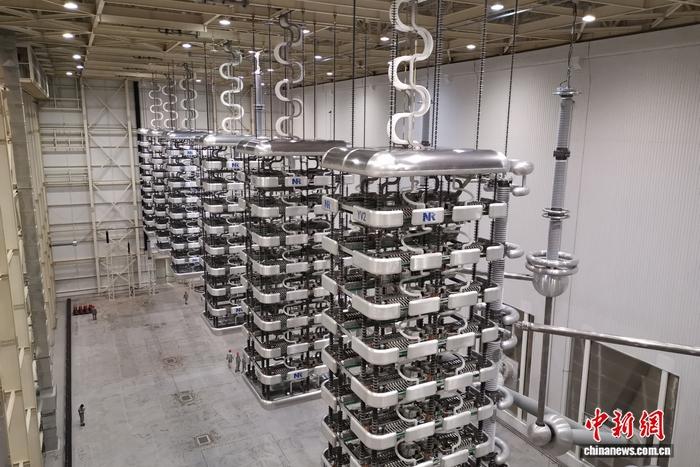
光大证券晨会速递-20251208
EBSCN· 2025-12-08 03:16
Core Insights - The report indicates that the market is experiencing a bullish trend, although it may enter a phase of wide fluctuations in the short term. The current index has significant room for growth compared to previous bull markets, but the duration of the bull market may be more critical than the magnitude of the increase due to government policies promoting a "slow bull" market [2] - The report highlights the attractiveness of fixed-income assets in a low-interest-rate environment, suggesting that the 10-year government bond ETF offers a favorable risk-reward ratio for investors [3] - The report notes that the A-share market is showing signs of recovery, with a focus on defensive and consumer sectors in the short term, while TMT and advanced manufacturing sectors are recommended for medium-term investment [4] Market Data Summary - The A-share market indices showed positive performance, with the Shanghai Composite Index closing at 3902.81, up 0.70%, and the Shenzhen Component Index closing at 13147.68, up 1.08% [8] - The report indicates a slight net inflow into stock ETFs, with small and mid-cap theme ETFs being the main contributors to this inflow [4] - The report also mentions that the issuance of credit bonds increased by 16.86% month-on-month, with a total issuance of 13153.34 billion yuan in November 2025 [7] Industry Research Summary - The report categorizes the electric power equipment and new energy sector into high-growth segments (such as AIDC power supplies, solid-state batteries, hydrogen ammonia, and energy storage) and "anti-involution" segments (including lithium batteries, wind power, and photovoltaics), each presenting unique investment opportunities [12] - The chemical industry is expected to see a recovery in profitability due to macroeconomic improvements and supply-side policy advancements, with a focus on sectors like phosphate chemicals, potassium fertilizers, and lithium battery materials [14] - The report emphasizes the investment potential in the hydrogen ammonia and energy storage sectors, particularly in the context of domestic bidding and overseas opportunities [15]
12月5日基础化工、电子、医药生物等行业融资净卖出额居前
Zheng Quan Shi Bao Wang· 2025-12-08 02:44
Summary of Key Points Core Viewpoint - As of December 5, the latest financing balance in the market is 24,641.11 billion yuan, showing a decrease of 23.78 billion yuan compared to the previous trading day. Industry Analysis - **Increase in Financing Balance**: - Eleven industries saw an increase in financing balance, with the computer industry leading with an increase of 9.99 billion yuan. Other notable increases were in the defense industry (5.19 billion yuan), machinery equipment (4.38 billion yuan), and banking (3.25 billion yuan) [1]. - **Decrease in Financing Balance**: - Twenty industries experienced a decrease, with significant reductions in basic chemicals (9.11 billion yuan), electronics (6.81 billion yuan), and pharmaceutical biology (5.11 billion yuan) [1][2]. - **Highest Growth Rate**: - The construction materials industry had the highest growth rate in financing balance at 1.80%, followed by agriculture, forestry, animal husbandry, and fishery (0.95%), and defense industry (0.63%) [1]. - **Largest Declines**: - The coal industry saw a decline of 1.21%, followed by household appliances (1.14%) and basic chemicals (0.91%) [1][2]. Detailed Financing Balance Changes - **Top Industries by Financing Balance**: - Computer: 1,785.70 billion yuan, +9.99 billion yuan, +0.56% - Defense Industry: 828.78 billion yuan, +5.19 billion yuan, +0.63% - Machinery Equipment: 1,302.23 billion yuan, +4.38 billion yuan, +0.34% - Banking: 758.49 billion yuan, +3.25 billion yuan, +0.43% [1]. - **Industries with Notable Decreases**: - Basic Chemicals: 988.44 billion yuan, -9.11 billion yuan, -0.91% - Electronics: 3,600.48 billion yuan, -6.81 billion yuan, -0.19% - Pharmaceutical Biology: 1,640.85 billion yuan, -5.11 billion yuan, -0.31% [2].
“申”挖数据 | 资金血氧仪
申万宏源证券上海北京西路营业部· 2025-12-08 02:00
Group 1 - The main point of the article highlights that in the past two weeks, the net outflow of main funds reached 18.386 billion yuan, with the automotive, building materials, and home appliances sectors seeing the highest net inflows, while the computer, media, and power equipment sectors experienced the largest net outflows [5][6][8]. Group 2 - The current margin trading balance is 2.483869 trillion yuan, showing a decrease of 0.31% from the previous period, with a financing balance of 2.466489 trillion yuan and a securities lending balance of 173.81 billion yuan [5][13]. - The average daily trading volume for margin trading in this period was 172.602 billion yuan, which is a decline of 16.64% compared to the previous period [5][14]. - The top three industries for net margin buying were communication, electronics, and national defense, while the top three for net margin selling were computer, media, and automotive [5][15]. Group 3 - In terms of market performance, the number of declining stocks exceeded that of rising stocks in the past two weeks, with only the food and beverage and banking sectors showing gains, while the non-bank financial, machinery equipment, and media sectors had the largest declines [5][20][26]. Group 4 - The overall strength analysis score for all A-shares was 6.20, with the CSI 300 at 5.61, the ChiNext at 6.32, and the Sci-Tech Innovation Board at 6.55, indicating a neutral to strong market condition [5][29][30].

195股融资余额增幅超5%
Zheng Quan Shi Bao Wang· 2025-12-08 01:49
12月5日沪指上涨0.70%,市场两融余额为24816.76亿元,较前一交易日减少21.94亿元。 证券时报·数据宝统计显示,截至12月5日,沪市两融余额12581.46亿元,较前一交易日减少12.08亿元; 深市两融余额12160.29亿元,较前一交易日减少9.71亿元;北交所两融余额75.01亿元,较前一交易日减 少0.15亿元;深沪北两融余额合计24816.76亿元,较前一交易日减少21.94亿元。 | 代码 | 简称 | 最新融资余额(万 | 较前一个交易日增减 | 当日涨跌幅(%) | 所属行业 | | --- | --- | --- | --- | --- | --- | | | | 元) | (%) | | | | 920058 | 华洋赛 车 | 859.90 | -22.88 | 1.68 | 汽车 | | 600595 | 中孚实 业 | 30245.15 | -22.44 | 9.58 | 有色金属 | | 002255 | 海陆重 工 | 53760.55 | -21.54 | 3.58 | 电力设备 | | 920706 | 铁拓机 械 | 2013.46 | -20.87 | 6. ...
376只个股流通市值不足20亿元
Zheng Quan Shi Bao Wang· 2025-12-08 01:48
Group 1 - Small-cap stocks exhibit higher volatility and activity compared to large-cap stocks, making them more likely to become market leaders [1] - As of December 5, there are 932 stocks with a circulating market value below 3 billion yuan, and 376 of these have a circulating market value below 2 billion yuan [1] - A total of 1,653 stocks have a total market value below 5 billion yuan, with 530 stocks having a total market value below 3 billion yuan [1] Group 2 - The three stocks with the smallest circulating market values are Kuntai Co. at 663 million yuan, Kangliyuan at 689 million yuan, and Yangzhou Jinqian at 692 million yuan [1] - The three stocks with the smallest total market values are *ST Changyao at 729 million yuan, *ST Suwu at 881 million yuan, and *ST Aowei at 905 million yuan [1] - A detailed list of stocks with circulating market values below 2 billion yuan includes various sectors such as automotive, light manufacturing, and textiles [1][2]


报告丨中国上市公司高端制造业发展报告
Xin Lang Cai Jing· 2025-12-08 01:33
Industry Overview - As of the end of 2024, the number of high-end manufacturing listed companies in A-shares reached 2,503, accounting for 46.50% of the total A-share companies, with a compound annual growth rate (CAGR) of 10.80% over the past five years [2][19] - The total asset scale reached 27.24 trillion yuan, and total revenue was 15.41 trillion yuan, with CAGRs of 13.98% and 13.27% respectively, indicating strong expansion capabilities [2][19] - Private enterprises accounted for 71.87% of the industry, while state-owned enterprises, though only 17.58% in number, contributed 34.31% of the revenue [2][19] - The industry is primarily concentrated in southeastern coastal provinces such as Guangdong, Jiangsu, and Zhejiang [2][19] - The tax contribution of the industry in 2024 was 253.9 billion yuan, with an employee count of 10.35 million and an average salary of 189,500 yuan, reflecting stable employment and income growth [2][19] Core Development Metrics - In 2024, total R&D expenditure was 934.12 billion yuan, with a CAGR of 18.51%, and R&D spending accounted for 6.06% of revenue [3][20] - The number of R&D personnel reached 1.8464 million, with a CAGR of 12.07%, achieving multiple technological breakthroughs in sectors like power equipment, semiconductors, and passenger vehicles [3][20] - The total market capitalization was 32.47 trillion yuan, with a CAGR of 3.91% [3][20] - The total scale of IPOs and refinancing was 115.54 billion yuan, showing a decline due to regulatory policy adjustments, although financing activity remained high in mechanical manufacturing and electronics [3][20] - Overseas revenue reached 4.3113 trillion yuan, with a CAGR of 19.81%, accounting for 27.98% of total revenue [3][20] Key Industry Characteristics - The mechanical manufacturing, electronics, power equipment, and passenger vehicles and parts sectors contributed 73.78% of the total assets and major revenue of the high-end manufacturing industry [4][20] - The medical industry led with a net profit margin of 13.19% and a return on assets of 5.03% [4][20] - The semiconductor industry benefited from the growth in AI and new energy vehicle demand, with a price-to-earnings ratio of 118.09 [4][20] - The aerospace and defense sector saw steady market capitalization growth driven by defense construction demand, with R&D investment accounting for 6.75% [4][20] - The power equipment sector faced a 66.43% decline in net profit due to overcapacity, while the pharmaceutical industry experienced a continuous decline in market capitalization due to policy adjustments, despite a high R&D investment ratio of 11.65% [4][20] Industry Trends and Policies - The government has introduced policies such as the "New National Nine Articles" and "Science and Technology Innovation Sixteen Articles" to support technological innovation, promoting equipment upgrades and the replacement of consumer goods [5][21] - The integration of AI and manufacturing has been widely applied in R&D design, production, and intelligent scheduling, leading to new business models [5][21] - New demands for computing power and smart terminals are emerging, with companies like SANY Heavy Industry and GAC Group leading practical implementations [5][21] - Efforts to revise the "Anti-Unfair Competition Law" and promote industry self-regulation have effectively addressed issues of low-price competition and disorderly expansion, guiding resources towards innovation [5][21] - The focus is on intelligent, green, and integrated development, with an emphasis on nurturing emerging industries such as low-altitude economy and humanoid robots, while tackling critical technology challenges in integrated circuits and industrial mother machines [5][21] Challenges and Future Outlook - Some industries are facing issues of overcapacity and profit fluctuations, with core technology bottlenecks persisting [6][22] - International market competition and geopolitical risks have intensified [6][22] - The future strategy includes increasing R&D investment, deepening industrial cluster development, and advancing international strategic layouts, aiming to transition from a "manufacturing giant" to a "manufacturing power" [6][22]
全球格局重构与“十五五”战略新机遇 - 2026年资本市场年度策略展望
2025-12-08 00:41
Summary of Key Points from Conference Call Records Industry and Company Overview - The conference call discusses the global economic landscape, focusing on the implications of U.S. monetary policy, U.S.-China relations, and the technology sector's development in 2026 [1][2][4]. Core Insights and Arguments U.S. Monetary Policy - The Federal Reserve is expected to maintain a passive easing policy, with potential impacts on liquidity influenced by Trump's announcement of the next Fed chair, which could benefit tech stocks but with limited sustainability [1][2]. - A key focus is on the timing of the Fed's shift to active easing, which historically has been favorable for U.S. equities [3]. U.S.-China Relations - 2026 is highlighted as a pivotal year for U.S.-China relations, with significant events such as Trump's potential visit to China and the need for a trade agreement by September to gain support from key voter demographics [5][6]. - The Chinese government is likely to implement policies to guide long-term capital into the market and support technological development in response to U.S. competition [4]. Domestic Policy Directions - China's domestic policies will become more proactive in addressing international competition, focusing on developing new productive forces and reducing reliance on high technology [7][11]. - The emphasis will be on enhancing the value of domestic industries and addressing the challenges posed by U.S. policies [11][12]. Investment Opportunities - Key investment opportunities in 2026 include sectors related to AI applications, AR technology, humanoid robotics, consumer electronics, and innovative pharmaceuticals [13]. - The focus on new energy supply chains, including critical materials like lithium and silicon, is emphasized as a strategic area for investment [12][37]. Risks and Market Dynamics - The Nasdaq's current valuation is noted to be significantly lower than during the Obama administration, despite higher ROE, indicating potential for recovery as the Fed shifts to active easing [3]. - The technology sector is experiencing volatility not primarily due to AI issues but rather due to market share shifts among companies, which could lead to increased investment and technological advancement in the long term [3]. Other Important but Potentially Overlooked Content Economic Indicators - The Shanghai Composite Index and the RMB/USD exchange rate are identified as critical indicators for monitoring China's economic health and policy effectiveness [8]. - The anticipated annual increase in the Shanghai Composite Index is projected to be between 10% and 20%, with a focus on maintaining a low volatility environment [8]. Housing Market Outlook - The housing market is expected to remain in a correction phase, with rental yields significantly lower than mortgage rates, making renting more attractive than buying [16]. Consumer and Fiscal Policies - China's consumer and fiscal policies are designed to ensure social stability amid geopolitical tensions, with limited scope for aggressive consumer spending initiatives [14][15]. Structural Changes in the Economy - The ongoing structural changes in China's economy, particularly in the real estate sector, are leading to a decline in disposable income growth and consumer sentiment, impacting overall economic stability [23]. Strategic Focus Areas - The conference highlights the importance of focusing on industries that can enhance China's competitive edge in global markets, particularly in technology and energy sectors [27][34]. This summary encapsulates the key points discussed in the conference call, providing insights into the strategic directions and investment opportunities within the context of the evolving global economic landscape.
中能电气拟收购三企业填补产品空白 标的挂牌底价合计8.57亿资产14亿
Chang Jiang Shang Bao· 2025-12-07 23:55
Core Viewpoint - Zhongneng Electric (300062.SZ) plans to acquire 65% equity and related debts of three companies in the same industry chain, aiming to enhance its product offerings and market share in the high-voltage sector [1][2][3]. Group 1: Acquisition Details - The acquisition involves purchasing 65% equity and debts of Shandong Dacheng Electric Co., Ltd., Shandong Dacheng High Voltage Switch Co., Ltd., and Shandong Shifang Electric Co., Ltd. for a total base price of 8.57 billion yuan [2][3]. - The transaction is still in the preliminary planning stage, and the final transaction details will depend on the bidding results at the Shandong Property Rights Exchange [2][3]. Group 2: Financial Performance - As of October 2025, the total assets of the three target companies amount to 1.4 billion yuan [7]. - Zhongneng Electric reported a revenue of 9.57 billion yuan for the first three quarters of 2025, a decrease of 4.30% year-on-year, but achieved a net profit of 5.11 million yuan, reversing a loss from the previous year [9][10]. - The financial performance of the target companies shows mixed results, with two of them reporting losses [4][5][6]. Group 3: Strategic Rationale - The acquisition is intended to fill the product gap in the high-voltage sector and leverage synergies to enhance the company's competitive position and business scale [1][3]. - Zhongneng Electric aims to align this acquisition with its development strategy, focusing on expanding its product categories and market presence [1][3].

国泰海通|金工:量化择时和拥挤度预警周报(20251205)短期内依旧会维持震荡
国泰海通证券研究· 2025-12-07 15:37
Market Overview - The market is expected to maintain a consolidation phase in the short term, as indicated by the technical analysis and sentiment model signals [1][2] - The liquidity shock indicator for the CSI 300 index was 0.03, lower than the previous week (0.50), suggesting current market liquidity is above the one-year average by 0.03 standard deviations [2] - The PUT-CALL ratio for the SSE 50 ETF decreased to 0.83 from 1.02, indicating reduced caution among investors regarding the short-term outlook [2] - The five-day average turnover rates for the SSE Composite Index and Wind All A were 1.01% and 1.62%, respectively, reflecting increased trading activity [2] Macroeconomic Factors - The onshore and offshore RMB exchange rates experienced slight fluctuations, with weekly increases of 0.12% and 0.03%, respectively [2] - The official manufacturing PMI for November was reported at 49.2, slightly above the previous value (49) but below the consensus expectation (49.3) [2] - The S&P Global China Manufacturing PMI was 49.9, down from the previous value (50.6) [2] Historical Performance - Historical data shows that from 2005 onwards, the SSE Composite Index, CSI 300, and other major indices have had a high probability of rising in the first half of December, with average gains of 1.81%, 2.45%, 1.55%, and -0.02% respectively [2] - The A-share market showed a slight upward trend last week, with the SSE 50 Index up by 0.47%, CSI 300 up by 1.64%, CSI 500 up by 3.14%, and the ChiNext Index up by 4.54% [2] Factor Analysis - The crowding degree for small-cap factors has significantly decreased, with a value of 0.16, while the low valuation factor crowding degree is at -0.65 [3] - High profitability factor crowding degree is at -0.09, and high growth profitability factor crowding degree is at 0.05 [3] - Industry crowding degrees are relatively high in telecommunications, non-ferrous metals, comprehensive sectors, power equipment, and electronics, while machinery and defense industries have seen a notable increase in crowding [3]