芯片

Search documents
明阳智能:拟收购德华公司控制权,13日起停牌
Xin Lang Cai Jing· 2026-01-12 14:51
明阳智能1月12日公告,公司于2026年1月12日收到控股股东能投集团的通知,拟由公司通过发行股份及 支付现金的方式收购中山德华芯片技术有限公司(下简德华公司)的控制权,并募集配套资金。本次交 易尚处于筹划阶段。 德华公司的控股股东为广东明阳瑞德创业投资有限公司,为公司董事张超全资持有,同时张超为公司实 际控制人的近亲属,本次交易构成关联交易。预计不构成重大资产重组。 公司股票自1月13日开市起停牌,预计停牌时间不超过10个交易日。 ...

特斯拉马斯克:2026年中国发电量将达美国三倍
Sou Hu Cai Jing· 2026-01-12 14:10
和讯财经 FOU he xun.com 和而不同 迅达天下 扫码查看原文 本文由 AI 算法生成,仅作参考,不涉投资建议,使用风险自担 【马斯克:未来货币本质是瓦特,看好中国发电与AI计算能力】1月12日消息,在"Moonshots"播客近日 近三小时访谈中,特斯拉CEO埃隆·马斯克重新定义未来硬通货,称"未来的货币本质上将是瓦特"。他 强调中国电力规模大,芯片也可能更多,按当前趋势,中国AI计算能力将远超其他国家。 被问人工智 能等领域增长瓶颈时,马斯克直言是"发电"。访谈中,他赞赏中国发电能力,称xAI与谷歌竞争,最终 会演变成与中国竞争。 马斯克认为,2026年中国发电量将达美国三倍,且中国会解决芯片问题。他指 出芯片收益递减,从3nm到2nm仅提升约10%,黄仁勋也曾说摩尔定律失效,这让中国追赶更易。 ...


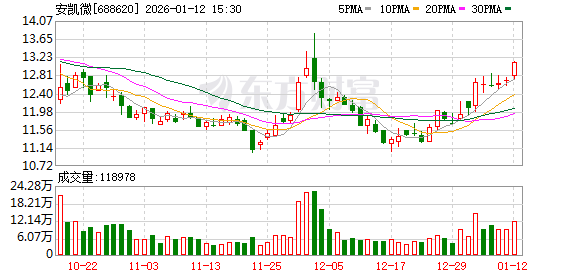
安凯微:公司的工业级芯片具备宽温、抗湿度等优势,可应用于工业级显控等
Zheng Quan Ri Bao· 2026-01-12 14:10
Group 1 - The core viewpoint of the article highlights that Ankai Micro's industrial-grade chips possess advantages such as wide temperature range and humidity resistance, making them suitable for industrial display control applications [2] - The adoption of these chips by downstream customers depends on their product design and selection requirements, indicating a reliance on customer specifications for implementation [2] - The company will continue to monitor opportunities for expanding applications in downstream scenarios, suggesting a proactive approach to market engagement [2]

科技股表现活跃 “碰一下”概念股受资金追捧
Zhong Zheng Wang· 2026-01-12 14:00
Group 1 - The core viewpoint of the articles highlights the strong performance of the A-share technology sector, particularly stocks related to the "Tap to Pay" feature of Alipay, which has seen daily payment transactions exceed 100 million [1][2] - The NFC (Near Field Communication) industry chain is experiencing increased attention and trading volume, with significant stock price increases for companies like Lens Technology, which rose by 10.26% with a trading volume exceeding 12 billion yuan, and Fudan Microelectronics, which increased by 9.84% with a trading volume of 2.48 billion yuan [1] - The rapid adoption of Alipay's "Tap to Pay" feature is activating the potential of existing NFC functionalities in smartphones, leading to increased order expectations for upstream components such as chips and materials [1] Group 2 - The simplification of operations through the "Tap to Pay" feature is lowering user barriers and pushing NFC from low-frequency applications to high-frequency payment scenarios, creating new growth opportunities for the industry [1][2] - Analysts note that the expansion of application scenarios for NFC technology, from payments to social interactions, is significantly enlarging the market space, potentially by several multiples [2] - There is a cautionary note from some institutional investors regarding short-term speculative risks, emphasizing the importance of focusing on companies' technological strengths and long-term value rather than merely following trends [2]


国芯科技:产业基金拟减持不超2.37%股份
Ge Long Hui· 2026-01-12 13:47
Core Viewpoint - Guoxin Technology (688262.SH) announced a plan to reduce its shareholding due to the exit of an industrial fund, with a maximum reduction of 7,964,648 shares, accounting for no more than 2.37% of the total shares [1] Summary by Relevant Sections - **Share Reduction Plan** - The company plans to reduce its holdings through secondary market centralized bidding and block trading [1] - The reduction period is set for three months starting from three trading days after the announcement [1] - **Shareholder Details** - The shareholders involved in the reduction hold less than 5% of the company's shares and are not classified as controlling shareholders, actual controllers, or members of the board of directors and supervisors [1] - **Compliance with Regulations** - The disclosed reduction plan fulfills the commitment made in the prospectus to announce any share reduction three trading days in advance [1]

英伟达还是放不下自动驾驶
远川研究所· 2026-01-12 13:12
Core Viewpoint - Nvidia is launching a comprehensive offensive in the autonomous driving sector with its open-source VLA model, Alpamayo, which aims to provide car manufacturers with a robust foundation for developing their own autonomous driving technologies [6][10][21]. Group 1: Nvidia's Innovations - At CES 2026, Nvidia announced the Alpamayo model, which utilizes a Vision-Language-Action (VLA) approach to enhance decision-making in autonomous driving by making the reasoning process interpretable and traceable [7][10]. - Alpamayo is the first open-source VLA model, allowing car manufacturers to customize it based on their data and needs, thus reducing development complexity while ensuring algorithmic differentiation [10][11]. - Alongside Alpamayo, Nvidia also introduced AlpaSim for closed-loop testing and the Physical AI dataset, which contains over 1,727 hours of driving data, providing a comprehensive toolkit for developers [11][13]. Group 2: Competitive Landscape - Other companies, such as Xiaopeng and Li Auto, are also developing VLA models, indicating a competitive shift towards this technology in the autonomous driving space [8][10]. - Tesla's FSD appears to be adopting a similar VLA-like architecture, although it remains less transparent compared to Nvidia's approach [10][14]. Group 3: Nvidia's Business Strategy - Nvidia's automotive business, while dominant in high-level driving assistance, has not met revenue expectations compared to its data center operations, prompting a strategic shift to provide more comprehensive support to car manufacturers [15][20]. - The company aims to create a closed-loop toolchain for intelligent driving, integrating cloud training and vehicle-side inference, thus facilitating easier adoption of its hardware and software solutions by automakers [21][22]. - Nvidia's strategy reflects a balance between standardization and customization, as it seeks to provide a rich software toolbox while avoiding direct involvement in specific autonomous driving projects [22][24].


【IPO追踪】港股开年新股全线飘红,热潮背后亦有隐忧
Sou Hu Cai Jing· 2026-01-12 11:52
Core Insights - The Hong Kong stock market has seen a strong start in 2026, with eight companies completing their IPOs within just six trading days, including notable firms in the GPU, surgical robotics, and biotechnology sectors [2][3][5] - The initial public offerings (IPOs) have been well-received, with first-day price increases ranging from 8.44% to 109.09%, indicating strong market enthusiasm for sectors like large models, domestic chip alternatives, and surgical robotics [2][3][5] IPO Performance - MiniMax, a key player in the large model sector, achieved a remarkable first-day closing price increase of 109.09%, with a market capitalization reaching HKD 106.7 billion, and was oversubscribed by 1,836.17 times in public offerings [3][5] - Wallen Technology, the first GPU stock in Hong Kong, also performed impressively with a first-day increase of 75.82% [4] - The average first-day increase for the new batch of IPOs was 40.16%, with a cumulative average increase of nearly 62% since listing, reflecting strong market recognition of high-quality hard tech assets [5][6] Market Dynamics - The current IPO market in Hong Kong is characterized by a large backlog of over 300 companies waiting to list, indicating a robust supply pipeline [6] - In December 2025, 32 companies submitted IPO applications, and 26 companies have done so in January 2026 alone, showcasing sustained enthusiasm for new listings [6] Sector Trends - The successful performance of new IPOs has broken the previous trend of "hot IPOs followed by cold market performance," suggesting that the sectors these companies operate in are gaining market confidence [5][6] - Companies like MiniMax and Zhizhu have shown significant cumulative price increases since their IPOs, with MiniMax achieving a total increase of 141.21% and Zhizhu 79.35% [5][6] Regulatory Environment - The Hong Kong Securities and Futures Commission has emphasized the need for high-quality IPO submissions, responding to concerns about the quality of some recent applications [8] - This regulatory focus aims to shift the IPO market from quantity-driven to quality-driven, which may temporarily slow down the listing process for some companies [8]
英伟达CEO主导CES大会:AI与机器人技术成焦点
Sou Hu Cai Jing· 2026-01-12 10:26
Group 1: AI and Robotics - The CES conference was dominated by discussions on artificial intelligence, with Nvidia unveiling new AI models and companies like Intel, AMD, and Qualcomm launching AI-focused chips [2] - Robotics technology became a focal point, highlighted by Nvidia CEO Jensen Huang's keynote speech, emphasizing the growing interest in physical AI applications [2] - Mobileye acquired humanoid robot startup Mentee Robotics for $900 million, while Boston Dynamics partnered with Hyundai to introduce humanoid robots in factories [2][3] - Significant funding is anticipated in the AI sector for 2026, with Elon Musk raising $20 billion for xAI and Anthropic reportedly seeking an additional $10 billion [2][3] Group 2: Chip Developments - Nvidia introduced the Rubin chip, featuring 336 billion transistors and 50 petaflops of performance, aimed at enhancing AI capabilities [4] - Qualcomm launched new chips for robotics and Windows laptops, while Intel released its first chips based on its advanced 18A manufacturing process [4] - AMD showcased the Ryzen AI PC and processors for mobile and embedded applications at CES [4] Group 3: Cybersecurity and Funding - In the cybersecurity sector, Cyera raised $400 million at a valuation of $9 billion for AI data security solutions, while CrowdStrike acquired SGNL for $740 million [5] - The consolidation in the cybersecurity field is accelerating, with Cisco potentially acquiring Axonius and Palo Alto Networks focusing on Koi Security [3][5] Group 4: New Models and Services - Nvidia launched open-source AI models for humanoid robots and autonomous vehicles, while OpenAI introduced ChatGPTHealth for medical inquiries [3] - Google's Gmail is receiving upgrades inspired by Gemini, including AI prioritization and summarization features [3] - SAP expanded AI options for retailers, and CraftStory added image-to-video generation capabilities for AI-generated videos [3]


吉利淦家阅与黄仁勋会晤,或达成集团级全面合作
Xin Lang Ke Ji· 2026-01-12 10:24
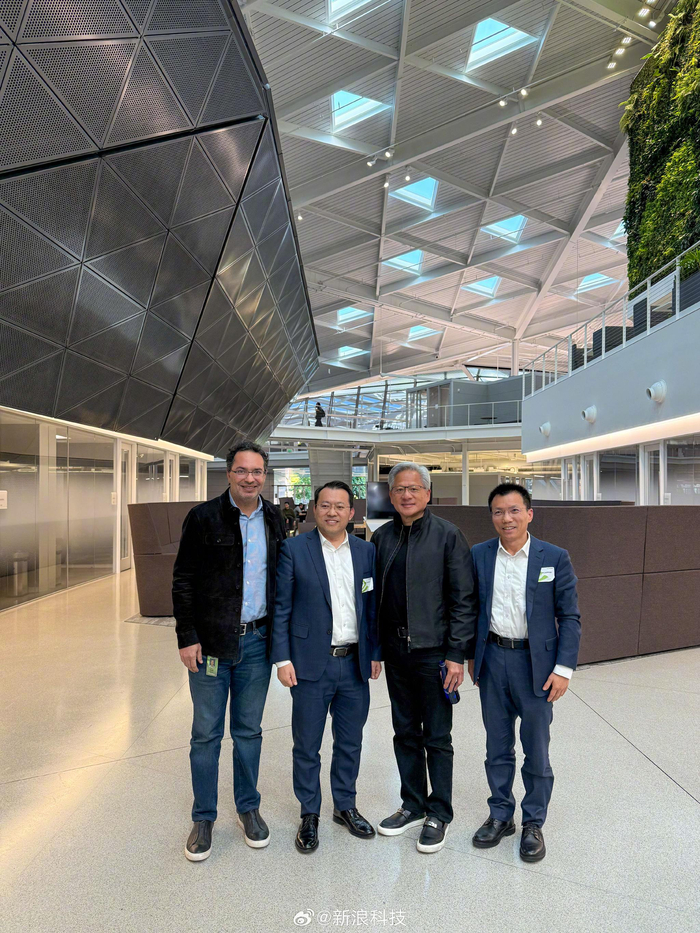
Core Insights - Geely's CEO Gan Jiayue met with NVIDIA's CEO Jensen Huang during CES, indicating a potential deep strategic partnership that could shift from a supplier model to a comprehensive group-level partnership [1] Group 1: Strategic Partnership - The collaboration between Geely and NVIDIA may encompass areas such as intelligent driving, AI cockpit, embodied intelligence, chip synergy, and ecosystem co-construction [1] - Geely's models, including Zeekr 9X and Zeekr 900, have already integrated NVIDIA's flagship autonomous driving chips, with the Zeekr 9X featuring two Thor chips, achieving an industry-leading computing power of 1400 TOPS, supporting L3-level autonomous driving [1] Group 2: Product Development and Future Plans - At CES 2026, Geely unveiled the WAM (World Action Model) and officially named its advanced driver assistance system as G-ASD, which is already equipped in multiple models from Zeekr and Lynk & Co [1] - Geely plans to introduce high-speed L3 and low-speed L4 functionalities this year, contingent on regulatory approval, and aims to initiate robtaxi operations [1]

李彦宏要IPO敲钟了
盐财经· 2026-01-12 10:22
Core Viewpoint - Baidu's Kunlun Chip is preparing for an IPO in Hong Kong, marking a significant move in the Chinese semiconductor industry as it aims to capitalize on the rising demand for computing power [4][9][10]. Group 1: Company Background and Development - Kunlun Chip, originally part of Baidu's AI chip division, was spun off in 2021 with an initial valuation of 13 billion RMB [4][12]. - The chip development began in 2011, with significant milestones including the launch of the first Kunlun chip in 2018, which achieved a computing power of 260 Tops [7][8]. - By 2024, the third generation of Kunlun chips is expected to be mass-produced, targeting various industries such as finance, energy, and education [8]. Group 2: Financial Performance and Market Position - Kunlun Chip has attracted a diverse range of investors, including major firms like BYD and various state-owned enterprises, indicating strong market confidence [12][13]. - Projections suggest that Kunlun Chip's sales could reach 3.5 billion RMB in 2025 and 6.5 billion RMB in 2026, highlighting its growth potential [13]. - Baidu anticipates that the IPO will enhance Kunlun Chip's market image and allow for independent capital market access, optimizing financial resource allocation [13]. Group 3: Competitive Landscape and Strategic Importance - The IPO comes at a time when other Chinese semiconductor companies, such as Wallen Technology and Moore Threads, have recently achieved significant market valuations, creating a competitive environment [16][17]. - Baidu's Kunlun Chip is positioned to replicate the success of its competitors, with a current shipment volume of 69,000 units, placing it among the top domestic chip manufacturers [17]. - Analysts suggest that if Kunlun Chip receives a valuation similar to that of Cambricon, Baidu's stake could be valued at 22 billion USD, representing 45% of its total market capitalization [17].