
制造业等

Search documents
不敢休息的打工人,困在「请假羞耻」里|2026职场人请假报告
36氪· 2026-01-22 00:10
Core Insights - The article discusses the phenomenon of "leave shame" among contemporary workers, highlighting the psychological barriers that prevent employees from taking their entitled leave despite recognizing it as a legal right [28][79]. - A survey conducted by "后浪研究所" reveals that over 70% of respondents feel a sense of shame when asking for leave, indicating a significant cultural issue within the workplace [28][79]. Group 1: Leave Types and Availability - Workers' paid leave is categorized into three types: essential guarantees, welfare leave, and special leave, with varying levels of availability [10]. - The survey found that only 81.8% of respondents have access to statutory annual leave, while other types of leave like sick leave and marriage leave have much lower coverage [11]. - Approximately 11.4% of workers reported having no paid leave at all, indicating a significant gap in employee benefits [11]. Group 2: Actual Leave Utilization - On average, employees possess 6.2 days of paid leave per year, but only manage to take an average of 4.3 days [16]. - A significant portion of young workers (over 40%) waste 1-3 days of their leave, suggesting a disconnect between available benefits and actual usage [18]. - Nearly half of the respondents reported that unused leave simply expires without compensation, reflecting a lack of supportive policies from employers [19][21]. Group 3: Psychological Barriers to Taking Leave - The article identifies a strong correlation between workplace culture and the reluctance to take leave, with many employees fearing negative evaluations from supervisors [42]. - The pressure to justify leave requests leads to a culture where employees often feel the need to fabricate reasons for taking time off [39][40]. - The survey indicates that 40.4% of respondents worry about their leave being questioned by management, which contributes to the overall reluctance to take time off [42]. Group 4: Gender and Industry Differences - The survey results show that women experience a higher level of leave-related shame compared to men, with 23.3% of women feeling intense shame when requesting leave [29]. - Certain industries, such as construction and legal sectors, exhibit higher levels of leave shame, with construction workers reporting a 50% shame rate [30]. Group 5: Work-Life Balance and Connectivity - Over 90% of respondents indicated that they still engage with work communications during their leave, highlighting a blurred line between work and personal time [51]. - The article notes that only 3.8% of workers can completely disconnect from work during their leave, suggesting a pervasive culture of overwork [53].


国家统计局:2025年12月份社会消费品零售总额45136亿元 同比增长0.9%
智通财经网· 2026-01-19 02:19
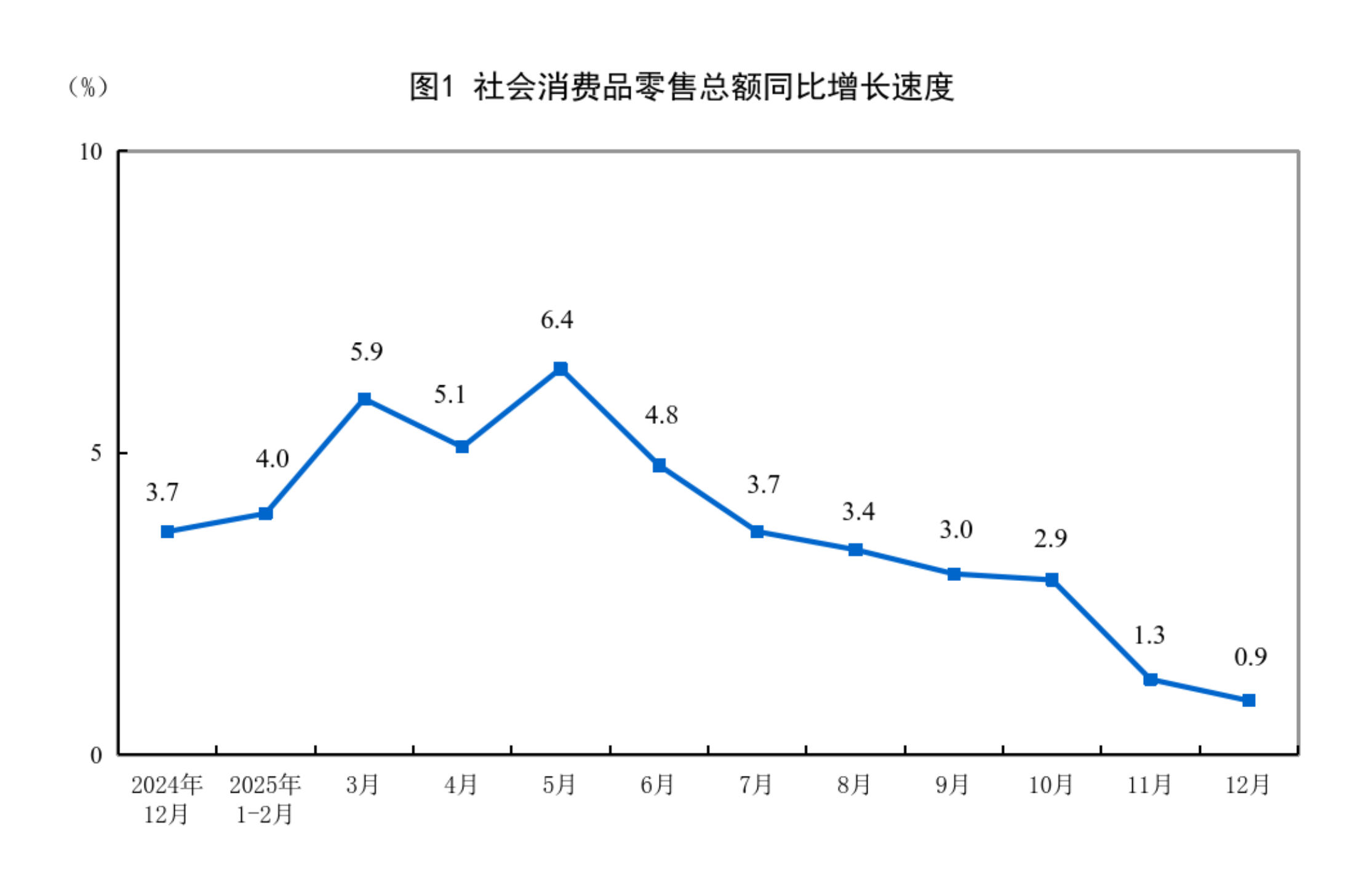
2025年12月份社会消费品零售总额增长0.9% 12月份,社会消费品零售总额45136亿元,同比增长0.9%。其中,除汽车以外的消费品零售额39654亿元,增长1.7%。2025年,社会消费品零售总额501202 亿元,比上年增长3.7%。其中,除汽车以外的消费品零售额451413亿元,增长4.4%。 智通财经APP获悉,国家统计局1月19日发布的数据显示,12月份,社会消费品零售总额45136亿元,同比增长0.9%。其中,除汽车以外的消费品零售额 39654亿元,增长1.7%。2025年,社会消费品零售总额501202亿元,比上年增长3.7%。其中,除汽车以外的消费品零售额451413亿元,增长4.4%。 原文如下: 按零售业态分,2025年,限额以上零售业单位中便利店、超市、百货店、专业店零售额比上年分别增长5.5%、4.3%、0.1%、2.6%;品牌专卖店零售额下降 0.6%。 2025年,全国网上零售额159722亿元,比上年增长8.6%。其中,实物商品网上零售额130923亿元,增长5.2%,占社会消费品零售总额的比重为26.1%;在实 物商品网上零售额中,吃类、穿类、用类商品分别增长14.5%、 ...
各地开年亮出先手棋
Jing Ji Ri Bao· 2026-01-16 01:17
Core Insights - Various regions in China, including Shanghai, Liaoning, and Hubei, are holding meetings to focus on developing new productive forces, enhancing business entities, and optimizing the business environment, indicating a strong commitment to high-quality development in the new year [1][2][4] Group 1: Regional Initiatives - Shanghai has prioritized optimizing the business environment for nine consecutive years, launching a plan with 26 specific measures to address issues like bidding and payment delays [1] - Liaoning's meeting on the first working day of 2026 focused on eight key areas for improving the business environment, establishing a closed-loop management mechanism for strict enforcement against violations [1] - Hubei's technology innovation conference aims to position the province as a hub for original innovation and high-quality development driven by technology [2] Group 2: Strategic Focus - The meetings emphasize the importance of early deployment and clear task lists, reflecting a proactive approach to addressing both external uncertainties and internal growth challenges [2][3] - Key topics include enhancing new productive forces, expanding business entities, and promoting high-level openness, with a focus on systemic support rather than isolated policy measures [4][6] Group 3: Investment and Economic Growth - Major project construction is highlighted as a key driver for stabilizing economic growth, with Yunnan declaring 2026 as a "Project Attack Year" and Shenzhen launching 222 new projects with a total investment of approximately 157.34 billion [8] - Investment strategies are shifting from government-led initiatives to a dual approach involving both government and private sector investments, emphasizing green energy and circular economy projects [8] Group 4: Social and Economic Stability - Regions are addressing economic and financial risks while ensuring safety in production and food security, with specific measures to prevent systemic financial risks and promote agricultural modernization [9] - Many areas are focusing on social welfare projects, including employment, education, and healthcare, to ensure a safety net for citizens while pursuing economic growth [9]
ETF资产配置月报(2026年1月):全球权益看A股,黄金向上趋势延续-20260115
Orient Securities· 2026-01-15 05:16
Report Industry Investment Rating No relevant content provided. Core Viewpoints of the Report - The report captures global multi - asset investment opportunities (covering domestic assets such as A - shares, bonds, and gold, as well as overseas equity assets like US stocks, Japanese stocks, and Indian stocks) and designs corresponding allocation schemes according to common investment scenarios. All portfolios can be tracked through corresponding ETF/LOF products [7]. - In January 2026, the allocation suggestions are as follows: A - shares may have short - term momentum but also face callback risks, with a focus on cyclical mid - cap blue - chips led by chemicals, domestic AI, satellites, and semiconductors; the domestic bond market is neutral, and short - term varieties can be focused on; US stocks may maintain a neutral shock pattern; Japanese stocks may have a neutral shock pattern; Indian stocks may have a weak shock pattern; gold may remain strong in the short - term but also face volatility risks, and its medium - to - long - term allocation value is significant [7]. - A two - stage robust multi - asset portfolio design method based on "portfolio insurance + risk budget" is introduced, which is decision - making based on risk characteristics, does not rely on asset return forecasts, and has good robustness while considering both return elasticity and risk control [7]. Summary by Relevant Catalogs 1. Market Review and Allocation Outlook 1.1 Market Review - In 2025, gold performed outstandingly, global equity assets showed differentiation (A - shares, Japanese stocks, and US stocks were strong, while Indian stocks declined slightly), and the bond market was relatively sluggish. The return performance of underlying assets was: gold (58.57%) > CSI 800 (23.91%) > Nikkei 225 (22.26%) > Nasdaq 100 (17.50%) > short - term financing (1.78%) > 7 - 10 - year policy - financial bonds (0.22%) > S&P BSE Sensex ( - 0.40%) [16]. 1.2 Asset Allocation Outlook - **A - shares**: Economic prosperity and mild inflation recovery support the medium - to - long - term stock market trend, but there are short - term callback risks. Industry themes such as cyclical mid - cap blue - chips led by chemicals, domestic AI, satellites, and semiconductors can be focused on [18]. - **Domestic bond market**: Due to the risk preference of rising equities and the expectation of mild inflation recovery, bonds are neutral overall, and short - term varieties can be continuously focused on [20]. - **US stocks**: The US economy still has resilience, but due to the downward revision of interest - rate cut expectations and relatively high valuations, US stocks may maintain a neutral shock pattern in the short - term [22]. - **Japanese stocks**: Japan's economy is in a benign "wage - price spiral" and is moderately recovering, but with a marginal net outflow of foreign capital, Japanese stocks may have a neutral shock pattern in the short - term [31]. - **Indian stocks**: The economic prosperity has declined from its peak, and with a marginal net outflow of foreign capital, Indian stocks may have a weak shock pattern in the short - term [34]. - **Gold**: Geopolitical tensions have pushed gold to new highs. It may remain strong in the short - term but also face volatility risks, and its medium - to - long - term allocation value is significant [38]. 2. Robust Portfolio Design Idea: Two - Stage Method of "Portfolio Insurance + Risk Budget" 2.1 Dilemma of Asset Allocation Models in Domestic Investment Applications - The two classic multi - asset portfolio management methods, mean - variance optimization (MVO) and its derivative models, and risk - budget - based models (such as the risk - parity model), have limitations in domestic investment applications. MVO is highly sensitive to changes in returns and risks, and the risk - parity model may lead to an overly low proportion of equity assets in the portfolio [45]. 2.2 Optimization Idea 1: Using Portfolio Insurance Method to Optimize the Sharpe Ratio of High - Risk Assets - The portfolio insurance strategy can optimize the return - risk ratio of high - volatility assets such as A - shares in the medium - to - long - term. Taking the domestic stock - bond CPPI portfolio as an example, it can achieve better risk performance compared to corresponding portfolios [52]. 2.3 Optimization Idea 2: Integrating Target Allocation Central Risk Budget Strategy - By decomposing the risk budget, the target stock - bond allocation central can be integrated into the risk - budget configuration model, and the allocation weights can be dynamically adjusted according to the changes in asset volatility [59]. 2.4 "Portfolio Insurance + Risk Budget": Balancing Return Elasticity and Risk Control - The two - stage combination design method of "portfolio insurance + risk budget" first uses the CPPI method to optimize the Sharpe ratio of single risk assets and then constructs a risk - budget investment portfolio based on the risk characteristics of each sub - portfolio. It can effectively combine return elasticity and risk control and has good robustness [63]. 3. Stock - Bond Target Allocation Central Risk Budget Portfolio 3.1 Investment Scenarios and Scheme Design - In a low - interest - rate environment, the fixed - income plus strategy can alleviate the problem of declining returns of pure - bond assets. Two strategies are designed: the stock - bond target allocation central risk budget strategy (stock - bond RB) and the "CPPI + RB" two - stage stock - bond target allocation central strategy (stock - bond CPPI_RB), with three types of allocation central combinations of 1:9, 2:8, and 3:7 constructed respectively [67][68][69]. 3.2 Portfolio Performance Analysis - During the back - testing period (January 5, 2015 - December 31, 2025), the performance of the strategy integrating the stock - bond target allocation central risk budget is better than that of the fixed - allocation central stock - bond portfolio, and the two - stage stock - bond CPPI_RB portfolio is better than the stock - bond RB portfolio [70]. 3.3 Allocation Weights and Marginal Changes - The stock - bond allocation of the three types of allocation central portfolios meets the requirements of the target allocation central. At the end of December 2025, the stock - bond RB portfolio moderately increased the weight of A - shares and increased the weight of long - term bonds while reducing the weight of short - term bonds within the bond category [75]. 4. Low - Volatility "Fixed - Income Plus" Portfolio 4.1 Investment Scenarios and Scheme Design - To reduce the volatility risk of the stock - bond portfolio during extreme "stock - bond double - kill" market conditions, an appropriate amount of gold is added. The portfolio is designed using the two - stage method of "portfolio insurance (CPPI) + risk budget (RB)", with a target allocation central of stock:gold:bond = 1:1:4 [80][81]. 4.2 Portfolio Performance Analysis - During the back - testing period (January 1, 2015 - December 31, 2025), the low - volatility "fixed - income plus" strategy has an annualized return of 7.08%, an annualized volatility of 3.47%, a maximum drawdown of - 4.92%, a Sharpe ratio of 1.99, and a Calmar ratio of 1.44 [83]. 4.3 Allocation Weights and Marginal Changes - As of December 31, 2025, the latest weights of the strategy are: CSI 800 (10.78%), gold (5.99%), 7 - 10 - year policy - financial bonds (75.09%), and short - term financing (8.14%). In December 2025, the weight of short - term financing was increased, and the weights of other assets were decreased [90]. 4.4 Strategy Implementation: Tracking Based on ETF Assets - The low - volatility "fixed - income plus" strategy can be well tracked by corresponding ETF assets. As of December 31, 2025, the annualized return of the strategy since 2023 is 9.38%, and the annualized returns of the FOF_of_ETFs portfolio based on ETF net value and on - site price are 9.05% and 9.07% respectively [95]. 5. Global Asset Allocation Portfolio 5.1 Investment Scenarios and Scheme Design - In a volatile global situation, global asset allocation can effectively diversify risks and improve the return - risk ratio of the portfolio. A two - stage FOF portfolio design method of "portfolio insurance (CPPI) + risk parity (RP)" is used [102][104]. 5.2 Global Multi - Asset Allocation Strategy I: A - shares + Bonds + Gold + US Stocks - **Performance**: During the back - testing period (January 1, 2014 - December 31, 2025), the annualized return is 11.85%, the annualized volatility is 5.94%, the maximum drawdown is - 7.97%, the Sharpe ratio is 1.91, and the Calmar ratio is 1.49. In 2025, it recorded 20.94% [106]. - **Allocation Weights and Marginal Changes**: As of December 31, 2025, the model allocation weights are: CSI 800 (18.98%), Nasdaq 100 (17.84%), gold (13.66%), and 7 - 10 - year policy - financial bonds (49.51%). In December 2025, the weight of 7 - 10 - year policy - financial bonds was increased, and the weights of other assets were decreased [111]. - **Strategy Implementation**: The strategy can be well tracked by corresponding ETF/LOF assets. As of December 31, 2025, the annualized return of the strategy since 2023 is 16.92%, and the annualized returns of the FOF_of_ETFs portfolio based on ETF net value and on - site price are 16.53% and 17.04% respectively [119]. 5.3 Global Multi - Asset Allocation Strategy II: A - shares + Bonds + Gold + Cross - Border Equities - **Performance**: During the back - testing period (January 1, 2014 - December 31, 2025), the annualized return is 10.25%, the annualized volatility is 5.09%, the maximum drawdown is - 9.97%, the Sharpe ratio is 1.94, and the Calmar ratio is 1.03. In 2025, it recorded 13.56% [126]. - **Allocation Weights and Marginal Changes**: As of December 31, 2025, the model allocation weights are: CSI 800 (9.63%), Nasdaq 100 (9.65%), Nikkei 225 (6.17%), S&P BSE Sensex (17.87%), gold (7.16%), and 7 - 10 - year policy - financial bonds (49.51%). In December 2025, the weights of S&P BSE Sensex and 7 - 10 - year policy - financial bonds were increased, and the weights of other assets were decreased [133]. - **Strategy Implementation**: The strategy can be well tracked by corresponding ETF/LOF assets. As of December 31, 2025, the annualized return of the strategy since 2023 is 14.06%, and the annualized returns of the FOF_of_ETFs portfolio based on ETF net value and on - site price are 13.60% and 14.06% respectively [145].
成交额超116亿,A500ETF基金(512050)交投活跃,机构称阶段性调整有助于行情延续
Xin Lang Cai Jing· 2026-01-15 03:54
Group 1 - The core viewpoint of the news highlights the strong performance of the A-share market, with significant trading activity and a notable increase in the A500 ETF fund's scale [1][2] - The A500 index has shown a slight increase of 0.01%, with several constituent stocks like Guanglianda and Wolong Nuclear Materials rising by over 10% [1] - The A500 ETF fund has experienced a substantial growth of 165.61 billion yuan in scale over the past month, indicating a robust market interest [1] Group 2 - The A500 index tracks 500 large-cap, liquid securities across various industries, reflecting the overall performance of representative listed companies [2] - As of December 31, 2025, the top ten weighted stocks in the A500 index account for 20.33% of the index, including major companies like Ningde Times and Kweichow Moutai [2] - The A500 ETF fund has several related products, including various connection funds and enhanced index funds, indicating a diverse investment offering [2]
资产配置专题:美元资产定价模式的变与不变
Huachuang Securities· 2026-01-14 07:43
Group 1 - The report indicates that the U.S. economic cycle is marked by a shift in the pricing model of dollar assets, transitioning from economic growth to inflation levels following the inversion of the U.S. Treasury yield curve [2][5][12] - The imposition of tariffs in 2018 and 2025 has led to fluctuations in the dollar asset pricing model, with high tariffs impacting demand for U.S. Treasury bonds more significantly than the strength of the dollar [2][5][28] - The demand for U.S. Treasury bonds from overseas investors is driven by yield spreads and duration needs, while the demand for U.S. equities is influenced by differences in labor productivity due to intangible asset investments [2][6][28] Group 2 - Over the past 20 years, the demand for overseas dollar assets has shifted from risk diversification to a focus on labor productivity differences, which may lead to significant asset price bubbles [3][6] - The report highlights that the private sector's balance sheets and cash flows have improved, supporting actual consumption demand, which alters the macroeconomic risks faced by the U.S. economy [5][27] - The report emphasizes that the marginal risk switch is hindered, leading to a new pricing model for dollar assets that oscillates between unexpected inflation risks and unexpected economic growth downturn risks [5][27] Group 3 - The impact of tariffs on the pricing of dollar assets is significant, as they are seen as a demand shock that hinders the return of offshore dollars, particularly affecting the demand for long-term U.S. Treasury bonds [28][31] - The report notes that the structure of overseas demand for U.S. Treasury bonds has shifted from official institutions to the private sector, indicating a change in the dynamics of dollar asset demand [34][35] - The report also discusses how the imposition of tariffs has a more pronounced negative effect on the demand for U.S. equities compared to U.S. Treasury bonds, as it raises costs for the private sector and increases recession risks [42][44] Group 4 - The evolution of overseas dollar asset demand shows that private sector investors have increasingly replaced official institutions as the main holders of U.S. assets, driven by the pursuit of higher returns and duration supply [52][70] - The report highlights that the labor productivity differences between the U.S. and other developed economies have led to a sustained increase in overseas investment in U.S. equities, as U.S. companies benefit from higher profit margins [70][75] - The report concludes that the shift in overseas dollar asset demand reflects a correction of previous trends where emerging markets diversified away from dollar assets, returning to a focus on labor productivity differences [77][78]
CPI同比回升至2023年3月以来最高
Di Yi Cai Jing· 2026-01-09 02:08
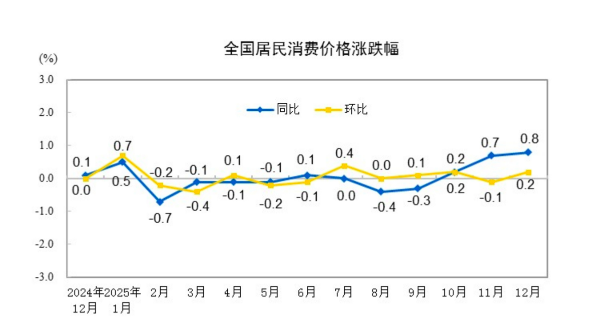
Group 1 - The core CPI has maintained a growth rate of over 1% for four consecutive months, driven by increased consumer demand and effective policies to boost consumption [1][4] - In December, the CPI rose by 0.8% year-on-year, with food prices contributing significantly to this increase, particularly fresh vegetables and fruits [4] - The core CPI, excluding food and energy, rose by 1.2%, indicating stable inflationary pressures in the economy [1][4] Group 2 - The PPI increased by 0.2% month-on-month, marking a continuous rise for three months, while the year-on-year decline narrowed to 1.9% [3][9] - Positive changes in PPI are attributed to ongoing macroeconomic policies and improvements in market competition, with certain industries experiencing reduced price declines [7][8] - The prices of key industries such as coal mining and lithium-ion battery manufacturing have shown signs of recovery, with price declines narrowing over several months [7][8] Group 3 - Economic experts predict that with the implementation of demand expansion policies, prices are expected to recover moderately, potentially returning to positive growth by 2026 [5] - The development of the digital economy and new materials is driving price increases in related sectors, indicating a shift towards a more dynamic economic environment [7]
四大逻辑驱动A股投资者信心持续修复
Zheng Quan Ri Bao· 2026-01-08 17:11
Group 1 - The core viewpoint of the article emphasizes the recovery of investor confidence in the A-share market, driven by a shift from "gambling on uncertainty" to "embracing certainty" [1] - The first logic driving this confidence is the continuous improvement of the macroeconomic governance system, which solidifies the foundation of policy certainty [1] - There is a significant enhancement in the consistency of macro policy orientation, with coordinated monetary, fiscal, and industrial policies creating a stable expectation for the market [1] Group 2 - The second logic is the realization of "new productive forces" performance, with tangible profits constructing a growth engine [2] - Industries related to new productive forces, such as semiconductors, have shown rapid revenue and profit growth since last year [2] - The evolution of China's manufacturing "going out" strategy is shifting from mere product exports to the export of brands, technology, and management models [2] Group 3 - The third logic is the trend of declining risk-free interest rates, leading to a systematic revaluation of equity assets [3] - As domestic risk-free interest rates enter a downward trend, the long-term return advantages of equity assets, especially high-dividend and high-growth companies, become more pronounced [3] - The growth of institutional investors in China is driving a systematic restructuring of the equity asset pricing system towards models that emphasize long-term cash flow and intrinsic value [3] Group 4 - The fourth logic involves the deepening consensus among domestic and foreign capital, creating a new market value ecosystem [4] - Externally, China's economy demonstrates strong resilience and certainty, enhancing the "stability anchor" property of RMB assets [4] - Internally, the structure of market micro-subjects is improving, with long-term capital such as insurance funds steadily increasing their allocation to equity assets [4]
广西财政收支增速连续12个月“双增长”
Sou Hu Cai Jing· 2026-01-07 00:38
Core Insights - In 2025, the region's fiscal departments are expected to achieve a "double growth" in both revenue and expenditure for 12 consecutive months, with general public budget revenue reaching 192.05 billion yuan, a year-on-year increase of 4.6%, and expenditure reaching 674.218 billion yuan, a year-on-year increase of 4.2% [1][2] Fiscal Performance - General public budget revenue is projected to exceed 190 billion yuan and expenditure to surpass 670 billion yuan, marking the first time in nearly six years that both revenue and expenditure have shown continuous growth for 12 months [1] - The region has allocated over 37.3 billion yuan to support major projects, including the Pinglu Canal and the Beibu Gulf International Gateway Port [1] Economic Empowerment - A series of tax reduction and fee reduction measures are expected to inject vitality into the business sector, with preliminary estimates indicating that over 26 billion yuan in tax reductions and refunds will support technological innovation and manufacturing development in 2025 [2] - The government has facilitated the issuance of subsidized loans exceeding 115.1 billion yuan, benefiting over 44,000 businesses and reducing financing costs by over 1.2 billion yuan [2] Innovation and Development - The region aims to allocate 150 billion yuan annually, totaling nearly 450 billion yuan over three years, to support the development of new productive forces through 11 policy measures [2] - Investment in digital infrastructure is set to increase by 133.3%, with 700 million yuan allocated for artificial intelligence capabilities and international cooperation [2] Social Welfare - In 2025, total spending on people's livelihoods is expected to reach 539.235 billion yuan, a year-on-year increase of 4.3%, accounting for 80% of general public budget expenditure [3] - Expenditure in key areas such as transportation, energy conservation, and social security is projected to grow at double-digit rates, enhancing the quality of life for residents [3]
韩国将要求更多企业提交英文监管文件
Jin Rong Jie· 2025-12-31 01:28
Group 1 - The South Korean government will require more companies to submit regulatory documents in English starting next year, enhancing transparency and providing broader market access for foreign investors [1] - The Financial Services Commission (FSC) will expand the requirement for English submissions from KOSPI-listed companies with assets over 10 trillion KRW to those with assets below 2 trillion KRW [1] - The new disclosure requirements will take effect on May 1, aiming to improve transparency and accessibility for overseas investors while enhancing the competitiveness of the local capital market [1] Group 2 - The "Yellow Envelope" law, which amends the Labor Union Act, is expected to come into effect in March next year, aimed at protecting the bargaining rights of indirectly hired workers by subcontractors [1] - The law prohibits companies from filing damage claims or temporary seizure lawsuits against workers who join unions [1] Group 3 - In 2026, South Korea's minimum wage will increase by 2.9% to 10,320 KRW per hour, with the monthly minimum wage reaching 2.15 million KRW [2] - The government has decided to expand tax incentives for domestic companies returning to South Korea, applicable to those that reduce overseas operations after establishing or expanding domestic facilities within four years [2]