
房屋建筑

Search documents
科技股回调 “抗AI”板块成为新赢家
Xin Lang Cai Jing· 2026-02-06 11:53
Group 1 - The core viewpoint of the article highlights that companies in sectors less susceptible to artificial intelligence are emerging as winners amid a decline in technology stocks [1] - The S&P 500 index fell by 2%, primarily driven down by software companies, while sectors such as homebuilders, transportation companies, and heavy machinery manufacturers experienced strong gains [1] - Essential consumer goods companies, viewed as safe havens during economic downturns, rose by 4.7%, potentially marking their best weekly performance since 2022 [1] Group 2 - Michael O'Rourke, Chief Market Strategist at JonesTrading, notes that investors are rotating into "anti-AI" sectors, which include industries with tangible, real-world elements [1] - Analysts from Citigroup and Citizens emphasize that the core activities of these companies, such as manufacturing, distribution, and assembly, are not areas where artificial intelligence can easily replace human involvement [1] - Jay McCanless from Citizens states that human presence is still essential for tasks like building homes, reinforcing the idea that certain industries will remain resilient against AI advancements [1]
美国建筑商拟启动“特朗普住宅”计划 向市场提供至多100万套房屋
Xin Lang Cai Jing· 2026-02-03 16:29
美国总统唐纳德·特朗普 美国房屋建筑商计划启动一个名为"特朗普住宅"(Trump Homes)的宏大开发项目,通过引入数以百亿 美元计的私人资本来解决房价承受力问题。 据知情人士透露,莱纳公司(Lennar Corp.)和Taylor Morrison Home Corp.等企业参与了该提案的制 定,方案要求建筑商将入门级住房出售给一个由私人投资者资助的"置业路径"计划。 该计划的规模最终取决于参与的建筑商数量,一名知情人士表示,建筑商讨论的目标是多达100万套住 房。以此计算,该计划将提供价值超过2500亿美元的住房。 美国总统唐纳德·特朗普 一名要求匿名的白宫官员透露,政府目前并未在积极考虑该计划。 另一位要求匿名的知情人士称,私人投资者将承担任何初始损失。许多细节尚待确定,包括联邦担保抵 押贷款应发挥的作用。行业人士最初于去年向政府提出了这一方案,目前仍在持续完善细节。 泰勒莫里森的发言人表示:"建筑商与政府之间关于帮忙更多美国人实现置业梦的讨论让我们倍感鼓 舞,现在了解细节还为时过早"。莱纳公司代表拒绝置评。 责任编辑:丁文武 美国房屋建筑商计划启动一个名为"特朗普住宅"(Trump Homes)的宏 ...


观山湖安置房项目1、7号楼顺利封顶
Xin Lang Cai Jing· 2026-02-01 21:21
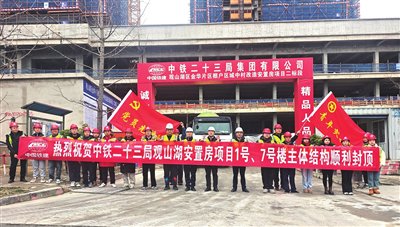
1月28日,随着最后一方混凝土浇筑完成,由中铁二十三局承建的观山湖安置房项目1、7号楼主体结构 顺利封顶,为后续装饰装修、配套设施建设及竣工交付奠定了坚实基础。 (来源:天津日报) 转自:天津日报 观山湖安置房项目(二标段)位于贵州省贵阳市观山湖区,总建筑面积118445.46平方米,规划建设7栋 高层建筑。项目全面建成后,将提供749套高品质安置住房,可满足约2600名居民的居住需求,有效缓 解金华片区安置住房需求,显著提升居民生活品质,并对完善区域公共服务配套、促进城市协调发展起 到积极作用。 文 杨澄澄 ...
1月PMI数据点评:制造业PMI超季节性回落,价格指数抬升
Western Securities· 2026-02-01 13:06
1. Report's Investment Rating for the Industry - No information provided regarding the industry investment rating in the report. 2. Core Viewpoints of the Report - In January 2026, the manufacturing PMI declined more than seasonally with supply - demand converging and enterprise - scale differentiation intensifying, while price indices rose. The service industry PMI slightly dropped and the construction industry's prosperity significantly declined, thus more efforts are needed to promote economic - stabilizing policies [1][10][34]. - In January, the shock of sentiment was gradually digested, and the bond market recovered after adjustment. However, there were still some constraints for a smooth short - term decline. The 10Y Treasury bond yield may return to the central part of the oscillation range in February. Two structural investment opportunities are recommended: the allocation opportunities of 5Y government - financial bonds and 3 - 5Y general - credit bonds, and the spread - compression opportunities such as 10Y CDB - 10Y Treasury bonds [4][34][35]. 3. Summary According to the Directory 3.1 1 - month PMI Data Overview - Manufacturing PMI declined by 0.8 percentage points to 49.3% in January, returning to the contraction range and being weaker than the seasonal average. The production index expansion slowed, demand was under pressure, price indices rose, and enterprises replenished inventory passively with a decline in purchasing willingness [10]. - In the non - manufacturing sector, the service industry PMI slightly decreased by 0.2 percentage points to 49.5%, and the construction industry's business activity index dropped by 4.0 percentage points to 48.8%, both showing different degrees of deviation from seasonal performance [11][14]. 3.2 Manufacturing: Demand - side Operation Under Pressure, Both Price Indices Rising - **Production**: The manufacturing PMI production index was 50.6% in January, down 1.1 percentage points month - on - month, weaker than the seasonal level. The slowdown was due to factors like cold weather and approaching Spring Festival, especially the over 4 - percentage - point decline in the consumer goods manufacturing production index [17]. - **Demand**: The new order index and new export order index of manufacturing PMI decreased by 1.6 and 1.2 percentage points respectively. The "new order - new export order" index dropped to 1.4%. Seasonal factors and external policy changes affected demand, but the proportion of manufacturing enterprises reporting insufficient market demand decreased [19]. - **Enterprise Scale and New Kinetic Energy**: The PMI of large, medium, and small enterprises decreased by 0.5, 1.1, and 1.2 percentage points respectively. New kinetic energy industries continued to lead, while traditional industries' prosperity declined [20]. - **Price**: Affected by multiple factors, the main raw material purchase price index and ex - factory price index were 56.1% and 50.6% respectively, up 3.0 and 1.7 percentage points month - on - month. The index difference reached 5.5 percentage points, compressing the profit space of mid - and downstream enterprises [23]. - **Inventory**: The raw material inventory index decreased by 0.4 percentage points, and the finished - product inventory increased by 0.4 percentage points. The economic kinetic energy index decreased by 2.0 percentage points, and the purchasing volume index dropped to 48.7%. The start of the replenishment cycle depends on the recovery of market demand [24]. 3.3 Non - manufacturing: Slight Decline in Service Industry PMI, Significant Decline in Construction Industry - **Service Industry**: In January, the service industry PMI slightly declined. The strong support from the financial industry, the stable development of new kinetic energy, and the good performance of some consumption - related service industries maintained its stability. However, the real - estate industry's business activity index fell below 40.0%, and Spring Festival consumption may boost the consumption - related service industries [29]. - **Construction Industry**: Due to cold weather and the approaching Spring Festival, the construction industry's business activity index decreased by 4.0 percentage points to 48.8% in January. Both housing construction and civil engineering construction activities slowed down, and the off - season characteristics may continue in February [32]. 3.4 Impact on the Bond Market - In January, after the shock of sentiment was digested, the bond market recovered. The 10Y Treasury bond yield dropped to the lower limit of the 1.8% - 1.9% oscillation range. With insufficient broad - money expectations and increased local - bond supply in February, the 10Y Treasury bond yield may return to the central part of the oscillation range. Two parts of structural investment opportunities are recommended [4][34][35].
中经评论:原拆原建让老旧危楼焕新
Jing Ji Ri Bao· 2026-01-28 00:04
寒冬时节,北京市西城区三里河一区28号楼正紧张施工,这是一栋全面拆除后重新打地基、在原址 上新建的住宅楼。等到2月份,原来的居民们就可以住回崭新的28号楼。 拆除前的三里河一区28号楼始建于1978年,共3个单元54户。经过近50年使用,老住宅存在结构老 化、外墙开裂、阳台风蚀龟裂等安全隐患。居民们苦不堪言:给排水、燃气等管线堵塞锈蚀漏水;未做 外墙保温造成冬季供暖室温不达标;厨房、卫生间空间狭小;室内外缺少适老化设施。居民们都期盼着 改造。 我国正持续推进城市更新,城市更新八项主要任务中,有一项是加强既有建筑改造利用。《中共中 央办公厅 国务院办公厅关于持续推进城市更新行动的意见》要求,稳妥推进危险住房改造,加快拆除 改造D级危险住房,通过加固、改建、重建等多种方式,积极稳妥实施国有土地上C级危险住房和国有 企事业单位非成套住房改造。三里河一区28号楼被认定为D级危险住房,是以原拆原建方式进行改造的 一处典型案例,可为全国其他地方危旧住宅楼原拆原建改造利用提供借鉴。 重建过程中应用"工厂制造+现场安装"智能建造模式,实现像造汽车一样造房子,大大缩短工期。 三里河一区28号楼项目由中国建筑国际集团承担重建任务 ...
新全球秩序催生金银牛市!美银:黄金有望突破6000美元
Hua Er Jie Jian Wen· 2026-01-19 23:20
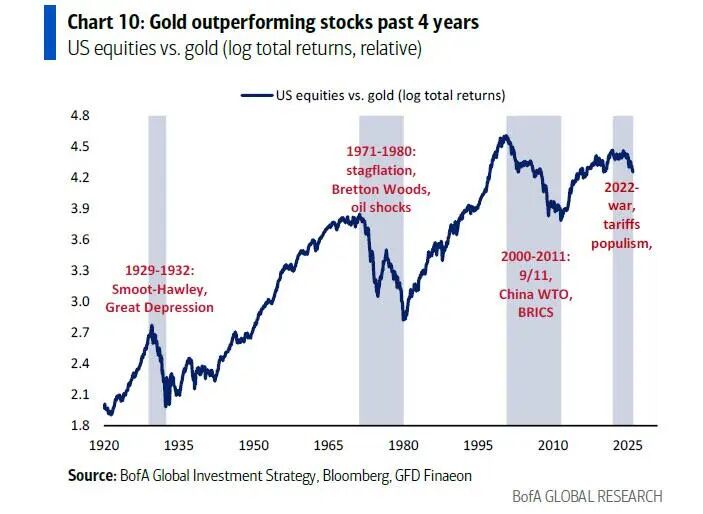
Group 1: New World Order and Global Bull Market - The chief investment strategist at Bank of America, Hartnett, believes that Trump is driving global fiscal expansion, leading to a "New World Order = New World Bull Market" scenario [1][2] - Hartnett suggests going long on international stocks as the market is shifting from U.S. exceptionalism to global rebalancing, with $1.6 trillion flowing into U.S. stock funds in the 2020s compared to only $0.4 trillion into global funds [2] - China is identified as the most promising market, with the end of deflation expected to catalyze bull markets in Japan and Europe [2] Group 2: Gold Bull Market - Hartnett emphasizes that the New World Order is not only fostering a stock bull market but also a gold bull market, despite short-term overbought conditions [3] - Gold was the best-performing asset in 2020, driven by factors such as war, populism, the end of globalization, excessive fiscal expansion, and debt devaluation [4] - The Federal Reserve and Trump’s administration are expected to increase quantitative easing liquidity by $600 billion through the purchase of government bonds and mortgage-backed securities by 2026 [5] - Gold has outperformed bonds and U.S. stocks over the past four years, and a higher allocation to gold remains reasonable, with historical bull markets averaging a 300% increase [6][7] Group 3: Economic Recovery Assets - In addition to gold, other assets are expected to benefit from the New World Bull Market, including mid-cap and small-cap stocks, homebuilders, retail, and transportation sectors [10] - Hartnett advises going long on "economic recovery" related assets while shorting large tech stocks until certain conditions are met, such as the U.S. unemployment rate rising to 5% [11] - Historical precedent shows that Nixon's price and wage freeze improved living costs and boosted his approval ratings, suggesting that if Trump fails to improve his ratings, risks for midterm elections will increase [15] Group 4: Risks from East Asian Currency Appreciation - The biggest risk identified is the rapid appreciation of the yen, won, and new Taiwan dollar, which could trigger global liquidity tightening [1][16] - The yen is currently trading near 160, at its weakest level against the yuan since 1992, and a rapid appreciation could reverse capital flows from Asia [16] - Hartnett warns that investors should closely monitor indicators like the "yen up, MOVE index up" risk aversion combination to determine when to exit the market [16]
可负担性压力冲击中低端市场 美国房屋建筑商信心年初继续下滑
智通财经网· 2026-01-16 15:50
Group 1 - The core viewpoint is that U.S. homebuilder confidence continues to decline, remaining in negative territory for the 21st consecutive month, with the Housing Market Index (HMI) dropping to 37 in January, below the expected 40 [1] - The HMI is based on a monthly survey of approximately 900 builders, assessing current new home sales, sales expectations for the next six months, and potential buyer traffic, all of which showed a decline in January, indicating weak demand recovery [1] - NAHB Chairman Buddy Hughes noted that while the high-end housing market remains relatively stable, affordability pressures are significantly impacting the mid-to-low end market due to high home prices and mortgage rates, leading to increased concerns among buyers [1] Group 2 - On a positive note, the average mortgage rate in the U.S. has decreased to 6.06% as of January 15, the lowest level in three years, and nearly 100 basis points lower than the same period last year, which may alleviate some cost pressures for buyers [2] - The HMI has historically shown a strong correlation with consumer confidence indicators, and the current index level aligns with declines in broader consumer confidence metrics, highlighting the ongoing challenges posed by high interest rates and home prices on the U.S. real estate market recovery [2]
青海省房屋建筑和市政基础设施工程政府投资项目初步设计及概算审批管理办法
Xin Lang Cai Jing· 2026-01-12 19:03
Core Points - The document outlines regulations for the preliminary design and budget management of government investment projects in housing construction and municipal infrastructure in Qinghai Province, aiming to enhance project investment control and ensure design quality [1][2] Group 1: General Principles - The regulations apply to all government investment projects for new, renovated, or expanded housing and municipal infrastructure within the province [1] - Government investment refers to fixed asset investment activities funded by budget allocations, including new construction, expansion, renovation, and technological upgrades [1] - Preliminary design is a crucial step that determines construction standards, technical parameters, and project scope, serving as a basis for bidding and project implementation [1] Group 2: Approval Authority Management - A tiered approval management system is established for preliminary design and budget of government investment projects, with responsibilities divided among provincial, municipal, and county-level departments [3] - Projects with a total investment of less than 10 million yuan do not require preliminary design approval and can proceed directly to construction drawing design based on feasibility study approval [4] Group 3: Preliminary Design and Budget Document Preparation - Preliminary design documents must be prepared by qualified design units and should include geological investigation reports, design explanations, drawings, budget texts, and relevant attachments [6][12] - The budget must adhere to national and provincial regulations, including detailed breakdowns and justifications for costs [15] Group 4: Approval Requirements and Procedures - Project units must submit specific materials for preliminary design and budget approval, including written applications, feasibility study reports, and design documents [17][18] - Approval authorities must review applications within specified timeframes, with major projects potentially requiring extended review periods [10] Group 5: Supervision and Management - Project units are responsible for ensuring the authenticity and timeliness of application materials and must adhere to established construction procedures [30] - Any unauthorized changes to approved projects must be reported to the original approval authority, and adjustments to design and budget require re-approval [11][16] Group 6: Implementation and Compliance - The document emphasizes strict adherence to budget limits, with provisions for adjustments under specific circumstances, such as significant policy changes or cost increases [12][13] - Violations of budgetary controls may result in penalties, and project units can seek recourse against responsible parties for cost overruns caused by negligence [35][36]
青海省房屋建筑和市政基础设施工程施工图设计文件审查管理办法
Xin Lang Cai Jing· 2026-01-11 19:16
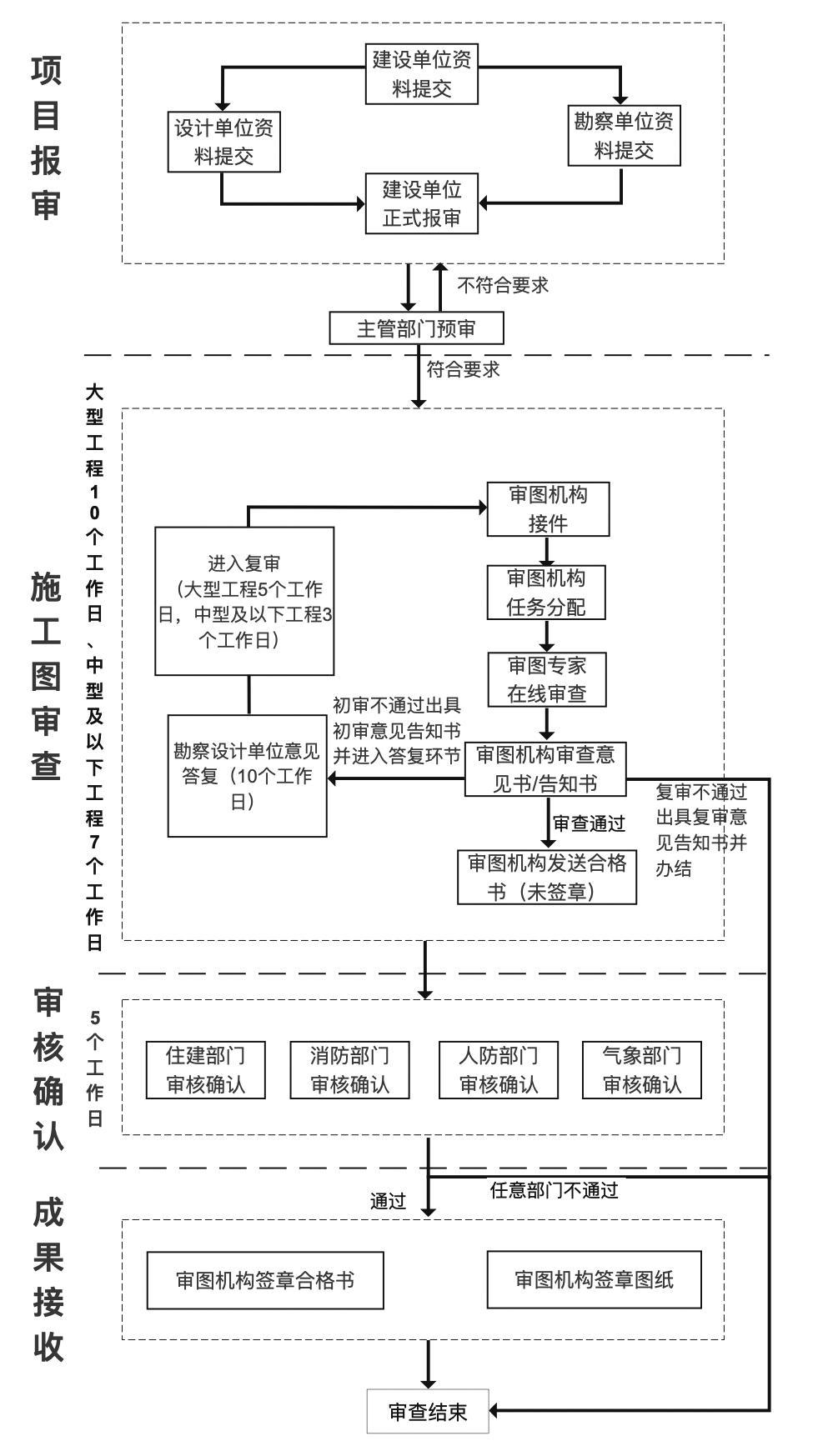
Core Viewpoint - The document outlines the regulations and procedures for the review and filing of construction drawings for housing and municipal infrastructure projects in Qinghai Province, aiming to enhance supervision, standardize review practices, and improve efficiency and service quality [6][7][8]. Group 1: General Principles - The regulations are established to strengthen the supervision and management of construction drawing design file reviews, ensuring compliance with various national and provincial laws [6]. - All construction projects, including new, renovated, or expanded buildings and specialized engineering projects, must undergo drawing review and management [6][7]. - The provincial housing and urban-rural development department is responsible for overseeing the review activities across the province [6][7]. Group 2: Review Process - The review process mandates a joint review system where all relevant design documents, including fire safety and human defense designs, must be submitted together for technical review [7]. - Small-scale projects that pose minimal risk may bypass pre-review requirements, allowing for expert validation instead [7][8]. - Drawings that have not been reviewed and approved cannot be utilized [8]. Group 3: Review Institutions Management - Review institutions must be independent legal entities with the necessary technical qualifications and are not profit-oriented [9]. - The number and scope of review institutions are determined by the provincial housing and urban-rural development department based on various criteria, including past review performance [9][10]. - Review institutions are categorized into three types based on their operational scope: Class I, Class II, and specialized institutions [11][12]. Group 4: Review Personnel Management - Review personnel must be selected from an expert database and cannot be employed by more than one review institution simultaneously [14][15]. - Both full-time and part-time reviewers must meet specific qualifications and undergo continuous education [19][20]. - Review personnel are prohibited from reviewing projects associated with their own organization or those with conflicts of interest [19][20]. Group 5: Project Application Management - The review process is digitized, with all stages managed through a unified system, ensuring accountability from the construction unit [20]. - Projects qualifying for a green channel can expedite the review process, allowing for preliminary construction permits while awaiting final approval [20][21]. - The application for review must include comprehensive documentation, including project progress reports and relevant government approvals [22][23]. Group 6: Quality Management - Review institutions and experts are responsible for ensuring that construction drawings comply with mandatory standards and safety regulations [29][30]. - Institutions must maintain thorough records of the review process and are liable for any damages resulting from non-compliance with legal standards [30][32]. - The review process must adhere to a one-time submission principle, with exceptions only for large or complex projects [24][25]. Group 7: Supervision and Management - Violations of the regulations by any involved parties will be recorded and may lead to penalties as per existing laws [50][51]. - Regular evaluations of review institutions will be conducted to ensure compliance and quality of service [51][52]. - Institutions failing to meet standards may face restrictions on their ability to conduct reviews and could be removed from the official list of review bodies [52][53].
中建四局等取得工程量快速统计方法及系统专利
Sou Hu Cai Jing· 2026-01-06 07:55
Group 1: Patent Information - China State Construction Fourth Engineering Bureau Co., Ltd., Chongqing Airport Group Co., Ltd., and Shenzhen Swier Technology Co., Ltd. have obtained a patent titled "Rapid Quantity Statistics Method and System," with authorization announcement number CN119474153B, applied on November 2024 [1][2]. Group 2: Company Profiles - China State Construction Fourth Engineering Bureau Co., Ltd. was established in 1991, located in Guangzhou, primarily engaged in the construction industry, with a registered capital of 8 billion RMB. The company has invested in 110 enterprises, participated in 5,000 bidding projects, holds 4,812 patent records, and has 3,234 administrative licenses [1]. - Chongqing Airport Group Co., Ltd. was founded in 2003, located in Chongqing, primarily involved in water transportation, with a registered capital of approximately 3.12 billion RMB. The company has invested in 19 enterprises, participated in 4,838 bidding projects, holds 20 trademark records, 66 patent records, and has 297 administrative licenses [1]. - Shenzhen Swier Technology Co., Ltd. was established in 2000, located in Shenzhen, primarily engaged in software and information technology services, with a registered capital of 90.4 million RMB. The company has invested in 16 enterprises, participated in 1,174 bidding projects, holds 24 trademark records, 68 patent records, and has 9 administrative licenses [2].