
汽车行业

Search documents
日元走低 此前日本首相高市早苗的言论令政府干预的猜测降温
Xin Lang Cai Jing· 2026-02-02 00:48
周一,日元兑美元汇率一度下跌0.5%至155.51日元兑1美元。日元现已抹去约半数的上周涨幅,上周市 场猜测日美当局可能协调干预汇率。 高市早苗周六在竞选活动上表示,日元走软可能为出口导向型产业带来重大机遇,并有助于汽车行业抵 御美国关税的影响。她随后试图澄清这番言论,强调其本意是想强调构建一个能够抵御汇率波动冲击的 经济体的必要性。 "高市最近的言论似乎表明,日元疲软对日本经济的某些领域有利,这可能表明,到目前为止,政府尚 未对日元汇率过分担忧,"澳新银行外汇策略师Felix Ryan表示:"即使我们看到美元再次走弱,我们也 不认为美元兑日元汇率在2026年会跌破150水平。" 责任编辑:王永生 日元走低,此前日本首相高市早苗表示日元走弱可为出口行业带来重大机遇,此番言论令外界对其政府 准备干预以支撑日元的猜测降温。 责任编辑:王永生 日元走低,此前日本首相高市早苗表示日元走弱可为出口行业带来重大机遇,此番言论令外界对其政府 准备干预以支撑日元的猜测降温。 周一,日元兑美元汇率一度下跌0.5%至155.51日元兑1美元。日元现已抹去约半数的上周涨幅,上周市 场猜测日美当局可能协调干预汇率。 高市早苗周六在竞 ...
新华视点丨多元赛道协同发力 激活消费市场新动能
Xin Hua Wang· 2026-01-30 09:40
■"银发经济"新浪潮:适老化设计如何催生"青春化"市场 银发经济,一头连着经济发展,一头牵系民生福祉。截至2024年底,全国60岁及以上老年人口达3.1亿人,预计到2035年,这一群体数量将 超4亿人,银发经济规模有望突破30万亿元。这个庞大群体催生的,远不止于传统的养老与照护需求,更是一个向往活力、快乐与自我实现的"青 春化"新市场。记者观察到,一场从"被动养老"到"主动享老"的消费变革,正从供给侧悄然发生。 在"中国木制玩具城"浙江云和,企业对"青春化"市场的理解十分深入。这里的木玩企业已研发200多款老年益智类产品。它们的功能不仅 是"锻炼",更是为了创造社交场景和竞技乐趣。 在浙江义乌的电商平台上,一批专为老年人设计的益智玩具,正成为新的增长点。 《中国老龄产业发展报告》预测,从2020年到2050年,中国老年人口的消费潜力将从约4.3万亿元增加到约40.6万亿元。业内人士认为,在人 均预期寿命持续提升、人工智能驱动经济转型的今天,释放银发经济活力,正为经济高质量发展开辟新蓝海。 ■"新国补"激发购车热 助力车市"开门红" 新年伊始,新一轮"国补"政策正式落地。今年,申领汽车报废更新补贴旧车的注册登记 ...


信息量很大!国务院国资委发声,涉央企重组整合、组建“AI+”产业共同体
Xin Lang Cai Jing· 2026-01-28 05:36
Core Insights - The State-owned Assets Supervision and Administration Commission (SASAC) announced that by the end of 2025, the total assets of central enterprises will exceed 95 trillion yuan, with a profit of 2.5 trillion yuan and fixed asset investment of 5.1 trillion yuan, contributing significantly to the economic and social development goals of China [1][7] - Central enterprises are making progress in technology innovation, industrial renewal, and deepening reforms, with a focus on restructuring and integrating enterprises, particularly in strategic emerging industries [1][3] Group 1: Financial Performance - By the end of 2025, central enterprises' total assets will surpass 95 trillion yuan, with an annual growth rate of 6.9% during the 14th Five-Year Plan period [2][8] - The total profit achieved is 12.7 trillion yuan, reflecting a 56.2% increase compared to the previous five-year period [9] - Labor productivity increased from 594,000 yuan to 836,000 yuan per employee, with an annual growth rate of 7.1% [9] Group 2: Investment and Innovation - Over the past five years, central enterprises have invested more than 5 trillion yuan in research and development, with a 0.27 percentage point increase in R&D intensity [9] - By 2025, revenue from strategic emerging industries is expected to exceed 12 trillion yuan, with an investment of 2.5 trillion yuan, accounting for 41.8% of total investments [5][11] Group 3: Restructuring and Integration - The SASAC is focusing on the strategic restructuring of central enterprises to enhance their roles in national energy security and green development [3][10] - New enterprises have been formed, such as the China Yajiang Group and the China Chang'an Automobile Group, which are reshaping competitive landscapes [10] Group 4: AI and Data Resource Development - The SASAC is advancing the "AI+" initiative, aiming to enhance capabilities in key areas such as application, computing power, and data [6][13] - There is a push for the open development of data resources in key sectors like transportation logistics, smart energy, and financial services to support high-quality industrial development [6][13]

“两新”政策的主要变化与优化方向
Sou Hu Cai Jing· 2026-01-28 02:45
自2024年3月国务院发布《推动大规模设备更新和消费品以旧换新行动方案》以来,"两新"政策已成为 我国扩大内需、促进绿色转型的重要抓手。2024年7月,国家发展改革委和财政部联合印发《关于加力 支持大规模设备更新和消费品以旧换新的若干措施》,统筹安排3000亿元左右超长期特别国债资金,加 力支持大规模设备更新和消费品以旧换新。2025年,"两新"政策加力扩围,拓展了消费品类别、设备更 新支持范围。2025年12月,国家发展改革委和财政部印发《关于2026年实施大规模设备更新和消费品以 旧换新政策的通知》,对政策进一步优化,呈现出从"加力扩围"到"提质增效"的特征。 2025年政策的鲜明特征是"加力扩围",其重点在于扩大政策覆盖面和增强支持力度,政策实施成效显 著。全年以旧换新相关商品销售额超2.6万亿元,惠及超3.6亿人次。2025年1—5月,大规模设备更新拉 动设备工器具购置投资同比增长17.5%,增速比全部投资高13.6个百分点。2025年1—11月,家电以旧换 新超1.28亿台,带动相关商品销售额超2.5万亿元;在循环利用方面,2025年1—10月,我国规范拆解电 视机、电冰箱、洗衣机、空调和电脑等"四 ...
扳回一城!东北第一个万亿之城诞生,大连压线挤入“万亿俱乐部”,南北方数据打成20比10
Jin Rong Jie· 2026-01-26 09:05
Group 1 - Dalian has officially become the 29th city in China to surpass a GDP of 1 trillion yuan, achieving a GDP of 10002.1 billion yuan in 2025, with a year-on-year growth of 5.7% at constant prices [1] - Dalian is recognized as the largest city in Northeast China in terms of economic output and is seen as a leader in the region's revitalization efforts [3] - The industrial sector remains a cornerstone of Dalian's economy, with the secondary industry expected to grow by 7.7% in 2025, and the value added of industrial enterprises above designated size increasing by 11.7%, marking a 4.1 percentage point improvement from the previous year [3] Group 2 - Key industries in Dalian are showing strong growth, with the petrochemical industry increasing by 8.9%, equipment manufacturing by 15.4%, and significant growth in the railway and shipbuilding sector by 57.5% and the automotive industry by 19.5% [3] - High-tech manufacturing in Dalian is also on the rise, with a growth rate of 13.9% [3] - As of 2025, Dalian is projected to have 30 listed companies, with 20 on the Shanghai and Shenzhen stock exchanges, 3 on the Sci-Tech Innovation Board, 4 on the Growth Enterprise Market, and 3 on the Beijing Stock Exchange [9]
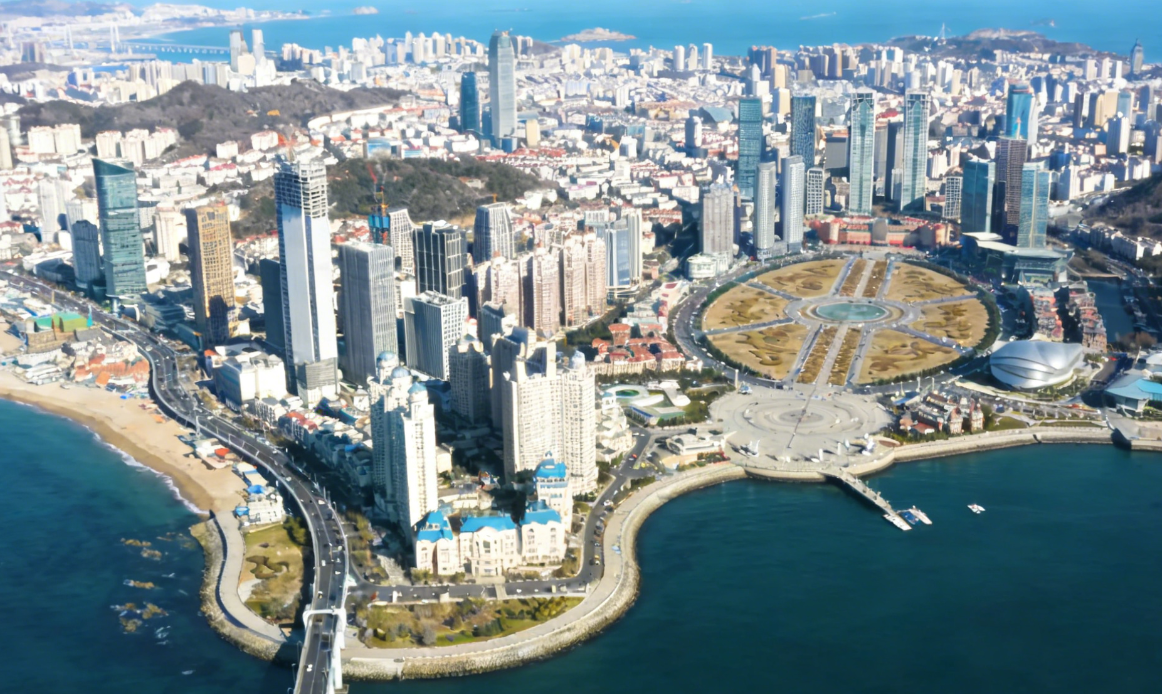
历史性突破!东北第一座万亿GDP城市,来了
3 6 Ke· 2026-01-26 02:58
Core Viewpoint - Dalian has officially entered the "trillion GDP club," becoming the first city in Northeast China to achieve this milestone, with a projected GDP of 10,002.1 billion yuan by 2025, reflecting a year-on-year growth of 5.7% at constant prices [1]. Economic Performance - In 2024, Dalian's GDP reached 9,516.9 billion yuan, indicating it was on track to become a trillion-yuan city [1]. - Dalian's GDP growth rate for the first three quarters of the previous year was 6%, showcasing a robust growth momentum [1]. - The city's second industry is expected to contribute 3,532.5 billion yuan to the GDP in 2025, with a growth rate of 7.7%, the highest among the three industries [3]. Industrial Growth - The industrial sector's steady growth is a crucial support for Dalian's achievement of a trillion GDP [4]. - The petrochemical industry saw an 8.9% increase in value added, while the equipment manufacturing sector grew by 15.4%, with the railway and shipbuilding industry experiencing a remarkable 57.5% growth [4]. - High-tech manufacturing grew by 13.9%, with computer and office equipment manufacturing surging by 78.2% and pharmaceutical manufacturing increasing by 30.9% [5]. Structural Transformation - Dalian's economic structure still relies heavily on petrochemicals, equipment manufacturing, shipbuilding, and electronic information, indicating a need for further industrial upgrading [6]. - The city is actively transitioning towards "smart manufacturing," with initiatives to enhance advanced manufacturing and foster specialized enterprises [6]. - Notable advancements include the launch of the world's first ultra-large turntable bearing and the completion of a domestic 450,000 tons/year polypropylene mixing and granulating machine [6]. Investment Trends - Manufacturing investment in Dalian is projected to grow by 2.8% in 2025, while infrastructure investment is expected to decline by 11.9% [6]. - Investment in technological transformation of industrial enterprises is anticipated to rise by 14.5% [6]. Emerging Industries - Dalian is focusing on developing new industry clusters, including advanced manufacturing, new-generation automobiles, high-end bearings, and rail transit, with expected outputs of 1,000 billion yuan, 200 billion yuan, and 180 billion yuan respectively [6]. - The city aims to develop new information technology and clean energy industry clusters, targeting outputs of over 2,000 billion yuan and 610 billion yuan [8]. Regional Significance - Dalian's entry into the trillion GDP club marks a significant breakthrough for Northeast China, with Shenyang expected to follow suit soon [9]. - The historical context shows that major cities in Northeast China have seen a decline in their national rankings, emphasizing the need for sustainable competitiveness [12][15]. - The revitalization of Northeast China is increasingly reliant on the leading role of its major cities, particularly Dalian and Shenyang [25][30].

基本面托底 结构分化主导
Qi Huo Ri Bao· 2026-01-26 02:00
Group 1 - The core viewpoint indicates that the economic data for December 2025 shows a positive trend, suggesting a strong warming trend for the domestic economy in the first quarter of 2026 [1] - The manufacturing PMI rose to 50.1% in December 2025, marking a 0.9 percentage point increase from the previous month, indicating a return to the expansion zone for the first time since April 2025 [1] - The non-manufacturing business activity index also increased by 0.7 percentage points, reflecting a continuous recovery in non-manufacturing business vitality, although the service sector remains in contraction [1] Group 2 - In December 2025, the industrial added value for large-scale industries grew by 5.2% year-on-year and 0.4% month-on-month, demonstrating solid resilience in industrial production [2] - The manufacturing sector was the main driver of industrial growth, with a year-on-year increase of 5.7%, supported by the recovery in the manufacturing PMI [2] - Consumer demand showed marginal improvement with a year-on-year growth of 0.9% in retail sales, while fixed asset investment decreased by 3.8%, primarily due to a 9.6% decline in real estate development investment [2] Group 3 - The expectation for the first quarter of 2026 is a steady increase in domestic economic growth, characterized by "consumption driving, stable production, and financial support," with the IMF raising global economic growth forecasts [3] - Industrial production is anticipated to continue its recovery, with the added value of large-scale industries expected to maintain a year-on-year growth rate of over 5% [3] - The automotive industry may pose a drag on manufacturing due to a reduction in the new energy vehicle purchase tax, leading to a decline in electric vehicle sales in January 2026 [3] Group 4 - The A-share market is expected to exhibit a "fundamentals supporting, structural differentiation leading" pattern in the first quarter of 2026, with a focus on high-prosperity sectors [4] - The valuation pressure on the Shanghai Composite Index and the CSI 500 Index indicates a need for time to digest previous gains, while the ChiNext Index still holds some valuation advantages [4] - Overall, the market is likely to experience a phase of consolidation, with limited downside potential in a generally optimistic macroeconomic environment [4]
山东GDP突破10万亿元 成北方首个10万亿级经济大省
Zheng Quan Shi Bao Wang· 2026-01-23 11:03
Economic Overview - Shandong Province achieved a GDP of 10.3197 trillion yuan in 2025, marking a 5.5% increase from the previous year, becoming the third province in China and the first in the north to surpass the 10 trillion yuan mark [1][4] - The province's economic growth is seen as a significant boost for the northern region's development [4] Industrial Structure - The primary industry maintained a solid foundation with a value-added of 677.5 billion yuan, growing by 4.0%, and total agricultural output reaching 1.31793 trillion yuan, up by 4.4% [1] - The secondary industry, a core support for economic growth, recorded a value-added of 4.0541 trillion yuan, increasing by 5.0%, with industrial output growing by 7.6% [2] - The equipment manufacturing sector was a major growth driver, with a value-added increase of 11.4%, significantly higher than the overall industrial growth rate [2] Tertiary Sector - The tertiary sector's value-added reached 5.5881 trillion yuan, growing by 6.1%, leading the growth among the three sectors [2] - The service industry saw a revenue increase of 6.0% from January to November, with high-end productive services, particularly scientific research and technical services, growing by 8.4% [2] Investment and Trade - Fixed asset investment decreased by 8.6% overall, with manufacturing investment down by 0.5%, while industrial technological transformation investment rose by 5.3% [3] - The total import and export value reached 3.53003 trillion yuan, a 4.5% increase, with exports at 2.16181 trillion yuan and imports at 1.36822 trillion yuan [3] Regional Economic Dynamics - Shandong's GDP growth solidifies its position as a key economic growth pole in northern China, contributing to regional coordinated development [4] - Over the past eight years, Shandong's economic total has steadily increased from 6.78644 trillion yuan in 2018 to 10.3197 trillion yuan in 2025, maintaining a robust growth trend [4]
29城GDP超万亿:大连成东北首个GDP万亿城市
Di Yi Cai Jing· 2026-01-23 06:02
Core Insights - Dalian has become the first city in Northeast China to surpass a GDP of 1 trillion yuan, achieving a total GDP of 1,002.1 billion yuan in 2025, reflecting a year-on-year growth of 5.7% at constant prices [1] Economic Performance - The primary industry in Dalian contributed an added value of 66.54 billion yuan, growing by 3.6% year-on-year [1] - The secondary industry saw an added value of 353.25 billion yuan, with a growth rate of 7.7% [1] - The tertiary industry achieved an added value of 580.42 billion yuan, marking a growth of 4.8% [1] Industrial Growth - In the previous year, Dalian's industrial output value increased by 11.7% year-on-year, which is an improvement of 4.1 percentage points compared to the previous year [1] - Key industries such as petrochemicals grew by 8.9%, while equipment manufacturing surged by 15.4%, with the railway and shipbuilding sector experiencing a remarkable growth of 57.5% and the automotive industry growing by 19.5% [1] - High-tech manufacturing also saw a growth of 13.9%, with computer and office equipment manufacturing skyrocketing by 78.2% and pharmaceutical manufacturing increasing by 30.9% [1] Product Output - Dalian reported significant increases in product output, with chemical raw materials, integrated circuit wafers, and liquid crystal displays growing by 26.1%, 19.1%, and 3.0% respectively [1] Additional Information - Wenzhou, located in Zhejiang Province, has also joined the "GDP trillion club" alongside Dalian [1]
29座城市GDP超万亿:大连成东北地区首个GDP万亿城市
Di Yi Cai Jing· 2026-01-23 05:05
Group 1 - The core viewpoint of the articles is that the number of cities in China with a GDP exceeding 1 trillion yuan has increased to 29, with Dalian and Wenzhou being the latest additions to this group [1][2][4] - Dalian's GDP is projected to reach 1,000.21 billion yuan by 2025, with a year-on-year growth of 5.7%, driven by increases in all three major industries: primary (3.6%), secondary (7.7%), and tertiary (4.8%) [1] - In 2022, Dalian's industrial output value grew by 11.7%, with significant growth in key sectors such as petrochemicals (8.9%), equipment manufacturing (15.4%), and high-tech manufacturing (13.9%) [1] Group 2 - Wenzhou is expected to surpass a GDP of 1 trillion yuan by 2025, supported by its unique external resources and efforts to revitalize traditional industries while fostering new ones [3] - The development of transportation infrastructure in Zhejiang, including high-speed rail, has enhanced Wenzhou's access to educational and technological resources, further supporting its economic growth [3] - Shanghai and Beijing are projected to maintain their positions as major economic centers, with GDPs of 5.67 trillion yuan and 5.21 trillion yuan respectively by 2025, both showing a growth rate of 5.4% [4]