
航空航天器及设备制造

Search documents
工信部:人工智能为工业经济增长注入强劲动力
Xin Lang Cai Jing· 2026-01-21 02:12
1月21日,国新办举行新闻发布会介绍2025年工业和信息化发展成效。工业和信息化部副部长张云明表 示,2025年,工信部着力推进科技创新和产业创新深度融合,深入实施关键核心技术攻关,产业基础再 造工程,重大技术装备攻关工程。人工智能为工业经济增长注入强劲动力,工业机器人产量同比增长 28%,新能源汽车新车销量达1649万辆,同比增长28.2%。新兴领域投资增势良好,航空航天器及设备 制造等行业投资实现两位数增长。 ...
2025年全年全国固定资产投资(不含农户)485186亿元 同比下降3.8%
Bei Jing Shang Bao· 2026-01-19 02:37
Core Insights - The National Bureau of Statistics reported a 3.8% year-on-year decline in national fixed asset investment (excluding rural households) for 2025, totaling 48,518.6 billion yuan [1] - Excluding real estate development investment, national fixed asset investment decreased by 0.5% [1] Investment Breakdown - Infrastructure investment fell by 2.2% [1] - Manufacturing investment saw a slight increase of 0.6% [1] - Real estate development investment experienced a significant decline of 17.2% [1] Real Estate Market - The sales area of newly built commercial housing reached 88,101 million square meters, down 8.7% [1] - The sales revenue from newly built commercial housing was 83,937 billion yuan, a decrease of 12.6% [1] Sector Performance - Investment in the primary industry grew by 2.3% [1] - Investment in the secondary industry increased by 2.5% [1] - Investment in the tertiary industry declined by 7.4% [1] Private Investment Trends - Private investment decreased by 6.4% [1] - Excluding real estate development investment, private investment fell by 1.9% [1] High-Tech Industry - In high-tech industries, investment in information services grew by 28.4% [1] - Investment in aerospace and equipment manufacturing increased by 16.9% [1] Monthly Trends - In December, fixed asset investment (excluding rural households) experienced a month-on-month decline of 1.13% [1]
投资中国就是投资未来(环球热点)
Ren Min Ri Bao Hai Wai Ban· 2026-01-01 00:05
Core Insights - The release of the "Encouragement Directory for Foreign Investment Industries (2025 Edition)" aims to attract and utilize foreign investment in China, enhancing confidence among foreign enterprises [2][3][4] Group 1: Investment Trends - Foreign investment in China is showing a trend of quality improvement and stable volume, with a shift towards high-tech industries and R&D centers [3][5] - A report by KPMG indicates that 75% of multinational companies operating in China plan to maintain or increase their investments by 2025 [3] - From January to November 2025, 61,207 new foreign-invested enterprises were established in China, marking a 16.9% year-on-year increase [4] Group 2: Sector Focus - High-tech industries, including e-commerce services, medical equipment manufacturing, and aerospace manufacturing, have seen significant foreign investment growth, with increases of 127%, 46.5%, and 41.9% respectively [4] - Foreign enterprises are increasingly focusing on localization, with 83% of companies planning to localize key parts of their operations in China [3] Group 3: Economic Environment - China's economic stability and growth potential are attracting foreign investors, with international organizations raising China's economic growth forecasts for 2025 [6][7] - China is viewed as a source of certainty in an uncertain global economic landscape, with a welcoming attitude towards foreign investment [8][9] Group 4: Future Opportunities - The 14th Five-Year Plan suggests significant opportunities for foreign enterprises in sectors such as finance, healthcare, artificial intelligence, and high-end manufacturing [11][12] - The emphasis on expanding domestic demand and innovation-driven development will provide foreign enterprises with broader high-quality development space in various sectors [11][12][13]

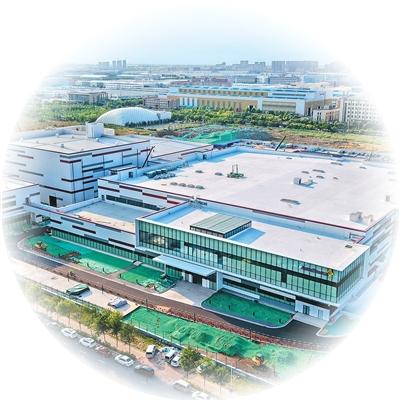
中游一枝独秀——11月工业企业利润点评
一瑜中的· 2025-12-28 13:45
Core Viewpoint - The article emphasizes that the midstream sector is currently the standout performer in terms of profit growth and revenue, contrasting with the overall decline in industrial profits [4][5][24]. Group 1: Midstream Sector Performance - In November, the midstream sector showed a profit growth of 6.77%, the only sector with a positive growth rate among five sectors, while upstream and downstream sectors experienced declines of -9.52% and -48.04% respectively [5][13]. - The revenue growth for the midstream sector in November was 4.66%, outperforming other sectors [5][13]. - The equipment manufacturing sector, particularly in electronics, aerospace, and smart devices, significantly contributed to the midstream sector's profit growth, with specific industries seeing profits increase by 57.4% and 54.0% respectively [5][29]. Group 2: Overall Industrial Profit Data - In November, the overall profit of industrial enterprises decreased by 13.1%, a decline from the previous value of -5.5% [24]. - The inventory level as of November showed a year-on-year increase of 4.6%, up from 3.7% [24]. - The profit growth rates for state-owned enterprises, private enterprises, and foreign enterprises were -17.0%, -12.6%, and -7.3% respectively [24]. Group 3: Quantity and Price Analysis - The midstream sector's value-added growth rate in November was 7.36%, higher than the overall industrial growth rate of 4.8% [6][15]. - The Producer Price Index (PPI) for the midstream sector turned positive in November, marking the first month of positive growth since June 2024, with a month-on-month increase of 0.04% [7][18]. - The profit margin for the midstream sector in November was 5.7%, which is an improvement compared to the same period last year [7][18]. Group 4: Supply and Demand Dynamics - The supply-demand dynamics for the midstream sector have been improving, with a favorable difference between demand and investment growth rates compared to upstream and downstream sectors [8][22]. - The article predicts that midstream prices are likely to continue to recover, leading to further profit increases in the sector [8][22].

从吸引外资结构变化看中国高质量发展
Ren Min Ri Bao· 2025-12-26 00:56
Group 1 - China's actual use of foreign investment increased by 26.1% year-on-year in November, with a total of 61,207 new foreign-invested enterprises established in the first 11 months, marking a 16.9% increase [1] - By the end of June this year, China's actual use of foreign investment during the "14th Five-Year Plan" period reached $708.73 billion, achieving its target six months ahead of schedule [1] - The resilience and improving structure of China's foreign investment attraction are evident, making it a favored destination for foreign capital [1] Group 2 - In the first 11 months of this year, actual foreign investment in China's high-tech industries reached 221.26 billion yuan, significantly contributing to the total foreign investment [2] - The e-commerce service industry, medical instruments and equipment manufacturing, and aerospace manufacturing saw foreign investment growth rates of 127%, 46.5%, and 41.9% respectively, indicating a shift towards higher-quality investment [2] - Foreign companies are increasingly recognizing opportunities in China, with significant investments in artificial intelligence, new energy, biomedicine, and green transformation sectors [2] Group 3 - The core attractions for foreign investment in China include an open innovation ecosystem, a complete industrial system, and rich application scenarios [3] - From 2013 to 2023, R&D expenditures by multinational companies in China increased by 86.5%, reflecting a shift from technology transfer to joint R&D and co-building industrial ecosystems [3] - The "14th Five-Year Plan" suggests new deployments to create new advantages in attracting foreign investment, with an improving business environment and high-quality development expected to provide broader opportunities for foreign enterprises [3]
从吸引外资结构变化看中国高质量发展(和音)
Ren Min Ri Bao· 2025-12-25 22:19
Group 1 - China's actual use of foreign investment increased by 26.1% year-on-year in November, with a total of 61,207 new foreign-invested enterprises established in the first 11 months, marking a 16.9% increase [1] - By the end of June, China's actual use of foreign investment during the 14th Five-Year Plan period reached $708.73 billion, achieving its $700 billion target six months ahead of schedule [1] - The resilience and improving structure of foreign investment in China are evident, making it a favored destination for foreign capital despite global challenges [1] Group 2 - In the first 11 months, actual foreign investment in China's high-tech industries reached 221.26 billion yuan, significantly contributing to the total foreign investment [2] - The e-commerce services, medical instruments manufacturing, and aerospace equipment manufacturing sectors saw foreign investment growth rates of 127%, 46.5%, and 41.9%, respectively [2] - Foreign companies are increasingly recognizing opportunities in China, with significant investments in artificial intelligence, new energy, biomedicine, and green transformation sectors [2] Group 3 - The core attractions for foreign investment in China include an open innovation ecosystem, a complete industrial system, and rich application scenarios [3] - From 2013 to 2023, R&D expenditures by multinational companies in China increased by 86.5%, reflecting a shift from technology transfer to joint R&D and co-building industrial ecosystems [3] - Companies like Schneider Electric and Bayer are leveraging China's innovation capabilities, with significant contributions to global product development and market applications [3]
中国仍然外商投资“热土” 11月实际使用外资同比增长26.1%
Yang Shi Wang· 2025-12-20 06:40
Group 1 - The core viewpoint of the articles indicates that China's actual foreign investment usage has shown a significant year-on-year increase of 26.1% in November, highlighting China's continued attractiveness as an investment destination for foreign enterprises [1] - The number of newly established foreign-invested enterprises has also maintained a strong growth trend, with 61,207 new enterprises established in the first 11 months, representing a year-on-year increase of 16.9%, and 7,425 new enterprises established in November alone, marking a 35.3% increase year-on-year [3] - In terms of actual foreign investment amount, China recorded 693.18 billion yuan in the first 11 months, which is a year-on-year decrease of 7.5%, although the decline has narrowed by 2.8 percentage points compared to the first 10 months of the year [4] Group 2 - The structure of foreign investment has continued to optimize, with the actual foreign investment in the productive service industry accounting for 63.5% of the total, an increase of 4.7 percentage points compared to the same period in 2024; specific sectors such as e-commerce services, medical instruments and equipment manufacturing, and aerospace equipment manufacturing have seen year-on-year growth rates of 127%, 46.5%, and 41.9% respectively [6] - The sources of foreign investment have become more diversified, with investments from Switzerland, the UAE, and the UK increasing by 67%, 47.6%, and 19.3% year-on-year respectively [8]
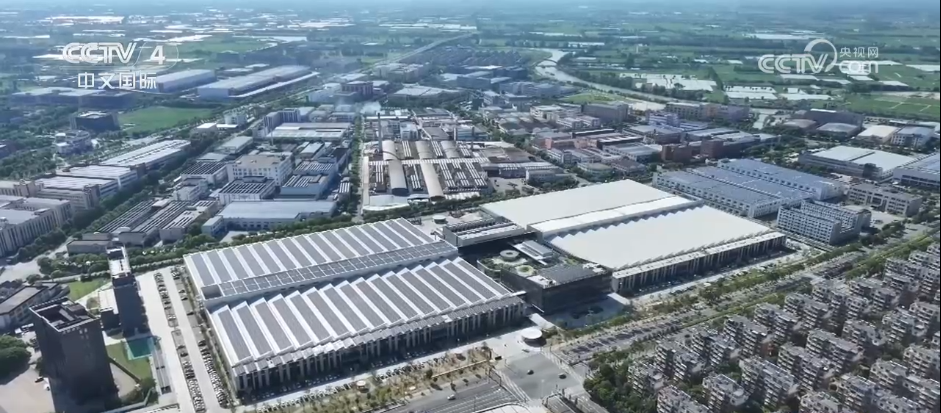
11月中国经济“成绩单”出炉!支持价格合理回升的积极因素继续累积
Qi Huo Ri Bao· 2025-12-15 06:40
Economic Overview - In November, the national economy continued to show a stable and progressive development trend, with a focus on implementing proactive macro policies and promoting high-quality development [2][6] - The total grain production for the year is expected to exceed 1.4 trillion jin, with a year-on-year increase of 1.2% [2] Industrial Production - The industrial added value above designated size increased by 4.8% year-on-year in November, with a month-on-month increase of 0.44% [3] - The equipment manufacturing industry and high-tech manufacturing industry saw significant growth, with increases of 7.7% and 8.4% respectively [3] - The production of 3D printing equipment, industrial robots, and new energy vehicles grew by 100.5%, 20.6%, and 17.0% year-on-year respectively [3] Retail Sales - The total retail sales of consumer goods reached 43,898 billion yuan in November, a year-on-year increase of 1.3% [4] - Online retail sales amounted to 144,582 billion yuan, with a year-on-year growth of 9.1%, and physical goods online retail sales accounted for 25.9% of total retail sales [4] - Service retail sales grew by 5.4% year-on-year, with significant growth in cultural, sports, and travel services [4] Fixed Asset Investment - Fixed asset investment (excluding rural households) decreased by 2.6% year-on-year from January to November, while manufacturing investment increased by 1.9% [5] - Infrastructure investment fell by 1.1%, and real estate development investment dropped by 15.9% [5] - Investment in high-tech industries, such as information services and aerospace manufacturing, saw significant increases of 29.6% and 19.7% respectively [5] Policy Impact - A series of proactive macro policies have effectively supported stable economic operations, leading to expanded consumer demand and increased key investments [7][8] - The implementation of consumption upgrade policies has resulted in significant sales growth in home appliances and communication equipment [8] - The industrial production growth was supported by policies promoting market demand and industrial upgrades [8] Price Trends - The Consumer Price Index (CPI) rose by 0.7% year-on-year in November, marking a continuous recovery trend [9] - The Producer Price Index (PPI) showed a month-on-month increase of 0.1%, indicating a narrowing decline trend since August [10][11] Long-term Economic Outlook - The resilience of the economy remains strong, with macro policies providing robust support and new growth drivers emerging [12][13] - The expansion of market demand and the continuous growth of new economic drivers are expected to positively impact economic development [12][14] - The upcoming economic policies aim to enhance domestic demand and optimize supply, ensuring a solid foundation for future growth [14]
中央明确推动投资止跌回稳,哪些政策工具可以期待
Di Yi Cai Jing· 2025-12-12 03:56
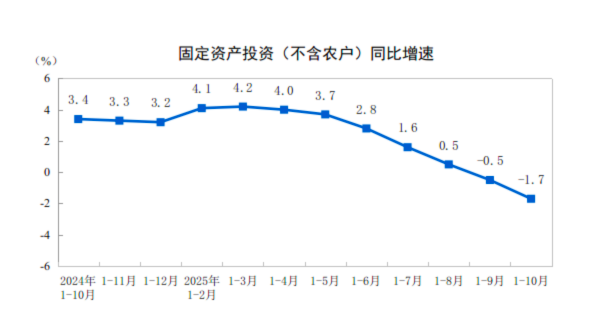
Group 1: Economic Policy and Investment Strategy - The Central Economic Work Conference emphasized the need to increase central budget investment and optimize the implementation of "two heavy" projects to stabilize investment growth [1][6] - A series of policies, including the issuance of 500 billion yuan in new policy financial tools and an additional 200 billion yuan in special bonds, aim to support investment in infrastructure and stimulate private investment [1][8] Group 2: Investment Trends and Performance - From January to October, fixed asset investment (excluding rural households) reached 4,089.14 billion yuan, a year-on-year decrease of 1.7%, with private fixed asset investment down by 4.5% [3] - Real estate investment saw a significant decline of 14.7% year-on-year, which negatively impacted overall investment growth by 3 percentage points [3][4] Group 3: Sectoral Investment Growth - Despite the overall slowdown, certain high-tech sectors experienced rapid investment growth, such as aerospace manufacturing (up 19.7%) and information services (up 32.7%) [4] - Clean energy investments, including solar, wind, nuclear, and hydropower, collectively grew by 10.4% year-on-year [4] Group 4: Private Investment and Policy Support - The government aims to effectively stimulate private investment, which is crucial for growth and employment, with measures to enhance access and support for private enterprises [8][9] - The National Development and Reform Commission plans to improve the effectiveness of policies promoting private investment, including facilitating financing for technology-driven enterprises [9]
扩大投资,抓住“有效”这个关键词
Ren Min Ri Bao· 2025-12-08 10:06
Group 1 - The core viewpoint emphasizes the importance of effective investment in driving economic growth, with a focus on reducing ineffective and blind investments while balancing financial, economic, and social benefits [1][2][3] - In 2023, a total of 800 billion yuan has been allocated to support 1,459 projects, including ecological restoration in the Yangtze River basin and improvements in national logistics hub planning [1] - Fixed asset investment has shown slight growth from January to October 2023, with manufacturing investment increasing by 2.7% year-on-year, and specific sectors like aerospace and information services showing significant growth rates of 19.7% and 32.7% respectively [1] Group 2 - The focus for future investments should be on major infrastructure, technological innovation, and green low-carbon transitions, particularly in areas like energy storage and water management [2] - Effective investment aims to enhance public welfare, with a long-term view on economic benefits, emphasizing the importance of investing in education, health, and skills development to boost consumption potential [2] - The government is encouraged to collaborate with the market to enhance effective investment, with recent policies aimed at increasing private investment through expanded access and addressing bottlenecks [3]