
生猪养殖

Search documents
上市猪企决战成本线,生猪产能出清预期再升温
Di Yi Cai Jing· 2025-06-17 11:29
Core Insights - The core viewpoint of the articles indicates that the pig farming industry in China is experiencing a significant increase in supply, leading to a decline in pig prices, which have fallen below the breakeven point for many companies [1][3][7]. Supply and Price Dynamics - In May, the total output of listed pig companies increased by 30% year-on-year, resulting in a surplus supply amid weak consumer demand, which caused pig prices to remain low [1][3]. - As of June 17, the national pig price was reported at 14.24 yuan/kg, down 24.13% year-on-year and 2.8% month-on-month, indicating a continued struggle below the breakeven price of 14 yuan/kg [1][3]. - The increase in supply is attributed to the seasonal decline in pork consumption during the second quarter, compounded by a lack of holiday demand [3][6]. Company Performance - Major companies like Muyuan Foods and Wens Foodstuffs reported significant sales figures despite the price drop. Muyuan sold 777,000 pigs in May, a 9% increase from the previous year, while Wens sold 315,540 pigs, a 32.64% increase [4][5]. - Smaller companies have also seen rapid growth in output, with companies like Zhengbang Technology and Dongrui achieving year-on-year growth rates of 158% and 122%, respectively [5]. Future Supply Expectations - The stock of breeding sows, which is crucial for future pig supply, stood at 40.38 million heads as of the end of April, with expectations for a reduction of about 1 million heads to alleviate oversupply [2][7]. - Analysts suggest that reducing the breeding sow stock will impact pig supply in the next 10 months, potentially stabilizing prices if demand does not improve [7]. Cost Management and Profitability - Companies are focusing on cost management as a key to profitability in a low-price environment. Muyuan's breeding cost has decreased to approximately 12.2 yuan/kg, allowing for a profit margin of about 3.3 yuan/kg at current sales prices [8]. - Wens also reported a decrease in breeding costs, which is crucial for maintaining profitability amid falling prices [8]. Market Outlook - The overall market sentiment remains cautious, with expectations of limited price recovery due to persistent oversupply and weak demand. The focus is shifting towards cost control and operational efficiency as key competitive factors in the industry [7][8].


邦基科技拟购生猪养殖资产包:涉两家零营收、负资产交易标的
2 1 Shi Ji Jing Ji Bao Dao· 2025-06-17 10:07
Core Viewpoint - After three years of declining performance since its listing, Bangji Technology (603151) seeks to make changes through a proposed acquisition of a pig farming asset package in China from a Singaporean company, which involves the equity of seven companies [1][12]. Group 1: Acquisition Details - The asset package is expected to generate a combined revenue of 656 million yuan and a net profit of 87 million yuan in 2024, which could positively impact the company's operational data [1]. - The acquisition involves companies with varying asset quality, including one with a net profit margin exceeding 23% and another with negative net assets [2][3]. - The seven target companies primarily engage in pig breeding and sales, with only two expected to generate over 100 million yuan in revenue in 2024 [3]. Group 2: Financial Performance Comparison - The net profit margin of the standout company, Ruidong Weili, is 23.15%, significantly higher than the average net profit margin of 11.56% for comparable A-share companies [4]. - The average market price for pigs in China from January to April this year was 15.01 yuan per kilogram, suggesting that Ruidong Weili's breeding costs could be around 10 yuan per kilogram [5]. - Other companies in the acquisition package, such as Xinmu Agriculture, have been consistently unprofitable, with negative equity reported [6][7]. Group 3: Strategic Implications - The acquisition aims to transform Bangji Technology from a single feed production company to an integrated feed and pig farming enterprise, enhancing operational synergy and risk resilience [12]. - The combined revenue of the target companies in 2024 is projected to exceed Bangji Technology's current net profit, indicating potential for significant financial uplift [12]. - The success of the acquisition will depend on the integration of feed and farming operations and the cost structure of the acquired assets, especially in a market characterized by low profit margins [13][16].

猪价跌跌不休时豪赌养猪,邦基科技是救命还是送命?
Tai Mei Ti A P P· 2025-06-17 09:23
Core Viewpoint - The company, Bangji Technology, is making a significant move to acquire seven pig farming enterprises despite a backdrop of declining pork prices, indicating a strategy of expansion against market trends [1][2]. Group 1: Acquisition Strategy - Bangji Technology plans to acquire 100% stakes in several pig farming companies, including Beixi Agriculture and others, through a combination of cash and stock issuance [2]. - The acquisition aims to extend the company's operations from pig feed production to the downstream pig farming sector, creating a vertically integrated supply chain [2][3]. - The final transaction price for the acquisitions will be determined based on an assessment value, reflecting the company's strategic shift [2]. Group 2: Market Conditions - Pork prices have been on a downward trend, with a 0.7% decrease in May and monthly declines of 1.9%, 4.4%, and 1.6% from February to April [2][3]. - The average price of live pigs peaked at 15.76 yuan per kilogram in January but has since dropped significantly, impacting profitability in the sector [3]. - Major competitors like Muyuan and Wens Foodstuffs have also reported declining sales, indicating a challenging market environment for all players [3]. Group 3: Financial Performance - Bangji Technology has experienced a continuous decline in net profit for three consecutive years since its IPO, with a projected revenue of 2.542 billion yuan for 2024, but a net profit of only 50 million yuan, down 40.24% year-on-year [6][8]. - The company attributes the profit decline to low capacity utilization rates and changes in customer structure, leading to increased accounts receivable [8]. - The company has frequently altered its fundraising projects, indicating potential instability in its financial strategy [9][11].

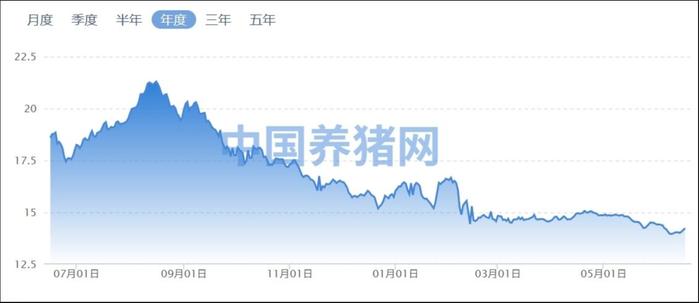
农林牧渔行业2025年中期投资策略:关注养殖周期底部回升,看景气赛道成长性变化
Dongguan Securities· 2025-06-17 09:20
Group 1 - The SW Agricultural, Forestry, Animal Husbandry and Fishery industry rose by 5.02% from January to May 2025, outperforming the CSI 300 index by approximately 7.43 percentage points [13][14] - Most sub-sectors recorded positive returns, with only planting and fishery sectors showing negative returns of -1.58% and -0.07% respectively [14] - Approximately 70% of stocks in the industry achieved positive returns, with three stocks increasing over 100%, the highest being Yizhi Magic Yam at 209.66% [15] Group 2 - The overall PB of the SW Agricultural, Forestry, Animal Husbandry and Fishery industry increased from a low of 2.31 times at the beginning of the year to 2.68 times, with a current PB of approximately 2.66 times as of June 13, 2025, reflecting a 15% recovery from the low [20] - The pig breeding sector is expected to see a gradual recovery in supply, with the number of breeding sows reaching 40.38 million heads by the end of April 2025, slightly above the normal holding capacity [21][23] - The average price of pigs as of June 13, 2025, was 14.04 yuan/kg, down 10.8% from the beginning of the year and 26.1% year-on-year, with expectations for a price rebound in Q4 2025 [27] Group 3 - The total feed production in China is expected to rebound in 2025 after a decline in 2024, with a total production of 49.2 million tons in the first two months of 2025, a year-on-year increase of 9.6% [54] - The average price of corn in China rose from approximately 2,122 yuan/ton at the beginning of the year to over 2,400 yuan/ton, reflecting a 13.3% increase [56] - The pet health market is anticipated to grow rapidly, with significant expansion potential in the domestic market for pet food and supplies, benefiting quality domestic leaders [5][6]


德康农牧股价“狂飙”之谜:养殖成本优势VS行业微利常态
Jing Ji Guan Cha Wang· 2025-06-17 07:50
Core Viewpoint - The significant rise in the stock price of Dekang Agriculture has brought the pig farming industry back into public focus, with a year-to-date increase of over 260% [1][2]. Group 1: Stock Performance - Dekang Agriculture's stock price surged from HKD 26 to a peak of HKD 96, marking a historical high and a year-to-date increase of 269% from its low [1][3]. - As of June 16, the stock closed at HKD 88.4, reflecting a cumulative increase of 224% for the year [1][2]. - The company reported a projected revenue of approximately RMB 22.463 billion for 2024, a year-on-year growth of 39%, and a net profit of about RMB 4.102 billion, reversing a loss of RMB 1.775 billion in 2023 [3]. Group 2: Industry Context - The pig farming industry has maintained profitability for 13 consecutive months, primarily due to a significant reduction in production costs for leading enterprises [2]. - Despite overall profitability, pig prices have been declining this year, leading to shrinking margins for farmers [2][5]. - The industry is characterized by a "strong supply and weak demand" dynamic, making cost reduction a key competitive factor [2][8]. Group 3: Competitive Position - Dekang Agriculture has established itself as a leading player in the pig farming sector, ranking first in the compound annual growth rate of large-scale pig farming enterprises in China and sixth in national pig sales [3]. - The company has implemented an innovative "company + sow breeding and fattening farm" model, which enhances asset efficiency and stability in farmer cooperation [4]. - Analysts predict that Dekang Agriculture's net profit per pig will be significantly higher than the industry average, with estimates of RMB 350-370 per pig compared to RMB 161 for scattered farming and RMB 302 for large-scale farming [4]. Group 4: Market Trends - The stock performance of Dekang Agriculture contrasts sharply with other listed pig farming companies, many of which have seen declines in stock prices this year [5]. - The average pig price has been fluctuating around RMB 14 per kilogram, with significant year-on-year declines observed [5][6]. - Analysts suggest that the current market conditions may lead to a stable development phase for the pig farming industry, with potential for price recovery in the second half of the year if supply capacity is managed effectively [7][8].
生猪供应压力大,5月产能惯性增加
China Post Securities· 2025-06-17 07:06
Industry Investment Rating - The investment rating for the agriculture, forestry, animal husbandry, and fishery industry is "Outperform the Market" [1] Core Viewpoints - The agriculture sector has shown defensive characteristics amid fluctuations in US-China relations, leading to an increase in the industry index [4][13] - The industry index for agriculture, forestry, animal husbandry, and fishery rose by 1.62%, ranking third among 31 primary industries [12] - The report highlights significant supply pressure in the pig market, with prices remaining stagnant and a forecast for increased supply in the second half of 2025 [5][20] Summary by Sections Market Review - The agriculture sector rebounded, with the industry index increasing by 1.62%, while the Shanghai Composite Index fell by 0.25% [12] - The pig farming and animal vaccine sectors led the gains, while agricultural product processing experienced significant adjustments [15] Livestock Industry Chain Tracking Pigs - As of June 15, the average price of pigs was 14.06 yuan/kg, down 1.82% from the previous week, indicating a stagnant price situation [5][17] - Supply pressure remains high, with an increase in production capacity since May 2024, and expectations for increased supply in the latter half of 2025 [5][20] - The report suggests that the pig price will likely fluctuate within a narrow range in 2025, with cost competition becoming a key focus for the year [21] Broilers - The price of broiler chicks has slightly decreased, with the price as of June 13 being 2.70 yuan/chick, down 0.2 yuan from the previous week [30] - Concerns regarding the introduction of foreign breeds have eased, and the report emphasizes the potential opportunities for domestic breeding companies due to disruptions in overseas imports [30] Planting Industry Chain Tracking - Sugar prices have adjusted downward, with the price of white sugar at 6090 yuan/ton as of June 13, down 60 yuan from the previous week [36] - The price of soybeans has slightly decreased, with the imported price at 3707 yuan/ton, down 1.3% [36] - Corn prices have shown slight fluctuations, with an average price of 2356 yuan/ton, up 20 yuan from the previous week [36]
6月17日午间新闻精选
news flash· 2025-06-17 04:22
智通财经6月17日午间新闻精选 1、智通财经记者从多位知情人士处获悉,近期有关部门召开了生猪生产调度会,会议提出了具体的生 猪生产调控目标,将对全国能繁母猪存栏量在现有基础上调减100万头左右,降至3950万头。 2、第三届链博会将于7月16日至7月20日在北京举行。中国贸促会副会长于健龙介绍,第三届链博会新 面孔多,有230多家首次参展的中外新伙伴,全球人工智能领军企业美国英伟达将首次在链博会上参 展。 3、日本央行维持政策利率在0.5%不变,将从明年第二季度开始放慢削减购债步伐。 4、截至午间收盘,沪指跌0.19%,深证成指微跌0.48点,创业板指跌0.14%。恒生指数跌0.13%,恒生科 技指数跌0.06%。 ...
6月17日早间重要公告一览
Xi Niu Cai Jing· 2025-06-17 03:51
Group 1 - Dongfang Shenghong's controlling shareholder plans to increase its stake by 500 million to 1 billion yuan within six months [1] - Aiwei Electronics is set to mass-produce a low-power high-voltage piezoelectric micro-pump liquid cooling product, marking a breakthrough in domestic chip technology [1] - *ST Jiuyou received a decision from the Shanghai Stock Exchange to terminate its stock listing, which will transition to the national SME share transfer system [2] Group 2 - Hangzhou Garden plans to invest up to 450 million yuan to build a smart ecological design R&D headquarters [2] - Tiancheng Self-Control intends to invest 20 million yuan to establish a subsidiary [3] - Leidi Ke is acquiring a 30% stake in a partnership fund for 40 million yuan, indirectly holding 20% equity in Beifang Machinery [5] Group 3 - Jiangbolong's subsidiary signed a memorandum of cooperation with Sandisk to develop customized UFS products for the mobile and IoT markets [6] - Tongda Co. announced plans for its directors and executives to reduce their holdings by a total of 0.029% [7] - Yinlun Co.'s subsidiary completed the counseling acceptance for its public offering and listing on the Beijing Stock Exchange [8] Group 4 - Hongli Zhihui's controlling shareholder obtained a special loan of up to 45 million yuan for stock buyback [9] - Fengshan Group's shareholders plan to reduce their holdings by a total of 983,000 shares [11] - Kuai Ke Electronics' shareholder plans to reduce their holdings by up to 2% [13] Group 5 - Zhongdian Xinlong's director plans to reduce their holdings by up to 0.81% [15] - Maihe Co.'s shareholder intends to reduce their holdings by up to 1.5% [17] - Yuandao Communication's shareholder plans to reduce their holdings by up to 1.01% [19] Group 6 - Muyuan Co. submitted its H-share issuance application to the China Securities Regulatory Commission [21] - Jiechuang Intelligent won a police equipment procurement project worth 11.2362 million yuan [21] - Chongqing Steel signed an asset transfer contract worth 1.081 billion yuan with the Heavy Steel Group [22]



建信期货生猪日报-20250617
Jian Xin Qi Huo· 2025-06-16 23:33
Report Information - Report Title: Pig Daily Report [1] - Date: June 17, 2025 [2] Industry Investment Rating - No investment rating information provided in the report. Core Viewpoints - The central reserve frozen pork purchase policy has stabilized pig prices and boosted confidence, leading to short - term rebounds in futures and spot prices. However, in the medium to long term, the supply of pigs is increasing while demand enters the seasonal off - season, and the supply - demand situation remains loose. Futures contracts are currently at a discount to the spot, and the medium - to - long - term market is still affected by the off - season demand and loose supply - demand. Attention should be paid to the sustainability of future purchase policies [10]. Summary by Directory 1. Market Review and Operation Suggestions - **Market Review**: On the 16th, the main 2509 contract of live pigs opened slightly higher, then fluctuated lower after a short - term rise, and closed in the red at the end of the session. The highest price was 13,850 yuan/ton, the lowest was 13,750 yuan/ton, and the closing price was 13,780 yuan/ton, unchanged from the previous day. The total position of the index decreased by 1,223 lots to 161,556 lots. The national average price of ternary pigs was 14.21 yuan/kg, up 0.09 yuan/kg from the previous day [9]. - **Analysis**: On the demand side, the price difference between fat and standard pigs remained low, the utilization rate of pigsties increased slightly, and the enthusiasm for secondary fattening replenishment was low, mostly in a wait - and - see state, weakening the support for prices. As the temperature rises, terminal demand weakens, and the orders of slaughtering enterprises are average, with the operating rate and slaughter volume remaining low. On the 16th, the slaughter volume of sample slaughtering enterprises was 145,500 heads, 1,000 heads less than the previous day and 27,000 heads more than a week ago. On the supply side, according to Yongyi sample data, the planned slaughter volume in June was 23.629 million heads, a 1.02% increase from the actual slaughter volume in May, and the slaughter volume continued to increase month - on - month. The large - pig slaughter volume declined, and the slaughter weight decreased slightly. On the policy side, on June 11, the central government conducted a tender for the purchase of 10,000 tons of frozen pork, with the transaction price of No. 2 - 4 pork ranging from 20.3 to 20.8 yuan/kg [10]. 2. Industry News - As of May this year, the inventory of reproductive sows in sample farms was 1.147 million heads, a month - on - month increase of 0.92% and a year - on - year increase of 8.57% [11][13]. 3. Data Overview - As of May, the inventory of piglets in sample enterprises was 2.315 million heads, a month - on - month increase of 1.32% and a year - on - year increase of 14.3% [19]. - In early June, the average proportion of secondary fattening sales was 0.75%, a decrease of 0.9 percentage points from the previous ten - day period [19]. - As of the week of June 13, the average slaughter weight of sample pigs was 128.82 kg, a decrease of 0.35 kg from the previous week, a month - on - month decrease of 0.69%, and a year - on - year increase of 2.01% [19]. - In early June, the utilization rate of fattening pigsties was 38.5%, an increase of 0.8 percentage points from the previous ten - day period. The price difference between 150 - kg fat pigs and standard pigs in the week of June 12 was 0.06 yuan/jin, a decrease of 0.02 yuan/jin from the previous week [19].
结合近期市场变化,再论生猪板块预期差
2025-06-16 15:20
Summary of Conference Call on Swine Industry Industry Overview - The conference call discusses the swine industry, particularly focusing on the impact of environmental policies in Hunan and other provinces on pig farming and supply dynamics [1][2][4]. Key Points and Arguments - **Environmental Policies Impact**: Hunan's strict environmental checks are accelerating the exit of smallholders from pig farming, which may significantly affect local pig production capacity. This policy targets farms with over 50 pigs and is expected to last from June to September [2][4]. - **Supply Dynamics**: The exit of smallholders has reduced their share in pig inventory to below 40%. The tightening of environmental regulations may also impact medium and large-scale farms, as few meet compliance standards [2][4]. - **Market Behavior**: In the Southwest region, farmers are increasingly raising larger pigs due to local dietary preferences and favorable feed prices. Current average slaughter weight is around 135 kg, and a reduction to 120 kg could increase supply pressure by approximately 10% [6][7]. - **Price Trends**: High piglet prices in the first half of the year are attributed to increased demand from the expansion of free-range farming in Shandong and the growing need for piglet fattening in the Southwest [9][11]. - **Substitution Effects**: Farmers are shifting from breeding sows to fattening piglets or finishing pigs, creating a substitution effect between these two farming methods [10][11]. - **Demand Comparison**: The Southwest region shows stronger demand compared to Shandong, driven by insufficient frozen meat stocks and anti-dumping policies limiting imports, which narrows the price gap between fresh and frozen products [12][13]. - **Cost Structure**: Listed companies with self-breeding and self-raising practices have a cost advantage, with production costs around 12-12.5 yuan per kg, compared to 13-14 yuan per kg for smallholders who purchase piglets [14]. Additional Important Insights - **Regulatory Effects on Market Behavior**: The recent ban on secondary fattening by the National Development and Reform Commission (NDRC) has paradoxically increased the enthusiasm for secondary fattening among farmers, as they anticipate price increases [8]. - **Future Outlook**: There may be a concentration of market supply in the second half of the year due to NDRC's requirements for large enterprises to reduce average weights. The impact of piglet diarrhea in the Southwest during the first quarter is expected to have a minor effect on supply in July and August [15]. This summary encapsulates the critical insights from the conference call regarding the swine industry, highlighting the interplay between regulatory changes, market dynamics, and cost structures.