晶圆代工

Search documents
半导体分析手册系列之一:AI驱动下的晶圆代工新纪元:2025投产股份格局、技术突破与中国力量
Dongxing Securities· 2025-08-28 08:18
Investment Rating - The report suggests a positive investment outlook for the semiconductor foundry industry, particularly driven by AI and automotive electronics demand [5]. Core Insights - The semiconductor foundry industry is experiencing a significant growth phase, with global semiconductor sales expected to exceed $1 trillion by 2030, growing at a CAGR of 9% from 2025 to 2030 [4][39]. - TSMC dominates the foundry market with a 60% market share, while SMIC, Hua Hong Semiconductor, and others are emerging as key players in the Chinese market [47][52][58]. Summary by Sections Industry Overview - Wafer foundry refers to the manufacturing of semiconductor wafers for other IC design companies without engaging in design itself. It is a crucial segment of the semiconductor industry [3][10]. - The industry is characterized by high capital and technology intensity, with significant investments required for advanced process nodes [22][23]. Market Dynamics - The global semiconductor wafer capacity is projected to grow from 31.5 million wafers per month in 2024 to 33.7 million in 2025, with a growth rate of 6% and 7% respectively [4][37]. - The demand for chips is driven by sectors such as AI, HPC, and automotive electronics, leading to increased R&D investments in advanced process technologies [29][39]. Key Players in China - SMIC is a leading foundry in China, achieving significant revenue growth and technological advancements, including the production of 14nm FinFET technology [52][54]. - Hua Hong Semiconductor is recognized for its comprehensive specialty process platform, focusing on various technology segments [58]. - Jinghe Integrated Circuit has achieved global leadership in the LCD driver chip foundry market [65]. Competitive Landscape - The foundry market is characterized by a "one strong, many strong" competitive structure, with TSMC as the clear leader, followed by Samsung and SMIC [47]. - The report highlights the increasing market share of SMIC, which has risen to third place in the global foundry rankings [47][49]. Future Trends - The report anticipates continued growth in advanced processes (28nm and below) and specialty processes, driven by the rising demand for high-performance computing and AI applications [5][39]. - The foundry industry is evolving towards a "Foundry 2.0" model, which includes not only wafer manufacturing but also packaging, testing, and other integrated services [24].



浙商早知道-20250825
ZHESHANG SECURITIES· 2025-08-24 23:31
Group 1: Key Recommendations - Semiconductor industry: SMIC (688981) is positioned as a leading domestic wafer foundry, with expected growth driven by the explosion in demand for AI chips and the trend of localization in chip production [5] - Automotive industry: Geely Auto (00175) is anticipated to enter a phase of dual growth in volume and profit, supported by a strong new car cycle in the second half of the year [7] - Electronics industry: Zhao Chi Co., Ltd. (002429) is recognized for its successful integration in the electronics manufacturing sector, with new growth potential in the optical communication field [8] Group 2: Important Insights - SMIC's revenue forecast for 2025-2027 is projected at 67.573 billion, 78.360 billion, and 89.721 billion CNY, with a revenue growth rate of 16.9%, 16.0%, and 14.5% respectively, and net profit growth rates of 44.7%, 19.0%, and 17.0% [5] - Geely Auto's revenue forecast for 2025-2027 is expected to reach 378.380 billion, 449.380 billion, and 521.762 billion CNY, with growth rates of 57.53%, 18.76%, and 16.11% respectively [7] - Zhao Chi Co., Ltd.'s revenue for 2025-2027 is estimated at 20.934 billion, 26.557 billion, and 34.642 billion CNY, with growth rates of 2.99%, 26.86%, and 30.45% respectively [9] Group 3: Catalysts - For SMIC, key catalysts include orders for semiconductor equipment and breakthroughs in process yield [5] - For Geely Auto, catalysts involve new car launches and the completion of shareholding integration [7] - For Zhao Chi Co., Ltd., catalysts include performance recovery in the second half of the year and progress in customer integration for optical communication projects [9] Group 4: Market Trends - The macroeconomic outlook indicates a return to equilibrium for the Federal Reserve's dual objectives, with a focus on maintaining a balanced approach to monetary policy [12] - The A-share strategy emphasizes a balanced allocation between large financials and technology sectors, while also increasing attention to previously lagging sectors like real estate [15]


中芯国际20250824
2025-08-24 14:47
中芯国际 20250824 其次,在成熟工艺方面,本地化趋势将持续利好国内头部晶圆厂。得益于价格 和服务优势,下游客户基于供应链安全及成本考虑,将继续推进 China for China 战略,从而提升成熟工艺节点国产化率。据预测,到 2025 年,中国大 陆成熟工艺代工产能将占全球 26%以上,而中国大陆需求占比超过 40%,这 表明本地化需求具备持续增长基础。 供给端有哪些超预期因素? 供给端主要包括两方面:首先是国内先进工艺产能良率有望持续提升,目前处 于蓄势待发状态。部分关键设备正在进行定制化开发,以更适应国内先进工艺 路线,这将促进良率提升节奏超预期。同时,关键制程良率突破将为企业构筑 坚实护城河,提高盈利能力。 其次,从竞争格局来看,长期马太效应显著,龙 头企业有望获得行业内超额回报。核心原因在于头部企业投入巨额研发,与最 优秀 IC 设计公司形成强绑定关系,通过更早扩产和度过折旧期,在毛利率及盈 利能力上压制后进者。这种模式使得行业呈现出极强马太效应,并且龙头企业 可以通过在先进工艺上的领先反补成熟工艺价格和服务,从而在两者上均达到 较高市场份额。 摘要 中芯国际受益于国产 AI 芯片需求爆发和 ...
华虹半导体拟收购成熟制程资产 整合进度低于市场预期
Zhong Guo Jing Ying Bao· 2025-08-22 20:34
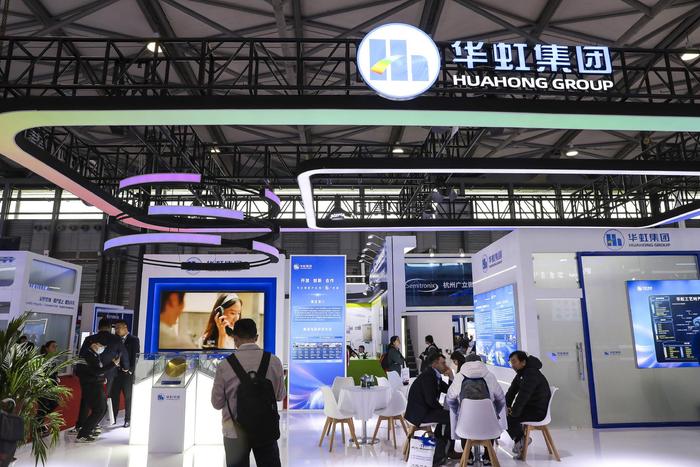
Core Viewpoint - The semiconductor market is experiencing a significant merger event as Huahong Semiconductor plans to acquire controlling stakes in Shanghai Huahong Microelectronics to resolve industry competition issues related to its IPO commitments [2][3]. Group 1: Acquisition Details - Huahong Semiconductor is planning to acquire the equity of Huahong Micro's Wafer Fab 5 through a combination of issuing shares and cash payments, while also raising funds to support this acquisition [2]. - The acquisition specifically targets Wafer Fab 5 and does not include the advanced process Wafer Fab 6, leading to investor concerns that the transaction may fall short of expectations and potentially violate IPO commitments [2][7]. - The acquisition is part of Huahong Semiconductor's commitment made during its IPO to eliminate competition within the same industry, as stated in a supplementary commitment letter issued at the time of its listing [3][4]. Group 2: Market Reactions and Concerns - Following the announcement of the acquisition, Huahong Semiconductor's H-shares experienced a decline of 7.37% from August 18 to 21, attributed to concerns over share dilution and uncertainties surrounding the acquisition [2]. - Analysts noted that the issuance of shares for the acquisition could dilute existing shareholders' equity, leading to fears of short-term pressure on earnings per share [3]. Group 3: Implications of Industry Competition - The acquisition is expected to address the overlapping business operations between Huahong Semiconductor and Huahong Micro, particularly in the 65/55nm and 40nm process nodes, thereby enhancing governance clarity and operational independence [6]. - Industry experts highlighted that resolving competition issues could improve resource allocation efficiency and mitigate risks associated with internal competition, which can dilute profits and cash flow [5][6]. Group 4: Strategic Benefits - The acquisition is seen as a strategic move to enhance Huahong Semiconductor's production capacity and market competitiveness, particularly in the 12-inch wafer segment, which is crucial for the company's growth [10][12]. - The integration of Wafer Fab 5 is expected to accelerate Huahong Semiconductor's ability to convert production capacity into revenue and strengthen its position in the domestic mature process market [12]. - The transaction aligns with the company's strategy to transition towards 12-inch wafer production, which is anticipated to significantly increase revenue potential, with estimates suggesting an annual revenue increase of over $500 million if Wafer Fab 5 reaches full production capacity [11][12].

中芯国际(688981):国产算力核心引擎,先进工艺蓄势待发
ZHESHANG SECURITIES· 2025-08-21 10:29
Investment Rating - The investment rating for the company is "Buy" (maintained) [7] Core Views - The company is positioned as a leading domestic wafer foundry, with the explosive demand for domestic AI chips and the trend of localization in edge-side chips expected to drive its performance growth beyond expectations [1][3] Demand and Supply Analysis - Demand Side: The growth in the AI cloud server industry is expected to drive the demand for AI chips. Additionally, domestic cloud manufacturers are increasingly seeking to localize AI chip production, which will further stimulate demand. There is potential for elasticity in advanced process wafer consumption if certain brands experience an upward turning point in sales expectations [3] - Supply Side: Domestic semiconductor equipment is being customized to better fit local process routes, which may lead to an unexpected improvement in wafer foundry yield rates. The long-term trend in the wafer foundry industry is expected to favor larger players, and the company is likely to benefit from the localization of advanced processes and the demand surge in the AI chip sector [3] Driving Factors - The explosive demand for AI chips in both cloud and edge markets is expected to create significant opportunities for advanced process expansion [4] Performance Metrics and Catalysts - Key performance indicators include the shipment pace of domestic AI chips and discrepancies between performance guidance and actual results. Catalysts for growth include orders for key production line equipment, breakthroughs in critical process yields, and accelerated localization in IC design tape-outs [5] Financial Forecast and Valuation - The company is projected to experience a new phase of revenue and profit elasticity from 2025 to 2027, with expected net profits of 5.352 billion, 6.370 billion, and 7.456 billion respectively, representing year-on-year growth rates of 44.7%, 19.0%, and 17.0%. The estimated P/B ratios for the same period are 4.5, 4.3, and 4.1, while the P/E ratios are 135.8, 114.1, and 97.5 [6][12]
台积电美国,提前获得2nm!
半导体芯闻· 2025-08-20 11:10
Core Viewpoint - TSMC is advancing its 2nm process technology with plans for a second fab in Arizona, aiming for an initial monthly capacity of approximately 20,000 wafers to meet strong local demand [1][2] Group 1: TSMC's Expansion Plans - TSMC's second fab in Arizona has completed construction and will utilize 3nm technology, with mass production timelines accelerated to support customer needs [1] - The third fab in the U.S. is under construction, set to employ both 2nm and A16 process technologies, driven by robust AI-related demand [1] - The timeline for establishing a mini-line at the second fab is now projected for Q2 2027, with mass production expected by Q4 2027, significantly ahead of the initial 2028 forecast [1] Group 2: 2nm Production Capacity - TSMC's 2nm production plans in Taiwan remain unchanged, with the Hsinchu Baoshan plant expected to reach a monthly capacity of 35,000 to 40,000 wafers by year-end, and the Kaohsiung plant already in production with a capacity of up to 10,000 wafers [2] - The total monthly capacity for TSMC's 2nm family (N2/N2P/N2X/A16) is estimated to reach 100,000 wafers by the end of 2026, with continued expansion through 2027-2028 [2] - Major clients for TSMC's 2nm technology include AMD, Apple, Qualcomm, MediaTek, Marvell, Broadcom, Bitmain, and Intel, indicating strong demand from leading industry players [2] Group 3: Competitive Landscape - Industry experts note that TSMC's capacity planning is flexible and adjusts based on customer demand and market conditions, ensuring that the expansion in the U.S. will not significantly detract from Taiwan's production capacity [2] - The demand for 2nm technology is high, and competitors like Samsung, Intel, and Rapidus still lag behind TSMC in yield, capacity expansion, and production stability, leaving TSMC as the primary choice for customers [2]
国企收购活跃 政策支持整合加速
Jin Rong Shi Bao· 2025-08-20 01:59
Group 1: Huanhong Company Acquisition - Huanhong Company is planning to acquire the controlling stake of Shanghai Huali Microelectronics to resolve internal competition issues and improve operational efficiency [2][3] - The acquisition will be conducted through a combination of issuing shares and cash payments, and it is classified as a related party transaction without changing the actual controller [2][3] - The acquisition targets Huali Micro's operations at the Huanhong Five Factory, which has overlapping competition in 65/55nm and 40nm process nodes [3] Group 2: China Shenhua's Acquisition - China Shenhua is set to acquire 100% stakes in 13 companies from the State Energy Group to address overlapping business issues and enhance company quality [4][5] - The acquisition involves issuing A-shares and cash payments, and it follows a previously established agreement to avoid competition with the controlling shareholder [4][5] - The recent regulatory changes, including the "Six Opinions" from the China Securities Regulatory Commission, are facilitating accelerated asset integration among state-owned enterprises [5]

台积电2nm,贵的吓人
半导体芯闻· 2025-08-19 10:30
Core Viewpoint - The competition in the 2nm wafer foundry market is intensifying, with TSMC setting a price of approximately $30,000 per wafer, which is 50-66% higher than the current 3nm process, while Samsung is adopting a lower price strategy to attract customers [1][2]. Group 1: TSMC's Strategy - TSMC plans to start trial production of its 2nm process within 34 months, targeting a monthly capacity of 30,000 to 35,000 wafers, with a long-term goal of reaching 60,000 wafers per month by 2026 [1]. - The initial yield rate for TSMC's 2nm process is around 60%, while the yield for SRAM exceeds 90%, indicating a smooth path to mass production [1]. - TSMC's pricing strategy focuses on maximizing profits by catering to high-performance computing (HPC) and artificial intelligence (AI) customers, such as Apple, NVIDIA, and AMD [1][2]. Group 2: Samsung's Response - Samsung's 2nm process currently has a yield rate of about 40%, and the company is emphasizing its price competitiveness and quick supply response to attract new customers [2][3]. - Samsung has secured a significant contract with Tesla for the production of next-generation AI chips, which is seen as a recognition of its pricing strategy and supply flexibility [2][3]. - The competition in the 2nm era will depend on various factors, including technological strength, pricing, supply speed, and long-term partnerships [3].
国企收购,再添一例
Jin Rong Shi Bao· 2025-08-19 09:15
Group 1: Huanhong Company Acquisition - Huanhong Company is planning to acquire controlling interest in Shanghai Huali Microelectronics to resolve internal competition issues and improve operational efficiency [2][3] - The acquisition will be conducted through a combination of issuing shares and cash payments, and it is classified as a related party transaction without changing the actual controller [2][3] - The acquisition targets Huali Micro's operations at the Huanhong Five Factory, which has overlapping competition in 65/55nm and 40nm process nodes [3] Group 2: China Shenhua Acquisition - China Shenhua is set to acquire 100% equity of 13 companies from the State Energy Group to address overlapping business issues and enhance company quality [4][5] - The acquisition includes various energy and coal-related companies, and it aims to fulfill the agreement to avoid competition with its controlling shareholder [5] - The recent "Merger Six Guidelines" policy has accelerated the asset integration among state-owned enterprises, facilitating smoother mergers and acquisitions [5][6] Group 3: Industry Trends - The trend of state-owned enterprise integration has been accelerating, with significant mergers such as Guotai Junan and Haitong Securities, and China Shipbuilding's acquisition of China Shipbuilding Heavy Industry [6] - The total transaction amount for the China Shipbuilding merger reached 115.15 billion, setting a record for A-share mergers in nearly a decade [6] - Other state-owned enterprises, including Sinochem Equipment and Huadian International, are also planning major acquisition schemes [6]
台积电2nm晶圆:售价3万美金
半导体行业观察· 2025-08-19 01:24
Core Viewpoint - The competition in the 2nm semiconductor foundry market is intensifying, with TSMC adopting a high-price strategy while Samsung focuses on competitive pricing and rapid supply response [2][3][5]. Group 1: TSMC's Strategy - TSMC has set the price for its 2nm wafers at approximately $30,000 each, which is about 50-66% higher than its current 3nm process [2]. - The company plans to start trial production within 34 months, aiming for a monthly capacity of 30,000 to 35,000 wafers initially, and to reach 60,000 wafers per month by 2026 [2]. - TSMC's strategy is to maximize profits by focusing on "premium demand" from high-performance computing (HPC) and artificial intelligence (AI) clients, such as Apple, NVIDIA, and AMD [2]. Group 2: Samsung's Response - Samsung is currently facing a yield rate of about 40% for its 2nm process, which is slower than TSMC's production speed [3]. - The company is adopting a low-price and fast-response strategy to attract new customers, including a recent partnership with Tesla for AI chip production [3][4]. - The collaboration with Tesla is expected to have a positive long-term impact on Samsung's profitability and yield improvement [4]. Group 3: Competitive Landscape - The competition in the 2nm era will depend on various factors, including technological strength, pricing, supply speed, and long-term partnerships [5]. - TSMC's high-price strategy aims to enhance loyalty among large AI and HPC clients, while Samsung seeks to build its customer base through competitive pricing [5].