
轻工制造

Search documents
41只北交所股票融资余额增加超百万元
Zheng Quan Shi Bao Wang· 2025-11-14 01:57
Core Insights - As of November 13, the total margin financing and securities lending balance on the Beijing Stock Exchange reached 7.894 billion yuan, an increase of 50.0693 million yuan from the previous trading day [1] - The stocks with the highest margin financing balances include Jinbo Biological, Shuguang Digital Creation, and Better Ray, with balances of 418 million yuan, 336 million yuan, and 292 million yuan respectively [1] - A total of 146 stocks received net margin purchases on November 13, with Tianhong Lithium Battery leading at 10.154 million yuan in net purchases [1][2] Margin Financing Overview - The margin financing balance increased by 497.195 million yuan to 7.893 billion yuan, while the securities lending balance rose by 349,800 yuan to 804,400 yuan [1] - The average margin financing balance as a percentage of market capitalization for the stocks with the highest balances is 1.31%, with Audiwei, Haidaer, and Juneng Co. leading at 4.18%, 3.79%, and 3.78% respectively [1][2] Industry Performance - The industries with the most stocks receiving net margin purchases over 1 million yuan include power equipment, basic chemicals, and machinery, with 10, 5, and 4 stocks respectively [2] - On average, stocks with net margin purchases over 1 million yuan rose by 2.99%, with Tianhong Lithium Battery, Taipeng Intelligent, and Rongyi Precision showing the highest increases of 29.97%, 11.80%, and 10.46% respectively [2] Trading Activity - The weighted average turnover rate for stocks with net margin purchases over 1 million yuan was 6.69%, with Tianhong Lithium Battery, Zhu Laoliu, and Taipeng Intelligent having turnover rates of 34.54%, 27.00%, and 24.20% respectively [2] - The average daily turnover rate for stocks on the Beijing Stock Exchange was 4.36% on November 13 [2]
豪取“12连阳”!标普红利ETF(562060)连续5日吸金6617万元,基金经理火线解读
Xin Lang Ji Jin· 2025-11-13 09:59
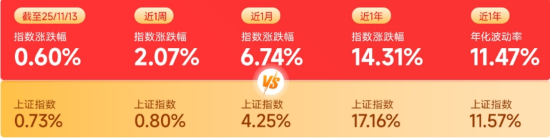
Core Viewpoint - The A-share market has shown strong performance, with the core index returning above 4000 points and the S&P A-share Dividend Index continuing its upward trend, indicating significant excess returns compared to the broader market [1][2]. Market Performance - As of November 13, the S&P A-share Dividend Index has increased by 0.60% in the past week, 6.74% in the past month, and 14.31% over the past year, with an annualized volatility of 11.47% [2]. - The Shanghai Composite Index has also performed well, with a 0.73% increase in the past week and a 4.25% increase in the past month [2]. ETF Performance - The S&P Dividend ETF (562060) has outperformed other popular dividend ETFs, achieving a premium increase of 0.48% and marking a "12 consecutive days of gains" with a closing price of 0.628 yuan [2][4]. - The ETF has seen a significant inflow of funds, with a total net inflow of 66.17 million yuan over the past five trading days, indicating strong investor interest [4]. Stock Performance - High-dividend stocks within the index have shown notable performance, with companies like Furui Co. achieving six consecutive daily price limits, and Zhongyuan Marine Energy rising by 7.11% [6][7]. Index Composition and Strategy - The S&P A-share Dividend Index is characterized by a more balanced industry distribution, with the top five industries (banking, machinery, light industry, home appliances, and basic chemicals) accounting for less than 50% of the index [12]. - The index features a median market capitalization of 21 billion yuan, which is significantly lower than that of the CSI 500 index, aligning with the current market preference for small-cap stocks [12]. Dividend Yield and Strategy - The S&P A-share Dividend Index maintains a competitive dividend yield of 18%, benefiting from a high-frequency rebalancing mechanism that enhances dividend stability and profitability [9][12]. - The index has outperformed its peers in terms of returns, with a year-to-date increase of 14.95% and a Sharpe ratio of 1.91, indicating strong risk-adjusted performance [9].

A股平均股价14.08元 20股股价不足2元
Zheng Quan Shi Bao Wang· 2025-11-13 08:33
Core Viewpoint - The average stock price in the A-share market is 14.08 yuan, with 20 stocks priced below 2 yuan, the lowest being *ST Yuan Cheng at 0.58 yuan [1] Summary by Category Stock Price Distribution - As of November 13, the Shanghai Composite Index closed at 4029.50 points, with the average A-share price at 14.08 yuan [1] - There are 20 stocks priced below 2 yuan, with *ST Yuan Cheng being the lowest at 0.58 yuan, followed by *ST Su Wu at 0.98 yuan and *ST Jin Ke at 1.47 yuan [1] - Among the low-priced stocks, 8 are ST stocks, accounting for 40% of the total [1] Market Performance - Out of the low-priced stocks, 16 saw an increase today, with the highest gains from ST Yi Gou (5.29%), *ST Jin Ke (5.00%), and Rongsheng Development (4.73%) [1] - Only 2 stocks experienced a decline, with ST Ling Nan and *ST Hui Feng dropping by 1.03% and 0.53%, respectively [1] Low-Priced Stock Rankings - A detailed ranking of low-priced stocks includes: - *ST Yuan Cheng: Latest closing price 0.58 yuan, market-to-book ratio 0.27, industry: construction decoration [1] - *ST Su Wu: Latest closing price 0.98 yuan, daily turnover rate 1.97%, industry: pharmaceutical [1] - *ST Jin Ke: Latest closing price 1.47 yuan, daily increase 5.00%, industry: real estate [1] - Other notable stocks include Chongqing Steel (1.59 yuan), Yongtai Energy (1.63 yuan), and Shandong Steel (1.65 yuan) [1]




A股平均股价13.93元 20股股价不足2元
Zheng Quan Shi Bao Wang· 2025-11-12 09:24
Core Points - The average stock price of A-shares is 13.93 yuan, with 20 stocks priced below 2 yuan, the lowest being *ST Yuan Cheng at 0.58 yuan [1] - As of November 12, the Shanghai Composite Index closed at 4000.14 points, indicating a relatively low proportion of both high-priced and low-priced stocks in the A-share market [1] - Among the low-priced stocks, 8 are ST stocks, accounting for 40% of the total [1] Low-Priced Stocks Summary - The lowest priced stock is *ST Yuan Cheng at 0.58 yuan, followed by *ST Su Wu at 0.98 yuan and *ST Jin Ke at 1.40 yuan [1] - In terms of market performance, 4 of the low-priced stocks increased in price, with Haihang Holdings, *ST Hui Feng, and *ST Su Wu showing gains of 1.09%, 1.08%, and 1.03% respectively [1] - Conversely, 12 stocks declined, with Chongqing Steel, Rongsheng Development, and Yabo Co. experiencing drops of 1.88%, 1.74%, and 1.53% respectively [1] Low-Priced Stocks Table - The table lists various low-priced stocks along with their latest closing prices, daily price changes, turnover rates, price-to-book ratios, and industries [1]
【盘中播报】沪指涨0.27% 石油石化行业涨幅最大
Zheng Quan Shi Bao Wang· 2025-11-12 03:28
Market Overview - The Shanghai Composite Index increased by 0.27% as of 10:28 AM, with a trading volume of 61.67 billion shares and a transaction value of 893.47 billion yuan, a decrease of 6.50% compared to the previous trading day [1] Industry Performance - The top-performing industries included: - Oil and Petrochemicals: Increased by 1.77% with a transaction value of 8.62 billion yuan, led by Sinopec Oilfield Service, which rose by 10.21% [1] - Banking: Increased by 1.52% with a transaction value of 15.41 billion yuan, led by Agricultural Bank of China, which rose by 2.89% [1] - Home Appliances: Increased by 1.01% with a transaction value of 14.36 billion yuan, led by Beiyikang, which rose by 10.78% [1] - The worst-performing industries included: - Communication: Decreased by 1.33% with a transaction value of 34.89 billion yuan, led by Yongding Co., which fell by 5.45% [2] - Electric Power Equipment: Decreased by 1.25% with a transaction value of 148.46 billion yuan, led by Canadian Solar, which fell by 13.92% [2] - National Defense and Military Industry: Decreased by 0.92% with a transaction value of 16.72 billion yuan, led by Triangle Defense, which fell by 7.34% [2] Stock Performance - A total of 1,864 stocks rose, with 49 hitting the daily limit, while 3,394 stocks fell, with 2 hitting the lower limit [1]





北交所市场点评:政策利好支撑下震荡整固,关注科技主线及进口替代
Western Securities· 2025-11-11 09:15
Investment Rating - The report indicates a positive outlook for the industry, suggesting a focus on sectors with significant growth potential and strong domestic alternatives [4][29]. Core Insights - The market is currently experiencing a structural shift, with consumer sectors leading gains while growth sectors like computing hardware are under pressure. This reflects a broader risk-averse sentiment in the A-share market [4]. - Recent government policies aimed at promoting private investment in key sectors such as low-altitude economy and commercial aerospace are expected to benefit specialized and innovative companies in the North Exchange [4]. - The balance of market conditions is characterized by supportive policies and short-term emotional consolidation, creating opportunities for specialized companies, particularly in high-end manufacturing and renewable energy [4]. Summary by Sections Market Review - On November 10, the North Exchange A-share trading volume reached 20.18 billion yuan, a decrease of 1.314 billion yuan from the previous trading day. The North Exchange 50 Index closed at 1512.52, down 0.67%, with a PE_TTM of 71.78 times. The specialized and innovative index closed at 2506.89, down 0.99% [2][9]. - Among 282 companies listed, 127 saw gains, 10 remained flat, and 145 experienced declines. The top five gainers included Taipeng Intelligent (+13.6%) and Anda Technology (+13.0%), while the top five losers included Fangsheng Co. (-5.4%) and Haidar (-4.6%) [2][17][18]. Important News - The National Development and Reform Commission and the National Energy Administration issued guidelines to enhance renewable energy consumption and control, aiming for a multi-level consumption regulation system by 2030 [20]. - The State Council released measures to encourage private investment in projects such as railways and nuclear power, allowing private capital to hold over 10% in qualifying projects [21]. Company Announcements - Boshun Bio announced the purchase of wealth management products amounting to 20 million yuan using idle funds [22]. - Iron Tuo Machinery's major shareholder plans to reduce holdings by 1.05 million shares, accounting for 1.14% of total equity [23]. - Qianjin Technology reported using 45 million yuan of idle raised funds for cash management [24].
11月10日8家公司获基金调研
Zheng Quan Shi Bao Wang· 2025-11-11 04:13
Group 1 - On November 10, a total of 13 companies were investigated by institutions, with 8 companies being surveyed by funds [1] - The most attention was given to Boying Special Welding, which had 17 participating funds, followed by Jiayi Co., Ltd. and Inno Laser with 9 and 5 funds respectively [1] - Among the surveyed companies, there was 1 from the main board, 5 from the ChiNext, 1 from the Sci-Tech Innovation Board, and 1 from the Beijing Stock Exchange [1] Group 2 - Of the companies surveyed, 7 had a total market capitalization of less than 10 billion yuan, including Canaan Technology, Super Equipment, and Boying Special Welding [1] - In terms of market performance, 4 out of the surveyed stocks increased in the last 5 days, with the highest gains from Kelu Electronics, Inno Laser, and Pumen Technology, showing increases of 5.42%, 5.29%, and 1.44% respectively [1] - Conversely, 4 stocks experienced declines, with Tonghui Electronics, Boying Special Welding, and Jiayi Co., Ltd. showing the largest drops of 7.23%, 4.03%, and 3.94% respectively [1]



渤海证券研究所晨会纪要(2025.11.11)-20251111
BOHAI SECURITIES· 2025-11-11 01:29
Macro and Strategy Research - In October 2025, China's exports decreased by 1.1% year-on-year, while imports increased by 1.0%, resulting in a trade surplus of 90.074 billion USD [2][3] - The decline in export growth is attributed to high base effects and seasonal factors, but the overall decrease is considered manageable [2] - Looking ahead, the easing of US-China trade tensions and stable global manufacturing PMI suggest that export uncertainties have significantly reduced [3] Price Data Analysis - In October 2025, the Consumer Price Index (CPI) turned positive with a notable increase driven by rising food prices and core inflation influenced by international gold prices [4][5] - The Producer Price Index (PPI) saw a narrowing year-on-year decline, with improvements in key industries such as coal and photovoltaic equipment due to ongoing capacity management [5][6] Fund Research - The equity market saw most major indices rise, with the Shanghai Composite Index increasing by 1.08% [7] - Bond ETF scales reached new highs, indicating strong investor interest in fixed-income products [7][8] - The average return for equity funds was positive, with quantitative funds leading the gains [8] Industry Research - The light industry and textile sectors are under pressure from export declines, with furniture and clothing exports down by 12.66% and 15.96% respectively in October [11][12] - New government policies aimed at accelerating digital transformation are expected to enhance the competitiveness of these sectors in the medium term [11] - The computer industry reported a revenue of 935.835 billion CNY in the first three quarters of 2025, with a year-on-year growth of 9.14%, driven by strong performance in software development and IT services [13][14]
“真香”九连阳!标普红利ETF(562060)收涨0.97%,连续2日吸金2643万元
Xin Lang Ji Jin· 2025-11-10 10:12
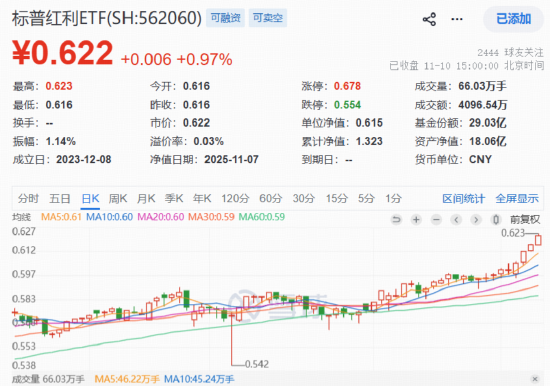
Core Viewpoint - The A-share market is consolidating around the 4000-point mark, with a focus on dividend stocks, as the S&P A-Share Dividend Index has shown a strong performance, rising 1.08% and accumulating over 7% since October 2025 [1][9]. Market Performance - The S&P A-Share Dividend Index has recorded four consecutive days of gains, reflecting a robust demand for dividend stocks [1]. - The S&P Dividend ETF (562060) has also performed well, increasing by 0.97% and reaching a new high, with a price of 0.622 yuan, indicating strong market interest [1]. Trading Activity - The S&P Dividend ETF (562060) has been included as a margin trading target, enhancing trading strategies and liquidity, with trading volume surpassing 40 million yuan on November 10, 2025 [2]. - The ETF has attracted significant capital inflow, with over 26.43 million yuan in two consecutive trading days [2]. Sector Performance - Among the top ten sectors in the S&P A-Share Dividend Index, 80% have seen gains, particularly in light industry manufacturing, textiles, and basic chemicals, which have risen over 1% [5]. - The banking sector has a weight of 16.58% and recorded a gain of 0.64%, while light industry manufacturing and textiles saw increases of 1.59% and 1.55%, respectively [5]. Component Stock Performance - High-dividend stocks continue to perform well, with over 80% of component stocks showing positive returns. Notably, Luzhou Laojiao surged by 8.23%, leading the gains [6][8]. - The top-performing component stocks include Luri Shares (10.04%), Yiyi Shares (10.00%), and Luzhou Laojiao (8.23%) [8]. Investment Strategy - As the market enters the fourth quarter, the S&P A-Share Dividend Index is highlighted for its strong performance in both yield and dividend rate, with a one-year return of 13.26% and a dividend yield of 5.18% [9][10]. - The index focuses on dividend stability and profitability, with a semi-annual optimization of its components, making it an attractive option for investors seeking low valuation and high dividend opportunities [9][11].
行业ETF配置模型2025年超额14.4%
GOLDEN SUN SECURITIES· 2025-11-10 03:43
Quantitative Models and Construction Methods 1. Model Name: Industry Mainline Model (Relative Strength Index, RSI) - **Model Construction Idea**: This model identifies leading industries by calculating their relative strength (RS) based on historical price performance. Industries with RS > 90% are considered potential leaders for the year [10] - **Model Construction Process**: 1. Use 29 first-level industry indices as the investment universe [10] 2. Calculate the price change over the past 20, 40, and 60 trading days for each industry index [10] 3. Rank the price changes for each period and normalize the rankings to obtain RS_20, RS_40, and RS_60 [10] 4. Compute the average of the three rankings to derive the final relative strength index: $ RS = (RS_{20} + RS_{40} + RS_{60}) / 3 $ where RS_20, RS_40, and RS_60 represent the normalized rankings of price changes over 20, 40, and 60 trading days, respectively [10] - **Model Evaluation**: The model successfully identified leading industries in 2024, such as coal, banking, and AI-related sectors, which showed strong performance during the year [10][12] 2. Model Name: Industry Rotation Model (Prosperity-Trend-Crowding Framework) - **Model Construction Idea**: This model combines three dimensions—prosperity, trend, and crowding—to recommend industry allocations. It includes two sub-strategies: "Strong Trend-Low Crowding" and "High Prosperity-Strong Trend" [7][15] - **Model Construction Process**: 1. Define prosperity as the core metric, supplemented by trend and crowding dimensions [15] 2. For the "High Prosperity-Strong Trend" strategy, focus on industries with high prosperity and strong trends while avoiding highly crowded industries [15] 3. For the "Strong Trend-Low Crowding" strategy, prioritize industries with strong trends and low crowding while avoiding low-prosperity industries [15] 4. Allocate weights to industries based on the framework, e.g., November 2025 allocation: Basic Chemicals (18%), Media (16%), Agriculture (12%), Light Manufacturing (12%), Computers (12%), Home Appliances (9%), Real Estate (9%), Retail (6%), New Energy (4%), Coal (3%) [7][15] - **Model Evaluation**: The model demonstrated strong performance, with an annualized excess return of 13.7% and an IR of 1.5. It also showed a high monthly win rate of 67% [15][22] 3. Model Name: Left-Side Inventory Reversal Model - **Model Construction Idea**: This model identifies industries in a recovery phase from distress by analyzing inventory levels and analyst expectations. It aims to capture reversal opportunities in industries with low inventory pressure and potential for restocking [29] - **Model Construction Process**: 1. Focus on industries experiencing current or past distress with signs of recovery [29] 2. Identify industries with low inventory pressure and restocking potential [29] 3. Incorporate analyst long-term positive outlooks for these industries [29] - **Model Evaluation**: The model achieved an absolute return of 27.9% and an excess return of 7.5% relative to equal-weighted industry benchmarks in 2025 (up to October) [29] --- Model Backtesting Results 1. Industry Mainline Model (RSI) - Annualized excess return: Not explicitly stated - IR: Not explicitly stated - Maximum drawdown: Not explicitly stated - Monthly win rate: Not explicitly stated - 2024 performance: Identified leading industries such as coal, banking, and AI, which showed strong performance during the year [10][12] 2. Industry Rotation Model (Prosperity-Trend-Crowding Framework) - Annualized excess return: 13.7% [15] - IR: 1.5 [15] - Maximum drawdown: -8.0% [15] - Monthly win rate: 67% [15] - 2023 excess return: 7.3% [15] - 2024 excess return: 5.7% [15] - 2025 excess return (up to October): 2.0% [15] 3. Left-Side Inventory Reversal Model - Annualized excess return: Not explicitly stated - IR: Not explicitly stated - Maximum drawdown: Not explicitly stated - Monthly win rate: Not explicitly stated - 2023 performance: Absolute return of 13.4%, excess return of 17.0% [29] - 2024 performance: Absolute return of 26.5%, excess return of 15.4% [29] - 2025 performance (up to October): Absolute return of 27.9%, excess return of 7.5% [29]