
国防军工

Search documents
倒计时两周!交易员备战日本大选:高市交易策略重燃,日元保卫战一触即发
Zhi Tong Cai Jing· 2026-01-27 01:39
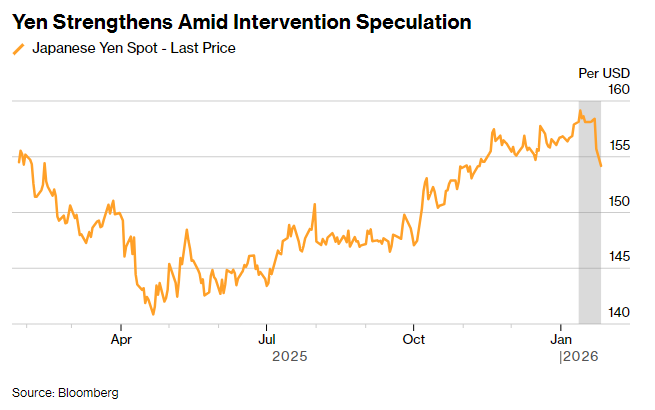
Group 1 - The Japanese government is preparing for increased volatility in the bond market, potential currency interventions, and fluctuations in the stock market as the early election approaches [1] - Concerns over government fiscal expansion have led to a significant drop in bond prices, resulting in substantial losses for investors and increased debt servicing pressure for the government [1] - Prime Minister Fumio Kishida's proposed two-year exemption on food consumption tax and military spending expansion have caused noticeable fluctuations in stock market sectors [1] Group 2 - Traders are betting that the election will further solidify Kishida's governing authority, allowing for more robust economic stimulus measures [2] - The market is expected to revert to traditional trading strategies, favoring long positions in stocks and short positions in the yen, while betting on falling bond prices and rising yields [2] - The proposed food tax exemption is estimated to cost approximately 5 trillion yen (around 32 billion USD) annually, raising concerns about Japan's fiscal discipline regardless of the election outcome [2] Group 3 - If the opposition coalition performs better than expected, political instability could further pressure both the stock and bond markets [3] - Should the government implement the food consumption tax exemption, sectors related to food, such as supermarket operators, may benefit despite potential opposition victories [3] - Kishida's commitment to expanding the defense budget could make defense and military technology stocks significant winners if his coalition retains a majority [3] Group 4 - The recent rise in Japanese government bond yields has negatively impacted the stock market, prompting caution regarding market price fluctuations [4] - The Bank of Japan's decision to maintain interest rates has investors closely monitoring the election's impact on future monetary policy [5] - If Kishida's influence increases, the Bank of Japan may face pressure to delay interest rate hikes, potentially exacerbating yen depreciation [5] Group 5 - The Japanese government has indicated readiness to intervene in the currency market if the yen continues to weaken, following previous interventions at critical exchange rate levels [5] - Market expectations for government intervention in the currency market have risen significantly, with limited upward movement anticipated for the dollar-yen exchange rate if the yen continues to weaken [5] Group 6 - The evolving relationship between Japan and China post-election is a key concern for investors, especially following diplomatic tensions related to comments made by Kishida [6] - Ongoing trade frictions with China and the impact of the Russia-Ukraine conflict are significant issues for Japan's economic outlook [7] - Political stability has historically been a core attraction for Japanese markets, but this advantage is perceived to be diminishing [7]
万联晨会-20260127
Wanlian Securities· 2026-01-27 01:22
Market Overview - The A-share market saw a collective decline on Monday, with the Shanghai Composite Index down by 0.09%, the Shenzhen Component down by 0.85%, and the ChiNext Index down by 0.91%. The total trading volume in the Shanghai and Shenzhen markets was 32,478.31 billion yuan [1][7] - In terms of industry performance, sectors such as power equipment, non-ferrous metals, and defense industry led the gains, while communication, banking, and coal sectors lagged behind. Concept sectors that performed well included avian influenza, lead, and zinc, while military information technology, terahertz, and military-civilian integration concepts saw declines [1][7] Important News - The precious metals market experienced significant volatility on Monday, with COMEX silver initially surging over 16% and spot silver nearly rising 14%, both surpassing the $117 per ounce mark before retreating. COMEX silver's gains narrowed to 2.5%, while spot silver turned negative. COMEX gold and spot gold also briefly crossed the $5,000 and $5,100 thresholds, respectively, but later saw their gains diminish, with both settling around the $5,000 mark [2][8] - Exchanges took measures to cool down the commodity futures market, with the Shanghai Futures Exchange and Shanghai International Energy Exchange announcing reductions in daily opening trading limits for silver and tin futures contracts to 800 lots and 200 lots, respectively. They also imposed restrictions on 16 clients regarding opening positions in tin and silver futures for one month and limited withdrawals. Additionally, the trading limits for copper, international copper, and aluminum futures contracts were adjusted to 9%, with margin ratios for hedging and general positions set at 10% and 11% [2][8]
倒计时两周!交易员备战日本大选:高市交易策略重燃 日元保卫战一触即发
智通财经网· 2026-01-27 00:52
Group 1: Election Impact on Markets - The upcoming Japanese election is expected to increase volatility in the bond market, with concerns over government intervention in the currency market and fluctuations in the stock market [1] - Prime Minister Fumio Kishida's proposed two-year exemption on food consumption tax and military spending expansion have led to noticeable fluctuations in stock market sectors [1][5] - Market participants are closely monitoring the positions of political parties on government spending and tax policies as the election date approaches [1] Group 2: Trading Strategies and Market Sentiment - Traders are betting that the election will further solidify Kishida's governing authority, allowing for more aggressive economic stimulus measures [2] - The prevailing trading strategy is to go long on stocks and short on the yen, while betting on falling bond prices and rising yields [2] - Analysts suggest that if the opposition performs better than expected, it could lead to political instability, negatively impacting both the stock and bond markets [6] Group 3: Sector-Specific Insights - If Kishida's administration secures a majority, defense and military technology stocks are expected to benefit from increased defense budgets [6] - The food sector, particularly supermarket chains, may also see positive impacts from the proposed tax cuts, with Life Corp. recently experiencing significant stock gains [6] - Financial stocks have been performing well due to rising interest rates, but concerns over bond price declines may pressure bank stocks [6] Group 4: Currency and Economic Policy - The yen's recent fluctuations are affecting export companies, and the bond market's volatility is weakening market risk appetite [6] - Analysts warn that if the yen continues to weaken, the Bank of Japan may face pressure to delay interest rate hikes, potentially exacerbating yen depreciation [8] - The government has indicated readiness to intervene in the currency market if necessary, as seen in past interventions when the yen reached critical levels [9] Group 5: Geopolitical Considerations - The relationship between Japan and China remains a significant concern, especially following diplomatic tensions related to Taiwan [12] - Political stability is crucial for market attractiveness, and any clear political outcomes from the election could lead to increased investor confidence [12] - The ongoing geopolitical issues, including the Russia-Ukraine conflict, are also influencing market dynamics and investor sentiment [12]

1月第3周立体投资策略周报:融资交易情绪边际降温-20260126
Guoxin Securities· 2026-01-26 15:24
Group 1 - The core conclusion indicates that in the third week of January, there was a net outflow of funds totaling 170.5 billion yuan, compared to an inflow of 4.9 billion yuan in the previous week [1][7] - Short-term sentiment indicators are at a high level since 2005, while long-term sentiment indicators are at a mid-low level since 2005 [1][11] - From an industry perspective, the highest transaction volume share in the past week was in the semiconductor (100%), electronics (99%), and defense industries (99%) [2][13] Group 2 - In the second week of January, the financing balance decreased by 8.3 billion yuan, public fund issuance increased by 39.3 billion yuan, ETF net redemptions were 162.3 billion yuan, and northbound capital estimated net outflow was 9.3 billion yuan [1][7] - The highest financing transaction share was in the machinery equipment (89%), electric power equipment (74%), and textile and apparel (79%) industries, while the lowest was in banking (12%), oil and petrochemicals (17%), and real estate (21%) [2][13]
两市主力资金净流出1143.17亿元,电子行业净流出居首
Zheng Quan Shi Bao Wang· 2026-01-26 09:24
1月26日,沪指下跌0.09%,深成指下跌0.85%,创业板指下跌0.91%,沪深300指数上涨0.10%。可交易 A股中,上涨的有1604只,占比29.36%,下跌的3771只。 今日各行业资金流向 | 行业 | 日涨跌幅(%) | 资金流向(亿元) | 行业 | 日涨跌幅(%) | 资金流向(亿元) | | --- | --- | --- | --- | --- | --- | | 非银金融 | 0.79 | 34.93 | 交通运输 | -0.26 | -15.20 | | 医药生物 | 0.29 | 28.39 | 房地产 | -2.23 | -19.26 | | 银行 | 0.44 | 22.50 | 商贸零售 | -1.93 | -20.01 | | 通信 | 0.30 | 13.81 | 公用事业 | -0.19 | -20.36 | | 石油石化 | 3.18 | 8.06 | 建筑装饰 | 0.16 | -21.95 | | 煤炭 | 2.07 | 4.50 | 有色金属 | 4.57 | -28.51 | | 美容护理 | -0.87 | -0.40 | 家用电器 | -1.68 | -3 ...
191.70亿元资金今日流出国防军工股
Zheng Quan Shi Bao Wang· 2026-01-26 09:24
资金面上看,两市主力资金全天净流出1143.17亿元,今日有6个行业主力资金净流入,非银金融行业主 力资金净流入规模居首,该行业今日上涨0.79%,全天净流入资金34.93亿元,其次是医药生物行业,日 涨幅为0.29%,净流入资金为28.39亿元。 主力资金净流出的行业有25个,电子行业主力资金净流出规模居首,全天净流出资金277.21亿元,其次 是电力设备行业,净流出资金为203.06亿元,净流出资金较多的还有国防军工、机械设备、汽车等行 业。 国防军工行业今日下跌4.47%,全天主力资金净流出191.70亿元,该行业所属的个股共138只,今日上涨 的有7只,涨停的有1只;下跌的有130只,跌停的有7只。以资金流向数据进行统计,该行业资金净流入 的个股有16只,其中,净流入资金超3000万元的有6只,净流入资金居首的是钢研高纳,今日净流入资 金1.12亿元,紧随其后的是光启技术、中国船舶,净流入资金分别为9416.43万元、5464.62万元。国防 军工行业资金净流出个股中,资金净流出超亿元的有41只,净流出资金居前的有航天电子、中国卫星、 海格通信,净流出资金分别为40.51亿元、27.47亿元、9.85 ...
粤开市场日报-20260126-20260126
Yuekai Securities· 2026-01-26 07:44
Market Overview - The A-share market saw most indices decline today, with the Shanghai Composite Index slightly down by 0.09% closing at 4132.61 points, the Shenzhen Component Index down by 0.85% at 14316.64 points, the ChiNext Index down by 0.91% at 3319.15 points, and the STAR 50 Index down by 1.35% at 1532.8 points [1] - Overall, there were 1602 stocks that rose and 3767 stocks that fell, with a total trading volume of 32,482 billion yuan, an increase of 1630 billion yuan compared to the previous trading day [1] Industry Performance - Among the primary industries, non-ferrous metals, petroleum and petrochemicals, coal, agriculture, forestry, animal husbandry, and fishery led the gains with increases of 4.57%, 3.18%, 2.07%, 0.85%, and 0.79% respectively [1] - Conversely, industries such as defense and military, automotive, social services, electronics, and real estate experienced declines, with decreases of 4.47%, 2.31%, 2.30%, 2.24%, and 2.23% respectively [1] Concept Sector Performance - The top-performing concept sectors included gold and jewelry, vaccines, selected rare metals, animal health, blood products, industrial metals, nickel ore, rare earths, influenza, cobalt ore, small metals, and biotechnology [2] - Sectors such as satellite internet, commercial aerospace, satellite navigation, and military information technology experienced pullbacks [2]
今日50只A股封板 有色金属行业涨幅最大
Zheng Quan Shi Bao Wang· 2026-01-26 05:06
Market Overview - The Shanghai Composite Index increased by 0.12% with a trading volume of 1,312.82 million shares and a transaction value of 22,631.30 billion yuan, representing an 18.63% increase compared to the previous trading day [1] Industry Performance - The top-performing industries included: - Non-ferrous metals: increased by 4.43% with a transaction value of 2,125.42 billion yuan, up 53.12% from the previous day, led by Xinweiling with a rise of 18.77% [1] - Oil and petrochemicals: increased by 4.34% with a transaction value of 249.22 billion yuan, up 31.70%, led by Tongyuan Petroleum with a rise of 13.42% [1] - Coal: increased by 2.37% with a transaction value of 111.32 billion yuan, up 60.37%, led by Huaibei Mining with a rise of 4.23% [1] Declining Industries - The worst-performing industries included: - National defense and military industry: decreased by 3.68% with a transaction value of 1,230.16 billion yuan, down 7.63%, led by Yaguang Technology with a decline of 12.24% [2] - Media: decreased by 2.21% with a transaction value of 751.18 billion yuan, down 9.68%, led by Giant Network with a decline of 8.63% [2] - Automotive: decreased by 2.11% with a transaction value of 937.05 billion yuan, down 17.57%, led by Kaizhong Co. with a decline of 10.02% [2]
本轮债市回暖中的新规律
2026-01-26 02:50
Summary of Conference Call Records Industry Overview - The conference primarily discusses the bond market, focusing on the recovery trends observed since mid-January 2026, with specific attention to government bonds and credit bonds [1][2]. Key Points and Arguments Recovery of the Bond Market - The bond market has shown signs of recovery due to three main factors: 1. **Stability of Government and Local Bonds**: The stability of interest rates for government bonds and local bonds has been crucial. The 10-year government bond has remained stable, not exceeding 1.9%, while local bonds have stayed below 2.5% [2]. 2. **Banking Sector Participation**: There has been an increase in bank allocations to bonds, particularly after the clarity of KPIs for banks in 2026. This has led to a stronger demand for bonds, especially those with shorter durations [3][4]. 3. **External Support Factors**: External factors such as the stagnation of equity markets and expectations of monetary easing have contributed to the bond market's recovery. The MLF (Medium-term Lending Facility) has also seen increased volumes, indicating a supportive monetary environment [4][5]. Future Market Outlook - The outlook for the bond market remains cautious but optimistic. Short-duration bonds are expected to perform well, while long-duration bonds may face more volatility. The market anticipates that the recovery could serve as a precedent for future bond market trends in 2026 [5][6]. - The potential for downward movement in interest rates exists, particularly for 10-year government bonds, if deposit rates continue to decline [5][6]. Risks and Challenges - The bond market may face challenges related to supply and demand mismatches, especially in the first and second quarters of 2026. The issuance of local bonds is expected to be high, which could lead to increased pressure on the market [9][10]. - The risk indicators for banks remain a concern, particularly for smaller banks, which may face stricter regulations and slower adjustments to their risk profiles [9][10]. Investment Recommendations - Analysts recommend focusing on 10-year government bonds and certain credit bonds, particularly those with favorable yield spreads. The expectation is that these assets will provide stability and potential for appreciation in the current market environment [11][12]. - The discussion also highlights the potential for industry-specific perpetual bonds, particularly those issued by state-owned enterprises, which are seen as having a favorable risk-return profile [17][18]. Market Dynamics - The dynamics of the bond market are influenced by the behavior of institutional investors, with a noted shift towards increasing allocations in response to market conditions. The performance of convertible bonds is also highlighted, with expectations of continued demand despite some volatility [26][27]. Conclusion - The bond market is currently in a recovery phase, supported by stable interest rates, increased bank participation, and favorable external conditions. However, potential risks related to supply-demand mismatches and regulatory pressures on banks warrant careful monitoring. Investment strategies should focus on stable, shorter-duration bonds and select credit instruments to navigate the evolving landscape [36].
万联晨会-20260126
Wanlian Securities· 2026-01-26 01:42
Core Insights - The A-share market saw collective gains last Friday, with the Shanghai Composite Index rising by 0.33%, the Shenzhen Component Index by 0.79%, and the ChiNext Index by 0.63%. The total trading volume in the Shanghai and Shenzhen markets reached 30,849.73 billion yuan [1][7] - In terms of industry performance, power equipment, non-ferrous metals, and national defense sectors led the gains, while communication, banking, and coal sectors lagged behind. Concept sectors such as BC batteries, perovskite batteries, and TOPCON battery concepts showed significant increases, while corn, Tonghuashun overseas 50, and soybean concepts experienced declines [1][7] Important News - Beijing has released measures to promote the development and utilization of commercial satellite remote sensing data resources from 2026 to 2030. The measures encourage capable enterprises to engage in mergers and acquisitions within the satellite data industry, aiming to create globally competitive leading enterprises [2][8] Industry Analysis - A joint document from nine government departments encourages horizontal mergers and acquisitions in the pharmaceutical retail sector. This initiative aims to enhance the professional services and health promotion functions of the pharmaceutical retail industry, establishing a better service platform for public health needs [3][9] - The document outlines several key policies, including optimizing the service of designated retail pharmacies, promoting participation in centralized drug procurement, and encouraging the integration of pharmaceutical wholesale and retail businesses. It also supports the development of commercial health insurance products tailored to the pharmaceutical retail sector [10][11] - The policy emphasizes support for prescription outflow, collaboration between retail and commercial insurance, and encourages the consolidation of retail pharmacies. This is expected to benefit leading companies in the pharmacy sector and open a window for industry consolidation [13]