
磷化工

Search documents
“一县一业”破局、“准千亿县”蓄势,湖北县域经济何以蜕变
21世纪经济报道· 2026-01-12 14:21
Core Insights - The article emphasizes the significant role of Hubei's county-level economy, which supports nearly half of the province's GDP, highlighting two main themes: "position improvement" and "characteristic growth" [1][3] - Hubei's counties are set to undergo a transformation with the introduction of characteristic industrial clusters, supported by financial incentives [1][5] Group 1: Economic Performance - In 2024, Hubei's county-level GDP is projected to reach 3.5 trillion yuan, accounting for 58% of the province's total GDP, with a year-on-year growth of 6.3%, surpassing the provincial average by 0.5 percentage points [3] - Hubei has maintained a strong position in the national ranking of top counties, with eight counties consistently in the top 100, ranking fourth nationally [3][4] Group 2: County Rankings - From 2021 to 2025, Hubei's counties have shown significant ranking improvements, with Xiangyin rising from 76th to 52nd, becoming the first "billion county" in 2022 [3][4] - The rankings of other counties such as Daye and Yidu have also improved, indicating a collective upward trend among Hubei's top counties [3][4] Group 3: Industrial Development - Hubei is focusing on developing characteristic industries, with a plan to cultivate one main industry per county, enhancing local economic resilience [8][10] - The province has identified key industries in various counties, such as new energy materials in Yidu and textile manufacturing in Hanchuan, which are crucial for local economic growth [9][10] Group 4: Future Prospects - Hubei is expected to see a wave of new "billion counties" as several counties are on the verge of crossing the billion yuan GDP threshold, with five counties currently classified as "quasi-billion counties" [5][6] - The province aims to strengthen its economic foundation through targeted policies and collaborations, enhancing the overall quality of its county-level economies [11]


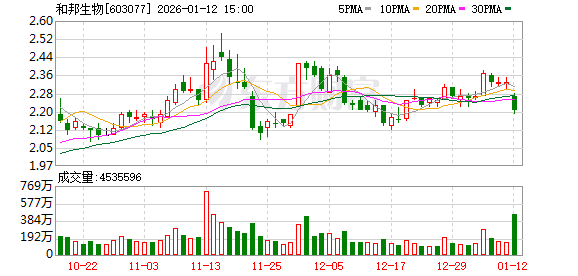
和邦生物:Wonarah磷矿项目正按照2026年实现开采和销售的目标,加快物流全链控制等配套实施工作
Mei Ri Jing Ji Xin Wen· 2026-01-12 08:41
Group 1 - The core message is that the Wonarah phosphate project in Australia is on track to achieve its goal of mining and sales by 2026, with efforts being made to accelerate logistics and supply chain implementation [2] Group 2 - The company, Hongbang Bio (603077.SH), is actively engaging with investors regarding updates on the phosphate project [2] - The focus on logistics and supply chain control indicates a strategic approach to ensure timely project execution [2]

绘好发展规划图 干出实干实景图
Xin Lang Cai Jing· 2026-01-11 22:25
Core Insights - The city has outlined a development blueprint for the "15th Five-Year Plan," emphasizing the importance of industrial development and the cultivation of new productive forces [1][2][7]. Group 1: Industrial Development - The city aims to "focus on industry and prioritize industrial development," with a commitment to transforming planning into actionable projects [2][3]. - The Economic Development Bureau plans to leverage the "Project Assault Year" to advance key projects, ensuring the implementation of the city's strategic goals [2]. - Traditional industries will be upgraded to high-end production, while emerging industries will be expanded to scale, and future industries will be clustered [2][8]. Group 2: Economic Growth and Planning - The Five-Year Plan emphasizes a solid foundation for economic work, with specific tasks and measures to ensure a strong start [3][10]. - The focus will be on high-quality project work to support economic growth, with a commitment to converting planning documents into actionable plans [3][12]. - The city will actively pursue project construction, particularly in key areas such as energy and materials, to enhance economic stability and growth [9][10]. Group 3: Community and Social Welfare - The meetings highlighted the need to enhance community services and address urgent issues faced by residents, aiming to improve overall quality of life [4][6]. - Initiatives will be implemented to foster a sense of community and shared prosperity among diverse populations [4][6]. - The focus on consumer services, particularly in tourism and cultural sectors, aims to stimulate economic activity and enhance community engagement [5][6]. Group 4: Governance and Implementation - Local governments are encouraged to adopt a proactive approach in implementing the directives from the meetings, ensuring that the spirit of the meetings translates into tangible outcomes [11][12]. - There is a strong emphasis on optimizing the business environment and fostering a supportive ecosystem for enterprises [8][12]. - The commitment to grassroots governance and community engagement is seen as essential for achieving the broader goals of the development plan [11][14].
化工行业2026年度投资策略:周期有望回暖,新兴需求成长可期
Shanghai Securities· 2026-01-09 12:23
Key Points - The chemical industry is expected to experience a recovery, with supply growth slowing and a replenishment cycle beginning. The government continues to strengthen policy guidance, and a new round of supply-side reforms is on the horizon. Focus on sectors such as refrigerants, potash fertilizers, organic silicon, and phosphorus chemicals, which are on an upward trend [5][10][20]. - Emerging demand growth opportunities in new materials are noteworthy. For lithium battery materials, the acceleration of solid-state battery industrialization is beneficial for related materials. In photolithography, strong downstream semiconductor demand is driving the need for photolithography materials, with accelerated domestic substitution [5][10][82]. - The refrigerant sector is seeing a supply contraction alongside demand release, leading to a sustained uptrend in the third-generation refrigerants. Key companies to watch include Jinshi Resources, Juhua Co., Sanmei Co., and Yonghe Co. [5][41]. - The potash fertilizer market is recovering due to production cuts by major players, with global demand expected to grow. Key companies include Yara International and Salt Lake Co. [5][47][55]. - The organic silicon industry has passed its peak expansion phase, with profitability expected to recover as the industry moves towards a supply-demand balance. Companies to focus on include Dongyue Silicon Material, Xingfa Group, Xin'an Chemical, and Luxi Chemical [5][56]. - The phosphorus chemical sector remains strong, with high prices supported by raw material costs and growing demand from the energy storage market. Companies to watch include Yuntianhua, Xingfa Group, Chuanheng Co., and Batian Co. [5][66][75]. - The industrial gas market is growing, with domestic production increasing. Key players include Qiaoyuan Co. [5][76]. - The solid-state battery industry is on the verge of industrialization, with significant advancements expected in the coming years. Companies to focus on include Dangsheng Technology [5][82]. - The photolithography market is expanding due to strong demand from the semiconductor industry, with domestic companies like Tongcheng New Materials and Jingrui Electric Materials leading the way [5][84].
从复合肥到磷化工,芭田股份业务重塑?
市值风云· 2026-01-09 10:09
Core Insights - The article discusses the strategic transformation of Batian Co., Ltd. from a traditional fertilizer manufacturer to an integrated phosphate chemical company focusing on "phosphate rock + high-end compound fertilizers + new energy materials" [4]. Group 1: Company Overview - Batian Co., Ltd. is the first publicly listed company in China's compound fertilizer industry, currently undergoing a significant strategic shift [4]. - The company is focusing on technological innovation and industrial chain layout to differentiate itself in a market facing product homogeneity and upstream raw material fluctuations [3]. Group 2: Financial Performance - In 2024, the compound fertilizer business contributed 2.6 billion yuan, accounting for 76.6% of total revenue; phosphate rock business achieved revenue of 710 million yuan, a year-on-year increase of 82% [5]. - By the first half of 2025, revenue from phosphate rock business rose to 998 million yuan, increasing its share of total revenue to 39.3%, becoming the company's second-largest revenue source [5]. - For the first three quarters of 2025, the company reported total revenue of 3.8 billion yuan, a year-on-year growth of 56.5%, with significant contributions from phosphate rock and its processed products, indicating a "dual-drive" phase of compound fertilizers and phosphate rock [7]. - The net profit attributable to shareholders reached 690 million yuan, reflecting a year-on-year increase of 236% [7].


国信证券:全球储能产业加速扩张背景下 磷酸铁锂对上游磷资源需求持续提升
智通财经网· 2026-01-09 01:50
Group 1: Potash Market - Global potash supply and demand are tightly balanced, with international potash prices on the rise. China, being the largest potash consumer, has an import dependency exceeding 60%. In 2024, China's potassium chloride production is expected to be 5.5 million tons, a decrease of 2.7% year-on-year, while imports are projected to reach 12.633 million tons, an increase of 9.1%, marking a historical high [2] - As of December 2025, domestic potassium chloride port inventory is 2.4294 million tons, a decrease of 615,300 tons year-on-year, with a decline rate of 0.21%. Due to increasing emphasis on food production safety, it is anticipated that domestic potash safety stock will rise to over 4 million tons [2] - The average market price of potassium chloride in December was 3,282 yuan/ton, reflecting a month-on-month increase of 0.83% and a year-on-year increase of 30.45% [2] Group 2: Phosphate Market - The long-term price center for phosphate rock is expected to remain high due to declining extractable grades and increasing extraction costs in China, alongside growing demand from new sectors such as lithium iron phosphate. The market price for 30% grade phosphate rock has remained in the high price range of 900 yuan/ton for over three years [3] - As of December 31, 2025, the market price for 30% grade phosphate rock in Hubei is 1,040 yuan/ton, while in Yunnan it is 970 yuan/ton, both remaining stable compared to the previous month [3] Group 3: Lithium Iron Phosphate - China's lithium iron phosphate production capacity is currently 5.945 million tons per year, with a projected output of 3.82 million tons in 2025, representing a year-on-year increase of 48.59%. As of January 7, 2026, the market price for lithium iron phosphate is approximately 50,300 yuan/ton, up 57.19% from the lowest price of 32,000 yuan/ton in June 2025 [4] - The demand for lithium iron phosphate is driven by the growing energy storage and power battery sectors, leading to a significant increase in the demand for phosphorus-containing new energy materials [4] Group 4: Glyphosate Market - Glyphosate prices experienced fluctuations in 2025, rising from 23,200 yuan/ton in April to 27,700 yuan/ton in October, before declining to 23,800 yuan/ton by the end of the year. The price changes were primarily influenced by demand variations, particularly from South America [6] - The export of glyphosate from China to North America saw a significant increase of 62.89% year-on-year in the fourth quarter of 2024, but the high inventory levels in North America led to a decrease in demand towards the end of 2025 [6] Group 5: Investment Recommendations - For potash, the company recommends focusing on the resource scarcity attribute, particularly highlighting "Yara International," with expected potassium chloride production of 2.8 million tons in 2025 and 4 million tons in 2026 [7] - In the phosphate sector, the company suggests investing in leading firms with rich phosphate reserves such as "Yuntianhua" and "Xingfa Group," while also monitoring companies like "Hubei Yihua" and "Yuntu Holdings" that are improving phosphate self-sufficiency [7] - In the pesticide sector, recommended companies include "Yangnong Chemical" and "Lier Chemical," with a focus on firms like "Xingfa Group" and "Limin Co." that are expanding their product lines and market presence [7]

农化行业:2025年12月月度观察:钾肥供需紧平衡,储能拉动磷矿石需求,草甘膦价格下行-20260108
Guoxin Securities· 2026-01-08 11:29
Investment Rating - The report maintains an "Outperform" rating for the agricultural chemical industry [5][9]. Core Views - The potassium fertilizer supply and demand are tightly balanced, with international prices rising. China, being the largest consumer, has a high import dependency exceeding 60%. The domestic production of potassium chloride is expected to decrease by 2.7% in 2024, while imports are projected to reach a historical high of 12.633 million tons, a year-on-year increase of 9.1% [1][24]. - The long-term price of phosphate rock is expected to remain high due to declining grades and increasing extraction costs, coupled with growing demand from new applications like lithium iron phosphate [2][50]. - The price of glyphosate has shown volatility, with a significant increase during the South American planting season, followed by a decline due to high North American inventories [4][49]. Summary by Sections Potassium Fertilizer - The global potassium fertilizer market is characterized by a supply-demand imbalance, with prices expected to recover due to resource scarcity and geopolitical factors affecting supply chains [1][44]. - Domestic potassium chloride prices have shown an upward trend, with the average price at 3,282 RMB/ton by the end of December, reflecting a year-on-year increase of 30.45% [1][40]. Phosphate Chemicals - The phosphate rock market is experiencing tight supply conditions, with prices for 30% grade phosphate rock remaining high at around 1,040 RMB/ton in Hubei and 970 RMB/ton in Yunnan [2][50]. - The production capacity of lithium iron phosphate is projected to grow significantly, with a year-on-year increase of 48.59% expected in 2025 [2][51]. Pesticides - The glyphosate market is expected to see price improvements in 2026, following a period of price fluctuations influenced by seasonal demand and inventory levels [4][49]. - The report highlights several key companies in the pesticide sector, including Yangnong Chemical and Lier Chemical, which are positioned to benefit from rising prices and demand [8][49]. Investment Recommendations - Key recommendations include focusing on companies with strong potassium and phosphate resources, such as Yara International and Yun Tianhua, which are expected to benefit from the ongoing demand and supply dynamics in the agricultural chemical sector [7][9].


农化行业:2025年12月月度观察:肥供需紧平衡,储能拉动磷矿石需求,草甘膦价格下行-20260108
Guoxin Securities· 2026-01-08 09:55
Investment Rating - The report maintains an "Outperform" rating for the agricultural chemical industry [5][9]. Core Views - The potassium fertilizer supply and demand are tightly balanced, with international prices rising. China, being the largest consumer, has a high import dependency exceeding 60%. The domestic production of potassium chloride is expected to decrease by 2.7% in 2024, while imports are projected to reach a historical high of 12.633 million tons, a year-on-year increase of 9.1% [1][24]. - The long-term price center for phosphate rock is expected to remain high due to declining grades and increasing extraction costs, alongside growing demand from new applications like lithium iron phosphate. The domestic supply-demand situation for phosphate rock is tightening, with prices for 30% grade phosphate rock remaining elevated [2][50]. - The price of glyphosate has shown volatility, with a peak during the South American planting season and a subsequent decline due to high North American inventories. The report anticipates a recovery in glyphosate prices in 2026 [4][49]. Summary by Sections Potassium Fertilizer - The global potassium fertilizer market is characterized by a supply-demand imbalance, with prices expected to recover due to resource scarcity and geopolitical factors affecting supply chains [1][44]. - Domestic potassium chloride prices are projected to stabilize around 3,100-3,200 CNY/ton, with expectations of maintaining high inventory levels for food security [24][40]. Phosphate Chemicals - The phosphate rock market is experiencing a tightening supply-demand balance, with prices for 30% grade phosphate rock remaining above 900 CNY/ton for over three years. The report highlights the increasing demand from lithium battery applications [2][50]. - Phosphate chemical prices have shown upward trends for products like lithium iron phosphate, while glyphosate prices have decreased significantly [49][51]. Pesticides - The report suggests a potential recovery in the pesticide sector, particularly for glyphosate and its derivatives, as the industry undergoes restructuring to improve profitability [4][8]. - Companies such as Yangnong Chemical and Lier Chemical are highlighted as key players in the pesticide market, with recommendations for investment [7][8].

兴发集团20260107
2026-01-08 02:07
Summary of Xingfa Group's Conference Call Company Overview - **Company**: Xingfa Group - **Industry**: Phosphate and Specialty Chemicals Key Points Phosphate Mining and Production - Xingfa Group plans to enhance phosphate rock production capacity to 10 million tons through acquiring mining rights from Qiaogou Mining and purchasing the remaining 30% stake in Bai Shui He Phosphate Mine, ensuring future phosphate resource supply [2][3] - Qiaogou Mining is expected to start construction in Q2 2026, with a mining rights certificate for 2.8 million tons anticipated by March 2026 [3] Specialty Chemicals Segment - The specialty chemicals segment focuses on phosphates, with high-value products like "Xinf A" and ethyl mercaptan contributing to profit growth [2] - In 2026, the specialty segment is expected to launch new products including BCD series phosphate additives and battery-grade pentasulfide, further enhancing profitability [2][3] New Energy Sector - The new energy segment is projected to achieve a profit of 200 million yuan in 2026, adding 150,000 tons of iron phosphate capacity [2] - Collaboration with BYD for contract manufacturing and controlling Linfu Lithium to supply battery-grade lithium dihydrogen phosphate to CATL [2][3] Organic Silicon Industry - The organic silicon industry is experiencing price recovery due to coordinated production cuts, with prices expected to rise to 15,000-16,000 yuan/ton post-Chinese New Year [2][5] - A price fluctuation of 1,000 yuan/ton impacts the company's profit by 200-300 million yuan [2][5] Collaboration with CATL - Deepening cooperation with CATL in lithium dihydrogen phosphate, with a monthly supply of no less than 6,000 tons and plans to expand capacity to 150,000 tons post-Chinese New Year [2][8] Black Phosphorus Research - Significant breakthroughs in black phosphorus research for applications in aerospace materials and catalysts, with ongoing collaborations with companies like Huawei [4][12] Agricultural Chemicals - The glyphosate sector faces uncertainty, with current prices around 23,000-24,000 yuan, while the company aims to secure export quotas [5][13] Price Control and Market Dynamics - The company is actively engaging with other firms for price control measures to enhance profitability, especially in the glyphosate market [14][22] Future Market Outlook - The demand for lithium iron phosphate is expected to increase by 100,000-150,000 tons in 2026, with ongoing partnerships with BYD and CATL to meet this demand [15][18] - The phosphate rock resource reserves are projected to double in the next 3-5 years, ensuring ample development potential [19] Fertilizer Sector Challenges - The fertilizer sector is impacted by reduced export quotas and rising sulfur prices, which could lead to increased domestic fertilizer prices [20][22] New Product Developments - Introduction of new high-value products in specialty chemicals, including sodium hypophosphite and sodium ethyl mercaptan, with significant profit margins [23][24] Downstream Demand - Strong downstream demand for specialty chemicals, particularly from mining sectors, is driving price increases for key products [25] Mining Rights and Capacity Expansion - The company has made progress in obtaining mining rights, with total equity capacity reaching 640,000 tons [26] Overall Performance Outlook - The company maintains a positive outlook for 2026, with expected growth across various segments, particularly in black phosphorus, specialty chemicals, new energy, and organic silicon [5][28]
川金诺预计去年净利润同比倍增
Zheng Quan Ri Bao Zhi Sheng· 2026-01-07 17:06
Core Viewpoint - KMG Chemical Co., Ltd. (川金诺) expects significant revenue and profit growth for 2025, driven by strong market demand and effective cost management [1] Group 1: Financial Performance - The company forecasts revenue between 3.8 billion to 4.2 billion yuan for 2025, representing a year-on-year growth of 18.47% to 30.94% [1] - Net profit attributable to shareholders is projected to be between 430 million to 480 million yuan, indicating a substantial increase of 144.24% to 172.64% year-on-year [1] Group 2: Operational Strategy - KMG plans to leverage flexible production capacity and optimize product structure to enhance the proportion of high-margin products, thereby increasing sales revenue and profit levels [1] - The company is focusing on cost control to further improve overall profitability [1] Group 3: Market Conditions - The supply-demand situation for phosphate rock remains tight, contributing to a high level of industry prosperity [1] - The increasing demand in the new energy sector is expected to further improve the outlook for the phosphate chemical industry chain [1] Group 4: Project Development - KMG is actively exploring overseas phosphate resources, having signed a land use rights transfer agreement with an Egyptian supplier for a project with a total investment of 1.934 billion yuan [1][2] - The project aims to produce various phosphate products, including 800,000 tons of sulfuric acid and 300,000 tons of industrial wet-process crude phosphate annually [1] Group 5: Resource Advantage - Egypt's phosphate resources are highly advantageous, with proven reserves of approximately 3 billion tons, ranking third globally [2] - The integration of mining and chemical production is expected to provide a stable supply and mitigate risks associated with market fluctuations [2]
