家居

Search documents
新浪财经资讯AI速递:昨夜今晨财经热点一览 丨2025年12月30日
Xin Lang Cai Jing· 2025-12-29 23:24
Group 1: U.S. Market Trends - The three major U.S. stock indices experienced slight declines on December 30, with the Dow Jones, Nasdaq, and S&P 500 down by 0.51%, 0.5%, and 0.35% respectively [1][8] - Large tech stocks mostly fell, with Tesla dropping over 3% and Nvidia down more than 1%, while Intel saw a rise of over 1% [1][8] - The precious metals sector led the declines, with Harmony Gold plunging over 8% and Pan American Silver and Kinross Gold both down more than 5% [1][8] Group 2: Precious Metals Market - On December 29, the international precious metals market experienced extreme volatility, with gold prices plummeting over $200 and silver prices dropping by more than 10% [1][9] - Rumors suggested that a "systemically important bank" faced a margin call due to short positions in silver futures, but UBS denied these claims [1][9] - Analysts indicated that the price drop was due to previous speculative excess, and measures taken by exchanges to curb speculation led to selling pressure, although the fundamentals for a silver bull market remain unchanged [1][9] Group 3: Nvidia and Intel Partnership - Nvidia completed a $5 billion stock purchase of Intel, acquiring approximately 4% of the company, which is seen as a lifeline for Intel amid financial difficulties due to strategic missteps and capacity expansion [1][10] - The transaction has received approval from U.S. antitrust authorities and includes a collaboration on chip development for personal computers and data centers [1][10] Group 4: Foreign Investment in China - Multiple foreign institutions remain optimistic about Chinese assets, shifting the market's core driving force from "valuation recovery" to "profit growth" [2][11] - Institutions have raised corporate profit forecasts and expect continued foreign capital inflows in 2026, supported by macro policy coordination and RMB appreciation [2][11] - The technology sector, particularly artificial intelligence and semiconductors, is highlighted as a primary focus for foreign investment, alongside high-dividend assets [2][11] Group 5: Huayi Brothers Financial Issues - Huayi Brothers founders Wang Zhonglei and Wang Zhongjun have been restricted from high consumption due to a court case involving 74.73 million yuan, with Wang Zhongjun facing restrictions twice this month [3][12] - The company is experiencing severe financial difficulties, with overdue debts reaching 52.5 million yuan, and all shares held by the Wang brothers have been frozen [3][12] - The company has reported continuous losses, with revenue significantly declining in the first three quarters of 2025, and its stock price has shrunk over 90% from its peak [3][12] Group 6: Zhao Peng's Departure - Zhao Peng, a former member of the Anbang takeover group and executive at Minsheng Bank, has resigned from his positions, coinciding with poor performance at the companies he was associated with [3][13] - His resignation comes amid scrutiny over dual salary arrangements and a previous investigation regarding his disappearance [3][13] Group 7: Beijing Tongrentang's Product Scandal - Beijing Tongrentang is embroiled in a scandal involving its Antarctic krill oil products, which are suspected of being counterfeit, revealing issues with brand authorization and OEM practices [3][14] - An investigation uncovered 425 associated companies using the Beijing Tongrentang name, leading to consumer confusion regarding product authenticity [3][14] - The company has initiated a brand management campaign, but counterfeit products continue to be sold on e-commerce platforms, raising concerns about consumer rights [3][14] Group 8: Changes in Tariff Policy - Starting January 1, 2026, China will adjust import and export tariffs on certain goods to better align with domestic economic needs and optimize trade structure [1][17] - Import tariffs on advanced technology equipment, key components, and energy resources will be reduced to support industrial upgrades and consumer demand [1][17] - Conversely, export tariffs on high-energy consumption and high-pollution products will be increased to protect domestic industries and the environment [1][17]


财信证券晨会纪要-20251229
Caixin Securities· 2025-12-29 00:20
Group 1: Market Overview - The overall market shows a positive trend with the Shanghai Composite Index closing at 3963.68, up by 0.10% [1] - The Shenzhen Component Index increased by 0.54%, closing at 13603.89, while the ChiNext Index rose by 0.14% to 3243.88 [1] - The CSI 300 Index also saw a gain of 0.32%, ending at 4657.24, indicating a generally bullish sentiment in the market [1] Group 2: Economic Insights - The Chinese ETF market has reached a record high of 6.03 trillion yuan, marking an increase of over 60% year-to-date [23][24] - The Ministry of Finance announced a continuation of a more proactive fiscal policy in 2026, aiming to expand fiscal spending [21][22] - The People's Bank of China is focusing on creating a favorable environment for long-term investments in A-shares, aiming to increase the scale and proportion of various long-term funds [27][28] Group 3: Industry Dynamics - The establishment of the Human Robot and Embodied Intelligence Standardization Technical Committee by the Ministry of Industry and Information Technology aims to promote the development of the humanoid robot and embodied intelligence industry [29][30] - The total box office for Chinese films in 2025 reached 51.2 billion yuan, with over 1.22 billion viewers, setting new annual records [31][32] - The approval of 1771 games in 2025 marks the highest number in seven years, indicating a robust gaming industry [33] Group 4: Company Updates - Heng Rui Medicine has licensed its SHR6508 project rights in mainland China to Hansoh Pharmaceutical, receiving an upfront payment of 30 million yuan [39][40] - Chipmaker Chipone Technology reported a significant increase in new orders, totaling 2.494 billion yuan, a 129.94% increase compared to the previous year's fourth quarter [42] - Shengyi Technology announced an adjustment to its share repurchase price ceiling to no more than 144.36 yuan per share [43][44] - Jianlin Home has entered into a strategic partnership with Jieka Robotics to enhance its smart home offerings [45][46] Group 5: Regional Economic Developments - In Changsha, the import and export volume maintained growth, with "new three samples" products seeing an export increase of 86.7% [50][52] - The city reported a total import of 2.5944 trillion yuan in the first eleven months of 2025, reflecting a 2.7% year-on-year growth [51]

聚焦四大核心消费领域,2026年成华元旦潮购月活动来了
Xin Lang Cai Jing· 2025-12-28 11:10
Group 1 - Chenghua District is launching a shopping festival themed "New Year Consumption · Trend Gathering Chenghua" from December 28 to January 3, 2026, aimed at boosting consumer enthusiasm [2] - The event will integrate four core consumption sectors: automobiles, home appliances, shopping centers, and specialty streets, offering a variety of online and offline activities [2] - Significant year-end discounts are available for consumers planning to purchase vehicles, as Chenghua is a key automotive consumption hub [2] Group 2 - Home improvement is a focus, with IKEA Chengdu and Fusenmei Home furnishing offering discounts and promotional activities to enhance living environments [2] - Various shopping malls and specialty streets will provide immersive experiences beyond shopping, transforming into trend showcases and art parks [3][4] - The event includes interactive performances and special promotions at locations like Chengdu MixC and Tianfu International Animation City, appealing to younger consumers [4] Group 3 - Major department stores and supermarkets are participating in the event, with promotions on fresh produce and daily necessities, facilitating one-stop price comparisons for consumers [5][6] - A convenience welfare station will be set up, where consumers can receive a "New Year Lucky Bag" containing practical items by presenting any purchase receipt from Chenghua District [6] - The overall initiative aims to create a comprehensive and layered consumption network through extensive and specific discounts [6]


文化纸企发布1月涨价函,汇率波动不改出口成长趋势
Huafu Securities· 2025-12-28 08:13
Investment Rating - The report maintains an "Outperform" rating for the industry [3]. Core Insights - Cultural paper companies have announced a price increase of 200 CNY/ton starting January 1, 2026, indicating a potential recovery in paper prices. The appreciation of the RMB is favorable for raw material procurement [3]. - Despite recent fluctuations in the RMB affecting export sentiment, the report anticipates a recovery in external demand under a backdrop of interest rate cuts, with strong alpha companies expected to maintain growth trends [3]. - The State Tobacco Monopoly Administration has issued a notice to regulate the electronic cigarette industry, which is expected to enhance the competitive edge of leading companies [3]. Summary by Sections 1. Industry Performance - The light industry manufacturing sector underperformed the market, with the industry index increasing by 1.69% compared to the Shanghai Composite Index's 1.95% [12]. - The packaging and printing index rose by 3.8%, while the home goods index increased by 0.21%, and the paper index rose by 4.47% [12]. 2. Home Furnishing - In November, residential sales saw an expanded decline, with furniture exports down by 12.7% year-on-year [28]. - The cumulative revenue of the furniture manufacturing industry from January to November decreased by 9.1% year-on-year [37]. 3. Paper and Packaging - As of December 26, 2025, the prices for various paper types showed mixed trends, with double glue paper at 4725 CNY/ton (unchanged) and corrugated paper down to 2930.63 CNY/ton (down 143.75 CNY/ton) [46]. - The paper industry reported a cumulative revenue decline of 2.7% year-on-year from January to November [63]. 4. New Tobacco Products - The electronic cigarette industry is expected to improve as the government enforces stricter regulations, which may enhance the competitiveness of leading firms [6]. 5. Textile and Apparel - The textile and apparel sector also underperformed, with the industry index increasing by only 0.61% [21]. - The demand for warm and sports apparel has increased due to online promotions and colder weather [7].
294项国家标准完成制修订 动力电池“不起火、不爆炸”首次列为强制性要求
Yang Shi Wang· 2025-12-27 06:17
Core Viewpoint - The joint issuance of the action plan for upgrading traction equipment and the old-for-new consumption scheme has led to the completion and approval of 294 national standards across 13 key areas, focusing on energy consumption, product quality, and recycling standards [1][3]. Group 1: Energy Consumption and Emission Standards - The approved standards include 113 national standards aimed at upgrading energy consumption limits in key industries such as thermal power, steel, and building materials, facilitating the elimination of outdated production capacity [3]. - The initiative emphasizes the need for enhanced energy efficiency and emission reduction technologies [3]. Group 2: Consumer Goods Standards - A total of 115 national standards have been developed for consumer goods, including automobiles, home appliances, and emerging consumption sectors, aligning with actual consumer needs [3]. - The focus on consumer safety and quality is highlighted, particularly in the automotive sector [3]. Group 3: Recycling and Resource Utilization Standards - The plan includes 66 national standards related to the recycling, disassembly, and regeneration of waste products, covering areas such as home appliances, furniture, electronics, photovoltaics, wind power, and power batteries [3]. - The standards aim to promote product design that considers ease of recycling and regeneration, addressing bottlenecks in the recycling chain [3]. Group 4: Safety Standards for Electric Vehicles - Significant advancements have been made in safety standards for electric vehicle batteries, with mandatory requirements for "non-flammability and non-explosiveness" introduced, encouraging manufacturers to optimize battery structures and thermal management systems [3].
294项“两新”相关国家标准全部完成批准发布 标准提升激发更大消费活力
Jing Ji Ri Bao· 2025-12-27 02:34
Core Insights - The article discusses the implementation of national standards to support high-quality development in various sectors, particularly focusing on equipment updates and the replacement of consumer goods [1][2]. Group 1: National Standards and Their Impact - The "Two New" initiative targets the automotive, home appliance, and emerging consumer sectors, with 115 national standards being revised to enhance the quality of durable consumer goods and stimulate domestic demand [2]. - New safety standards for electric vehicle batteries now mandate that they must not catch fire or explode, which is expected to improve the safety of new energy vehicles significantly [2]. - The introduction of a new mandatory national standard for coal-fired power generation is projected to reduce average coal consumption to below 302 grams per kilowatt-hour by 2030, leading to a decrease in carbon dioxide emissions by approximately 160 million tons [3]. Group 2: Environmental and Circular Economy Standards - The "Two New" initiative also emphasizes the need for upgrading energy consumption and emission standards, with 113 national standards being revised to facilitate the elimination of outdated production capacity and enhance advanced capacity [2]. - The initiative includes the development of 66 national standards focused on green product design, second-hand product transactions, and recycling, which aim to promote resource circulation and efficient recovery of strategic resources like nickel, cobalt, and lithium [3]. Group 3: Industry Development and Future Plans - The Ministry of Industry and Information Technology has completed the revision of 44 key national standards under the "Two New" initiative, which is crucial for driving investment growth and industrial development [4]. - The focus for the upcoming year includes the revision of over 1,800 standards across traditional industries such as petrochemicals, machinery, and textiles, to support high-quality development and meet consumer demands for safety, quality, and sustainability [5].
294项国家标准发布
Xin Lang Cai Jing· 2025-12-26 22:04
Core Viewpoint - The article discusses the completion of a national action plan aimed at enhancing standards for traction equipment updates and consumer product recycling, covering 294 national standards across 13 key areas, which has been successfully finalized [1]. Group 1: Energy Consumption and Emission Standards - The 294 national standards focus on upgrading energy consumption and emission technology standards, enhancing product quality and safety standards, and increasing the supply of recycling and circular economy standards [1]. - The action plan includes the revision of energy consumption limit standards for key industries such as thermal power, steel, and building materials, aiming to eliminate outdated production capacity and improve the proportion of advanced capacity [1]. - A total of 113 national standards have been published to tighten energy efficiency requirements for general equipment like boilers, motors, and transformers [1]. Group 2: Carbon Emission Standards - The plan aims to establish a carbon emission accounting and product carbon footprint standard system, with 18 national standards for corporate greenhouse gas emission accounting published to provide unified norms for carbon emission calculations [1]. - This initiative guides companies in systematically implementing energy-saving and carbon-reduction transformations [1]. Group 3: Quality and Safety Standards for Consumer Products - The action plan includes the revision of 115 national standards in sectors such as automotive, home appliances, furniture, and emerging consumer goods, aimed at improving product quality and safety standards [1]. - The goal is to facilitate the entry of high-quality durable consumer goods into residents' lives [1]. Group 4: Recycling and Resource Utilization Standards - The plan also addresses the recycling, disassembly, and regeneration of waste products, with 66 national standards for resource recycling established in areas like home appliances, furniture, electronic products, photovoltaic, wind power, and power batteries [2]. - These standards encourage product design that considers ease of recycling and regeneration, and they regulate scientific disassembly and reuse during product recovery [2].
13个重点领域294项国家标准发布
Xin Lang Cai Jing· 2025-12-26 19:59
Core Viewpoint - The release of 294 national standards across 13 key areas aims to enhance the upgrade of traction equipment and promote the recycling of consumer goods, supporting the transition to a greener economy and improved product quality [1][2][3] Group 1: Energy Consumption and Emission Standards - The 294 national standards focus on upgrading energy consumption and emission technology standards, enhancing product quality and safety standards, and increasing the supply of recycling and circular economy standards [1] - New mandatory national standards for coal-fired power generation units are expected to reduce average coal consumption to below 302 grams per kilowatt-hour by 2030, leading to a decrease in carbon dioxide emissions by approximately 160 million tons [1] Group 2: Consumer Product Standards - A total of 115 national standards have been revised in sectors such as automotive, home appliances, and emerging consumption, aimed at improving product quality and safety, thereby facilitating the entry of high-quality durable consumer goods into households [2] - Significant advancements in electric vehicle battery safety standards now include mandatory requirements for "no fire, no explosion," which will enhance the safety of new energy vehicles and boost consumer confidence [2] Group 3: Recycling and Resource Utilization Standards - The establishment of 66 national standards for the recycling, disassembly, and regeneration of waste products aims to ensure that product design considers recyclability and to streamline the recycling process [2] - New mandatory standards for electronic product information clearance have been introduced to ensure the safety and privacy of second-hand product circulation [2] Group 4: Impact on Industry and Economy - The implementation of these standards is expected to support the government's policies for stable growth and consumption, effectively driving the transformation and upgrading of the light industry [3] - From January to November, over 12.8 million home appliances were replaced under the old-for-new policy, generating sales exceeding 2.5 trillion yuan, while approximately 8.6 million units of various appliances were dismantled, yielding around 1.9 million tons of recycled resources [3]
金牌家居:完成工商变更登记并取消监事会
Zheng Quan Ri Bao Wang· 2025-12-26 09:40
证券日报网讯12月26日,金牌家居(603180)发布公告称,公司完成工商变更登记,注册资本变更为 154257088元,取消监事会并修订公司章程,注册地址仍为厦门市同安工业集中区同安园集和路190号。 ...

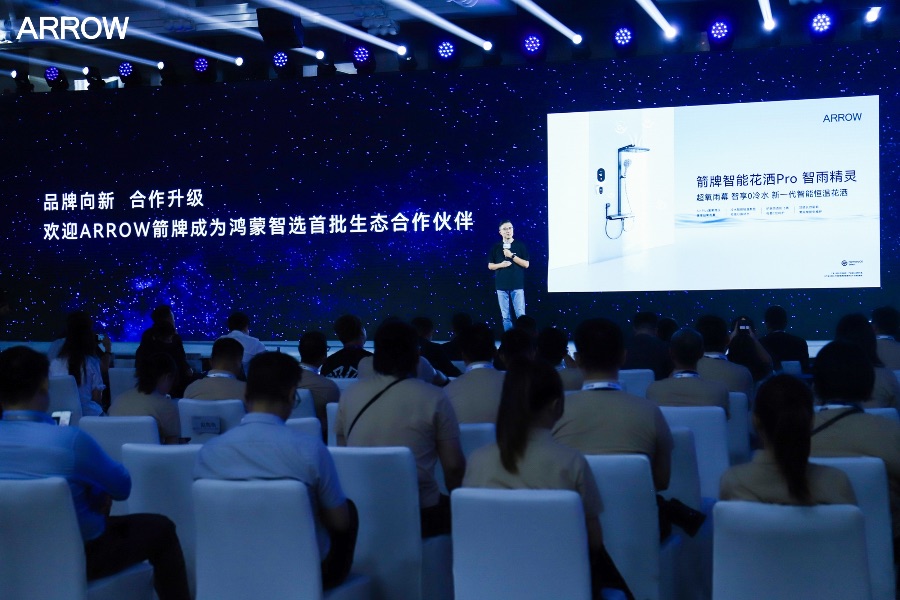
“好房子”东风下,箭牌家居引领智能卫浴进入“场景互联”新阶段
2 1 Shi Ji Jing Ji Bao Dao· 2025-12-26 07:43
Core Insights - The article highlights the transformation of the Chinese bathroom industry from imitation to innovation, emphasizing the integration of AI technology in smart home solutions, particularly in the bathroom sector [1][3][10] Group 1: Industry Trends - The Chinese smart home market is projected to ship 281 million units by 2025, reflecting a year-on-year growth of 7.8% [3] - The collaboration between Arrow Home and Hongmeng Smart Selection signifies a shift in the smart home competition from product functionality to ecosystem collaboration [1][2][10] - The industry is moving towards high-quality development, focusing on smart, healthy, and green home solutions, driven by government policies [2][3] Group 2: Company Collaboration - Arrow Home has become the first ecological partner in the bathroom industry for Hongmeng Smart Selection, indicating a strategic alliance aimed at enhancing user experience through integrated technology [4][6] - The partnership aims to combine Arrow's manufacturing expertise with Hongmeng's open technology ecosystem, facilitating a seamless user experience in smart bathrooms [1][6][10] - The "Smart Rain Spirit" series of shower products exemplifies this collaboration, offering features like remote temperature control and integration with other smart devices [6][8] Group 3: Consumer Experience - Current smart bathroom products often lack integration, leading to a fragmented user experience where multiple devices require manual operation [5][9] - The collaboration aims to redefine the bathroom space as a holistic environment for relaxation and health, moving beyond mere functionality [8][13] - The focus is on creating a seamless, user-friendly experience that prioritizes comfort and convenience, addressing the pain points of existing smart products [9][13] Group 4: Future Outlook - The future of competition in the smart home industry will hinge on the ability to provide complete scene solutions rather than isolated product features [11][13] - Arrow Home's approach combines professional manufacturing with ecosystem collaboration, positioning the company to thrive in a scenario-driven market [13][14] - The evolution of the home as a nurturing space emphasizes the importance of smart technology in enhancing emotional well-being and comfort [11][14]