
量子计算

Search documents
晚报 | 12月1日主题前瞻
Xuan Gu Bao· 2025-11-30 14:35
Silver Market - Silver prices surged significantly on November 28, with COMEX silver futures reaching a high of $57.245 per ounce and London spot silver hitting $56.78 per ounce, while domestic futures peaked at 13,239 yuan per kilogram. The year-to-date increase has reached 90%, making it one of the strongest performers this year [1] - The strong performance of silver is driven by macro monetary policy expectations and supply-demand dynamics. The market now anticipates an 85% probability of a 25 basis point rate cut by the Federal Reserve in December, up from about 40% a week prior. This easing expectation has weakened the dollar index, reducing the holding cost of silver and attracting significant capital inflows into precious metals [1] - The global silver market has experienced a supply deficit for the fifth consecutive year, estimated at 95 million ounces. High photovoltaic installation levels and increased penetration of electric vehicles are expected to sustain industrial demand for silver, with projections indicating continued supply shortages through 2026, providing strong support for silver prices [1] Quantum Computing - On November 28, the University of Science and Technology of China achieved a significant breakthrough in quantum simulation by detecting high-order non-equilibrium topological phases using the programmable superconducting quantum processor "Zuchongzhi No. 2." This marks an important advancement in exploring complex topological states [2] - The experiment demonstrates the significant advantages of superconducting quantum processors in programmability and control precision, reinforcing the leading position of this technology route. The findings are expected to facilitate applications in condensed matter physics, quantum chemistry, and materials science, potentially addressing challenges in high-temperature superconductivity and complex molecular structures [2] Cybersecurity - The Political Bureau of the Central Committee of the Communist Party of China emphasized the importance of strengthening network ecological governance during a collective study session on November 28. This governance is crucial for national development and security, as well as for the interests of the people [3] - The meeting highlighted the challenges posed by emerging technologies such as artificial intelligence and big data, while also recognizing the new support conditions they provide for network governance. It called for the encouragement of new technology development in the internet and information sectors, and the establishment of a tiered and classified security regulatory mechanism [3] Tantalum Capacitors - Amid the rapid expansion of AI server data centers, the supply of tantalum capacitors is tightening, with Panasonic announcing price increases of 15% to 30% for certain models. This price hike follows similar actions by American manufacturers, indicating a hot market for tantalum capacitors [4] - The tantalum supply chain is characterized by oligopoly and long delivery times, suggesting a potential wave of price increases in 2026. Tantalum capacitors are critical electronic components used in power management, signal coupling, and filtering, with demand surging due to the rapid growth of AI and other high-tech applications [4] IP Economy - The film "Zootopia 2" achieved a single-day box office of over 700 million yuan on November 30, surpassing "Avengers: Endgame" to become the highest single-day box office for an imported film in China's history. The film's total box office has exceeded 2 billion yuan, making it the highest-grossing imported animated film in China [5] - The surge in demand for "Zootopia 2" has led to a significant increase in the prices of related merchandise, such as blind boxes, reflecting a trend of emotional consumption among young people [5] Copper Market - LME copper futures surged over 4% on Friday, breaking the $11,200 mark and reaching a historical high for the first time in four weeks. This increase is attributed to expectations of a Federal Reserve rate cut and a focus on supply shortages, with miners pricing commodities significantly above buyer expectations [6] - The global copper market is experiencing its tightest supply chain ever, driven by weak supply growth and frequent disruptions, alongside strong demand from emerging sectors and stable demand from traditional core areas [6] AI Toys - The AI emotional companion toy "Smart Hanhai" launched by Huawei sold out immediately upon release, indicating strong market demand. Additionally, Honor announced a strategic partnership with Aofei Entertainment to develop AI interactive toys targeting young consumers [7] - The AI toy market is expected to expand rapidly, with projections indicating that by 2030, the market size in China will exceed 100 billion yuan. The high gross margins of over 70% for mid-to-high-end AI toys are attracting significant investment [7] Energy Storage - On November 28, the Ministry of Industry and Information Technology held a meeting to discuss the battery industry, focusing on regulating competition and promoting high-quality development in the power and energy storage battery sectors. The meeting emphasized the need for targeted policy measures and monitoring of production capacity [9] - By 2025, the Chinese energy storage industry is expected to undergo a significant transition, with independent energy storage becoming mainstream as mandatory storage policies are phased out. The global market is experiencing rapid growth, particularly in the U.S. and Europe, leading to increased orders for domestic energy storage cell manufacturers [9]

中科大×山西大学合作发表最新Science论文
生物世界· 2025-11-28 10:00
Core Insights - The article discusses a significant breakthrough in the field of quantum simulation, specifically the realization and detection of higher-order nonequilibrium topological phases (HOTPs) using a programmable superconducting quantum processor [1][5]. Group 1: Research Background - Topological phases have emerged as a crucial research direction in condensed matter physics and quantum simulation, with higher-order topological phases challenging traditional bulk-boundary correspondence [3]. - The realization of higher-order topological phases in quantum systems has been a scientific challenge, with potential implications for revealing the quantum nature of topological states and enabling topological quantum computing based on non-Abelian statistics [4]. Group 2: Experimental Achievements - The research team successfully implemented quantum simulation and detection of both balanced and nonequilibrium second-order topological phases using the "Zuchongzhi 2" superconducting quantum processor [5]. - They developed theoretical designs for static and Floquet quantum circuits to construct higher-order topological Hamiltonians in a two-dimensional superconducting qubit array, addressing key challenges in the field [5]. - The experimental setup involved a 6×6 qubit array, where the team executed up to 50 Floquet periods of evolution operations, successfully realizing four different types of nonequilibrium second-order topological phases and exploring their energy spectra, dynamical behaviors, and topological invariants [5][7].

中央企业布局未来产业大有可为
Zheng Quan Shi Bao Wang· 2025-11-28 09:35
Core Viewpoint - The article emphasizes the importance of central enterprises in China to strategically layout future industries driven by cutting-edge technologies, which are crucial for national development and economic transformation [1][2][3]. Group 1: Historical Mission of Central Enterprises - The layout of future industries is essential for national strategy, as it helps seize opportunities from the new technological revolution and industrial transformation [2]. - Central enterprises face risks in key areas like high-end chips and industrial software, which threaten national security and technological independence [2]. - The 14th Five-Year Plan outlines the need for initiatives in advanced technologies such as brain-like intelligence, quantum information, and hydrogen energy [2]. Group 2: Development of New Quality Productivity - New quality productivity is driven by technological breakthroughs and innovative resource allocation, representing the evolution of advanced productivity [4]. - Future industries, including quantum technology and bio-manufacturing, are seen as pivotal for economic growth and sustainability [4]. - The cultivation of future industries is viewed as a key strategy for enhancing China's competitive edge and achieving high-quality economic development [4]. Group 3: Opportunities for Transformation and Upgrading - Central enterprises are urged to transition from traditional growth models to high-value, high-tech industries to address challenges like overcapacity and declining profit margins [5]. - Future industries are expected to create new pillar industries worth hundreds of billions or even trillions, providing a second growth curve for central enterprises [5]. - A strategic plan is necessary for central enterprises to focus on high-collaboration areas within the industry chain [5]. Group 4: Advantages and Current Trends of Central Enterprises - Central enterprises possess strong capital strength and technical reserves, with total assets exceeding 90 trillion yuan by the end of 2024 [7]. - Since the 14th Five-Year Plan, central enterprises have invested 8.6 trillion yuan in strategic emerging industries [7]. - Central enterprises play a crucial role in national strategic missions, enabling resource integration and collaborative operations [7]. Group 5: Breakthroughs in Key Future Industries - Central enterprises have made significant progress in humanoid robotics, quantum computing, and controllable nuclear fusion, showcasing their technological capabilities [8][9]. - The establishment of a controllable nuclear fusion innovation consortium indicates a commitment to advancing this critical technology [9]. - Continuous reforms in state-owned enterprises aim to enhance innovation capabilities and core competitiveness [9]. Group 6: Systematic Planning for Future Industries - Central enterprises must adopt a systematic approach to strategically plan for future industries, ensuring they remain at the forefront of national development [10]. - Differentiated strategies are necessary for various sectors, considering their unique challenges and resource endowments [11]. - Emphasis on internal innovation and collaboration with external partners is crucial for building a robust industrial ecosystem [13]. Group 7: Reforming Mechanisms and Support Systems - Reforming governance structures and financial support systems is essential to foster innovation and provide long-term capital for future industries [14]. - Central enterprises should lead the establishment of common technology platforms and promote international cooperation in technology [14]. - Creating an open innovation ecosystem will facilitate collaboration across various sectors and enhance overall industry competitiveness [14].

中国首个规模化专用光量子计算机制造工厂落地深圳
Zhong Guo Jing Ji Wang· 2025-11-26 07:03
Core Insights - The inauguration of China's first large-scale dedicated optical quantum computer manufacturing facility marks a significant step in the country's quantum technology development, transitioning from laboratory principles to industrial applications [1][2] - The facility, covering approximately 5,000 square meters, is capable of producing dozens of dedicated optical quantum computers annually, filling a global manufacturing gap in this field [1][3] Group 1: Technological Advancements - The team has made continuous breakthroughs in key technologies such as coherent light sources, low-loss optical paths, and high-speed measurement and control, establishing a fully autonomous optical quantum computing engineering system [2] - The successful implementation of this manufacturing facility is a physical manifestation of these technological capabilities, emphasizing that the real value lies in practical applications [2] Group 2: Collaborative Efforts - The company has engaged in deep collaborations with various partners, including Guangzhou National Laboratory, China Mobile, and Ping An Group, to validate the efficiency and quality advantages of optical quantum computers in different scenarios [2] - The supportive business environment in Shenzhen, characterized by innovation and efficiency, has encouraged the company to establish its primary manufacturing base there [2] Group 3: Manufacturing Process - The facility integrates research and development, manufacturing, and testing, aiming for engineering, standardization, and large-scale production of optical quantum computers [3] - It features a clean production area designed to maintain quantum state stability, supported by a five-layer guarantee system including personnel purification and air cleanliness [3] - The manufacturing process consists of seven major processes, 223 procedures, and over 1,000 operational steps, ensuring a highly integrated and precise assembly line for quantum computing [3]
中国量子计算从“实验室”走向“生产线”
Nan Fang Du Shi Bao· 2025-11-25 23:09
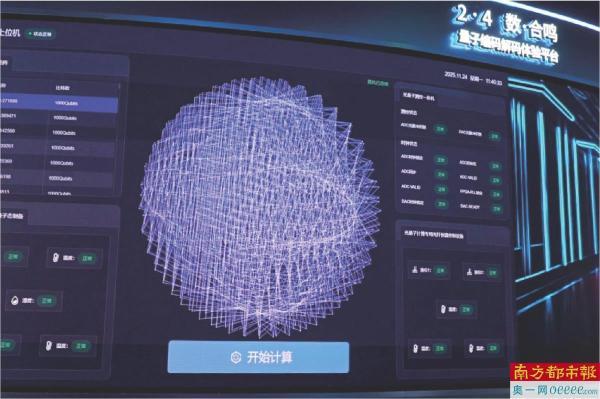
中国首个规模化专用光量子计算机制造工厂启用仪式现场展示相关数据和设备。 11月24日,我国量子计算在深圳南山迎来历史性突破:中国首个规模化专用光量子计算机制造工厂在南 山智城启用。该制造工厂的落地,标志着我国量子计算正式从"实验室原理验证"迈入"工程化量产"新阶 段,不仅填补了全球光量子计算机规模化制造的行业空白,也为我国在全球量子科技竞争中抢占产业化 先机奠定关键基础。 政策面上,"量子科技"被写入《中共中央关于制定国民经济和社会发展第十五个五年规划的建议》,与 生物制造、氢能和核聚变能、脑机接口、具身智能、6G等并列为前瞻布局的未来产业。 迎产业化里程碑 工厂的核心竞争力体现在严苛的制造标准与完善的技术保障体系。魏海介绍,光量子计算机共7大制 程、223道工序、1000余个工步,位于南山区的这个全国首个规模化专用光量子计算机制造工厂总面积 约5000平方米,主要划分为两大功能板块:万级洁净生产区和综合配套支持区。 中国首个规模化专用光量子计算机制造工厂启用仪式现场展示相关数据和设备。 建立可复制、可扩展的量子硬件制造标准 "这座工厂的落成,不仅是生产线,更是连接基础科学与产业应用的'桥梁'。"中国科学院院 ...
开展“科创天府·智汇蓉城”活动 打造城市科创品牌 四川成都:科技成果转化新机制赋能城市高质量发展
Ren Min Ri Bao· 2025-11-25 22:16
Core Insights - The "Science and Technology Innovation Tianfu · Smart Chengdu" initiative has successfully facilitated over 300 technology achievement matching events in the past year, involving more than 9,000 enterprises and resulting in over 400 collaborations between industry, academia, and research institutions [1][2][3] Group 1: Mechanism and Structure - Chengdu has established a regular mechanism for technology achievement matching, focusing on high-level supply-demand alignment through government-led initiatives and multi-party collaboration [2] - The city has created a specialized activity system for technology supply-demand matching, including three categories: technology seeking, market seeking, and funding seeking, to ensure frequent and precise interactions [2][4] Group 2: Innovation and Brand Development - The initiative has attracted over 9,000 enterprises, enabling them to efficiently secure orders and find partners, thereby enhancing the innovation capacity of local businesses [3] - Chengdu is actively building a nationally influential urban innovation brand, expanding its innovation network to regions such as the Chengdu-Chongqing area, Yangtze River Delta, and Greater Bay Area, as well as international collaborations [3] Group 3: Ecosystem and Support Services - Chengdu has developed a comprehensive service system to support sustainable innovation ecosystems, including specialized teams for technology transfer and industry chain collaboration [4][5] - The city has implemented an online and offline innovation transformation service system, helping over 2,153 technology-based SMEs secure bank loans totaling 11.755 billion yuan [5]
晚报 | 11月26日主题前瞻
Xuan Gu Bao· 2025-11-25 14:31
Group 1: Space Computing - The "Liangxi Constellation" project, involving 12 intelligent computing satellites, is publicly tendered with an estimated contract value of 450 million yuan [1] - The project aims to address the increasing demand for computing power driven by the explosive growth of artificial intelligence (AI), as traditional data centers face significant limitations [1] - Space computing is expected to become a crucial component of future computing infrastructure, with investment opportunities across satellite manufacturing, core chips, data processing, and communication links [1] Group 2: Artificial Intelligence - Alibaba reported a revenue of 247.8 billion yuan for Q2 of fiscal year 2026, with its Cloud Intelligence Group generating 39.82 billion yuan, exceeding market expectations [2] - AI-related product revenue has seen triple-digit growth for nine consecutive quarters, with a year-on-year increase of 34% in the Cloud Intelligence Group [2] - Alibaba's Qwen app achieved over 10 million downloads within a week of its public beta, surpassing the growth rates of competitors like ChatGPT [2] Group 3: Commercial Space - The National Space Administration of China has issued a plan to promote high-quality and safe development of commercial space from 2025 to 2027, including the establishment of a national commercial space development fund [3] - The plan aims to enhance the commercial space ecosystem, which includes satellites, rockets, and launch facilities, transitioning from technology validation to large-scale application [3] - The commercial space sector is expected to play a vital role in China's global space economy and contribute to the digital economy and smart society [3] Group 4: Quantum Computing - China's first large-scale dedicated optical quantum computer manufacturing facility has opened, marking a significant step towards the industrialization of quantum computing [4] - Quantum computing is recognized as a core driver of next-generation information technology, capable of addressing traditional computing power limitations [4] - The industry is expected to grow rapidly due to technological breakthroughs, policy support, and market demand, with applications expanding across various sectors [4] Group 5: Data Elements - The National Data Bureau has initiated a pilot project for the development and utilization of data resources in state-owned enterprises, involving 12 central enterprises [7] - This initiative is part of a broader strategy to enhance the value of public data operations, which is expected to significantly impact economic and social development [7] Group 6: 3D Vision Technology - Huawei has launched the Mate 80 series smartphones, which support 3D facial recognition technology, enhancing payment security and user convenience [6] - The 3D vision industry is anticipated to experience explosive growth starting in 2024, driven by the demand for high-precision perception in automation applications [6]

国盾量子:11月25日召开董事会会议
Mei Ri Jing Ji Xin Wen· 2025-11-25 12:10
Group 1 - The core point of the article is that Guodun Quantum (SH 688027) announced its board meeting and provided details on its revenue composition for 2024, highlighting the significant contributions from various sectors within the quantum industry [1] - The revenue composition for Guodun Quantum in 2024 is as follows: Quantum communication accounts for 57.79%, quantum computing for 22.33%, quantum precision measurement for 15.32%, and other businesses for 4.56% [1] - As of the report, Guodun Quantum has a market capitalization of 47.3 billion yuan [1] Group 2 - The article also mentions another company, which has recently faced regulatory scrutiny from the China Securities Regulatory Commission (CSRC) due to a significant loss exceeding 100 million yuan shortly after its IPO [1] - The core product of this company has been severely impacted as its largest customer has shifted to self-sourcing, resulting in reduced procurement [1]

11.25犀牛财经早报:沪深ETF规模逾5.7万亿元 雷军超1亿港元增持小米集团
Xi Niu Cai Jing· 2025-11-25 01:39
Group 1: ETF Market Growth - The total scale of ETFs in Shanghai and Shenzhen has exceeded 5.7 trillion yuan, with 772 ETFs in Shanghai valued at 40,847.47 billion yuan and 559 ETFs in Shenzhen valued at 16,246.33 billion yuan [1] - Recent regulatory changes by the China Securities Regulatory Commission have optimized the ETF registration and listing review process, potentially enriching product supply and attracting more long-term capital into the market [1] Group 2: Financial Support for Consumption - Various regions have announced financial policies to support consumption, focusing on encouraging consumer-oriented companies to go public and guiding financial institutions to utilize loans for consumption and elderly care [1] - Supporting high-quality consumer companies is expected to enhance corporate credibility, expand quality supply, and optimize consumption structure [1] Group 3: Share Buybacks by Listed Companies - A-share listed companies have shown strong enthusiasm for share buybacks, with 1,859 buyback plans implemented this year, involving 1,365 companies, and 365 companies completing buybacks exceeding 100 million yuan [1] - The total buyback amount has reached approximately 227.5 billion yuan, signaling positive market sentiment and investor confidence [1] Group 4: Copper Industry Challenges - Copper prices have reached historical highs, but rising raw material costs are significantly impacting downstream operations, with 18% of small and medium-sized enterprises in the copper supply chain reducing production [2] - Many copper smelting plants are facing raw material shortages, leading to increased operational pressures and a potential shift towards aluminum in various applications due to cost advantages [2] Group 5: Quantum Computing Development - China's first optical quantum computer manufacturing plant has been established in Shenzhen, covering approximately 5,000 square meters and integrating R&D, manufacturing, and testing [3] - The plant aims to achieve engineering, standardization, and large-scale production of optical quantum computers, marking a significant step in the country's quantum computing capabilities [3] Group 6: Investment in Robotics - Three listed companies, Longqi Technology, Ningbo Yunsheng, and Ningbo Huaxiang, have announced plans to invest in a new venture capital fund focused on the embodied intelligence industry [5] - The fund aims to stimulate the growth of the supply chain ecosystem by investing in early-stage innovative companies within the industry [5] Group 7: Xiaomi Stock Buyback - Xiaomi Group's founder Lei Jun has personally invested over 100 million Hong Kong dollars to increase his stake in the company, raising his ownership to 23.26% [5] - The company has conducted significant stock buybacks, totaling over 2.3 billion Hong Kong dollars this year [5] Group 8: New H Shares Issuance - UBTECH has announced a placement of 31.468 million new H shares at a discount of approximately 11.39% from the previous closing price [6] - LeMo Technology plans to globally issue 5.5556 million H shares, with a maximum price of 40 Hong Kong dollars per share [7] Group 9: Control Change in ST Lvkang - ST Lvkang has undergone a change in controlling shareholder to Zongteng Network, with the actual controller now being Wang Zuan [8] - This change is not expected to have a significant adverse impact on the company's main business and operating performance [8] Group 10: Lithium Hexafluorophosphate Supply - Xinzhou Bang has reported that its self-supply ratio of lithium hexafluorophosphate is currently between 50% and 70%, with plans to maintain this level while optimizing costs [9] - The company aims to balance cost control with external partnerships to ensure supply chain stability [9] Group 11: Stock Issuance by Guangxun Technology - Guangxun Technology's application for a specific stock issuance has been accepted by the Shenzhen Stock Exchange, pending further regulatory approvals [10]

科技团队联合展望 - 2026年度策略报告汇报会议
2025-11-26 14:15
Summary of Key Points from the Conference Call Industry or Company Involved - The conference call discusses various sectors including AI computing, telecommunications, quantum computing, and optical modules, with a focus on companies like Google and domestic firms in China. Core Insights and Arguments 1. **AI Computing Sector**: - The introduction of Google's multimodal understanding model is expected to enhance performance in optical modules and OCS optical switching, benefiting related companies in the supply chain [1][3][4] - Optimistic revenue forecasts from companies like Opai, projecting $125 billion by 2029 and $200 billion by 2030, indicate a strong investment outlook in AI computing despite short-term trading pressures [1][3][4][5] 2. **Telecommunications Operators**: - High dividend yields make telecom operators attractive as dividend assets, with resilient profit margins expected to sustain steady growth and substantial dividend returns despite macroeconomic pressures [1][6] 3. **Quantum Computing Developments**: - The superconducting route in quantum computing is slightly ahead, with companies like Benyuan Quantum initiating IPOs. The value of a single quantum computer can reach tens of millions of dollars, highlighting the importance of dilution refrigerants and superconducting coaxial cables [1][7] 4. **Optical Module Industry**: - The optical module sector is optimistic about 2026, with rising demand for 800G and 1.6T modules. Supply constraints in lasers and optical chips are expected to support performance growth for core companies [1][8][9] 5. **Storage Market Dynamics**: - Strong demand for storage driven by AI is reshaping the market, with traditional PC, server, and mobile markets being impacted. The emergence of "warm data" between hot and cold data is significantly boosting storage needs [1][16] 6. **Investment Strategies for 2026**: - Investment strategies will focus on AI, divided into model end, hardware end, and terminal end, emphasizing large model manufacturers, core chips like GPUs, and new terminal devices such as smart glasses and robots [1][11] 7. **Hardware Market Trends**: - The PCB market is projected to exceed 90 billion yuan by 2026, driven by AI demand, although high-end capacity remains limited [1][14] 8. **Media and Internet Sector Outlook**: - The media and internet industry is expected to see accelerated AI application development and a rebound in content consumption, with significant competition among major players for new traffic entry points [1][20][27][33] Other Important but Possibly Overlooked Content - The gaming industry is anticipated to maintain high growth in 2026, driven by successful titles and community engagement, indicating a strong potential for AI integration [1][30] - Domestic companies are increasingly leveraging AI for business development, with notable success in overseas markets [1][25][29] - The commercialization of AI applications is expected to be driven by user growth, increased payment penetration, and price hikes through premium offerings [1][22][23]