
农产品种植

Search documents
南美大豆,玉米主产区天气展望
Guo Tai Jun An Qi Huo· 2025-11-21 14:01
Report Summary 1) Report Industry Investment Rating No information provided. 2) Core View of the Report The report focuses on the current growth situation of soybeans and corn in Brazil and Argentina, as well as their future two - week weather forecasts and potential impacts on the market. The sowing progress of soybeans and corn in both countries is compared with previous years and multi - year averages, and the future precipitation and temperature changes are analyzed [9][10][14][15]. 3) Summary by Related Catalogs Soybean Growth and Weather - As of November 18, 2025, the sowing progress of Brazil's 2025/26 soybean was 69%, lower than 73.8% in the same period last year, 58.4% the previous week, and the five - year average of 67.2% [9]. - As of November 20, 2025, the sowing progress of Argentina's 2025/26 soybean was 24.6%, compared with 12.6% the previous week, 35.6% in the same period last year, and the five - year average of 27.6% [9]. - Brazil's rainy season is gradually returning. In the next two weeks, precipitation will be slightly less than the same period, and unevenly distributed. Precipitation in the central - western region is normal to less, while that in the eastern and northern regions is more obvious [10]. - Argentina had good soil moisture in the early stage. In the next two weeks, precipitation will be less. Dry weather is conducive to sowing, but continuous drought should be watched out for [10]. Corn Growth and Weather - As of November 15, 2025, the sowing of Brazil's first - season corn was 52.6% completed, compared with 52.4% in the same period last year, 47.7% the previous week, and the five - year average of 53% [14]. - As of November 20, 2025, the sowing progress of Argentina's 2025/26 corn was 37.3%, compared with 36.7% last week and 49.94% in the same period last year [14]. - Similar to soybeans, Brazil's rainy season is gradually returning. In the next two weeks, precipitation will be slightly less than the same period and unevenly distributed. Argentina's precipitation will be less in the next two weeks, and continuous drought should be watched out for [15]. Specific Precipitation and Temperature Data - There are detailed charts showing the precipitation and temperature changes in the soybean and corn producing areas of Brazil and Argentina in the next two weeks, including the comparison of forecast precipitation with normal values and the departure of forecast daily - mean temperature from normal values [5][8][11][13]
南美大豆、玉米主产区天气展望
Guo Tai Jun An Qi Huo· 2025-11-21 11:38
Report Industry Investment Rating - No relevant information provided Core Viewpoints - As of November 18, 2025, Brazil's 2025/26 soybean sowing progress was 69%, lower than 73.8% in the same period last year, 58.4% the previous week, and the five - year average of 67.2%. As of November 20, Argentina's 2025/26 soybean sowing progress was 24.6%, compared to 12.6% the previous week, 35.6% in the same period last year, and the five - year average of 27.6% [9] - As of November 15, Brazil's first - season corn sowing was 52.6% complete, compared to 52.4% in the same period last year, 47.7% the previous week, and the five - year average of 53%. As of November 20, Argentina's 2025/26 corn sowing progress was 37.3%, compared to 36.7% last week and 49.94% in the same period last year [14] - Brazil's rainy season is gradually returning. In the next two weeks, precipitation will be slightly less than the same period last year and unevenly distributed. In Argentina, the early soil moisture was good, with less precipitation in the next two weeks. Dry weather is beneficial for sowing but continuous drought should be watched out for [10][15] Summary by Related Catalogs Soybean Situation Current Growth and Sowing Progress - As of November 18, 2025, Brazil's 2025/26 soybean sowing progress was 69%, lower than 73.8% in the same period last year, 58.4% the previous week, and the five - year average of 67.2% [9] - As of November 20, Argentina's 2025/26 soybean sowing progress was 24.6%, compared to 12.6% the previous week, 35.6% in the same period last year, and the five - year average of 27.6% [9] Weather Forecast - Brazil: Rainy season is returning. In the next two weeks, precipitation is slightly less than the same period last year and unevenly distributed. Midwest has normal to less precipitation, while the east and north have more obvious precipitation return [10] - Argentina: Early soil moisture was good. In the next two weeks, precipitation is less. Dry weather is good for sowing, but continuous drought should be watched out for [10] Weather Data Visualization - There are charts showing the precipitation and temperature anomalies in Brazil and Argentina in the next two weeks, as well as the precipitation and temperature changes in soybean - producing areas in the next two weeks [1][2][5] Corn Situation Current Growth and Sowing Progress - As of November 15, Brazil's first - season corn sowing was 52.6% complete, compared to 52.4% in the same period last year, 47.7% the previous week, and the five - year average of 53% [14] - As of November 20, Argentina's 2025/26 corn sowing progress was 37.3%, compared to 36.7% last week and 49.94% in the same period last year [14] Weather Forecast - Brazil: Rainy season is returning. In the next two weeks, precipitation is slightly less than the same period last year and unevenly distributed. Midwest has normal to less precipitation, while the east and north have more obvious precipitation return [15] - Argentina: Early soil moisture was good. In the next two weeks, precipitation is less. Dry weather is good for sowing, but continuous drought should be watched out for [15] Weather Data Visualization - There are charts showing the precipitation and temperature changes in corn - producing areas in Brazil and Argentina in the next two weeks [11][12][13]
河南淅川:特色产业铺就乡村振兴路
Zhong Guo Jing Ji Wang· 2025-11-21 06:27
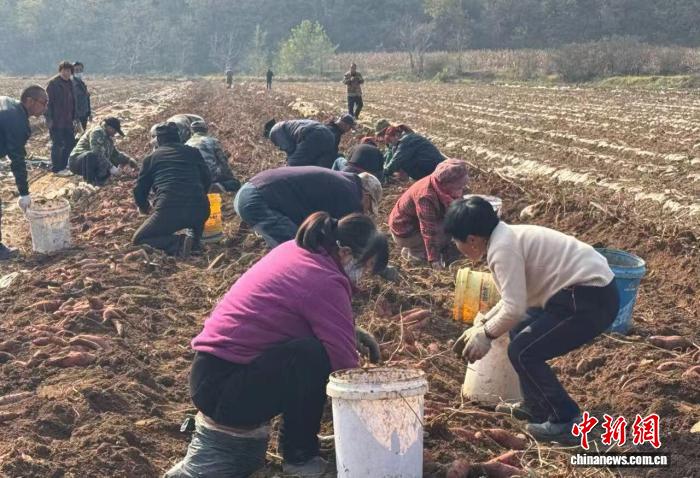
Core Viewpoint - The development of sweet potato cultivation in Xichuan County is a key part of the local agricultural restructuring and rural revitalization strategy, significantly contributing to the income of local farmers and the overall economic growth of the region [1][2]. Group 1: Agricultural Development - Xichuan County has cultivated over 6,000 acres of sweet potatoes, providing employment for hundreds of villagers and increasing monthly income by over 2,000 yuan [1]. - The county has established a model of "one town, one specialty" and "one village, one product," promoting tailored agricultural development plans based on local resources and advantages [1]. Group 2: Agricultural Enterprises and Cooperatives - Xichuan has developed 24 agricultural leading enterprises, nearly 2,000 agricultural cooperatives, and 682 family farms, fostering high-quality industrial development [2]. - The county has established 110,000 acres of standardized agricultural bases and has implemented 18 agricultural standards, focusing on organic and green product certifications [2]. Group 3: Product Marketing and Branding - The "Xiyou Mountain River" regional public brand has been integrated to enhance product sales, with 53 merchants authorized to use the brand, covering 165 product categories [2]. - The county actively collaborates with e-commerce platforms and live-streaming influencers to promote products in real-time, expanding market reach [2]. Group 4: Specialty Industry Clusters - Xichuan has formed three major advantageous specialty industry clusters: fruit, medicinal herbs, and edible fungi, with a total area of over 230,000 acres for fruit cultivation and 100,000 acres for medicinal herbs [3].
山东邹平:特色产业筑基 文农旅融合发展绘新卷
Zhong Guo Xin Wen Wang· 2025-11-21 06:19
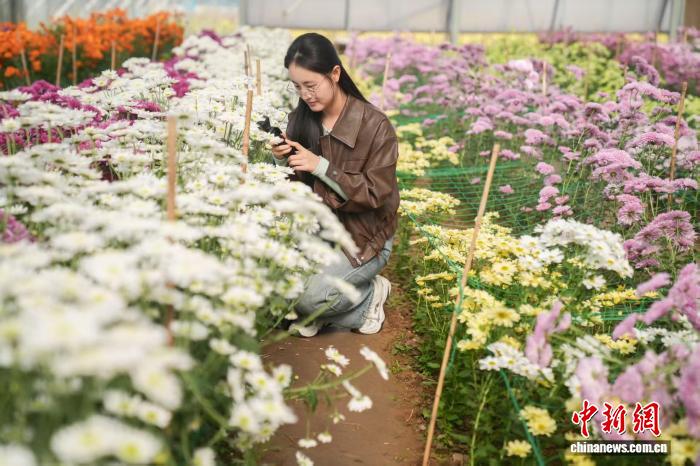
Core Insights - The article highlights the integration of agriculture, culture, and tourism in Zhou Ping, Shandong, showcasing a high-quality rural revitalization path through distinctive industries and cultural tourism [1][5]. Summary by Sections Agricultural Development - The Bafang Farm in Changshan Town has introduced 200 varieties of chrysanthemums, creating a "Chrysanthemum Festival" that has attracted approximately 80,000 visitors this year [2]. - The farm's chrysanthemum planting yields 1,000 pounds per acre, with an economic benefit of around 10,000 RMB per acre [2]. Cultural and Tourism Integration - Qiao Family Village has developed a model combining intangible cultural heritage workshops and unique homestays, generating an annual cultural income of 150,000 RMB [2][3]. - The village has invested 10 million RMB to transform idle old houses into heritage workshops and educational bases, with 80 units currently in use [3]. Industry and Economic Impact - The Ai Cao Industry Park has developed over 20 products from mugwort, increasing the added value by more than ten times [4]. - The park collaborates with local schools to create an educational base, receiving over 3,000 students for hands-on experiences related to mugwort culture [4]. Overall Development Strategy - Zhou Ping is leveraging its rural resources to cultivate distinctive industries through various models such as "Agriculture + Culture and Tourism," "Intangible Heritage + Industry," and "Ecology + Processing" [5].

厄尔尼诺及拉尼娜影响下油菜籽供给指标如何演变
对冲研投· 2025-11-20 11:55
Core Viewpoint - The article discusses the impact of El Niño and La Niña on canola production in major exporting countries, highlighting the probabilities of yield changes and area variations under different climatic conditions [5][10]. Group 1: El Niño Impact - In Canada, initial high temperatures during the sowing period lead to a higher probability of reduced yield (44%), but an increased area (56%) may offset this, resulting in a 67% chance of overall production increase [5]. - Ukraine experiences dry conditions during the planting period, with a high probability of reduced yield (78%) but also a 56% chance of increased area, leading to a 56% probability of production increase [5]. - Australia faces high temperatures and drought during the growing season, with a 78% probability of reduced yield and a 67% chance of overall production decrease [6]. - In Russia, some areas are cooler during the growing season, with a 63% probability of reduced area and a 50% chance of reduced yield, leading to a 63% probability of decreased production [7]. - The EU experiences wet and hot conditions during sowing, with an 86% probability of reduced yield and a 57% chance of decreased area, resulting in an 86% probability of reduced production [7]. Group 2: La Niña Impact - In Canada, only a small part of the western coastal region is affected by cooler temperatures, leading to a 55% probability of reduced yield but a 64% chance of increased area, resulting in a 73% probability of overall production increase [8]. - Australia shows a high probability of increased production (82%) and yield (73%) during La Niña conditions, with favorable weather during the growing season [8]. - Ukraine and the EU have a high probability of increased yield (78% for Ukraine and 71% for the EU) during La Niña, although Ukraine faces a 67% chance of reduced area, leading to a 56% probability of decreased production [8]. - In Russia, the harvest period sees high temperatures, with a 71% probability of reduced yield but a 100% chance of increased area, resulting in a 71% probability of no overall production decrease [8]. Group 3: Summary of Climatic Effects - Regardless of whether El Niño or La Niña occurs, Canada and Russia have a higher probability of reduced yield, while Australia is more likely to increase production under La Niña and decrease under El Niño [9][10]. - Ukraine and the EU show a higher probability of increased yield under La Niña, but Ukraine's area changes often inversely affect yield, leading to production following area trends [9][10]. - The weak La Niña phenomenon is expected to last until February next year, with current weather conditions in Canada, Russia, Australia, Ukraine, and the EU being monitored for their impact on canola production [10][11].

东北产区花生产量、品质双提升 与河南地区花生价差拉大
Xin Hua Cai Jing· 2025-11-20 06:29
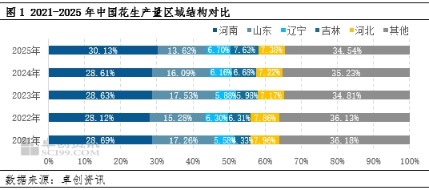
Core Insights - The weather conditions in Northeast China's peanut production areas have been favorable this year, leading to improvements in both yield and quality for the new harvest season [1][3] - The price disparity between high-quality peanuts from Northeast China and average-quality peanuts from Henan is expected to widen, with good quality peanuts likely to see price increases before the New Year [1][6] Production and Yield - Over the past five years, the distribution of peanut planting areas in China has slightly changed, with Henan maintaining its position as the largest producer, accounting for approximately 28%-30% of the national total [1] - The production in Liaoning and Jilin provinces is on the rise due to better soil quality and large-scale planting, with forecasts indicating significant increases in peanut production for 2025 [1] - Liaoning's peanut production is expected to reach approximately 1.1623 million tons in 2025, a year-on-year increase of 15.51%, while Jilin's production is projected at about 1.3224 million tons, up 21.23% [1] Quality and Market Dynamics - The quality of peanuts from Northeast China is generally good this season, with harvesting occurring about 10 days earlier than in previous years, despite some areas in Liaoning experiencing a slight decrease in oil content [3] - The market for peanuts in Henan is facing challenges due to delayed harvesting caused by rainy weather, leading to lower quality and prices [3][5] - As of November 18, the average purchase price for white sand peanuts in Northeast China was approximately 9,100 yuan per ton, an increase of 11.66% from early October, while Henan's price dropped by 10.98% to about 7,300 yuan per ton [3][6] Price Trends and Expectations - The market sentiment is cautious, with farmers in Henan showing reluctance to sell high-quality peanuts at low prices, while those in Northeast China are more willing to sell due to better quality [5][6] - There is an anticipated demand for replenishment in the wholesale market leading up to the New Year, which may limit price declines for high-quality peanuts [6] - Expected purchase prices for mid-to-high quality peanuts are projected to be between 7,000-8,000 yuan per ton in Henan and 8,400-9,600 yuan per ton in Liaoning [6]
棕榈油:反弹高度有限,关注产地去库进程,豆油:暂无突破驱动,区间震荡为主,豆粕:调整震荡
Guo Tai Jun An Qi Huo· 2025-11-20 01:31
Report Industry Investment Rating No information provided in the report. Core Views - Palm oil: Limited rebound height, focus on the de - stocking process in the producing areas [2] - Soybean oil: No breakthrough driver, mainly range - bound [2] - Soybean meal: Adjustment and oscillation [2] - Soybean: Stable spot, adjustment and oscillation in the futures market [2] - Corn: Oscillatory operation [2] - Sugar: Weak operation [2] - Cotton: Futures prices maintain an oscillatory trend [2] - Eggs: Near - term weak, long - term strong, in a reverse spread pattern [2] - Pigs: The cooling expectation has been realized, and the pressure is gradually released [2] - Peanuts: Pay attention to the actions of oil mills [2] Summary by Related Catalogs Palm Oil and Soybean Oil - **Fundamentals**: Palm oil futures had a night - session decline of - 0.66%, and soybean oil futures had a night - session increase of 0.05%. Spot prices of palm oil in Guangdong increased by 120 yuan/ton, and that of soybean oil in Guangdong increased by 50 yuan/ton [4] - **News**: Sarawak Oil Palms aims to increase production by 5% this year, with a total output of 1.25 million tons last year [5][6] Soybean Meal and Soybean - **Fundamentals**: DCE soybean meal 2601 had a day - session decline of - 1.14%, and DCE soybean 2601 had a day - session decline of - 0.77%. Spot prices of soybean meal in different regions had various changes [10] - **News**: On November 19, CBOT soybean futures fell due to long - position liquidation. China bought 792,000 tons of US soybeans on Tuesday and 330,000 tons on Wednesday [10][12] Corn - **Fundamentals**: C2601 had a day - session increase of 0.09% and a night - session decline of - 0.32%. The price of Jinzhou平仓 decreased by 10 yuan/ton [13] - **News**: Northern corn bulk shipping port prices decreased by 10 yuan/ton in some areas, and Guangdong Shekou prices increased by 10 yuan/ton [14] Sugar - **Fundamentals**: The original sugar price was 14.71 cents/pound, a decrease of - 0.04. The futures main - contract price was 5381 yuan/ton, a decrease of - 26 [19] - **News**: In the 25/26 sugar - crushing season, India's sugar export quota is 1.5 million tons. Brazil's sugar production in October increased by 1% year - on - year, and exports increased by 13% [19] Cotton - **Fundamentals**: CF2601 had a day - session increase of 0.67% and a night - session increase of 0.11%. Cotton spot trading was relatively stable, and cotton yarn prices were slightly weak [24][25] - **News**: ICE cotton futures were slightly down, and the market was cautious before the USDA export sales data release [25] Eggs - **Fundamentals**: Egg 2512 had a decline of - 0.75%, and Egg 2601 had a decline of - 0.53%. Spot prices in different regions were relatively stable [30] Pigs - **Fundamentals**: The Henan spot price was 11,830 yuan/ton, an increase of 100. Futures prices of different contracts had different changes [33] Peanuts - **Fundamentals**: PK601 had a decline of - 1.86%, and PK603 had a decline of - 1.34%. Spot prices in different regions were mostly stable [36] - **News**: In the spot market, peanut prices in different regions were stable, with different trading situations [37]
科技引领 品牌赋能 中部农博会为乡村振兴与农业现代化注入新活力
Zhong Guo Fa Zhan Wang· 2025-11-19 05:14
Core Insights - The 26th China Central (Hunan) Agricultural Expo was held from November 14 to 17, showcasing over 3,500 enterprises from 17 provinces and regions in China and more than ten countries, emphasizing the theme of "Technology Leading, Brand Empowerment, and Supporting Rural Revitalization" [1][2] Group 1: Exhibition Highlights - The expo featured a diverse range of agricultural products, including Tianjin's "Imperial Tribute Rice," Jilin's ginseng, and Xinjiang's melons and grapes, demonstrating the rich variety of local and international agricultural goods [2][3] - Hunan's agricultural products, such as "Dongting Fragrant Rice" and "Hunan Tea Oil," were prominently displayed, showcasing the province's branding efforts and the success of geographical indication products [2][3] Group 2: International Participation - The expo included international products from countries like Laos, South Africa, and Thailand, enhancing global agricultural exchanges and showcasing South Africa as the guest country with its unique products [3] Group 3: Technological Advancements - Hunan's agricultural sector is highlighted for its advancements in smart agriculture, with companies like Zhonglian Smart Agriculture showcasing their integrated data collection and decision-making systems for crop management [4][6] - The province has made significant strides in seed industry innovation, producing 30% of the country's hybrid rice seeds and fostering leading enterprises in the sector [5][6] Group 4: Economic Impact - The expo facilitated substantial economic activity, with 28 projects signed worth approximately 10 billion yuan, and total sales exceeding 600 million yuan during the event [7][8] - The event has evolved from a simple product exhibition to a comprehensive platform for brand display, technology exchange, trade negotiation, and investment attraction, contributing to rural revitalization [8][9] Group 5: Future Developments - The expo aims to create a modern agricultural service ecosystem by integrating exhibition, circulation, data, and finance, positioning itself as a continuous empowering hub for the agricultural industry [8][9]
(乡村行·看振兴)山西长治潞城区:红薯“链”动增收 助力乡村发展
Zhong Guo Xin Wen Wang· 2025-11-17 14:09
Core Insights - The article highlights the successful implementation of a sweet potato cultivation model in Gucheng Village, Shanxi Province, which has significantly contributed to rural revitalization and income generation for local farmers [1][3]. Summary by Sections Sweet Potato Cultivation and Economic Impact - Gucheng Village has cultivated approximately 500 acres of sweet potatoes this year, utilizing varieties such as Jishuo 25 and local sandy potatoes, employing advanced agricultural techniques like ridge planting, film covering, and drip irrigation [3]. - The average yield per acre is about 5,000 pounds, leading to a total production of 2.5 million pounds, which has been sold through various channels including e-commerce and wholesale markets [3][4]. - The village has also produced 1.5 million pounds of sweet potato vines, generating an additional income of 300,000 yuan, demonstrating the full utilization of the sweet potato plant [3]. Infrastructure and Market Strategy - The village has established a complete sweet potato industry chain encompassing planting, harvesting, storage, and sales, which enhances the "monetization" capability of the sweet potatoes [4]. - A cooperative led by the village party branch has focused on unified management and sales, aligning with market demands and securing contracts for the purchase of sweet potato vines [3][4]. Future Development Plans - Gucheng Village plans to expand its sweet potato cultivation area and develop deep processing of sweet potatoes, particularly focusing on sweet potato noodle production to strengthen the "Gucheng Village Sweet Potato" brand [4]. - The village aims to further utilize resources such as sweet potato skins and vines to bolster collective economic growth and increase farmers' incomes, contributing to ongoing rural revitalization efforts [4].
南农晨读 | 融深入湾
Nan Fang Nong Cun Bao· 2025-11-15 05:32
Group 1 - The article discusses the trend in Guangdong where some mothers are experiencing minimal out-of-pocket expenses for childbirth, reflecting a shift in the perceived value of childbirth [3][4] - Several provinces, including Jilin, Jiangsu, and Shandong, have implemented policies that allow for childbirth with little to no cost, indicating a broader regional movement towards subsidizing childbirth [4] - The article highlights the importance of addressing misinformation that can harm agricultural producers, as seen in the case of farmers in Chifeng who suffered significant losses due to rumors about free cabbage [5][6][7] Group 2 - The rise of generative AI is changing consumer decision-making processes, with more individuals relying on AI for product recommendations based on brand strength, product advantages, and cost-effectiveness [9][10] - Being selected by AI is becoming a critical threshold for agricultural enterprises to reach core consumers, emphasizing the need for brands to adapt to this new landscape [10][11] - The article notes that as of June 2023, Guangdong has been approved for 229 geographical indication products, ranking first in the country, which enhances the region's agricultural branding and export potential [17][18][19]
