
加密货币

Search documents
Coinbase 指控澳大利亚四大银行系统性 “去银行化” 加密企业
Xin Lang Cai Jing· 2026-02-03 13:39
Core Viewpoint - Coinbase has accused Australia's four major banks of systematically refusing to provide banking services to legitimate cryptocurrency and fintech companies, claiming that "debanking" has evolved from an isolated issue to a norm within the industry, effectively constituting a "de facto illegal regulatory ban" [1] Group 1: Industry Impact - The term "debanking" refers to the practice where banks unilaterally shut down accounts or restrict transfers related to cryptocurrency transactions, leading to significant operational challenges for affected companies [1] - As of 2021, approximately 60% of fintech companies reported being denied services by banks, indicating a widespread issue that remains unresolved [1]

比特币跌超5%,以太坊、狗狗币盘中一度重挫超8%,加密货币全网22万人爆仓
Cai Jing Wang· 2026-02-03 09:18
Group 1: Gold and Silver Market Dynamics - Spot gold reached a historical high of $5598.75 before experiencing a significant drop of 5.9%, hitting a low of $5097.36 per ounce [1] - Spot silver also saw a sharp decline, dropping 8.4% to a low of $106.76 per ounce [1] - As of the latest update, spot gold is trading at $5343.808 per ounce, reflecting a daily decrease of 0.62% [1] - The recent volatility in gold and silver prices is attributed to profit-taking by investors after new highs were reached [4] - Despite the recent drop, gold has increased by 6.5% this week and 23% this month, indicating strong ongoing demand [4] Group 2: Market Reactions and Investor Sentiment - Hong Kong-listed gold stocks such as Chifeng Jilong Gold Mining and Zijin Mining experienced declines of 8.24% and 5.96%, respectively [2] - A-shares in silver and gold sectors faced significant sell-offs, with popular stocks hitting the daily limit down [3] - Investor sentiment is mixed, with some expressing anxiety over recent price fluctuations, while others feel relieved after the rebound [4] Group 3: Cryptocurrency Market Impact - Bitcoin fell below the $85,000 mark, with a significant drop of 6.8%, reflecting a broader trend of risk aversion in the market [5] - The cryptocurrency market saw over 220,000 liquidations, amounting to approximately $10.06 billion [7] - Analysts note that Bitcoin and other cryptocurrencies are increasingly viewed as high-risk assets, particularly in a tightening liquidity environment [5][8]
特朗普阵营中期选举前募款4.29亿美元,加密和AI巨头慷慨解囊!
Jin Shi Shu Ju· 2026-02-03 08:51
Group 1 - Trump and allies raised a record $429 million in political donations over the past year, with significant contributions from tech billionaires and businesses seeking policy changes [1] - The political action committee (PAC) "Make America Great Again" (Maga Inc) currently holds $304 million, surpassing any previous midterm election PAC reserves and exceeding Democratic counterparts by tens of millions [1] - Despite some dissatisfaction among swing voters regarding Trump's policies, he maintains absolute dominance within the Republican Party [1] Group 2 - The PAC can raise unlimited funds but cannot directly coordinate with campaign activities, allowing Trump and allies to potentially fund pro-Trump candidates in competitive elections [2] - Major donations include $30 million from cryptocurrency exchange Crypto.com, which has business ties with Trump's family and is under investigation by the SEC [2] - Other significant donors include Greg Brockman of OpenAI, who donated $12.5 million, and Jeff Yass, who contributed $16 million, with ties to ByteDance [3][4] Group 3 - Trump signed an executive order to review state-level AI laws, celebrating the move as a win for AI competition [5] - Donations from companies like RAI Services and Extremity Care followed favorable regulatory changes after their contributions [5] - Over $21 million of the PAC's fundraising came from a "dark money" organization, which does not disclose donor information [5] Group 4 - Trump also received donations from individuals seeking pardons, such as Julio Herrera Velutini, who donated $3.5 million and received a pardon shortly after [6] - Trump remains the largest fundraising draw for the Republican Party, significantly outpacing other fundraising channels [6] - Strategist Alex Conant noted that Trump is the only figure who can energize Republican voters, reflected in the fundraising data [6]


深夜重大!比特币突然崩盘,8万美元说破就破,42万人一夜爆仓!特朗普向伊朗释放复杂信号,你的投资组合正面临三重风暴
Sou Hu Cai Jing· 2026-02-03 05:23
Group 1: U.S.-Iran Relations - U.S. President Trump expressed a desire to negotiate with Iran while simultaneously showcasing military strength by deploying the USS Ford aircraft carrier to the Persian Gulf, creating ambiguity about U.S. intentions [2][3] - Iran's Foreign Minister stated that any agreement must include the lifting of U.S. sanctions and recognition of Iran's right to peaceful nuclear energy, indicating fundamental differences in demands between the two nations [3] - The U.S. is reportedly using third-party countries like Turkey, Egypt, and Qatar to facilitate potential negotiations with Iran, aiming to prevent direct military conflict [2][3] Group 2: OPEC's Decision - OPEC's core oil-producing countries, including Saudi Arabia and Russia, decided to maintain current oil production levels without increases, citing seasonal demand factors [4][7] - Analysts suggest that the decision to pause production increases is influenced by weak global economic recovery and the potential for military conflict in the Gulf, which could disrupt oil supply [7][8] - This strategy allows OPEC countries to remain flexible in response to market conditions, either to capitalize on price spikes due to supply fears or to manage oversupply if tensions ease [7][8] Group 3: Bitcoin Market Volatility - Bitcoin experienced a significant drop, falling below $80,000 for the first time since April 2025, with over 420,000 investors liquidated, totaling $25.59 billion in losses [8][10] - The decline was triggered by market speculation regarding Trump's potential appointment of a hawkish Federal Reserve chair, which strengthened the U.S. dollar and reduced liquidity in the cryptocurrency market [10] - The lack of regulatory clarity in the U.S. regarding cryptocurrencies has deterred institutional investors, contributing to the market's instability [10] Group 4: Market Reactions - Oil prices initially rose following OPEC's decision to maintain production levels but later fell due to Trump's comments about potential negotiations with Iran, reflecting market uncertainty [11] - Precious metals like gold and silver saw significant sell-offs as investors liquidated positions to cover losses in other markets, indicating a broader risk-off sentiment [11][14] - Financial institutions are tightening risk management measures, with exchanges raising margin requirements for futures contracts to reduce market leverage and risk exposure [12][14]

血崩!比特币一夜暴跌超6%,7700亿市值蒸发,42万人爆仓归零!真相太扎心
Sou Hu Cai Jing· 2026-02-03 01:50
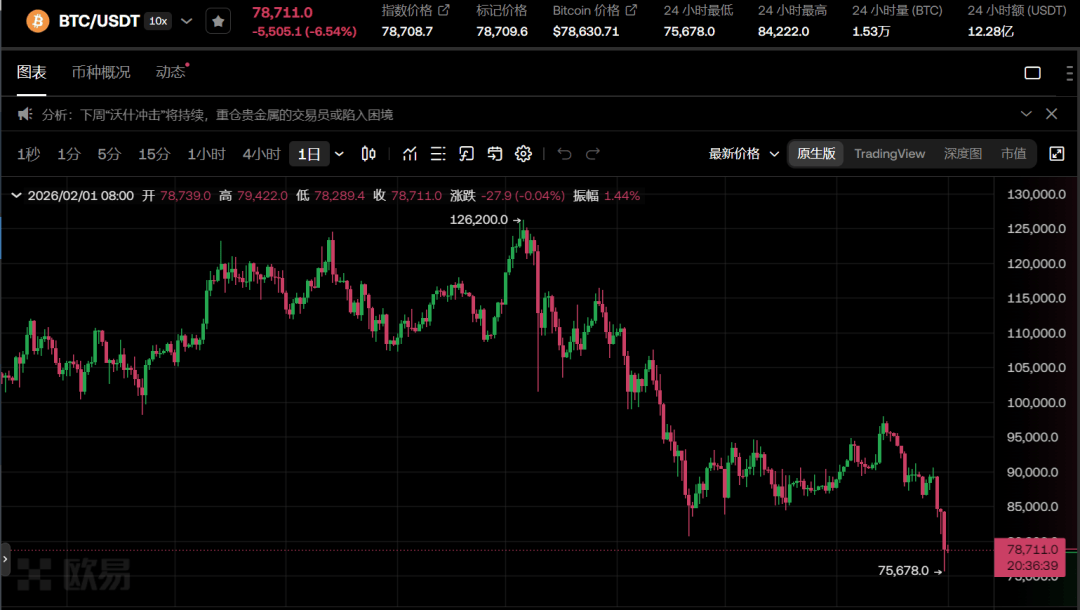
Core Viewpoint - The cryptocurrency market experienced a significant crash, with Bitcoin dropping to a nearly 10-month low, reflecting a broader market panic and loss of over $110 billion in total market capitalization within 24 hours [2][8]. Market Overview - Bitcoin's price fell from approximately $97,000 at the beginning of January to below $76,000, marking a nearly $20,000 decline in just one month, resulting in a cumulative drop of 10% year-to-date [2]. - Ethereum saw a daily drop exceeding 11%, reaching a low of $2,202, while other popular cryptocurrencies like Solana and Dogecoin also experienced declines of over 10% [6]. Investor Impact - The crash led to significant losses for leveraged investors, with many facing forced liquidations, resulting in a total of $25.61 billion in liquidations affecting over 420,000 investors, predominantly those who were bullish [8][12]. - The largest single liquidation amounted to $222 million, highlighting the extreme risks associated with high leverage in trading [8]. Causes of the Crash - The immediate trigger for the crash was the nomination of Kevin Walsh as the next Federal Reserve Chair, known for his hawkish stance on monetary policy, which raised fears of tighter monetary conditions and a potential delay in interest rate cuts [9][10]. - This shift in expectations led to a withdrawal of funds from high-risk assets like Bitcoin, as investors sought safer investments such as U.S. Treasury bonds [9][11]. Market Dynamics - The cryptocurrency market's liquidity has significantly decreased, with trading activity dropping sharply since November of the previous year, making it vulnerable to large sell orders [14]. - Institutional investors have also been pulling out, with over $1.2 billion in net outflows from Bitcoin ETFs in January alone, further destabilizing the market [14]. Regulatory Environment - Stricter global regulatory policies have added to the market's woes, with new regulations in Hong Kong increasing the risk weight for cryptocurrencies, making it more challenging for banks to engage in crypto-related activities [17]. - The U.S. has also tightened regulations, proposing a draft bill that limits the earnings from stablecoins, contributing to investor caution [17]. Lessons for Investors - The recent crash serves as a stark reminder of the inherent risks in the cryptocurrency market, emphasizing the importance of avoiding high leverage, not following market trends blindly, and diversifying investments [19][20].
23:00,一份数据拯救了世界
Xin Lang Cai Jing· 2026-02-02 23:38
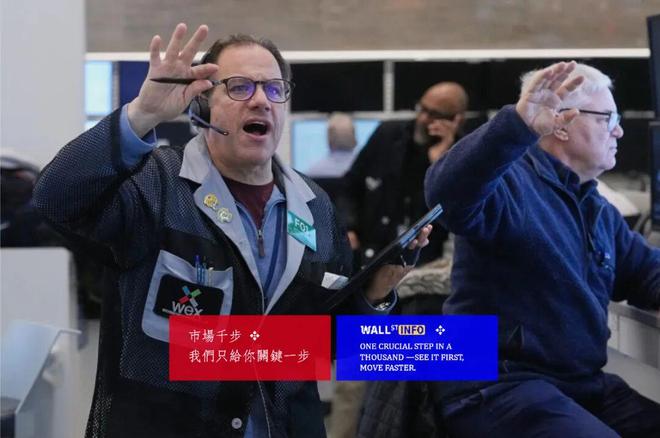
Core Insights - The market has shifted from a "worst-case scenario" to a phase of "waiting for validation" as U.S. stock markets experience a broad rally, with the Dow Jones index rising over 1% [2] - Economic data, particularly the ISM manufacturing index for January at 52.6, significantly exceeded market expectations of 48.5, indicating a shift from contraction to expansion and marking the highest level since 2022 [2] - This positive economic data alleviates three major market fears: concerns over a "hard landing," the stabilization of profit bottoms, and the Federal Reserve's ability to control inflation without rushing to intervene in the market [3] Market Reactions - The rise in U.S. stock markets has restored "missing confidence," which is crucial for mitigating the current global market downturn [2] - Gold and silver markets began to rebound after passive selling subsided, indicating a temporary recovery rather than a return of bullish sentiment [3] - The current market calm does not imply that issues have been resolved; rather, it suggests that problems are being postponed for later resolution [3] Future Outlook - The market is currently in a "repair phase," transitioning from panic to recovery, but caution is advised as misjudging the market's direction could be dangerous [3] - There is a call for deeper insights into global markets, suggesting that assumptions about January's direction continuing into February may be misleading [3]
黄金暴跌,市场总有轮回。
Sou Hu Cai Jing· 2026-02-02 20:40
Group 1 - The current market situation is characterized as a "repricing of risk assets" rather than a simple price correction, indicating a collective reassessment of long-ignored assumptions [3][5] - The macroeconomic environment has shifted, with signals from the Federal Reserve suggesting a potential slowdown in interest rate cuts, leading to a reevaluation of assets that thrived on low rates and high liquidity [4][5] - The tightening of liquidity and the strengthening of the dollar have forced long positions in various assets, including gold, to be liquidated, resulting in simultaneous declines in these safe-haven assets [6][7] Group 2 - Bitcoin and gold are both influenced by macroeconomic trends but differ significantly in their belief systems, funding structures, and correction mechanisms [20] - The recent decline in gold prices is attributed to its status as a central bank asset, which provides a buffer against severe drops, unlike Bitcoin, which is more volatile [21] - Gold is recognized as a universal hard currency with intrinsic value, and its price is expected to rise in the long term due to limited supply and increasing global demand, despite short-term fluctuations [23]
全球市场遭遇“黑色星期一”
Xin Lang Cai Jing· 2026-02-02 18:02
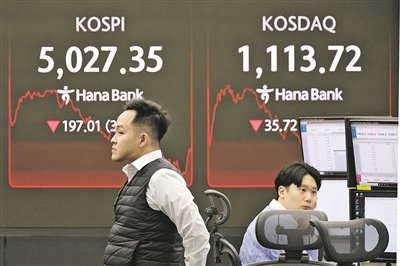
Market Overview - On February 2, the South Korean stock market experienced a significant drop, with the KOSPI index falling over 5%, triggering a trading halt for 5 minutes [2][4] - Global markets faced a "Black Monday" due to expectations of a hawkish shift in the Federal Reserve's monetary policy, technical adjustment pressures, and concerns over high valuations in technology stocks [2][4] Precious Metals Market - International precious metals prices saw drastic fluctuations, with gold futures dropping to $4423.2 per ounce, a decline of over 6%, and silver futures falling to $71.2 per ounce, down over 9% [2][3] - The London spot gold price hit a low of $4402.06 per ounce, marking a decline of over 10%, while silver prices fell to $71.312 per ounce, down over 16% [2] - Compared to the historical highs on January 29, silver prices dropped by 40% and gold prices by approximately 20% on February 2 [2] Oil Market - The oil market also faced significant declines, with light crude oil futures on the New York Mercantile Exchange falling to $61.43 per barrel and Brent crude futures dropping to $65.45 per barrel, both down over 5% from the previous day's close [3] Stock Market Reactions - Following a strong performance in January driven by AI hype, stock markets reversed course, with investors questioning the returns on substantial investments in the tech sector [4] - The Jakarta Composite Index in Indonesia also saw a significant drop, exceeding 5% in early trading on February 2 [4] - The Nikkei 225 index in Japan closed down by 1.25%, and the Tokyo Stock Exchange index fell by 0.85% [4] Investor Sentiment - Analysts noted that the volatility in the precious metals market has caused unease among traders, with increased margin requirements leading to forced liquidations and a domino effect across other assets [3] - The market is currently reassessing valuations amid uncertainty regarding potential monetary policy changes under Kevin Walsh, who has been nominated as the next Fed Chair [5]
Tom Lee's BitMine Buys the Ethereum Dip, Even as Unrealized Losses Top $6 Billion
Yahoo Finance· 2026-02-02 16:24
Core Insights - BitMine Immersion Technologies (BMNR) has acquired an additional 41,788 ETH valued at approximately $96 million, despite facing significant unrealized losses as Ethereum's price declines [1][2] - The firm now holds a total of 4,285,125 ETH, representing over 3.5% of Ethereum's circulating supply, with a current valuation of $9.9 billion, while incurring more than $6 billion in unrealized losses [2][3] - The chairman of BitMine remains optimistic about Ethereum's fundamentals, despite the price drop, attributing the decline to external market factors such as liquidations and a surge in precious metals [4][5] Company Summary - BMNR's total ETH holdings were initially acquired for approximately $14.95 billion at an average cost of around $4,001 per ETH, but the current value has decreased to about $8.8 billion [2] - The firm has accumulated around $400 million in unrealized losses from its additional ETH purchases since the initial acquisition [3] - Shares of BMNR have decreased by 5% recently, trading at $23.83, marking the lowest point since July 2025 [5] Industry Context - Ethereum's on-chain activity and fundamentals have reportedly strengthened over the past few months, contrasting with the decline in ETH prices [4] - The recent price drop of ETH is linked to a significant $19 billion in liquidations and a shift in investor appetite towards precious metals, which have seen price surges [4] - ETH has experienced a 3.7% increase in the last 24 hours but has fallen nearly 18% over the past week, currently sitting about 52% below its all-time high of $4,946 [6]