新茶饮

Search documents
新茶饮集体业绩狂飙,底层逻辑是什么?
Hu Xiu· 2025-09-04 08:34
Group 1 - The new tea beverage brands, such as Mixue Ice City and Shanghai Auntie, have seen significant profit growth this year, with stock prices doubling and heightened enthusiasm in the capital market [1] - Despite the impressive performance of individual brands, the overall industry growth rate is slowing down, indicating a more competitive landscape with an influx of new products [1] - The fierce competition in the delivery market, characterized by aggressive spending, may mask deeper underlying trends within the industry [1]
新茶饮半年报:行业分化态势加剧 外卖业务将回归常态
Zheng Quan Shi Bao Wang· 2025-09-04 08:19
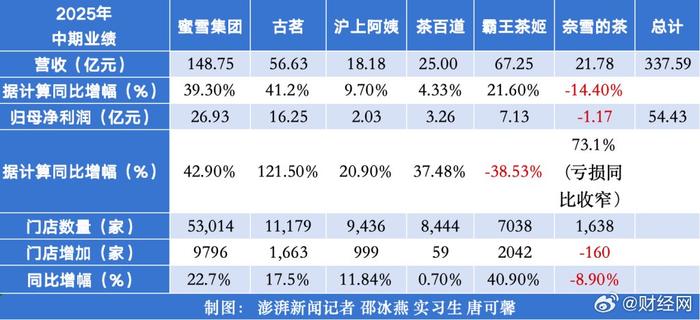
Core Insights - The new tea beverage industry is experiencing significant differentiation, with leading companies leveraging scale and supply chain advantages to maintain market leadership, while other brands face increasing competition [1] - Overseas expansion has become a crucial strategy for major brands amid intensified domestic competition [4] - The impact of the recent delivery service subsidy wars has been limited on overall performance, with expectations for the delivery business to normalize [5][6] Revenue Summary - Mixue Group reported revenue of 14.875 billion yuan, a year-on-year increase of 39.3%, leading the industry [1] - Bawang Chaji achieved revenue of 6.725 billion yuan, ranking second, while Guming reported 5.663 billion yuan, with a growth rate of 41.2% [1] - Other brands like Cha Baidao and Hushang Ayi reported revenues of 2.5 billion yuan and 1.818 billion yuan, respectively, while Nayuki's Tea saw a decline in revenue to 2.178 billion yuan, down 14.4% [1] Profitability Overview - Mixue Group's profit increased by 44.1% to 2.718 billion yuan, maintaining its leading position [2] - Guming's profit surged by 121.5% to 1.625 billion yuan, driven by refined operations and supply chain optimization [2] - Other brands reported varying profit growth, with Cha Baidao at 333 million yuan (up 39.5%) and Hushang Ayi at 203 million yuan (up 20.9%), while Nayuki's Tea reduced its adjusted net loss to 117 million yuan, a 73.1% improvement [2] Store Expansion Insights - Mixue Group expanded its global store count to 53,014, with 9,796 new stores added in the first half of the year, 57.6% of which are in third-tier cities and below [2] - Guming became the second brand to exceed 10,000 stores, reaching 11,179 locations, with 1,570 new openings [2] - Nayuki's Tea reduced its store count to 1,638, closing 160 stores as part of its optimization strategy [2] Supply Chain Developments - Mixue Group has achieved 100% self-production of core beverage ingredients, establishing five production bases and over 70 smart production lines [3] - Guming has 98% of its stores implementing a "two-day delivery" cold chain, with an 85% direct sourcing rate [3] - Cha Baidao has increased its distribution centers to 26, ensuring next-day delivery for approximately 93.8% of its stores [3] Overseas Expansion Strategy - As of mid-year, Mixue Group has 4,733 stores outside mainland China, with a net increase of 128 stores, covering 12 overseas countries [4] - Bawang Chaji expanded its overseas store count to 208, with a GMV of 235.2 million yuan in Q2, a 77.4% year-on-year increase [4] Delivery Business Trends - The recent delivery service subsidy wars have had a limited impact on the new tea beverage industry, with brands like Mixue Group and Cha Baidao seeing increased order volumes [4] - Nayuki's Tea reported a 7.5 percentage point increase in revenue from delivery orders, indicating a growing reliance on this channel [4]
古茗中期业绩暴增121% 下沉市场与咖啡品类成增长双引擎
Xin Lang Zheng Quan· 2025-09-04 07:01
Core Viewpoint - Guming Holdings Limited (01364.HK) reported strong financial results for the first half of 2025, with significant revenue and profit growth exceeding market expectations [1][2]. Financial Performance - Revenue for the first half of 2025 reached 5.663 billion yuan, a year-on-year increase of 41.2% [1]. - Shareholder profit surged to 1.625 billion yuan, up 121.51% compared to the previous year, surpassing the total net profit for 2024 [1]. - Adjusted net profit was 1.086 billion yuan, reflecting a 42.4% increase from 762 million yuan in the same period last year [2]. - Gross Merchandise Volume (GMV) for the first half of 2025 was 14.094 billion yuan, a 34.4% year-on-year growth [2]. - The average daily GMV per store increased from 6,200 yuan to 7,600 yuan, marking a 22.6% rise [2]. - Cash and bank balances rose significantly from 1.9353 billion yuan at the end of the previous year to 4.2693 billion yuan [2]. Growth Drivers - The company's growth was driven by rapid store expansion and improved operational efficiency [3]. - A net increase of 1,265 stores was achieved in the first half of 2025, with a total of 11,179 stores across over 200 cities in China [3]. - The proportion of stores in lower-tier cities reached 80.9%, with 43% located in townships, indicating a strong presence in underdeveloped markets [3]. - The expansion of the coffee product line contributed significantly to revenue growth, with over 8,000 stores equipped with coffee machines and 16 new coffee products launched [3][4]. Supply Chain and Operational Efficiency - The company operates 22 warehouses with a total area of approximately 230,000 square meters and a cold storage capacity exceeding 61,000 cubic meters [4]. - Guming owns and operates 362 delivery vehicles, enabling 98% of stores to receive deliveries within two days, enhancing product quality and operational efficiency [4]. Future Outlook - Based on strong performance, the company has raised its annual store expansion target from 2,100 to 2,500 stores [5]. - Analysts project adjusted net profits for 2025-2027 to be 2.285 billion, 2.699 billion, and 3.259 billion yuan, with growth rates of 48%, 18%, and 21% respectively [5]. - The company plans to explore overseas market opportunities while focusing on domestic supply chain optimization and store network expansion [6]. - Guming's extensive store network serves as a competitive advantage, particularly in lower-tier cities, where significant market potential remains [6].
霸王茶姬,全球开出7000家店
投资界· 2025-09-04 06:58
Core Viewpoint - The article highlights the rapid international expansion of BaWang ChaJi, showcasing its growth in overseas markets and the strategic shift from "Made in China" to "Chinese brands" on a global scale [3][14]. Financial Performance - In Q2, BaWang ChaJi reported a total GMV of 8.1031 billion yuan, a year-on-year increase of 15.5%, with net income reaching 3.3319 billion yuan, up 10.2% [7]. - The overseas GMV for Q2 was 2.352 billion yuan, reflecting a significant year-on-year growth of 77.4% and a quarter-on-quarter increase of 31.8% [6]. Global Expansion - BaWang ChaJi has opened 208 overseas stores, with recent entries into the Philippines and Vietnam, and a total of 70,38 stores globally [5][6]. - The company has adopted a "1+1+9+N" model for international expansion, focusing on establishing local subsidiaries and a strong management structure before opening franchise stores [9]. Strategic Partnerships - In Thailand, BaWang ChaJi received an investment of 142 million Thai Baht from Thai President Foods, gaining a 51% stake, which enhances its local market integration [10]. - Collaborations with local giants in Malaysia and Indonesia are also in place to accelerate market penetration and brand localization [10]. Market Positioning - BaWang ChaJi has chosen not to engage in aggressive price competition, focusing instead on sustainable growth and innovative consumer experiences [6][12]. - The company emphasizes a long-term strategy of integrating into local markets rather than adopting a conqueror mentality, aligning with local partners for mutual benefit [15][16]. Future Outlook - The company aims to expand its global footprint by adding over 1,000 new stores by 2025, continuing to tell the story of Chinese tea on the world stage [12].


宇树科技拟提交上市申请,新茶饮上半年赚超50亿 | 财经日日评
吴晓波频道· 2025-09-04 00:29
Group 1: Manufacturing Sector Insights - The US ISM Manufacturing Index for August is reported at 48.7, indicating contraction for six consecutive months, with new orders index rising to 51.4, marking its first expansion since early this year [2][3] - Markit Manufacturing PMI shows a stronger performance, suggesting robust expansion in the manufacturing sector, driven by increased sales and a recovery in domestic demand [3] - The cautious attitude towards production expansion and low hiring intentions in the manufacturing sector may exert pressure on the US job market [2] Group 2: Gold Market Dynamics - Non-US central banks' gold holdings have surpassed US Treasury holdings for the first time in 30 years, with gold prices reaching historical highs [4][5] - The World Gold Council anticipates an increase in global central bank gold reserves over the next 12 months, with Morgan Stanley setting a year-end gold price target of $3,800 per ounce [4] - The shift in central banks' asset allocation towards gold reflects concerns over potential financial conflicts and a diversification away from US dollar assets [5] Group 3: Robotics Industry Developments - Yushu Technology plans to submit its IPO application between October and December 2025, with a focus on transparency in operations as it prepares for public listing [6] - The company has expanded its product line from quadruped robots to humanoid robots, aiming to capture new market opportunities [6] - Despite being a leading player in the robotics sector, Yushu Technology faces challenges in commercializing its products, with a significant portion of sales coming from research procurement rather than industrial applications [7] Group 4: State-Owned Enterprises Collaboration - China National Petroleum Corporation (CNPC) plans to transfer 5.41 billion shares to China Mobile, enhancing strategic cooperation and optimizing shareholding structure [8][9] - The share transfer is seen as a common practice in state-owned enterprise reform, with potential for improved collaboration in exploration and sales through technology integration [8] - The government encourages state-owned enterprises to adjust resource allocation and enhance competitiveness, indicating a shift towards more flexible capital management [9] Group 5: New Tea Beverage Market Performance - Six new tea beverage companies reported a total revenue exceeding 30 billion yuan and a net profit of over 5 billion yuan in the first half of 2025, with significant growth in most companies [10][11] - The competitive landscape is shifting as brands focus on cost control and market expansion, particularly in lower-tier markets, while some high-end brands struggle with profitability [10] - The overall market is expected to face intensified competition as external subsidies decline and consumer preferences shift towards value [11] Group 6: Stock Market Trends - The number of new A-share accounts opened in August increased by approximately 165% year-on-year, reflecting growing investor interest amid a rising market [14][15] - The Shanghai Composite Index rose by 7.97% in August, marking its fourth consecutive month of gains, driven by increased trading volume [14] - The trend of "deposit migration" suggests that investors are reallocating funds from savings to the stock market due to lower interest rates and better market performance [15]




半年报看板丨原料涨价、外卖补贴,新茶饮品牌上半年业绩分化背后
Xin Hua Cai Jing· 2025-09-03 12:47
Core Insights - The new tea beverage industry is experiencing unprecedented differentiation due to the "takeaway war," with brands leveraging scale and supply chain advantages for expansion while some face growth bottlenecks [1][2] - The competition has shifted from "wild growth" to "refined management," emphasizing the importance of balancing scale and innovation, brand image, and supply chain barriers for future competition [1] Company Performance - Six listed new tea beverage companies have released their mid-year financial reports, with Mixue Group leading the industry with a revenue of 14.875 billion yuan, while Gu Ming achieved the fastest revenue growth at 41.2% [2][3] - Mixue Group's revenue growth of 39.3% and net profit of 2.693 billion yuan (up 42.9%) is attributed to its strong scale effect and expansion of product offerings [4] - Gu Ming's revenue reached 5.663 billion yuan with a net profit of approximately 1.625 billion yuan, marking a significant increase of 121.5% [4] - Other companies like Hu Shang Ayi and Cha Bai Dao showed steady revenue growth, while Ba Wang Cha Ji faced profit decline despite a revenue increase of 21.6% [5][6] Supply Chain and Market Dynamics - The takeaway war has positioned new tea beverages as major beneficiaries of ongoing subsidies, with companies like Mixue and Gu Ming seeing increased sales due to these incentives [7][8] - Mixue's supply chain efficiency, including direct procurement and vertical integration, has allowed it to maintain lower costs and higher profit margins [8][9] - Gu Ming's long-term investment in supply chain optimization has also contributed to its significant revenue growth [9][10] Product Innovation and Market Expansion - Companies are diversifying their product offerings to avoid over-reliance on single categories, which can lead to decreased customer loyalty [11] - Gu Ming has introduced 52 new products, including coffee, which has enhanced customer engagement and sales volume [11][12] - Mixue's "Lucky Coffee" brand is emerging as a significant growth driver, leveraging direct procurement advantages [12][13] Future Outlook - The industry is at a critical juncture, requiring brands to redefine their positioning and avoid homogenization while balancing capital and supply chain management [13]
外卖大战时代的新茶饮,原来是生死内功局
3 6 Ke· 2025-09-03 07:20
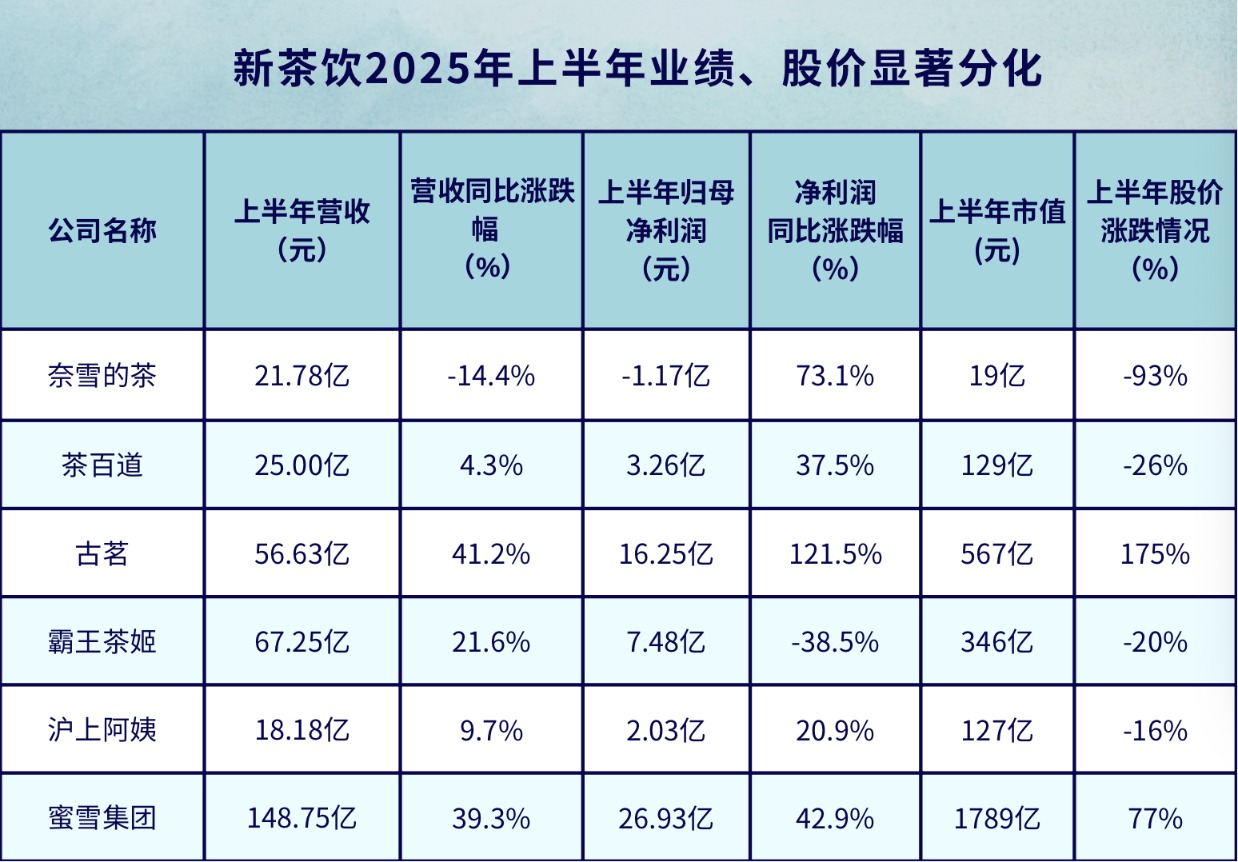
Core Viewpoint - The recent delivery subsidy war has led to a temporary boost in sales for tea beverage stocks, particularly milk tea, but raises questions about the sustainability of this growth once subsidies are withdrawn [1][5][11]. Group 1: Financial Performance of Listed Tea Beverage Companies - Six listed tea beverage companies have shown a divergence in their financial performance for the first half of 2025, with significant differences in revenue growth and profitability [2]. - Mixue Group reported a revenue of 14.87 billion yuan, a year-on-year increase of 39.3%, and a net profit of 2.72 billion yuan, up 44.1% [2]. - Gu Ming achieved a net profit of approximately 1.625 billion yuan, a staggering increase of 121.5%, with revenue of 5.663 billion yuan, up 41.2% [3]. - Other companies like Hu Shang A Yi and Cha Bai Dao showed modest growth, while Ba Wang Cha Ji experienced a decline in net profit despite revenue growth [4]. - Nai Xue's Tea reported a revenue of 2.178 billion yuan, a decline of 14.4%, and a net loss of 118 million yuan, indicating significant challenges in maintaining market position [4]. Group 2: Impact of Delivery Subsidy War - The delivery subsidy war has unexpectedly disrupted the tea beverage industry, with analysts suggesting that subsidy resources will increasingly concentrate on leading brands [5][7]. - High order volumes are primarily manageable by top tea beverage brands, which possess the necessary supply chain capabilities to meet increased demand [5][8]. - The competition has led to a "Matthew Effect," where companies with strong supply chains benefit the most, while smaller brands struggle to survive [8][11]. - Gu Ming reported a peak weekly delivery order volume of over 8 million, a threefold increase compared to normal levels, highlighting the impact of the subsidy war on operational capacity [8]. Group 3: Future Industry Trends - As subsidies are expected to diminish, the demand stimulated by these incentives may also decline, leading to a potential market shakeout [11][12]. - Companies are encouraged to focus on strengthening their supply chains and diversifying product offerings to remain competitive in a challenging market environment [12][13]. - The introduction of coffee products by brands like Gu Ming and Mixue indicates a strategic shift towards cross-category competition, which may become a key growth area [9][12].
研究完20+半年报后,我们梳理出联名成功必备公式
Xin Lang Cai Jing· 2025-09-03 05:47
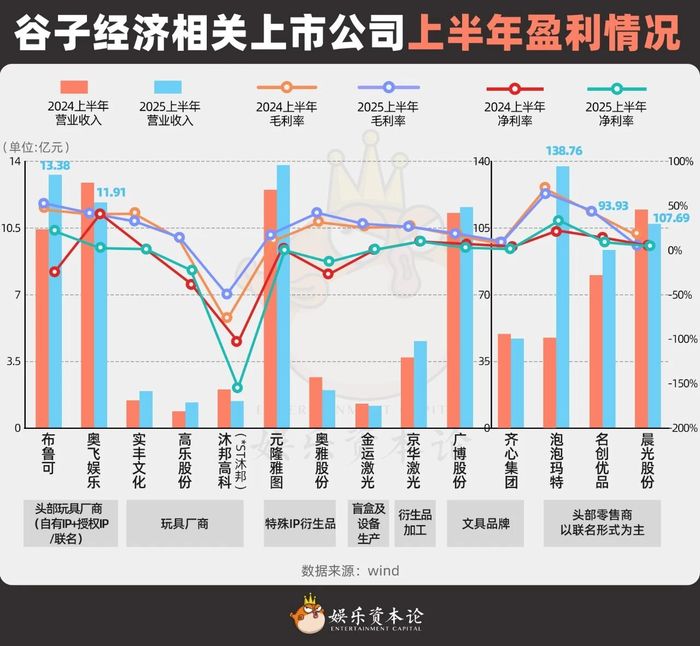
Core Insights - The article discusses the rise of co-branding in the Chinese market, particularly in the "谷子经济" (Guzi Economy), highlighting the increasing frequency and variety of collaborations between brands and popular IPs [1][2][3] Group 1: Co-Branding Trends - By 2025, co-branding cases in China are expected to reach thousands, with nearly a hundred collaborations in the new tea beverage sector alone [1] - Successful co-branding hinges on strong IP and unique products, with a good IP collaboration potentially amplifying commercial value by 10 to 40 times [1][12] - The "谷子经济" is characterized by high brand premiums, yet many participants remain traditional toy and stationery manufacturers [3][24] Group 2: Financial Performance - Keep's online membership and paid content revenue fell to 330 million yuan, a 23% year-on-year decline, attributed to a decrease in virtual sports events [2][19] - The combined profits of several listed companies in the IP sector are less than Lego's 7.2 billion yuan net profit [2] - Sales expenses for major companies in the "谷子经济" have increased, indicating the financial strain of frequent co-branding [4][8] Group 3: Market Dynamics - The new tea beverage sector has seen a significant rise in sales expenses, exceeding 2.5 billion yuan in the first half of 2025, but many companies are adjusting their cost structures [8][9] - The article notes that while high-frequency co-branding can drive sales, it has also led to increased sales expenses for listed companies [4][8] - The performance of co-branding initiatives varies, with some brands struggling to convert new consumers into loyal customers [20][24] Group 4: Successful Case Studies - The collaboration between Wanda Films and the IP "光与夜之恋" generated over 106 million yuan in sales, showcasing the potential of high-profile IP partnerships [1][17] - The "哪吒2" collaboration led to a significant increase in revenue for Pop Mart, with a year-on-year growth of over 100% in IP licensing income [13][17] - The article emphasizes the importance of unique and differentiated products in successful co-branding, as seen in the case of Wanda's popcorn "痛桶" [27][28]
六家新茶饮公司上半年营收超300亿,蜜雪集团148亿领跑
Cai Jing Wang· 2025-09-02 12:29
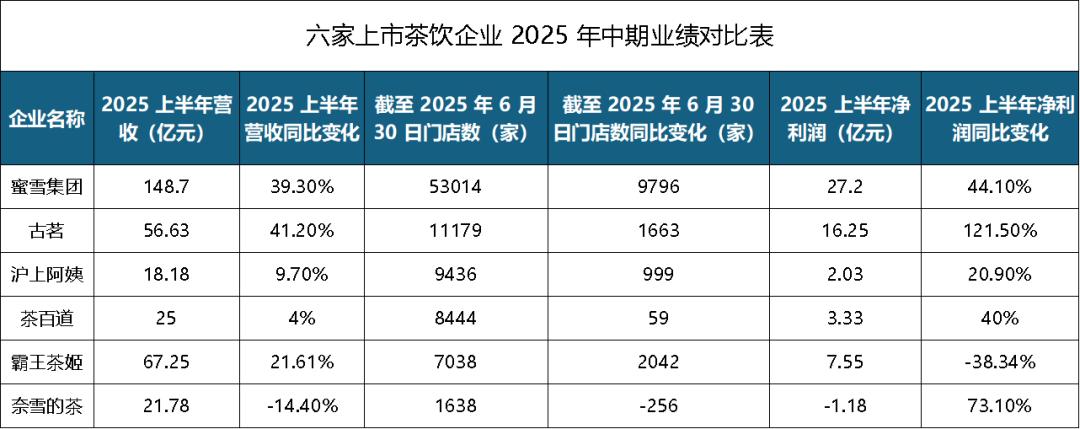
Core Insights - The six new tea beverage companies reported a total revenue exceeding 30 billion yuan in the first half of 2025, with a combined net profit of over 5 billion yuan, indicating positive growth for most companies [1][2] Group 1: Company Performance - Mixue Group led the industry with revenue of over 14.875 billion yuan, significantly outperforming its competitors, with revenue 2.2 times that of Bawang Chaji and 6.8 times that of Nayuki [1] - Mixue Group also recorded the highest net profit among tea companies, earning nearly 2.693 billion yuan, a year-on-year increase of over 40% [1] - Other companies like Gu Ming and Cha Bai Dao also showed strong revenue growth, with Gu Ming's revenue increasing by 41.2% and Cha Bai Dao by 4.33% [2] Group 2: Impact of Delivery Services - Nayuki's financial report indicated that approximately 44.2% of its direct store revenue came from third-party delivery platforms, with a year-on-year increase of 7.5 percentage points in revenue from delivery orders [2] - The delivery service fees paid to third-party providers amounted to 200.7 million yuan, representing 9.2% of the total revenue, up from 6.7% in the previous year [2] - The ongoing "delivery war" has positioned new tea beverage companies as major beneficiaries of multiple rounds of subsidies, enhancing their sales performance [2] Group 3: Market Trends and Future Outlook - Goldman Sachs has raised profit forecasts for Gu Ming and Mixue due to the prolonged duration of delivery subsidies, although it warns of potential growth declines after the subsidies are withdrawn in 2026 [2] - The normalization of subsidies is expected to accelerate industry consolidation, benefiting leading companies with strong supply chain and brand advantages [2]
中国企业出海浪潮中,飞书如何成为全球化“神队友”?
Sou Hu Cai Jing· 2025-09-02 11:08
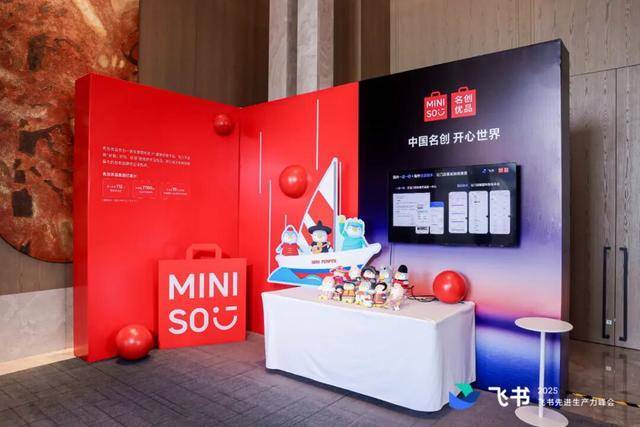
Core Insights - Miniso, a Chinese trendy retail brand, has successfully attracted consumers with its plush toy series at its Paris flagship store in July 2024, highlighting a surge in consumer interest [1] - The company has expanded its operations to 112 countries and regions, facing challenges in maintaining efficient operations in international markets [1] - Miniso's global journey reflects the current trend of Chinese brands focusing on systematic and refined global operations rather than mere product exports [1] Group 1 - Miniso utilizes advanced digital tools to monitor global sales data, consumer feedback, and supply chain stability in real-time from its headquarters in Guangzhou [1] - The introduction of Feishu, a global integrated collaboration platform, has enhanced operational efficiency and communication across different time zones and languages [2] - The "Overseas Store Assistant" application built on Feishu's low-code platform has standardized operations and improved cross-time zone collaboration for Miniso's global stores [3] Group 2 - In the Indonesian market, Miniso leveraged Feishu's multi-dimensional table feature to digitize its store expansion process, achieving a 50% increase in development efficiency compared to traditional methods [3] - Challenges such as language barriers and cross-time zone collaboration consume significant resources for companies expanding internationally, as noted by Feishu's Chief Commercial Officer [3] - Cultural integration is emphasized as a "soft power" for Chinese companies, with brands like Bawang Tea Ji using Feishu to promote understanding of Chinese tea culture among global employees [5] Group 3 - Feishu respects cultural diversity in its product design, supporting multi-skin tone emoji options and avoiding potentially misinterpreted symbols [5] - The platform provides stable and efficient foundational services while also offering customizable solutions for specific business scenarios [5] - J&T Express, a global logistics service provider, has implemented Feishu for unified collaboration across 12 countries, achieving online coordination for 80,000 employees in just 40 working days [5][6] Group 4 - The ongoing trend of Chinese companies expanding internationally is supported by Feishu, which is transforming its accumulated experiences into a toolkit for more outbound enterprises [6] - Feishu's collaboration with outbound companies is creating new narratives on a global scale [6]