
电商零售

Search documents
德国电商消费者画像:价格敏感、物流挑剔、年轻群体崛起
Sou Hu Cai Jing· 2025-10-16 05:56
Group 1: Consumer Behavior - German online shoppers are characterized as "serious, rational, and savvy," with a strong price orientation and demand for efficiency [1] - Approximately 49% of consumers consider "price discounts" as the primary factor for online shopping, while 38% are attracted by discount coupons [1] - 43% of consumers spend less than 120 euros monthly, with only 4% spending over 1200 euros, indicating a cautious overall spending trend [1] Group 2: Logistics Expectations - German consumers have high expectations for delivery times, with 83% referencing seller logistics ratings before making a purchase [1] - 55% believe that standard delivery (3-5 days) should be free of shipping charges, while 20% desire "next-day delivery" [1] - Currently, only one-third of merchants can meet the delivery expectations of 75% of consumers who want their orders within 2-4 days [1] Group 3: Demographic Insights - Generation Z (ages 18-24) shows a stronger willingness to pay for convenient return services, with 53% willing to do so, compared to only 17% of those aged 65 and above [3] - Despite facing aging population pressures, millennials (16.89 million) and Generation Z remain the main drivers of e-commerce consumption in Germany [3] - These younger generations are in their career advancement phase, balancing essential household needs with discretionary spending, which is crucial for e-commerce market growth [3]


时代电服X京东汽车:共创"好买车、好服务"汽车消费全链路新体验
Ge Long Hui· 2025-10-16 03:21
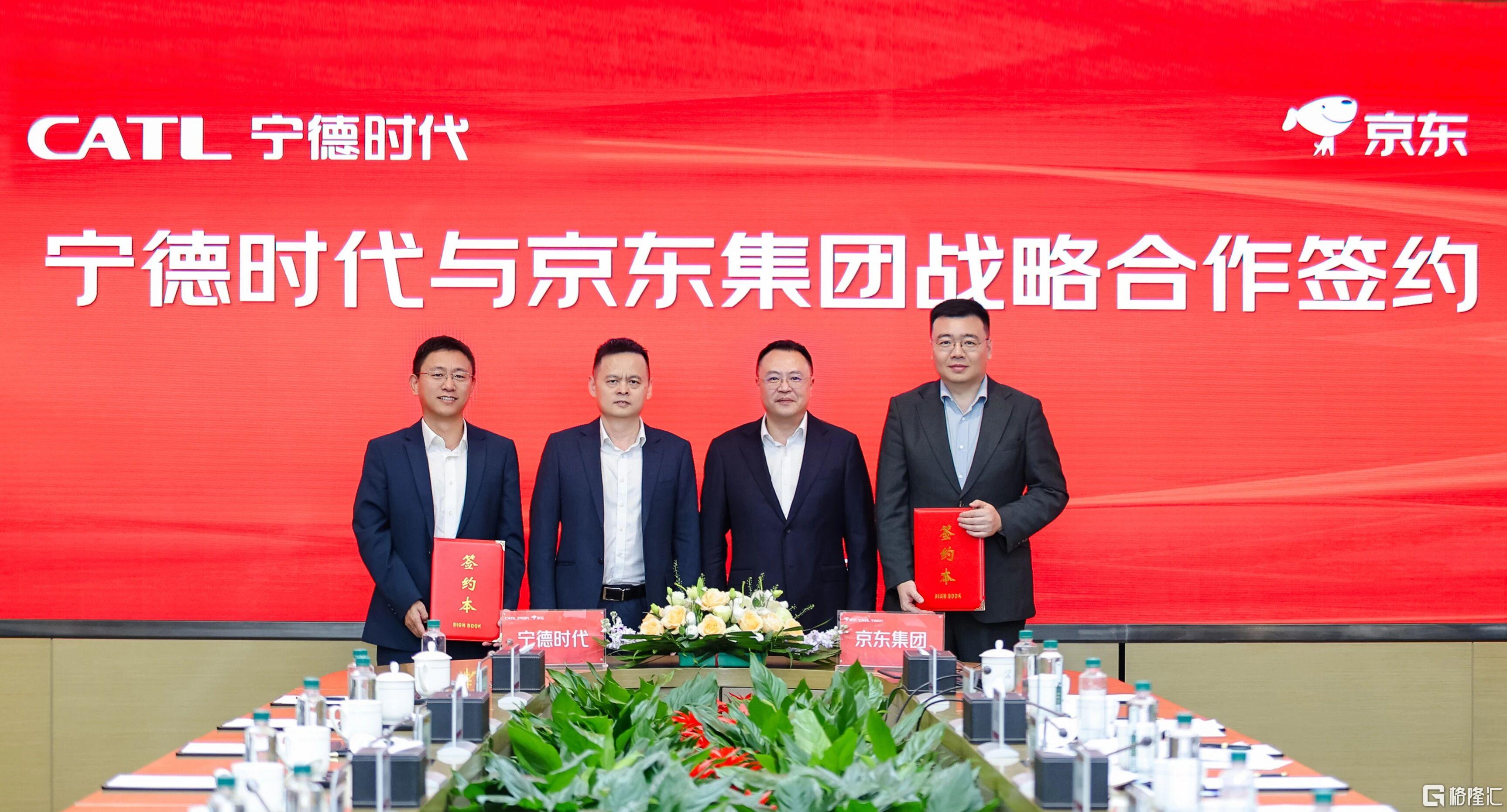
Group 1 - The core viewpoint of the news is the strategic partnership between CATL and JD Group, focusing on enhancing channel efficiency and user experience in the automotive sector [1][4]. Group 2 - The collaboration will leverage the "CATL Chocolate JD Self-operated Flagship Store" to provide consumers with diverse products and services, including battery subscription and financial solutions, aiming for a transparent car purchasing experience [4]. - The partnership will also enhance the construction and operation of battery swap stations, integrating various services to create a comprehensive lifecycle experience for electric vehicle users [4]. Group 3 - During JD's 11.11 event, JD Automotive announced a collaboration with CATL and GAC Group to launch a "National Good Car," which will be exclusively sold on JD's platform during the Double Eleven shopping festival [5].


大行评级丨招银国际:上调京东目标价至50.5美元 维持“买入”评级
Ge Long Hui· 2025-10-16 02:31
该行将京东集团2025至2027年的收入、non-GAAP净利润预测上调,考虑核心零售业务收入和利润增长 有望强于该行之前预期,以及外卖业务亏损小于预期的情况。该行将基于DCF的目标价上调2%至50.5 美元,维持"买入"评级。 招银国际发表研报,预计京东集团第三季总收入将达2950亿元,按年增长13.3%,与市场一致预期相 符;预计non-GAAP净利润为44亿元,好于37亿元的市场一致预期;京东零售的营业利润将按年增长 17%,绝对值较市场预期高出5%,这得益于规模效应提升及高利润率服务收入营收占比增加。 ...
双11”从“价格战”到“效率与体验战
Bei Jing Shang Bao· 2025-10-15 22:51
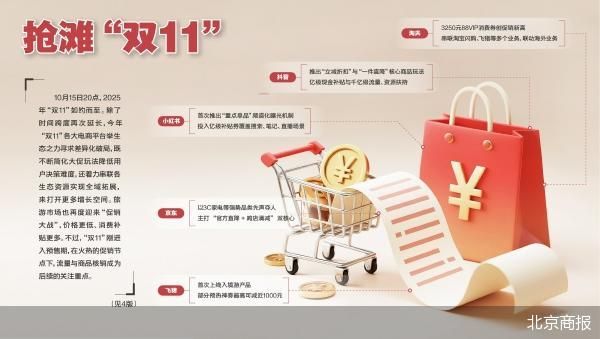
Group 1: Core Insights - The core theme of this year's "Double 11" is the shift from price wars to efficiency and experience battles among e-commerce platforms [1][8] - Companies are simplifying discount strategies and enhancing consumer experience to meet the demand for rational consumption [3][4] - Instant retail and cross-border e-commerce are emerging as new growth areas during the promotional period [5][7] Group 2: Discount Strategies - Major platforms are issuing record-high discount coupons, with Tmall offering an unprecedented 3250 yuan 88VIP coupon package [3] - The trend of complex promotional strategies is declining, with platforms like JD.com focusing on straightforward discounts and price protection [4] - Instant discounts and simplified purchasing processes are being emphasized to enhance user experience [3][5] Group 3: Instant Retail Growth - Instant retail is becoming a significant growth driver, with platforms like Taobao Flash Sale introducing exclusive discounts for 88VIP users [5][6] - The user demographic for instant retail is primarily aged 25-40, indicating a strong demand for quick and convenient shopping solutions [6] - Taobao Flash Sale has seen substantial growth, with many brands achieving significant sales milestones [6] Group 4: Cross-Border E-commerce Expansion - E-commerce platforms are expanding their cross-border operations, with AliExpress covering over 30 countries and emphasizing brand quality [7] - TikTok Shop is launching a global promotion that spans multiple countries, indicating a strategic alignment with major shopping events [7] - Platforms are synchronizing their promotional timelines to maximize consumer engagement and sales opportunities [7] Group 5: Tourism Market Dynamics - The tourism sector is experiencing intensified competition during "Double 11," with platforms like Fliggy increasing investment and promotional offerings [9][11] - Fliggy is providing substantial consumer subsidies, with some discounts reaching nearly 1000 yuan, to attract customers [11][12] - The trend of "pre-purchase and later booking" is becoming established, allowing consumers to plan ahead and take advantage of discounts [14][15]


宁德时代与京东集团达成全面战略合作共创产业协同新范式
Xin Lang Cai Jing· 2025-10-15 21:14
Core Insights - CATL and JD Group signed a strategic cooperation agreement to enhance their collaboration in the battery consumption market and promote green logistics and supply chain digitalization [1][2] Group 1: Strategic Cooperation - The partnership aims to accelerate the electrification of urban logistics vehicles and promote innovative battery swapping products for heavy trucks [1] - Both companies will work together to establish a comprehensive domestic and international warehousing and distribution system for efficient, safe, and zero-carbon transportation of power batteries and other products [1] Group 2: Supply Chain Digitalization - The collaboration focuses on building a digital supply chain system for consumer goods and industrial products, enhancing procurement capabilities through supply chain operation technologies and services [1] - The companies plan to jointly develop data centers and expand their overseas business in line with the digital supply chain initiatives [1] Group 3: Battery Consumption Market - The partnership will establish a direct sales channel for battery swapping services and promote the vehicle-battery separation model, expanding the sales of battery swapping vehicles [1] - Utilizing JD's nationwide service network, the collaboration will also enhance after-market services for batteries, providing professional-level support for users [2]
配送超35分钟复购降 30%,巨头竞速即时零售,争最后一公里
Sou Hu Cai Jing· 2025-10-15 20:50
Core Insights - This year's "Double 11" shopping festival has started earlier than in previous years, with JD.com beginning promotions on October 9, resulting in the longest "Double 11" period ever, extending by 5 days compared to last year [1] - The shopping landscape has changed significantly, with platforms shifting focus from acquiring new users to retaining existing ones as the market nears saturation with nearly 1 billion online shoppers [6][8] Group 1: Simplification of Rules - E-commerce platforms are simplifying their promotional rules to enhance user experience, with Tmall and Taobao introducing "official discounts" and JD.com adding "official direct discounts" alongside traditional promotions [8][10] - The shift reflects a broader understanding that consumers now prefer straightforward and transparent value propositions rather than complex discount structures [10][12] Group 2: Instant Retail Revolution - Instant retail is emerging as a key competitive advantage, aiming to eliminate long delivery times and meet consumer needs immediately, transforming the traditional supply chain model [14][16] - Companies like Alibaba and JD.com are investing in infrastructure to support rapid delivery, with AI systems predicting consumer needs based on various data points [17][19] Group 3: Global Expansion - E-commerce giants are also focusing on global expansion, with Alibaba launching a "Taobao Outbound" initiative to facilitate international sales for domestic merchants, simplifying logistics and payment processes [23][25] - This strategy allows brands to operate in a dual market, catering to both traditional e-commerce and instant retail demands [25][27] Group 4: Consumer Behavior Changes - Consumers are adapting to a mixed shopping strategy, categorizing purchases into immediate needs and planned purchases, reflecting a shift in shopping behavior [27][29] - The overarching goal for companies is to deliver products and services in the most efficient and hassle-free manner possible, which will determine future success in the market [29]

东方甄选自营品再出爆款!直播宣布:益生菌成为第三季度自营品“销冠”
Cai Jing Wang· 2025-10-15 15:12
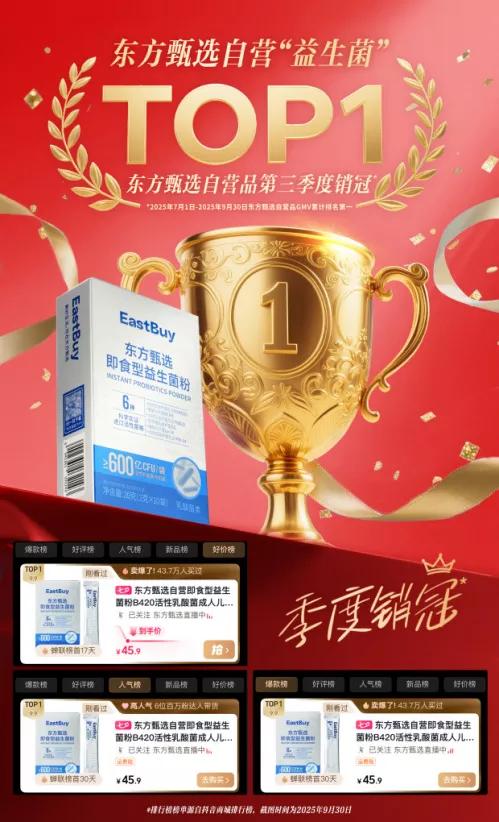
Core Insights - Oriental Selection's self-operated probiotic products have surpassed other self-operated products to become the top seller in Q3 2025, marking a significant expansion into the health and nutrition sector [1][3]. Product Development - Historically, Oriental Selection's self-operated product rankings were dominated by agricultural products like milk and eggs, demonstrating their established capabilities in product development, management, and sales in the agricultural and food sectors [3]. - The self-operated probiotic product, launched in May 2025, achieved the highest sales in the self-operated product category within just five months, indicating rapid market penetration in this new area [3][6]. - As of May 31, 2025, Oriental Selection's self-operated product portfolio has expanded to 732 items, covering categories from fresh food and snacks to health and nutrition products, pet food, and apparel [6]. Market Response - The launch of the probiotic product received enthusiastic market feedback, with inventory selling out multiple times, and it currently ranks first on Douyin's "Children's Probiotic Bestsellers" list [6]. - The company emphasizes a commitment to quality in its nutritional products, adhering to principles of "real additives, trustworthy ingredients, public accessibility, and strict quality control" [3][4]. Future Outlook - Oriental Selection plans to continue expanding its product matrix, focusing on the development of nutritional food products, reflecting consumer demand for high-quality and cost-effective nutrition options [6].
东方甄选自营益生菌成为第三季度自营品“销冠”
Jing Ji Guan Cha Wang· 2025-10-15 10:16
Core Insights - Oriental Selection's self-operated probiotic products have surpassed other self-operated products to become the top seller in Q3 2025, marking a significant expansion into the nutritional health food sector [1][2] - The rapid success of the probiotic line, launched in May 2025, indicates a strong market response, with multiple sell-outs and restocks [1] - The company plans to continue expanding its product matrix, which currently includes 732 self-operated products across various categories [1] Group 1 - The achievement of the probiotic products reflects Oriental Selection's ability to diversify beyond its core agricultural and food offerings [2] - Consumer demand for high-quality and cost-effective nutritional products is driving the success of the new probiotic line [2] - The company is committed to focusing on the development of nutritional food categories in the future [2]
中金:上调京东集团-SW(09618)2025年度经调整净利润预测1.8%至275亿元人民币 ...
Xin Lang Cai Jing· 2025-10-15 02:49
中金预计,京东第三财季日百类别仍能维持较快增速,零售业务利润率稳健及外送优于预期,或带动第 三财季净利润超此前预期。 中金发布研报称,预测京东集团(09618,JD.US)第三财季营收将年增14%至2971亿元人民币(下同),高于 该行先前预期,对应非通用准则净利率1.5%。中金调高京东2025年经调整净利预测1.8%至275亿元,维 持2026年盈利预测384亿元;维持"跑赢行业"的投资评级及目标价41美元,对应2026年11倍经调整本益比 和28.7%上行空间;目前股价对应25/26年12/8倍经调整本益比。 来源:智通财经网 ...
中金:上调京东集团-SW2025年度经调整净利润预测1.8%至275亿元人民币 维持“跑赢行业”评级
Zhi Tong Cai Jing· 2025-10-15 02:49
Core Viewpoint - CICC predicts JD Group's Q3 revenue will increase by 14% year-on-year to 297.1 billion RMB, exceeding previous expectations, with a corresponding non-GAAP net profit margin of 1.5% [1] Revenue and Profit Forecast - CICC raises JD's adjusted net profit forecast for 2025 by 1.8% to 27.5 billion RMB, while maintaining the 2026 profit forecast at 38.4 billion RMB [1] - The investment rating is maintained at "outperform" with a target price of $41, corresponding to an 11x adjusted P/E ratio for 2026 and a 28.7% upside potential [1] Business Performance Expectations - CICC expects JD's Q3 daily category growth to remain robust, with stable retail business profit margins and better-than-expected delivery performance, potentially leading to Q3 net profit exceeding previous forecasts [1]