
可再生能源

Search documents
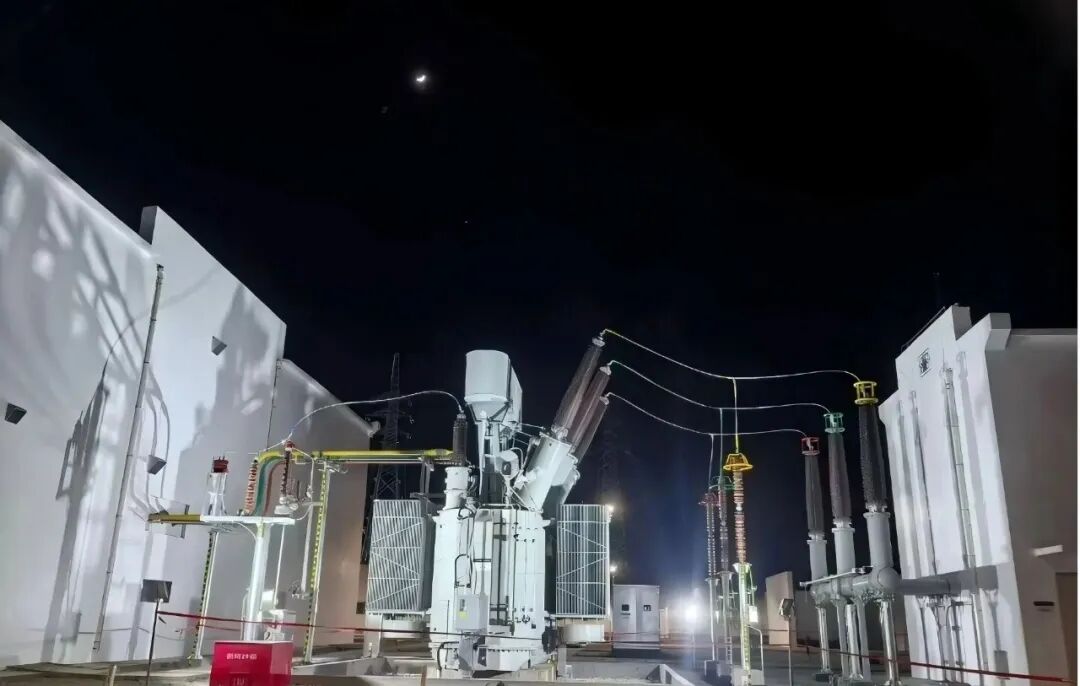
阿拉善盟首个燃煤自备电厂可再生能源替代项目成功并网
Xin Lang Cai Jing· 2025-12-29 13:44
Core Insights - The first renewable energy replacement project for a coal-fired self-supplied power plant in Alxa League, the Zhongyan Jilantai Chlor-Alkali Chemical 108,000 kW project, has successfully connected to the grid [1][7] - The total installed capacity of renewable energy in the league has reached 13,508,000 kW, comprising 6,505,000 kW from wind power and 7,003,000 kW from solar power [1][7] Investment and Project Details - The project has a total investment of 630 million yuan, establishing a diversified clean energy supply system primarily based on wind power, complemented by solar power and energy storage [3][9] - It includes 75,000 kW of wind power and 33,000 kW of solar power, along with the construction of a 220 kV booster station and supporting energy storage systems [3][9] Industry Impact - This project serves as a practical example of clean energy replacement in the industrial sector of Alxa League, effectively replacing traditional coal-fired power generation [3][9] - It aligns with the policy direction for the transformation of high-energy-consuming industries, aiding Zhongyan Jilantai Chlor-Alkali Chemical in deepening green technological upgrades and reducing energy costs [3][9] - The project provides replicable experiences for the transformation of high-energy-consuming enterprises in the region, accelerating the conversion of energy resource advantages into high-quality development advantages [3][9]


赵何娟对话张雷:能源成本再降50%,AI时代才会真正到来|2025 T-EDGE 全球对话
Sou Hu Cai Jing· 2025-12-29 04:48
Core Insights - The discussion emphasizes the critical relationship between artificial intelligence (AI) and energy consumption, highlighting the need for a sustainable energy system to support the future of AI [4][6][12] - The concept of "AI energy anxiety" is introduced, suggesting that the current energy demands of AI are outpacing existing infrastructure, particularly in the U.S. [6][10][30] - The future of AI is seen as dependent on a transition from fossil fuels to renewable energy sources, which must be optimized for cost and efficiency to meet the growing energy demands of AI [9][20][21] Group 1: AI and Energy Demand - AI's rapid growth is leading to a structural mismatch in energy supply, particularly in the U.S., where the electrical grid is outdated and unable to handle the increased load from AI data centers [6][10][30] - The U.S. relies heavily on natural gas for its computing power, which is projected to peak around 2035, raising concerns about the sustainability of AI development [7][11][30] - In contrast, China is positioned to leverage its advanced renewable energy infrastructure to meet AI's energy needs, although it still requires a more tailored energy system for optimal AI performance [7][12][30] Group 2: Future Energy Systems - The future energy system must be characterized by sustainability, integration, and mutual enhancement, with AI playing a crucial role in optimizing energy consumption and production [9][12][42] - A significant reduction in energy costs (by 50% to 80%) is necessary for AI to thrive, necessitating a shift towards renewable energy sources that can provide abundant and low-cost energy [9][20][21] - The integration of AI with energy systems is expected to create a new paradigm where energy production and consumption are dynamically managed to support AI's exponential growth [23][24][42] Group 3: Investment Opportunities - Companies that can effectively integrate AI with energy systems will likely emerge as leaders in the market, as the demand for efficient energy solutions grows [39][41] - The energy sector is seen as a critical area for investment, particularly in companies that can navigate the complexities of future energy systems and provide sustainable solutions [39][41] - The potential for renewable energy to provide a stable and low-cost energy supply is highlighted as a key factor for the success of AI technologies in the coming years [20][21][39]

协合新能源午前涨超3% 接获新交所就建议第二上市发出的上市资格函
Xin Lang Cai Jing· 2025-12-29 03:57
Core Viewpoint - The company, Xiehe New Energy, is progressing towards a secondary listing on the Singapore Exchange, which is expected to enhance its international capital operations and support its renewable energy business expansion globally [1]. Group 1: Company Developments - Xiehe New Energy's stock price increased by 3.23% to HKD 0.32, with a trading volume of HKD 4.9456 million [1]. - The company received a listing eligibility letter from the Singapore Exchange on December 23, 2025, regarding its proposed secondary listing [1]. - The secondary listing will not involve the issuance of new shares or other fundraising activities, and the company's ordinary shares will continue to be primarily listed and traded on the Hong Kong Stock Exchange [1]. Group 2: Regulatory and Market Context - The China Securities Regulatory Commission's International Cooperation Department issued a filing notice for Xiehe New Energy's overseas issuance and listing [1]. - The company plans to achieve its listing on the Singapore Exchange through an introduction method, marking a significant step in its international capital operations [1]. - Analysts highlight Singapore's unique advantages as a financial hub in the Asia-Pacific region for capital allocation in the green energy sector, suggesting that this listing could attract more international long-term capital [1].
协合新能源涨超3% 接获新交所就建议第二上市发出的上市资格函
Zhi Tong Cai Jing· 2025-12-29 03:50
Core Viewpoint - The company, Xiehe New Energy, has received a listing eligibility letter from the Singapore Exchange for its proposed secondary listing, marking a significant step in its international capital operations [1] Group 1: Company Developments - Xiehe New Energy's stock rose by 3.23% to HKD 0.32, with a trading volume of HKD 4.6859 million [1] - The proposed secondary listing will not involve the issuance of new shares or other fundraising activities, and the company's ordinary shares will continue to be primarily listed and traded on the Hong Kong Stock Exchange [1] Group 2: Regulatory and Market Context - The China Securities Regulatory Commission's International Cooperation Department issued a filing notice regarding Xiehe New Energy's overseas issuance and listing [1] - The company plans to achieve its listing on the Singapore Exchange through an introduction method, indicating progress in its international capital strategy [1] - Singapore is highlighted as a significant financial hub in the Asia-Pacific region, offering unique advantages in capital allocation for the green energy sector, which may attract more international long-term capital to support the company's global renewable energy business [1]
2025年能源行业全景盘点:绿电赋能转型 城市勇破“碳锁”
Zhong Guo Neng Yuan Wang· 2025-12-29 03:37
2025年,作为"十四五"规划收官的关键一年,我国能源结构转型在政策引导、技术创新与市场驱动的协 同发力下,呈现"清洁替代提速、智能升级赋能、区域协同深化"的鲜明特征。从沿海城市的海上能源岛 建设到内陆地区的绿电园区崛起,从工业领域的能效革命到建筑交通的全面低碳,城市作为能源消费和 碳排放的核心载体,正通过多元路径破解"碳锁"制约,为新型能源体系建设筑牢坚实根基。 政策协同发力 筑牢绿色转型制度根基 能源转型的稳步推进,离不开顶层设计与地方实践的同频共振。今年《政府工作报告》明确提出"协同 推进降碳减污扩绿增长,加快经济社会发展全面绿色转型",将城市能源结构调整纳入核心任务。7月召 开的中央城市工作会议,进一步把"着力建设绿色低碳的美丽城市"列为七大重点任务之一,为全年城市 能源发展锚定方向。 随后,一系列配套政策密集出台:《关于有序推动绿电直连发展有关事项的通知》规范绿电直接交易机 制,《关于完善省内天然气管道运输价格机制的指导意见》优化能源价格形成体系,《交通运输部等十 部门关于推动交通运输与能源融合发展的指导意见》推动跨领域绿色协同,从机制保障、价格调控、跨 域融合等多个维度,构建起全方位的政策支撑体系 ...
中国能源这一年,加速跑!
中国能源报· 2025-12-29 03:28
Group 1 - The core viewpoint of the article emphasizes China's commitment to achieving a low-carbon economy by 2035, marking a significant step in global climate cooperation and showcasing the country's ability to balance climate responsibility with economic growth [2][3]. - The "14th Five-Year Plan" includes the goal of building an energy powerhouse, elevating energy from a foundational element of economic development to a core pillar of national strength, thus establishing a clear direction for high-quality energy development in the coming years [2][3]. Group 2 - China's energy strategy is characterized by a dual focus on security and development, with coal production expected to remain above 4.8 billion tons by 2025, and renewable energy capacity projected to exceed 2.2 billion kilowatts, highlighting a robust commitment to clean energy [3][4]. - The construction of a new energy system is anticipated to be flexible, reliable, and interconnected, moving beyond simple iterations of old and new energy sources [4]. Group 3 - In the first 11 months of the year, China's total electricity consumption reached 94,602 billion kilowatt-hours, a year-on-year increase of 5.2%, with projections indicating that total consumption will exceed 100 trillion kilowatt-hours for the first time [6]. - The energy supply security measures have proven effective, with record-high electricity loads during peak summer months and significant inter-provincial electricity support [6]. Group 4 - Oil and gas production has reached new heights, with crude oil output at approximately 215 million tons and natural gas production surpassing 260 billion cubic meters, marking a historic high [7][8]. - The oil and gas industry is expected to continue focusing on increasing reserves and production while ensuring a resilient and sustainable energy supply system [8]. Group 5 - The renewable energy sector is rapidly advancing, with installed capacity nearing 2.2 billion kilowatts and accounting for approximately 59.1% of total capacity, driven by strong policy support and technological breakthroughs [10]. - New energy storage capacity has also seen significant growth, exceeding 100 million kilowatts, representing over 40% of the global total [10]. Group 6 - The renewable energy industry is undergoing a transformation to address issues of price competition and market order, with government initiatives aimed at regulating low-price competition in the photovoltaic sector [11][12]. - The focus is shifting from scale expansion to value creation, emphasizing innovation and differentiation in product development and business models [12]. Group 7 - China's nuclear power sector is expanding, with five new projects approved this year, maintaining a leading position globally with 54 units under construction and 58 in operation [14]. - Significant advancements in nuclear technology, including the development of the "Hualong One" reactor and breakthroughs in thorium-based molten salt reactors, are enhancing the role of nuclear energy in achieving a low-carbon energy system [14]. Group 8 - The electricity market has seen substantial growth, with a total trading volume of 60,300 billion kilowatt-hours from January to November, representing a 7.6% increase year-on-year [19][20]. - The implementation of market reforms is facilitating the integration of renewable energy into the grid, with new policies promoting market-based pricing for renewable projects [21]. Group 9 - The national carbon market has expanded to include key industries such as steel, cement, and aluminum, covering over 60% of total carbon emissions, with significant trading volumes recorded [23]. - The integration of carbon markets with renewable energy markets is being strengthened, which is crucial for promoting low-carbon transitions in the economy [23]. Group 10 - The establishment of zero-carbon parks is underway, with a goal to create approximately 100 national-level parks, emphasizing the importance of these areas in achieving green transformation and carbon neutrality [24]. - Various regions are exploring innovative practices to enhance renewable energy consumption and industrial green transformation within these parks [24].

Science发布2025十大科学突破 | 红杉爱科学
红杉汇· 2025-12-29 00:05
Group 1 - The 2025 Science Breakthroughs list highlights significant advancements in various fields, including renewable energy, gene editing, and new medical treatments [3] - Renewable energy, primarily solar and wind, has surpassed fossil fuels in new electricity generation, with China leading the transition through large-scale solar and wind projects [4] - Customized gene editing therapies have shown promise for rare genetic diseases, exemplified by a case involving a child with a severe condition treated with a lipid nanoparticle delivery system [5] Group 2 - New antibiotics for gonorrhea, gepotidacin and zoliflodacin, have been approved by the FDA, providing new treatment options against antibiotic-resistant strains [8] - Research has revealed that neurons can donate mitochondria to cancer cells, enhancing their ability to metastasize, presenting new targets for cancer treatment [10] - The Vera C. Rubin Observatory in Chile aims to revolutionize astronomy by continuously scanning the sky, generating vast amounts of data to create a 3D map of the universe [12] Group 3 - A study successfully linked ancient DNA from a "Dragon Man" skull to Denisovans, enhancing understanding of human evolution and diversity in East Asia [15] - Large language models (LLMs) have demonstrated exceptional capabilities in scientific research, solving complex problems and significantly improving research efficiency [17][18] - Breakthroughs in lattice gauge theory have allowed precise calculations of muon magnetic properties, marking a significant advancement in particle physics [21][22] Group 4 - Milestones in xenotransplantation have been achieved, with genetically modified pig kidneys functioning in human patients for extended periods, addressing organ shortages [23] - Research on a natural gene switch in rice has improved heat tolerance, enhancing crop quality and yield, which is crucial for adapting to climate change [26]
Silver Prices Soar as China's New Export Rules Take Effect—Elon Musk Says, 'This Is Not Good'
Benzinga· 2025-12-28 19:11
Elon Musk has voiced his concerns over China’s impending restrictions on silver exports, highlighting the potential impact on various industrial processes.On Saturday, Musk reacted to a post on X by Jesse Peltan, who had shared a post from Bull Theory. The original post announced that China is set to impose restrictions on silver exports starting January 1, 2026, requiring companies to obtain government licenses for the same. Peltan had commented that this development is a “bigger deal than it may seem.”Mus ...

外媒年终报道里的中国:可信、可爱、可敬
Xin Lang Cai Jing· 2025-12-28 06:03
Group 1 - China's global contribution is increasingly recognized for its ideological leadership, with various international media praising its role in shaping a better world [1][25] - The global innovation index ranking for China has improved from 34th in 2012 to 10th in 2025, highlighting its advancements in technology and innovation [6] - China is now seen as a leader in renewable energy technology and production, significantly impacting global energy transitions [6] Group 2 - International institutions have raised their economic growth forecasts for China for 2025, with the World Bank, IMF, and ADB increasing their projections by 0.4, 0.2, and 0.1 percentage points respectively [9] - The term "economic vitality" has been frequently mentioned in foreign media, reflecting China's robust production, trade, and investment growth [11][13] - China's commitment to open trade and international cooperation has been emphasized, with initiatives like the RCEP and the Hainan Free Trade Port attracting foreign investment [13] Group 3 - The concept of "living in tomorrow" is illustrated through advancements in technology, such as autonomous delivery vehicles and AI applications, showcasing China's innovative landscape [2][8] - The integration of AI and urban planning in cities like Shenzhen and Hangzhou is transforming lifestyles and urban environments [6] - The emergence of significant AI models like DeepSeek has attracted global investor interest in Chinese AI companies [8] Group 4 - China's proactive stance in global governance and cooperation is highlighted, particularly in addressing challenges like unilateralism and geopolitical tensions [23][25] - The country has proposed several global initiatives aimed at fostering international collaboration and addressing issues such as poverty and conflict [25] - China's approach to global issues is seen as a stabilizing force in a tumultuous world, promoting a more equitable international order [23][25]

外媒在年终报道回顾这一年的潮起潮涌时——纷纷赞叹一个可信可爱可敬的中国
Xin Hua She· 2025-12-27 23:29
Group 1: Technological Innovation - International media highlighted China's technological innovation, with reports showcasing advancements such as autonomous delivery trucks and drones, creating a sense of "living in tomorrow" [2] - China's global innovation index ranking improved from 34th in 2012 to 10th in 2025, reflecting the country's rapid technological advancements [2] - China is recognized as a leading force in renewable energy technology and production, significantly impacting global energy transitions [2] Group 2: Economic Vitality - International institutions have raised their economic growth forecasts for China in 2025, with the World Bank, IMF, and ADB increasing their projections by 0.4, 0.2, and 0.1 percentage points respectively [4] - Reports emphasize China's robust production, trade, and investment growth, asserting that the country remains the world's most dynamic "factory" [4] - The narrative around China's economic resilience counters previous pessimistic views, highlighting its ongoing vitality and market potential [4] Group 3: International Cooperation - China's commitment to international cooperation is evident through initiatives like the Regional Comprehensive Economic Partnership and the Belt and Road Initiative, showcasing its proactive stance in global trade [5] - The country is seen as a vital player in maintaining global competitiveness for multinational corporations, attracting increased investment from European firms [5] Group 4: Modernization Practices - China is recognized as a leading example of ambitious modernization, with cities like Suzhou and Shenzhen integrating technology with urban planning [6] - The country's governance and development strategies are praised for their effectiveness, contributing to a growing sense of confidence among the populace [7] Group 5: Global Contributions - China is actively participating in global governance discussions, offering initiatives aimed at addressing international challenges such as poverty and conflict [9] - The country is viewed as a stabilizing force in a tumultuous world, promoting cooperation and dialogue to resolve differences [9]