休闲零食

Search documents
三只松鼠港股上市底气面临挑战:一季度净利下滑22.46%
IPO日报· 2025-05-06 08:54
Core Viewpoint - The recent financial data of Three Squirrels shows a decline in net profit despite revenue growth, raising concerns about its ambitious future targets and market position [2][7][8]. Group 1: Company Overview - Three Squirrels, founded in February 2012, initially focused on nuts and quickly gained market traction through e-commerce platforms, achieving significant sales milestones [4][5]. - The company went public in July 2019, becoming the "first stock of national snacks" with a market capitalization reaching 80 billion yuan on its first trading day [6]. Group 2: Financial Performance - In Q1 2025, Three Squirrels reported revenue of 3.723 billion yuan, a year-on-year increase of 2.13%, but net profit fell by 22.46% to 239 million yuan, indicating a trend of increasing revenue without corresponding profit growth [2][7]. - From 2020 to 2023, the company experienced a decline in revenue from 9.794 billion yuan to 7.115 billion yuan, with net profits also decreasing significantly during this period [7][8]. Group 3: Market Position and Challenges - Three Squirrels has primarily relied on online sales, which accounted for approximately 69.73% of its revenue in 2024, but its offline market presence remains weak compared to competitors [10][11]. - The company set a target to achieve 20 billion yuan in revenue by 2026, requiring a significant increase in both online and offline sales [12][14]. Group 4: Strategic Initiatives - To strengthen its offline presence, Three Squirrels announced plans to acquire a mid-tier snack brand and expand its store network, although progress has been slow [15][16]. - The company aims to diversify its product offerings, including pet food and ready-to-eat meals, and plans to invest in marketing and brand awareness through various channels [17][18]. Group 5: Funding and Future Plans - The upcoming IPO on the Hong Kong Stock Exchange aims to raise funds for expanding production capacity, enhancing supply chain management, and increasing brand visibility [21][22]. - Three Squirrels plans to establish new processing plants across various regions in China and explore strategic alliances to strengthen its market position [21][22].



三只松鼠港股上市底气面临挑战:一季度净利下滑22.46%
Guo Ji Jin Rong Bao· 2025-05-06 08:46
Core Viewpoint - The recent financial data of Three Squirrels (300783.SZ) raises concerns about investor confidence as the company applies for a listing on the Hong Kong Stock Exchange, showing revenue growth but a significant decline in net profit [2][6]. Financial Performance - In Q1 2025, Three Squirrels reported revenue of 3.723 billion yuan, a year-on-year increase of 2.13%, while net profit attributable to shareholders was 239 million yuan, a year-on-year decrease of 22.46% [2]. - The company aims to achieve a revenue target of 20 billion yuan by 2026, with 10 billion yuan from online and offline sales each [9][11]. Historical Growth - Three Squirrels experienced rapid growth from 2015 to 2018, with revenue increasing from 2.043 billion yuan to 7.001 billion yuan, representing a 242% growth over three years [5]. - The company became the first domestic snack company to reach a revenue of 10 billion yuan in 2019, with a market capitalization peak of 36 billion yuan in May 2020 [5][6]. Market Challenges - Since 2020, Three Squirrels has faced a decline in revenue for four consecutive years, dropping from 9.794 billion yuan to 7.115 billion yuan [6]. - The company's stock market value has decreased by 70%, falling to 10.7 billion yuan as of April 30, 2024 [7]. Online vs. Offline Sales - In 2024, online sales accounted for approximately 74.07 billion yuan, making up 69.73% of total revenue, while offline sales remain underdeveloped [7][9]. - The company has struggled to expand its offline presence, with a significant gap compared to competitors like Good Products, which has 2,700 offline stores [8]. Strategic Initiatives - To strengthen its offline market, Three Squirrels plans to open flagship stores and provide support to franchisees, aiming to enhance brand visibility and attract more partners [13]. - The company is diversifying its product offerings, including pet food and ready-to-eat meals, and plans to invest in these areas through the funds raised from the IPO [14][16]. Supply Chain and Production - Three Squirrels aims to improve its supply chain by establishing new production bases and expanding production capacity, including plans for factories in various regions of China and Vietnam [16]. - The company is also focusing on strategic alliances and acquisitions to enhance control over key segments of the value chain [17]. Marketing and Brand Awareness - The company has significantly increased its marketing expenditures, with total sales expenses reaching 10.72 billion yuan from 2019 to 2024, including nearly 6 billion yuan on advertising [17]. - Three Squirrels plans to enhance brand awareness through advertising on short video platforms and e-commerce channels [18].
恰恰食品一季度业绩变脸净利润同比下降近七成
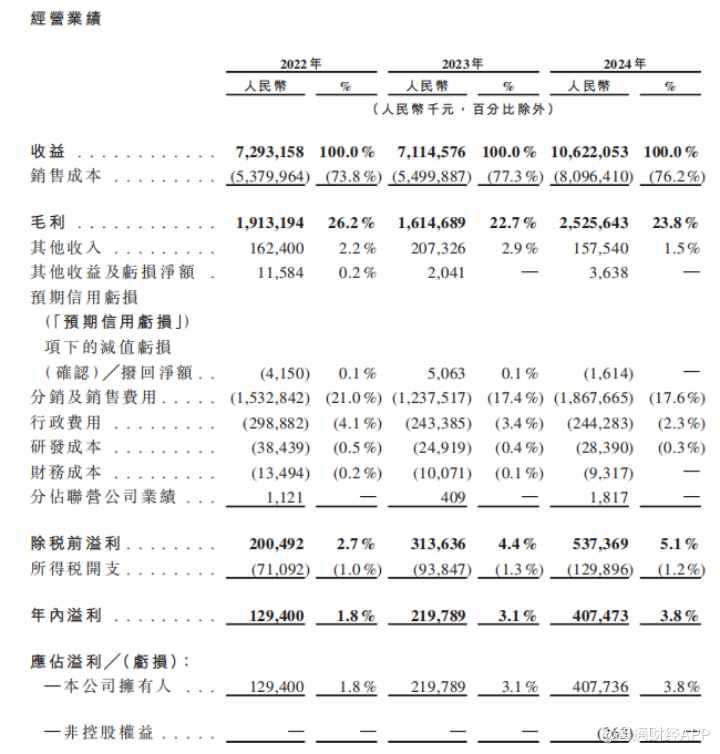
Xin Lang Cai Jing· 2025-05-06 05:10
Core Viewpoint - Q1 2024 financial results for Qiaqia Foods show a significant decline in net profit, raising concerns about the company's growth trajectory and market position [3][5][6]. Financial Performance - In 2023, Qiaqia Foods reported a revenue of 7.13 billion yuan, a year-on-year increase of 4.8%, and a net profit of 850 million yuan, up 5.8% [3][5]. - For Q1 2024, the company experienced a revenue drop to 1.57 billion yuan, a decrease of 13.8%, and a net profit of 77.24 million yuan, down 67.9% year-on-year [3][5]. Market Position and Challenges - Qiaqia Foods, established in 2001, has been a leading player in the snack food industry, particularly known for its sunflower seeds [4]. - The company is facing challenges due to a shift in consumer preferences and increased competition from brands like Three Squirrels and Good Products [7][8]. Product Performance - Sunflower seed products remain the largest revenue contributor, generating 4.38 billion yuan, accounting for 61.45% of total revenue, but growth is slowing [7]. - The nut product line has grown from 247 million yuan in 2017 to 1.75 billion yuan in 2023, but growth rates have declined significantly [8]. Strategic Initiatives - Qiaqia Foods has announced a cash dividend plan of 4.97 billion yuan and has repurchased shares worth 172 million yuan to support its stock price [9][10]. - The company is also focusing on expanding its overseas market, achieving 569 million yuan in revenue from international sales, a 10.28% increase [10].


食饮 2024年报及25一季报总结
2025-05-06 02:27
Summary of Industry and Company Insights from Conference Call Records Industry Overview Alcohol Industry - The liquor industry is currently in a bottoming phase, with overall deceleration and rising costs. High-end liquor brands like Moutai, Wuliangye, and Luzhou Laojiao show strong resilience, with combined revenue and profit growth of 7.4% and 7.9% respectively in Q4 2024 and Q1 2025 [1][12][11] - The high-end liquor segment is crucial, with brands such as Moutai, Wuliangye, and Luzhou Laojiao being particularly noteworthy. Other brands like Fenjiu and regional brands such as Jiuqu Hong and Gujing Gongjiu are also significant [4][12] - The overall revenue for the liquor sector in 2024 was 442.2 billion yuan, with a year-on-year growth of 7.3% [11] - The sales expense ratio for the liquor sector was approximately 9.7%, an increase of 0.4 percentage points year-on-year, indicating a strategy to maintain market share through increased spending [13] Beer Industry - The beer industry is facing sales pressure, with a slowdown in price upgrades. However, some companies are achieving excess profits through volume growth and improved operational efficiency [5][35] - In 2024, the beer sector's revenue was generally under pressure, but Q1 2025 saw a rebound in sales for most brands, excluding Budweiser [35][37] Food and Beverage Industry - The food and beverage sector is experiencing a shift from high-end to low-end consumption, influenced by government policies and consumer expectations [2] - The condiment sector is in a phase of stock competition, with weak sales environments but better profit expectations due to sustained raw material cost advantages [3][43] Key Insights Financial Performance - The liquor sector's combined revenue growth for Q4 2024 and Q1 2025 was 1.5%, with profit growth of 0.2% [11] - High-end liquor brands maintained stable profit margins, while mid-tier and regional brands experienced declines in revenue and profit [12][27] - Online sales for liquor reached 10.38 billion yuan in 2024, a year-on-year increase of 10.8%, indicating a strong trend towards online sales [20] Consumer Trends - The consumer trend in 2025 shows a notable shift towards value-oriented purchases, with a more rational approach from investors in selecting companies for potential rebounds [2] - The snack food sector is seeing a divergence in performance, with production-oriented companies benefiting from category advantages while channel-oriented companies face pressure [46][47] Investment Recommendations - Investment focus should be on high-end stable brands in the liquor sector, such as Moutai and Wuliangye, as well as promising regional brands with strong market performance [25][22] - The beer sector is expected to recover in Q2 2025, with companies like Qingdao and Yanjing showing potential for growth due to low base effects from the previous year [42] Future Outlook - The liquor industry is anticipated to see significant differentiation in performance during the Mid-Autumn Festival and National Day in 2025, with ongoing monitoring of market dynamics [23] - The overall valuation of the liquor sector is at historical lows, with a price-to-earnings ratio (PETTM) below 20 times, suggesting potential for recovery [24] Additional Considerations - The health supplement and additive sectors are expected to expand in the long term, with companies that have strong R&D capabilities showing stability and competitiveness [7][57] - The beverage market is experiencing significant differentiation, with energy drinks and electrolyte beverages launching new products, while competition in the sugar-free tea segment intensifies [9][58]



食品综合2024年报及2025年一季报总结:零食继续领跑,餐饮链有望企稳
Soochow Securities· 2025-05-05 07:05
Investment Rating - The report maintains an "Overweight" rating for the food and beverage industry [1] Core Viewpoints - The snack sector continues to lead, while the restaurant chain industry is expected to stabilize [2] - The report emphasizes the structural growth opportunities within the snack industry, driven by channel transformation and product innovation [11][31] - The frozen food sector is gradually overcoming its pressure phase, with leading companies seeking new growth [44] - The restaurant chain sector shows signs of stabilization, although single-store revenue still faces challenges [65] Summary by Sections 1. Snack Foods - The snack food industry exhibits structural growth opportunities, with a notable increase in revenue growth rates among key players [11][31] - In 2024, seven major listed companies in the snack sector achieved revenue growth exceeding 20%, with three maintaining this growth into Q1 2025: Wancheng Group, Youyou Foods, and Yanjinpuzi [12][11] - The growth in the snack sector is attributed to channel innovations, particularly through snack wholesale channels and e-commerce platforms like Douyin [14][21] - Wancheng Group and Mingming Group are expanding their store numbers significantly, validating their business model [14][20] - Profitability in the snack sector is influenced by raw material costs, with Wancheng Group showing efficiency improvements [32][34] 2. Frozen Foods - The frozen food sector is gradually recovering, with leading companies like Lihai Foods and Anjifoods showing resilience [49][44] - Revenue performance in the frozen food sector aligns closely with the overall restaurant industry, with Lihai Foods demonstrating notable growth driven by its cream product line [49][44] - The report highlights that the small B channel and rice noodle products are under significant pressure due to market saturation and competition [50][51] - Profit margins are under pressure due to rising raw material costs and increased competition, although Lihai Foods has managed to improve its profitability through internal efficiency measures [54][57] 3. Restaurant Chains - The restaurant chain sector is experiencing a stabilization trend, with essential food brands like Babi Foods performing better than optional brands [65] - Despite growth in the number of stores, many companies still face revenue gaps compared to pre-pandemic levels, with Babi Foods and Guoquan showing positive revenue growth [65] - The report notes that cost control measures have led to improved profitability for some companies, while others continue to struggle with high expenses [65]
食品饮料行业周报:业绩稳健收官,持续关注零食等景气催化
SINOLINK SECURITIES· 2025-05-05 04:25
投资建议 白酒板块:本周年季报业绩期收官,整体而言:白酒板块 24 年年报及 25 年一季报的兑现度均较为不错,绝大多数酒 企的表观业绩高度契合市场预期。在当下白酒行业景气度仍有所承压的背景下,一方面市场期待酒企能发挥其品牌/ 渠道/组织等优越性,积极紧抓消费需求、拼抢巩固自身市场份额;另一方面,市场亦深知欲速则不达,只有基本面 底盘企稳、酒企方能伴随景气上行而厚积薄发。因此,业绩的平稳兑现已是行业磨底期酒企交出的不错答卷。 当下已至白酒消费淡季,酒企的营销重心也逐步倾斜至流通渠道稳价盘、团购商务做客情、宴席聚饮抢需求。从目前 的动销反馈来看,宴席场景动销普遍反馈可圈可点、部分区域因民俗因素致使今年宴席有所回补,但团购商务、聚饮 动销仍较承压。考虑到春糖后外部贸易环境等不确定性进一步提升,我们预计短期白酒行业动销或仍处于小幅回落的 磨底状态,拐点仍待促内需、顺周期相关政策落地后从需求端曳引。 目前我们维持行业景气度仍处于下行趋缓阶段的判断,类似上一轮周期中 14 年下半年至 15 年,该时期行业景气度不 再断崖式回落、尤其淡季动销绝对量占比相对较低,但需求侧仍缺乏足够强的拉力。考虑产业层面已处于磨底阶段, 白 ...
新股前瞻|营收重返百亿,三只松鼠(300783.SZ)还能“燎原”零食江湖?
智通财经网· 2025-05-05 02:02
Core Viewpoint - Three squirrels (300783.SZ) has initiated its IPO process in Hong Kong after its revenue returned to over 10 billion RMB, aiming to strengthen its position in the snack market through global supply chain enhancement, channel expansion, digital capability improvement, and strategic investments [1][2]. Company Overview - Founded in 2012, Three Squirrels has grown from a single nut product to the largest Chinese snack company, with revenue increasing from 924 million RMB in 2014 to 10.17 billion RMB in 2019, achieving a compound annual growth rate (CAGR) of 57.2% [2]. - The company faced a decline in revenue from 2020 to 2023, dropping to 7.115 billion RMB due to rising customer acquisition costs and challenges in offline expansion [2][3]. - In 2024, Three Squirrels' revenue rebounded to 10.622 billion RMB, marking a historical high, with a net profit of 408 million RMB [2][3]. Market Position - As of 2024, Three Squirrels ranks as the fourth largest snack company in China, with a retail revenue of 13.98 billion RMB and a market share of 3.2% [4][6]. - The company has the fastest CAGR among the top five snack companies in China, at 18.86% from 2022 to 2024 [4]. Industry Trends - The Chinese snack market is projected to grow from 1.0816 trillion RMB in 2019 to 1.344 trillion RMB in 2024, with a CAGR of 4.4% [7]. - Consumer demand is shifting towards healthier, personalized snacks, with increasing interest in low-sugar, low-fat, and high-protein options [11]. Competitive Landscape - The snack market is highly fragmented, with the top five companies holding only 5.9% of the total market share, necessitating strong brand influence and product competitiveness for success [12]. - Three Squirrels has implemented a "high-end cost-performance" strategy to enhance product competitiveness and market share, but faces challenges in balancing cost control and pricing strategies [12][13]. Product and Pricing Strategy - In 2024, the average selling prices of core products such as nuts and baked goods decreased significantly, which may compress profit margins if low pricing is maintained [13]. - The company is exploring multi-brand and new product categories to diversify risks and identify new growth points, although some brands are still in the incubation stage [15]. Future Outlook - The IPO is a critical decision for Three Squirrels, presenting both opportunities and challenges. The company must effectively utilize the raised funds to address strategic, channel, and product innovation issues to enhance brand competitiveness and market adaptability [15].
安徽前首富,又要收获一个IPO
投中网· 2025-05-03 03:48
Core Viewpoint - Three Squirrels is preparing for a listing in Hong Kong after its successful IPO in A-shares in July 2019, driven by its strong brand presence and significant revenue from snack sales exceeding 10 billion yuan annually [1][4]. Group 1: Company Overview - Founded by Zhang Liaoyuan, Three Squirrels capitalized on the e-commerce boom starting in 2012, focusing on leisure snacks and leveraging platforms like Taobao and JD.com for rapid growth [4]. - The company has expanded its product offerings beyond nuts to include baked goods, meat products, and various snack combinations, with over 1,000 SKUs under brands like "Three Squirrels" and "Little Deer Blue" [8]. Group 2: Financial Performance - After experiencing a revenue decline for three consecutive years starting in 2020, the company has rebounded, achieving revenue and net profit growth for five consecutive quarters as of Q3 2023 [5]. - Revenue increased from 7.293 billion yuan and net profit of 129 million yuan in 2022 to 10.622 billion yuan and 407 million yuan in 2024, marking a significant recovery [9]. Group 3: Market Position and Strategy - Three Squirrels aims to enhance its market position by adopting a "high-end cost performance" strategy and restructuring its entire value chain to optimize costs [5]. - The company is also pursuing acquisitions to strengthen its supply chain and expand its offline retail presence, with plans to invest up to 360 million yuan in acquiring control of several food companies [8][9]. Group 4: Industry Context - The snack food market in China is poised for growth, with Zhang predicting that a Chinese company could emerge as a global leader in the snack industry [10]. - A wave of consumer companies, including Three Squirrels, is heading to the Hong Kong stock market, indicating a favorable environment for listings and capital raising in the sector [12][14].

A股上市未果的溜溜果园,换到港股就能“梅”事了吗?
Sou Hu Cai Jing· 2025-05-02 04:23
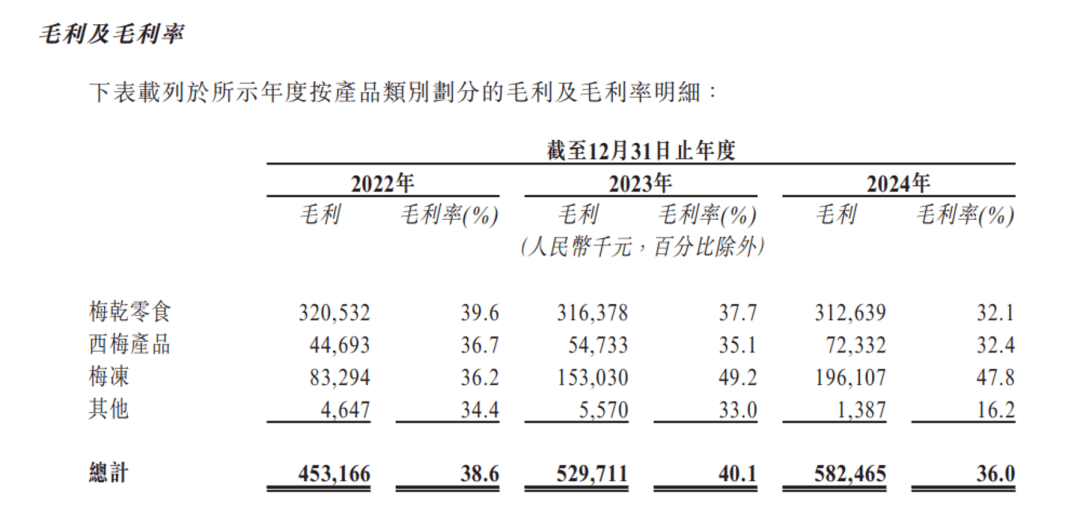
文|摩根商研所 近日,溜溜果园集团股份有限公司向港交所递交了招股书。 也许这名字对很多消费者来说有些陌生,但要说这就是那个"没事就吃溜溜梅"的母公司,很多人就清楚了。毕竟其大单品"溜溜梅"可谓家喻户晓,即使没吃 过也见过那魔性的广告。 从溜溜果园的招股书来看,此次赴港IPO可谓准备充足,但客观来说,"梅"开二度的溜溜果园,依然充满挑战。 营收虽好,旧疾仍在 先看财务数据,这三年来溜溜果园的营收情况十分不错。 根据招股书数据显示,在2022年、2023年及2024年,溜溜果园的总收入分别为11.74亿元、13.22亿元及16.16亿元。 同期的净利润则为分别0.68亿元、0.99亿元和1.48亿元。 不过在拆解过后会发现,净利润中还有着有政府补助的影子,近年来溜溜果园政府补贴一路从1950万元上升至2024年的3380万元,占净利润比例达22.8%。 虽然营收与净利润在稳步上升,但毛利率却从2023年的40.1%下降至2024年的36%。 其中,营收占比最大的梅干类零食2022年到2024年的毛利分别为3.21亿、3.16亿和3.12亿元,毛利率分别为39.6%、37.7%和32.1%,西梅类毛利也较为乏力, ...
中国零食上市公司“盈利王”:去年净赚11亿元,领先洽洽、三只松鼠
Sou Hu Cai Jing· 2025-04-30 12:36
Industry Overview - The market size of China's snack food industry reached 933 billion yuan in 2024, with a per capita annual consumption of 662.5 yuan, significantly lower than developed countries like the US (7578.7 yuan), UK (6543.9 yuan), and Japan (3524.6 yuan), indicating substantial growth potential [1] - The market is expected to grow to 1.14 trillion yuan by 2029, with a compound annual growth rate (CAGR) of 4.1% [1] Company Performance - Many listed companies in the snack sector have reported declines in both revenue and net profit in the past year, including major players like Liangpinpuzi, Juewei Food, and Zhou Hei Ya [3] - The "three giants" of marinated snacks have seen a reduction of over 5,000 stores due to declining performance, with Zhou Hei Ya reducing its stores by 785 to 3,031, and Huang Shang Huang by 837 to 3,660 [3] Leading Companies - Weidong Meiwai emerged as the "profit king" among snack companies, achieving a net profit of 1.068 billion yuan in the last year, a year-on-year increase of 21.37%, and revenue of 6.266 billion yuan, up 28.6% [5] - Three Squirrels is the only company to surpass 10 billion yuan in revenue, reporting 10.622 billion yuan, a 49.3% increase, and a net profit of 408 million yuan, up 85.51% [7] - The company has expanded its product range significantly and plans to enter the bulk snack market through acquisitions [7] Financial Summary of Major Snack Companies - Three Squirrels: Revenue 106.22 billion yuan, Net Profit 4.08 billion yuan [8] - Liangpinpuzi: Revenue 71.59 billion yuan, Net Profit 0.46 billion yuan [8] - Juewei Food: Revenue 62.57 billion yuan, Net Profit 2.12 billion yuan [8] - Weidong Meiwai: Revenue 62.66 billion yuan, Net Profit 1.068 billion yuan [8] - Other companies like Salted Fish and Good Idea also reported varied performance, with some experiencing significant declines [8]