
果干

Search documents
“每逢佳节胖三斤” 健康过节到底怎么吃才好?
Xin Lang Cai Jing· 2026-02-16 03:38
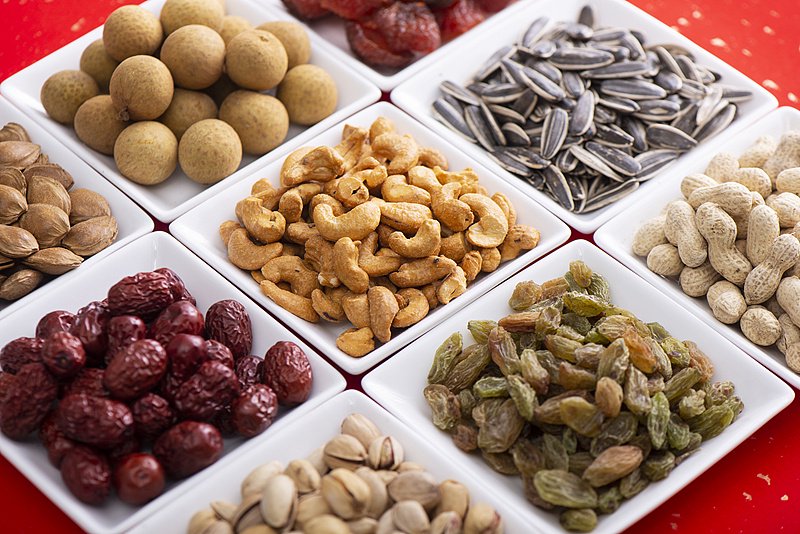
Core Viewpoint - The article emphasizes the importance of healthy eating during the Spring Festival, highlighting the need to balance festive indulgence with health considerations to avoid gastrointestinal issues and other health risks. Group 1: Health Risks of Common Snacks - Many popular holiday snacks, such as flavored sunflower seeds and dried fruits, contain high levels of salt and sugar, which can exceed recommended daily limits [3][5] - For instance, 100g of flavored sunflower seeds can contain 2 to 3 grams of salt, while 50g of preserved plums may have 15 to 20 grams of sugar [3][5] - The Chinese dietary guidelines recommend that daily sugar intake should not exceed 25 grams and salt intake should not exceed 5 grams [3] Group 2: Dietary Recommendations - It is advised to consume salty and oily foods in moderation, as they can lead to health issues such as hypertension and increased cardiovascular risks [5][7] - A balanced approach to meals is recommended, starting with vegetables, followed by protein sources like shrimp and fish, and limiting fatty meats and fried foods [7] - Monitoring weight and maintaining a healthy lifestyle through exercise is crucial during the holiday season [7] Group 3: Gastrointestinal Health Concerns - Gastrointestinal diseases are more prevalent during the Spring Festival, often due to foodborne illnesses or overeating [8] - Individuals with pre-existing conditions such as gallstones or high cholesterol should be particularly cautious to avoid acute pancreatitis and cholecystitis [8] - The article stresses the importance of enjoying the holiday while maintaining a focus on healthy eating habits to enhance overall well-being [8]

投融界观察:暖春消费旺,直播电商成为春节消费新风口
Sou Hu Cai Jing· 2026-02-13 12:46
Group 1: Core Insights - The 2026 Spring Festival is marked by a strong consumer demand across various sectors, including travel, dining, and shopping, driven by the longest 9-day holiday in history [1] - The consumption market is characterized by quality, experience, and digitalization, reflecting the continuous optimization of China's consumption structure and new trends in industry development [1] Group 2: Travel Market Dynamics - The travel market during the 2026 Spring Festival shows a robust demand and supply, with diverse travel experiences and upgraded consumption [3] - A notable trend is "reverse holidaying," where young people choose to celebrate the festival in their work cities with family, leading to significant growth in tourist numbers in first-tier and new first-tier cities [3] - High-end accommodation and unique experiences are increasingly popular, with a marked rise in bookings for luxury hotels, hot springs, and family-friendly resorts, as consumers seek quality over traditional tourism [3] Group 3: Dining and New Year Goods - The dining and New Year goods market is evolving with a focus on health and innovation, maintaining traditional elements while introducing new vitality [4] - There is a strong demand for dining experiences during the festival, with various options such as home-cooked meals, hotel reservations, and food delivery maintaining high activity levels [4] - Health-oriented products like nuts, dried fruits, and organic oils are seeing significant sales growth, replacing traditional high-fat and high-sugar items as consumer preferences shift [4] Group 4: E-commerce and Live Streaming Impact - E-commerce and live streaming are reshaping the distribution of New Year goods, with live streaming becoming a key sales channel, as evidenced by a threefold increase in sales of gift boxes on Douyin during the festival period [5] - Regional specialties, such as Chaoshan marinated goose and Zhejiang sauce duck, have successfully expanded from local markets to nationwide sales, with a 223% year-on-year increase in transaction value for these products [5] - The ongoing consumer demand is driving innovation and upgrades in related industries, with companies leveraging technology and services to optimize their offerings and capture the Spring Festival consumption boom [5]

车厘子稳居“顶流”,“高端”水果更平价|年货新趋势
Bei Ke Cai Jing· 2026-02-11 08:36
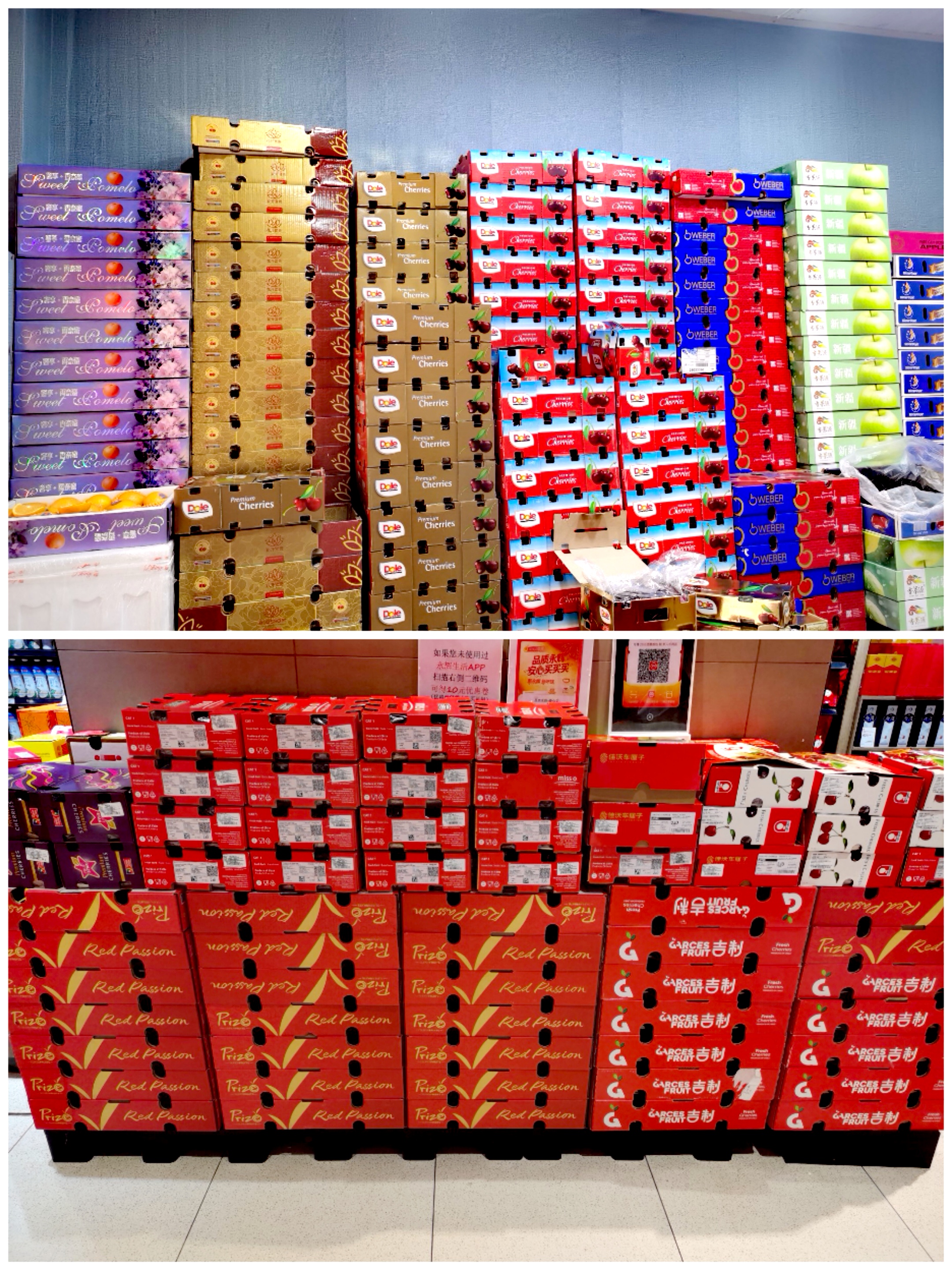
Group 1 - The fruit market is experiencing a surge in demand as the Spring Festival approaches, with cherries emerging as a top-selling item due to significant price drops and consistent quality [1][3][8] - Consumers are increasingly focused on the quality, health labels, and convenience of fruits, leading to a clear trend towards premium, healthy, and convenient options in the fruit consumption market [2][29][30] - The supply of cherries is expected to increase significantly, with Chilean cherry exports projected to reach 620,000 tons in the 2024/2025 season, a 50% year-on-year increase, primarily targeting the Chinese market [8] Group 2 - Strawberry gift boxes are also popular, with varieties like Dandong Hongyan and Shandong Zhangji strawberries seeing high sales, particularly online during promotional events [10][11] - Citrus fruits are gaining traction in the market, with products like Satsuma mandarins and Guangxi Wogan oranges being frequently restocked in supermarkets [12][15] - The definition of "premium" fruits is expanding, with a wider variety of fruits such as kumquats and cherry plums gaining consumer favor due to their quality and taste [17] Group 3 - The trend of high-quality fruit gift boxes is driven by the needs of smaller family units, with many consumers opting for customized combinations of fruits [22][27] - The aesthetic appeal and cultural significance of fruit packaging are becoming crucial factors in consumer purchasing decisions, with brands focusing on design and meaningful themes [28] - The fruit market is evolving towards a focus on quality, health, and convenience, with consumers willing to pay a premium for organic and nutrient-rich options [29][30][31]
三只松鼠扣非降约80%三个月两涨价 一年12亿买流量
Chang Jiang Shang Bao· 2026-02-03 07:11
Core Viewpoint - The snack giant Three Squirrels (300783.SZ) has struggled with its "high-end cost-performance" strategy, leading to a significant decline in expected profits for 2025, with net profit projected to drop by approximately 60% year-on-year [1][5]. Financial Performance - For the fiscal year 2025, the company anticipates a net profit attributable to shareholders of between 1.35 billion to 1.75 billion yuan, a decrease of about 2.73 billion to 2.33 billion yuan compared to the previous year, representing a year-on-year decline of 57.08% to 66.89% [5][6]. - The company reported a net profit of 1.61 billion yuan and a non-recurring net profit of 570 million yuan for the first three quarters of 2025, reflecting a year-on-year decline of 52.91% and 78.57%, respectively [2][6]. - The fourth quarter of 2025 is expected to be the worst in nearly four years, with projected net profits ranging from a loss of 260 million yuan to a profit of 140 million yuan [7]. Strategic Challenges - The company has faced challenges due to structural misalignment during peak sales seasons, significant increases in nut raw material prices, and strategic adjustments in sales structure, which have collectively contributed to profit declines [4][9]. - Despite the downturn, the company remains committed to its "high-end cost-performance" strategy, aiming for quality and differentiation [9]. Marketing and Sales Expenses - In 2024, the company spent 1.2 billion yuan on customer acquisition, and sales expenses exceeded 1.6 billion yuan in the first three quarters of 2025, marking a 24% increase year-on-year [4][14]. - The high sales expenses are primarily attributed to platform service and promotional costs, which are closely linked to the company's reliance on online sales [15][16]. Comparison with Competitors - Competitors like Wancheng Group and Mingming are implementing "extreme cost-performance" strategies, achieving significant profit increases, while Three Squirrels' strategy has not yielded similar advantages [10].

三只松鼠扣非降约80%三个月两涨价 “高端性价比”或失灵一年12亿买流量
Chang Jiang Shang Bao· 2026-02-03 00:25
Core Viewpoint - The snack giant Three Squirrels (300783.SZ) has seen its "high-end cost-performance" strategy fail after three years, leading to a significant decline in expected profits for 2025 [1][7]. Financial Performance - For the fiscal year 2025, the company anticipates a net profit attributable to shareholders of between 135 million to 175 million yuan, representing a year-on-year decline of approximately 60% [1][3]. - The expected net profit excluding non-recurring items is projected to be between 45 million to 65 million yuan, indicating a year-on-year decrease of around 80% [1][3]. - In the first three quarters of 2025, the company reported a net profit of 161 million yuan and a net profit excluding non-recurring items of 57 million yuan, both showing significant declines of 52.91% and 78.57% respectively compared to the previous year [4][11]. Strategic Challenges - The company attributes the profit decline to several factors, including structural misalignment during the sales peak season, significant increases in nut raw material prices, and proactive adjustments to the sales structure [5][6]. - Despite the downturn, Three Squirrels remains committed to its "high-end cost-performance" strategy, aiming for quality and differentiation [7]. Marketing and Sales Expenses - In 2024, the company spent 1.2 billion yuan on customer acquisition, and in the first three quarters of 2025, sales expenses exceeded 1.6 billion yuan, a year-on-year increase of 24% [2][12]. - The high sales expenses, primarily due to platform service and promotional costs, have significantly impacted profitability, with the net profit margin dropping to 1.97% [11][14]. Comparison with Competitors - Competitors like Wancheng Group and Mingming are implementing "extreme cost-performance" strategies, achieving substantial profit increases, while Three Squirrels' strategy has not yielded similar results [8].
瓜子比猪肉贵!过年还能愉快嗑瓜子吗?丨川观探市
Xin Lang Cai Jing· 2026-02-02 10:52
Core Viewpoint - The rising prices of sunflower seeds and other snacks during the upcoming Spring Festival have sparked discussions among consumers, highlighting the significant price differences across various sales channels [1][3]. Price Trends - Sunflower seeds are priced between 8 to 14 yuan per pound in community stores, around 20 yuan in chain stores, and over 30 yuan in high-end gift shops [1]. - The price of sunflower seeds is considered relatively affordable compared to other snacks, with nuts and dried fruits ranging from tens to hundreds of yuan per pound [3]. Consumer Behavior - Consumers are adjusting their purchasing habits due to high prices, with many opting for smaller packages instead of bulk buying [5]. - The average expenditure on snacks during the Spring Festival can reach nearly 1,000 yuan, leading to concerns about the value received for money spent [5]. Market Dynamics - The popularity of chain snack stores is attributed to their diverse product offerings and the appeal of freshly roasted items, although high prices deter some consumers [6][8]. - Over 80% of consumers spend between 20 to 100 yuan monthly on nuts and snacks, indicating a shift in consumption habits [8]. Brand Positioning - The debate over whether branded snacks are overpriced or of superior quality centers on brands like Xueji and Qi Wang, which have rapidly expanded their presence [10][11]. - The success of these brands is linked to their focus on food safety and freshness, with higher raw material costs contributing to elevated prices [11][13]. Competitive Landscape - The competitive environment for branded snacks is intensifying, with a growing number of players entering the market [13]. - To maintain a competitive edge, brands are advised to diversify their product offerings and consider pricing strategies that appeal to a broader consumer base [13].

联农带农共享产业发展收益
Xin Lang Cai Jing· 2026-01-14 20:45
Core Viewpoint - The establishment of the Baiguyuan clean vegetable processing project in Xibula Village is a significant step towards developing local specialty industry clusters and enhancing the agricultural support mechanism, injecting vitality into rural development [1] Investment and Project Details - The project has a total investment of 30 million yuan and features a 4,730 square meter intelligent clean workshop equipped with over 10 specialized production lines, with an annual processing capacity of 10,000 tons of clean vegetables and meat [1] Employment and Community Impact - The project employs a mechanism of "village collective guidance + enterprise support + farmer participation," having signed planting orders with 21 farmers, with over 80% of employees being local villagers, addressing the issue of "difficulties in selling vegetables" and providing local employment opportunities [1] Agricultural Development and Economic Growth - The local agricultural sector is diversifying, with farmers like Wu Haibo expanding specialty planting from 28 idle greenhouses to over 40, producing 200,000 jin annually and generating over 2 million yuan in income through deep processing of dried fruits [1] - Companies such as Yuhua Food and Gaoyuan Almond Beverage are promoting the transformation of agricultural products from "raw" to "marketable" goods, benefiting over a thousand farming households [1] Future Plans - Local officials plan to continue focusing on agricultural industry upgrades, improve benefit-sharing mechanisms, and ensure the effective connection between poverty alleviation and rural revitalization, aiming for broader community access to development benefits and steady progress towards common prosperity [1]
提振消费进行时丨古建寻幽 柿园生“金” 农旅融合富瑶乡
Guang Xi Ri Bao· 2026-01-05 02:49
Group 1 - The tourism sector in Gongcheng Yao Autonomous County experienced significant growth during the New Year holiday, with over 30,000 visitors, a year-on-year increase of nearly 25% [2] - The sales revenue of moon persimmon products reached 860 million yuan, with more than one-third sold through e-commerce channels [2] - The oil tea and related products achieved sales exceeding 320 million yuan, indicating a strong market demand [2] Group 2 - The local economy is benefiting from the transformation from selling agricultural products to selling tourism experiences, with average annual tourism income per household exceeding 100,000 yuan [1] - Automation in production is evident, with Guilin Juxin Agricultural Co., Ltd. processing over 20 tons of fresh moon persimmons daily, and orders extending into the next year [1] - New products such as concentrated oil tea paste and instant oil tea are being produced at a daily capacity of 2 tons, yet still face high demand [2]
那些看着很有意思的职业,有苦也难言
3 6 Ke· 2025-12-25 06:31
Core Viewpoint - The role of "taste testers" in the food industry is increasingly glamorized on social media, presenting it as an easy and enjoyable job, but the reality is much more complex and demanding [1][2][26]. Group 1: Job Description and Responsibilities - The position of "taste tester" is officially referred to as a sensory evaluation specialist, requiring a deep understanding of consumer preferences and product characteristics [3][5]. - Taste testers must provide detailed feedback on various food products, including quantitative assessments of taste, texture, and aroma, which are crucial for product development [9][11][12]. - Each tasting session involves strict protocols, including pre-meeting to select products, controlled tasting amounts, and writing comprehensive reports that contribute to product optimization [7][8][9]. Group 2: Skills and Challenges - The job demands high levels of concentration and objectivity, as taste testers must accurately capture subtle differences in flavor and texture across product batches [10][18][27]. - Taste testers face physical challenges, such as maintaining their weight and avoiding taste fatigue, which can affect their ability to perform their duties effectively [19][20][21]. - The role is not merely about enjoying food; it requires a professional approach to sensory evaluation, where personal preferences must be set aside for objective assessments [23][24][41]. Group 3: Industry Context and Evolution - The emergence of taste testers reflects a broader trend in the labor market, where sensory experiences are being professionalized and quantified, similar to roles like hotel testers and scent evaluators [28][31][37]. - These new professions, while appearing appealing, involve rigorous standards and responsibilities that challenge the notion of "easy" jobs [39][40]. - The increasing demand for sensory evaluation in product development highlights the importance of human perception in industries that rely on consumer satisfaction [38][41].

乡村振兴齐鲁新实践:片区推进,协同共赢
Xin Hua Wang· 2025-12-20 02:40
Core Viewpoint - The article discusses the transformation of rural areas in Shandong Province, China, through the establishment of integrated rural revitalization zones that leverage local resources and promote industrial development, resulting in significant economic growth and improved living standards for residents [1][3][12]. Group 1: Industrial Development - Shandong has established 2,070 rural revitalization zones, covering approximately one-third of its administrative villages, creating a "Qilu model" for rural revitalization [3][11]. - The integration of industries, such as the "colorful tomato" initiative in Shouguang, has led to increased market bargaining power and significant sales growth, with one village achieving a transaction volume exceeding 60 million yuan from 500,000 jin of tomatoes [2][3]. - The development of specialized agricultural zones has resulted in substantial income increases for farmers, with average annual incomes in some villages rising from less than 50,000 yuan to over 200,000 yuan [2][3]. Group 2: Resource Optimization - The article highlights the importance of resource integration across villages to enhance efficiency and service delivery, with examples of successful collaborations leading to increased collective income [6][7]. - The establishment of cooperative models, such as the "rural revitalization partner" initiative, has facilitated the development of new business ventures and job creation in rural areas [10][11]. - The integration of cultural and natural resources in areas like Yangjiashan has attracted significant tourism, generating over 100 million yuan in annual revenue [5][11]. Group 3: Policy and Governance - Shandong's government has implemented policies to support the development of rural revitalization zones, including financial incentives and a structured policy framework to guide local initiatives [11][12]. - The establishment of a "development community" model aims to create self-sustaining rural economies by fostering collaboration among neighboring villages [11][12]. - The focus on coordinated development within rural revitalization zones addresses challenges related to infrastructure, public services, and resource management, promoting a holistic approach to rural growth [11][12].