工业母机

Search documents
博时市场点评9月2日:两市震荡盘整,创业板跌超2.8%
Xin Lang Ji Jin· 2025-09-02 08:13
Market Overview - The three major indices in the A-share market adjusted, with the Shenzhen Component Index falling over 2.1% and the ChiNext Index dropping over 2.8%. The total trading volume reached 2.9 trillion yuan [1] - The margin financing balance continued to increase, exceeding 35 billion yuan to nearly 2.3 trillion yuan, indicating high leverage sentiment [1] - The U.S. labor market shows signs of weakness, suggesting a slight economic slowdown, with a significant probability of interest rate cuts by the Federal Reserve in September [1] Policy Developments - The National Standardization Administration and the Ministry of Industry and Information Technology issued a plan for establishing a high-quality standard system for industrial mother machines by 2026, aiming for a 90% international standard conversion rate [2] - The implementation of the AI-generated content identification regulation starting September 1 aims to enhance transparency and reduce misinformation in the AI sector [3] Commodity Market - Silver prices surpassed $40 per ounce for the first time since 2011, with a year-to-date increase of over 40%. Gold prices also continued to rise, with COMEX gold futures reaching a historical high [3] - The rise in precious metals is driven by supply-demand fundamentals, expectations of Federal Reserve rate cuts, and increased industrial demand for silver due to the global green energy transition [3] A-share Market Performance - On September 2, the A-share market saw declines across major indices, with the Shanghai Composite Index down 0.45%, the Shenzhen Component Index down 2.14%, and the ChiNext Index down 2.85% [4] - Among the sectors, banking, public utilities, and household appliances showed positive performance, while telecommunications, computers, and electronics faced significant declines [4] Fund Tracking - The market turnover reached 29,127.66 billion yuan, an increase from the previous trading day. The margin financing balance reported at 22,969.91 billion yuan also saw an increase [5]

关注中游高技术产业发展
Hua Tai Qi Huo· 2025-09-02 07:47
Report Summary Core Views - The report focuses on the development of mid - stream high - tech industries and provides an overview of mid - level events and industry trends across different sectors [1]. Industry Overview Upstream - In the chemical industry, the PTA price has declined; in the agricultural sector, the palm oil price has dropped; and in the black metal industry, the rebar price has fallen [3]. Mid - stream - The PTA operating rate in the chemical industry has decreased, and the coal consumption of power plants in the energy sector has shown no significant change recently [3]. Downstream - The sales of commercial housing in first - and second - tier cities in the real estate industry have seasonally declined, and the number of domestic flights in the service industry has decreased [4]. Mid - level Event Summary Production Industry - On September 1st, new energy vehicle manufacturers announced their August delivery data, with overall growth. Leapmotor, XPeng, and NIO achieved new monthly delivery highs, while Li Auto's monthly delivery decreased for three consecutive months due to product transition and sales - service system adjustment. In August, Leapmotor led with 57,066 units delivered, a year - on - year increase of over 88%, while Li Auto delivered 28,529 vehicles, a year - on - year decrease of 40.72% and a month - on - month decrease of 7.17% [1]. - The Standardization Administration of China and the Ministry of Industry and Information Technology issued the "Plan for the Construction of a High - Quality Standard System for Machine Tools", aiming to basically establish a high - quality standard system for machine tools by 2026, with at least 300 standards formulated or revised, at least 5 international standards led in formulation or revision, and an international standard conversion rate of 90% [1]. Service Industry - A commemorative event for the 80th anniversary of the victory of the Chinese People's War of Resistance against Japanese Aggression and the World Anti - Fascist War will be held on September 3rd. The parade will last about 70 minutes, with 45 formations (echelons) demonstrating the military's modern combat capabilities [2]. Key Industry Price Indicators | Industry Name | Indicator Name | Unit | Price on 9/1 | YoY | | --- | --- | --- | --- | --- | | Agriculture | Spot price: Corn | Yuan/ton | 2301.4 | - 0.31% | | Agriculture | Spot price: Eggs | Yuan/kg | 6.5 | - 0.77% | | Agriculture | Spot price: Palm oil | Yuan/ton | 9404.0 | - 2.43% | | Agriculture | Spot price: Cotton | Yuan/ton | 15478.7 | 1.59% | | Agriculture | Average wholesale price: Pork | Yuan/kg | 20.0 | - 0.50% | | Non - ferrous metals | Spot price: Copper | Yuan/ton | 79993.3 | 0.98% | | Non - ferrous metals | Spot price: Zinc | Yuan/ton | 22076.0 | - 1.01% | | Non - ferrous metals | Spot price: Aluminum | Yuan/ton | 20636.7 | - 0.75% | | Non - ferrous metals | Spot price: Nickel | Yuan/ton | 124566.7 | 2.31% | | Ferrous metals | Spot price: Rebar | Yuan/ton | 3180.0 | - 2.45% | | Ferrous metals | Spot price: Iron ore | Yuan/ton | 794.0 | - 0.24% | | Ferrous metals | Spot price: Wire rod | Yuan/ton | 3377.5 | - 0.81% | | Non - metals | Spot price: Natural rubber | Yuan/ton | 14958.3 | - 0.11% | | Non - metals | China Plastic City Price Index | - | 803.4 | - 0.16% | | Energy | Spot price: WTI crude oil | US dollars/barrel | 64.0 | 0.55% | | Energy | Spot price: Brent crude oil | US dollars/barrel | 67.5 | - 0.37% | | Energy | Spot price: Liquefied natural gas | Yuan/ton | 3936.0 | 0.66% | | Energy | Coal price: Coal | Yuan/ton | 783.0 | 0.00% | | Chemical | Spot price: PTA | Yuan/ton | 4755.5 | - 2.05% | | Chemical | Spot price: Polyethylene | Yuan/ton | 7445.0 | 0.07% | | Chemical | Spot price: Urea | Yuan/ton | 1707.5 | - 0.29% | | Chemical | Spot price: Soda ash | Yuan/ton | 1290.0 | 0.00% | | Building materials | Cement price index: National | Points | 129.6 | - 0.74% | | Building materials | Building materials composite index | Points | 113.7 | - 1.33% | | Real estate | Concrete price index: National | Points | 93.0 | 0.00% | [36]


A股收评:创业板指跌2.85%,算力硬件股集体大跌
2 1 Shi Ji Jing Ji Bao Dao· 2025-09-02 07:28
相关股票: 长飞光纤招商银行济民健康舒泰神盛景微渝农商行巨轮智能塞力医疗热景生物生益科技招 商银行景旺电子长飞光纤兴森科技广生堂秦川机床沪农商行华东数控渝农商行 相关快讯 相关文章 南方财经9月2日电,A股今日集体下跌,截至收盘,上证指数跌0.45%,深证成指跌2.14%,创业板指跌 2.85%,北证50涨0.4%。沪深京三市全天成交额29124亿元,较上日放量1348亿元。全市场超4000只个 股下跌。板块题材上,CPO、半导体、铜缆高速连接等算力硬件股跌幅居前;银行、贵金属、PEEK材 料、电力、工业母机板块涨幅居前。盘面上,CPO、半导体、铜缆高速连接等算力硬件股集体大跌,长 飞光纤、景旺电子、盛景微、生益科技、兴森科技等多股跌停。创新药概念股冲高回落,济民健康、塞 力医疗盘中跌停,舒泰神、广生堂、热景生物跌幅居前。银行板块今日逆市走强,渝农商行、沪农商 行、招商银行盘中涨超3%。工业母机、汽车零部件板块午后逆市走高,华东数控、巨轮智能、秦川机 床等多股封板涨停。 相关股票: 长飞光纤招商银行济民健康舒泰神盛景微渝农商行巨轮智能塞力医疗热景生物生益科技招 商银行景旺电子长飞光纤兴森科技广生堂秦川机床沪农 ...
工业母机概念股开盘领涨 华东数控竞价涨停
Shang Hai Zheng Quan Bao· 2025-09-02 07:25
Group 1 - The industrial mother machine concept stocks opened strong, with Huadong CNC hitting the daily limit up [1] - Other companies such as Huazhong CNC, Haitan Precision, Kede CNC, and Ningbo Jingda also opened high [1]


午评:主要股指显著调整 贵金属股领涨 CPO概念股领跌
Xin Hua Cai Jing· 2025-09-02 05:15
Market Overview - The Shanghai and Shenzhen stock markets showed mixed performance on September 2, with the Shanghai Composite Index slightly up at the open, while the Shenzhen Component and ChiNext Index opened lower. By midday, all indices experienced significant declines [1] - The Shanghai Composite Index closed at 3844.84 points, down 0.79%, with a trading volume of approximately 811.7 billion yuan. The Shenzhen Component Index closed at 12545.82 points, down 2.21%, with a trading volume of about 1.1 trillion yuan. The ChiNext Index closed at 2870.72 points, down 2.90%, with a trading volume of around 529.2 billion yuan [1] Sector Performance - Sectors such as industrial mother machines, brain engineering, non-ferrous metals, aviation, and electricity showed strong performance at the market open. Precious metals, solid-state batteries, and innovative pharmaceuticals also performed well initially [1] - However, sectors like CPO concepts, communication equipment, copper cable high-speed connections, liquid cooling concepts, electronic components, and digital currencies experienced significant adjustments during the early trading session [1] Institutional Insights - CITIC Securities suggests that the market style will maintain high-level fluctuations, focusing on domestic and international computing power themes. The second half of the year is typically a period of intensive technology releases and product iterations in the domestic technology sector [2] - China Galaxy Securities notes that A-shares have a lower absolute valuation compared to U.S. stocks, indicating significant room for improvement. Certain sectors like finance and transportation infrastructure still hold valuation advantages, presenting structural opportunities [2] - GF Securities expresses optimism about the real estate sector's potential for recovery, highlighting September as a crucial window for decision-making in real estate allocation [2] Policy Developments - The State-owned Assets Supervision and Administration Commission (SASAC) emphasizes the acceleration of the development of the central enterprise biopharmaceutical industry, aiming to create a national team in the biopharmaceutical field to promote high-quality development [3] - The National Standardization Administration and the Ministry of Industry and Information Technology have issued a plan to establish a high-quality standard system for industrial mother machines by 2026, aiming to enhance product quality and equipment upgrades [4] - Shenzhen has introduced regulations to promote the innovative development of the synthetic biology industry, focusing on creating a market-oriented and application-predictable industrial system [5][6]
银行、电力股表现活跃
Di Yi Cai Jing Zi Xun· 2025-09-02 04:26
Market Overview - The A-share market experienced a decline, with the Shanghai Composite Index down 0.79% at 3844.84 points, the Shenzhen Component Index down 2.21% at 12545.82 points, and the ChiNext Index down 2.9% at 2870.72 points [2][3] - Nearly 4500 stocks in the Shanghai and Shenzhen markets fell, while only 858 stocks saw an increase [2] Sector Performance - The consumer electronics, computing power, military industry, and information technology sectors led the declines, while the precious metals sector continued to rise [2] - Precious metals increased by 2.05%, with banking and electric power stocks also showing positive performance [4] Trading Volume - The trading volume in the Shanghai and Shenzhen markets exceeded 1.5 trillion yuan for the 21st consecutive trading day [8] Notable Stocks - Guizhou Moutai's stock price rose over 2%, reaching 1500 yuan per share, marking a new high since May [12] - The innovative drug concept stocks saw significant gains, with companies like BeiGene and Amgen rising over 10% [12] International Market Influence - The Hang Seng Technology Index fell over 1%, with Huahong Semiconductor leading the decline among component stocks [5]



银行、电力股表现活跃
第一财经· 2025-09-02 04:10
Market Overview - The A-share market experienced a decline, with the Shanghai Composite Index down 0.79% at 3844.84 points, the Shenzhen Component Index down 2.21% at 12545.82 points, and the ChiNext Index down 2.9% at 2870.72 points [3][4][6] - Nearly 4500 stocks fell across the Shanghai, Shenzhen, and Beijing markets, with only 858 stocks rising [3] Sector Performance - The consumer electronics, computing power, military, and trust innovation sectors led the declines, while the precious metals sector continued to rise [3][6] - Precious metals increased by 2.05%, while sectors like communication equipment and components saw declines of 5.53% and 5.47%, respectively [5] Trading Volume - The trading volume in the Shanghai and Shenzhen markets exceeded 1.5 trillion yuan for the 21st consecutive trading day [7] - The trading volume surpassed 1 trillion yuan for the 69th consecutive trading day [10] Notable Stocks - Innovative drug concepts saw a resurgence, with companies like BeiGene and Amgen rising over 10% [11] - Kweichow Moutai's stock price returned to 1500 yuan per share, marking a new high since May [12] Economic Indicators - The People's Bank of China conducted a 255.7 billion yuan reverse repurchase operation at an interest rate of 1.40%, unchanged from previous rates [21] - The Chinese yuan depreciated by 17 basis points against the US dollar, with the central parity rate reported at 7.1089 [22]

两融余额、国际金价,历史新高!工业母机,大涨!603177,“天地板”!
Zheng Quan Shi Bao Wang· 2025-09-02 02:53
Group 1: Industrial Machinery and Solid-State Battery Concepts - The industrial machinery concept saw a significant rise, with companies like Huadong CNC and Bojie Co. hitting the daily limit up, following the release of a high-quality standard system construction plan by the National Standardization Administration and the Ministry of Industry and Information Technology, aiming for a comprehensive standard system by 2030 [4] - The solid-state battery concept also showed strength, with companies like Saiwu Technology hitting the daily limit up and Shanghai Xiba rising over 5%, continuing to set historical highs [5] Group 2: Precious Metals Market - The price of gold surpassed $3,500 per ounce, marking a historical high, with a year-to-date increase of over 33% [7] - Silver and other precious metal stocks also experienced gains, with companies like Hunan Silver and Western Gold rising over 5%, supported by strong performance in the gold mining sector, where companies reported significant revenue growth [8] - Shandong Gold announced a placement agreement to issue up to 136.5 million shares at a price of HKD 28.58 per share, with expected proceeds of approximately HKD 39.01 billion, aimed at debt repayment [9] Group 3: Stock Market Overview - On September 2, the three major indices opened mixed, with the Shanghai Composite Index up 0.04% and the Shenzhen Component and ChiNext Index down 0.09% and 0.18%, respectively [2] - The A-share margin financing balance reached a historical high of CNY 2.3 trillion, surpassing the previous peak in June 2015, with an increase of CNY 35.642 billion from the previous day [2]

3分钟惊魂!603177,上演“天地板”
Sou Hu Cai Jing· 2025-09-02 02:52
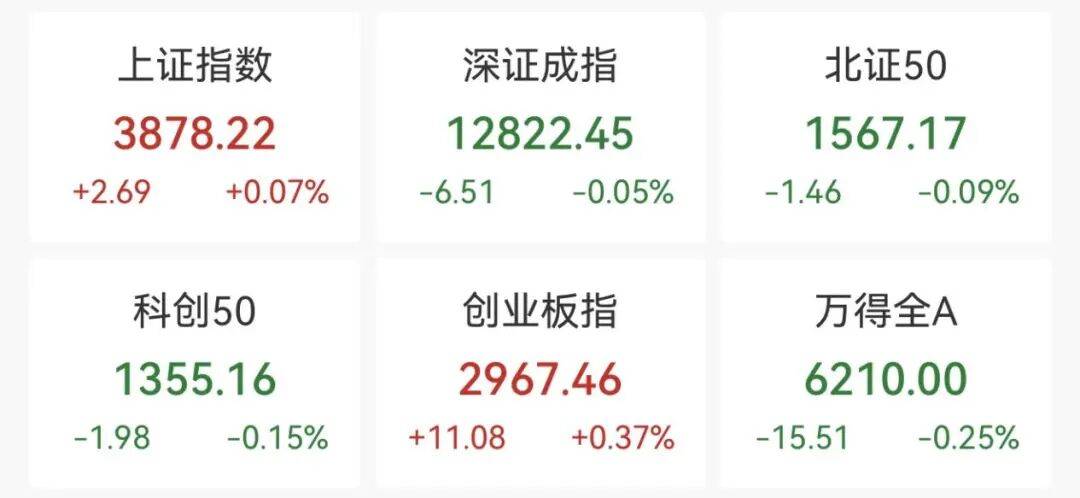
Market Overview - The A-share market showed mixed performance on September 2, with the ChiNext index experiencing a notable rise [1] - The Shanghai Composite Index closed at 3878.22, up by 0.07%, while the Shenzhen Component Index fell by 0.05% to 12822.45 [2] - The Hong Kong market saw all three major indices decline, with the Hang Seng Index down by 0.35% to 25528.40 [4] Sector Performance - Precious metals stocks led the gains, with significant increases in industrial mother machine stocks, while sectors like internet and diversified finance faced adjustments [2][10] - The industrial mother machine sector saw notable gains, with companies like Huadong CNC and Ningbo Jingda hitting the daily limit [10] - Precious metals stocks also surged, with West Mining hitting the daily limit and other companies like Hunan Silver and Shengda Resources following suit [13] Company Specifics - Dechong Environmental experienced extreme volatility, opening at a limit-up price of 17.55 CNY, then plummeting to a limit-down price of 14.36 CNY, showcasing a "heaven and earth board" phenomenon [6][8] - The company reported a market capitalization of 2.973 billion CNY, with a P/E ratio of 149.25 and a P/B ratio of 7.70 [7] - The stock's trading volume reached 138,300 hands, indicating significant market activity [7] Regulatory and Economic Context - The National Standardization Administration and the Ministry of Industry and Information Technology released a plan for the high-quality standard system for industrial mother machines, aiming for a comprehensive standard system by 2030 [11] - The current gold price has reached a historical high, exceeding 3500 USD per ounce, driven by expectations of interest rate cuts by the Federal Reserve [12][15]
3分钟惊魂!603177,上演“天地板”
中国基金报· 2025-09-02 02:49
Market Overview - On September 2, the A-share market showed mixed performance with the ChiNext index experiencing a notable rise [2] - The Shanghai Composite Index closed at 3878.22, up by 0.07%, while the Shenzhen Component Index fell by 0.05% to 12822.45 [3] - The Hong Kong stock market saw all three major indices decline, with notable drops in stocks like Hua Hong Semiconductor and Kuaishou [5] Sector Performance - Precious metals concept stocks led the gains, with significant increases in industrial mother machine stocks, while sectors like internet and diversified finance faced adjustments [3][4] - The industrial mother machine sector saw stocks like Huadong CNC and Ningbo Jingda hit the daily limit up, with Hengjin Induction rising over 15% [10][14] - Precious metals stocks also surged, with West Mining hitting the daily limit up and other stocks like Hunan Silver and Shengda Resources following suit [16][17] Company Specifics - Dechuan Environmental experienced extreme volatility, opening at a limit up before plummeting to a limit down, showcasing a "天地板" phenomenon [7][8] - The stock opened at ¥17.55, reached a high of ¥17.55, and then fell to a low of ¥14.36, closing at ¥14.42, down 9.59% [8] - The company issued a notice regarding abnormal stock fluctuations, indicating high P/E and P/B ratios and warning of speculative risks [8] Gold Market Insights - Spot gold prices reached a historic high, surpassing $3500 per ounce, with a year-to-date increase of over 33% [15][18] - Analysts predict that the next target for gold could be between $3900 and $4000 per ounce, driven by expectations of a Federal Reserve rate cut [18]