建筑

Search documents
流动性&交易拥挤度&投资者温度计周报:杠杆&ETF资金分化-20260112
Huachuang Securities· 2026-01-12 09:16
Group 1: Liquidity - The supply side of funds is expanding, with the issuance of equity public funds dropping to a historical low of 10 billion yuan, while margin financing saw a net inflow of 857 billion yuan, the highest since August last year, placing it in the 97th percentile over the past three years[8] - Stock ETFs experienced a net outflow of 4 billion yuan, with the net subscription remaining negative, at the 39th percentile over the past three years[8] - The total amount of repurchases reached 46 billion yuan, significantly up from 5 billion yuan, ranking in the 84th percentile over the past three years[26] Group 2: Trading Congestion - The trading heat for the insurance sector increased by 22 percentage points to 51%, while central enterprises rose by 20 percentage points to 78%, and medical services increased by 10 percentage points to 41%[3] - Conversely, the communication sector saw a decline of 13 percentage points to 54%, construction dropped by 12 percentage points to 39%, and light industry decreased by 8 percentage points to 89%[3] Group 3: Investor Sentiment - Retail investors saw a net inflow of 155.7 billion yuan, an increase of 64.1 billion yuan from the previous value, placing it in the 86.2 percentile over the past five years[3] - The market sentiment was strong, with the Shanghai Composite Index achieving 16 consecutive days of gains, indicating a clear upward trend and increasing trading volume[71]
特朗普绑架马杜罗与泄密非农数据,市场为何无动于衷
第一财经· 2026-01-12 06:30
Core Viewpoint - The article discusses the recent actions of U.S. President Trump, including the controversial kidnapping of Venezuelan President Maduro and the unprecedented leak of U.S. non-farm employment data, highlighting the lack of significant market reaction despite these events [3][4]. Economic Data Summary - In December 2025, the U.S. added 50,000 non-farm jobs, below the market expectation of 70,000, with private sector jobs increasing by only 37,000 and negative growth in retail, construction, and manufacturing sectors [3][4]. - The unemployment rate unexpectedly decreased by 0.1 percentage points to 4.4%, indicating a decline in labor participation rate, while hourly wages increased by 0.3%, meeting expectations [3][4]. - The total employment increase for the year was 584,000, averaging about 49,000 jobs per month, marking the lowest job growth since 2003, attributed to cost control by companies and federal job cuts [5]. Consumer Sentiment and Economic Outlook - Consumer confidence is declining, influenced by rising living costs, with many middle-class families falling below the ALICE (Asset Limited, Income Constrained, Employed) threshold due to inflation [6]. - The economic landscape in 2026 is expected to mirror 2025, with strong U.S. economic performance but weak European internal demand and low investment, while tourism in Europe remains robust [6][7]. Political and Economic Implications - The K-shaped economic recovery is likely to continue, with the strong performing better and the weak falling further behind, potentially leading to political backlash in the upcoming U.S. midterm elections [7]. - The Federal Reserve's monetary policy is anticipated to become more aggressive under the new chair, possibly abandoning the 2% inflation target, with the potential for a return to quantitative easing if economic conditions worsen [8]. Market Dynamics - The stock market is expected to continue its upward trend amid excess liquidity, although concerns about the sustainability of AI investments are growing, with significant capital expenditures becoming increasingly challenging for tech giants [8].


熵机模型发布:AI预测A股回报,助力金融气象应用
Sou Hu Cai Jing· 2026-01-12 05:31
Core Insights - The "Entropy Machine" AI model, the first financial meteorological AI model in China, was launched at the second Financial Meteorology Academic Annual Conference in Guangzhou, developed by Fudan University and the National Meteorological Information Center [1][3]. Group 1: Model Overview - The "Entropy Machine" model is constructed based on global meteorological reanalysis data and stock price-volume data, capable of predicting short-term returns for the majority of A-share market stocks [3]. - Validation results indicate that the model effectively identifies industries highly sensitive to meteorological factors, such as renewable energy (wind and solar power), traditional petroleum and chemical industries, construction, and agriculture, aligning with classifications from the World Meteorological Risk Management Association [3]. Group 2: Investment Strategy and Applications - Investment strategies developed from the model's testing and inference results have shown consistent and stable positive returns during historical backtesting across multiple time periods [3]. - The model has broad applications in the financial sector, allowing listed companies in meteorologically sensitive industries to manage climate risks and maintain market value; banks and insurance companies can utilize it for risk control in equity pledge businesses and explore innovative climate financing models; investors can use it as a quantitative investment tool; and academia can leverage model outputs to test and refine asset pricing theories [3]. Group 3: Purpose and Future Implications - The release of the model aims to explore the role of meteorological factors in financial asset pricing, providing innovative tools for risk management and investment decision-making [3]. - Its application is expected to support the construction of intelligent financial service systems and quantitative assessments of meteorological risks [3].

中国企业出海的风险纾解与应对思路︱问海·中企出海新观察
Di Yi Cai Jing· 2026-01-11 12:53
Core Insights - The article discusses the challenges faced by Chinese companies in their overseas expansion due to changing geopolitical landscapes, complex business environments, and potential cultural and technological barriers [1] - It emphasizes the need for companies to elevate risk management to a strategic level to ensure sustainable overseas operations, which is crucial for both corporate success and national development [1] Group 1: Development Stages and Dynamics of Chinese Companies Going Global - Since joining the WTO in 2001, Chinese companies have transitioned from tentative layouts to strategic actions, with foreign direct investment stock reaching $31,399.3 billion by the end of 2024, a 105-fold increase since 2002 [2] - China has risen from 25th to a stable position among the top three in global rankings for foreign direct investment, with the number of overseas enterprises growing at an average annual rate of 10.4% to 52,000 [2] - Investment distribution shows a stable concentration in Hong Kong (55%-60%) and rapid growth in Southeast Asia, while the share of traditional markets like the U.S. has decreased from 2.6% in 2015 to 1.1% in 2024 [2] Group 2: Evolution of Outbound Investment Models - The outbound investment model has evolved through three stages: cost-driven exports (2001-2010), brand expansion (2011-2020), and ecosystem export (from 2021 onwards), where companies are now exporting technology, standards, and management practices [3] - The transition is driven by three main forces: market saturation and competitive pressure, technological iteration and industrial upgrading, and the need for resource acquisition and strategic positioning [3] Group 3: Risks Faced by Chinese Companies Abroad - Political risks are the primary challenge, influenced by the stability of host countries, policy changes, and international relations, which can affect operations and lead to significant financial losses [4] - Economic risks include exchange rate fluctuations, inflation, and changes in economic cycles, which can impact profitability and investment returns [4] - Legal risks arise from differences in legal systems, intellectual property protection, and contract enforcement, potentially leading to compliance issues and financial penalties [5] - Cultural risks stem from differences in language, customs, and values, which can create communication barriers and management conflicts [6] - Market risks involve variations in market demand, competitive dynamics, and consumer behavior, which can affect product sales and profitability [6] - Technological risks relate to differing technical standards and the pace of innovation, which can hinder market access and competitiveness [6] Group 4: Recommendations for Risk Mitigation - Companies should prioritize compliance management by understanding local regulations and forming high-caliber legal teams to navigate complex legal environments [8] - Diversifying business layouts across mature and emerging markets can mitigate risks associated with over-concentration in a single market [8] - Establishing robust technology and intellectual property protections is essential for maintaining competitive advantages in international markets [9] - Companies should enhance their ability to utilize policy and financial tools to manage risks effectively, including leveraging government resources and financial products [9] - Focusing on deep localization and building sustainable ecosystems is crucial for integrating into local markets and reducing operational friction [9] Conclusion - In the context of complex international dynamics, companies must adopt a strategic approach to compliance, diversification, technology protection, policy utilization, and localization to navigate risks and achieve sustainable growth [10]
去年12月发布回购预案公司数量环比增近六成,行业龙头领衔大额回购
Mei Ri Jing Ji Xin Wen· 2026-01-11 05:41
Group 1 - In December 2025, the enthusiasm for stock buybacks in the A-share market significantly increased, with both the number of companies announcing buyback plans and the total amount seeing substantial growth [1] - A total of 35 companies announced new buyback plans in December, representing an increase of nearly 60% compared to 22 companies in November [1] - The total proposed buyback amount for these 35 companies reached approximately 10.548 billion yuan, a 54.89% increase from 6.81 billion yuan in November [1] - Among these companies, 24 planned to buy back over 100 million yuan, accounting for 68.57% of the total [1] Group 2 - State-owned enterprises and industry leaders showed prominent performance in the buyback announcements, with notable companies like China Metallurgical Group and Dong'e Ejiao participating [1] - The companies with the highest proposed buyback amounts included China Metallurgical Group (2.5 billion yuan), Luxshare Precision (2 billion yuan), ZTE Corporation (1.2 billion yuan), and others, highlighting the financial strength and market responsibility of leading enterprises [1]




A股回购月报:去年12月行业龙头领衔大额回购,立讯精密高位兑现20亿元回购承诺!
Mei Ri Jing Ji Xin Wen· 2026-01-11 05:29
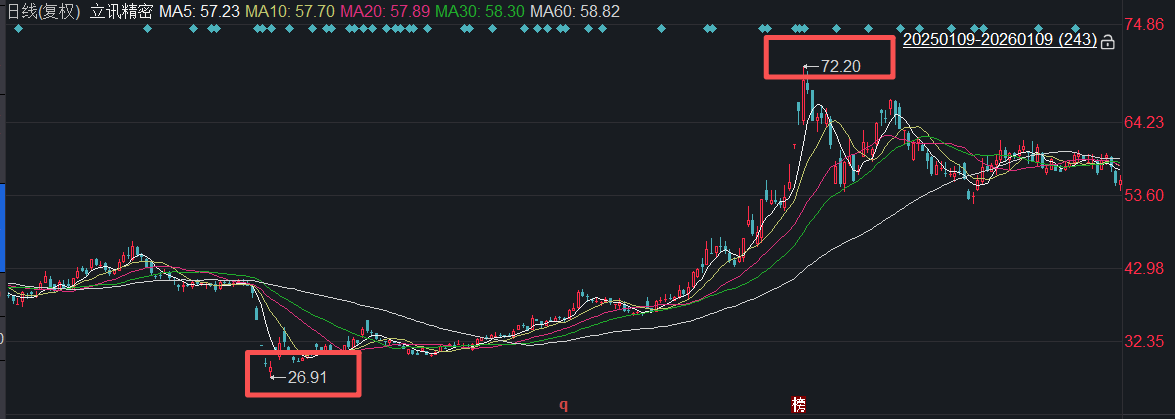
Core Viewpoint - In December 2025, the enthusiasm for stock buybacks in the A-share market significantly increased, with both the number of companies announcing buyback plans and the total amount seeing substantial growth, particularly among state-owned enterprises and industry leaders [1][2]. Group 1: Buyback Plans and Market Response - A total of 35 companies announced new buyback plans in December 2025, representing a nearly 60% increase from 22 companies in November, with a total proposed buyback amount of approximately 10.548 billion yuan, up 54.89% from 6.81 billion yuan in November [1]. - Among these, 24 companies proposed buybacks exceeding 100 million yuan, accounting for 68.57% of the total [1]. - Notable companies leading the buyback initiatives include China Metallurgical Group, Luxshare Precision, and ZTE, with proposed buyback amounts of 2.5 billion yuan, 2 billion yuan, and 1.2 billion yuan respectively [2]. Group 2: Specific Company Actions - China Metallurgical Group's buyback plan, which involves repurchasing 1 to 2 billion yuan of A-shares and up to 500 million yuan of H-shares, is interpreted as a crisis management response following a significant asset sale announcement [2][3]. - Luxshare Precision announced a buyback plan of 1 to 2 billion yuan, reaffirming a commitment made by its chairman earlier in the year, with a buyback price ceiling set at 86.96 yuan per share [3][4]. - The buyback pricing for Luxshare shows strong confidence, as it is set at a premium of 223.15% compared to its low of 26.91 yuan earlier in the year [4]. Group 3: Market Dynamics and Execution Challenges - There is a noticeable divergence in the execution of buyback plans among companies, with some industry leaders pausing their buybacks after reaching the minimum thresholds, while others are struggling to meet their buyback targets as deadlines approach [8][9]. - As of December 2025, major companies like CATL and Midea Group have reached their buyback limits but have not executed any buybacks in recent months, indicating a cautious approach [9]. - Conversely, companies like Conglin Technology and Deepin Technology are facing challenges in executing their buyback plans due to their stock prices consistently exceeding the proposed buyback price limits [11][13].
天价罚单逼近!审计巨头涉嫌失误酿破产,或将赔付 7.54 亿人民币(8000 万英镑)
Xin Lang Cai Jing· 2026-01-11 00:52
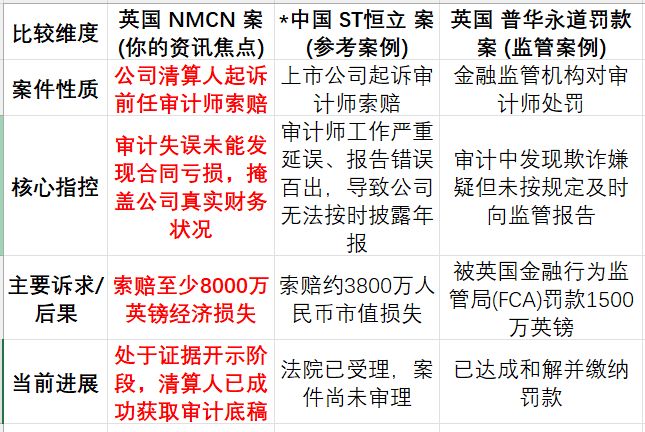
Core Viewpoint - The lawsuit against BDO by the liquidators of NMCN PLC highlights significant allegations of audit failures that contributed to the company's bankruptcy, with claims for at least £80 million in damages [1][3][8]. Group 1: Key Facts of the Case - NMCN PLC, a construction company involved in major water infrastructure projects, entered bankruptcy management in 2021 and was liquidated in September 2024 [2]. - BDO LLP served as the independent auditor for NMCN from 2010 to 2020 and is accused of failing to identify substantial losses in long-term contracts during the 2018-2019 audits [3]. - The case is currently in the early stages of legal proceedings, with the liquidators having obtained court approval to access BDO's audit work papers from the relevant years [3][4]. Group 2: Key Disputes in the Case - The specific nature of the audit failures involves BDO's incorrect assessment of losses related to long-term contracts, particularly in the water sector, under the new accounting standard IFRS 15 [4]. - Following a change in auditors to Ernst & Young (EY) in 2020, EY discovered that NMCN faced actual losses of up to £43 million, significantly higher than the initial estimates of £13.5 to £15 million [4]. - The causal relationship between the alleged audit failures and the bankruptcy is central to the £80 million claim, with liquidators arguing that earlier detection of issues could have mitigated losses [4]. Group 3: Compensation Claims - The £80 million claim is based on the principle of "restoration" under UK law, aiming to return the plaintiff to the financial state they would have been in without the alleged negligence [5]. - Compensation calculations will not simply equate to total losses, as the court will scrutinize the direct losses caused by the audit failures, including improper dividends and additional financing costs due to delayed restructuring [5]. - A similar case in January 2025 highlighted the "mitigation" principle, where costs incurred by the plaintiff due to independent decisions may disrupt the causal link to the original negligence, potentially affecting compensation [5]. Group 4: Comparative Context - The NMCN case is compared to other legal actions, such as the ST Hengli case in China and a penalty against PwC in the UK, illustrating the commonality of audit-related disputes and the varying legal frameworks [7]. - The NMCN case emphasizes the potential financial repercussions for auditors in cases of alleged negligence, with significant claims reflecting the broader implications for the auditing profession [8].
发现隐患及时报告 员工获现金奖励
Xin Lang Cai Jing· 2026-01-11 00:41
Core Insights - The Guangxi Zhuang Autonomous Region's Emergency Management Department published a selection of nine typical cases where employees reported safety hazards and received rewards, aiming to encourage the establishment of internal reporting reward mechanisms in production and operation units to prevent safety accidents from the source [1][2] Group 1: Case Examples - Two cases from Nanning highlight the importance of employee safety awareness, where employees reported hazards related to a broken lightning rod and water leakage, receiving cash rewards of 300 yuan and 600 yuan respectively [1] - In Qinzhou, an employee reported a risk of collapse and landslide due to widening cracks in a quarry, receiving a reward of 6,500 yuan after the company implemented a corrective plan [2] - Three cases from Beihai involved employees reporting design defects and safety valve issues, with rewards ranging from 300 yuan to 1,500 yuan for their timely reports [2] Group 2: Industry Coverage - The reported cases span multiple industries including mining, food processing, automotive parts, construction, new materials, and electricity, indicating a broad application of safety reporting mechanisms across sectors [1][2] - The initiative aims to foster a culture of safety awareness among employees in various industries, encouraging proactive reporting of potential hazards [1][2]
中国经济信心说丨消费添“绿”,产业向“新”
Xin Lang Cai Jing· 2026-01-10 16:23
Core Viewpoint - The recent joint announcement by the Ministry of Commerce and nine other departments on promoting green consumption aims to establish a comprehensive incentive mechanism, proposing 20 measures across seven areas to drive green transformation in production and lifestyle, thereby injecting new momentum into high-quality development [1][3]. Group 1: Policy Measures - The initiative includes policy subsidies, credit support, and incentive points to lower the cost of green consumption for consumers, effectively stimulating consumption willingness and confidence [3]. - Measures such as promoting green recycling and upgrading energy efficiency labeling management are designed to solidify the institutional foundation for normalizing green consumption [3]. - It is projected that from 2024 to 2025, 18.3 million vehicles will be replaced under the old-for-new policy, and 192 million home appliances will be upgraded, with nearly 60% being new energy vehicles and over 90% being first-level energy-efficient appliances [3]. Group 2: Industry Transformation - The push for green consumption is expected to trigger a chain reaction of transformations across various sectors, including manufacturing, circulation, energy, and emissions reduction [4]. - In manufacturing, energy-efficient appliances are continuously evolving, while smart variable frequency devices balance comfort and energy savings [4]. - The construction industry is seeing the rise of green buildings that can reduce energy consumption by over 90% compared to traditional buildings, significantly enhancing residents' living experiences [4]. Group 3: Youth Engagement - The youth demographic is identified as a key driver in promoting green consumption, with 93.3% of surveyed young individuals prioritizing the purchase of green products, and 77.6% believing that a green low-carbon lifestyle will become more prevalent among their peers [6]. - As policy support becomes more robust, it is expected to create new scenarios for green consumption, facilitating a seamless connection for young consumers to engage in sustainable practices [6].

做好三件事,投资其实不难!
雪球· 2026-01-10 05:21
Core Viewpoint - Investment success hinges on three key factors: buying price, portfolio structure, and patience [4][5]. Group 1: Buying Price - It is crucial to avoid purchasing assets at inflated prices; even a good company can lead to poor returns if bought at a high price [6][7]. - Valuation metrics, such as the price-to-earnings (P/E) ratio, serve as a straightforward measure to assess whether an asset is overvalued or undervalued [8][10]. - Historical comparisons of valuation can provide context; for instance, the average P/E ratio of the CSI 300 index over the past decade is approximately 12 times, and deviations from this average can signal potential risks or opportunities [10][11]. Group 2: Portfolio Structure - Diversification is essential as it acknowledges the unpredictability of market movements; overconfidence in one's judgment can lead to significant losses [13][14][15]. - Relying solely on one stock or sector increases risk, as market conditions can change unexpectedly, leading to potential capital loss [17][18]. - Embracing broad market indices, such as the CSI 300 or Hang Seng Index, allows investors to capture growth across various sectors, reducing the risk associated with individual stocks [19][20]. Group 3: Patience - The stock market is volatile in the short term but tends to stabilize over the long term; thus, long-term investment strategies are more likely to yield positive returns [21][22]. - Historical data indicates that holding investments for longer periods significantly increases the probability of achieving positive returns, with a 60% chance of profit after one year and over 80% after three years [24]. - Long-term investments should be made with funds that are not needed in the near future, as this reduces anxiety during market fluctuations and helps avoid panic selling [26][27].