
航运

Search documents
交通运输行业周报(20260309-20260315):聚焦:中东冲突第二周,油轮运价回调但仍处历史高位,集运运价上行-20260315
Huachuang Securities· 2026-03-15 08:52
Investment Rating - The report maintains a "Recommendation" rating for the transportation industry, indicating an expected increase in the industry index by more than 5% over the next 3-6 months compared to the benchmark index [78]. Core Insights - The report highlights the significant impact of the ongoing Middle East conflict on shipping rates, with oil tanker rates experiencing a decline but remaining at historically high levels, while container shipping rates are on the rise [1][2]. - The daily average of vessels passing through the Strait of Hormuz has dropped by 95% to 5 vessels, with oil tankers averaging only 1 vessel per day, a decrease from 40 vessels prior to the conflict [1][11]. - The report notes that Saudi Arabia's Red Sea Yanbu Port is expected to add 3-4 million barrels per day in export capacity, while Iran continues to export 2 million barrels per day through the Strait of Hormuz [1][11]. - Brent crude oil futures saw significant fluctuations, closing at $103.89 per barrel, an 11% increase from March 6 [1][15]. Shipping Market Impact - Oil shipping rates have adjusted from their highs, with the Clarksons VLCC-TCE index at $175,000, down 54.2% week-on-week. The Middle East to China route is reported at $390,000 per day, down 17% [2][18]. - Container shipping rates have increased, with the SCFI index reaching 1710 points, a 14.9% week-on-week rise, driven by geopolitical tensions and rising fuel costs [2][25]. - The dry bulk shipping market has shown limited impact, with the BDI index at 2028 points, reflecting a 0.9% week-on-week increase [2][26]. Investment Recommendations - The report suggests that if the Middle East conflict remains manageable and the Strait of Hormuz traffic gradually recovers, it could lead to a replenishment market. The report continues to recommend companies such as China Merchants Energy and COSCO Shipping Energy [3][31]. - Emphasis is placed on the importance of energy resource security, with recommendations for logistics and warehousing companies like Hongchuan Wisdom and Milky Way [3][31]. - The report also highlights the potential for growth in the aviation sector, with domestic passenger volume increasing by 4.6% year-on-year during the Spring Festival period [32][34]. Industry Data Tracking - Domestic aviation passenger volume averaged 2.36 million per day during the Spring Festival, reflecting a 4.6% year-on-year increase [32][34]. - The report notes a decrease in outbound air cargo prices at Shanghai Pudong Airport, with a week-on-week drop of 9.7% but a year-on-year increase of 0.2% [51].
招商交通运输行业周报:红利资产配置需求提升,油运中期逻辑仍向好-20260315
CMS· 2026-03-15 08:34
Investment Rating - The report maintains a recommendation for the transportation industry, indicating a positive outlook for investment opportunities in shipping, infrastructure, express delivery, and aviation sectors [2]. Core Insights - The report highlights the increasing demand for dividend assets due to high oil prices, which enhances their defensive value in the current economic climate [6][20]. - It emphasizes the mid-term positive logic for the shipping industry, particularly in oil transportation, while also noting the potential for valuation recovery in the express delivery sector [6][22]. Shipping Sector Summary - Shipping rates are experiencing fluctuations, with oil transportation rates remaining high. The report suggests monitoring the actual passage conditions in the Strait of Hormuz, which could impact future rates [6][12]. - The report notes significant increases in shipping rates for routes to the Middle East and India due to regional tensions and rising fuel costs, while also indicating a potential decline in rates for oil tankers due to reduced cargo volumes [6][10]. - Recommended stocks in the shipping sector include COSCO Shipping Energy, COSCO Shipping Holdings, and others [6][18]. Infrastructure Sector Summary - High oil prices are leading to inflationary expectations, making dividend assets more attractive for investment. The report provides weekly data showing a 40.6% increase in truck traffic compared to the previous week, although year-on-year figures show a decline [20][18]. - The report suggests that ports, as stable cash flow assets, are currently undervalued and recommends stocks such as Anhui Expressway and Qingdao Port for investment [20][19]. Express Delivery Sector Summary - The express delivery sector is showing signs of recovery, with a projected increase in demand growth. The report indicates that the overall valuation of the sector is low, and the recovery of demand could lead to price support [22][21]. - Key players in the express delivery market include SF Express and YTO Express, with expectations for improved profitability due to operational optimizations [22][21]. Aviation Sector Summary - The aviation industry is witnessing a steady increase in demand, but there are concerns regarding the impact of rising oil prices on profitability. The report highlights a slight year-on-year increase in passenger traffic, with domestic ticket prices showing a decline [27][24]. - The report advises caution regarding the potential for short-term spikes in oil prices and their long-term effects on airline profits [27][24]. Logistics Sector Summary - The logistics sector is experiencing fluctuations in air freight prices, with a noted decrease in the Shanghai outbound air freight price index. The report also mentions a significant increase in the chemical price index [28][28].





下周外盘看点丨 美联储领衔央行超级周,英伟达GTC会带来什么惊喜
第一财经· 2026-03-15 06:50
Market Overview - The international market is experiencing volatility due to the blockage of the Strait of Hormuz, leading to a surge in oil prices and concerns over inflation and economic outlook [2] - Major US stock indices fell, with the Dow Jones down 1.99%, Nasdaq down 1.26%, and S&P 500 down 1.60% for the week [2] - European indices also declined, with the FTSE 100 down 0.23%, DAX 30 down 0.61%, and CAC 40 down 1.03% [2] Federal Reserve Outlook - The Federal Reserve is expected to maintain the federal funds target rate at 3.50%–3.75% during the upcoming policy decision, marking the second consecutive meeting without a change [3] - Investors are particularly focused on how the Fed will signal its approach to potential interest rate cuts in light of rising energy prices due to Middle East conflicts [4] - HSBC economists predict a cautious assessment from Fed Chair Powell, highlighting the dual risks of inflation and economic slowdown from the conflict [4] Oil and Gold Market - Oil prices have risen for the fourth consecutive week, with WTI crude up 8.59% to $98.57 per barrel and Brent crude up 11.27% to $103.14 per barrel [6] - The International Energy Agency (IEA) agreed to release 400 million barrels from emergency reserves, but market concerns remain high due to ongoing threats in the Strait of Hormuz [6] - Precious metals are under pressure, with COMEX gold futures down 2.65% to $5022.11 per ounce and silver futures down 3.46% to $80.914 per ounce [6] European Central Bank (ECB) and Other Central Banks - The ECB meeting is a key event next week, with expectations of a shift from a neutral stance due to rising energy prices from the Middle East conflict [8] - The market anticipates that the ECB will raise rates before July, with a focus on the conditions that would trigger such adjustments [8] - The Bank of England is also expected to maintain its rate at 3.75% amid inflation concerns, with a 70% probability of a rate hike by the end of the year [8] Upcoming Economic Data - Key US economic data to watch includes February industrial output, producer price index (PPI), and initial jobless claims [4] - In Europe, important data includes the ZEW economic sentiment index and harmonized CPI for February [8]



高频经济周报(2026.03.08-2026.03.14):生产延续季节性回暖,人员流动有所回落-20260315
Shenwan Hongyuan Securities· 2026-03-15 05:59
Report Investment Rating - No information about the industry investment rating is provided in the report. Core Viewpoints - The industrial production is showing signs of recovery, with some indicators rising and others falling. The flow of people has declined, while freight prices have increased slightly. The movie market has weakened, and prices continue to decline. Construction shows seasonal improvement, and the real estate market has rebounded. Container throughput has increased slightly, and shipping indices have recovered. The performance of major asset classes is mixed [2]. Summary by Directory 1. Major Asset Classes - This week, bond indices, stock indices, and commodities showed mixed performance, and foreign currencies, except for the US dollar, generally declined. Among bond indices, the AA+, AA, and AA- corporate bond indices of ChinaBond rose the most, with a gain of 0.04%, while the 10-year ChinaBond Treasury bond index fell the most, with a decline of 0.15%. Among stock indices, the ChiNext index rose the most, with a weekly gain of 2.51%, and the Sci-Tech Innovation 50 index fell the most, with a decline of 2.88%. Among commodities, the Nanhua Energy and Chemicals Index rose the most, with a gain of 9.76%, and the Nanhua Precious Metals Index fell the most, with a decline of 1.52%. Foreign currencies depreciated against the RMB, with the Japanese yen having the largest decline of 1.17%, and the US dollar appreciated against the RMB, with a weekly gain of 0.07% [2][6]. 2. Industrial Production - Production has recovered. In the upstream, the operating rate of petroleum asphalt plants decreased by 0.30 pcts week-on-week to 23.00%, the blast furnace operating rate increased by 0.67 pcts week-on-week to 78.36%, and the crude steel output decreased by 0.10% week-on-week. In the real estate chain, the rebar operating rate increased by 2.62 pcts week-on-week to 38.38%, the float glass operating rate decreased by 0.10 pcts to 71.42%, and the mill operation rate decreased by 1.94 pcts week-on-week to 14.62%. In the consumer goods chain, the polyester filament operating rate increased by 4.3 pcts week-on-week to 88.79%, the PTA operating rate increased by 0.64 pcts week-on-week to 80.33%, and the methanol operating rate decreased by 1.22 pcts week-on-week to 85.61%. In the automotive chain, the operating rate of automobile semi-steel tires increased by 3.68 pcts week-on-week to 77.71%, and the operating rate of automobile all-steel tires increased by 4.32 pcts week-on-week to 70.22% [2][9]. 3. People and Freight Flow - The flow of people has declined, and freight prices have increased slightly. The 7DMA of the national migration scale index decreased by 14.30% week-on-week, the 7DMA of the number of domestic flights decreased by 7.34% week-on-week, and the 7DMA of the number of international flights decreased by 4.63% week-on-week. The subway passenger volume in Shanghai, Shenzhen, and Guangzhou increased week-on-week, while that in Beijing decreased. The 4WMA of the road logistics freight rate index increased by 0.03% week-on-week, and the total volume was slightly higher than the same period last year [2][28]. 4. Consumption - The movie market has weakened, and prices continue to decline. The previous period's automobile wholesale and retail sales decreased month-on-month, but the 4WMA of the year-on-year growth rate of wholesale and retail sales increased. This period's movie box office decreased by 64.00% week-on-week, and the 7DMA of the number of moviegoers decreased by 63.00% week-on-week. Agricultural product prices decreased slightly, with pork prices decreasing by 4.99% week-on-week and vegetable prices decreasing by 5.18% week-on-week [2][44]. 5. Investment - Construction shows seasonal improvement, and the real estate market has rebounded. This period's cement inventory ratio decreased by 0.3% week-on-week, the cement price index decreased by 0.38% week-on-week, and the cement shipping rate increased by 5.2% week-on-week. The rebar inventory increased by 2.6% week-on-week, the proportion of profitable steel mills nationwide decreased by 1.73% week-on-week, and the apparent demand for rebar increased by 80.0% week-on-week. Overall, the terminal demand for construction shows seasonal improvement. The 7DMA of the commercial housing transaction area in 30 large and medium-sized cities increased by 4.7% week-on-week. By city tier, the commercial housing transaction areas in first- and third-tier cities increased, while that in second-tier cities decreased. The 7DMA of the second-hand housing transaction area in 16 cities increased by 4.31% week-on-week, and the national second-hand housing listing price index decreased by 0.8% week-on-week. The land transaction area in 100 cities increased, and the land transaction premium rate decreased week-on-week [2][54]. 6. Exports - Container throughput has increased slightly, and shipping indices have recovered. This period's port cargo throughput decreased by 0.42% week-on-week, and container throughput increased by 1.4% week-on-week. The BDI index increased by 0.90% week-on-week, the domestic SCFI index increased by 14.85% week-on-week, and the CCFI index increased by 1.70% week-on-week [2][70].
高频经济周报:生产延续季节性回暖,人员流动有所回落-20260315
Shenwan Hongyuan Securities· 2026-03-15 04:21
1. Report Industry Investment Rating No information provided. 2. Core View of the Report The report analyzes the economic situation from multiple aspects during the period of 2026.03.08 - 2026.03.14, indicating that industrial production is recovering, personnel flow is decreasing, freight prices are slightly rising, the film market is weakening, prices are continuing to decline, construction is seasonally warming up, the real - estate market is recovering, exports show a slight increase, and the performance of major asset classes is mixed [4]. 3. Summary According to the Directory 3.1. Large - scale Assets - This week, bond indices showed mixed performance, stock indices showed mixed performance, commodities showed mixed performance, and foreign currencies, except the US dollar, generally declined. Among bond indices, the AA +, AA, and AA - indices of ChinaBond corporate bonds rose the most, with a gain of 0.04%, while the 10 - year ChinaBond Treasury bond index fell the most, with a decline of 0.15%. Among stock indices, the ChiNext index rose the most, with a weekly gain of 2.51%, and the Sci - tech Innovation 50 index fell the most, with a decline of 2.88%. Among commodities, the Nanhua Energy and Chemicals Index rose the most, with a gain of 9.76%, and the Nanhua Precious Metals Index fell the most, with a decline of 1.52%. Foreign currencies against the RMB generally fell, with the Japanese yen having the largest decline of 1.17%, and the US dollar appreciated against the RMB, with a weekly gain of 0.07% [4][9]. 3.2. Industrial Production - Production has recovered. In the upstream, the operating rate of petroleum asphalt plants decreased by 0.30 pcts week - on - week to 23.00%, the blast furnace operating rate increased by 0.67 pcts week - on - week to 78.36%, and the crude steel output decreased by 0.10% week - on - week. In the real - estate chain, the operating rate of rebar increased by 2.62 pcts week - on - week to 38.38%, the operating rate of float glass decreased by 0.10 pcts week - on - week to 71.42%, and the mill operation rate decreased by 1.94 pcts week - on - week to 14.62%. In the general consumer goods chain, the operating rate of polyester filament increased by 4.3 pcts week - on - week to 88.79%, the PTA operating rate increased by 0.64 pcts week - on - week to 80.33%, and the methanol operating rate decreased by 1.22 pcts week - on - week to 85.61%. In the automobile chain, the operating rate of automobile semi - steel tires increased by 3.68 pcts week - on - week to 77.71%, and the operating rate of automobile all - steel tires increased by 4.32 pcts week - on - week to 70.22% [4][12]. 3.3. People and Goods Flow - Personnel flow has decreased, and freight prices have risen slightly. In terms of personnel flow, the 7 - day moving average (7DMA) of the national migration scale index decreased by 14.30% week - on - week, the 7DMA of the number of domestic flights decreased by 7.34% week - on - week, and the 7DMA of the number of international flights decreased by 4.63% week - on - week. The subway passenger volume in Shanghai, Shenzhen, and Guangzhou increased week - on - week, while that in Beijing decreased. In terms of freight flow, the 4 - week moving average (4WMA) of the road logistics freight rate index increased by 0.03% week - on - week, and the total volume was slightly higher than the same period last year [4][32]. 3.4. Consumption - The film market has weakened, and price performance has continued to decline. In the previous period, automobile wholesale and retail sales decreased month - on - month, and the 4WMA of the year - on - year growth rate of wholesale and retail sales increased. This period, the weekly box office of movies decreased by 64.00% week - on - week, and the 7DMA of the number of movie - goers decreased by 63.00% week - on - week. Agricultural product prices decreased slightly, with the pork price decreasing by 4.99% week - on - week and the vegetable price decreasing by 5.18% week - on - week [4][48]. 3.5. Investment - Construction shows seasonal warming, and the real - estate market has recovered. This period, the cement inventory - to - capacity ratio decreased by 0.3% week - on - week, the cement price index decreased by 0.38% week - on - week, and the cement shipment rate increased by 5.2% week - on - week. The rebar inventory increased by 2.6% week - on - week, the proportion of profitable steel mills nationwide decreased by 1.73% week - on - week, and the apparent demand for rebar increased by 80.0% week - on - week. Overall, the terminal demand for construction shows seasonal warming. The 7DMA of the commercial housing transaction area in 30 large and medium - sized cities increased by 4.7% week - on - week. By city - tier, the commercial housing transaction areas in first - and third - tier cities increased, while that in second - tier cities decreased. The 7DMA of the second - hand housing transaction area in 16 cities increased by 4.31% week - on - week, and the national second - hand housing listing price index decreased by 0.8% week - on - week. The land transaction area in 100 cities increased, and the land transaction premium rate decreased week - on - week [4][58]. 3.6. Exports - Container throughput has increased slightly, and shipping indices have recovered. This period, the port cargo throughput decreased by 0.42% week - on - week, and the container throughput increased by 1.4% week - on - week. The BDI index increased by 0.90% week - on - week, the domestic SCFI index increased by 14.85% week - on - week, and the CCFI index increased by 1.70% week - on - week [4][74].
反内卷与自下而上挺价相结合,快递涨价趋势或将延续
GOLDEN SUN SECURITIES· 2026-03-15 03:50
Investment Rating - The report maintains a "Buy" rating for key companies in the logistics and transportation sectors, including SF Holding, Jitu Express, and ZTO Express [7]. Core Insights - The report highlights a trend of price increases in the express delivery sector, driven by regulatory measures aimed at reducing unhealthy competition and improving profit margins for delivery personnel [4][15]. - The logistics sector is expected to benefit from the ongoing "anti-involution" measures, with a focus on stabilizing operations and income for delivery staff [4][16]. - The airline industry is projected to see a recovery in passenger demand, with expectations of rising ticket prices due to high load factors and a recovering economy [12][3]. Summary by Sections Transportation Sector Overview - The transportation sector index fell by 1.21% in the week of March 9-13, 2026, underperforming the Shanghai Composite Index by 0.51 percentage points [17]. - The best-performing sub-sectors included express delivery (up 3.16%), railway transport (up 1.67%), and highways (up 1.09%) [17]. Shipping and Ports - The report notes disruptions in the Strait of Hormuz affecting oil shipping rates, with a potential positive scenario for oil transport if current inventory reductions are followed by replenishment [2][13]. - The report indicates that shipping companies are implementing emergency fuel surcharges in response to rising fuel prices [2][14]. Logistics - The express delivery sector is experiencing a shift towards price increases, with Guangdong extending its "lock period" to prevent price wars, and companies like Tongda Rabbit raising prices in specific regions [4][15]. - The report identifies two main investment themes: international expansion driven by the growth of overseas e-commerce and the ongoing "anti-involution" efforts within the domestic market [4][16]. Airline Industry - The airline sector is witnessing a significant increase in passenger volume during the Spring Festival, with a record of nearly 95 million travelers, reflecting a 4.7% year-on-year increase [11][12]. - The report suggests that the airline industry will benefit from a combination of low supply growth and recovering demand, leading to improved profitability for airlines [12]. Key Companies to Watch - Recommended companies include Jitu Express, ZTO Express, and SF Holding in the logistics sector, and major airlines such as China Southern Airlines and China Eastern Airlines in the aviation sector [4][12][16].


交通运输行业周报:反内卷与自下而上挺价相结合,快递涨价趋势或将延续
GOLDEN SUN SECURITIES· 2026-03-15 03:24
Investment Rating - The report provides a "Buy" rating for several companies in the logistics and transportation sectors, including SF Holding, Jitu Express, and ZTO Express [7]. Core Insights - The report highlights a trend of price increases in the express delivery sector, driven by regulatory measures to combat excessive competition and improve profit margins for delivery personnel [4][15]. - The aviation sector is expected to benefit from a recovery in demand and rising ticket prices, with a focus on domestic and international travel resuming post-pandemic [12][3]. - The shipping industry is facing challenges due to geopolitical tensions affecting oil transport routes, but there is potential for recovery as supply chains stabilize [13][14]. Summary by Sections Transportation Sector Overview - The transportation sector index fell by 1.21% in the week of March 9-13, 2026, underperforming the Shanghai Composite Index by 0.51 percentage points [17]. - The best-performing sub-sectors included express delivery, railway transport, and highways, with increases of 3.16%, 1.67%, and 1.09% respectively [17]. Aviation - The report notes a significant increase in passenger volume during the Spring Festival, with nearly 95 million travelers, marking a 4.7% year-on-year increase [11]. - Airlines are adjusting fuel surcharges in response to rising oil prices, which could impact ticket pricing strategies [11][12]. Shipping and Ports - The report discusses the impact of the geopolitical situation in the Hormuz Strait on oil shipping rates, with a potential for recovery if supply chains normalize [13][14]. - The report mentions that shipping companies are implementing fuel surcharges to cope with rising fuel costs, affecting both domestic and international shipping rates [14]. Logistics - The express delivery sector is undergoing a transformation with regulatory measures aimed at stabilizing prices and improving profitability for delivery personnel [4][15]. - The report identifies two main investment themes: international expansion driven by e-commerce growth and the ongoing "anti-involution" trend in the domestic market [16].
投资策略专题:下一个信号:波动率收敛
KAIYUAN SECURITIES· 2026-03-15 02:43
Group 1 - The market is still further recognizing the expectation gap regarding the US-Iran conflict, with the core anchor being the ICE Brent crude oil price, which has seen significant fluctuations from around $80 to a high of $119 before retreating again [3][11][16] - The expectation gaps identified include the duration misalignment from "AI strike" to "mosaic quagmire," the physical rigidity of the Hormuz Strait blockade versus the illusion of increased production, and the US strategy of "watching while fighting" alongside a shift in the Middle Eastern landscape [3][11][15] Group 2 - The next important signal for the market is the convergence of volatility in oil prices, which is currently high and affects various asset classes; the focus should be on when this volatility will stabilize rather than the final price level of oil [4][16] - During periods of high volatility, investment strategies should focus on three levels of asset allocation: "certain varieties" such as shipping, gold, and upstream energy; "trend varieties" like defense and cybersecurity; and "non-consensus" allocations in agriculture and volatility strategies [4][16][17] Group 3 - In the medium to long term, as volatility decreases, investment strategies should pivot towards AI technology, cyclical sectors, and high dividend stocks, particularly in coal, non-bank financials, media, petrochemicals, and transportation [4][17][18] - The report emphasizes the importance of maintaining confidence in a bull market while adjusting expectations and seizing opportunities in physical asset allocations due to geopolitical shocks [5][19]
两艘印度运输船,顺利通过霍尔木兹海峡
中国能源报· 2026-03-14 12:57
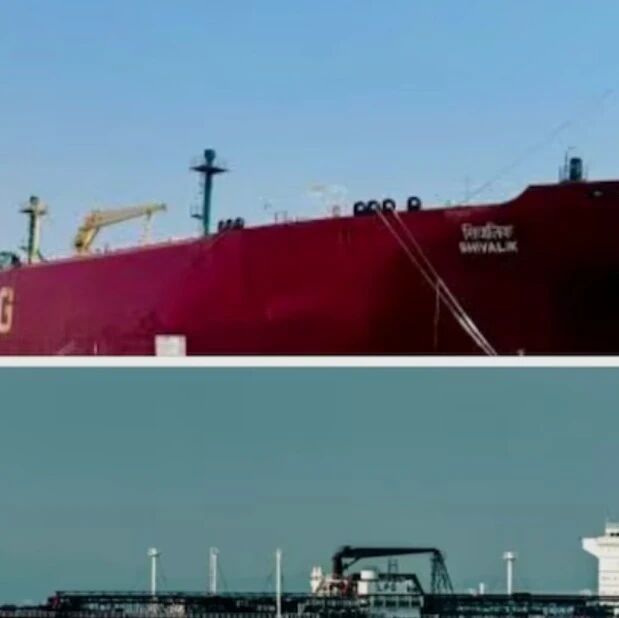
Group 1 - Two liquefied petroleum gas (LPG) carriers flying the Indian flag successfully navigated the Strait of Hormuz and are currently en route to India, expected to arrive at Indian ports in a few days. The operation was described as "very cautious" [2] - Over 20 Indian-flagged commercial vessels are currently anchored in the Strait of Hormuz, a critical route for oil exports from several major Middle Eastern countries, accounting for approximately 20% of global oil transportation [3] - Following a military strike by the US on Iran on February 28, Iran announced a ban on any vessels passing through the Strait of Hormuz. As tensions escalated, the risk to shipping in this energy chokepoint increased, leading to many vessels halting operations or rerouting [3]
航运:霍尔木兹海峡日度通行及运价-20260313
Zhong Xin Qi Huo· 2026-03-13 13:36
Report Summary 1. Report Industry Investment Rating There is no information about the report industry investment rating in the provided content. 2. Core View The report provides daily data on the passage of ships through the Strait of Hormuz and shipping freight rates, including the number of ships passing through the strait, VLCC, refined oil, and container shipping freight rates [2]. 3. Summary by Related Catalogs Strait Passage - On March 12, 3 ships passed through the Strait of Hormuz (1 entering and 2 exiting), a decrease of 6 ships compared to the previous day. As of 13:00 on March 13, 1 liquid bulk carrier with the operating entity Al Rafedain Marine Services was passing through the strait in the outbound direction [2]. WL00 Daily Freight - On March 12, the freight rates from the Middle East to China and from West Africa to China were $10.41 and $9.2 per barrel respectively, with daily decreases of 25.3% and 17.3% [2]. Refined Oil Daily Freight - On March 12, the freight rates from Saudi Ras Tanura to Singapore LR (105kt) and from Saudi Ras Tanura to Yokohama, Japan (105kt) were updated to $6.49 and $11.1 per barrel respectively, showing rebounds of 2.7% and 2.8% [2]. Container Shipping Daily Freight - As of 11:00 on March 13, the TCJ Tianjin + Persian Gulf basic port freight index was updated to 1726.87 points, a month - on - month increase of 83.2%. The freight rate was still missing, possibly due to short - term shipping stagnation. The freight rate from Tianjin to European basic ports was $2877 per FEU, and the index was flat compared to the previous day. The freight rates from Tianjin to the western and eastern Mediterranean basic ports were $3735.22 and $4091.56 per FEU respectively, and the indices were flat [2]. - The TCI 40GP and 20GP quotes for various routes on March 12 are provided, including routes to the Persian Gulf, Europe, the Mediterranean, the Americas, Asia, and Africa [9].