
运动服饰

Search documents
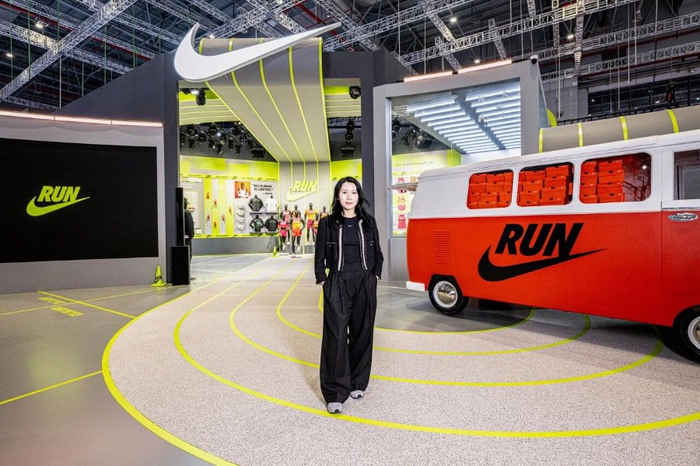
耐克中国自救,从给在华高管加速放权开始
2 1 Shi Ji Jing Ji Bao Dao· 2025-12-31 09:11
Core Insights - Nike is facing significant market pressure in China, necessitating a more flexible operational mechanism and empowering local teams [3][4] - The appointment of Dong Wei as the CEO of Greater China reflects Nike's strategy to enhance collaboration and adapt to local market conditions [1][2] Group 1: Market Performance - Nike's sales in China have declined by 16% year-on-year to $1.423 billion, with EBIT dropping by 49% [4] - Direct sales have decreased by 18%, with digital sales down 36% and store sales down 5%, while wholesale business fell by 15% [4] - The brand is perceived as a discount brand, impacting its high-end market positioning and leading to increased discount sales and higher return rates [4] Group 2: Competitive Landscape - The Chinese sports market is becoming increasingly competitive, with domestic brands gaining market share [5][6] - Adidas's market share in China has dropped from 15% in 2021 to 8.7% in 2024, while Nike's share decreased from 18.1% to 16.2% [6] - Domestic brands like Anta and Li Ning are also experiencing growth challenges, with Anta reporting low single-digit growth and Li Ning experiencing a decline in retail sales [6] Group 3: Strategic Adjustments - Nike is working to reshape its brand image in China by reducing discount rates and focusing on maintaining its premium positioning [7][9] - The company plans to upgrade key stores and has seen a 25% increase in sales for upgraded product lines [10] - Nike is also reducing its spring product distribution and cutting summer product purchases to improve sales rates and full-price sales [11] Group 4: Continued Investment - Despite challenges, Nike remains confident in the Chinese market, as evidenced by the launch of its first creative center outside the U.S. in Shanghai [11] - The establishment of the Nike China Sports Research Lab in Shanghai further demonstrates the company's commitment to the market [11][12] - Nike's marketing strategies, including collaborations with local sports stars, highlight its deep integration into the Chinese market [12]

耐克中国自救,从给在华高管加速放权开始丨小贺说
2 1 Shi Ji Jing Ji Bao Dao· 2025-12-31 08:47
Core Insights - Nike is facing significant market pressure in China, necessitating a more flexible operational mechanism and empowering local teams [1][3] - The company has appointed regional leaders, including the promotion of Dong Wei to a higher management level, to enhance collaboration and accelerate the Win Now plan [1][3] - Nike's sales in China have declined by 16% year-on-year to $1.423 billion, with EBIT dropping by 49% [3][4] Company Performance - Nike's direct business in China has seen an 18% decline, with digital sales down 36% and store sales down 5% [3] - The wholesale business has also decreased by 15%, indicating broader challenges in the market [3] - Increased discount sales and higher return rates have negatively impacted profitability in the Greater China region [4] Market Competition - The competitive landscape in the Chinese sports market is intensifying, with domestic brands gaining market share [5][6] - Nike's market share has decreased from 18.1% to 16.2%, while Adidas has dropped from 15% to 8.7% [6] - Domestic brands like Anta and Li Ning are experiencing growth, with Anta's market share increasing from 9.8% to 10.5% [6] Strategic Adjustments - Nike is working to reshape its brand image in China by reducing discount rates to maintain its premium positioning [7][9] - The company plans to upgrade key stores and has seen a 25% increase in sales for upgraded product categories [10] - Nike is also reducing inventory levels, with a 20% decrease in stock compared to the previous year, and is adjusting its product procurement strategy [10] Future Outlook - Despite current challenges, Nike remains confident in the Chinese market, as evidenced by the launch of its first creative center outside the U.S. in Shanghai [11] - The company continues to leverage its marketing strengths by collaborating with local sports stars and engaging in significant events like the National Games [11] - The recent management changes reflect Nike's response to the evolving market dynamics in China [11]

“加拿大巴菲特”暴力抄底安德玛(UAA.US) 超16% 股权,释放何种信号?
Zhi Tong Cai Jing· 2025-12-31 02:39
Group 1 - Under Armour's stock price has increased for the ninth time in ten trading days, primarily due to Fairfax Financial Holdings' increased stake [1] - Fairfax Financial Holdings now holds over 30 million shares of Under Armour, representing 16.1% of its outstanding shares, a significant increase from the previously disclosed 9% [1] - Despite the increased stake, the market does not expect Fairfax to initiate a proxy fight or push for management changes, given its reputation for long-term value investing [1] Group 2 - Under Armour's Q2 performance exceeded market expectations, with a 5% year-over-year decline in sales and a loss of $0.04 per share [1] - The company has revised its fiscal 2026 revenue guidance to a decline of 4%-5%, an improvement from the previous guidance of 6%-7%, with expected earnings per share rising to $0.03-$0.05 [1][2] - The revised guidance reflects the company's "premium branding" strategy, focusing on its top 10 core products and enhancing direct-to-consumer channels while reducing reliance on traditional discount promotions [2] Group 3 - As of the latest close, Under Armour's stock price rose by 7.53% to $5.14, although it has declined nearly 40% year-to-date [3]
“加拿大巴菲特”暴力抄底安德玛(UAA.US) 超16% 股权,释放何种信号?
智通财经网· 2025-12-31 02:36
Group 1 - The core point of the article highlights Under Armour's stock price has risen for the ninth time in ten trading days, primarily due to Fairfax Financial Holdings increasing its stake in the company to over 30 million shares, representing 16.1% of its outstanding shares, a significant increase from the previously disclosed 9% [1] - Despite the increased stake, the market does not expect Fairfax to initiate a proxy fight or push for management changes, as the firm is known for its long-term value investment approach [1] - Under Armour's latest Q2 earnings exceeded market expectations, with a 5% year-over-year decline in sales and a loss of $0.04 per share. The company has revised its revenue guidance for FY2026 to a decline of 4%-5%, narrowing from the previous 6%-7% forecast, while expected earnings per share have been raised to $0.03-$0.05, significantly above the prior range of $0.01-$0.02 [1] Group 2 - The upward revision of the FY2026 guidance reflects the company's "brand premiumization" strategy, focusing on the top 10 core products for efficient resource allocation, strengthening direct-to-consumer channels, and systematically reducing reliance on traditional high-discount promotional models [2] - As of the latest close, Under Armour's stock price increased by 7.53% to $5.14, although it has declined nearly 40% year-to-date [3]
迪桑特不想只赚东北人的钱
3 6 Ke· 2025-12-31 01:40
Core Insights - Descente has become one of the most popular brands in the Northeast region of China, particularly in ski resorts, following its joint venture with Anta Group in 2016 [1][4] - The brand's rapid growth in the Northeast is attributed to its high-end positioning and the cultural significance it holds among local consumers [3][6] Sales Performance - The Descente store in Changchun has ranked first in sales nationally multiple times, achieving over 100 million yuan in sales for 2023 [2] - From January 1 to March 16, 2023, the store generated 30 million yuan in sales, and by the third quarter, the cumulative sales reached 100 million yuan [2] Brand Positioning - Descente's core products are priced between 1,000 yuan and 4,000 yuan, with ski apparel typically ranging from 5,000 yuan to 9,000 yuan, indicating a clear high-end market positioning [3] - The brand is perceived as a "hard currency" in social settings in Northeast China, reflecting a consumer preference for high-end brands [3] Market Expansion - As of December 30, 2023, Descente has 59 stores in Northeast China, with plans to expand its total store count in China and Southeast Asia to 260-270 by the end of 2025 [5][6] - The brand is also expanding into southern markets, with 48 stores in Jiangsu, Zhejiang, and Shanghai, indicating a strategic move to diversify its market presence [7] Financial Growth - In 2023, Descente's retail sales exceeded 5 billion yuan, contributing nearly 72% to its segment's revenue [5] - The brand aims for a compound annual growth rate of 20%-25% from 2024 to 2026, targeting annual sales of 10 billion yuan [9] Competitive Landscape - Descente faces challenges in diversifying beyond its winter sports image and competing in the southern market against established brands [8][11] - The brand's growth is heavily reliant on channel expansion, with a focus on high-performance stores and flagship locations [9]
爱马仕在中国市场“涨不动价”了
2 1 Shi Ji Jing Ji Bao Dao· 2025-12-31 00:11
Group 1: Market Trends and Company Performance - The global fashion, fast-moving consumer goods, and high-end tourism industries are exploring new growth paths amid performance differentiation and strategic adjustments [1] - Nike's Q2 revenue exceeded expectations at $12.4 billion, but growth engines are showing signs of divergence, with a decline in direct sales revenue by 8% [7][8] - Birkenstock reported a 16.2% increase in annual revenue to nearly €2.1 billion, but cautious guidance for 2026 led to a significant stock drop of over 11% [14][15] Group 2: Strategic Investments and Leadership Changes - Anastasia Beverly Hills' founder injected $225 million to stabilize the brand's financial health amid a significant reduction in TPG's stake from 38% to 6% [6] - Coty announced a leadership change with Markus Strobel, a veteran from Procter & Gamble, taking over as interim CEO to address performance challenges [9] - Lululemon's founder Chip Wilson nominated three board candidates to address concerns over CEO succession and product innovation amid declining sales growth [2] Group 3: Pricing Strategies and Market Dynamics - Hermès slowed its price increases in China, with the highest increase capped at 10%, reflecting challenges in relying solely on price hikes for growth [3][4] - The luxury goods market is experiencing a shift in pricing strategies as brands adapt to changing consumer demand and market conditions [3] Group 4: High-End Tourism Investments - Marriott signed a deal to open a Ritz-Carlton hotel in Dunhuang, marking its second luxury property in Greater China, as part of its strategy to expand in the luxury vacation market [11] - Blackstone announced the acquisition of Hamilton Island resort for approximately AUD 1.2 billion, highlighting the growing interest in high-end tourism assets [13] Group 5: Challenges in Sustainable Fashion - Stella McCartney faced a 27% revenue decline to £16 million, marking its lowest point since 2009, as the brand struggles with profitability despite its sustainable fashion ethos [19][20]

换帅、博弈,Lululemon的“多事之秋”
Bei Jing Shang Bao· 2025-12-30 13:22
Core Viewpoint - Lululemon's founder Chip Wilson has initiated a proxy battle to restructure the board, expressing dissatisfaction with the company's current direction and management, which he believes is causing a loss of the brand's original intent and vision [2][4]. Founder’s Discontent - Chip Wilson plans to nominate three independent board candidates for the 2026 shareholder meeting, citing a lack of visionary leadership in the current board [2]. - Wilson criticizes the board and CEO Calvin McDonald for failing to regain stakeholder confidence and for the company's inability to restore growth momentum [2][5]. - He has publicly stated that the current management is overly focused on financial performance at the expense of creativity and innovation, leading to a loss of top talent and internal capabilities [5]. Leadership Changes - Calvin McDonald will step down as CEO and board member effective January 31, 2026, after leading the company for seven years, during which Lululemon's revenue grew from $3.3 billion to over $10 billion [3][5]. - The transition is seen as a potential turning point for Lululemon's strategic direction, allowing new leadership to implement fresh strategies [6]. Business Performance - For fiscal year 2024, Lululemon reported a 10% year-over-year revenue increase to $10.6 billion and a net profit of $1.815 billion, up 17.06% [5]. - However, growth has begun to slow, with Q1 2025 revenue at $2.371 billion, a 7.32% increase, and Q3 2025 revenue at $2.57 billion, a 7% increase, while net profit declined by approximately 12.8% [5][6]. Market Dynamics - The Chinese market has shown strong growth, with a 25% revenue increase in Q2 2025 and a 46% increase in Q3 2025, making it a key driver for international growth [6][7]. - Despite the positive performance in China, Lululemon faces increasing competition from both international brands like Nike and Adidas and local brands such as Anta and Li Ning [6][7]. - Lululemon's brand positioning is at risk as it pursues scale and efficiency, potentially diluting its premium image in the market [7]. Strategic Implications - The ongoing proxy battle reflects a broader strategic debate within Lululemon regarding its future direction, balancing short-term growth with long-term brand integrity [4][6]. - The company's ability to navigate these challenges will be crucial for its success in a polarized consumer market [4].

换帅、博弈……Lululemon的“多事之秋”
Bei Jing Shang Bao· 2025-12-30 13:15
Core Viewpoint - Lululemon's founder Chip Wilson has initiated a proxy fight to restructure the board, expressing dissatisfaction with the company's current direction and performance under the existing management [2][3]. Group 1: Founder’s Discontent - Chip Wilson plans to nominate three independent board candidates for the 2026 shareholder meeting, citing a lack of visionary leadership in the current board [3]. - Wilson believes that Lululemon needs creative leadership to regain stakeholder confidence and restore business growth, criticizing the current board for being financially focused [3][4]. - The resignation of CEO Calvin McDonald, effective January 31, 2026, marks a significant leadership change, with McDonald having led the company to surpass $10 billion in annual revenue from $3.3 billion during his tenure [3][7]. Group 2: Strategic Direction and Challenges - Lululemon has expanded from a niche yoga brand targeting affluent, health-conscious women to a broader lifestyle brand, which has led to challenges in maintaining its original brand identity [5][6]. - The proxy fight represents a conflict between short-term business growth and long-term brand integrity, with concerns about the management's focus on financial metrics over strategic innovation [6]. - Recent financial performance shows a slowdown, with Q1 2025 revenue growth at 7.32% and Q3 2025 revenue growth at 7%, alongside a decline in net profit [7]. Group 3: Market Performance and Opportunities - The Chinese market has been a bright spot for Lululemon, with Q2 2025 revenue growth of 25% and Q3 growth of 46%, making it a key driver for international business [8][9]. - Despite strong performance in China, Lululemon faces increasing competition from both international brands like Nike and Adidas and local brands such as Anta and Li Ning [8][9]. - Lululemon's brand positioning is at risk of becoming too mainstream, which could undermine its premium image as the "Hermès of yoga" [9].


拼情绪价值、打动年轻人,什么样的品牌更有未来?
Sou Hu Cai Jing· 2025-12-30 13:13
Core Insights - The article discusses the evolving landscape of brand marketing, emphasizing the shift from traditional marketing strategies to more personalized and emotionally resonant approaches. Brands must adapt to fragmented consumer attention and leverage technology, particularly AI, to create meaningful connections with users [2][3][6]. Group 1: Brand Marketing Evolution - Young consumers are increasingly selective, favoring brands that resonate with their personal values rather than those with high market visibility [3]. - Brands need to focus on creating a sense of "human connection" with users, moving beyond mere exposure to genuine engagement [3][5]. - Emotional value is becoming a critical component of consumer decision-making, with brands required to understand and fulfill both functional and emotional needs [5][10]. Group 2: Utilizing Technology and AI - AI is seen as a valuable tool for brands, enabling them to break traditional boundaries of creativity and engage users in innovative ways [6]. - Brands like Coca-Cola have successfully utilized AI to analyze global taste trends and involve consumers in product creation, enhancing brand engagement [6]. - The rise of social media and fragmented media consumption presents challenges for brands in delivering effective messaging [6][10]. Group 3: Creating Hit Products - The emergence of hit products is linked to brands' ability to understand and address consumer pain points, as demonstrated by various case studies [8][9]. - Anta's SV brand exemplifies a successful strategy of targeting younger consumers through high-end, trendy products, showcasing the importance of clear positioning in niche markets [8][9]. - Brands must embrace experimentation and innovation in product design and marketing strategies to create high-value offerings that resonate with consumers [9][10]. Group 4: Future Brand Strategies - The market is experiencing significant changes, with a focus on consumer engagement and interaction becoming essential for brand success [10]. - Brands are encouraged to create social currency and meaningful conversations around their products to build long-term value [10]. - The future of brand marketing will involve multi-dimensional, cross-platform strategies that cater to diverse consumer needs and emotional values [10].


特斯拉全球第900万辆电动车在上海超级工厂下线;创始人向董事会发难,Lululemon陷权力斗争;美股三大期指齐涨,百度涨超4.5%【美股盘前】
Mei Ri Jing Ji Xin Wen· 2025-12-30 11:41
Group 1 - Major stock indices futures show slight increases, with Dow futures up 0.02%, S&P 500 futures up 0.03%, and Nasdaq futures up 0.04% [1] - Large tech stocks exhibit mixed performance, with Tesla rising over 1%, while Amazon, Apple, and Google A remain flat, and Meta, Microsoft, and Nvidia declining by 0.1% [2] - Baidu's stock rises over 4.5% despite reporting a net loss of 11.232 billion yuan for Q3 2025, primarily due to long-term asset impairment of 16.19 billion yuan; however, its non-GAAP net profit stands at 3.77 billion yuan, indicating resilience in core business [2] - Meta is set to acquire AI startup Manus for over $2 billion, with no changes to Manus's operational structure; Meta's stock is down 0.22% [2] - Tesla announces the production of its 9 millionth electric vehicle at its Shanghai Gigafactory, specifically a Model Y, with stock up 1.02% [2] Group 2 - Faraday Future's stock rises nearly 2% as the company plans a special shareholder meeting on February 13, 2026, to vote on proposals including a name change to Faraday Future AI Electric Vehicle Inc. [3] - Boeing secures an $8.5 billion contract from the U.S. Department of Defense for the F-15 project, with stock up 0.6% [3] Group 3 - The U.S. International Trade Commission (ITC) initiates a 337 investigation into specific DRAM equipment and its downstream products, naming Samsung and Google among the defendants [4] - KKR announces the acquisition of the Incheon Cheongna Logistics Center in South Korea, marking the largest single-asset logistics transaction in the country to date [4] Group 4 - Lululemon faces a rare power struggle as founder Chip Wilson attempts to oust the current board, nominating three candidates for board positions, with stock rising nearly 0.5% [5]
