交通

Search documents
四川推进社保卡“一卡通”建设,到2027年实现各类民生服务事项“应接尽接” 看病出行发资金一卡搞定
Si Chuan Ri Bao· 2025-09-22 06:46
Core Viewpoint - The Sichuan Provincial Government aims to accelerate the construction of a "one card" social security card system, facilitating its application across various sectors including public services, healthcare, transportation, cultural tourism, and financial disbursement by 2027 [1][2][4] Public Services - The social security card will serve as an effective identity credential for citizens to access public and government services, allowing for functions such as queuing and business processing at service halls [2] - The electronic social security card will enable users to log into the "Sichuan Digital Government Platform" for comprehensive access to all government services [2] Human Resources and Social Security - Employment subsidies and social security benefits will be integrated into the social security card, supporting functions related to work injury medical settlements and various employment services [2] Healthcare - The integration of the social security card with electronic health cards will allow for medical services such as appointment scheduling, hospitalization registration, and medication retrieval [2] Transportation - The social security card will facilitate public transport access through card swiping and QR code scanning, with potential discounts for users in certain areas [3] Cultural Tourism - The card will be used for entry verification at tourist attractions and cultural venues, serving as an identity credential for accessing museums and libraries [3] Financial Disbursement - Financial aid, social insurance benefits, and other subsidies will be prioritized for distribution through the social security card, while also allowing for traditional bank card channels [3] Other Services - The social security card will support various daily services such as utility payments, elder care services, and shopping, while encouraging insurance companies to utilize the card for claims [3] Implementation Strategy - The "one card" system will be incorporated into the digital government construction plan, with a focus on unified standards and enhanced cross-regional service capabilities [4]
五年四川经济总量连跨两个万亿元大关
Sou Hu Cai Jing· 2025-09-21 23:11
Economic Development - Sichuan's total economic output has surpassed 6 trillion yuan, ranking 5th in the country, achieving a historic milestone [1] - The per capita GDP of Sichuan has exceeded 10,000 USD, indicating a significant improvement in economic strength [2] - The contribution rate of the service industry to economic growth has exceeded 60%, with strategic emerging industries accounting for 30% of the industrial output [2] - Sichuan's import and export total has surpassed 1 trillion yuan, ranking first in Central and Western China, enhancing its international competitiveness [2] Social Development - The average annual growth rate of per capita disposable income in Sichuan is 6.7%, outpacing economic growth by 1 percentage point [3] - Over 5 million new urban jobs have been created, and the basic medical insurance coverage rate has exceeded 95% [3] Regional Cooperation - The economic output of the Chengdu-Chongqing economic circle has grown from 6.3 trillion yuan to 8.7 trillion yuan, demonstrating its significant role in supporting high-quality development in the West and nationwide [4] - The railway operating mileage between Sichuan and Chongqing has increased by 28%, with a total of 26 transportation routes established [4] - The two regions have built the largest OLED production base globally and the third-largest automobile industry cluster in China [4] Transportation Infrastructure - Sichuan's transportation infrastructure investment has reached 1.7 trillion yuan, supporting high-quality economic development [6] - The total length of the transportation network in Sichuan has reached 443,000 kilometers, with new mileage sufficient to circle the equator nearly once [6] - The number of charging stations for electric vehicles has reached nearly 14,000, with charging facilities installed at all highway service areas [6]
北京实现减量背景下的高质量跃升
Yang Shi Wang· 2025-09-20 12:53
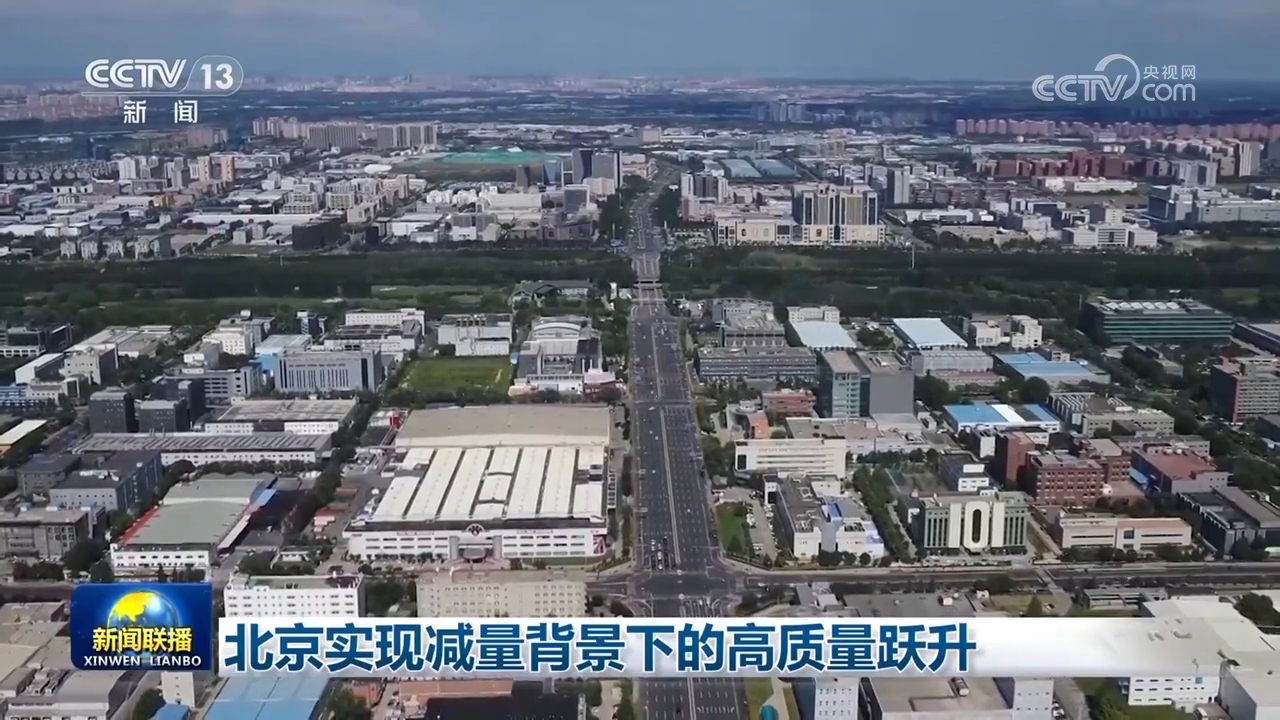
Group 1 - Beijing is the first super-large city in China to implement a reduction development strategy, focusing on connotative development and the concept of a people-oriented city [1] - Over the past decade, Beijing has eliminated more than 3,000 general manufacturing and polluting enterprises and has reduced urban construction land by 150 square kilometers [3] - The city has established three trillion-yuan industrial clusters and several hundred-billion-yuan clusters, with the information service and financial sectors contributing over 60% to economic growth [3] Group 2 - Beijing has utilized space from illegal constructions to implement greening projects covering approximately 9,000 hectares and has removed over 1,000 kilometers of guardrails [5] - The city has initiated smart city projects, such as the "Double Smart" traffic pilot in Haidian District, which uses AI to optimize traffic light timings [5][7] - Platforms like "Jing Tong" and "One Network for All" have streamlined policies for citizens and businesses, enhancing urban operational efficiency [7]

成渝地区双城经济圈经济总量达8.7万亿元
Zhong Guo Xin Wen Wang· 2025-09-19 06:38
Core Points - The Chengdu-Chongqing economic circle has seen its economic output grow from 6.3 trillion yuan to 8.7 trillion yuan over the past five years, highlighting its significant role in supporting high-quality development in the western region and nationwide [1][2] - Infrastructure development has been a key focus, with nearly 10,000 kilometers of railway operational between the two regions, an increase of 28% compared to five years ago [1] - The two regions have collaborated to create world-class industrial clusters, including the largest OLED production base globally and the third-largest automotive industry cluster in China [1] Infrastructure Development - The Chengdu-Chongqing area has advanced its infrastructure through a unified approach, completing major projects like the Yichang-Chongqing high-speed railway and accelerating the construction of several outbound transportation projects [1] - The integration of transportation networks has resulted in 26 railways, highways, and waterways connecting the two regions [1] Industrial Innovation - The Chengdu-Chongqing economic circle has focused on integrated industrial innovation, establishing two national advanced manufacturing clusters in electronic information and biomedicine [1] - Eleven key laboratories have been established to facilitate the local transformation and industrialization of scientific achievements [1] Economic Integration and Trade - The two regions are deepening reforms and expanding openness, promoting regional market integration and exploring the separation of economic and administrative zones [2] - The total import and export volume between the two provinces has exceeded 1.7 trillion yuan, marking a 40% increase over the past five years [2]
法国超50万人举行罢工 反对政府财政紧缩方案
Zhong Guo Xin Wen Wang· 2025-09-19 03:22
Core Points - Protests and strikes occurred across France on September 18 in opposition to the government's austerity measures, with over 500,000 participants reported [1] - The transportation, education, and healthcare sectors were notably affected, with disruptions in metro and regional train services in Paris [1] - Violent incidents and property damage were reported during demonstrations, leading to over 300 arrests by the police [1] - The new Prime Minister, Élisabeth Borne, expressed intentions to engage in dialogue with unions and protesters regarding their demands [1] - The government's budget plan for 2026, aimed at further spending cuts, faced significant opposition from the National Assembly and the public [1] - The previous Prime Minister, Édouard Philippe, resigned after losing a confidence vote related to fiscal policies [1]
法国发生多行业罢工 旨在反对政府财政紧缩计划
Zhong Guo Xin Wen Wang· 2025-09-19 01:47
Core Points - A nationwide strike occurred in France on September 18, with tens of thousands participating to protest against the government's austerity measures [1] - The strike significantly impacted various sectors, including transportation, education, healthcare, and energy, leading to service disruptions in Paris and other regions [1] - The French government reported approximately 500,000 participants in the protests, while unions claimed the number was around 1 million [1] - The main demands of the unions include the withdrawal of the 2026 budget plan proposed by the Borne government, increased public service spending, and higher taxes on the wealthy [1] - Recent polls indicate that over half of the French population supports the strike and related protests, with only 25% opposing them [1] - French Prime Minister Élisabeth Borne responded to the protests, emphasizing ongoing dialogue with social groups and condemning violence against police [1] Industry Impact - The strike led to significant disruptions in public transportation services, including metro, suburban trains, and buses, as well as the closure of tourist attractions like the Eiffel Tower [1] - The energy sector also experienced a decrease in electricity generation due to the strike [1] - The upcoming meeting of union representatives on September 19 may determine future actions, including the possibility of additional strikes, indicating ongoing labor unrest [2]
法国逾50万人罢工反对政府财政紧缩方案
Yang Shi Xin Wen· 2025-09-18 22:44
Core Points - A large-scale strike and protest occurred in France on September 18, with over 500,000 participants nationwide, including approximately 55,000 in Paris, in response to government austerity measures [1] - The protests involved workers from various sectors, including transportation, education, electricity, and healthcare, calling for a "fairer" fiscal plan [1] - Violence and property damage were reported during demonstrations in cities like Paris, Lyon, and Rennes, leading to over 300 arrests [1] Government Response - Paris police expressed concerns about potential violence during the protests and advised local businesses to close [1] - French Prime Minister Le Cornu stated he would continue discussions with unions and protesters regarding their demands while condemning the violence [1] Background Context - The protests were triggered by a budget proposal introduced in July by former Prime Minister Bérurier, which included measures such as converting two public holidays into workdays and cutting healthcare spending to alleviate public debt [1] - The proposal faced significant opposition from the National Assembly and the public, leading to Bérurier's resignation after a failed confidence vote on September 8 [1]
淮安全面启动2025年“质量月”活动 五大行动筑牢高质量发展根基
Xin Hua Ri Bao· 2025-09-18 21:56
Core Viewpoint - The "Quality Month" activities in Huai'an aim to enhance comprehensive quality management and promote the construction of a quality-oriented city, injecting vitality into the city's economic and social high-quality development [1] Quality Management Improvement Action - The quality management improvement action focuses on the actual needs of enterprises, promoting standardized construction and technical support to enhance quality management levels [2] - Huai'an is advancing provincial standardization pilot evaluations and guiding enterprises to establish standards that exceed national and industry standards [2] - Specialized training sessions are being held to update knowledge and skills in key sectors such as surveying engineering and tour guide services [2] Quality Safety Supervision Action - The quality safety supervision action emphasizes safeguarding quality safety in key industries, including explosives, food safety in elderly care institutions, and agricultural product quality [3] - Comprehensive inspections are being conducted to identify safety hazards and ensure compliance with quality safety responsibilities [3] - Increased monitoring of agricultural product quality is being implemented to ensure food safety for consumers [3] Quality Brand Building Action - The quality brand building action aims to enhance the influence of product and service quality brands in key industries and livelihood sectors [4] - Activities include promoting certifications for special equipment, organic products, and green products to improve market competitiveness [4] - Huai'an is conducting inspections and providing guidance for construction quality to ensure high standards in urban infrastructure projects [4] Quality Safety Co-Governance Action - The quality safety co-governance action fosters collaboration among government, enterprises, and financial institutions to support quality development [5] - Financial products like "Su Quality Loan" and "Huai Quality Loan" are being introduced to assist quality enterprises in overcoming financing challenges [5] - Public engagement activities are being organized to enhance community awareness of quality safety [5] Quality Consumption Improvement Action - The quality consumption improvement action focuses on enhancing consumer experience and protecting consumer rights [6] - Strict enforcement actions are being taken against counterfeit goods and false advertising to deter illegal activities [6] - Initiatives are in place to promote safe consumption practices, such as the "old for new" policy for electric bicycles [6] Conclusion - The "Quality Month" activities represent a significant initiative for Huai'an in advancing quality-oriented city construction, with a commitment to collaborative efforts across departments to ensure effective implementation and high-quality service delivery [7]

新华社权威速览·非凡“十四五”丨科技让生活更美好:天更蓝、食更优、行更快
Xin Hua She· 2025-09-18 13:47
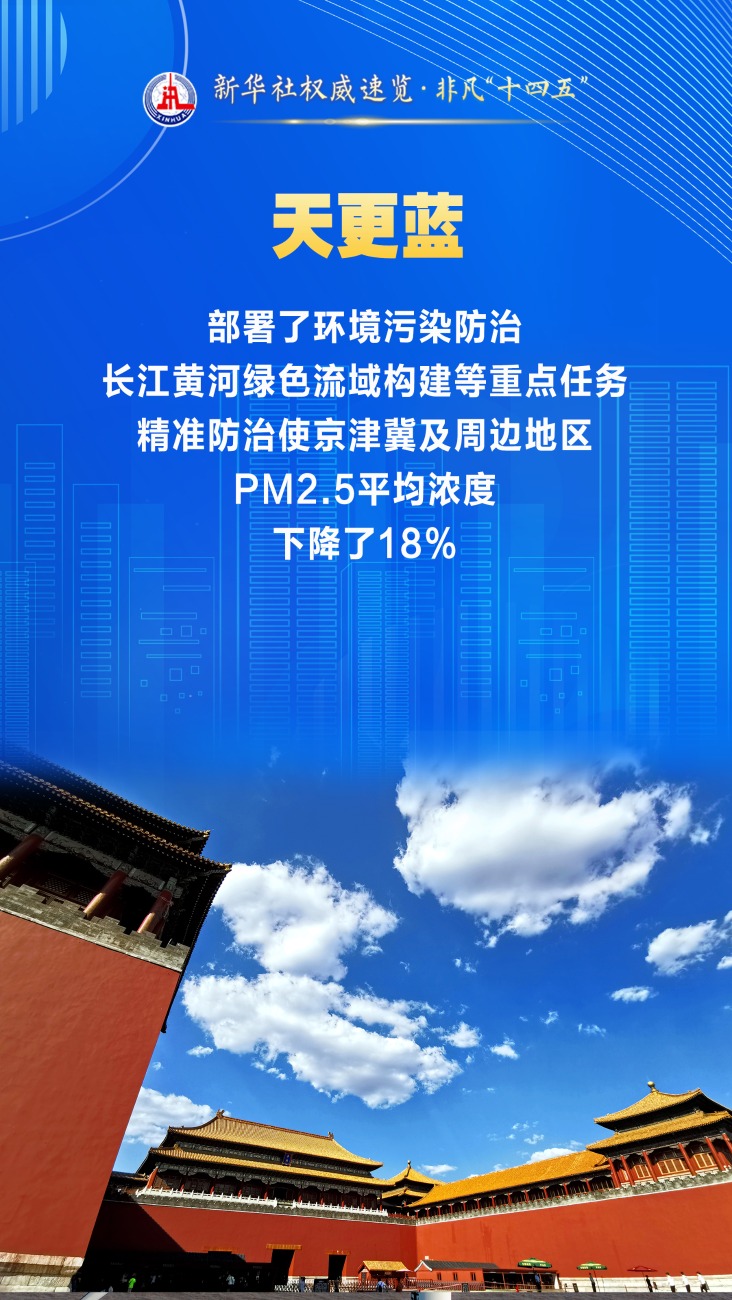
Group 1 - The core focus of the technology sector is to meet the people's aspiration for a better life, with systematic layouts and breakthroughs achieved during the "14th Five-Year Plan" period [1] - Key tasks include biological breeding and agricultural machinery equipment, leading to the development of major crop varieties such as wheat, corn, and rice, as well as high-end agricultural power equipment [4] - The deployment of transportation equipment includes critical technologies for the Sichuan-Tibet Railway, with CR450 trains capable of operating at speeds up to 400 km/h, and the C919 aircraft moving towards regular commercial operations [6] Group 2 - The technology sector is also focusing on high-end and emergency medical equipment, as well as new drug development [7] - The development of the world's first 5.0T medical equipment has been achieved [8]
新华社权威速览·非凡“十四五”丨科技创新引领新质生产力发展,科技部门这样干!
Xin Hua She· 2025-09-18 13:23
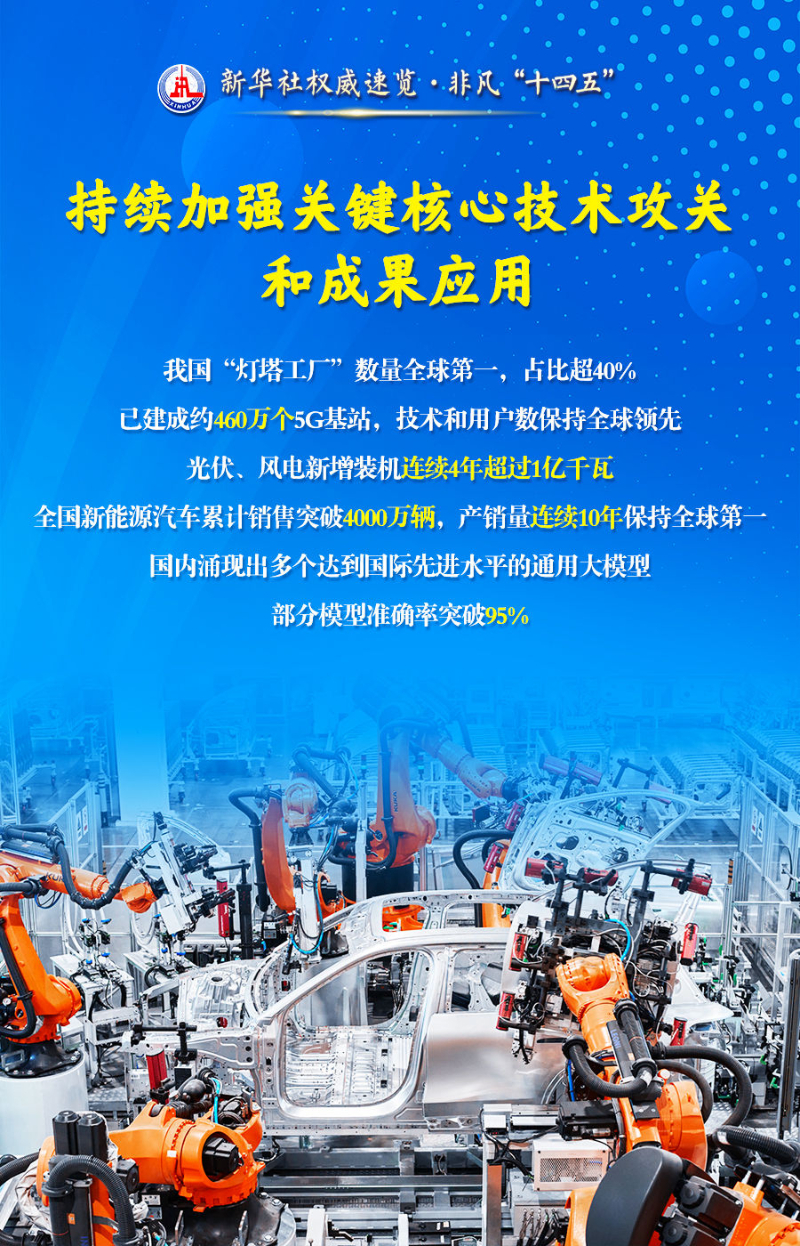
Core Insights - The Chinese government emphasizes the importance of technological innovation during the "14th Five-Year Plan" period, aiming to enhance core technology breakthroughs and application of results to drive new productivity [1][2]. Group 1: Technological Advancements - China has the largest number of "lighthouse factories" globally, accounting for over 40% of the total [2]. - Approximately 4.6 million 5G base stations have been established, maintaining a leading position in technology and user numbers [2]. - New installations of solar and wind power have exceeded 100 million kilowatts for four consecutive years [2]. - Cumulative sales of new energy vehicles in China have surpassed 40 million, with production and sales maintaining a global lead for ten consecutive years [2]. Group 2: Environmental and Agricultural Innovations - Key tasks include environmental pollution prevention and the construction of green river basins for the Yangtze and Yellow Rivers [4]. - Major crop varieties such as wheat, corn, and rice have been developed to meet urgent production needs [4]. - The CR450 train set has achieved an operational speed of 400 kilometers per hour, continuously setting new records for "Chinese speed" [4]. - The C919 aircraft has progressed from its first flight to regular commercial operations [4]. - The world's first 5.0T full-body MRI scanning equipment has been developed, significantly reducing examination costs [4]. Group 3: Regional Innovation and Collaboration - The government is focusing on building three international innovation centers in Beijing, Shanghai, and the Guangdong-Hong Kong-Macao Greater Bay Area [5]. - Regional innovation centers are being established in Chengdu, Wuhan, and Xi'an to support collaborative innovation across regions and key urban clusters [5]. Group 4: Technology Transfer and Financial Support - The level of technology transfer has improved, with pilot management of job-related technological achievements initiated in 2022, leading to reforms in 17 provinces and cities [7]. - A multi-layered technology trading network has been formed, with 89 national technology innovation centers established for concept verification and pilot testing [7]. - The scale of re-loans for technological innovation and technological transformation has increased to 800 billion, with a reduced re-loan interest rate of 1.5% [11]. Group 5: Youth Engagement in Science and Technology - During the "14th Five-Year Plan," 43.3% of project leaders in key national research programs are under 45 years old, highlighting the role of young scientists in major projects like the Chang'e lunar exploration and artificial intelligence [13]. Group 6: International Cooperation - The government is promoting mutually beneficial international scientific cooperation, implementing the "Belt and Road" technology innovation action plan, and collaborating with nearly 50 countries to establish over 70 joint laboratories [15]. - More than 55,000 young scientists from partner countries have been supported to work and exchange in China, along with training for over 23,000 science and management personnel from partner countries [15]. Group 7: Infrastructure and Data Development - The "China Sky Eye" has discovered over 1,000 pulsars, and the total data volume of 20 national scientific data centers has exceeded 270 petabytes, a fivefold increase since the end of the "13th Five-Year Plan" [17]. - A total of 167 national field stations have been established in relevant fields to support scientific research [17].