
煤化工

Search documents
A股策略周报20260111:趋势仍在,结构再平衡-20260111
SINOLINK SECURITIES· 2026-01-11 13:41
Group 1: Market Liquidity and A-Share Performance - The improvement in market liquidity has been a direct catalyst for the recent rise in A-shares, with margin trading balances increasing by over 125 billion yuan in just half a month, leading to a more than 35% increase in trading volume across the A-share market [3][13][22] - Historical data shows that similar situations, where the A-share market rose by nearly 10% over 16 trading days with trading volume expanding by over 30%, have occurred six times in the past decade, predominantly at the beginning of the year [3][18][22] - The recent surge in the commercial aerospace index has led to a significant increase in turnover rates and trading volume proportions, indicating a potential structural overheating in the market [3][22] Group 2: AI Impact on Employment and Economic Policy - The U.S. job market continues to face pressure, with December's non-farm payrolls adding only 50,000 jobs, below expectations, and a downward revision of 76,000 jobs for October and November [4][26][33] - The adoption of AI by large U.S. companies has significantly suppressed employment growth, particularly in the information, finance, and professional services sectors, which have collectively lost 344,000 jobs over the past three years [4][26][33] - The Federal Reserve's extended rate-cutting cycle is expected to benefit commodity markets, as inflation concerns related to AI investments are easing [4][40][41] Group 3: Domestic Economic Recovery and Policy Optimization - The Producer Price Index (PPI) for industrial enterprises in December showed a year-on-year increase, indicating a shift from price drag to price support for corporate revenues [5][56] - The Consumer Price Index (CPI) has also risen, with the core CPI maintaining its highest level in five years, reflecting a smoother transmission of prices from enterprises to consumers [5][56] - The ongoing anti-involution policies are expected to enhance corporate profitability, with regulatory measures aimed at preventing monopolistic practices and promoting fair competition [5][62] Group 4: Rebalancing and Investment Recommendations - The report suggests a positive outlook for A-shares, driven by improved liquidity and favorable domestic and international economic conditions [6][63] - Recommended investment areas include industrial resource products like copper, aluminum, and lithium, as well as sectors benefiting from the recovery of domestic manufacturing and consumer spending [6][63] - The report emphasizes the importance of capturing opportunities in sectors such as aviation, duty-free, and food and beverage, which are expected to benefit from increased consumer income and tourism recovery [6][63]
国金策略:趋势仍在,结构再平衡
Sou Hu Cai Jing· 2026-01-11 10:59
Group 1 - The recent improvement in market liquidity has driven the A-share market's rise, with historical patterns suggesting a strong performance in the upcoming period [1][5] - The A-share market has seen a significant increase in trading volume, with a 35% growth in total trading volume and a 10% rise in the overall A-share index over the past 16 trading days [2][14] - There is a notable structural overheating in the market, particularly in the commercial aerospace index, which has seen a sharp increase in turnover and trading volume [2][14] Group 2 - AI's negative impact on the U.S. employment market is becoming evident, with December's non-farm payrolls falling short of expectations and a downward revision of previous months' data [3][20] - The prolonged interest rate cut cycle by the Federal Reserve is expected to benefit commodity markets, as the demand for resources related to AI and new energy industries is increasing [3][33] - Geopolitical tensions are altering inventory behaviors among market participants, leading to increased stockpiling and a rise in copper and silver inventories [3][35] Group 3 - Domestic policies aimed at reducing "involution" are being implemented, with industrial prices showing signs of recovery, leading to improved corporate profitability [4][43] - The recent regulatory focus on the photovoltaic industry has raised concerns about the commitment to anti-involution policies, but the overall direction remains focused on improving corporate fundamentals [4][49] - The government is actively working on regulatory frameworks to support innovation while preventing monopolistic practices, which is expected to enhance corporate profitability in the long run [4][51] Group 4 - The report maintains an optimistic outlook for the A-share market, suggesting that the combination of improved liquidity, AI investments, and domestic policy support will lead to a favorable investment environment [5][52] - Recommended sectors include industrial resource products like copper, aluminum, and lithium, as well as equipment exports and consumer sectors benefiting from recovery trends [5][52]

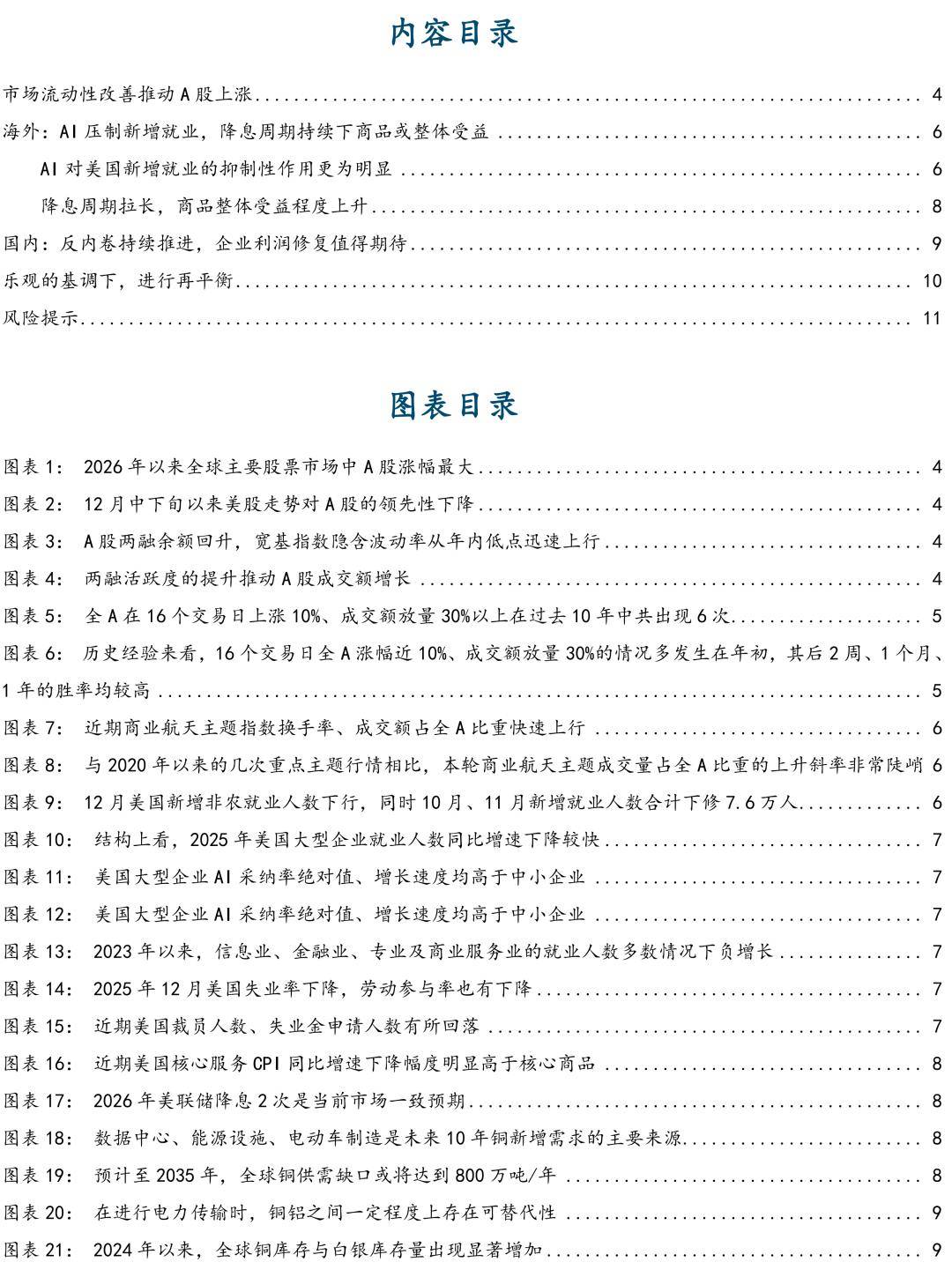
我国硫化氢清洁处理技术取得新突破
Xin Lang Cai Jing· 2026-01-11 00:41
Core Viewpoint - The research team from the Dalian Institute of Chemical Physics has developed a new technology for the complete decomposition of hydrogen sulfide, which addresses environmental and health hazards associated with this toxic compound [1][3]. Group 1: Technology Development - The "Off-site Electrocatalytic Complete Decomposition of Hydrogen Sulfide to Hydrogen and Sulfur Technology" has successfully solved the scaling-up issues in the engineering process [1]. - This technology utilizes a new reaction mode that separates chemical reactions from charge transfer, allowing for the oxidation of hydrogen sulfide to sulfur and proton reduction to hydrogen to occur outside the electrode [2]. Group 2: Industrial Application - An industrial demonstration project has been launched in the coal chemical industry, capable of eliminating and utilizing 100,000 cubic meters of hydrogen sulfide per year [4]. - The project features four technological innovations, including a high-efficiency electrochemical cell, a high conversion and efficient separation system, and recovery technologies for high-quality sulfur and high-purity hydrogen [6]. Group 3: Environmental and Economic Impact - The technology provides a key green transition solution for industries such as natural gas, petrochemicals, and coal chemicals, supporting the development of high-sulfur hydrogen sulfide resources and low-carbon industrial growth [3]. - It contributes to China's dual carbon goals by offering a new pathway for the complete elimination and resource utilization of hydrogen sulfide, enhancing both environmental protection and economic benefits [7].
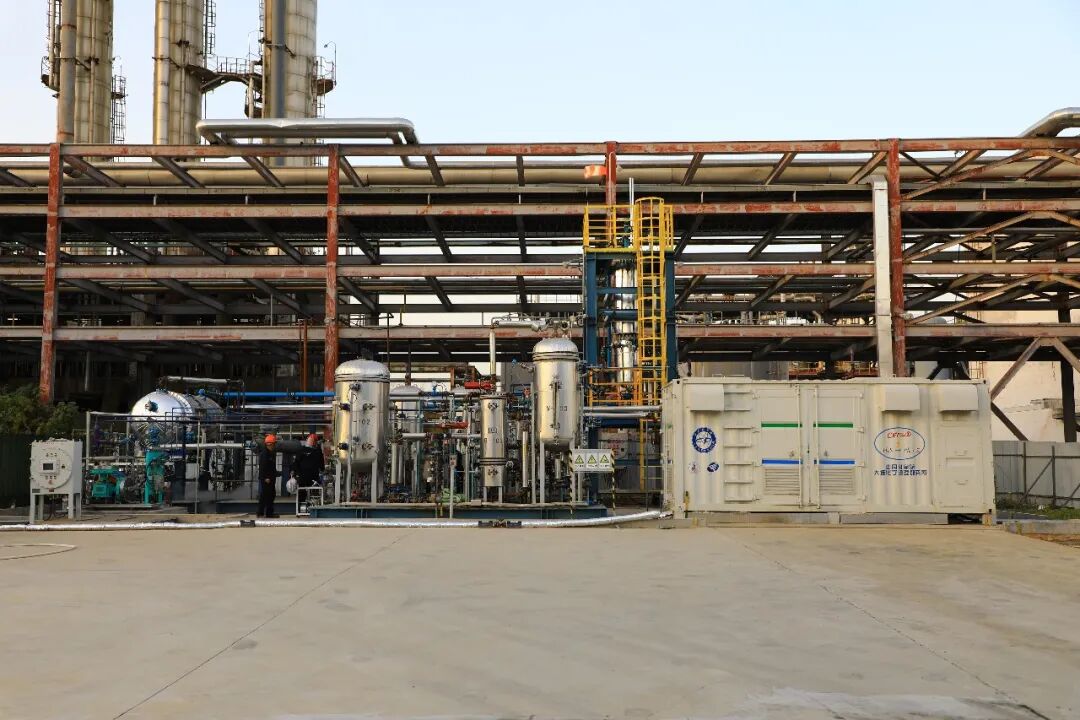
光大期货煤化工商品日报-20260109
Guang Da Qi Huo· 2026-01-09 05:38
| 品种 | 点评 | 观点 | | --- | --- | --- | | 尿素 | 周四尿素期货价格走势略有回落,主力05合约收盘价1776元/吨,微幅下跌0.45%。 | 震荡 | | | 现货市场涨势放缓,仅个别地区价格微幅上调。昨日山东、河南地区市场价格分 | | | | 别为1760元/吨、1750元/吨,日环比分别上涨10元/吨、持平。近期行业供应窄幅 | | | | 波动,昨日尿素日产量20.04万吨,日环比小幅提升0.18万吨。中旬之后仍有企业复 | | | | 产,尿素供应水平将继续提升。需求情绪继续保持谨慎,昨日主流地区平均产销 | | | | 率仅有23%左右,需求承接力度依旧 佳。整体来看,尿素基本面近期变化不大, | | | | 期货市场情绪受到国际消息、宏观环境变化及煤炭等品种波动等因素扰动,波动 | | | | 幅度明显提升。后续印标最终结果、出口以及宏观政策等方面仍有题材发酵可能 | | | | ,但此前盘面连续多日上涨后动能已较为有限,上方空间也明显受限,短期震荡 | | | | 调整为主。关注现货成交氛围、印标最终结果、期货市场关联品种走势。 | | | 纯碱 | 周四纯 ...
煤化工气化渣污染控制标准征求意见
Zhong Guo Hua Gong Bao· 2026-01-09 03:12
中化新网讯 近日,生态环境部发布《煤化工气化渣污染控制标准(征求意见稿)》(下称《标 准》),向社会公开征求意见。《标准》对气化渣消纳、利用等提出具体要求,填补了该领域国家生态 环境标准的空白。 该负责人表示,《标准》实施后,预计每年可以减少800万吨(约占目前气化渣总量的10%)的气化渣 产生量,从源头降低气化渣利用处置的费用。 《标准》规定了煤化工气化渣污染控制的总体要求,适用于历史遗留和新增的煤化工气化渣产生、收 集、贮存、运输、回填、充填、利用和填埋等全过程的污染控制及环境管理。 据了解,气化渣含有重金属、苯并[a]芘等有毒有害物质,且部分气化渣浸出液呈酸性或碱性,不规范 的收集、贮存、运输、回填、充填、利用和填埋会造成污染隐患。目前,气化渣资源化利用率很低,主 要方式为堆存和填埋。大量堆存和填埋的气化渣制约了煤气化技术的高质量发展,亟需在环境风险可控 的前提下,打通气化渣规模化消纳途径,促进煤气化技术的绿色健康发展。 生态环境部相关负责人指出,《标准》的编制注重环境效益、经济效益和社会效益的统一,遵循4项原 则:一是重点过程污染控制原则。针对气化渣产生、收集、贮存、运输、回填、充填、利用、填埋等重 ...
山西部署能源转型攻关任务
Zhong Guo Hua Gong Bao· 2026-01-09 02:51
Core Viewpoint - Shanxi Province has issued the "Implementation Opinions on Accelerating Energy Technology Innovation to Support Energy Transition Development," aiming to enhance energy technology innovation and support the province's energy transition through strategic initiatives and key tasks [1][2]. Group 1: Energy Technology Innovation - The "Implementation Opinions" identifies nine new paths for energy transition, including coal chemical industry, coalbed methane exploration, new energy, smart grid, solid waste disposal and utilization, carbon capture, utilization, and storage, and "Artificial Intelligence + Energy Innovation" [1][2]. - A total of 33 key tasks have been outlined to drive breakthroughs in critical core technologies, providing robust technological support for Shanxi's energy transition [1]. Group 2: Coal Chemical Industry Development - The document emphasizes the development of high-end, diversified, and low-carbon technologies in the coal chemical sector, including the utilization of coal in various grades and types, new coal coking technologies, and downstream material development [1]. - It promotes the integration of coal and renewable energy, focusing on key technology research and engineering demonstrations for low-carbon gasification, green hydrogen substitution, and biomass utilization [1]. Group 3: Renewable Energy and Hydrogen Technologies - The "Implementation Opinions" calls for accelerated development of wind and solar technologies, including high-efficiency low-cost crystalline silicon batteries and new perovskite solar cells [2]. - It also highlights the importance of hydrogen energy technologies, including the development of key technologies for hydrogen production, storage, and transportation, as well as promoting multi-scenario application demonstrations [2]. Group 4: Carbon Dioxide Utilization and Storage - The document outlines initiatives to advance CO₂ conversion technologies for producing high-value oxygen-containing compounds and to develop a safe and controllable CO₂ storage technology system [2]. - It includes research on the potential for CO₂ storage in geological formations such as saline aquifers and abandoned mines, as well as demonstrations of CO₂ injection for enhanced coalbed methane recovery [2]. Group 5: Artificial Intelligence in Energy - The "Implementation Opinions" proposes the implementation of an "Artificial Intelligence + Energy Innovation" strategy, focusing on integrating AI into coal chemical processes to enhance catalyst research, process simulation, and reactor design [2].
宝丰能源跌2.08%,成交额5.03亿元,主力资金净流出5738.30万元
Xin Lang Cai Jing· 2026-01-09 02:36
Core Viewpoint - Baofeng Energy's stock price has shown fluctuations, with a recent decline of 2.08%, while the company has experienced significant revenue and profit growth year-on-year. Group 1: Stock Performance - As of January 9, Baofeng Energy's stock price was 19.82 CNY per share, with a market capitalization of 145.35 billion CNY [1] - The stock has increased by 0.97% year-to-date, with a 9.50% increase over the past 20 days and a 14.24% increase over the past 60 days [1] - The net outflow of main funds was 57.38 million CNY, with significant selling pressure observed [1] Group 2: Financial Performance - For the period from January to September 2025, Baofeng Energy achieved a revenue of 35.545 billion CNY, representing a year-on-year growth of 46.43% [2] - The net profit attributable to shareholders for the same period was 8.950 billion CNY, reflecting a year-on-year increase of 97.27% [2] Group 3: Shareholder Information - As of September 30, the number of Baofeng Energy's shareholders increased to 65,400, up by 3.70% from the previous period [2] - The company has distributed a total of 17.348 billion CNY in dividends since its A-share listing, with 8.121 billion CNY distributed in the last three years [3] - The top ten circulating shareholders include Hong Kong Central Clearing Limited, which holds 177 million shares, a decrease of 25.624 million shares from the previous period [3]

“一煤独大”怎么解?
Jin Rong Shi Bao· 2026-01-08 05:18
Group 1 - The core viewpoint of the articles highlights the transformation of the coal industry in Shanxi, particularly focusing on the development of coalbed methane (CBM) and its integration into green finance initiatives to support low-carbon transitions [1][4][8] - Shanxi's Jinchen city has seen a significant increase in coalbed methane utilization, with production rising from 3.59 billion cubic meters to 5.48 billion cubic meters, achieving a city gasification rate of over 95% [4][8] - The financial support from institutions like the Industrial and Commercial Bank of China has been crucial, providing tailored financing solutions, including a total of 100 million yuan in working capital loans since 2025 [7][8] Group 2 - The technology employed by Qinshi River Gas Power Co., which includes a self-developed waste heat recovery power generation technology, has improved energy conversion efficiency to over 80% and reduced nitrogen oxide emissions to internationally advanced levels [3][4] - The financial ecosystem in Jinchen has been enhanced through the establishment of a communication mechanism between financial institutions and local government, leading to a comprehensive support directory for green projects [8][25] - The shift towards intelligent mining in Shanxi, with a focus on reducing labor and increasing efficiency, has been supported by financial institutions, which have recognized the need for substantial investment in technology and infrastructure [9][10][11] Group 3 - The Lu'an Coal-based Clean Energy Company is leading the charge in high-end coal chemical product development, with a projected total output value of 71.5 billion yuan in 2024, making it the top in the province [20][22] - The company has developed 54 types of coal-based synthetic products, filling domestic gaps and focusing on import substitution, thus enhancing its market competitiveness [21][22] - Financial institutions have provided long-term, stable credit support, including a 1 billion yuan project loan for the Lu'an 180 project, which is crucial for equipment procurement and construction [22][24] Group 4 - The articles emphasize the importance of a systematic financial support framework that aligns with the industrial transformation needs, moving from traditional coal reliance to innovative, high-value product development [24][25] - The integration of technology and finance is seen as essential for the successful transition of resource-based regions, enabling the extension of value chains and the broadening of application scenarios [25]
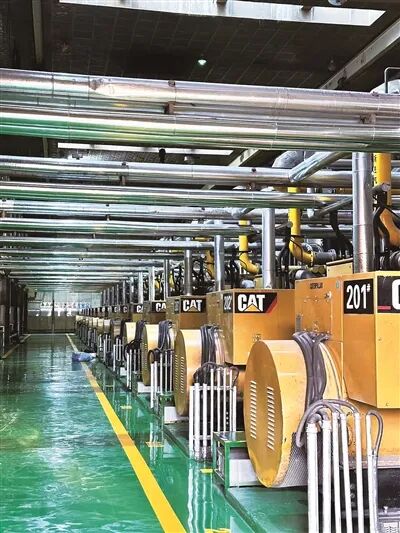
光大期货煤化工商品日报-20260108
Guang Da Qi Huo· 2026-01-08 03:20
Group 1: Investment Ratings - The report gives a "Bullish" rating for urea, soda ash, and glass [1] Group 2: Core Views - For urea, on Wednesday, the spot market continued to strengthen with some mainstream regional prices rising by 10 yuan/ton. The daily output was 20.4 tons, remaining stable. Supply is expected to increase after mid - month. Demand chasing sentiment is cautious with a产销率 in the 10% - 30% range. The inventory increased slightly by 0.29%. The strong coal in the futures market supports the urea futures price. It is expected to run strongly in the short term, but the upside space is limited [1] - For soda ash, on Wednesday, the futures price rose significantly while the spot price was stable with some manufacturers willing to raise prices. The industry's maintenance is basically over with an 84.7% operating rate. Supply will increase. Demand sentiment improved with more active downstream purchasing, but the rigid demand is still not optimistic. The strong coal and macro - policy factors support the futures price. It is expected to be strong in the short term with increased volatility [1] - For glass, on Wednesday, both the futures and spot prices rose significantly. The daily melting volume is around 15.15 tons. The 产销率 in some regions reached 180% - 190%. The short - term spot trading supports price increases, but the rigid demand faces pressure as the Spring Festival approaches. The strong coal in the futures market drives the glass futures price. It is expected to be strong in the short term with a game between internal and external factors [1] Group 3: Market Information - Urea - On January 7, the urea futures warehouse receipts were 12,619, unchanged from the previous day, with 333 valid forecasts [4] - On January 7, the urea industry's daily output was 20.04 tons, a decrease of 0.1 tons from the previous day and an increase of 2.58 tons from the same period last year. The operating rate was 82.86%, a 4.89 - percentage - point increase from the same period last year [4] - On January 7, the small - particle urea spot prices in Shandong, Henan, Hebei, Anhui, and Jiangsu were 1750 yuan/ton (Shandong + 10, Hebei + 10, Anhui + 10, Jiangsu 1760 + 10), and in山西 it was 1620 yuan/ton (unchanged) [4] Group 4: Market Information - Soda Ash & Glass - On January 7, the soda ash futures warehouse receipts were 5276, an increase of 500 from the previous day, with 878 valid forecasts. The glass futures warehouse receipts were 1676, unchanged from the previous day [6] - On January 7, the soda ash spot prices varied by region. For example, in North China, the light soda ash was 1200 yuan/ton and the heavy soda ash was 1250 yuan/ton [6] - On January 7, the soda ash industry's operating rate was 84.7%, unchanged from the previous day. The average price of the float glass market was 1081 yuan/ton, a 5 - yuan increase from the previous day, and the daily output was 15.16 tons [7] Group 5: Research Team Introduction - Zhang Xiaojin is the director of resource product research at Everbright Futures Research Institute, focusing on the sugar industry. He has won many analyst awards [24] - Zhang Linglu is an analyst at Everbright Futures Research Institute, responsible for urea, soda ash, and glass research. She has won many honors in relevant fields [24] - Sun Chengzhen is an analyst at Everbright Futures Research Institute, mainly engaged in the research of cotton, cotton yarn, ferroalloys, etc. He has also won relevant awards [24]
从一块煤到一滴油
Jin Rong Shi Bao· 2026-01-08 02:03
站在潞安煤基清洁能源公司的观景平台上,视线所及是蓝天下铺展的"钢铁巨阵":数十座银灰色塔器拔 地而起,周身缠满管道,银白与深灰的管线在钢结构框架间织成密网,顺着塔壁螺旋而上斜跨向邻座设 备,连缀起整片生产区。不远处,"坚定推进能源革命"的蓝底标语挂在塔群间隙里。 这一数字的背后,是一条特色鲜明的发展路径——从传统的煤炭洗选、焦化向煤制油、煤制气、煤制烯 烃等高端煤化工产品转型。而潞安180项目,正是当地煤化工产业链的核心引擎。 "我们首先将高硫煤通过气化炉进行气化处理,净化后的合成气在高温高压条件下,通过催化剂发生费 托合成反应,费托合成产生的液态烃类混合物经分馏、加氢等精制工艺,再转化为油。可以说,我们的 油是通过气转化而来,燃烧时比传统意义的石油更环保。"潞安煤基清洁能源公司首席师张国华向记者 介绍道。目前,该公司已开发出五大类54种产品、270个规格型号的煤基合成产品,从高密度航空煤油 到尼龙纤维,多个产品填补了国内空白,在高端化工市场占据了重要地位。 从"一块煤",到"一滴油",从"单一燃料"到"多元材料",当地正把煤的价值"吃干榨净",如今,这 滴"油"已经敲开了进口化替代的大门。 这里是潞安180 ...