
电商平台

Search documents
带案底的大螃蟹10只才240元,多少大馋丫头把「法拍直播间」当拼多多逛?
3 6 Ke· 2025-11-17 10:28
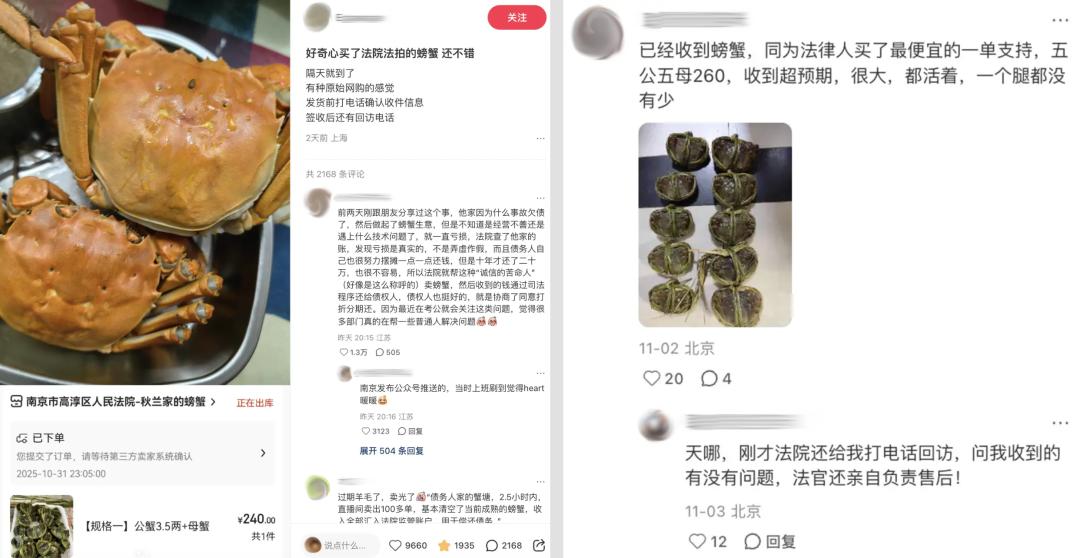
Core Insights - The article discusses a unique case where judges in Nanjing, China, conducted a live-streaming sale of crabs to help a debtor repay their debts, showcasing an innovative approach to judicial asset disposal [3][11][22] Group 1: Judicial Innovation - The judges transformed from legal professionals to live-streaming hosts, selling crabs directly from a debtor's pond, which attracted over 200,000 viewers and generated sales of 57,000 yuan in just 2.5 hours [3][11] - This method of selling perishable goods like crabs is rare in judicial auctions, which typically focus on higher-value items like real estate or vehicles [5][7] Group 2: Market Dynamics - The crabs were sold at a price of 240 yuan for 10 live crabs, which were well-received by customers for their quality and freshness [3][4] - The approach aims to maximize the value recovered for debtors while minimizing waste, as traditional bulk auctions often lead to unsold items [24][31] Group 3: Broader Implications - The case reflects a potential shift in how courts handle asset liquidation, moving towards a more retail-oriented model that could increase participation and efficiency in the auction process [22][24] - Similar past instances include the sale of low-value items like soft drinks, indicating a trend where courts may resort to selling food and beverage items when other assets are unavailable [10][18]

多线对战,Shopee 的增长变得更贵了
3 6 Ke· 2025-11-17 09:52
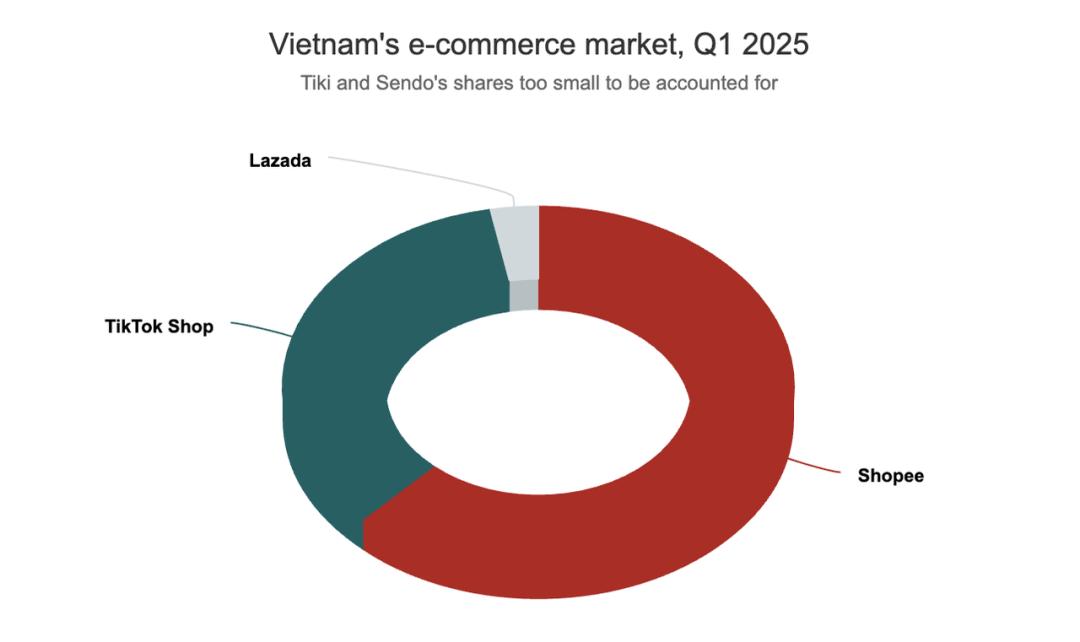
Core Viewpoint - Sea's stock price dropped over 8% after the release of its financial report, marking three consecutive days of decline, despite showing significant revenue and profit growth in Q3 [1] Group 1: Financial Performance - Sea's Q3 revenue was approximately $6 billion, a year-on-year increase of about 38.3%, with a net profit of $375 million, up 114.62% year-on-year [1] - Shopee's Q3 revenue reached $4.3 billion, reflecting a year-on-year growth of 34.9%, while adjusted EBITDA was $186.1 million [1] - Total operating expenses for Sea increased by 28% year-on-year to $2.12 billion, with sales and marketing expenses rising to $1.15 billion, a 30.9% increase [1] Group 2: Competitive Landscape in Southeast Asia - Shopee is facing intense competition from TikTok Shop and Alibaba in the Southeast Asian e-commerce market, leading to significant marketing and user acquisition expenditures [1] - TikTok Shop's market share in Vietnam increased from 23% to 35%, while Shopee's share decreased from 68% to 62% [3] - A Cube Asia survey indicated that consumer spending on TikTok Shop has increased, while spending on Shopee decreased by 51% in Indonesia, Thailand, and the Philippines [5] Group 3: Strategic Initiatives - To counter the competition from TikTok, Shopee has been actively promoting content e-commerce, including live streaming and partnerships with platforms like YouTube and Facebook [6] - Shopee reported a 65% increase in orders from live sellers, and a 400% year-on-year growth in video product transaction volume [6] - Shopee launched a "Daily Star Live" event during the Double Eleven shopping festival to leverage celebrity influence and enhance live streaming impact [7] Group 4: Latin America Market Dynamics - Latin America is currently the fastest-growing e-commerce market globally, with retail e-commerce sales projected to grow by 12.2% this year, reaching $191.25 billion [10] - Shopee has established a significant presence in Brazil, with a projected GMV of approximately 60 billion reais by 2024, which is double that of Amazon and 40% of Mercado Livre's revenue [11] - Due to increased competition from platforms like Temu and TikTok, Shopee exited the Colombian and Chilean markets, focusing on Brazil as its primary battleground [12] Group 5: Logistics and Infrastructure Challenges - In Brazil, Shopee is investing heavily in logistics to compete with Mercado Livre's established infrastructure, which boasts a 73% same-day delivery rate in São Paulo [12][13] - Shopee's average delivery time in Brazil has improved by two days compared to the previous year, but it still lags behind Mercado Livre [13] - Temu's aggressive pricing and user acquisition strategies pose additional challenges for Shopee in the Brazilian market [13]

美股异动|阿里巴巴盘前涨超3% 阿里国际站欧洲订单同比大涨57%
Ge Long Hui· 2025-11-17 09:33
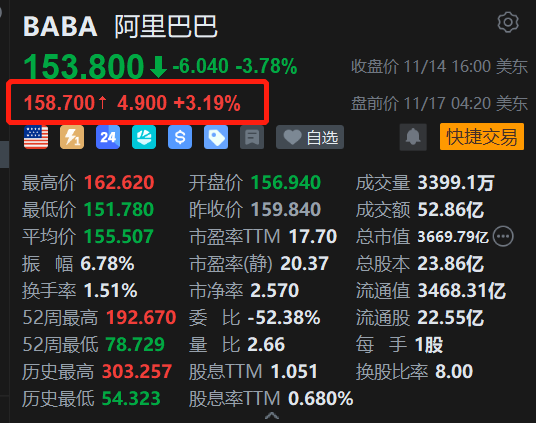
Group 1 - Alibaba's stock (BABA.US) rose by 3.19% in pre-market trading [1] - Orders from Alibaba's international platform in Europe increased by 57% year-on-year [1] - The company announced plans to significantly increase investment in the core European market and added a special European session to its global SME summit, CoCreate [1] Group 2 - The closing price of Alibaba's stock was $153.80, down 3.78% [2] - The pre-market price was $158.70, reflecting a gain of $4.90 [2] - The stock's market capitalization is approximately $366.98 billion [2]

2025双11深度战报:近1.7万亿GMV,平台品类分化加剧
Di Yi Cai Jing· 2025-11-17 08:56
Core Insights - The total transaction volume for the 2025 Double 11 shopping festival reached 1.695 trillion yuan, representing a year-on-year growth of 14.2% [2] - E-commerce platforms are increasingly providing detailed insights into their performance, with Taobao and JD.com showing significant user and order growth [1][2] - The competition among major platforms is intensifying, with Taobao/Tmall maintaining a dominant market share, while Douyin and Pinduoduo are rapidly closing the gap [4][6] Overall Performance - The overall transaction volume of 1.695 trillion yuan reflects a structural growth, with comprehensive e-commerce accounting for 95.5% of the total [2] - Douyin's GMV in the shelf scene exceeded 1.4 trillion yuan, with expectations to surpass 50% in 2025 [2] - Key categories showing explosive growth include sports and outdoor, beauty, and apparel, indicating a shift in consumer preferences towards more "suitable" products [2] Competitive Landscape - Taobao/Tmall holds over 50% market share, followed by JD.com at 18.9%, with Douyin and Pinduoduo at 14.8% and 12.2% respectively [4][6] - The competition is characterized by a focus on specific categories, with platforms either consolidating their strengths or facing stagnation in core categories [6][8] Category Analysis - Categories in the "want it all" quadrant show high market share and growth, with Taobao and Douyin leading in apparel and beauty [8] - Categories in the "mid-life crisis" quadrant face growth challenges, such as Taobao's mother and baby products and JD.com's 3C digital products [8] - Emerging categories in the "high-speed development" quadrant, like Douyin's and Pinduoduo's 3C products, show significant growth potential [9] Strategic Approaches - Major platforms are adopting a balanced strategy to avoid direct confrontations, focusing resources on high-return areas [12] - Taobao is concentrating on core areas like apparel and beauty while accepting slower growth in other categories [12] - Smaller players like Douyin and Pinduoduo are capitalizing on opportunities in high-value categories to quickly increase their market share [12] Technological Innovations - AI and instant retail have emerged as key highlights of the 2025 Double 11, with instant retail generating 67 billion yuan in GMV, a 138.4% increase [13][16] - AI tools are enhancing operational efficiency for merchants, with significant improvements in order processing and customer service [13][14] - The integration of AI and instant retail is creating a complete ecosystem that combines online and offline retail experiences [16][17]


淘宝公布“双11”出海战绩:超20万商家成交额翻倍
Zheng Quan Shi Bao Wang· 2025-11-17 08:11
Core Insights - This year's "Double 11" event marks Taobao's first global promotion across 20 countries and regions, offering services in five languages, indicating a significant shift from a Chinese shopping festival to a global consumer event [1][2] Group 1: Global Expansion and Performance - Taobao achieved strong GMV growth in overseas markets such as Singapore, Malaysia, Australia, and Japan during the "Double 11" period, highlighting the success of its international strategy [1] - The "Overseas Growth Plan" launched by Taobao has enabled over 200,000 signed merchants to double their transaction volumes, with their GMV growth rate being three times that of Taobao's overall overseas performance [1] - The number of daily active users (DAC) placing orders from overseas markets saw double-digit growth, with nine key markets experiencing over 20% year-on-year growth, showcasing their potential as high-value export destinations [1] Group 2: Localization and Service Enhancements - Taobao introduced multiple foreign language versions this year, leading to record high transactions from English-speaking users in Australia and Singapore, and a 30% increase in new buyers in Kazakhstan using the Russian interface [1][2] - The launch of direct mail services for furniture and the expansion of self-operated businesses like AliHealth and Fliggy into overseas markets represent significant advancements in cross-border logistics and service offerings [2] - The trial of cross-border free shipping for perishable food items in Hong Kong resulted in a more than 50% year-on-year increase in transaction volume, indicating successful adaptation to local market needs [2] Group 3: Strategic Vision - The general manager of Taobao's overseas operations emphasized that "Double 11" serves as a crucial barometer for the Chinese e-commerce industry, and this year's event reflects a coordinated effort in localizing audiences, diversifying supply, and globalizing fulfillment [2] - The ongoing acceleration of Taobao's international expansion is expected to open new growth opportunities for Chinese merchants in untapped markets [2]
双十一的“成人礼”:当狂欢节走向理性深耕
3 6 Ke· 2025-11-17 02:48
Core Insights - The article discusses the evolution of the Double Eleven shopping festival, highlighting a shift from rapid growth and GMV obsession to a focus on quality and efficiency in the e-commerce industry [3][6][13] Group 1: GMV Competition and Industry Changes - The GMV (Gross Merchandise Volume) competition has reached a turning point, with platforms extending promotional periods to maintain growth amid market saturation [4][6] - Major platforms like Alibaba and JD.com have stopped emphasizing GMV figures, focusing instead on metrics like user growth and order volume [6][12] - The promotional periods for major platforms have significantly increased, with Douyin, Suning, JD.com, and Taobao/Tmall extending their sales periods to 57, 44, 37, and 31 days respectively [4][12] Group 2: New Market Dynamics - The competition has intensified in traditional categories like 3C, apparel, and beverages, prompting platforms to innovate through cross-industry collaborations and technology integration [7][10] - JD.com's "car ecosystem" initiative, including a partnership with GAC and CATL, exemplifies the shift towards creating comprehensive service offerings beyond mere sales [9][10] - Instant retail has seen explosive growth, with total sales reaching 67 billion yuan during Double Eleven, marking a 138.4% increase year-on-year [10] Group 3: Consumer Behavior and Market Sentiment - Consumers are shifting from impulsive buying to more rational and practical purchasing decisions, reflecting a broader change in shopping behavior [11][13] - The perception of Double Eleven as the lowest price shopping event has diminished, with consumers increasingly seeking value and comparing prices online [11][13] - The overall growth in package deliveries during the promotional period has slowed, indicating a weakening of the promotional pull [11][12]

拼多多“千亿扶持”半年成果:优质供给深入更多地区,高质量生态格局初步成型
Zheng Quan Shi Bao Wang· 2025-11-16 08:49
Core Viewpoint - Pinduoduo's "100 Billion Support" initiative is enhancing e-commerce accessibility and driving high-quality development across various regions, particularly benefiting small and medium-sized businesses and consumers in remote areas [1][2][6] Group 1: "100 Billion Support" Initiative - The "100 Billion Support" program was launched in early April to invest heavily in building a high-quality e-commerce ecosystem, aiming for a win-win situation among users, merchants, and the platform [1] - Over the past six months, the initiative has led to a 51% year-on-year increase in quality product SKUs and a 42% increase in the number of merchants born in the '95 and '00 generations [1][2] - Remote areas like Genhe City in Inner Mongolia and Jingyuan County in Gansu have been included in the "free shipping zone," enhancing market vitality and contributing to stable platform growth [1] Group 2: Agricultural Support and Value Enhancement - Pinduoduo is committed to promoting agricultural products, with the "Multi-Quality Specialty" initiative exploring new models for agricultural product sales and helping farmers increase income [2][3] - The initiative has successfully implemented customized development plans for hundreds of agricultural merchants across various regions, enhancing the added value of agricultural products [2] - For instance, Yunnan coffee, despite its high production, has struggled with branding; Pinduoduo's support has helped local brands gain recognition and improve farmers' income [3] Group 3: New Quality Supply and Market Transformation - The "New Quality Supply" initiative aims to assist traditional industries in transforming and upgrading by providing comprehensive support in product development, marketing, and supply chain management [4][5] - In regions like Zhejiang and Shandong, local manufacturers have successfully transitioned from traditional wholesale to direct online sales, enhancing brand recognition and product innovation [5] - The number of merchants in the "New Quality Supply" program has increased significantly, with over 30% growth in '00 generation merchants and a 54% increase in quality product SKUs [5] Group 4: Expanding Consumer Accessibility - Pinduoduo's efforts to reduce logistics costs have significantly improved access to quality products in western regions, with many remote areas now included in the free shipping zone [6][7] - The platform's initiatives have led to a notable increase in orders from county-level regions, making premium products more accessible to consumers [6] - The logistics improvements have reduced delivery times from over five days to within three days for remote areas, enhancing the overall shopping experience [7][8]

2025“双11”交卷:为GMV脱水、向大消费开疆,一个理性主义天猫的进击
Xin Lang Cai Jing· 2025-11-16 06:37
Core Insights - The recent "Double 11" event for Tmall has shown significant growth, with nearly 600 brands achieving over 100 million yuan in sales, and many brands experiencing substantial year-on-year growth [1][2][6] - This year's event marks a strategic shift for Alibaba, focusing on AI and instant retail, moving away from traditional live streaming as a primary sales driver [2][3][4] Group 1: Performance Metrics - Tmall's "Double 11" achieved its best growth in four years, with 34,091 brands seeing sales double year-on-year, and 13,081 brands experiencing over 5 times growth [1] - The event also saw significant performance from other Alibaba platforms, with Fliggy achieving over 30% year-on-year growth and Tmall's instant retail orders increasing by over 200% compared to last year [7][8] Group 2: Strategic Shifts - Alibaba's strategy has evolved to emphasize AI and instant retail, with the launch of the "Taobao Convenience Store" aimed at enhancing consumer experience through rapid delivery [4][5] - The company is focusing on supporting quality and original brands, aligning with its 2025 strategy to foster brand growth and high-quality supply [6][7] Group 3: Market Trends - The "Double 11" event reflects a shift from impulsive to rational consumer behavior, with platforms adapting to provide better value and simplified discount structures [8][9] - The competition landscape is changing, with e-commerce platforms pursuing differentiated development strategies rather than merely competing for traffic [8][9]
“京东点评”功能上线?回应:处于测试阶段,针对部分城市用户随机开展
Xin Lang Ke Ji· 2025-11-15 03:03
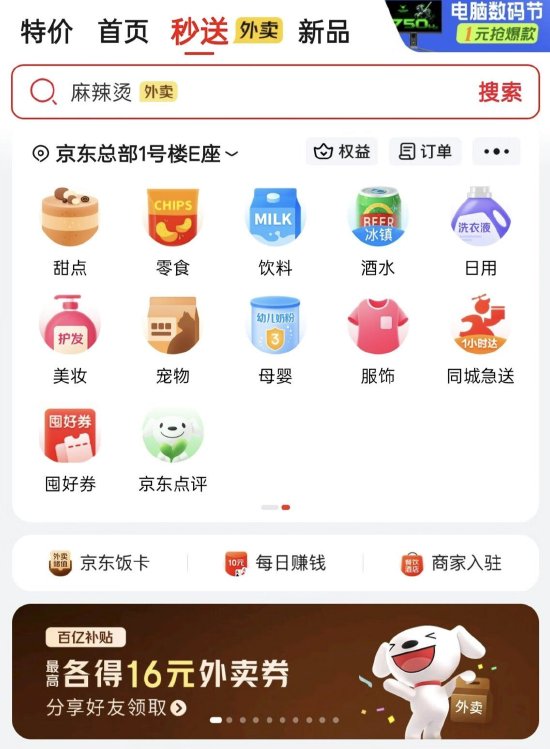
谈及京东点评目前是否开启商业化,对方表示,"暂时没有商业化,还是测试阶段。"(闫妍) 新浪科技讯 11月15日上午消息,有消息称,近日京东在秒送里上线了"京东点评"功能。 对此消息,新浪科技向京东客服进行求证,对方表示,"是上线了,京东点评功能目前正处于测试阶 段,针对于部分城市部分用户随机开展的,具体功能包括酒店、景点的点评等。" 责任编辑:韦子蓉 ...
天猫“双11”全周期近600个品牌成交破亿元
Zheng Quan Shi Bao Wang· 2025-11-15 02:42
Core Insights - Tmall's "Double 11" event achieved its best growth in four years, excluding refunds [1] Performance Metrics - Nearly 600 brands surpassed 100 million yuan in transaction volume [1] - 34,091 brands experienced a year-on-year growth of over 100% [1] - 18,048 brands saw a year-on-year growth exceeding 300% [1] - 13,081 brands reported a year-on-year growth of over 500% [1]