
航空

Search documents
成都居热门目的地TOP1
Xin Lang Cai Jing· 2026-02-14 18:45
Group 1 - The trend of combining holidays to create extended vacations is becoming popular, with February 14 marking a significant turning point in the Spring Festival travel market [1][2] - On February 14, domestic air travel heat increased by over 40% compared to the same week last year, driven by the holiday combination trend [1] - Chengdu ranked as the top destination for domestic travel, followed by Chongqing, Kunming, Guiyang, and Harbin [1][2] Group 2 - The booking heat for domestic hotels on February 14 saw significant increases, with nearly 300 destinations in southern small cities experiencing over 100% year-on-year growth [2] - The popularity of overseas long-haul vacation travel has also risen, with a growth of over 40% compared to the same period last year [1]
2026年春运系列报告之(三):节前将现客流高峰,票价趋势有望向好
GUOTAI HAITONG SECURITIES· 2026-02-14 11:33
Investment Rating - The report assigns an "Accumulate" rating for the aviation industry [5]. Core Insights - The demand for civil aviation during the 2026 Spring Festival is expected to be strong, with limited additional flights, leading to a gradual narrowing of passenger growth rates. Ticket prices are anticipated to continue rising year-on-year during and after the holiday period. Coupled with lower oil prices, airline profitability is expected to improve significantly compared to the previous year [3][4]. Summary by Sections Industry Overview - The 2026 Spring Festival travel season officially began on February 2, with strong demand expected to set a new historical high for passenger flow. As of February 12, the overall flow of people increased by 2.3% year-on-year, with aviation leading at a growth rate of 5.4% [5][6]. Passenger Flow Analysis - Passenger flow for various transportation modes showed the following year-on-year growth rates: aviation at 5.4%, rail at 2.6%, and road at 2.2%. The first week of travel was impacted by adverse weather, but recovery was noted in the second week as conditions improved [5][6][8]. Airline Performance - Daily average passenger volume for civil aviation reached approximately 2.36 million, with a year-on-year increase of 5.4%. The growth rate is in line with expectations, although the limited number of additional flights may lead to a slight decrease in growth rates as the holiday approaches [5][8]. Ticket Pricing Trends - The report estimates that domestic load factors increased by about 1 percentage point year-on-year, with ticket prices (excluding fuel surcharges) rising by approximately 1-2%. Despite a 13% year-on-year decrease in jet fuel prices, the net ticket prices are expected to rise, indicating an improvement in airline gross margins [5][8]. Future Outlook - The report anticipates a "super cycle" for the Chinese aviation industry, driven by sustained demand growth and a shift towards market-driven pricing. The upcoming peak season is expected to significantly enhance airline profitability, with the first quarter of 2026 likely to see industry-wide profitability [5][8]. Recommended Stocks - The report recommends accumulating shares of key airlines, including Air China, Juneyao Airlines, China Eastern Airlines, China Southern Airlines, and Spring Airlines, based on their expected performance and market conditions [5][13].




又一个许家印?巅峰操盘公司力压京东小米,一夜崩塌负债7500亿被抓
商业洞察· 2026-02-14 09:21
Core Viewpoint - The article discusses the rapid rise and subsequent fall of HNA Group, highlighting the dangers of excessive leverage and the importance of focusing on real business operations for sustainable growth [1][11]. Group 1: HNA's Rise - HNA Group's asset scale reached a record high of 1.23 trillion yuan in 2017, surpassing major players like JD.com and Xiaomi, making it the second-largest private enterprise in China [1][5]. - Founder Chen Feng utilized a "nested" financing strategy, starting with 10 million yuan to lease and then mortgage aircraft, ultimately acquiring over 300 planes [3][5]. Group 2: HNA's Downfall - Despite the rapid asset growth, HNA's high debt levels posed significant risks, with a cash flow of only 40 billion yuan and a total debt reaching 750 billion yuan by 2021, marking one of the highest debt levels in Chinese corporate history [9][11]. - Chen Feng's son was implicated in misappropriating company funds, further exacerbating financial pressures, leading to HNA's bankruptcy filing in 2021 [9][11]. Group 3: Lessons Learned - The contrasting paths of HNA, JD.com, and Xiaomi illustrate the risks of speculative financial practices versus the stability offered by solid business operations [11][13]. - Companies like JD.com and BYD focus on innovation and real business growth, contributing to their long-term success and resilience in the market [11][13].


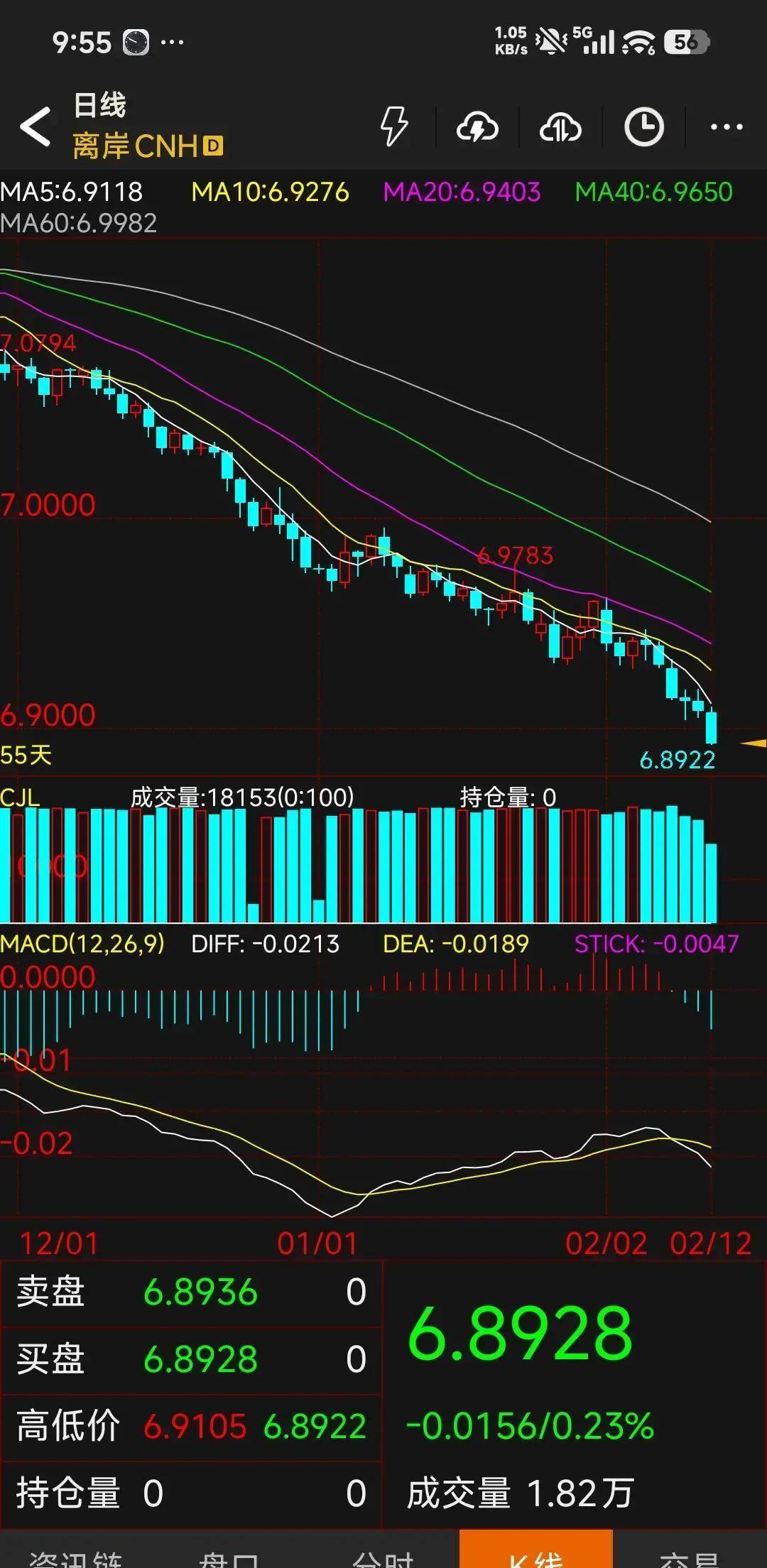
离岸人民币破6.89!三股力量推升A股,四大板块暗藏玄机
Sou Hu Cai Jing· 2026-02-14 05:12
Core Viewpoint - The offshore RMB has strengthened significantly, breaking the 6.89 mark, driven by reduced expectations for Fed rate hikes, continuous foreign capital inflow, and steady improvement in the Chinese economy, making RMB a focal point in the market [1] Group 1: Aviation Industry - The aviation sector is highly sensitive to exchange rates, with costs for aircraft, fuel, and parts typically settled in USD; RMB appreciation reduces financial burdens for companies [4] - China National Airlines, China Southern Airlines, and China Eastern Airlines benefit from this appreciation, with China National Airlines' USD debt constituting 60% of its liabilities, leading to significant profit increases with every 1% rise in RMB [4] - China Southern Airlines, due to its large fleet, sees even more pronounced profit increases, while China Eastern Airlines also experiences improved profitability from reduced fuel costs and exchange gains [4] Group 2: Paper Industry - The paper industry is directly impacted by RMB appreciation, as pulp prices are closely tied to USD, with over 60% of pulp imported; a stronger RMB effectively lowers raw material costs [4] - Companies like Sun Paper, which has a high self-sufficiency rate, can see immediate profit increases with slight RMB appreciation, while others heavily reliant on imports, such as Hengda New Materials, benefit significantly from reduced cost pressures [4] Group 3: Outbound Tourism - The outbound tourism sector reacts quickly to exchange rate changes; a stronger RMB makes international travel, including flights and accommodations, more affordable, increasing consumer interest [5] - China Duty Free Group stands out as a major beneficiary, with rising demand for duty-free shopping, while China Youth Travel Service also benefits from improved product value and increased orders due to RMB appreciation [5] Group 4: Financial Sector - The financial sector is an indirect beneficiary of RMB strength, attracting foreign capital, particularly from funds focused on long-term asset allocation [5] - Major banks like Industrial and Commercial Bank of China maintain stable profits, while retail banks like China Merchants Bank see increased foreign holdings; China Ping An benefits from the appreciation of overseas investments when converted to RMB [5] Group 5: Market Sentiment and Future Outlook - The recent RMB appreciation signals a shift in investor sentiment, moving from passive observation to active evaluation of Chinese asset safety and value [6] - The sustainability of this appreciation and its ability to translate into real profits for companies remains uncertain, but if it continues, sectors like aviation, paper, tourism, and finance could enter a new valuation cycle [7] - The market's response to the RMB's strength reflects a broader confidence returning, with questions about how long this confidence can last and its potential impact on corporate earnings [7]
万米高空品广府年味 南航与中国大酒店携手焕新云端粤菜
Guang Zhou Ri Bao· 2026-02-14 05:10
Core Viewpoint - The collaboration between China Southern Airlines and China Grand Hotel has successfully integrated traditional Cantonese cuisine into in-flight dining, enhancing the travel experience for passengers during the Spring Festival season [1][2]. Group 1: Product Offering - The "Cloud New Encounter: Reunion Flavor" themed meal set was launched, featuring traditional Cantonese dishes such as abalone braised pork and other festive delicacies, available for pre-order via the China Southern Airlines app [1][2]. - The "Lucky Lychee Pastry Gift Box" was introduced, utilizing fresh preservation technology to maintain the natural sweetness of the lychee, and will be distributed for free on flights departing from 15 locations nationwide [1][2]. Group 2: Strategic Collaboration - The partnership between China Southern Airlines and China Grand Hotel aims to innovate dining services and expand the "Food in Guangzhou" brand, merging local culinary culture with airline services [2][3]. - The "Cloud Dining" initiative has been developed to ensure that traditional Cantonese dishes retain their authentic taste at high altitudes, overcoming challenges posed by low-pressure environments [2][3]. Group 3: Long-term Development - Since the strategic cooperation agreement in 2017, both companies have continuously worked to bring Cantonese cuisine to the skies, with plans for personalized meal options and seasonal food maps [3]. - The Guangzhou government is committed to enhancing consumer spending and supporting the integration of the food industry with aviation, tourism, and other sectors to promote high-quality development in the restaurant industry [4].
财信证券袁闯:估值驱动行情延续 节后把握结构性机会
Zhong Guo Zheng Quan Bao· 2026-02-14 01:18
Core Viewpoint - The A-share market is influenced by multiple factors, showing characteristics of valuation-driven and structural differentiation, with an upward trend expected to continue post-Spring Festival [1][2]. Market Dynamics - The A-share market is experiencing a clear upward trend supported by improving corporate earnings, increased willingness of residents to invest, and ongoing policies to optimize industry competition [2]. - Short-term market fluctuations are expected due to seasonal effects, particularly around the Lunar New Year, but the overall upward trend remains intact [2][4]. Market Structure Characteristics - Historical data shows that since 2009, the average spring market rally lasts 57 days with an average increase of over 20%, with value blue-chip sectors performing well before the Spring Festival [3]. - The equity market is currently in a bullish window until early March 2026, with a focus on risk management and strategic positioning [3]. Post-Spring Festival Outlook - The A-share market is anticipated to continue its upward trend post-Spring Festival, supported by macroeconomic recovery, stable policy environment, and regulatory measures to prevent overheating [4]. - There is potential for a "red envelope market" if consumer data exceeds expectations, reinforcing cyclical sector support [4]. Investment Strategies - The investment logic post-Spring Festival will focus on "value supporting growth," with a shift from low-risk to high-risk preferences, emphasizing technology and cyclical sectors [7]. - Five key investment themes are recommended: 1. AI industry chain focusing on application development and performance-driven investments [7]. 2. High dividend yield assets, particularly in stable cash flow sectors like home appliances and banking [7]. 3. Sectors benefiting from policy-driven improvements, such as coal, steel, and lithium [7]. 4. Core areas of domestic demand recovery, including health, sports, and travel industries [8]. 5. Investment opportunities in strategic and industrial metals, anticipating a rebound in prices [8].
机票预订量倍增 “反向过年”成为春节团圆新选择
Yang Shi Xin Wen· 2026-02-14 01:17
不再执着于"老家才是年的目的地",这个春节,很多家庭调转了春运的方向。从"年轻人返乡过年"转变 为"接父母来大城市过年","反向过年"已经成为一种团圆新趋势。 据在线旅游平台数据显示,2026年春节假期,前往北京、上海、成都、广州等多条"反向过年"航线火 热,机票预订量倍增。飞往北京的旅客中,60岁及以上旅客比2025年春节假期同期增加1.6倍。 北京一家科研院所的柯先生,来京工作已经四年多。今年春节,因工作需要值守岗位,他第一次选择留 在北京过年。时间自由的父母决定,来北京陪他过年。以往过年,柯先生总要费心抢票返乡。今年,他 帮二老买票,过程非常顺利。 反向过年,票好买,价更优。铁路部门推行分日期、分时段、分区段、分席别的灵活差异化的票价优惠 策略,在一些非热门线路推出了打折优惠措施,通过市场杠杆的作用,推动春运客流"双向奔赴"、更加 均衡。航空出行方面,"反向过年"的票价优势同样显著。据悉,"反向过年"出行流向一、二线城市或小 众目的地的,因票源充足,票价普遍比返乡方向低30%至50%,且错峰出行能避开拥堵。 在华中师范大学经济研究中心副主任胡继亮看来,"反向过年"核心就是随心团圆、舒服过年,既能让老 年 ...
六大场景、多重优惠,山东春节促消费活动2月15日启动
Feng Huang Wang Cai Jing· 2026-02-14 00:08
Group 1 - The core theme of Shandong's "Le Gou New Spring, Fortune Full Qilu" campaign is to promote consumption during the Spring Festival from February 15 to 23, focusing on six major areas: eating, accommodation, transportation, tourism, shopping, and entertainment [1][2]. - Various local restaurants are offering special reunion dinner packages and showcasing Shandong cuisine, while home appliance and decoration companies are hosting sales events, and hotels are providing discounts for family stays [2][3]. - Transportation services are enhanced with optimized air-rail connections, ticket lotteries, and improved convenience services at gas stations, ensuring a smooth travel experience for consumers [2][3]. Group 2 - Financial incentives include a continuation of the old-for-new policy for cars and appliances, with a total of 60 million yuan allocated for retail and dining vouchers, and additional subsidies for winter sports activities [3]. - The campaign also features cross-industry collaborations, such as combined tickets for tourism, dining, and performances, along with rewards for small purchases, enhancing the overall consumer experience [3]. - Shandong is actively promoting inbound tourism by offering special packages for international visitors, particularly targeting Southeast Asian markets, and ensuring seamless payment options for foreign tourists [3].
关税威胁真解除了?印度炼厂急躲俄油,就为保住那18%税率!
Sou Hu Cai Jing· 2026-02-13 23:04
Core Viewpoint - The recent trade agreement between the US and India marks a significant reduction in tariffs, facilitating deeper economic cooperation and market access for both nations [1][2][3]. Group 1: Tariff Adjustments - The US has implemented an 18% "reciprocal tariff rate" on Indian-origin goods, a substantial decrease from previous rates that could reach 50% or more [3][21]. - India has committed to significantly lowering tariffs on a range of US industrial and agricultural products, including specific items that benefit US agricultural states and manufacturing hubs [4][5][6]. Group 2: Non-Tariff Barriers - India has agreed to address long-standing non-tariff barriers that have hindered US companies, including the import licensing process for medical devices and market access restrictions for ICT products [7][8]. - The agreement includes a commitment from India to evaluate the adoption of US standards or international testing requirements within six months of the agreement's effectiveness [9]. Group 3: Strategic Goals - The US aims to expand exports, deepen market access, and strengthen regulatory frameworks, seeking not only to sell more products but also to lower entry barriers for US workers and producers in India [13][14][15]. - The agreement reflects a broader strategy where both countries are positioning themselves for future economic and technological collaboration, moving beyond mere tariff reductions [12][32]. Group 4: Procurement Commitments - A notable aspect of the agreement is the procurement commitment of $500 billion over five years, which includes high-value items such as energy, aircraft parts, and technology products [26][27]. - This procurement list is seen as a means to translate political agreements into tangible business contracts, particularly in the technology sector [28][29]. Group 5: Energy and Geopolitical Considerations - The agreement subtly ties tariff reductions to India's commitment to reduce imports of Russian oil, indicating a complex geopolitical exchange [35][37]. - India is gradually diversifying its oil supply sources, reflecting a strategic approach to balance its energy needs while maintaining relations with both the US and Russia [41][53]. Group 6: Future Cooperation and Challenges - The agreement is viewed as a first step towards a more comprehensive bilateral trade deal, with mechanisms in place to adjust commitments if either party alters its tariff arrangements [49][66]. - The real test will be whether the commitments translate into effective execution, particularly in areas like non-tariff barriers and digital trade rules [64][65].

亿航智能华东总部落户合肥,股价波动显著,机构观点分化
Jing Ji Guan Cha Wang· 2026-02-13 22:39
Group 1: Company Developments - EHang Intelligent has established its East China regional headquarters in Hefei as of February 9, 2026, to deepen its low-altitude economy full industry chain layout, involving technology research and development, manufacturing, and commercial operation cooperation [1] - The company showcased its technological achievements at the transformative vertical flight conference in Silicon Valley, USA, in January 2026, aiming to expand global cooperation [1] - The EH216-S manned aircraft became the world's first model to obtain all airworthiness certificates, including type certification and production licenses, marking its official entry into the commercial operation phase in October 2025 [1] Group 2: Stock Performance - EHang Intelligent's stock price experienced significant fluctuations over the past week, with a drop of 4.34% to $11.46 on February 12, 2026, followed by a slight increase of 0.87% to close at $11.56 on February 13, 2026, resulting in a trading range of 8.56% [2] - The trading volume was relatively low, with a total of approximately $27.62 million over the past five days, indicating low liquidity that amplified volatility, while the Nasdaq index fell by 2.03%, reflecting market concerns about short-term performance [2] Group 3: Financial Performance - In Q3 2025, the company's financial performance faced pressure, with revenue declining by 27.7% year-on-year to 92.5 million RMB, and delivery volume decreasing by 38.2% quarter-on-quarter to 42 units, primarily due to delayed payments from some customers, resulting in 30 orders' revenue not being recognized [3] - The net loss expanded by 70.7% year-on-year, and management maintained the annual revenue forecast of 500 million RMB, although the feasibility of concentrated deliveries in Q4 is questioned by the market [3] Group 4: Institutional Perspectives - Institutional views are divided, with JPMorgan downgrading EHang Intelligent's rating to "Hold" in November 2025, lowering the target price to $13, citing short-term performance risks [4] - Conversely, a report from CCID Research in February 2026 indicated that the low-altitude economy has entered a critical stage of scaled development, with accelerated commercialization exploration in the eVTOL market, suggesting that the long-term growth logic of the industry remains unchanged [4]