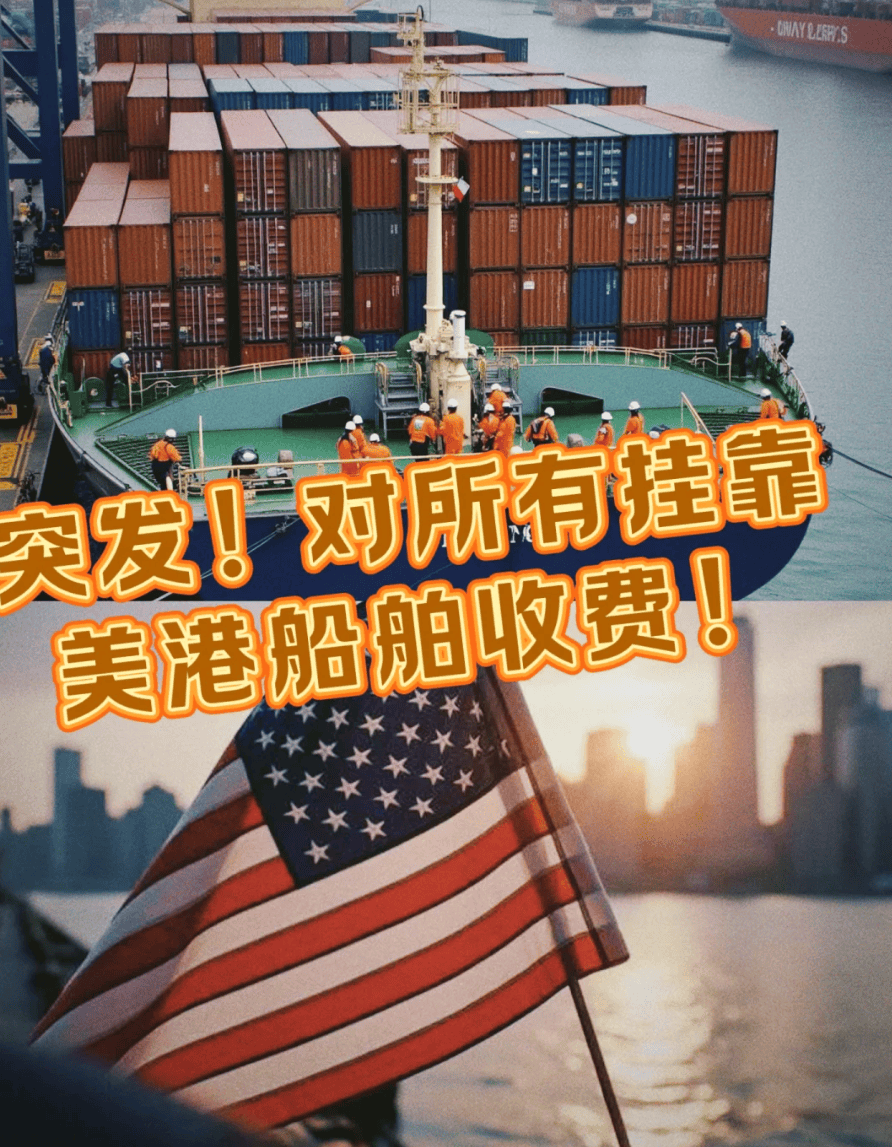
航运业

Search documents
美方称将对中方加征100%关税,商务部回应
中国能源报· 2025-10-12 03:29
Core Viewpoint - The Chinese government has implemented export controls on rare earth materials to maintain national security and international stability, emphasizing that these measures are not a ban on exports but a regulatory framework to ensure compliance with international obligations [2][3]. Group 1: Export Control Measures - The export control measures on rare earth materials are a legitimate action by the Chinese government to enhance its export control system amid global instability and military conflicts [2]. - China will conduct licensing reviews based on legal regulations, ensuring that compliant applications for civilian use will be approved, and will consider various facilitation measures to promote compliant trade [3]. Group 2: Response to U.S. Actions - In response to the U.S. announcement of a 100% tariff on Chinese rare earth exports and software export controls, China criticized the U.S. for its double standards and excessive use of export controls, which it claims harms legitimate business interests and disrupts international trade order [3][4]. - The U.S. has recently intensified its restrictions on Chinese entities, including adding multiple Chinese firms to export control lists, which China argues undermines the atmosphere for bilateral economic talks [4][5]. Group 3: Maritime and Shipping Measures - The U.S. plans to impose port fees on Chinese vessels starting October 14, which China views as a violation of WTO rules and a unilateral action that disrupts fair competition in international shipping [5][6]. - China has responded with countermeasures, including special port fees on U.S. vessels, as a necessary defensive action to protect its legitimate rights and interests in the shipping and shipbuilding sectors [6].


最新回应!商务部:“对于关税战,中方的立场是一贯的,我们不愿打,但也不怕打”
Zheng Quan Shi Bao· 2025-10-12 02:31
Core Viewpoint - The Chinese government has implemented export controls on rare earth materials, citing national security and international obligations as key reasons for these measures [2][3]. Group 1: Export Control Measures - On October 9, the Ministry of Commerce and the General Administration of Customs announced export controls on certain rare earth items, emphasizing the importance of these materials in military applications [2]. - The export controls are not a ban; applications that meet regulations will be approved, and the government aims to facilitate compliant trade through various measures [3]. - The Chinese government has conducted thorough assessments of the potential impacts on supply chains and believes the effects will be minimal [3]. Group 2: U.S.-China Trade Relations - The U.S. announced a 100% tariff on Chinese rare earth exports in response to China's export controls, which China views as a double standard and an abuse of export control measures [3][4]. - China has expressed strong opposition to the U.S. actions, which it believes undermine the atmosphere for bilateral trade talks and harm mutual interests [4]. - The Chinese government has reiterated its unwillingness to engage in a trade war but is prepared to respond to U.S. actions to protect its legitimate rights [4]. Group 3: Maritime and Shipping Measures - Starting October 14, the U.S. will impose port fees on Chinese vessels, which China claims violates WTO rules and the principles of the China-U.S. maritime agreement [5]. - In response, China will implement countermeasures, including special port fees for U.S. vessels, to defend its rights and maintain fair competition in international shipping [5][6]. - The Chinese government hopes the U.S. will recognize its errors and return to dialogue and negotiation [5].
最新回应!商务部:“对于关税战,中方的立场是一贯的,我们不愿打,但也不怕打”
证券时报· 2025-10-12 02:26
Core Viewpoint - The Chinese government has implemented export controls on rare earth materials, emphasizing its role as a responsible major power in maintaining global peace and regional stability while ensuring compliance with international obligations [2][3]. Group 1: Export Control Measures - On October 9, the Ministry of Commerce and the General Administration of Customs announced export controls on certain rare earth items, citing their significant military applications [2]. - The export controls are not a ban; applications that meet regulations will be approved, and the government aims to facilitate compliant trade through various measures [3]. - China has conducted thorough assessments of the potential impacts on supply chains and believes the effects will be minimal [3]. Group 2: U.S. Response and Trade Tensions - Following China's announcement, the U.S. plans to impose a 100% tariff on Chinese rare earth items and implement export controls on key software, which China views as a double standard [3]. - The U.S. has expanded its list of export controls against China, affecting thousands of Chinese companies and undermining the atmosphere for bilateral trade talks [4]. - China has expressed strong opposition to the U.S. actions, emphasizing that high tariffs are not the correct approach to bilateral relations and reiterating its willingness to engage in dialogue [4]. Group 3: Maritime and Shipping Measures - The U.S. will impose port fees on Chinese vessels starting October 14, which China claims violates WTO rules and the principle of mutual benefit [5]. - In response, China has announced countermeasures, including special port fees for U.S. vessels, to protect its legitimate rights and maintain fair competition in the international shipping market [5][7].

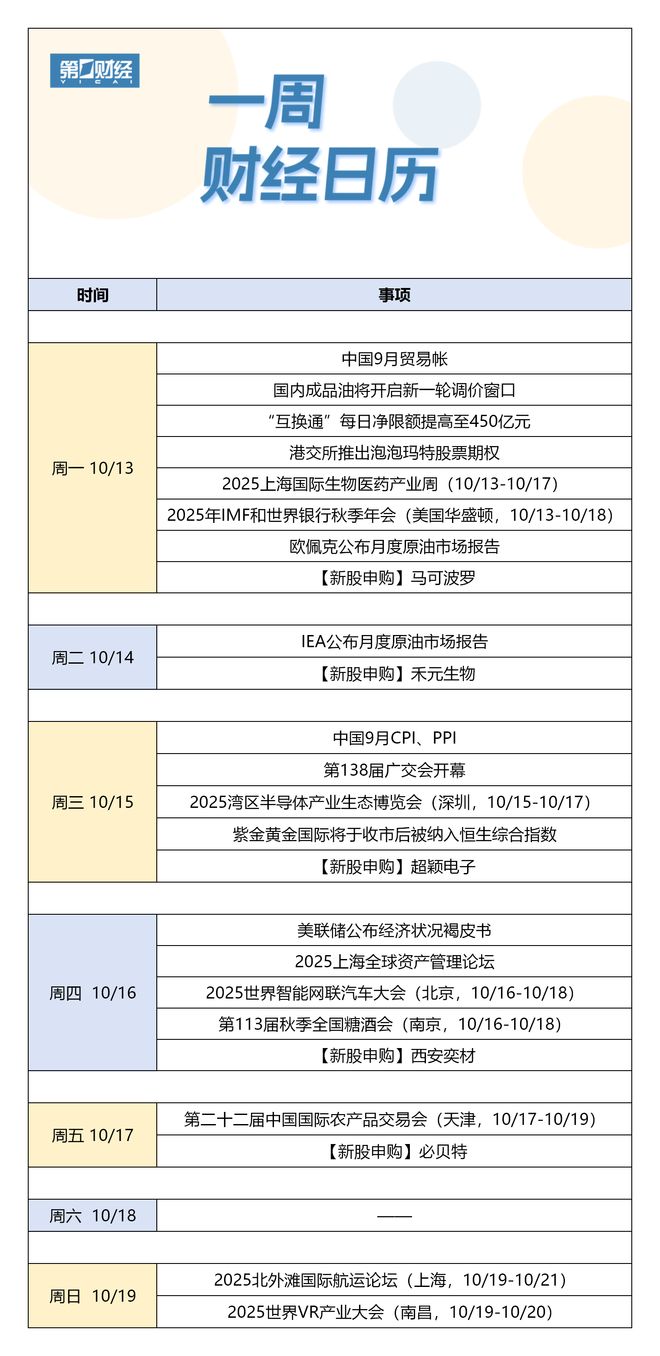
下周财经日历(10月13日-10月19日)
Di Yi Cai Jing Zi Xun· 2025-10-11 12:47
Group 1 - China's trade balance for September will be released on October 13, which is a key indicator for the country's economic health [1] - Domestic refined oil prices will enter a new round of adjustment window, impacting the energy sector [1] - The "Swap Connect" daily net limit will be increased to 45 billion yuan, enhancing cross-border trading capabilities [1] Group 2 - The Hong Kong Stock Exchange will launch stock options for Pop Mart, indicating a growing interest in the collectibles market [1] - The International Energy Agency (IEA) will release its monthly oil market report on October 14, providing insights into global oil supply and demand [2] - The 138th Canton Fair will open on October 14, serving as a significant platform for international trade [2]
中方强调:对美反制是“正当防卫”
财联社· 2025-10-10 15:53
Core Viewpoint - The article discusses China's response to the U.S. unilateral measures against its maritime, logistics, and shipbuilding industries, emphasizing the need for fair competition in international shipping and shipbuilding markets [1]. Group 1: U.S. Measures - On April 17, the U.S. Trade Representative's Office announced final measures from a 301 investigation targeting China's maritime, logistics, and shipbuilding sectors [1]. - The U.S. will impose port fees on Chinese vessels starting October 14, which is viewed as a discriminatory action harming Chinese enterprises [1]. Group 2: China's Response - In response, China will implement special port fees on vessels with U.S. elements, including those flagged, built, or owned by U.S. companies, effective October 14 [1]. - China's measures are described as a "justifiable defense" aimed at maintaining a fair competitive environment in international shipping and shipbuilding [1].

余心玎:“港口税”大棒搅动国际航运业
Huan Qiu Wang· 2025-10-10 00:02
Core Viewpoint - The introduction of the "port tax" by the U.S. on Chinese vessels is seen as a political maneuver that could disrupt global shipping dynamics and supply chains, prompting China to respond with regulatory adjustments to protect its interests and maintain international shipping order [1][2][3] Group 1: U.S. Port Tax Implications - The U.S. aims to increase operational costs for Chinese vessels to redirect international freight flows and weaken China's competitive position in global shipping [1] - American businesses across various sectors have expressed opposition to the port tax, citing concerns over increased import costs, reduced export competitiveness, and supply chain disruptions [1][2] - The aging infrastructure and rising labor costs in U.S. ports, along with the reliance on efficient operations from Chinese ports, suggest that the port tax may ultimately raise costs for U.S. importers and consumers [1][2] Group 2: China's Response and Strategy - China's recent amendment to the International Maritime Regulations includes a systematic approach to counter discriminatory measures, reflecting a commitment to legal frameworks and multilateral coordination [2][4] - The resilience and innovation within China's shipping industry, including advancements in port automation and shipbuilding, position it favorably in the global shipping network [3][4] - China's strategy involves enhancing international shipping regulations, accelerating digital and green transformations in ports, and deepening cooperation with countries along the Belt and Road Initiative to secure stable shipping routes and emerging markets [4] Group 3: Global Shipping Landscape - The international shipping industry relies heavily on efficiency and established rules rather than political confrontations, indicating that the port tax could lead to a reconfiguration of shipping routes and increased costs [2][3] - The U.S. port tax is viewed as a short-term political tactic that is unlikely to alter the fundamental dynamics of international shipping, emphasizing the need for open and fair shipping practices to ensure global economic stability [3][4] - The recognition of the costs associated with imbalanced rules may foster a stronger consensus among nations to support free shipping and multilateral order [3]
10月14日开征对华“入港费”!美国把贸易战烧到港口
Sou Hu Cai Jing· 2025-10-09 02:36
Core Points - The U.S. Trade Representative (USTR) will impose a "port entry fee" on Chinese or China-built vessels starting October 14, 2025, aimed at restructuring shipping and supply chain dependencies [2][5] - The fee structure includes three tiers: $50 per net ton (NT) for Chinese-operated vessels, $18 per NT or $120 per TEU for non-Chinese-operated but China-built vessels, and $14 per NT for foreign-built vehicle carriers [2][3] - Exemptions are available for U.S.-flagged vessels, certain MARAD project vessels, small vessels, and LNG carriers during a transition period [3][5] Policy Development - The policy was developed over 18 months, beginning with a "301 investigation" into China's shipping and logistics sectors in April 2024, leading to public hearings and a final decision in April 2025 [5][6] - The U.S. government aims to address perceived unfair practices by China in the maritime sector, reflecting a broader strategy to counter China's growing dominance in global shipping [7][8] Economic Impact - The new regulations are expected to add billions in costs to the global container shipping industry, with estimates suggesting an additional $3.2 billion in expenses for the top ten global shipping companies by 2026 [9][10] - Increased shipping costs may lead to a shift in trade patterns, with U.S. importers potentially stockpiling goods and Chinese exporters facing diminished competitive advantages [10][11] Operational Adjustments - Shipping companies are likely to restructure their operations, including optimizing vessel deployment and utilizing third-country transshipment to avoid fees [9][16] - The policy may lead to a tightening of shipping capacity and increased competition for available slots, particularly on traditional routes to the U.S. [14][16] Strategic Responses - Shipping firms may adopt various strategies to mitigate the impact of the new fees, such as changing vessels, altering shipping routes, and enhancing alliances for shared resources [16][18] - The long-term implications of the policy could reshape the global shipping landscape, creating a divide between companies focused on Western markets and those engaged in trade with developing countries [10][18]
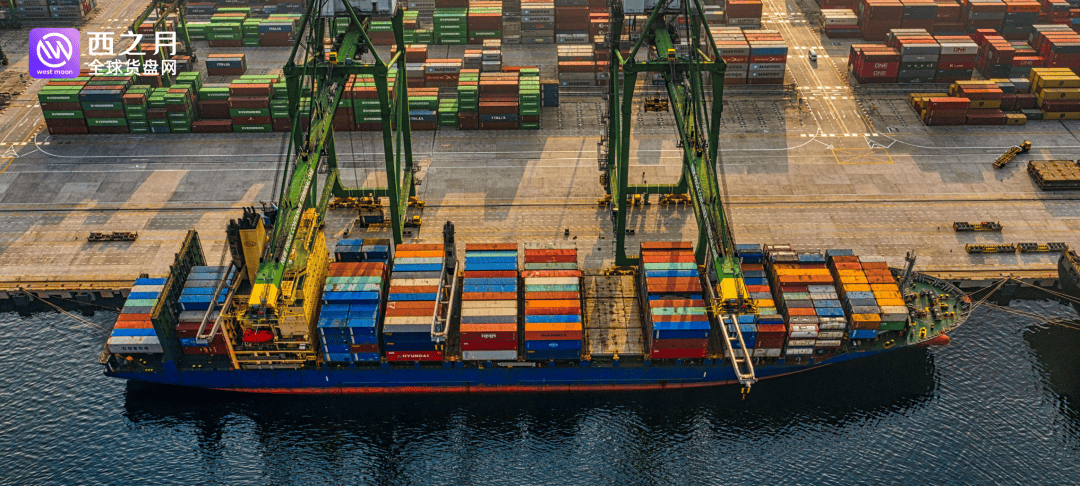
招商轮船20251006
2025-10-09 02:00
Summary of the Conference Call for China Merchants Energy Shipping Company Industry and Company Overview - **Company**: China Merchants Energy Shipping Company (招商轮船) - **Industry**: Shipping, specifically focusing on oil and bulk cargo transportation - **Market Position**: Established global leader in VLCC (Very Large Crude Carrier) and VLOC (Very Large Ore Carrier) sectors, with oil and bulk transportation contributing over 60% of revenue and 90% of total capacity [2][4] Core Business Insights - **Revenue Contribution**: Oil and bulk transportation accounted for over 60% of revenue and more than 90% of total capacity since 2018 [2][4] - **Fleet Size**: As of 2024, the company owns 221 vessels, with over 150 dedicated to oil and bulk transportation [2][4] - **Profit Stability**: Since 2020, gross profit has remained between 5 billion to 7 billion CNY, and net profit has been between 3.6 billion to 5 billion CNY [2][5] Business Model and Strategy - **Operating Model**: Primarily operates in the spot market for bulk commodity shipping, supplemented by long-term contracts with companies like Vale to ensure stable income [2][5] - **Diversification**: Engages in container shipping, LNG (Liquefied Natural Gas) transportation, and roll-on/roll-off (RoRo) shipping, enhancing profit resilience [2][6] - **Future Growth Areas**: LNG and RoRo shipping are identified as key growth areas, with expectations of significant profit contributions from these segments [2][6][8] Market Dynamics - **Oil Transportation Demand**: Future demand for oil transportation is expected to be driven by OPEC and non-OPEC production increases, with OPEC's production currently at 1.8 to 1.9 million barrels per day [10][12] - **Bulk Shipping Supply and Demand**: The bulk shipping market faces supply constraints due to aging fleets and environmental regulations, while demand is bolstered by increased exports of bauxite and iron ore [11][14] - **Impact of Economic Factors**: The Federal Reserve's interest rate cuts are anticipated to increase dollar liquidity, potentially driving up commodity prices and benefiting shipping markets [15] Risks and Considerations - **Geopolitical Risks**: The shipping industry is exposed to risks from macroeconomic factors, geopolitical tensions, and changes in environmental regulations [16] - **Market Volatility**: Fluctuations in oil prices and shipping demand due to geopolitical events, such as the Russia-Ukraine conflict, could impact operations [10][17] Conclusion - **Outlook**: China Merchants Energy Shipping Company is well-positioned in the shipping industry, with a diversified portfolio and strong market presence. The company is expected to continue performing well in the current market environment, although it must navigate various risks related to macroeconomic conditions and geopolitical developments [17]

美国公布对中国造船、运营船收取港口费细则
Sou Hu Cai Jing· 2025-10-07 18:16
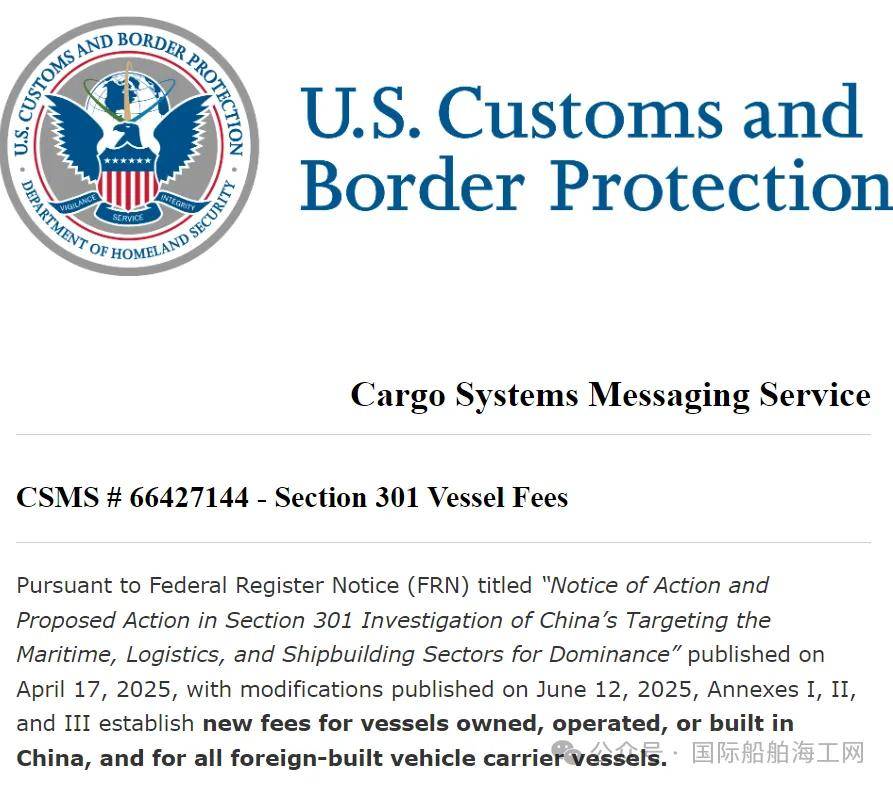
Core Points - The U.S. Customs and Border Protection (CBP) announced new port fees for vessels owned or operated by Chinese entities, effective from October 14, 2025 [1][5] - The fees include $50 per net ton for vessels arriving at U.S. ports owned or operated by Chinese entities, $18 per net ton or $120 per container for vessels built in China, and $14 per net ton for car carriers [1][5] - The responsibility for payment lies with the vessel operators, who must initiate the payment process at least three business days before arrival [5][6] Payment Process - Payments must be made through the U.S. Treasury's secure Pay.gov platform and cannot be paid at the port of entry [6] - The payment form requires detailed information about the vessel and operator, and confirmation of payment must be provided to avoid delays in unloading or customs clearance [5][6] Industry Impact - The new fees are seen as detrimental to globalization and free trade, with various stakeholders, including U.S. shippers and shipping companies, expressing opposition during hearings [6] - In response, China is preparing to amend its international shipping regulations to counteract these measures, including potential retaliatory actions against vessels from countries imposing discriminatory measures [7]
这不是港口费,而是美国发起的“海上围猎”,我们不能当沉默的羔羊!
Sou Hu Cai Jing· 2025-10-07 03:26
Core Viewpoint - The U.S. Customs announced high port fees for Chinese vessels starting October 14, which is perceived as a targeted attack on China's shipping industry [1][3]. Group 1: Impact on Shipping Industry - The U.S. has implemented a "301 clause announcement," categorizing ships into five levels, with Chinese-built and operated ships facing a fee of $2.5 million per port call, increasing annually [3][6]. - Nearly half of the 57,000 commercial ships that transport goods to the U.S. annually are related to China, potentially extracting $70 to $100 billion from the Chinese shipping sector each year [6][9]. - The increased costs for Chinese shipowners will lead to a collapse in competitive advantage, affecting shipping routes and overall industry viability [9][11]. Group 2: Broader Economic Consequences - The repercussions extend to shipbuilding, as foreign shipowners may shift new orders to South Korea and Japan to avoid U.S. fees, jeopardizing China's significant share in global shipbuilding [9][20]. - Financial and insurance sectors will also be impacted, with increased risks leading to higher insurance premiums and potential changes in ship registration to evade U.S. fees [9][11]. - Exporters will face higher shipping costs and longer delivery times, further diminishing their competitiveness in the global market [11][20]. Group 3: Proposed Countermeasures - Experts suggest establishing a "301 Fairness Fund" to counteract U.S. discriminatory fees, which would impose special docking fees on U.S.-built and operated ships at Chinese ports [12][23]. - The proposed measures aim to create a more equitable market environment, encouraging global shipping markets to align with China against U.S. fee structures [12][14]. - China's shipbuilding capacity is robust, with over 1,700 ships built annually, representing 23% of global production, contrasting sharply with the U.S. shipbuilding industry [16][18].