
生态农业

Search documents
63名“科技副总”在安庆企业挂职
Xin Lang Cai Jing· 2026-01-13 02:14
Core Viewpoint - The Anhui Provincial Science and Technology Department has announced the fourth batch of "Technology Vice Presidents," with 11 individuals appointed to technology-oriented enterprises in Anqing, covering various fields such as biomedicine, functional membrane materials, and ecological agriculture [1] Group 1 - The "Technology Vice President" initiative is a flexible talent introduction policy aimed at injecting innovation into enterprises by assigning research talents from universities and research institutions to serve as technical vice presidents [1] - This program has resulted in a total of 63 provincial-level "Technology Vice Presidents" currently serving in enterprises within Anqing [1] - The initiative aims to bridge the gap between industry, academia, and research, enhancing regional innovation efficiency and overall competitiveness, thus contributing to high-quality local development [1] Group 2 - Since the implementation of this policy, Anqing has established a regular selection process for provincial-level technology vice presidents, facilitating a green channel for technology personnel from universities to enter enterprises [1] - A dynamic scheduling mechanism has been set up to monitor the service status of "Technology Vice Presidents," including service duration, joint talent cultivation, platform construction, technical cooperation, and technology achievement transformation [1] - The program emphasizes proactive communication and service support to effectively leverage the innovative leadership role of "Technology Vice Presidents," accelerating the integration of innovation chains, industrial chains, and talent chains [1]
连山入选全国第三批共同现代化试点
Nan Fang Ri Bao Wang Luo Ban· 2026-01-08 08:06
Core Insights - The article highlights the recognition of Lianshan Zhuang and Yao Autonomous County as part of the third batch of national modernization pilot projects, marking it as the only county in Guangdong province to be selected [1] - Lianshan has achieved significant economic development, completing its "14th Five-Year Plan" economic targets a year ahead of schedule, and has established the first agricultural new productivity development center in the province [1] Economic Development - Lianshan has successfully created the Qingyuan Lianshan Industrial Park, achieving a breakthrough in provincial-level ecological industrial park establishment since its founding in 1962 [1] - The county's total area is 1,265 square kilometers, with a registered population of 125,000, of which 65.47% are from ethnic minorities [1] Ecological and Agricultural Initiatives - The county is focusing on ecological agriculture, strengthening the "Lianshan Rice" industry, and has been recognized as a first batch of Guangdong's characteristic agricultural product advantage areas [2] - Lianshan has developed over 20,000 acres of under-forest economy, significantly increasing the annual income of participating farmers by over 30,000 yuan [2] - The county has issued 234,200 tons of carbon reduction credits, generating an additional income of 8.6 million yuan for village collectives [2] Cultural and Tourism Development - Lianshan is leveraging its selection as a provincial-level pilot for cultural industry empowerment in rural revitalization to enhance its brand as the "City of Zhuang and Yao Culture" [2] - The county has developed nine tourism routes recognized at the provincial level, with one case being awarded as one of the top ten nationwide [2] - In 2024, the county expects an 80.51% increase in tourist numbers and a 103.77% increase in tourism revenue compared to 2022 [2] Technological Advancements in Agriculture - Lianshan has established the county agricultural new productivity development center, focusing on seed innovation and promoting over 3000 rare rice varieties [3] - The county aims to promote the planting of seven characteristic rice varieties across 500,000 acres in the Guangdong, Hunan, and Guangxi regions, increasing the average annual income of 32,000 farmers by 8,000 yuan [3] - The "Cloud Lianshan" e-commerce platform has achieved online sales exceeding 150 million yuan for geographical indication products [3] Future Development Plans - Lianshan plans to implement a three-year systematic reform from 2026 to 2028, focusing on green industrialization and creating a modernization development pattern that aligns with the unique characteristics of ethnic regions [3] - The vision includes enhancing cultural tourism, ecological beauty, thriving industries, practical livelihoods, and ethnic harmony [3]
【安康】各展其长 协同并进
Shan Xi Ri Bao· 2026-01-06 23:25
Core Viewpoint - The article highlights the successful implementation of the "Three Links" mechanism in Ankang City, which promotes collaboration among villages and enterprises to enhance agricultural production and market access, leading to improved economic outcomes for local communities [1][2][5]. Group 1: Collaborative Development - Ankang City has initiated a "Party Branch Joint Construction" approach, allowing villages to share resources and develop industries collectively, thus overcoming individual limitations [2][3]. - The partnership between military dam village and a local agricultural technology company has led to the establishment of a comprehensive aquaculture industry chain, significantly increasing income for local residents [3]. - Five villages in the Hengkou demonstration area have formed a joint party branch, facilitating resource sharing and unified planning for a standardized rice industry park, which has attracted tourism [3]. Group 2: Industrial Alliances - Ankang City has formed 336 various industrial alliances or joint bodies, covering key sectors such as selenium-rich food, cultural tourism, and biomedicine, with 894 standardized raw material bases established [5]. - The establishment of a joint party branch in the Jinpo area has led to a cooperative model that integrates planting, processing, and sales, enhancing the collective economy [5]. - Villages in Shiquan County have unified silkworm breeding standards and introduced automated equipment through an industrial alliance, promoting cultural tourism related to sericulture [5]. Group 3: Resource Sharing - The "Three Links" mechanism focuses on optimizing the flow and utilization of development resources, including land and capital, to increase farmers' incomes [6]. - Villages have consolidated idle collective assets for unified development, such as integrating water surface rights for ecological fisheries, resulting in shared profits among villagers [6]. - The sharing of intangible resources like agricultural training and market access has been facilitated through joint platforms, enhancing the capabilities of village organizations [6].
生态文明示范创建位居全国前列 四川再添8个国家级名片
Si Chuan Ri Bao· 2026-01-06 08:45
Core Viewpoint - Sichuan has been recognized for its ecological civilization initiatives, with 8 areas designated as demonstration zones and innovation bases, ranking second nationally and first in the western region [1] Group 1: Recognition and Achievements - Eight locations in Sichuan have been named as 2025 ecological civilization demonstration zones and "Green Mountains and Clear Water are Gold and Silver Mountains" innovation bases, placing Sichuan second in the country and tied for first in the western region [1] - Since the start of the ecological civilization demonstration initiative, Sichuan has established a total of 43 ecological civilization demonstration zones and 14 innovation bases, totaling 57, ranking third nationally and first in the western region [1] Group 2: Environmental Quality and Public Perception - The recognized areas have created a positive demonstration effect across the province, solidifying the foundation for building a beautiful Sichuan, with improved environmental quality and increased public satisfaction regarding ecological conditions [2] Group 3: Institutional Support and Cross-Regional Cooperation - Ganzi Prefecture has become the third entire city (or prefecture) in Sichuan to successfully create an ecological civilization demonstration zone, supported by local regulations and a city-level ecological demonstration creation reward policy [3] - The "Green Ecological Barrier Coordinated Development Pilot Area" created by Xuanhan County and Kaizhou District serves as a national model for cross-provincial ecological governance [4] Group 4: High-Quality Development and Green Economy - Sichuan's demonstration areas are exploring diverse paths for realizing the value of ecological products, contributing to high-quality development [5] - The integration of ecological civilization construction into economic and social development processes is emphasized, with local governments fostering industries such as high-altitude ecological tea and traditional Chinese medicine [5] Group 5: Future Directions - Sichuan aims to maintain its creation advantages during the 14th Five-Year Plan period, linking ecological civilization demonstration creation with the construction of a beautiful Sichuan [6]
警惕以“云养经济”为名的涉农非法集资陷阱
Sou Hu Cai Jing· 2026-01-06 03:34
Core Viewpoint - The rise of "cloud farming economy" has led to illegal fundraising activities that threaten public financial security and disrupt social stability, necessitating regulatory measures to address these issues. Group 1: Issues Identified - The "cloud farming economy" is being misused by criminals who falsely promote projects by linking them to national policies like rural revitalization and smart agriculture, using high return promises to attract investments while evading financial regulations [1] - Criminals often combine real operations with fake scales, initially conducting small-scale legitimate activities to build trust, then inflating project scales and fabricating data to attract more funds, which are misused for high-interest payments and personal expenses [1] - The long production cycles and vulnerability to natural factors in agriculture are exploited by fraudsters to delay payouts, using excuses like "production cycle not reached" or "natural disasters" to buy time for fund misappropriation [2] Group 2: Suggested Governance Measures - Strengthening inter-departmental collaborative regulation is essential, establishing a mechanism involving financial, agricultural, market, public security, and internet information departments to monitor and assess risks associated with "cloud farming economy" projects [3] - Increasing law enforcement efforts against illegal fundraising in the "cloud farming economy" is crucial, focusing on false advertising and fictitious projects, while also educating vulnerable groups through case studies to enhance awareness [3]
我的2026新愿
Xin Lang Cai Jing· 2026-01-05 22:49
Group 1 - The article highlights the vibrant new developments in the Qian Dong region, focusing on the stories of local communities participating in industrial growth and sharing in the benefits [1] - It showcases the various sectors such as ecological industry, ecological agriculture, and ecological tourism, emphasizing the comprehensive rural revitalization efforts in Tongren City [1] Group 2 - The New Year's celebration in Tongren featured a nostalgic parade program, indicating community engagement and cultural activities [2]


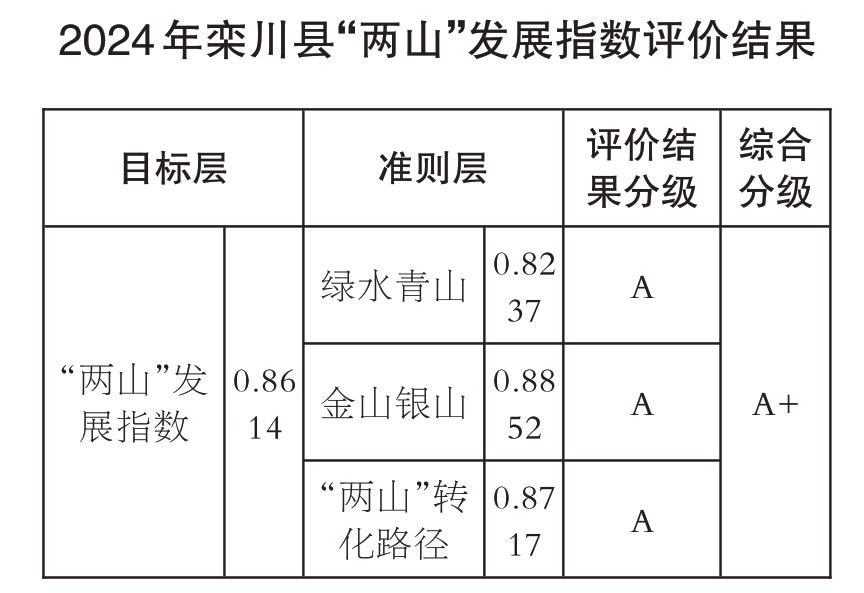
河南省栾川县“两山”发展指数研究项目成果发布
Zhong Guo Huan Jing Bao· 2026-01-04 08:40
Core Insights - The "Two Mountains" development index project in Luanchuan County, Henan Province, successfully passed its final evaluation, achieving an A+ rating, which reflects the county's strong performance in environmental quality, ecological status, and innovation in governance [1][3]. Group 1: Evaluation and Results - The evaluation committee, consisting of seven experts including two academicians, unanimously agreed on the project's success and recognized the comprehensive evaluation level of A+ for Luanchuan County's "Two Mountains" development index [1]. - The index showed an improvement from 0.8014 in 2021 to 0.8614 in 2024, maintaining a rating in the "excellent" range of 0.8-1.0 for four consecutive years, indicating significant achievements in balancing ecological protection with socio-economic development [3]. Group 2: Evaluation Framework - A comprehensive evaluation system was developed, focusing on three core goals: "Green Water and Green Mountains," "Golden Mountains," and "Two Mountains Transformation Path," which includes 12 criteria and various indicators covering multiple dimensions such as environmental quality, resource conservation, and social benefits [2]. - Specific indicators tailored to Luanchuan's dual characteristics as an "ecological highland" and "mining heavy area" were introduced, allowing for a detailed assessment of the county's "Two Mountains" practices [2]. Group 3: Strategic Initiatives - Luanchuan County has implemented a series of initiatives since being designated as a national "Green Water and Green Mountains" practice innovation base in 2018, focusing on ecological industry, tourism, agriculture, and environmental construction [4]. - The county aims to enhance environmental quality, with air quality and surface water consistently meeting high standards, and has achieved 100% safety in drinking water sources [5]. Group 4: Economic and Industrial Development - The county is accelerating the construction of a green economy system, with a focus on transforming ecological value into economic and social value, exemplified by the development of a comprehensive tourism framework and the promotion of high-end homestay industries [6]. - Luanchuan is also optimizing its mining structure and promoting green transformation, achieving significant progress in ecological restoration and resource utilization [6]. Group 5: Institutional Framework and Future Plans - A robust institutional framework has been established to support ecological civilization, including leadership and coordination bodies, and mechanisms for ecological protection and responsibility assessment [6]. - The county plans to use the "Two Mountains" development index as a core tool for ongoing evaluation and policy calibration, aiming to continuously improve ecological quality and broaden the transformation pathways [7].
河北四地入选2025年“绿水青山就是金山银山”实践创新基地
Xin Lang Cai Jing· 2026-01-02 23:42
Group 1 - The Ministry of Ecology and Environment has designated 91 regions as "Green Water and Green Mountains are Gold and Silver Mountains" practice innovation bases, with Hebei Province having a total of 12 such bases [1] - Qinhuangdao's Beidaihe New District is leveraging marine, beach, forest, and wetland resources to explore the transformation path of "Two Mountains," focusing on eco-tourism, medical care, and agriculture [1][2] - The Hebei Huanghua Port Coal Port Area is the first functional area in the province to be named a "Two Mountains" practice innovation base, implementing a smart ecological water system and achieving zero discharge of coal wastewater [2] Group 2 - Chengde's Xinglong County is developing ecological agriculture and exploring five "tourism+" development models to enhance the interaction between ecological environment and economy [2] - The county is promoting the hawthorn industry towards scale, quality, diversification, and branding, while also innovating water ecological value transformation [2] - Hengshui's Wuqiang County is focusing on modern agricultural demonstration and circular economy, converting agricultural waste into eco-fertilizers and green energy [3]
秸秆“变身记”!看广东如何玩转农业“循环魔法”
Nan Fang Nong Cun Bao· 2025-12-31 09:34
Core Viewpoint - The article discusses the transformation of agricultural waste, specifically straw, into valuable resources in Guangdong, showcasing a closed-loop agricultural model that enhances sustainability and economic benefits [2][6][9]. Group 1: Agricultural Transformation - Straw, once considered waste, is now being utilized as animal feed, providing nutritional value for livestock [2][14]. - Livestock waste is processed and returned to the fields as fertilizer, contributing to soil vitality [3][25]. - The closed-loop system connects planting and breeding, where straw is converted into feed, livestock produce waste that becomes fertilizer, and the cycle continues [7][8][31]. Group 2: Economic and Environmental Benefits - The closed-loop model has led to significant cost savings, with annual savings of approximately 14 million yuan in feed costs, 4 million yuan in wastewater treatment costs, and 2 million yuan in reduced fertilizer purchases, totaling over 20 million yuan in economic benefits [45]. - The model has also eliminated the burning of straw and direct discharge of livestock waste, improving environmental conditions in fields and rivers [47][49]. - The integration of advanced agricultural machinery has increased efficiency in straw collection and processing, making the system more sustainable [58][60]. Group 3: Policy and Community Engagement - The development of this model has been supported by local policies, with the establishment of standardized straw feed production bases and investment in agricultural technology [36][38]. - Community involvement has been crucial, with local farmers participating in land leasing and crop rotation, revitalizing previously abandoned land [67][72]. - The initiative has created over 170 jobs, providing additional income for local residents and enhancing community engagement in sustainable practices [64][66]. Group 4: Future Prospects - Research institutions are collaborating with local enterprises to develop customized feed formulations and enhance the nutritional value of straw-based feed [80][83]. - The market potential for "ecological meat" produced from livestock fed with straw is growing, as consumers are willing to pay a premium for healthier, sustainably raised products [85][86]. - The ongoing transformation in Guangdong's agricultural practices represents a shift towards high-quality agricultural development, emphasizing resource utilization and sustainability [92][93].

推动边疆地区更好融入全国统一大市场
Jing Ji Ri Bao· 2025-12-30 22:39
Core Viewpoint - The development of border areas is crucial for national strategy, ecological security, and opening up to the outside world, and should be integrated into China's modernization strategy and regional coordinated development [1] Group 1: Enhancing Regional Advantages - Border areas possess unique geographical and resource advantages that can be transformed into competitive strengths through improved market infrastructure, such as property rights protection and fair competition [2] - Optimizing institutional frameworks can reduce transaction costs and attract capital and technology to flow across regions, enhancing the competitiveness of local enterprises [2] Group 2: Economic Structure Optimization - Integrating border areas into the national unified market can facilitate the flow of advanced production factors, such as technology and high-end talent, which can empower traditional resources and improve overall productivity [2] - This integration is expected to foster new business models and promote economic structure upgrades in border regions [2] Group 3: Expanding Domestic and International Demand - Deep integration into the national market will connect border areas to larger consumer markets, allowing niche industries to develop through industrialization and standardization [3] - Enhancing transportation networks will enable border regions to transition from being endpoints to becoming trade frontiers, effectively linking domestic and international economic cycles [3] Group 4: Challenges and Bottlenecks - Border areas face challenges such as underdeveloped transportation networks and insufficient logistics infrastructure compared to central and eastern regions [4] - The local business environment requires significant improvement, with regulatory inefficiencies and a lack of high-end talent hindering integration into national supply chains [4] Group 5: Strategic Recommendations - Prioritize the development of comprehensive transportation networks to connect border areas with key markets and enhance logistics capabilities [5] - Strengthen market rules and regulations to eliminate barriers to entry and improve the business environment for enterprises [5] - Focus on developing industries that leverage local resources, such as clean energy and cultural tourism, while promoting brand building and regional特色产业 [6] - Optimize the market-based allocation of resources, including talent and capital, to facilitate efficient cross-regional flows [6]