黑电

Search documents
家电行业财报综述暨 11 月投资策略:白电及小家电板块增长良好,龙头韧性充足
Guoxin Securities· 2025-11-11 10:00
Core Insights - The home appliance industry shows resilient growth with a 3.6% year-on-year revenue increase in Q3, totaling 366.3 billion yuan, despite external pressures from reduced government subsidies and high export bases [13][14][22] - The overall net profit for the industry increased by 4.4% year-on-year, reaching 30.1 billion yuan, with a slight improvement in net profit margin by 0.1 percentage points [13][14][22] Segment Analysis White Goods - The white goods segment reported a revenue of 268.7 billion yuan in Q3, reflecting a 5.0% year-on-year growth, with a net profit margin of 9.5% [30][31] - Major players like Midea and Haier showed strong performance, with Midea's revenue growing by 9.9% and Haier's by 9.5% [33][34] Kitchen Appliances - The kitchen appliance segment experienced a revenue decline of 4.8% in Q3, totaling 5.96 billion yuan, with a net profit margin of 8.4% [37][44] - Traditional kitchen appliance companies like Boss and Vanward maintained relatively stable performance, while integrated stove manufacturers faced significant pressure [43][44] Black Goods - The black goods segment saw a revenue decrease of 3.6% in Q3, amounting to 47.29 billion yuan, but net profit increased by 41.9% to 1.4 billion yuan [45][53] - Companies like Hisense maintained stable growth, benefiting from balanced domestic and international operations [52][53] Small Appliances - The small appliance segment achieved a revenue growth of 6.3% in Q3, reaching 30.62 billion yuan, with a net profit margin of 6.7% [54][59] - Emerging categories within small appliances, such as robotic vacuum cleaners, contributed significantly to revenue growth [59] Lighting and Components - The lighting and components segment reported stable revenue of 13.73 billion yuan, with a slight year-on-year increase of 0.1%, but faced profit pressure with a net profit margin of 4.6% [3][28]






家电行业财报综述暨11月投资策略:白电及小家电板块增长良好,龙头韧性充足
Guoxin Securities· 2025-11-11 07:38
Core Insights - The home appliance industry shows resilient growth with a 3.6% year-on-year revenue increase in Q3, totaling 366.3 billion yuan, despite a slowdown due to the reduction of national subsidies and high export bases [13][14][22] - The overall net profit for the industry increased by 4.4% year-on-year, reaching 30.1 billion yuan, with a slight improvement in net profit margin by 0.1 percentage points [13][14][22] Segment Analysis White Goods - The white goods segment reported a revenue of 268.7 billion yuan in Q3, reflecting a 5.0% year-on-year growth, with a net profit margin of 9.5% [30][31] - Major players like Midea and Haier showed strong performance, with Midea's revenue growing by 9.9% and Haier's by 9.5% [33][34] Kitchen Appliances - The kitchen appliance segment experienced a revenue decline of 4.8% in Q3, totaling 5.96 billion yuan, with a net profit margin of 8.4% [37][44] - Traditional kitchen appliance companies like Boss and Vanward maintained relatively stable performance, while integrated stove companies faced significant pressure [43][44] Black Goods - The black goods segment saw a revenue decrease of 3.6% in Q3, amounting to 47.29 billion yuan, but net profit increased by 41.9% to 1.4 billion yuan [45][53] - Companies like Hisense maintained stable growth, benefiting from balanced domestic and international operations [52][53] Small Appliances - The small appliance segment achieved a revenue growth of 6.3% in Q3, reaching 30.62 billion yuan, with a net profit margin of 6.7% [54][59] - Emerging categories within small appliances contributed significantly to revenue growth, with companies like Roborock and Xiaobear showing strong performance [59] Lighting and Components - The lighting and components segment reported stable revenue of 13.73 billion yuan in Q3, with a slight decline in net profit margin to 4.6% [3][28] - The segment faced challenges due to declining downstream demand and tariff impacts [3][28] Investment Recommendations - Recommended stocks include Midea Group, Haier, TCL, and Gree in the white goods sector, while Hisense is suggested for black goods, and Roborock and Xiaobear for small appliances [4][5] Key Data Tracking - The home appliance sector's relative return in October was +0.70%, indicating positive market performance [3][4] - Raw material prices showed increases in October, with copper and aluminum prices rising by 5.7% and 7.6% respectively [3][4]

家用电器行业投资策略报告:内销承压增速回落,外销改善自主品牌更优-20251107
CAITONG SECURITIES· 2025-11-07 12:24
Core Insights - The home appliance industry is experiencing a decline in domestic sales growth while external sales are improving, with a focus on self-owned brands [5][6][11] Industry Overview - The home appliance sector reported a revenue of 12,678 billion yuan and a net profit of 955 billion yuan for the first three quarters of 2025, reflecting a year-on-year growth of 6.4% and 10.2% respectively [11][12] - The overall profitability of the industry remains stable, with a gross margin of 24.3% and a net profit margin of 7.5% [11][12] White Goods Sector - In Q3 2025, the domestic sales growth of air conditioners, refrigerators, and washing machines showed a decline, with external sales down by 13%, 5%, and 1% respectively [6][16] - The revenue and net profit growth for key white goods companies in Q3 2025 was 9.0% and 2.7% respectively, indicating a slowdown compared to Q2 2025 [26][28] Small Appliances Sector - The small appliances segment saw rapid growth in cleaning appliances, with a year-on-year revenue increase of 21.5%, while traditional small appliances maintained a stable growth rate of 5.6% [35][37] - Key players like Ecovacs and Roborock reported significant revenue growth of 29.3% and 60.7% respectively [35][37] Black Goods Sector - The black goods sector experienced a revenue decline of 4.5% in Q3 2025, but net profit increased by 94.4%, showing a significant recovery from the previous quarter [50][52] - Companies like XGIMI led the industry with a revenue growth of 2.9% and a net profit increase of 79.7% [50][51] Kitchen Appliances Sector - The traditional kitchen appliance segment reported a slight revenue decrease of 0.7% but a net profit increase of 2.0%, indicating an improvement compared to Q2 2025 [59][60] - Boss Electric showed strong performance with a revenue growth of 1.4% and a net profit increase of 0.2% [59][60]

家电行业 2025 年三季报总结:国补+自补引领家电消费,关税影响缓和
Shenwan Hongyuan Securities· 2025-11-06 14:11
Investment Rating - The report maintains a positive outlook on the home appliance industry, particularly recommending investments in the white goods sector due to its low valuation, high dividends, and stable growth potential [3][4][5]. Core Insights - The home appliance industry experienced a revenue growth of 4.57% year-on-year in Q3 2025, with total revenue reaching 356.1 billion yuan. Net profit increased by 3.49% to 30.158 billion yuan [3][20]. - The report identifies three main investment themes: 1) White goods benefiting from favorable real estate policies and trade-in incentives; 2) Export-oriented companies like Ousheng Electric and Dechang Co. showing stable profitability; 3) Core components suppliers like Huaxiang Co. and Shun'an Environment poised for growth due to increased demand [3][4][5]. Summary by Sections 1. Industry Performance Overview - The home appliance sector underperformed compared to the broader market, with an 8.3% increase from July to September 2025, lagging behind the 17.9% rise of the CSI 300 index [9][10]. 2. Q3 2025 Revenue and Profit Growth - The home appliance industry saw a total revenue of 356.1 billion yuan in Q3 2025, marking a 4.57% increase year-on-year. The net profit for the same period was 30.158 billion yuan, reflecting a 3.49% growth [3][20]. 3. Subsector Performance 3.1 White Goods - The white goods sector achieved a revenue of 254.924 billion yuan, up 5.64% year-on-year, with a net profit of 25.049 billion yuan, a growth of 3.42% [40][41]. 3.2 Kitchen Appliances - The kitchen appliance sector reported a revenue decline of 6.38% to 7.257 billion yuan and a net profit drop of 18.66% to 548 million yuan [47][48]. 3.3 Small Appliances - Small appliances saw a revenue increase of 11.36% to 36.739 billion yuan, with a net profit rise of 2.13% to 2.201 billion yuan [53][54]. 3.4 Black Goods - The black goods sector experienced a revenue decline of 4.02% to 26.898 billion yuan and a significant net profit drop of 28.12% to 332 million yuan [59][61]. 3.5 Components - The components sector reported a revenue increase of 6.85% to 30.238 billion yuan and a net profit surge of 29.07% to 2.027 billion yuan [64][65]. 4. Key Investment Targets - The report highlights key companies for investment, including Midea, Haier, and Gree in the white goods sector, as well as Ousheng Electric and Shun'an Environment in the components sector [3][4][5]. 5. Investment Analysis - The report emphasizes the potential for growth in the home appliance sector driven by domestic trade-in policies and recovering overseas demand, suggesting a favorable outlook for the industry in 2025 [4][5].
家电行业25年三季报总结:分化趋势延续,龙头经营稳健
INDUSTRIAL SECURITIES· 2025-11-05 11:07
Group 1 - The core view of the report indicates that the home appliance industry demonstrated resilience in Q3 2025, with revenue and profit showing steady growth, with a year-on-year revenue increase of 2.6% and a net profit increase of 4.8% [3][15][18] - The white goods sector continued to show stable growth, with a year-on-year revenue increase of 3.7%, while the kitchen appliances and lighting sectors saw a narrowing decline [3][15][25] - The small appliances sector experienced a year-on-year revenue growth of 6.4%, with notable performance from companies like Bear Electric and Beiding, which benefited from low base effects and improved internal operations [3][39] Group 2 - In the white goods segment, major companies such as Gree Electric and Midea Group reported mixed results, with Gree's revenue declining by 15.1% while Midea's increased by 9.9% [25][26] - The profitability of the white goods sector remained stable, with a year-on-year net profit increase of 3.5% and a slight decline in net profit margin by 0.1 percentage points [29][30] - The small appliances sector showed internal performance differentiation, with leading companies like Ecovacs and Roborock achieving significant revenue growth of 29.3% and 60.7% respectively [39][40] Group 3 - The black goods sector maintained stable volume and price increases, with companies like Hisense and Skyworth reporting revenue growth of 2.7% and 9.1% respectively [3][15] - The overall profitability in the black goods sector improved, with a year-on-year net profit margin increase of 0.7 percentage points for Hisense [3][18] - Investment recommendations suggest focusing on leading companies in the white goods sector such as Midea Group and Haier, as well as the black goods leader Hisense, due to their stable operational performance and dividend value [3][39]

家电板块25年三季报业绩前瞻
2025-10-19 15:58
Summary of Key Points from the Conference Call Industry Overview - The home appliance industry is experiencing a shift in competition dynamics, particularly in the white goods sector, with a notable increase in the proportion of mid-to-high-end consumption driven by national subsidies [1][2][4] - Price competition for flow models has eased, returning to levels seen in April, likely due to the seasonal decline in air conditioning demand [1][2][4] - Consumer demand is currently weak, with a notable impact from the expiration of subsidies in various regions, particularly in the southwest and eastern areas of China [2][3] Company Performance Midea Group - Midea's revenue growth is expected to be in the high single digits, around 10%, but profit growth may lag due to the consolidation of assets [1][6] - The company demonstrates strong operational resilience, effectively managing inventory to adjust to market conditions [6] Haier - Haier's revenue growth is projected at 7%-8%, with double-digit profit growth anticipated due to channel reforms and reduced expense ratios [1][7] - The Casarte brand continues to perform well under national subsidy policies, contributing positively to profitability [7] Hisense - Hisense is expected to see slight increases in both revenue and profit, although its central air conditioning business faces challenges [1][8] - The company has experienced a rebound in installation card growth since July, indicating a stabilization in price competition [2][4] TCL - TCL's revenue is expected to remain flat compared to last year, with profit also stabilizing due to high base effects from the previous year [1][9] Hailong Cold Chain - Hailong Cold Chain's revenue is expected to match the first half of 2025, with strong growth in refrigeration and exports [1][10] Market Dynamics Mini LED Technology - The penetration rate of Mini LED technology has slightly decreased, influenced by subsidy reductions and cost adjustments in electronic modules [1][11] - Despite this, product iterations are expected to support higher selling prices [11] Small Appliances - The small appliance sector is witnessing significant growth, particularly in cleaning devices like robotic vacuums, with companies like Stone Technology reporting an 80% revenue growth and a 50% profit increase [1][14] - The kitchen small appliance market remains stable, with companies like Bear Electric projecting a 13% revenue increase, while New Bao is expected to face negative growth [1][15][16] Export Market - The export market is experiencing volatility, particularly in Europe and Latin America, with the latter entering its peak air conditioning sales season [3][5] - Chinese companies are shifting production to countries like Egypt and Thailand to mitigate tariff pressures [3][5] Future Outlook - The small appliance industry is expected to continue evolving, focusing on cost control and innovation to drive growth [1][17] - New product categories, such as washing robots, are anticipated to become significant growth drivers [17]


追踪系列之一:全球黑电需求回落,中企份额持续提升
Changjiang Securities· 2025-10-15 14:23
Investment Rating - The report maintains a "Positive" investment rating for the home appliance industry [12]. Core Insights - The global TV market is experiencing a dual decline in both volume and revenue in Q2 2025, with a year-on-year shipment decrease of 2.12% to 47.09 million units and a revenue drop of 10.18% to $20.79 billion, primarily due to falling global average prices and weak demand in mature markets. However, emerging markets show resilient growth, with the Chinese market benefiting from supportive policies [4][10]. - Chinese brands are closing the gap with South Korean leader Samsung, with shipment share differences narrowing to within 3 percentage points. However, there remains a significant gap in premium pricing capabilities [8][10]. - Mini LED technology is becoming a key structural growth driver in the global TV market, with a shipment increase of 162.96% year-on-year, leading to a global penetration rate of 5.90%, dominated by Chinese brands [9][10]. Summary by Sections Market Conditions - In Q2 2025, the global TV market shows a dual decline in shipments and revenue, with shipments down 2.12% to 47.09 million units and revenue down 10.18% to $20.79 billion. The global average price fell by 8.23% to $441.49, indicating a phase of adjustment due to price sensitivity among consumers [21][24]. Competitive Landscape - The market share gap between Chinese brands and South Korean giants like Samsung is narrowing, with Samsung at 16.9%, TCL at 14.7%, and Hisense at 14.3%. However, Samsung's average price remains significantly higher at $741.91 compared to Chinese brands [8][10]. Structural Changes - Mini LED technology is rapidly gaining traction, with shipments reaching 2.78 million units in Q2 2025, a year-on-year increase of 162.96%. China's penetration rate leads globally at 14.93% [9][10]. Investment Recommendations - The report suggests that despite the current phase of adjustment in the industry, Chinese brands like TCL and Hisense are expected to continue their resilient growth, supported by emerging market demand and strategic positioning in high-end and large-screen segments [10][13].
国联民生证券:白电内销保持稳健 扫地机拥抱高景气
智通财经网· 2025-09-29 05:52
Group 1: Core Insights - The report from Guolian Minsheng Securities indicates that the domestic sales of air conditioners, refrigerators, and washing machines are expected to grow by +5%, -1%, and remain flat year-on-year in Q3 2025, respectively, showing a decrease compared to Q2 [1] - The online retail sales of robotic vacuum cleaners are projected to increase by +73% year-on-year in July-August 2025, driven by provincial subsidies and the introduction of new products [3] - The overall performance of the white goods sector is expected to show steady growth in domestic sales, while external sales are showing marginal improvement, particularly for leading brands like Haier [2] Group 2: Market Trends - The average selling prices for air conditioners, refrigerators, and washing machines in July-August 2025 are expected to change by -1%, +1%, and +2% year-on-year, indicating a stable pricing environment [1] - The global market for robotic vacuum cleaners is experiencing significant growth, attributed to the combination of high-end Chinese brands lowering prices and consumers upgrading their products [3] - The TV market is seeing a decline in sales, with internal and external volumes down by -7% and -6% year-on-year, but there is an improvement in product structure with a rise in high-end MiniLED products [4] Group 3: Future Outlook - The resilience of leading brands is expected to exceed expectations, with a projected return to mid-single-digit growth rates after short-term fluctuations [5] - The cleaning appliance sector is anticipated to achieve high double-digit revenue growth in Q3 2025, supported by the performance of leading companies like Roborock and Ecovacs [3] - The overall valuation of the sector has declined to near historical lows, with expectations for improved shareholder returns and increased dividend rates [5] Group 4: Recommended Stocks - The report recommends continued investment in white goods companies such as Haier Smart Home, Midea Group, Hisense Home Appliances, and Gree Electric, as well as black goods company Hisense Visual and cleaning appliance companies Roborock and Ecovacs [6]

暖通空调跟踪:国补退坡零售下滑,十年包修开启“品质战”
Yin He Zheng Quan· 2025-09-23 06:25
Investment Rating - The report maintains a "Buy" rating for the home appliance industry [1] Core Viewpoints - The home appliance industry is experiencing a shift from a "price war" to a "quality war," driven by Xiaomi's announcement of a 10-year free warranty for its air conditioners, which aims to enhance consumer confidence in product quality [3][41] - The impact of national subsidies is significant, with a projected increase in retail sales due to the "old-for-new" policy, which is expected to contribute to a 29.9% year-on-year growth in retail sales from September to December 2024 [5][19] - The air conditioning market is facing challenges due to a high base from the previous year and the reduction of national subsidies, leading to cautious production forecasts for the upcoming months [3][22] Summary by Sections 1. Domestic Sales and Export Trends - The "old-for-new" policy has positively impacted domestic sales, with a notable increase in retail sales of home appliances [5] - In August 2024, air conditioning domestic sales volume reached 7.737 million units, a year-on-year increase of 1.2%, driven by high temperatures [3][22] - Export volumes for air conditioners are expected to decline, with a forecast of approximately 9.581 million units for the entire year 2025, a year-on-year decrease of 1% [48] 2. Air Conditioning Industry Growth - The air conditioning market is experiencing a decline in retail sales, with online and offline sales showing significant year-on-year decreases in September 2025 [3][22] - The average retail price of air conditioners has shown signs of recovery after a price war, with offline prices rising to 4,301 yuan per unit in September 2025 [41][42] - The air conditioning industry is transitioning towards a focus on quality and service, as evidenced by Xiaomi's extended warranty offering [3][41] 3. Valuation and Investment Recommendations - The home appliance sector is currently undervalued, with a price-to-earnings ratio of 15.3, below the historical average of 17.3 [74] - Investment recommendations include companies with strong dividend yields and successful digital transformation, such as Midea Group and Haier Smart Home [76] 4. Heat Pump Industry Development - The heat pump industry is expected to benefit from favorable policies, with a projected market space of 100 billion yuan [65] - Exports of heat pumps are showing signs of recovery, with a year-on-year growth of 21.6% in the first seven months of 2025 [65]
智能科技领跑者的中场战事:中高端战略夯实“基本盘”,“创新”打开增长天花板
华尔街见闻· 2025-09-15 10:42
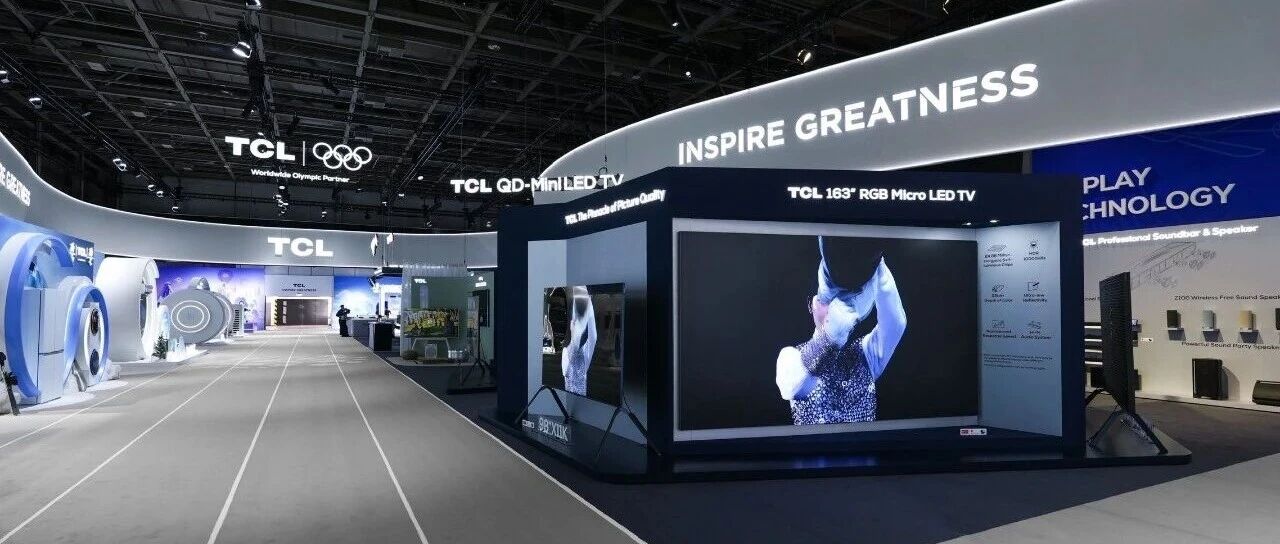
Core Viewpoint - TCL Electronics has demonstrated strong performance in the context of a slowing global black electronics market, achieving quality growth in its core business and significant innovation breakthroughs, leading to a 20.4% year-on-year revenue increase to HKD 54.78 billion in the first half of 2025 [1][2]. Financial Performance - In the first half of 2025, TCL Electronics reported a post-tax profit of HKD 1.05 billion, a 60.5% increase year-on-year, and an adjusted net profit attributable to shareholders of HKD 1.06 billion, up 62.0% year-on-year [1]. - The company's television business revenue grew by 9.4% to HKD 28.35 billion, with a gross margin increase of 0.5 percentage points to 15.9% [5]. Strategic Focus - TCL Electronics is committed to a "high-quality development" strategy, aiming for long-term goals where net profit growth outpaces revenue and sales growth [2]. - The company is focusing on a "mid-to-high-end + globalization" strategy to navigate the current market uncertainties and enhance its competitive position [2]. Market Trends - The TV market is experiencing structural growth trends towards larger and higher-end products, with a significant increase in demand for Mini LED technology [3][4]. - The domestic TV market has surpassed a 50% penetration rate for large screens, while the overseas market is gradually catching up, presenting opportunities for TCL [3]. Innovation and Technology - TCL Electronics is exploring Micro LED technology and AI to enhance operational efficiency and expand into new markets such as smart glasses and companion robots [2][9]. - The company launched the 163-inch Micro LED television X11H Max, featuring advanced specifications that enhance picture quality [7]. Competitive Position - TCL Electronics has solidified its position as the second-largest global TV manufacturer, with a 7.6% year-on-year increase in global TV shipments to 13.46 million units in the first half of 2025 [5]. - The company leads the global market in Mini LED TV shipments, showcasing its technological advancements and market responsiveness [5]. Future Outlook - The market for companion robots is projected to reach USD 117.3 billion by 2033, with a CAGR of approximately 18%, indicating significant growth potential for TCL's innovations in this area [13]. - TCL's strategic focus on AI and AR/XR technologies is expected to open new growth avenues, enhancing its brand presence globally [14].