
AI产业链

Search documents
【广发宏观郭磊】经济温差缩小,资产叙事收敛:2026年宏观环境展望
郭磊宏观茶座· 2025-11-24 23:50
Group 1 - In 2025, global markets are influenced by several macro narratives, including the long-term weakening of dollar credit, restructuring of global supply chains, gold as a new anchor for the monetary system, AI as the infrastructure for a new industrial transformation, and non-ferrous metals as the new oil [1][8][36] - Domestic assets in 2025 are driven by fundamentals such as external demand and new industries, while high-yield assets are concentrated in non-ferrous metals and AI-related sectors [1][9][10] - The existence of a "temperature difference" in the economy indicates that new industrial investments are concentrated in emerging sectors, while traditional sectors show weaker performance [1][10] Group 2 - In 2026, a "mirror" relationship may form, with global narratives expected to converge, leading to reduced uncertainty in the global trade environment [2][11] - The expected recovery in investment gaps during the first year of the 14th Five-Year Plan may stabilize the real estate sector and improve consumption rates [2][13] - The profitability of large-scale industrial enterprises is projected to improve, with an expected increase in profit growth from approximately 3% to 6.6% [3][14] Group 3 - The transition of macroeconomic policy from "counter-cyclical" to "expanding domestic demand" is expected to enhance fundamental pricing power [3][15][16] - The combination of converging narratives and reduced temperature differences will impact asset pricing characteristics, with a shift from forward pricing to a combination of near and far pricing for commodities [4][17] - The normalization of risk preferences among residents will lead to an increase in rental yield pricing power in the real estate sector [4][18] Group 4 - The next round of narratives may include themes such as industrialization in southern countries, the second wave of globalization for Chinese enterprises, AI scenario applications, and a new quality of consumption [5][20] - The traditional investment research framework faces challenges from these narratives, necessitating an optimization of the investment research framework to incorporate narrative analysis [5][21] Group 5 - Key assumptions for economic judgment in 2026 include a moderate recovery in investment gaps, improvement in consumption, stable export fundamentals, and a reduction in downward pressure on the real estate sector [6][22][23][26] - The projected economic growth for 2026 is approximately 4.9% in real terms and 5.1% in nominal terms, indicating a stable growth outlook [6][28]


暴跌后!A股的天真变了
Sou Hu Cai Jing· 2025-11-24 00:14
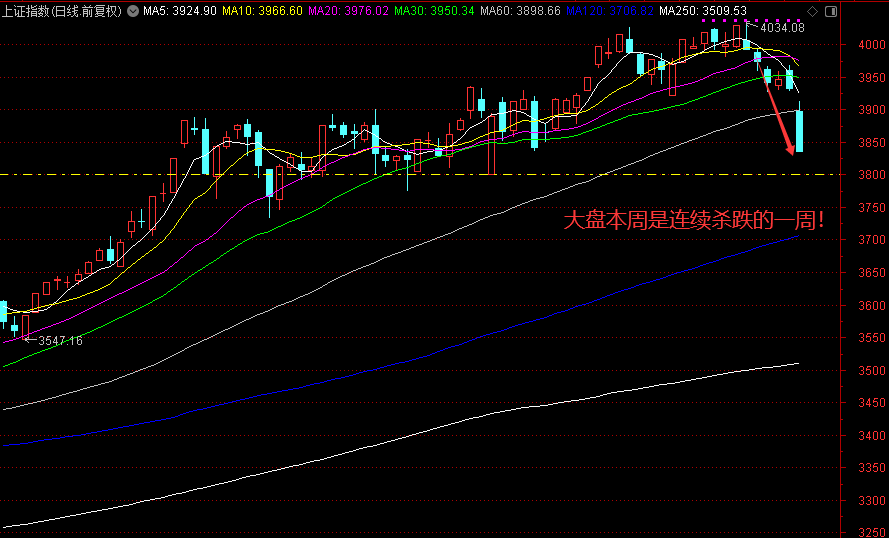
大盘在4000点三次磨蹭后,果然又是横久必跌、再次败阵下来。而本以为周一黑的,但没想的是一周黑,盘面个股从周二到周 五四日,每日都差不多8成个股杀跌,周五更是超过九成的杀跌,且还是暴风雨的重挫。 而经过周五的杀跌,很多人的心态都炸了。龙轩身边有部分朋友就很沮丧,有的说把全年的利润都打没了、有的则直接说这轮 不是牛市、还有人被套较深,咨询龙轩怎么办? 对此,龙轩之前就说这是结构性的牛市,因此对于本周的持续杀跌,我们要分开来看。另外就是仓位的问题,只要不是重仓 的,其实本周这种级别的杀跌根本就是小儿科。 首先科技股方面,这是市场天,而经过周五暴跌后,龙轩认为天已经变了。主要导火线之一就是美股科技也在全线回落,且像 软银等机构都开始全线清仓英伟达,说明机构对后市科技的谨慎,美股闪迪周四更是一夜暴跌20%! 但当前这些板块最大的问题是,阶段性涨幅巨大,很多个股从4月贸易战地点算起,都是大几倍、甚至十几倍的涨幅,这把未 来几年的业绩预期都打满了。 而2020-2021新能源迎来戴维斯双击的时候,也是出现如此爆发的。当时机构也普遍看好业绩,但过后大家都知道迎来了杀估 值,然后只有宁王、阳光电源等少数龙头今年走出。当前的A ...
A股:大涨前的最后砸盘,大家做好准备,不出意外,周一,股市会迎来新行情
Sou Hu Cai Jing· 2025-11-23 18:04
当前这轮下跌,从市场结构和资金行为角度看,更接近于: 在阶段性牛市框架下,高位品种的集中出货 + 指数维稳下的结构性换手。 不是典型的流动性危机式崩盘,而是: 通过"指数护住、个股先跌"的方式, 实现高位筹码向后手资金、尤其是中小投资者的有序转移, 为后续一轮指数级别的反弹乃至趋势延伸,腾出"空间"和"换手基础"。 "最后砸盘"更多是盈利兑现+筹码再分配的技术动作,而不是趋势逆转的根本性信号。 二、市场表象与核心差异:指数没怎么跌,持股体验很差 1. 指数层面:被权重股"托着"走 最近一段时间,上证指数在银行、保险、白酒等权重板块的轮番拉升下,表面波动有限: 银行、保险:估值在1倍PB附近,处于"政策维稳+高股息"功能性角色; 白酒、部分消费龙头:在盈利相对稳定+情绪修复下,阶段性担当"护盘工具"。 结果是: 指数回撤不深,看上去"风险不大"; 但权重护盘掩盖了中小市值、高弹性品种的持续阴跌。 2. 个股层面:提前下跌 + 指数跌时再补刀 这次大家难受在两点: 很多个股从 9 月起就开始阴跌,尤其是高位的科技资产; 当指数这几天开始补跌时,个股并不是提前跌完,而是"继续大跌"——体验远比指数曲线惨烈。 市场结 ...

【广发宏观郭磊】经济温差缩小,资产叙事收敛:2026年宏观环境展望
郭磊宏观茶座· 2025-11-23 09:08
Group 1 - The core narrative for the global market in 2025 includes the long-term weakening of the US dollar credit, restructuring of global supply chains, gold as a new anchor for the monetary system, AI as the infrastructure for a new industrial transformation, and non-ferrous metals as the new oil [1][8][36] - Domestic assets in 2025 are driven by fundamentals such as external demand and new industries, while high-yield assets are concentrated in non-ferrous metals and AI-related sectors [1][9][10] - The existence of a "temperature difference" in the medium term indicates that new industrial investments are concentrated, with emerging sectors showing high prosperity, while traditional sectors are weak [1][10] Group 2 - In 2026, a "mirror" relationship may form, with global narratives expected to converge, leading to reduced uncertainty in the global trade environment [2][11] - The expected recovery in investment gaps during the first year of the 14th Five-Year Plan may stabilize the real estate sector and improve consumption rates [2][13] - The profitability of industrial enterprises is projected to improve, with an expected increase in profit growth from approximately 3% to 6.6% [3][14] Group 3 - The transition of macroeconomic policy from "counter-cyclical" to "expanding domestic demand" is expected to enhance fundamental pricing power [3][15][16] - The combination of converging narratives and reduced temperature differences will impact asset pricing characteristics, with a shift from forward pricing to a combination of near and far pricing for commodities [4][17] - The normalization of risk preferences among residents will lead to an increase in rental yield pricing power in the real estate sector [4][18] Group 4 - The next round of narratives may include themes such as industrialization in southern countries, the second wave of globalization for Chinese enterprises, AI scenario applications, and a new quality of consumption [5][20] - The traditional investment research framework faces challenges from these narratives, necessitating an optimization of the investment research framework to incorporate narrative analysis [5][21] - Key assumptions for economic judgment in 2026 include a moderate recovery in investment gaps, improvement in consumption, stable export fundamentals, and a stabilization of real estate decline [6][22][23][26]

申万宏源策略一周回顾展望:调整是也只是“怀疑牛市级别”
Shenwan Hongyuan Securities· 2025-11-22 11:49
Group 1 - The report indicates that the current adjustment phase is characterized as a "doubtful bull market level," with the AI industry chain experiencing a significant trend that has not yet ended, while smaller fluctuations are present and the cost-effectiveness of large trends is temporarily insufficient. This situation resembles historical patterns observed in early 2014 with the ChiNext, early 2018 with food and beverage, and early 2021 with new energy [4][6][7] - The "bull market two-stage theory" remains unchanged, confirming the high-level area of the bull market 1.0 phase. The transition from bull market 1.0 to 2.0 is expected to occur in the first half of 2026, with a focus on the accumulation of conditions for a comprehensive bull market and adjustments in industry trends to digest cost-effectiveness issues [6][7][9] - The report emphasizes that while adjustments are occurring, it is crucial to maintain a firm belief in the bull market. The adjustment phase is seen as a potential bottom, particularly when it aligns with the core track's bull-bear boundary [6][7] Group 2 - The report expresses optimism for the spring market following the adjustment, highlighting that achieving the 2035 medium-developed country goal requires maintaining a high economic growth rate. The economic performance in Q3 2025 was weak, and December 2025 is identified as a critical window for laying out economic policies for 2026, with the possibility of an early verification of the "policy bottom" [7][8] - Two key clues for the spring market are discussed: first, the management's emphasis on economic growth and the potential early verification of the "policy bottom"; second, the mid-term upward trend of the technology industry remains unchanged, with the AI industry still in "stage 3" and moving towards "stage 4," indicating non-linear growth in industry profits [8][9] - The report anticipates that the transition from bull market 1.0 to 2.0 will favor high-dividend defensive strategies, with the actual improvement in economic sentiment catalyzing a breakthrough in cyclical stocks, while the technology industry's trend and global influence of manufacturing will be the main lines of the bull market [9] Group 3 - The report outlines expectations for the 2026 industry style rhythm, indicating that cyclical stocks may serve as the foundational assets for the spring market, with basic chemicals and industrial technology being highlighted as higher elasticity directions. The technology sector is expected to rebound, focusing on innovative pharmaceuticals and national defense industries [9][10] - Specific sectors such as AI computing power, storage, energy storage, and robotics are anticipated to have rebound opportunities in the spring [9][10] - The report includes quantitative sentiment indicators and ETF tracking data, providing insights into market dynamics and investor sentiment [2][17]
A股关键时刻!八大券商最新研判!
天天基金网· 2025-11-20 08:38
Core Viewpoint - The article discusses the optimistic outlook for China's economy and A-share market in 2026, highlighting the potential for high-quality development and the importance of sectors such as technology, cyclical industries, and manufacturing [3][5][11]. Economic Outlook - Multiple institutions predict that China's economy will maintain resilience and enter a new phase of high-quality development in 2026, marking the beginning of the "15th Five-Year Plan" [5]. - Macro policies are expected to shift from extraordinary counter-cyclical adjustments to a more normalized approach, focusing on technological self-reliance and the cultivation of new productive forces [5]. - External demand is anticipated to remain robust, while internal demand will rely on fiscal efforts to stimulate investment in human capital and consumer supply [5]. A-share Market Trends - The A-share market has been on a rising trend since 2025, with active trading observed. There are differing opinions on whether this upward trend will continue in 2026, with some institutions expecting a comprehensive market rally while others foresee a slowdown in growth [7][8]. - By mid-2026, it is expected that the "policy bottom, market bottom, and economic bottom" will successively appear, potentially triggering a comprehensive market rally [8]. - The overall sentiment is that the A-share market's upward momentum is far from over, with expectations that it may challenge levels not seen in the past decade [8]. Sector Focus - Key sectors to watch in 2026 include technology, cyclical industries, and manufacturing, with specific attention to areas such as AI, robotics, energy storage, photovoltaics, pharmaceuticals, and military industries [11]. - Institutions suggest that resource products may emerge as a new mainline direction following technology, driven by global monetary easing, supply-demand gaps, and domestic inventory replenishment [11]. - The TMT (Technology, Media, and Telecommunications) and advanced manufacturing sectors are expected to remain central to market dynamics, with potential for significant growth [11]. Capital Flow Insights - Residents are identified as the most significant source of funds in the A-share market, with current trends resembling those seen in 2015. High-risk preference funds have entered the market rapidly, while medium-risk preference funds may represent the next incremental growth phase [9].





申万宏源傅静涛:2026年春季前科技成长至少还有一波机会
Guo Ji Jin Rong Bao· 2025-11-19 11:39
Core Viewpoint - The 2025 technology structural bull market is considered "Bull Market 1.0," with a potential peak in spring 2026, followed by a comprehensive bull market termed "Bull Market 2.0" in the second half of 2026 [1] Group 1: Market Trends - The AI industry trend is expected to deepen, but the cost-effectiveness of the A-share AI industry chain is deemed low, similar to previous years in 2014, 2018, and 2021 [1] - A mid-2026 supply clearing in midstream manufacturing is anticipated, with a notable increase in sectors where capacity growth is lower than demand growth [1] - The sequence of "policy bottom, market bottom, economic bottom" is expected to occur, with mid-2026 potentially validating the "policy bottom" [1] Group 2: Investment Recommendations - Investors are advised to focus on three main lines in 2026: 1. Recovery trading sectors such as cyclical Alpha, basic chemicals, and industrial metals 2. Technology industry trend sectors including AI industry chain, humanoid robots, energy storage, photovoltaics, pharmaceuticals, and military industry 3. Sectors related to manufacturing influence enhancement, such as chemicals and engineering machinery [2] - The transition from Bull Market 1.0 to 2.0 is characterized by high dividend defensiveness, with the latter stage driven by cyclical policies and technological trends [2]
申万宏源:明年年中或迎全面行情,看好科技、制造业板块
Zhong Guo Zheng Quan Bao· 2025-11-18 12:47
Core Viewpoint - The 2026 Capital Market Investment Conference held by Shenwan Hongyuan suggests that 2026 will be a year of comprehensive reform and development, with a potential full-scale launch of the A-share market by mid-2026, driven by trends in the technology industry and the enhancement of manufacturing global influence [1][4]. Group 1: Economic Growth and New Drivers - New factors and assets are becoming the new drivers of economic growth, with knowledge, technology, data, computing power, and talent leading the way [2]. - The "14th Five-Year Plan" period is expected to be a critical phase for comprehensive reform, with 2026 marking the acceleration of these reforms [2][3]. - The nominal GDP recovery in 2026 is anticipated to improve corporate profitability, with service demand showing greater elasticity [2]. Group 2: Reform and Opportunities - The focus for 2026 will be on leveraging reforms for dividends, emphasizing systemic and effective reforms, particularly in the implementation of "Artificial Intelligence+" initiatives [3]. - Key areas for reform include the construction of a unified market, development of new productive forces, and reforms in social security and financial systems [3]. Group 3: A-share Market Outlook - The A-share market is expected to experience a significant rally by mid-2026, with a potential peak in the spring of 2026 [4]. - Factors supporting this rally include cyclical improvements in fundamentals, strengthening trends in emerging industries, and a shift in resident asset allocation towards equities [4][5]. - Investment focus areas for 2026 include basic chemicals, industrial metals, AI industry chains, and sectors related to manufacturing influence [5].
申万宏源傅静涛:2026年年中A股行情可能全面启动
Zhong Zheng Wang· 2025-11-18 11:30
Core Viewpoint - The A-share market is expected to reach a cyclical peak in spring 2026, with a comprehensive market rally potentially triggered by the sequential emergence of "policy bottom, market bottom, and economic bottom" around mid-2026 [1] Group 1: Market Outlook - By mid-2026, the supply in midstream manufacturing may clear, leading to a noticeable increase in sectors where capacity growth is lower than demand growth [1] - The upcoming market rally will be supported by improvements in the fundamental cycle, strengthening trends in emerging industries, shifts in resident asset allocation towards equities, and the enhancement of China's global influence [1] Group 2: Investment Strategy - Before spring 2026, technology growth stocks may experience minor rebounds; from spring to mid-year, high-dividend defensive stocks are expected to outperform [1] - After mid-2026, a "cyclical foundation with growth leading" approach is anticipated, with the "policy bottom" catalyzing cyclical sectors to lead index breakthroughs, while the trends in technology industries and the enhancement of manufacturing global influence will be the main market themes [1] Group 3: Key Investment Themes - Three major structural themes to focus on in 2026 include: 1. Recovery trading sectors such as cyclical Alpha, basic chemicals, and industrial metals 2. Technology industry trend sectors including AI supply chain, humanoid robots, energy storage, photovoltaics, pharmaceuticals, and military industry 3. Sectors related to the enhancement of manufacturing influence, such as chemicals and engineering machinery [2]
数据扎心!中国股民人均亏损2.1万,巨额资金究竟哪去了?
Sou Hu Cai Jing· 2025-11-16 23:12
很多人质疑"人均亏损2.1万"是不是自媒体炒作,其实这是沪深交易所2025年11月联合发布的真实数 据,计算方式很透明:用1-8月A股散户总亏损额,除以参与交易的个人投资者总数(约1.2亿人),得 出人均亏损约2.1万元 。 这里要澄清两个误区:一是亏损率不是网传的98.7%,那是方正证券研报的错误数据,官方确认散户亏 损率是81.1%,还有18.9%的人实现了盈利;二是亏损和资金量强相关,深交所数据显示,1万元以下账 户亏损率近99.9%,10万元以下账户亏损率较高,但100万以上账户盈利比例达90%,500万以上账户更 是高达99% ,说白了就是"小散易亏,大户易赚"。 中国结算2025年10月末数据显示,A股投资者总数已突破2.45亿,其中个人投资者占比超99%。而沪深 交易所2025年11月权威披露,1-8月A股散户盈利比例仅18.9%,81.1%的人都在亏损,人均亏损约2.1万 元。更让人纳闷的是,同期A股总市值较去年底增加超22万亿元,突破108万亿元 ,一边是股民大面积 亏损,一边是市场总市值暴涨,这巨额资金到底流去了哪里? 一、先核实:2.1万亏损数据靠谱吗?官方给出明确答案 二、资金去向一: ...
