咖啡

Search documents
一年5.1万家咖啡店倒闭?九块九时代咖啡店们该咋办?
3 6 Ke· 2025-12-19 07:28
近几年,咖啡在全国范围内可谓是红火异常,街头巷陌各家咖啡店如雨后春笋一样涌现出来,甚至不少地方咖啡店的普及率都超过了小吃店,然 而却有媒体曝出一年有近5.1万家咖啡店倒闭,九块九时代咖啡店们到底该咋办呢? 一、一年5.1万家咖啡店倒闭? 据赢商网转载咖门的报道,立冬一过,全国气温骤然下降,而咖啡行业感受到的"寒意",甚至比天气更为深刻。"仅半年就开不下去了""坚持9个月,还是关 了""首次创业,亏了几十万"…… 或因单量持续低迷撑不下去,或因租约到期无心续签,一批咖啡馆陆续倒闭离场。海口六年老店"幸会咖啡",今年9月正式闭店。店主坦言:"闭店像是交了 答卷走出考场,反而松了一口气""从热爱开始,到力不从心结束"。与此同时,新疆的CM.Coffee也在经营三年后永久打烊。店主在与顾客的告别中写 道:"离别是为了更好地相遇。谢谢你们把故事留在吧台角落,愿每一杯喝过的咖啡,都成为美好的回忆。" 然而,这种浪漫化的叙事掩盖了一个残酷事实:咖啡店本质上仍是零售业态,其生存高度依赖稳定的人流、精准的选址、高效的运营以及持续的复购率。一 旦脱离这些商业基本面,仅靠"氛围感"和"情绪价值"支撑,注定难以长久。尤其在一线城市商 ...

“咖啡界安踏”崛起?瑞幸又盯上蓝瓶%Arabica
Guan Cha Zhe Wang· 2025-12-18 13:57
Core Viewpoint - Luckin Coffee, China's largest coffee chain, and its major investor, Dazhong Capital, are considering acquiring Blue Bottle Coffee from Nestlé to enhance brand image and enter the high-end coffee market [1][3] Group 1: Acquisition Considerations - Discussions regarding the acquisition are in early stages, and a formal offer may not be made [1] - Besides Blue Bottle Coffee, Luckin and Dazhong are also evaluating the acquisition of %Arabica's operations in China [1] - Blue Bottle Coffee, founded in 2002, is known for its fresh coffee beans and minimalist design [1][2] Group 2: Market Presence - Blue Bottle Coffee has 15 stores in mainland China, with locations in Shanghai, Shenzhen, and Hangzhou [2] - %Arabica has 116 stores in mainland China and Hong Kong, making China its largest market [2] Group 3: Financial Performance - Luckin Coffee has shown remarkable recovery post-financial scandal, with 29,214 stores globally and a net revenue of 15.287 billion yuan in Q3 2023, a 50.2% year-on-year increase [3] - The net profit for the same quarter reached 1.278 billion yuan [3] Group 4: Strategic Implications - Acquiring Blue Bottle or %Arabica could help Luckin fill a gap in the high-end market and enhance brand value [3] - Nestlé is reportedly evaluating the future of Blue Bottle Coffee, including potential sale options, as part of a strategic shift under its new CEO [4][5] Group 5: Challenges and Market Dynamics - The acquisition poses challenges due to the cultural differences between Luckin's fast service model and the slow culture of hand-brewed coffee [5] - The domestic coffee market is facing intense price competition, raising questions about the financial rationale behind acquiring a brand with average profitability [5] - The evolving coffee market landscape indicates a shift towards higher value and broader market opportunities for local brands like Luckin [5]
12.18犀牛财经晚报:品牌首饰铂金报价突破800元
Xi Niu Cai Jing· 2025-12-18 10:30
Group 1: Platinum Jewelry Prices - The price of platinum jewelry has surpassed 800 yuan per gram, with the price reaching 815 yuan for foot platinum 999 on December 18 [1] - In the Shenzhen Shui Bei market, the price of platinum jewelry has increased to around 470 yuan per gram, up from approximately 300 yuan in June [1] - On the domestic futures market, platinum futures saw a significant increase, with a closing price rise of 5.32% on December 18 [1] Group 2: Chinese Technology ETFs - The KraneShares China Internet ETF (KWEB) has attracted $2.3 billion in inflows this year, potentially marking its best annual performance since 2021 [1] - The Invesco China Technology ETF (CQQQ) has also seen $2.1 billion in inflows, aiming for its best annual performance in history [1] Group 3: HBM3e and DDR5 Pricing Trends - The price of conventional DRAM has surged due to supply shortages, while HBM3e prices are also rising due to increased orders from GPUs and ASICs [1] - It is expected that the average selling price (ASP) gap between HBM3e and DDR5 will narrow significantly over the next year [1] Group 4: UK Home Security Market Growth - The number of households in the UK using professional home security monitoring services is projected to grow by 31% by 2025, reaching 542,600 households [2] - This growth indicates a significant market shift as consumers increasingly adopt smart technology for home security [2] Group 5: Chinese Photovoltaic Exports - China's photovoltaic product exports saw a total of $24.42 billion from January to October 2025, with a year-on-year decline of 13.2%, a significant improvement from the 34.5% decline in the same period of 2024 [2] - The stabilization of export prices reflects the effectiveness of industry self-regulation [2] Group 6: Hainan Free Trade Port - The Hainan Free Trade Port officially began operations on December 18, with international flight bookings to Haikou for the Spring Festival expected to double year-on-year [2] - Flight bookings for the New Year period also saw significant increases, with a 19% rise for Haikou and a 51% rise for Sanya [2] Group 7: Chow Tai Fook Price Increase - Chow Tai Fook announced a price increase for some products effective December 19, with most products seeing price hikes between 4% and 16% [3] - For example, a gold bracelet weighing approximately 32.35 grams increased in price from 56,800 yuan to 65,800 yuan, reflecting a 15.8% increase [3] Group 8: AI Framework for Disease Treatment - A research team from Jilin University has developed an AI framework called SpatialEx, which integrates spatial multi-omics data to aid in the diagnosis and treatment of diseases like breast cancer and Parkinson's [3] Group 9: MiniMax IPO Plans - MiniMax, a domestic AI model company, has passed the Hong Kong Stock Exchange hearing and plans to list in January 2026, potentially becoming the fastest AI company to IPO globally [6] - The company has served over 210 million users across more than 200 countries and regions [6] Group 10: Corporate Leadership Changes - The CEO of Master Kong, Chen Yingrang, will retire, with Wei Hongcheng appointed as the new CEO effective January 1, 2026 [5] - Wang Weidong has resigned as general manager of Songyang Resources, with Cai Jiantao taking over the position [6]
瑞幸及其大股东要竞购蓝瓶咖啡?瑞幸回应
Xin Lang Cai Jing· 2025-12-18 05:00
Core Viewpoint - Luckin Coffee and its major shareholder Centurium Capital are reportedly considering a bid for Blue Bottle Coffee, but Luckin has declined to comment on the matter [1] Group 1: Company Performance - As of the end of Q3 2023, Luckin Coffee has a total of 29,214 stores globally, with a net increase of 3,008 stores in the quarter [1] - For Q3 2025, Luckin's total net revenue is approximately 15.287 billion yuan, representing a year-on-year growth of 50.2% [1] - The GAAP operating profit for the same period is about 1.777 billion yuan [1] - The average monthly transacting customer count is around 112 million, showing a year-on-year increase of 40.6% [1] Group 2: Profitability Metrics - Despite strong revenue growth, Luckin's net profit for Q3 2025 is approximately 1.278 billion yuan, which is nearly flat compared to the same period last year, reflecting a year-on-year decline of about 2.7% [1] - The GAAP operating profit margin stands at 11.6%, down from 15.5% in the same quarter last year [1]
瑞幸及其大股东要竞购蓝瓶咖啡?瑞幸回应:不予置评
Xin Jing Bao· 2025-12-18 04:43
Core Viewpoint - Luckin Coffee and its major shareholder, Centurium Capital, are reportedly considering a bid for Blue Bottle Coffee, although Luckin has declined to comment on the matter [1] Financial Performance - As of the end of Q3 2023, Luckin Coffee has a total of 29,214 stores globally, with a net addition of 3,008 stores in the quarter [1] - For Q3 2025, Luckin's total net revenue is approximately 15.287 billion yuan, representing a year-on-year growth of 50.2% [1] - The GAAP operating profit for the same period is about 1.777 billion yuan, with a monthly average of 111 million transaction customers, reflecting a year-on-year increase of 40.6% [1] - Despite strong revenue growth, the net profit for Q3 2025 is approximately 1.278 billion yuan, showing a year-on-year decline of about 2.7% [1] - The GAAP operating profit margin stands at 11.6%, down from 15.5% in the same period last year [1]
11月,咖啡开店2979家
3 6 Ke· 2025-12-18 03:25
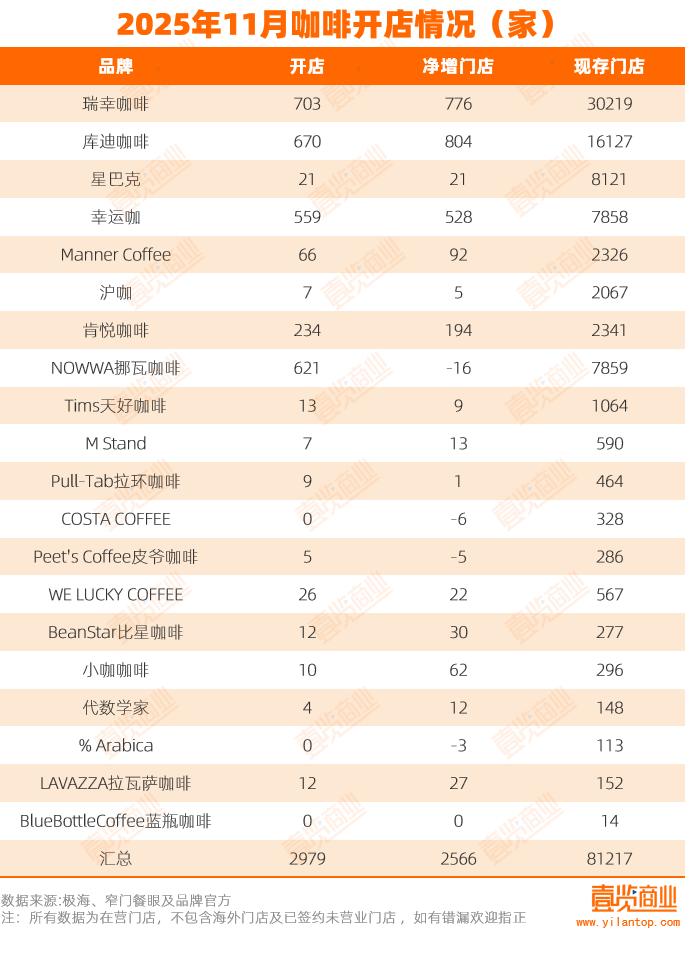
11月,壹览商业长期跟踪的20家连锁咖啡品牌共新开2979家门店,同比增长75.64%;总门店突破8.1万家,共计81217家,环比净增2566家,整体规模持续扩 大。 从新开门店看,幸运咖(新开门店不包含海外门店及已签约未营业门店)、瑞幸咖啡(新开门店不包含海外门店及已签约未营业门店)、库迪咖啡(新开门 店不包含海外门店及已签约未营业门店)、挪瓦咖啡(新开门店不包含海外门店及已签约未营业门店)四家品牌共开店2553家,合计贡献了85.69%的新增 门店。 | 2025年11月咖啡开店情况(家) | | --- | | 品牌 | 开店 | 净增门店 | 现存门店 | | --- | --- | --- | --- | | 瑞幸咖啡 | 703 | 776 | 30219 | | 库迪咖啡 | 670 | 804 | 16127 | | 星巴克 | 21 | 21 | 8121 | | 幸运咖 | રેત્વે | 528 | 7858 | | Manner Coffee | 66 | 92 | 2326 | | 沪咖 | 7 | 5 | 2067 | | 肯悦咖啡 | 234 | 194 | 2341 | | ...
COSTA收购案尚未落地,瑞幸又盯上蓝瓶咖啡,算法“镰刀”终于挥向“匠心咖啡”?
3 6 Ke· 2025-12-18 02:23
Core Viewpoint - Nestlé is planning to sell Blue Bottle Coffee, which it acquired in 2017, to Luckin Coffee, as it struggles with the operational challenges of the brand while seeking to maintain its high-margin consumer goods business [2][4][5]. Group 1: Nestlé's Strategy - Nestlé's decision to sell Blue Bottle is driven by the realization that the brand's expansion has diluted its identity, creating a conflict with the company's growth expectations [3][4]. - The sale involves a strategic separation of the brand from its physical retail operations, allowing Nestlé to retain the brand's intellectual property while offloading the costly and complex retail locations [4][5]. - This divestment is seen as a perfect asset separation for Nestlé, allowing it to focus on its strengths in high-margin consumer products [5]. Group 2: Blue Bottle's Market Performance - Blue Bottle's initial success in China has waned, with a significant decline in consumer interest and foot traffic in its stores, which were once seen as trendy [6][7]. - The brand's pricing strategy has come under scrutiny, as consumers question the value of its offerings compared to local competitors like Manner and Grid Coffee, which provide similar quality at lower prices [7][9]. - As of August 2025, Blue Bottle has only 14 stores in mainland China, a stark contrast to the rapid expansion of competitors, highlighting its struggle to adapt to the local market [9]. Group 3: Luckin Coffee's Ambitions - Luckin Coffee's recent financial performance shows significant growth, with a net revenue of 15.287 billion yuan in Q3 2025, reflecting a 50.2% year-on-year increase [10]. - The acquisition of Blue Bottle is viewed as a strategic move for Luckin to elevate its brand perception from a budget option to a premium player in the coffee market [12][13]. - Luckin aims to leverage Blue Bottle's established brand recognition in international markets to enhance its global presence and valuation [12][13]. Group 4: Challenges for Luckin Coffee - Despite its rapid growth, Luckin faces challenges related to its brand image, which is often associated with low-cost offerings, limiting its potential in the premium segment [11][12]. - The company's aggressive expansion strategy, including opening new stores near existing ones, has led to dissatisfaction among franchisees, impacting profitability and operational stability [16][17]. - The cultural clash between Luckin's data-driven approach and Blue Bottle's artisanal ethos raises questions about the future integration of the two brands [16][17].
瑞幸咖啡:醇香中淬炼可持续未来 推动产业与生态共荣
Di Yi Cai Jing· 2025-12-17 15:48
Core Viewpoint - Luckin Coffee leads the industry with a comprehensive green sustainable development strategy, winning the "Sustainable Ecological Contribution Model Award" at the recent China Corporate Social Responsibility Model Selection event organized by Yicai [1] Group 1: Sustainable Development Strategy - Luckin Coffee has achieved significant commercial success while implementing a green sustainable development strategy throughout its entire industry chain [1] - The 2025 Yicai China Corporate Social Responsibility Model Selection focuses on "sustainable competitiveness," assessing how companies transform social responsibility practices into long-term capabilities that drive business, environmental, and social resilience [1] Group 2: Innovations in Production - The company has built a green value chain, driving industry progress through technological innovation, including a fresh fruit processing plant in Yunnan that utilizes advanced water treatment technologies to achieve zero industrial wastewater discharge [1] - Luckin's Jiangsu roasting base, operational since 2024, integrates green operational principles and received the LEED BD+C Platinum certification in May 2025 [2] Group 3: Expansion of Sustainable Practices - Luckin Coffee extends its sustainability standards from backend production to frontend consumption, developing a standardized LEED model for its stores, with three locations in Xiamen, Tianjin, and Hangzhou achieving LEED Gold certification [2] - The flagship store in Beijing's Zhongguancun area received the LEED v4 ID+C Platinum certification, setting a positive example for the domestic coffee industry [2] Group 4: Biodiversity and Social Responsibility Initiatives - To promote biodiversity at coffee origins, Luckin has launched a "Business for Good" biodiversity protection project in collaboration with WWF and OPF, focusing on the protection of the endangered Blue-throated Bee-eater [3] - The company has supported health initiatives in Yunnan and Xinjiang, donating eight "Benevolence Medical Rooms" and assisting children with congenital heart disease in receiving professional treatment [3] Group 5: Long-term Strategic Vision - Luckin Coffee's sustainable development practices are integrated into its core business, representing a shift from scale growth to a focus on quality, responsibility, and sustainable competitiveness [3] - The company is evolving from merely providing coffee to advocating for sustainable lifestyles and harmonious coexistence between industry and ecology, offering a "Luckin model" for sustainable development in Chinese enterprises [3]
雀巢想瘦身,瑞幸在狂奔:蓝瓶咖啡收购传闻背后的资本局
3 6 Ke· 2025-12-17 11:27
Group 1 - The core of the news revolves around the potential acquisition of Blue Bottle Coffee by Luckin Coffee, which symbolizes a shift in the global coffee landscape, especially as both companies are in different strategic phases [1][9] - Nestlé, having acquired a 68% stake in Blue Bottle Coffee for approximately $425 million in 2017, is now considering divesting it as the brand no longer aligns with its current focus on large-scale products [4][5] - The new CEO of Nestlé, Philipp Navratil, emphasizes a shift towards "RIG-led growth," indicating a need for rational evaluation of all business segments, which may lead to the sale of Blue Bottle Coffee if it does not meet performance standards [4][8] Group 2 - Luckin Coffee's recent financial performance shows a significant increase, with Q3 revenue reaching 15.3 billion yuan, a 50% year-on-year growth, and a total of nearly 30,000 stores, highlighting its ambition to acquire a premium brand like Blue Bottle [11][17] - The acquisition could fill a gap in Luckin's brand portfolio, providing a high-end image and facilitating international expansion, particularly in the U.S. market where Blue Bottle has a presence [11][12] - Despite the potential benefits, Luckin's management has historically been cautious about acquisitions, preferring organic growth strategies, which raises questions about the feasibility of the Blue Bottle acquisition [14][15][16] Group 3 - Nestlé's financial urgency is evident as it announced a cost-saving plan of up to 2.5 billion Swiss francs and plans to cut 12,000 white-collar jobs, making the retention of Blue Bottle Coffee seem impractical [7][8] - The operational model of Blue Bottle Coffee, which relies on high-touch, artisanal coffee preparation, contrasts sharply with Luckin's automated and efficiency-driven approach, creating a fundamental conflict in business philosophies [16] - Luckin's cash flow is strong, with approximately 9.3 billion yuan in cash and equivalents as of September 30, 2025, but the competitive landscape in China necessitates careful financial management, especially in light of rising delivery costs [17][18]

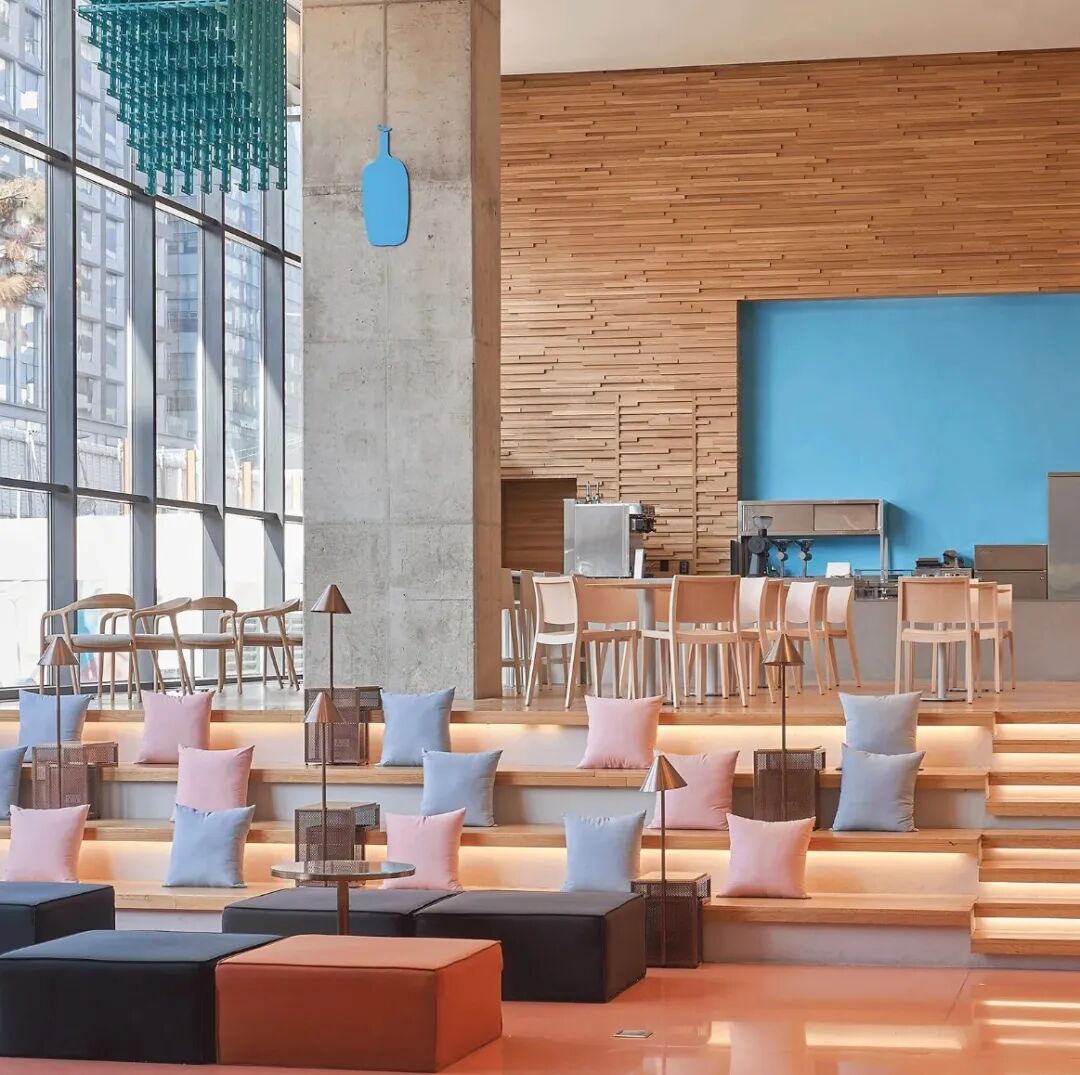
瑞幸咖啡,传考虑竞购雀巢的蓝瓶咖啡Blue Bottle Coffee
Xin Lang Cai Jing· 2025-12-17 04:23
Group 1 - Luckin Coffee is reportedly considering acquiring Blue Bottle Coffee from Nestle to enhance its brand image and expand into the premium coffee market [2] - The company and its shareholder, Dazhong Capital, are also evaluating other acquisition targets, including the operator of %Arabica coffee shops, which is backed by private equity firm PAG [2] - Previous considerations included Costa Coffee, owned by Coca-Cola, but it is unlikely that they will pursue this option further [2] Group 2 - Luckin Coffee aims to return to the US stock market, although there is currently no timeline for the listing [3] - As of Q3 2025, Luckin Coffee has increased its total number of stores to 29,214, with an average monthly customer traffic of 112.3 million [3] - As of December 16, Luckin Coffee's stock price was $32 per share, giving it a market capitalization of approximately $9.248 billion [3]