
天然气

Search documents
天然气:寒潮褪去,回归平静
Wu Kuang Qi Huo· 2026-02-24 01:12
Report Industry Investment Rating - Not mentioned in the provided content Core Viewpoints - In January, the average spot price of natural gas at Henry Hub reached $7.72 per million British thermal units, a significant increase from the December average of $4.26 per million British thermal units, hitting the highest nominal monthly average since September 2022. The price increase was mainly driven by abnormally cold weather in most parts of the US, especially in the second half of the month, which led to a surge in heating demand. The "Finn" winter storm further increased heating demand while natural gas production decreased due to the temporary freezing of gas wells. The large inventory consumption in late January means that the US natural gas inventory will be lower than previously expected at the end of the heating season in March. The EIA has raised the price forecast for most of this year due to the inventory reduction. However, the price increase compared to last month's forecast will moderate later this year. The current high prices are expected to stimulate more natural gas - targeted drilling activities, leading to higher natural gas production than previously predicted. As production increases, the EIA has lowered the price forecast for 2027. After the cold snap subsides, the average spot price at Henry Hub is expected to be about $4.40 per million British thermal units, a 5% decrease from last month's forecast, and natural gas prices may return to calm in the future [3][5][7] Summary by Relevant Catalogs Natural Gas Price - In January, the average spot price of natural gas at Henry Hub was $7.72 per million British thermal units, a significant increase from December. On January 23, the daily price at this hub set a nominal record of $30.72 per million British thermal units. The price increase was due to cold weather and increased heating demand. The "Finn" winter storm increased demand while production decreased. As of the week ending January 30, the combination of strong demand and production decline led to a record - high single - week inventory draw of 360 billion cubic feet. Futures prices suggest that the market believes the supply - tight situation will be relatively short - lived. On January 28, the February futures settlement price was significantly higher than the March price. On February 2, the newly - listed March 2026 contract plunged 25.7% to $3.24 per million British thermal units, the largest single - day decline in 30 years [5][6] Natural Gas Inventory - The EIA expects the natural gas inventory to be depleted by nearly 2080 billion cubic feet this winter (November to March), 7% higher than the five - year average consumption. The heating degree - days in January were 5% higher than the ten - year average and 12% higher than last month's forecast. It is currently expected that the natural gas inventory at the end of the heating season will be 1% higher than the five - year average, down from last month's forecast of 10% higher. All regions in the US saw a decline in inventory in January. As of the time of writing, the inventories in the East and Midwest were below the five - year average, the South - Central region was close to the average, while the Pacific region was 30% above the average and the Rocky Mountain region was 34% above the average. In the week ending January 30, the natural gas inventory had a record single - week draw of 360 billion cubic feet. The cold snap had a significant impact on the South - Central region, which accounted for 44% of the total US consumption that week. The EIA expects the natural gas inventory to be rebuilt faster than the five - year average during the injection season (April - October), and the inventory is predicted to be in a surplus state compared to the five - year average by the end of the injection season in October [11] Natural Gas Production - The cold snap in January led to a decline in natural gas production. From December to January, the daily average production decreased by 4 billion cubic feet (a 3% decline), mainly due to the continuous cold weather in the Appalachian region in the northeastern US. By early February, most of the production capacity had resumed operation. The EIA predicts that US dry natural gas production will increase by 2% (about 2 billion cubic feet per day) in 2026 and another 1% (about 1 billion cubic feet per day) in 2027. The growth rate is expected to slow down in the first half of 2026 due to weather - related shutdowns and insufficient pipeline capacity outside the Permian Basin. With the new pipeline capacity in the Permian Basin coming into operation in the second half of 2026, production is expected to accelerate. In 2027, the increase in the oil - to - gas ratio in the Permian region and the increase in drilling activities in the Haynesville region driven by rising natural gas prices will jointly promote overall production growth. The EIA currently predicts that the daily production of US dry natural gas will reach 110 billion cubic feet this year and exceed 111 billion cubic feet next year [19]
地缘紧张致欧洲经济复苏后劲不足
Xin Lang Cai Jing· 2026-02-23 22:48
Economic Growth and Projections - The Eurozone's GDP is projected to grow by 1.5% in 2025, while the EU's GDP is expected to grow by 1.6%, indicating a slight upward adjustment from previous market expectations [3] - Compared to other major economies like China and the US, Europe's economic recovery shows insufficient momentum [3] Trade and Investment Challenges - Trade frictions and tariff barriers are suppressing exports and investments, with the US targeting the EU in its trade policies, increasing costs for European companies exporting to the US [3] - The uncertainty in global trade policies is dampening business investment confidence, particularly affecting manufacturing sectors reliant on global supply chains [3] Energy Supply and Price Volatility - The prolonged Russia-Ukraine conflict and energy sanctions are reshaping Europe's energy landscape, with the EU planning to ban new gas contracts with Russia starting in 2026 [4] - Transitioning to liquefied natural gas from the US and Qatar faces challenges such as inadequate infrastructure and high costs, leading to potential inflation and reduced purchasing power [4] - Despite advancements in renewable energy, the slow upgrade of electrical grid infrastructure is causing inefficiencies in power distribution, leading to a mismatch in generation and transmission capabilities [4] Inflation and Monetary Policy Dilemmas - The inflation rate in Europe is expected to approach the 2% target by 2025, but supply chain disruptions from geopolitical conflicts pose upward risks to inflation [4] - The European Central Bank faces a dilemma between supporting economic growth and controlling inflation, with expectations that central banks will maintain stable interest rates throughout 2026 [4] Internal Disparities and Market Integration - Structural weaknesses in the European economy are becoming more pronounced, particularly with core economies like Germany, France, and Italy facing industrial output declines and fiscal crises [5] - Southern European countries like Spain are becoming growth leaders, but their smaller economic size cannot compensate for the weaknesses of the larger economies [6] Systemic Policy Responses - The EU is implementing a series of systemic policies to address internal and external challenges, including reforms to deepen the single market and eliminate internal barriers [7] - Initiatives include establishing a unified regulatory framework for market access, tax, and intellectual property to reduce cross-border operational costs [7] - The EU is also focusing on crisis response mechanisms to ensure market resilience against geopolitical conflicts and supply chain disruptions [7] - Significant investments are planned in strategic areas like AI, quantum computing, and clean technology to address innovation gaps and capital outflows [7] - The EU aims to accelerate green and digital transitions, with expectations for green industry investments to exceed €500 billion by 2025, representing 35% of global investments [7] - A "new independence" strategy is being promoted to reduce reliance on external powers in technology, energy, and security [7]


西北天然气2025财年首季业绩增长显著
Xin Lang Cai Jing· 2026-02-23 20:39
Financial Performance - For the first quarter of fiscal year 2025, the company reported revenue of $494 million, representing a year-over-year increase of 14.03% [1] - The net profit for the same period was $87.916 million, showing a year-over-year growth of 37.75% [1]

特朗普5年心血白费!对印度的施压正在失效。印度外交部一句话透露了关键信号,访华成最后赌注
Sou Hu Cai Jing· 2026-02-23 18:25
Core Viewpoint - The U.S. Supreme Court ruled that the large-scale global tariff policy implemented by the Trump administration under the International Emergency Economic Powers Act lacks clear legal authorization, marking it as illegal [1][3]. Group 1: Legal and Financial Implications - The ruling effectively nullifies the expected $1.4 trillion in federal revenue from tariffs that were anticipated from 2026 to 2034 [3]. - The Trump administration had collected over $175 billion in tariffs based on the now-invalidated legal framework, which may require refunds to importers [3]. - The tariffs affected a wide range of goods, including a 10% tariff on all imports from China and varying rates on goods from Mexico and Canada [3]. Group 2: Immediate Responses and New Measures - Following the ruling, Trump announced a new 10% global import tariff, which he later increased to 15%, effective immediately [4][6]. - The new tariff is based on a rarely used provision of the Trade Act of 1974, allowing temporary tariffs for a maximum of 150 days unless extended by Congress [6]. Group 3: International Reactions and Negotiations - The ruling has led to a shift in diplomatic dynamics, particularly with India, which had previously agreed to reduce tariffs in exchange for halting oil purchases from Russia [10][11]. - India's comprehensive tariff on U.S. goods was significantly reduced from 50% to 18%, although India remains cautious about its oil purchasing strategy [10][11]. - The upcoming visit of Trump to China is seen as a critical moment for negotiations, with expectations for discussions on trade agreements and tariffs [11][12][16]. Group 4: Broader Trade Policy Context - The Supreme Court's decision is viewed as a significant setback for Trump's trade policy, which had relied on emergency powers to impose tariffs without congressional approval [16][17]. - Analysts suggest that the ruling may enhance China's negotiating position, as Trump may have lost leverage in discussions regarding agricultural and energy product purchases [14][16].

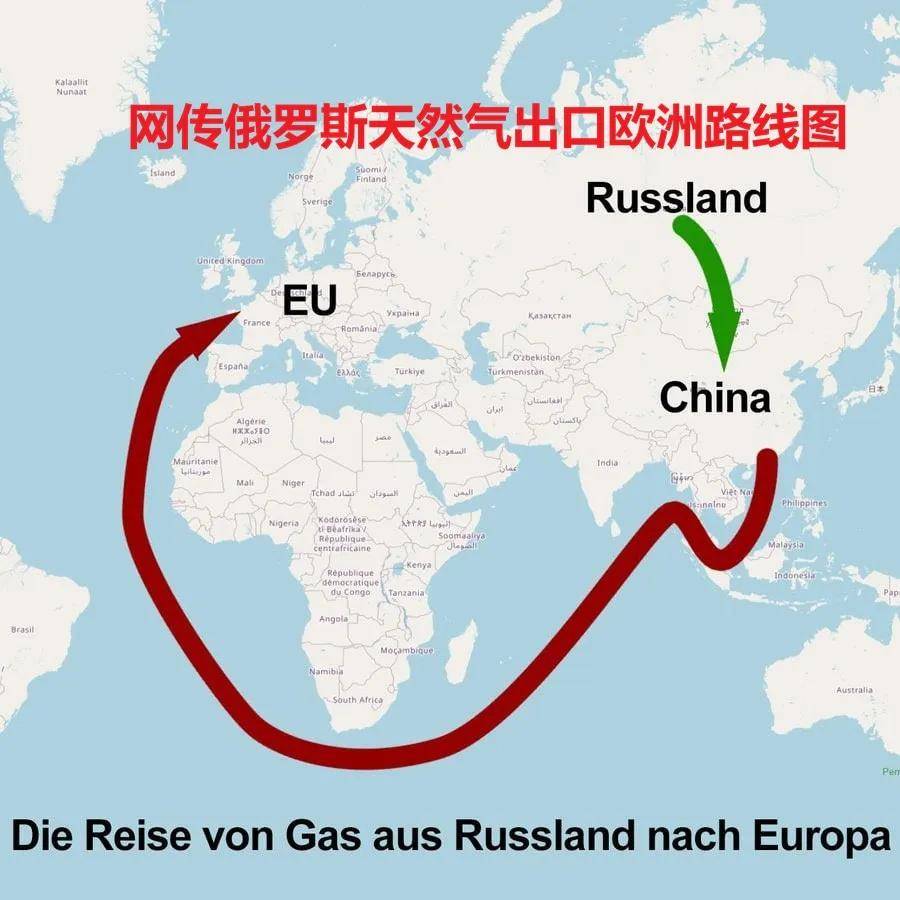
最近欧盟熄火了,不再趾高气扬地指责第三国购买俄罗斯液化天然气
Sou Hu Cai Jing· 2026-02-23 08:23
Core Insights - The global energy trade landscape is undergoing significant changes, with European institutions that previously criticized others for purchasing energy now remaining silent [1] - Russian export data indicates that by 2025, over 50% of liquefied natural gas (LNG) will be sold to the Asia-Pacific region, totaling more than 16 million tons, while Europe still accounts for 44% of total sales with imports reaching 13.6 million tons [1] - The hypocrisy of European nations is highlighted as they continue to import energy while publicly condemning others for similar actions [1] Group 1 - Burkina Faso's foreign minister publicly questioned the double standards in energy trade, noting that France paid over $2.5 billion to Russia for gas in a year while European countries continue to engage in trade with Russia despite sanctions [3] - This behavior undermines international moral standards and reveals the political motivations behind energy trade [3] - The U.S. is attempting to use energy exports as a geopolitical tool, offering high-priced gas orders to entice other countries, but allies struggling with energy dependence lack bargaining power [3] Group 2 - Some nations that claim to have a strong stance on energy sanctions are actually purchasing gas in quantities comparable to major energy producers, raising questions about the industrial needs for this gas [5] - The rigid energy strategy of Germany has led to a significant decline in industrial output and a sharp rise in living costs, ultimately impacting ordinary citizens [5] - The lack of strategic flexibility is causing traditional European industrial powers to lose competitiveness in the energy market [5] Group 3 - The value-based criticisms from Western countries are merely a smokescreen to mask their own self-interest in the energy trade [7]
360亿美元!日本承诺特朗普的首笔投资,砸向了美国能源
Hua Er Jie Jian Wen· 2026-02-22 08:20
Group 1: Investment Overview - Japan has fulfilled its commitment to invest $550 billion in the U.S., with the first tranche amounting to $36 billion, prominently featuring a 9.2 GW natural gas power plant project [1][2] - The natural gas power plant, located in Ohio, is described by U.S. Commerce Secretary Howard Lutnick as "the largest natural gas power plant in history" [1][2] - Remaining funds will be allocated to a synthetic diamond factory and the Texas GulfLink deepwater oil export terminal, which is expected to generate $20 billion to $30 billion in U.S. crude oil exports annually, with a daily export capacity of 1 million barrels [1][3] Group 2: Energy Demand and Supply - The investment reflects the reality of surging electricity demand in the U.S., particularly driven by data centers fueled by artificial intelligence [1][2] - The International Energy Agency indicates that global electricity demand is growing at the fastest rate in 15 years, with natural gas emerging as the preferred energy source for providing reliable, round-the-clock power [1][2] Group 3: Texas GulfLink Project - The Texas GulfLink deepwater oil export terminal project recently received approval from the Trump administration, led by Sentinel Midstream, with a daily export capacity of 1 million barrels of crude oil [3] - U.S. Transportation Secretary Sean Duffy stated that the Texas GulfLink project demonstrates job creation domestically and stability abroad by streamlining the fossil fuel industry [3] - The deepwater facility is projected to generate $400 billion to $600 billion in revenue over 20 years, advancing the Trump administration's energy dominance agenda [3][4] Group 4: Trade Agreement Context - The trade agreement reached last summer with Trump included commitments from Japan to reduce proposed tariffs on U.S. imports from 25% to 15% and to invest $550 billion in the U.S. economy [5] - Japan also committed to expanding market access for U.S. goods, including automobiles, agricultural products, and energy [5] - The agreement has been effective in using tariff threats as a tool to pursue energy dominance goals [4]

新天绿能发布2026年1月经营数据,发电量同比增15.25%
Jing Ji Guan Cha Wang· 2026-02-21 09:46
Core Insights - The company, New Tian Green Energy (600956.SH), has shown positive operational growth in early 2026, with significant increases in both power generation and gas sales compared to the previous year [2][3]. Operational Performance - In January 2026, the company reported a power generation of 1.7393 million MWh, reflecting a year-on-year increase of 15.25%. Gas sales reached 723 million cubic meters, up 6.80%, with sales volume increasing by 8.49% [2]. - For the fourth quarter of 2025, power generation and grid-connected electricity both increased by 3.66% year-on-year. However, the average grid-connected electricity price (excluding tax) decreased by 4.52%, while the proportion of market-based trading electricity rose to 66.16% [3]. Institutional Engagement - From December 3 to December 24, 2025, the company hosted 21 institutional investors, including Ruiyuan Fund and Taibao Asset, to discuss the financial data for the third quarter of 2025 and operational updates from November. The findings from this engagement were disclosed on January 9, 2026 [4]. Project Development - The second phase of the Tangshan LNG project is expected to be completed by the end of 2025, with future attention needed on its production and operational effectiveness [5].

俄罗斯能源新布局落地,蒙古国不再敢得寸进尺,中国成最大赢家
Sou Hu Cai Jing· 2026-02-21 09:26
Core Viewpoint - Russia's new energy strategy, focusing on increasing exports to China and strengthening cooperation with Central Asian countries, significantly impacts the global energy landscape and benefits China [1][5]. Group 1: Russia's Energy Strategy - Russia is shifting its energy exports eastward, particularly to China, due to reduced reliance from Europe and geopolitical pressures [3][5]. - The new strategy involves constructing more energy pipelines and forming a robust energy export system centered on the eastern market [5]. Group 2: Mongolia's Position - Mongolia, previously attempting to leverage its position between China and Russia, has lost its negotiating power as Russia enhances its energy exports to China [5][7]. - The country has recognized its economic dependence on China and Russia, leading to a shift in its policy towards deeper cooperation rather than opportunistic bargaining [7]. Group 3: Implications for China - China's energy supply becomes more stable and diversified, reducing reliance on any single country and mitigating risks associated with international energy price fluctuations [7]. - The adjustment in Mongolia's stance allows for smoother cooperation between China and Mongolia, enhancing trade and infrastructure connectivity, which is crucial for China's Belt and Road Initiative [7]. Group 4: Geopolitical Impact - The evolving dynamics between China, Russia, and Mongolia enhance China's geopolitical influence in East and Central Asia, contributing to a favorable tri-party interaction [7]. - This new energy landscape holds significant strategic implications for China's national security and economic development, strengthening its voice in the global energy market [7].
越南成为国际能源署联系国
Shang Wu Bu Wang Zhan· 2026-02-21 03:00
Core Viewpoint - Vietnam has been accepted as an associate member of the International Energy Agency (IEA), highlighting its growing cooperation in building a secure, sustainable, and affordable global energy system [1] Group 1: Membership and Recognition - The IEA Director, Fatih Birol, emphasized the high regard for Vietnam's deepening cooperation with member countries [1] - Vietnam's population of over 100 million and its significant potential in solar, hydropower, natural gas, and nuclear energy make it an important associate member for the IEA [1] Group 2: Energy Transition and Global Dialogue - Vietnam's ambassador to France, Dang Dinh Quy, stated that the IEA's decision reflects recognition of Vietnam's efforts in energy transition and commitment to addressing global energy challenges [1] - Joining the IEA is particularly significant as Vietnam advances its carbon neutrality goals and green energy transition [1] - Vietnam is prepared to actively participate in global energy dialogues and supports the establishment of a truly representative energy organization that reflects emerging energy development trends [1]
印度1月主要行业产出同比增长4%
Xin Lang Cai Jing· 2026-02-20 12:24
Core Insights - India's major industrial output grew by 4% year-on-year in January [1] Group 1: Industry Performance - Crude oil production decreased by 5.8% year-on-year [1] - Coal production increased by 3.1% year-on-year [1] - Natural gas production declined by 5% year-on-year [1] - Refinery products output remained flat year-on-year [1] - Fertilizer production rose by 3.7% year-on-year [1] - Steel production increased by 9.9% year-on-year [1] - Cement production grew by 10.7% year-on-year [1] - Electricity generation increased by 3.8% year-on-year [1]