新消费

Search documents
港股周报(2025.09.15-2025.09.19):腾讯发布混元3D3.0模型,看好港股科技估值持续提升-20250924
Tianfeng Securities· 2025-09-24 04:09
Investment Rating - The report maintains a "Buy" rating for stocks, expecting a relative return of over 20% within the next six months [23] Core Insights - The Hong Kong stock market showed positive momentum with the Hang Seng Index rising by 0.59% and the Hang Seng Technology Index increasing by 5.09% during the week [1] - Tencent's release of the Mixed Yuan 3D 3.0 model is expected to enhance the valuation of Hong Kong technology stocks, with significant improvements in modeling precision and detail [2][6] - Continuous structural inflow of southbound funds is noted, particularly into internet and consumer sectors, with major investments in Alibaba, Meituan, and Pop Mart [2][18] Summary by Sections Market Overview - The Hang Seng Index increased by 0.59% with a trading volume of 1.73 trillion yuan, while the Hang Seng Technology Index rose by 5.09% [1] - Southbound funds recorded a net inflow of 33.726 billion yuan for the week, totaling 1,031.159 billion yuan year-to-date, which is 138.59% of the total net inflow for 2024 [1][16] Sector Performance - The top-performing sectors for the week were Electrical Equipment and Semiconductors, with weekly gains of 15.57% and 9.85% respectively [1] - Notable stocks included CATL in the Electrical Equipment sector, which saw a weekly increase of 19.11%, and SMIC and Hua Hong Semiconductor in the Semiconductor sector, which rose by 11.16% and 18.47% respectively [1] AI and Technology Developments - Tencent's Mixed Yuan 3D 3.0 model boasts a threefold increase in modeling precision and supports ultra-high-definition modeling with 3.6 billion voxels, aimed at various industries including gaming and e-commerce [2][6] - The report suggests focusing on platform-based internet companies with synergistic advantages in computing power and application scenarios, including Tencent, Kuaishou, Alibaba, and others [2] Investment Recommendations - For internet companies, Tencent is projected to have a PE of 25X for 2025, with strong overseas gaming growth expected to continue [2] - Meituan is anticipated to maintain stable growth, while Alibaba's cloud business is expected to sustain high growth rates [2] - In the new consumption sector, Pop Mart is highlighted for its accelerating global IP strategy and significant profit potential [3]
A股再度“深V”!这是盘中相信“会反弹”的三个理由
Mei Ri Jing Ji Xin Wen· 2025-09-23 07:55
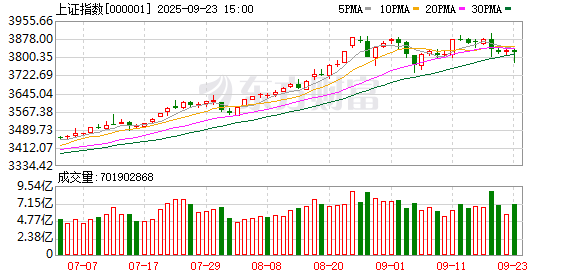
Market Performance - On September 23, the market experienced a rebound after a significant drop, with the ChiNext index rising by 0.21% while the Shanghai Composite Index fell by 0.18% and the Shenzhen Component Index dropped by 0.29% [2] - Over 4,200 stocks declined in the market, with a total trading volume of 2.49 trillion yuan, an increase of 372.9 billion yuan compared to the previous trading day [2] - The market saw a brief moment where the number of declining stocks exceeded 5,000, indicating high volatility [2] Technical Indicators - The Wind data indicated that the market indices, including the Wind All A Index and average stock price, approached the 30-day moving average, suggesting a weakening trend for most stocks [4] - The recent strong indices, such as the Shenzhen and ChiNext, experienced downward breaks of their 5-day or 10-day moving averages before slightly recovering [2][4] Market Sentiment and Expectations - There is a belief that a rebound is likely following the significant drop, supported by historical patterns of recovery after sharp declines [5] - The upcoming anniversary of the "9·24" market event is seen as a potential catalyst for market recovery, which could boost investor confidence [10] Fund Flows and External Influences - There were signs of capital inflow towards the end of the trading day, indicating a possible anticipation of market recovery [11] - External factors, such as the performance of US tech stocks, have influenced the A-share market, with some domestic tech stocks opening high but closing lower [11] Market Dynamics and Risks - Analysts suggest that the market's recent downturn may be attributed to profit-taking behavior ahead of the long holiday, particularly among leveraged funds [12] - The current financing balance stands at 2.4 trillion yuan, which, while not excessively high relative to market capitalization, indicates a significant amount of capital that could be affected by risk factors [12] Future Outlook - According to research from Huajin Securities, the market may see stronger performance in October and December due to potential policy shifts and expectations of liquidity easing from the Federal Reserve [15][16]

资金回流!外资单周净流入中资股创新高,港股科技50ETF近日吸金超2亿
Xin Lang Cai Jing· 2025-09-23 02:34
Group 1 - The core viewpoint of the article highlights that with the Federal Reserve initiating interest rate cuts, Hong Kong's technology assets are experiencing inflows from both domestic and foreign investors [1][5] - As of September 17, foreign net inflows into Chinese stocks reached $1.86 billion, marking the highest weekly inflow since November of the previous year [1][5] - Passive foreign investments shifted from a net outflow of $230 million to a net inflow of $1.9 billion, indicating a significant change in investor sentiment [1][5] Group 2 - The Hong Kong Technology Index is currently valued at 24.59 times PE, which is at the 15.36% historical percentile, suggesting potential undervaluation [3] - The Hong Kong Technology 50 ETF has seen continuous net inflows exceeding 200 million yuan over the past week, reflecting growing investor interest [2] - Historical data indicates that after the Federal Reserve's initial rate cuts, the probability of A-shares and Hong Kong stocks rising in the following three months is 100% and 75% respectively, with a 100% probability for Hong Kong stocks over the next six months [2][8] Group 3 - The article notes that the southbound capital allocation in technology remains low at 2.7%, slightly improved from 3.0% in early July, indicating a cautious approach towards technology investments [1][5] - The overall market outlook remains positive for both A-shares and Hong Kong stocks under the current easing monetary policy environment, with a focus on growth-oriented sectors [8] - The narrowing of the Hong Kong-US interest rate differential is expected to alleviate liquidity constraints, further attracting foreign investments into the Hong Kong market [8]

逾70%仓位聚焦AI、数字货币与新消费,止于至善调整定位变身“全球价值投资践行者”
Jing Ji Guan Cha Bao· 2025-09-22 13:09
Core Viewpoint - The article highlights the increasing investment focus of private equity firms in Hong Kong's stock market, particularly in AI, digital currency, and new consumption sectors, with a significant portion of their portfolios allocated to these areas [1][2]. Group 1: Investment Strategy - The company has adjusted its positioning to become a "global value investment practitioner," planning to increase investments in global markets, especially in AI and digital currency sectors [1]. - Currently, over 70% of the company's portfolio is allocated to AI, digital currency, and new consumption sectors, with AI being identified as the largest investment opportunity encountered [1][2]. - The company is focusing on two specific segments within the AI sector: HBM investments and application AI companies, which are expected to have substantial growth potential due to increasing demand for bandwidth and efficiency improvements [2]. Group 2: Digital Currency Focus - The digital currency sector has become a new investment priority for the company, with a particular emphasis on DAT (Digital Asset Treasury) companies, which are seen as stable business models that can capitalize on the growth of digital currencies [3]. - As capital flows into the AI and digital currency sectors, valuations of many listed companies in these fields have surged, prompting the company to enhance its risk management capabilities to ensure dynamic portfolio balance [3]. Group 3: New Consumption Sector - The company is closely monitoring investment opportunities in the new consumption sector, particularly focusing on companies that can deliver sustained emotional value and high product value-to-price ratios to consumers [4]. - The investment strategy includes regular communication with investors to keep them informed about the latest investment trends and potential risks in the AI and digital currency sectors [4].
什么信号?热门赛道ETF建仓放缓,头部基金组团入局新消费
券商中国· 2025-09-22 05:57
Core Viewpoint - Despite the strong performance of technology and pharmaceutical funds, public funds are gradually adopting a defensive mindset [1] Group 1: ETF Construction Strategies - The construction speed of popular industry ETFs has slowed down, with significant positions only around 10-17% before their respective listings [3][4] - As of September 19, 2023, the strongest technology funds have achieved returns of up to 196%, while pharmaceutical funds have exceeded 170% [3][4] - The rapid construction of ETFs is often linked to the performance of the underlying sectors, with slower construction occurring when sector gains are excessive [4] Group 2: Shift Towards Consumer Stocks - Leading funds are increasingly focusing on consumer stocks, with several pharmaceutical-themed funds beginning to include new consumer stocks in their portfolios [5][6] - The IPO of IFBH, a coconut water company, attracted significant interest from multiple public and private funds, indicating a shift in investment strategy [5] - The entry of public funds into consumer stocks is seen as a response to the strong performance of the innovative drug sector [6] Group 3: Outlook on Consumer Sector - The consumer sector is viewed as a core defensive asset for public funds, driven by the emergence of quality companies and new performance drivers [7][8] - Analysts suggest that the competitive landscape in the consumer industry may improve due to a weak economic environment, leading to better product innovation and operational efficiency [8] - The consumer sector is characterized by a vast domestic market and increasing international expansion, presenting new investment opportunities [8]

恒生科技指数午后跌幅收窄,机构称科技震荡中趋势仍然可期
Mei Ri Jing Ji Xin Wen· 2025-09-22 05:28
Group 1 - The core viewpoint indicates that the performance of Hong Kong stocks, particularly the Hang Seng Technology Index, is influenced by the economic environment and fundamental changes, with a focus on sectors like AI technology and consumer electronics [1][2] - The Hang Seng Technology Index ETF (513180) experienced fluctuations, with notable gains in stocks like Sunny Optical Technology and SMIC, while companies like Meituan and JD.com faced declines [1] - The influx of foreign capital into Chinese assets is still in its early stages, with significant inflows expected only after clear signals of economic improvement [1][2] Group 2 - Long-term trends in the technology sector remain promising despite recent volatility, with the market interpreting the Federal Reserve's recent meeting as relatively hawkish [2] - The potential for a rebound in the Hang Seng Technology Index is supported by the ongoing AI narrative and the anticipated continued inflow of southbound capital following the Fed's interest rate cuts [2] - Investors without access to the Hong Kong Stock Connect may consider the Hang Seng Technology Index ETF (513180) as a means to invest in core Chinese AI assets [2]
中信建投:联储降息落地后,“十五五”有望成为下一阶段市场关注重点
Xin Lang Cai Jing· 2025-09-21 23:36
Core Viewpoint - The report from CITIC Securities indicates that after the Federal Reserve's interest rate cut, the "15th Five-Year Plan" is expected to become a focal point for the market, emphasizing anti-involution, service consumption, boosting domestic demand, and industrial upgrades [1] Market Sentiment - Overall market sentiment remains high, with no significant signs of peak or decline, while indices are experiencing narrow fluctuations at high levels [1] - Individual stocks and sectors are showing considerable volatility [1] Investment Strategy - As risks increase in high-positioned sectors, the strategy suggests focusing less on indices and more on individual stocks [1] - It is recommended to position in low-positioned sectors and focus on stocks related to "refusing adjustments" [1] Industry Focus - Key industries to watch include humanoid robots, AI, pig farming, new energy, new consumption, innovative pharmaceuticals, non-ferrous metals, basic chemicals, and non-bank financials [1]

均衡派选手的“不平庸”打法——访富安达基金申坤
Shang Hai Zheng Quan Bao· 2025-09-21 15:28
Core Viewpoint - The article highlights the investment strategy of Shen Kun, a fund manager who emphasizes balanced investment and risk control while pursuing quality growth and reasonable valuations [4][9]. Investment Strategy - Shen Kun adopts a GARP (Growth at a Reasonable Price) investment strategy, focusing on selecting growth companies that are reasonably valued or undervalued [4][9]. - The investment approach involves a balanced allocation across multiple industries, such as computing power, consumer electronics, new consumption, and lithium batteries, to mitigate risks associated with over-concentration in a single sector [6][9]. - The fund manager emphasizes the importance of holding quality growth stocks and avoiding chasing market trends, which can lead to poor performance [5][9]. Performance Metrics - Shen Kun's fund, the Fuanda Advantage Growth Mixed Fund, has achieved over 90% returns in the past year, attributed to a forward-looking approach in selecting individual stocks [7]. - The maximum drawdown for the funds managed by Shen Kun has remained below 20% over the past year, showcasing effective risk management [9]. Market Outlook - The article discusses the positive performance of Chinese assets in 2023, driven by advancements in technology and increased government support for the capital market [11]. - Shen Kun believes that the AI sector is poised to lead the fourth industrial revolution, presenting numerous investment opportunities in the coming years [11].

兴业证券:A股“健康牛”是切换还是扩散?
智通财经网· 2025-09-21 11:49
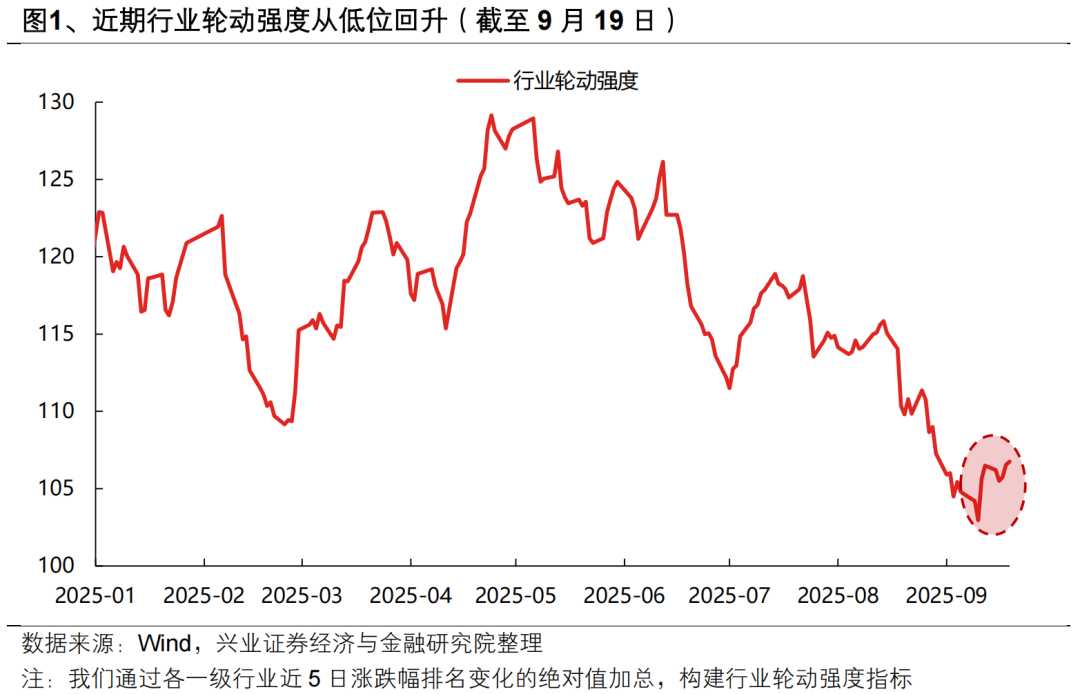
Core Viewpoint - The report from Industrial Securities emphasizes the importance of sector rotation in the A-share market, suggesting that a diverse market with multiple sectors performing well is essential for sustainable growth. The current market environment, driven by incremental capital and favorable economic conditions, requires a focus on sector expansion rather than simple high-to-low switching strategies [1][3][6]. Group 1: Market Dynamics - Recent fluctuations in growth sectors indicate increased volatility and high-level oscillation, prompting discussions on whether to switch from high to low positions [1][3]. - The market's structural differentiation and concentrated consensus need to be digested and consolidated, with a recommendation for a rotational approach to manage rhythm fluctuations [3][6]. - The current market is characterized by an "incremental market" where capital behavior has shifted from "moving house" in a stock market to "expanding" in an incremental market, making the "expansion logic" more applicable [3][6]. Group 2: Sector Focus - Key sectors to watch include Hong Kong internet, military industry, innovative pharmaceuticals, new energy, new consumption, and "anti-involution" & cyclical sectors (non-ferrous metals, chemicals) [11][20][36]. - The Hong Kong internet sector is highlighted for its potential rebound, driven by external liquidity and AI expansion, with significant room for growth compared to A-share TMT sectors [11][14]. - The military sector is expected to benefit from upcoming five-year planning meetings, historically showing strong performance leading up to such events [17][20]. Group 3: Innovative Pharmaceuticals - The innovative pharmaceutical sector is experiencing a reduction in crowding, with a notable release of pressure and a shift towards commercialization, leading to improved performance from leading companies [24][25]. - The sector is witnessing a surge in product approvals and international licensing deals, indicating a strengthening global competitive position for domestic pharmaceutical companies [24][25]. Group 4: New Energy Sector - The new energy sector is positioned for growth due to technological breakthroughs and a focus on "anti-involution" policies, which are expected to attract funds seeking flexible returns [26][29]. - The sector's recovery is supported by improved supply-demand dynamics and a significant reduction in inventory levels, indicating a potential for performance stabilization [29][30]. Group 5: New Consumption Trends - New consumption sectors are anticipated to benefit from seasonal catalysts and improved economic outlooks, with a focus on structural changes driven by the rise of Generation Z [31][34]. - The current low crowding levels in new consumption sectors present opportunities for rotation and potential growth as consumer trends evolve [31][34]. Group 6: Anti-Involution and Cyclical Sectors - The "anti-involution" policy is seen as a long-term theme that will influence various sectors, particularly those with historical low profitability and capital expenditure [36][37]. - The report highlights the importance of evaluating sectors based on their willingness to participate in anti-involution efforts, with a focus on traditional industries like steel, glass, and new energy supply chains [36][37].

破圈·跨海:中国文化走进全球 | 2025中国—东盟博览会品牌文化出海交流会
3 6 Ke· 2025-09-19 11:32
Core Insights - The narrative of Chinese companies going global has evolved from merely exporting products to sharing a culturally rich experience and identity [1][3] - The recent event hosted by 36Kr focused on the theme of cultural export, highlighting the new paths, challenges, and opportunities for Chinese culture in the global market [1][3] Group 1: Gaming Industry - Chinese self-developed games generated over $9.5 billion in overseas sales in the first half of 2025, marking an 11% growth and the highest point in five years [4] - The focus of game exports is shifting from Europe and North America to emerging markets in Southeast Asia and Latin America, indicating a deeper localization effort [4][5] - Successful acceptance of Chinese games abroad is attributed to their engaging gameplay and emotional resonance with local cultures [5] Group 2: Short Video Industry - Chinese short video products have reached over 200 countries, with in-app purchase revenues nearing $700 million in Q1 2024, a fourfold increase from the previous year [6] - The trend has shifted from simple translations of content to creating original works that resonate with local cultures and values [6] - The production quality of short videos has significantly improved, evolving from basic mobile recordings to high-quality, professionally produced content [6] Group 3: New Consumer Brands - New consumer brands are increasingly focusing on building brand capabilities and deep localization to penetrate overseas markets [7] - Examples include adaptations of local cultural elements in branding and product offerings, such as seasonal themes and local attire for mascots [7] - Chinese brands are being perceived not just for their affordability but as "attitude choices," reflecting a deeper cultural connection with consumers [7] Group 4: Overall Cultural Export - Cultural export involves a comprehensive expression that includes products, content, services, aesthetics, pricing, and emotional value [8] - The evolution of cultural export is seen as an upgrade in expression methods rather than a mere traffic miracle [8] - 36Kr continues to document and report on new trends in cultural export, supporting Chinese enterprises in their global narrative [8]