
债券

Search documents
固收指数月报 | 2026高收益美元债预期回报7.7%-9.6%,违约风险影响几何;中国指数上月关键分析
彭博Bloomberg· 2026-01-21 06:05
Core Insights - Bloomberg is the first global index provider to include Chinese bonds in mainstream global indices, offering a unique perspective on the Chinese bond market through the Bloomberg China Fixed Income Index series [3] - The Bloomberg China Aggregate Index recorded a return of -0.08% in December, with a year-to-date return of 0.61% and an annual return of 8.00% for 2024 [5][6] - The Bloomberg China High Liquidity Credit (LCC) Index achieved a return of 0.14% in December, while the Chinese dollar credit bond index (Kungfu bonds) saw a year-to-date return of 7.33% but a negative return of -0.04% in December [5][6] Monthly Index Performance - The China Aggregate Index (I08271CN) had a month-to-date return of -0.08% and a year-to-date return of 0.61%, with an index level of 244.42 [7] - The Treasury Index (I08273CN) recorded a month-to-date return of -0.27% and a year-to-date return of 0.08%, with an index level of 233.27 [7] - The Corporate Index (I08275CN) achieved a month-to-date return of 0.14% and a year-to-date return of 1.84%, with an index level of 275.58 [7] Market Developments - In September, China opened its bond repurchase market to foreign investors, with the buyout repurchase scale increasing from 810 million RMB to 13.1 billion RMB [9] - The Bloomberg Asian (ex-Japan) high-yield dollar bond index (I29381) is projected to have total returns between 7.7% and 9.6% for 2026, with positive returns expected under most scenarios despite potential default risks [9]

日债集体反弹!日本长债收益率大幅下行
Hua Er Jie Jian Wen· 2026-01-21 05:15
Core Viewpoint - Japan's long-term bond yields have decreased, indicating a potential shift in the country's monetary policy or economic outlook [1] Group 1: Bond Yield Changes - The yield on Japan's 40-year government bonds has fallen by 22 basis points to 3.99% [1] - The yield on Japan's 20-year government bonds has decreased by 10 basis points to 3.245% [1] - The yield on Japan's 10-year government bonds has declined by 5 basis points to 2.290% [1]
游戏结束!中国减持外汇资产,纳瓦罗气急败坏:美国一粒大豆也不出售
Sou Hu Cai Jing· 2026-01-21 03:36
Core Viewpoint - The economic interaction between China and the U.S. is currently in a delicate and tense balance, highlighted by China's strategic reduction of U.S. Treasury holdings amidst a rising global demand for U.S. debt [1][4]. Group 1: China's Strategy - China reduced its U.S. Treasury holdings by $6.1 billion in November 2025, bringing the total to $682.6 billion, while global U.S. debt holdings reached a record high of $9.36 trillion [1]. - This reduction is a calculated adjustment rather than a blind sell-off, reflecting China's recognition of systemic risks associated with the U.S. debt model due to increasing fiscal deficits [1][4]. - China aims to diversify its foreign exchange reserves by reducing reliance on a single asset, thus enhancing its asset safety and value growth objectives [3][4]. Group 2: U.S. Response - The U.S. has shown emotional anxiety in its economic interactions with China, particularly in the agricultural sector, as evidenced by aggressive statements from U.S. trade representatives [3][5]. - The proposal to halt soybean exports to China, which accounts for nearly 60% of U.S. soybean exports, could devastate the U.S. agricultural sector and disrupt political stability in key Republican states [5]. - The emotional responses from U.S. politicians contrast sharply with China's rational asset management approach, highlighting differing underlying logics in addressing economic challenges [5][6]. Group 3: Future Outlook - The ability of China and the U.S. to find a new balance between cooperation and confrontation will be a critical issue for the global economy [6]. - Acknowledging mutual dependencies and managing differences with a pragmatic attitude is essential for both countries to maintain stability in the unpredictable international financial landscape [6].

债市早报:财政金融协同促内需一揽子政策陆续发布;资金面整体平稳,债市回暖
Jin Rong Jie· 2026-01-21 03:27
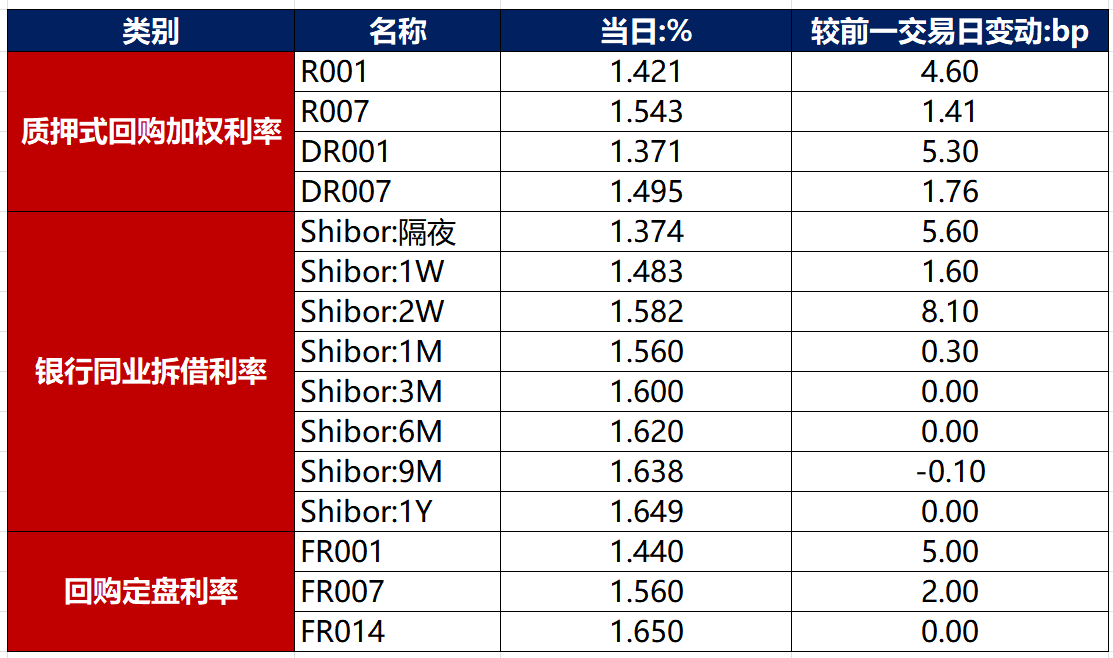
Core Insights - The overall funding environment remains stable, with a recovery in the bond market driven by a cooling stock market, while convertible bonds experience a collective decline [1] Group 1: Domestic News - The Ministry of Finance has issued five notifications to promote domestic demand, including a 500 billion yuan special guarantee plan for private investment aimed at increasing loans to small and micro enterprises [2] - In 2026, the Ministry of Finance plans to implement a more proactive fiscal policy, ensuring that total expenditure increases and key areas are adequately supported [3] - The National Development and Reform Commission emphasizes strengthening domestic circulation and expanding domestic demand, with plans to optimize support policies and develop a national-level merger fund [4] Group 2: International News - Global bond markets faced a significant sell-off due to fiscal pressures and geopolitical tensions, with U.S. Treasury yields rising by at least 4 basis points [6] - The sell-off was exacerbated by concerns over the unpredictability of U.S. government policies, particularly regarding tariffs on European countries [6] Group 3: Commodity Market - International crude oil prices increased, with WTI crude rising by 1.51% to $60.34 per barrel, and natural gas prices also saw a significant rise of 9.08% [7] Group 4: Funding Conditions - The central bank conducted a 3,240 billion yuan reverse repurchase operation at a fixed rate of 1.40%, resulting in a net withdrawal of 346 billion yuan for the day [8] - The funding rates showed slight increases, with DR001 rising by 5.30 basis points to 1.371% [9] Group 5: Bond Market Dynamics - The bond market showed signs of recovery, with the yield on the 10-year government bond decreasing by 0.65 basis points to 1.834% [12] - The credit bond market experienced significant price movements, with one industrial bond seeing a price increase of over 138% [14] Group 6: Convertible Bonds - The convertible bond market followed the equity market downwards, with major indices declining by approximately 0.64% to 0.72% [15] - The trading volume in the convertible bond market increased to 883.43 billion yuan, with 256 bonds declining in value [15]
固收亮话-当前债券关注点及地方政府经济政策分析
2026-01-21 02:57
Summary of Key Points from Conference Call Records Industry or Company Involved - The discussion primarily revolves around the bond market and local government economic policies in China. Core Points and Arguments 1. **Current Bond Market Outlook**: The bond market should not be overly pessimistic, suggesting a neutral duration strategy and focusing on opportunities from increased allocation and interest rate cut expectations. The spread between 30-year and 10-year bonds is approaching 50 basis points, indicating potential for recovery [1][2][3]. 2. **Investment Recommendations**: - Focus on 5-year positive capital bonds, 5-10 year perpetual bonds, and high-rate long-term bonds. - The 30-year old bonds are more cost-effective compared to new bonds, and the 50-year government bonds present better opportunities [1][4]. 3. **Government Support for Local Projects**: Local governments are advancing project construction tailored to regional needs, with the Ministry of Finance emphasizing increased fiscal spending and financial collaboration to support local projects [1][7][8]. 4. **Debt Management and Wage Issues**: The government is addressing wage arrears for private enterprises and migrant workers to ensure smooth consumption during the Spring Festival. Measures include monitoring, data reporting, and credit penalties [2][9]. 5. **Banking Sector's Role**: Banks are actively providing liquidity loans to city investment companies to help repay project debts, indicating progress in debt clearance efforts [2][10]. 6. **Service Sector Development**: The business department is focusing on specific industries such as telecommunications, healthcare, and tourism in selected pilot cities to promote economic growth [2][11]. 7. **Fiscal Policy for 2026**: The fiscal policy will remain proactive, with a projected deficit rate around 10% of GDP, emphasizing job creation and timely repayment of debts to support various projects [2][17]. 8. **Investment in Major Projects**: The government plans to increase central budget investments significantly, targeting major engineering projects with high leverage effects [2][13]. 9. **Monitoring and Auditing**: The audit office will focus on the management of fiscal funds, especially in key sectors like energy and local government debt, to prevent systemic risks [2][14]. Other Important but Possibly Overlooked Content 1. **Economic Growth Indicators**: The construction business activity index rose from 49.0 to 52.8, driven by early project approvals and new financial tools [2][12]. 2. **Measures to Increase Resident Income**: Specific initiatives in Anhui province aim to enhance income through job creation, support for entrepreneurs, and improved social security policies [2][20]. 3. **Support for Private Enterprises**: The government is implementing various financial measures to support private enterprises, including low-interest loans and quick debt issuance channels for small and medium enterprises [2][21].
未知机构:今天美国日本债券市场的大量抛售使基本金属承压贵金属受追捧1日本我们在去-20260121
未知机构· 2026-01-21 02:00
今天美国日本债券市场的大量抛售使基本金属承压,贵金属受追捧 1) 日本:我们在去年12月时曾提醒关注日本 风险引发的全球抛售,会蔓延至基本金属市场。 今天日本债市崩盘引发了流动性冲击。 日本因由于财政扩张担忧导致国债遭到大规模抛售,收益率飙升并外溢至美债市场,压制了全球风险资产表现。 高市早苗在即将到来的选举中提出的减税主张,担忧其财政后果,这使得在2月8日预定的民调发布前,东京市场 的交易可能持续处于动荡之中。 今天日本债市崩盘引发了流动性冲击。 日本因由于财政扩张担忧导致国债遭到大规模抛售,收益率飙升并外溢至美债市场,压制了全球风险资产表现。 高市早苗在即将到来的选举中提出的减税主张,担忧其财政后果,这使得在2月8日预定的民调发布前,东京市场 今天美国日本债券市场的大量抛售使基本金属承压,贵金属受追捧 1) 日本:我们在去年12月时曾提醒关注日本 风险引发的全球抛售,会蔓延至基本金属市场。 ...
未知机构:特朗普挥舞普罗主义大棒海外市场大幅波动海外长端利率飙升黄金大涨欧美股市年-20260121
未知机构· 2026-01-21 02:00
Summary of Key Points from Conference Call Industry Overview - The current market environment is characterized by significant volatility, particularly influenced by the policies of the Trump administration, which has led to a perception of the U.S. market as unstable and unreliable. Global investors are advised to adopt strategies to mitigate risks or hedge their positions [1][4]. Market Impact - Short-term impacts on markets such as Hong Kong stocks are expected due to a decrease in risk appetite among investors [2][5]. - In the medium term, Chinese assets are anticipated to benefit from a global reallocation of funds and diversification strategies [3][6]. Domestic Market Conditions - The domestic bond market is showing a divergence from global trends, with certain favorable conditions emerging in the short term. The 30-10 year government bond yield spread approached 50 basis points, which has been identified as a critical threshold, improving the odds for investors [6]. - Factors such as stock market technical adjustments, commodity price fluctuations, appreciation of the Renminbi, and a loose monetary environment are contributing to an increased probability of favorable outcomes in the short term [6]. Operational Strategies - There are limitations on potential gains due to supply-demand dynamics, stock market conditions, and expectations regarding monetary policy. The liquidity situation around tax periods requires careful monitoring [7]. - Recommended operational strategies include a focus on short-term interest income, engaging in tactical trading, and maintaining a neutral position in convertible bonds by reducing exposure [8].
未知机构:昨夜美国市场上演股债汇三杀一幕经典的避险场景却带着全然不同的底色-20260121
未知机构· 2026-01-21 02:00
Summary of Key Points from the Conference Call Industry Overview - The current market dynamics are influenced by a shift from inflation and central bank policies to fiscal and credit concerns, particularly highlighted by the recent performance of U.S. and Japanese bonds [1][2][4]. Core Insights and Arguments - Japan's 40-year government bond yield has surpassed 4%, marking the first time in over 30 years, which has significant implications for global financial markets [2][3]. - The combination of high government debt and high interest rates in major developed economies, including the U.S. and Japan, is creating a precarious situation for fiscal sustainability [4]. - The market is increasingly worried about the astronomical interest payments on government debt, leading to three potential outcomes: fiscal tightening, continued large-scale borrowing, or central banks resorting to debt monetization [4][5]. - The recent sell-off in long-term U.S. Treasuries reflects a loss of confidence, as institutional investors like the Danish pension fund have opted to liquidate their holdings [6][8][9]. - The systemic rise in risk-free rates is negatively impacting the valuation models of all risk assets, leading to a broader market correction [11]. Additional Important Content - Gold prices have surged to historical highs, driven not by traditional inflation concerns but by fears regarding sovereign credit and the weakening of the dollar, indicating a shift towards "de-dollarization" [12][13]. - The current market environment is characterized by a transition to a new era, driven by debt cycles, geopolitical tensions, and a restructuring of monetary order [14][15]. - The exit of Japan from its Yield Curve Control (YCC) policy and subsequent interest rate hikes signal a reduction in the motivation for Japanese investors to hold foreign bonds, particularly U.S. Treasuries, potentially leading to a capital outflow and further imbalance in the global bond market [17]. - The correlation between asset classes is changing, with both stocks and bonds experiencing declines, and the sources of risk are shifting from economic cycles to political decisions [18]. - Investors are advised to reassess what constitutes a "safe asset," as long-term government bonds may become a source of volatility rather than stability, emphasizing the need for assets with strong cash flow and real repayment attributes [18].
美国“股债汇”三杀
财联社· 2026-01-21 01:59
Core Viewpoint - The article discusses the significant market turmoil in the U.S. following President Trump's threats of tariffs against several European countries and his ambitions regarding Greenland, leading to a "sell America" trend among global investors [1][3]. Market Reaction - The S&P 500 index experienced a 2.1% drop, erasing all gains since 2026, marking the largest single-day decline since October of the previous year [1][4]. - The VIX, a measure of market volatility, surged to its highest level since November of the previous year, indicating increased investor anxiety [1]. - Long-term U.S. Treasury yields rose sharply, reaching a four-month high, as investors reacted to fears stemming from Japanese bond sell-offs and Danish pension funds planning to exit U.S. debt [1][3]. Global Context - The article highlights a broader global risk aversion, with investors seeking to reduce or hedge their exposure to the volatile U.S. market [3]. - The tensions surrounding the Greenland dispute have intensified the "sell America" trend, as global investors reassess their positions [3][5]. Japanese Bond Market Impact - Japan's long-term bond yields surpassed 4% for the first time in 30 years, contributing to a significant sell-off in the Japanese bond market, which in turn affected U.S. Treasury prices [7][8]. - The yield on Japan's 30-year bonds has now exceeded that of Germany's, increasing the attractiveness of Japanese bonds to foreign investors [11]. Investor Sentiment - Despite the market turmoil, a recent Bank of America survey indicated that investor optimism towards the stock market is at a five-year high, while protective measures against market downturns are at their lowest since 2018 [5]. - Analysts suggest that the current market conditions may warrant increased risk hedging and investment in safe-haven assets [6]. Future Outlook - The ongoing geopolitical tensions and potential tariff implementations could lead to significant short-term market volatility, with analysts closely monitoring developments [5][12]. - The Danish pension fund's decision to liquidate U.S. Treasuries may further exacerbate market fluctuations and pressure on U.S. assets [13].

大选前,日本国债陷入“抛售潮”
Huan Qiu Shi Bao· 2026-01-20 23:01
高市早苗一直是扩张性财政政策的支持者。据日本财务省公布的文件,高市早苗内阁提出的2026财年预 算规模达122.3万亿日元,远超2025财年的115.2万亿日元。其中,仅国债费就高达31.3万亿日元。然 而,日本政府债务余额占国内生产总值比重已达240%。高市内阁推行扩张性财政政策、大肆发债,令 投资者对日本财政状况恶化的忧虑不断加深。"日本债券市场目前处于无人买入但抛售不止的状态。"彭 博社援引基金行业人士的话报道称。 多家日本媒体报道称,削减消费税已经成为此次选举的一个焦点,因为执政党和反对党都试图通过减轻 不断上升的生活成本负担措施来赢得选民。不过,日本央行19日发布的2025年12月生活意识问卷调查结 果显示,认为一年后的物价较现在"将上涨"的受访者占比为86.0%,仍然处于高位。 有分析认为,日本国债收益率上行不仅源于财政政策的不确定性,还叠加了通胀与货币政策预期的影 响。《日经亚洲评论》报道提到,日本核心通胀率在2025年11月仍维持在3.0%,经通胀调整后的实际 工资已连续11个月处于负增长区间。在生活成本压力持续存在的背景下,主要政党在选举前竞相讨论减 税与扩大财政支出,加剧了市场对财政可持续 ...