
家电

Search documents
“稳定健康、不断进步的中国经济值得看好” ——外国媒体和国际人士热议中国春节经济
Ren Min Ri Bao· 2026-02-25 01:58
Core Insights - The Chinese Spring Festival has significantly boosted economic activity, showcasing the resilience and potential of China's large market, which in turn fosters global economic opportunities [1][4][6] Group 1: Consumer Market Performance - During the Spring Festival, China's consumer market experienced robust growth across various sectors, including tourism, retail, and entertainment, with notable sales increases reported [2][3] - In Sichuan, 411 monitored retail enterprises achieved sales of 2.78 billion yuan, a year-on-year increase of 10.9%, while Guangdong welcomed 86.59 million tourists, generating 84.89 billion yuan in tourism revenue, up 8.1% and 13.9% respectively compared to the previous year [2] - The overall cross-regional movement of people during the Spring Festival is expected to reach 9.5 billion, with railway and civil aviation passenger volumes projected at 540 million and 95 million respectively [2] Group 2: Emerging Consumption Trends - The consumption structure in China is evolving, with new growth points emerging, such as smart devices and organic foods becoming popular choices for consumers [3] - Su Ning's report indicated a 78% increase in foot traffic at its stores, with sales of smart watches and glasses rising by 62% [3] - The integration of various sectors, such as film and dining, is driving growth in related industries, reflecting a shift towards high-quality consumption [3] Group 3: International Trade and Economic Impact - The Spring Festival's economic activity has led to significant "spillover effects," benefiting international suppliers and enhancing trade relationships, particularly with countries like Peru and Egypt [4][5] - The demand for foreign products, such as chocolates and cosmetics, has surged in China, contributing to the growth of local industries in exporting countries [4] - Statistics show that 17.8 million people crossed borders during the Spring Festival, with foreign tourist flight bookings to China increasing by over four times compared to the previous year [4] Group 4: Long-term Economic Outlook - The Spring Festival's economic performance is seen as a strong indicator of China's economic health, laying a solid foundation for growth throughout the year [6] - Experts emphasize that the festival reflects consumer confidence and market vitality, which are crucial for assessing China's economic landscape [6] - The ongoing release of domestic demand and continuous reform measures are expected to drive China towards higher quality and sustainable economic development [6][7]
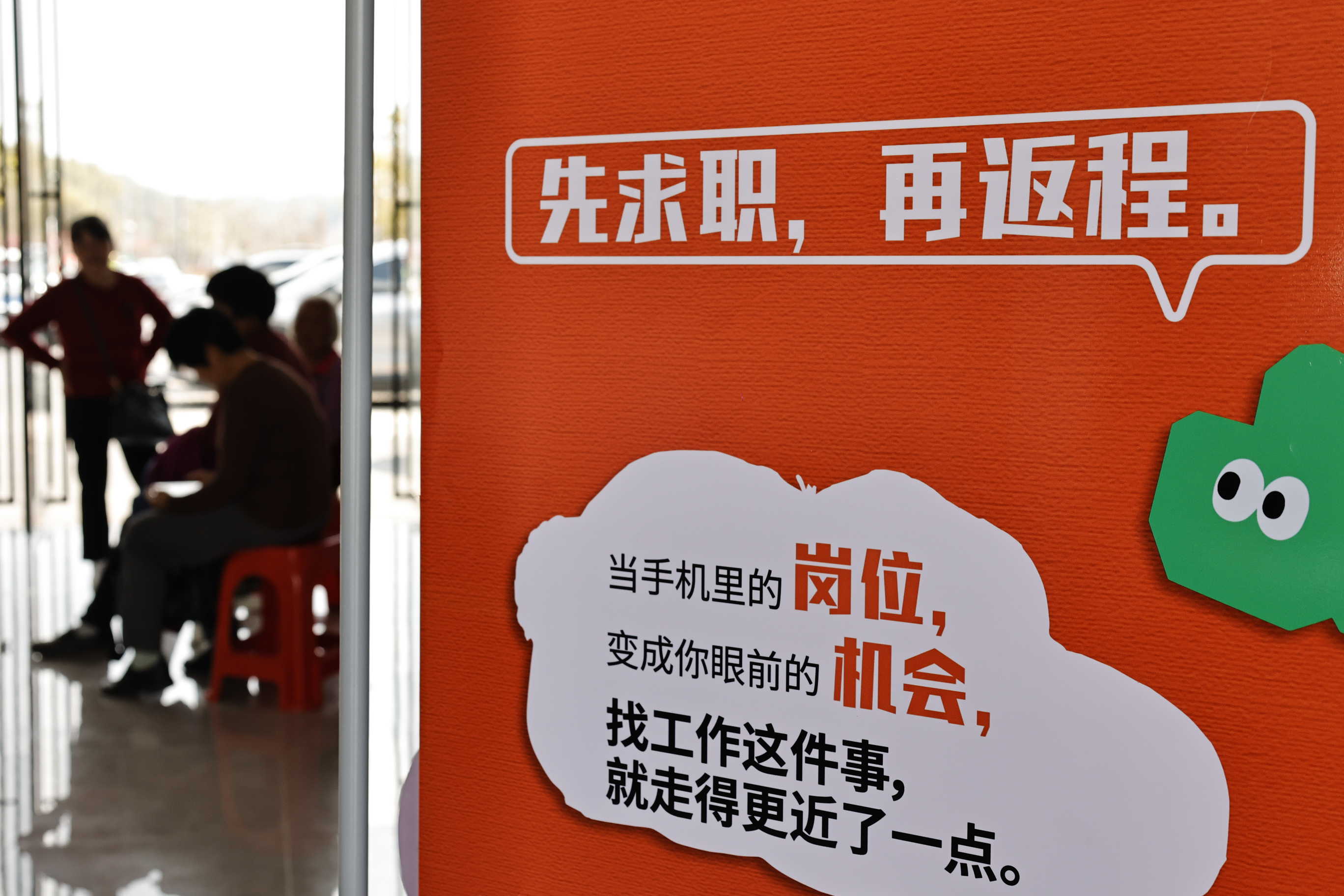
AI简历、AI面试进村,名企岗位提前“见到”河源四都镇老乡
Zhong Jin Zai Xian· 2026-02-25 01:41
Core Insights - The AI employment service station in Longchuan Town, Heyuan City, is transforming the job-seeking process by enabling young people to complete interviews in under ten minutes using AI technology [1][3] - The introduction of AI-assisted resume writing has significantly improved the conversion rates for job seekers, with the work experience page conversion rate rising to 31.4% and the self-introduction page conversion rate increasing to 92.5% [3] - The trend of "interviewing before returning" is emerging, allowing job seekers to prepare and apply for jobs before returning to urban areas, thus increasing their chances of securing employment [7][8] Group 1 - The AI employment service station operates as a "job-seeking preparatory camp," providing hands-on assistance to villagers in using AI tools for resume writing [3] - AI-generated resumes and interview preparation resources are helping job seekers overcome barriers related to self-presentation and confidence [5] - The service is part of a broader initiative to bring employment resources closer to rural communities, allowing individuals to prepare for job opportunities without needing to travel [7] Group 2 - The spring recruitment peak is occurring earlier this year, with over 150,000 companies utilizing AI interviews for initial screening, streamlining the hiring process [8] - Major companies such as Midea, BYD, and McDonald's are actively seeking candidates, indicating a robust demand across various sectors including manufacturing, logistics, and service industries [7][8] - The AI employment service is contributing to a shift in the job market, making the process of job searching more accessible and efficient for rural populations [7][8]

21社论丨用好优势抓住机遇,促进广东制造业与服务业协同发展
2 1 Shi Ji Jing Ji Bao Dao· 2026-02-24 23:09
Group 1 - The core theme of the Guangdong conference is the collaborative development of manufacturing and service industries to explore new paths for high-quality development [1] - Guangdong's manufacturing sector accounts for 1/8 of the national manufacturing value added and approximately 1/3 of the province's GDP, establishing it as a global manufacturing hub [1] - The manufacturing industry in Guangdong is transitioning towards intelligent, green, and integrated development, aiming to move from low-value assembly to high-value design and sales [1] Group 2 - The historical evolution of developed economies shows that manufacturing and service industries have always evolved dynamically and collaboratively, leading to deeper industrial division and tighter integration [2] - The rapid development of information technology since the 1990s has empowered manufacturing through service-oriented manufacturing and the integration of the digital economy with the real economy [2] - The current technological revolution and industrial transformation necessitate a strong collaboration between manufacturing and services, leveraging advancements in AI, biomanufacturing, and quantum communication [2] Group 3 - Guangdong has unique advantages in the global technological revolution, with the Guangdong-Hong Kong-Macao Greater Bay Area being the only region with both mechanical and AI technologies [3] - The manufacturing sector in Guangdong includes leading industries such as home appliances, mobile phones, and automobiles, which need to collaborate with intelligent technologies to enhance their competitive edge [3] - A supportive market environment is essential for the collaborative innovation of manufacturing and services, requiring regulatory frameworks that facilitate new products, business models, and technological innovations [3]
用好优势抓住机遇,促进广东制造业与服务业协同发展
2 1 Shi Ji Jing Ji Bao Dao· 2026-02-24 22:40
Group 1 - The core theme of the Guangdong conference is the collaborative development of manufacturing and service industries to explore new paths for high-quality development [1] - Guangdong's manufacturing sector accounts for 1/8 of the national manufacturing value added and approximately 1/3 of the province's GDP, establishing it as a global manufacturing hub [1] - The manufacturing industry in Guangdong is transitioning towards intelligent, green, and integrated development, aiming to move from low-value assembly to high-value design and sales [1] Group 2 - The historical evolution of developed economies shows that manufacturing and service industries have always evolved dynamically and collaboratively, leading to deeper industrial division and tighter integration [2] - The rapid development of information technology since the 1990s has empowered manufacturing through service-oriented manufacturing and the integration of digital and physical economies [2] - The current technological revolution and industrial transformation necessitate a strong collaboration between manufacturing and services, leveraging advancements in AI, bio-manufacturing, and quantum communication [2] Group 3 - Guangdong has unique advantages in the global technological revolution, with the Guangdong-Hong Kong-Macao Greater Bay Area being a leading region in both mechanical and AI technologies [3] - The manufacturing sector in Guangdong includes leading industries such as home appliances, mobile phones, and automobiles, which need to collaborate with intelligent technologies to enhance their competitive edge [3] - A supportive market environment is essential for the collaborative innovation of manufacturing and services, requiring regulatory frameworks that facilitate new products, business models, and technological innovations [3]
春节假期消费相关行业日均销售收入增13.7%
Ren Min Ri Bao· 2026-02-24 22:25
Core Insights - The National Taxation Administration reported a 13.7% increase in average daily sales revenue in consumer-related industries during the 2026 Spring Festival holiday compared to the previous year [1] - The consumption market showed significant highlights, with notable demand for tourism, cultural consumption, and a surge in the ice and snow economy driving rapid growth in tourism services in related provinces [1] - There was a marked increase in dining consumption and sustained growth in retail sales of goods [1] Consumer Trends - Policies encouraging trade-ins effectively stimulated consumer enthusiasm for "upgrading," leading to a 19% year-on-year increase in sales revenue for high-quality, high-tech smart products, including household appliances like robotic vacuum cleaners and projection TVs [1] - The extended Spring Festival holiday facilitated the release of pent-up demand for tourism, resulting in a 39.6% year-on-year increase in sales revenue for tourism-related services [1]
这个春节 成都吸睛又吸金
Xin Lang Cai Jing· 2026-02-24 22:23
Core Insights - Chengdu's consumer market experienced a strong start post-Spring Festival, with total online and offline consumption reaching 631.7 billion yuan, a year-on-year increase of 10.3% [3] Group 1: Consumer Market Performance - All shopping districts in Chengdu reported increases in both foot traffic and sales during the Spring Festival, with the total foot traffic in 11 monitored districts reaching 20.9 million and total sales amounting to 4.88 billion yuan [4] - The iconic Chunxi Road shopping area attracted over 10 million visitors and generated sales of 2.68 billion yuan, driven by the "Spring Six Treasures" event that combined traditional customs with modern technology [4] - Chengdu's 215 featured commercial streets attracted 37.875 million visitors and achieved sales of 6.51 billion yuan during the nine-day holiday [4] Group 2: Events and Activities - Over 600 events were organized during the Spring Festival, with 45 key activities attracting 14.569 million visitors and generating 1.1 billion yuan in consumption [5] - Notable events included the "New Year Theme Activity" at Jiezi Ancient Town, which drove 400 million yuan in consumption, and the "Chess Encounter" event at Times Outlet, contributing 130 million yuan [5] Group 3: Policy Support - The "old-for-new" vehicle and appliance replacement policies significantly boosted consumer activity, with applications for vehicle replacements reaching 25,600 and appliance replacements totaling 1.181 million, driving consumption of 4.396 billion yuan and 4.53 billion yuan respectively [6] - Chengdu's new energy vehicle purchase subsidies and the expansion of the appliance replacement policy to include additional categories are expected to further stimulate consumer spending [6] - A prize invoice initiative attracted over 1.139 million participants, with a total fund of 21 million yuan allocated for the program, enhancing consumer engagement [7]
春节假期消费市场火热亮点纷呈
Qi Huo Ri Bao Wang· 2026-02-24 16:38
Group 1 - The core viewpoint of the articles highlights a significant increase in consumer spending during the 2026 Spring Festival holiday, with a daily average sales revenue growth of 13.7% compared to the previous year [1][2] - The sales revenue of smart and high-tech household appliances, such as robotic vacuum cleaners and projection TVs, increased by 19% during the holiday, reflecting a consumer preference for high-quality and technologically advanced products [1] - The electric vehicle charging sales revenue saw a remarkable growth of 163.9%, driven by improved charging infrastructure, indicating a shift towards greener services [1] Group 2 - The tourism sector experienced a surge, with sales revenue from tourism-related services increasing by 39.6%, fueled by the extended holiday period [2] - The ice and snow economy in key regions like Heilongjiang, Jilin, Liaoning, and Xinjiang saw a combined sales revenue growth of 62.4% in tourism-related services [1] - Hainan's tourism and shopping services experienced a significant boost, with sales revenue increasing by 70.9% during the holiday, marking the first long holiday after the "closure" of the free trade port [1] - The cultural and entertainment sectors also thrived, with digital cultural services and performance venues seeing sales revenue growth of 38.8% and 136.6% respectively [1] Group 3 - The restaurant industry saw a robust performance, with overall dining revenue increasing by 31.2%, including a 26.5% growth in formal dining and a 42.1% increase in snack services, showcasing regional culinary diversity [2] - Department store retail sales grew by 39.3%, while online retail saw a 10.4% increase, providing convenience for consumers during the festive shopping season [2] - The extended holiday and policies encouraging "old-for-new" exchanges contributed to heightened consumer enthusiasm, laying a solid foundation for economic stability and growth in the coming year [2]
购销两旺背后的“稳”与“活” ——新疆春节消费市场分析
Sou Hu Cai Jing· 2026-02-24 14:31
Core Viewpoint - The article highlights the significant increase in consumer activity during the Spring Festival in Xinjiang, driven by various government initiatives and a vibrant market atmosphere, resulting in a 6.1% year-on-year growth in retail and catering sales [1][6]. Group 1: Consumer Market Dynamics - During the Spring Festival, Xinjiang's consumer market showed robust vitality, with a focus on enhancing consumption through special actions and diverse activities [1][6]. - The local government invested nearly 200 million yuan in subsidies, combined with national policies like trade-in incentives, to stimulate consumer spending [3][6]. Group 2: Price Stability and Supply - The supply of essential goods remained sufficient and prices stable during the festival, with the average price of 30 monitored vegetable varieties at 5.17 yuan per kilogram, reflecting a 4%-5% decrease compared to the previous period [4][6]. - The poultry product prices decreased by approximately 5%, while sales of beef, lamb, and seafood increased by 3%, 5%, and 7.5% respectively, indicating strong consumer demand [4][6]. Group 3: Promotion of New Consumption Models - The introduction of "old-for-new" policies significantly boosted consumer interest in electronics and automobiles, with 73,000 applications for subsidies during the festival, leading to a total consumption increase of 1.79 billion yuan [9]. - Smart home appliances saw a notable rise in sales, with a 29% increase in cleaning products and a 37% increase in large-screen TVs, reflecting changing consumer preferences [9]. Group 4: Integration of Various Sectors - The integration of commerce, tourism, and cultural activities was emphasized, with initiatives like "ticket root economy" encouraging cross-sector collaboration and increasing visitor numbers to attractions by about 15% [10]. - A series of promotional events were organized across various sectors, including dining, accommodation, and entertainment, to create a comprehensive and engaging consumer experience [12].
人民日报:这个春节,三点感受很明显
Xin Lang Cai Jing· 2026-02-24 14:24
Group 1: Technology Integration - The integration of technology into the Spring Festival is increasingly prominent, with online greetings and video calls enhancing family reunions across distances [1] - AI products have sparked a "tech gift" consumption trend, reflecting a shift in consumer preferences towards practical, technologically advanced, and emotionally resonant products [1] - The rise of smart devices and AI-driven experiences indicates a broader trend of consumption upgrading, enriching the market supply and enhancing consumer quality [1] Group 2: New Consumption Trends - The festive atmosphere is characterized by vibrant consumption scenes, with restaurants offering special reunion meals and home appliance brands providing discounts and trade-in options to meet consumer needs [2] - Hotels and homestays are adapting to new travel preferences, with customized packages reflecting local characteristics, leading to a steady increase in room bookings [2] - Rural areas are revitalizing consumption through traditional markets and cultural events, showcasing the dynamic nature of the market [2] Group 3: Cultural Significance - The Spring Festival serves as a vital platform for cultural transmission and innovation, blending traditional customs with modern expressions [4] - Various cultural activities, such as temple fairs and intangible cultural heritage exhibitions, have been organized to deepen the understanding of traditional culture while attracting global visitors [4][5] - China's commitment to cultural openness and facilitation of travel for international visitors is enhancing the global appeal of the Spring Festival, showcasing cultural confidence [5]

2025年地产配套家电市场下滑,2026年或有低基数效应
Xiangcai Securities· 2026-02-24 13:39
Investment Rating - The industry investment rating is maintained at "Overweight" [3][8] Core Insights - The home appliance industry saw a slight increase of 0.16% from February 9 to February 13, ranking 19th among peers, while the CSI 300 index increased by 0.36% during the same period [4][9] - The overall market for home appliances is expected to decline in 2025, with a low base effect anticipated for 2026 [6] - The current valuation of the home appliance industry is at a historical low, with a price-to-earnings (PE) ratio of 15.40, ranking 26th among 31 industries [5][25] Summary by Sections Industry Performance - From February 9 to February 13, the home appliance sector increased by 0.16%, with "other black appliances" leading at +3.22% [4][17] - The top five gainers in the home appliance sector during this period were Tongxing Technology (+18.78%), Zhaochi Co. (+14.57%), *ST Gauss (+12.91%), Hongchang Technology (+7.69%), and Deep Konka A (+7.07%) [4][20] Market Trends - The home appliance market is projected to decline in 2025, with significant drops in new wind systems and major appliances, with the overall market size for refined decoration expected to decrease by 22.1% [6] - Midea has shown notable performance, improving its market share in several categories, including air conditioning and water heating systems [6] Valuation and Investment Strategy - The home appliance industry's PE ratio is 15.40, indicating a relatively low valuation compared to the CSI 300 index's PE of 13.31 [5][25] - Investment strategies focus on four main lines: enhancing operational efficiency in domestic competition, exploring new demands through innovative products, leveraging cost advantages in component manufacturing, and identifying "hidden champions" in the small appliance sector [7][53]