半导体

Search documents
电子行业专题报告:GTC 2026,NVIDIA发布技术创新
Shanghai Aijian Securities· 2026-03-24 12:24
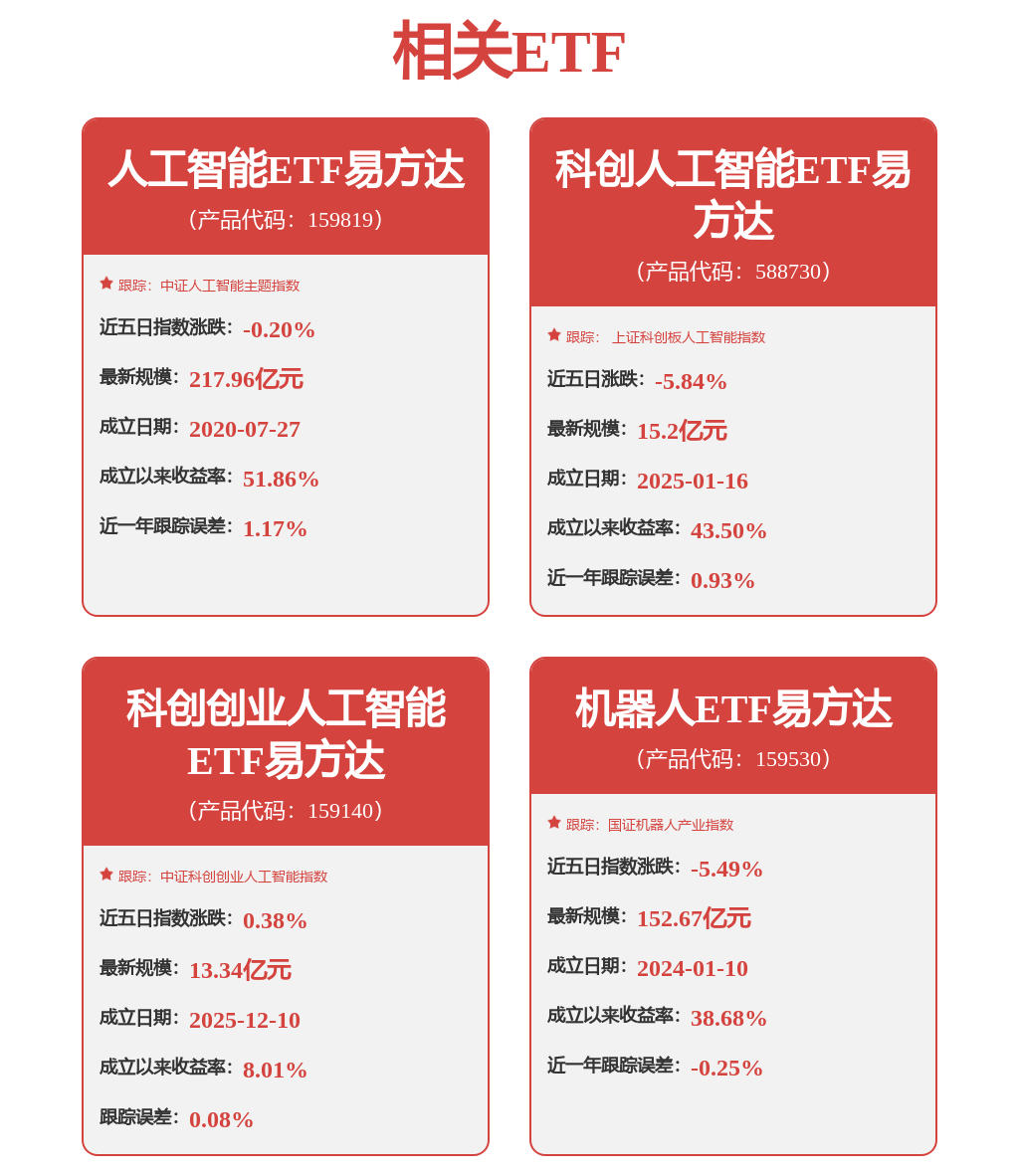
Investment Rating - The report rates the electronic industry as "Outperform" compared to the market [1]. Core Insights - NVIDIA's GTC 2026 introduced the Vera Rubin full-stack AI computing platform and the next-generation Feynman architecture, indicating a significant technological evolution in AI computing [2][5]. - The Vera Rubin platform features a new Vera CPU and Groq 3 LPU, creating a collaborative computing system that enhances AI inference performance and reduces latency [15][21]. - The report highlights potential growth opportunities in SRAM, new liquid cooling technologies, and CPO optical chips as a result of NVIDIA's advancements [37]. Summary by Sections NVIDIA's Technological Advancements - NVIDIA has transitioned from Tesla and Fermi architectures to the Vera Rubin and Feynman architectures, marking a significant leap in GPU technology from graphics acceleration to general-purpose parallel computing [6][8]. - The Vera Rubin platform integrates a new Vera CPU optimized for AI inference and a Groq 3 LPU designed for low-latency processing, significantly improving performance metrics [19][21]. Liquid Cooling Technology - The Vera Rubin platform employs a 100% liquid cooling architecture, which enhances cooling efficiency and reduces operational costs compared to traditional air and liquid cooling methods [26][27]. - This new cooling technology is expected to gradually replace conventional cooling solutions in data centers, improving overall energy efficiency [26]. CPO Optical Technology - NVIDIA launched the Spectrum-X Ethernet switch, the first CPO (Co-Packaged Optics) technology, which integrates optical modules directly into chip packaging, enhancing data center network bandwidth and efficiency [28]. - The CPO technology is anticipated to drive demand for copper and optical components in the industry [28]. Potential Beneficiaries - The report identifies several companies that may benefit from these technological advancements, including: - Beijing Junzheng, which focuses on SRAM and has a leading market share in automotive-grade SRAM [38]. - Gaolan Co., a specialist in thermal management solutions, which has seen revenue growth due to increased demand for liquid cooling systems [46]. - Chuanrun Co., which offers comprehensive liquid cooling solutions and has shown a recovery in revenue growth [50]. - Changguang Huaxin, which specializes in high-power semiconductor laser chips and has recently seen a rebound in performance [53]. - Yuanjie Technology, focusing on high-speed optical chips, has experienced significant revenue growth [61].

【太平洋科技-每日观点&资讯】(2026-03-25)
远峰电子· 2026-03-24 11:48
Market Overview - Major indices showed positive performance with the STAR 50 up by 2.33%, the Northern Exchange 50 by 1.94%, the Shanghai Composite Index by 1.78%, the Shenzhen Component Index by 1.43%, and the ChiNext Index by 0.50% [1] TMT Sector Performance - The TMT sector led the market with significant gains, including SW Communication Cables and Accessories up by 5.41%, SW Optical Components by 4.73%, and SW Passive Components by 4.18% [1] Domestic News - Alibaba launched its new flagship CPU product, the Xuantie C950, based on the open-source RISC-V architecture, achieving a single-core performance score exceeding 70 in the Specint2006 benchmark, setting a global record for RISC-V performance [2] - CINNO reported that Zhongdao Optoelectronics successfully won a project for high-precision AOI detection equipment for leading panel manufacturers, achieving a 0.4μm detection precision [2] - Silicon Valley Semiconductor delivered its first batch of fully automated laser stripping equipment compatible with 12-inch silicon carbide substrates, marking a successful industrialization of this technology [2] - According to MIR, the domestic production rate of semiconductor manufacturing equipment in China is projected to increase from 4% in 2017 to 21% by 2025 [2] International News - STMicroelectronics announced that the first batch of STM32 wafer products, manufactured by Huahong Grace, has been shipped to domestic customers, with plans for more STM32 product series to achieve local production by 2026 [3] - Samsung stated that its HBM5 core bare chips will continue to use the 1c (sixth generation 10nm level) process, with plans to upgrade the core chip to 1d (seventh generation 10nm level) DRAM for the ninth generation HBM5E products [3] - Anmou Technology released a new generation of "Linglong" VPU IP products, expected to enter mass production in 2026, featuring high performance and low latency across various application scenarios [3] AI News - Meitu's AI Skills have officially integrated with the "Lobster Ecosystem," offering eight AI imaging capabilities for users [4] - OpenAI has discontinued the "Instant Checkout" feature in ChatGPT, redirecting users to merchant websites for purchases due to technical complexities [4] - AiPPT.com has introduced the Nano Banana 2 model to enhance its image generation quality and understanding of prompts [4] - SwitchBot claims to have launched the world's first local home AI agent supporting OpenClaw, capable of understanding real-world events through connected cameras [4] Industry Tracking - Beijing Yushi Space Technology Co., Ltd. completed a 200 million yuan Pre-A+ round of financing to support its rocket assembly testing and capacity construction [5] - A Chinese team made significant progress in brain-controlled robotic dog technology by integrating a non-invasive brain-computer interface with autonomous navigation [5] - A humanoid robot named "Titan o1" was released, utilizing a general action pre-training model to mimic human movements [5] - Covestro announced a contract with the Fraunhofer Institute for Chemical Recycling of rigid polyurethane foam waste, with a processing capacity of 2,000 tons per year [5] Annual Reports - Yuanjie Technology reported a total revenue of 601 million yuan for 2025, a year-on-year increase of 138.5%, with a net profit of 191 million yuan, up 3212.62% [6] - Huidian Co., Ltd. achieved a total revenue of 18.945 billion yuan, a 42% increase year-on-year, with a net profit of 3.822 billion yuan, up 47.74% [6] - China Telecom reported total revenue of 523.925 billion yuan, a slight increase of 0.07%, with a net profit of 33.185 billion yuan, up 0.52% [6] - Guangku Technology reported total revenue of 1.474 billion yuan, a 47.56% increase year-on-year, with a net profit of 177 million yuan, up 163.76% [6]

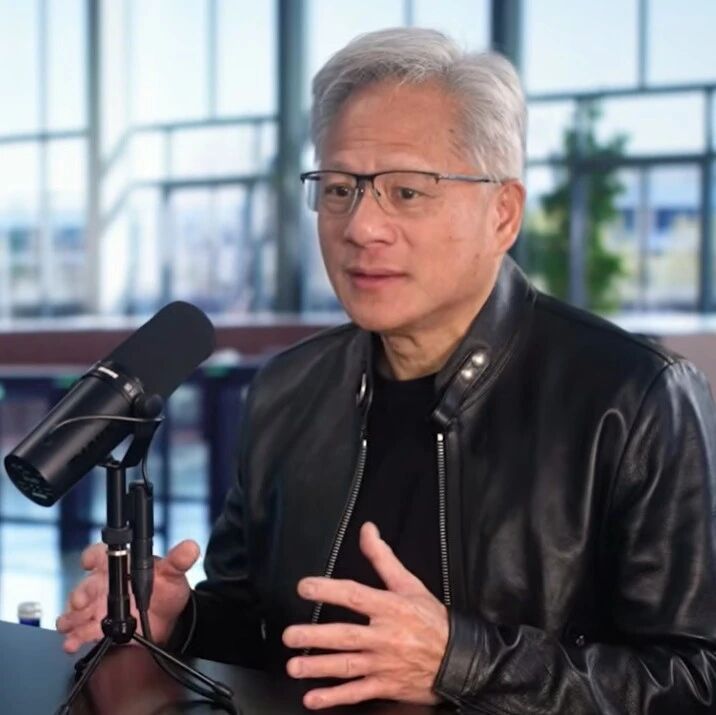
英伟达早不靠GPU躺赢,黄仁勋终极预判:10亿程序员时代将至,AI智能彻底廉价
3 6 Ke· 2026-03-24 11:42
Core Insights - Huang Renxun emphasizes that the core competition in AI is shifting from individual chips to "AI factories," which will determine NVIDIA's potential to reach a market value of $10 trillion [2] - The future of AI growth will rely heavily on system-level engineering capabilities rather than just upgrading individual GPUs [3] - Huang believes that the true limit of intelligence will be determined by computational power, and the focus will shift to maximizing token output per watt [3][28] Group 1: AI Development and Strategy - Huang Renxun discusses the "expansion law," stating that it will continue to evolve along four paths: pre-training, post-training, testing, and intelligent agent systems [2][19] - The transition from training to inference will require significant computational resources, as inference is inherently more complex than pre-training [20] - The future of AI will see a massive increase in the number of programmers, driven by the need for problem-solving and collaboration rather than just coding [5] Group 2: System Design and Collaboration - NVIDIA's approach has shifted from chip-level design to rack-level and system-level design, necessitating extreme collaborative design across various technical domains [7][10] - Huang emphasizes the importance of collective intelligence, with around 60 experts reporting directly to him, covering all critical technical dimensions [4][10] - The company focuses on optimizing the entire technology stack, from architecture to algorithms, to ensure efficient distribution of workloads across systems [9][10] Group 3: Market Position and Future Predictions - Huang expresses confidence that NVIDIA's market position is central to the emerging economic infrastructure as the world transitions to a context-based system [5] - The company is actively working to address supply chain challenges and ensure that it can maintain its growth trajectory in the AI computing market [29][30] - Huang predicts that the next three years will require hardware investments in yet-to-emerge AI models, necessitating foresight and flexibility in system architecture [23][24] Group 4: Energy Efficiency and Sustainability - Huang highlights the underutilization of global electricity systems, suggesting that AI factories can leverage idle power to enhance efficiency [3][35] - The focus on energy efficiency is critical, as the profitability of AI factories will depend on maximizing token output per watt [28] - Huang advocates for a new approach to power contracts that allows data centers to reduce loads during peak demand, thus utilizing excess capacity [35][37] Group 5: Global Talent and Competitive Landscape - Huang acknowledges the significant contribution of Chinese researchers to global AI advancements, noting that many top talents are based in China [47] - The competitive landscape in China is characterized by a multitude of tech companies and internal competition, fostering innovation and excellence [47]
黄仁勋深度访谈:“Token经济”爆发,AI计算占GDP比重将翻百倍,英伟达10万亿是必然
华尔街见闻· 2026-03-24 11:09
Core Insights - The essence of computing has fundamentally shifted from a "storage system" to a "generative system" with context-awareness capabilities, which directly ties to revenue generation for businesses [3][4] - AI computing is now likened to a "factory" producing a new commodity called "Token," which has been segmented and priced, indicating a significant transformation in the economic role of computing [4][5] - The CEO is confident that the share of global GDP attributed to computing will increase by a factor of 100 in the future, suggesting a substantial growth trajectory for the industry [5] AI and Economic Impact - The production of Tokens is expected to create immense value, with potential pricing models indicating that people may pay $1,000 for every million Tokens in the near future [4] - The company is projected to reach a market valuation of $10 trillion, with a strong belief in inevitable growth leading to potential revenues of $3 trillion [6] Power and Efficiency Challenges - Power supply is a concern for AI expansion, but it is not the only issue; improving energy efficiency and acquiring more power are both necessary [8][9] - The CEO emphasizes the importance of "tokens per watt per second" as a key efficiency metric, with expectations for token generation costs to decrease significantly over time [8] Supply Chain and Infrastructure - The company is proactively addressing potential supply chain constraints by collaborating with around 200 suppliers and advancing the manufacturing model for data centers [10][11] - The shift from traditional assembly to pre-manufactured data center components is crucial for meeting the high interconnectivity demands of modern computing [11] AI Scaling Laws - The CEO outlines four scaling laws for AI expansion: pre-training, post-training, testing expansion, and agent-based expansion, indicating a comprehensive approach to AI development [13] - There is a belief that the limitations of training data will shift to being constrained by computing power instead [14] Competitive Advantages - The company's largest competitive moat is identified as the extensive deployment of CUDA and the trust built within its ecosystem of developers and partners [16][17] - The exploration of moving data centers to space is acknowledged, but significant physical challenges remain, with a current focus on optimizing terrestrial energy use [17] Workforce Transformation - The CEO predicts a dramatic increase in the number of programmers globally, suggesting that the workforce will evolve to include a broader range of professionals skilled in AI [21] - The potential for AI to create autonomous applications that generate profit is already seen as feasible, indicating a shift in the nature of work and innovation [21]
兆易创新GD32M531,打造电机控制专用MCU新标杆
半导体芯闻· 2026-03-24 10:53
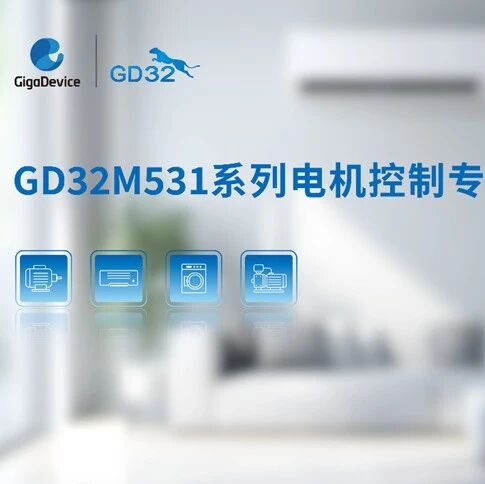
Core Viewpoint - The article highlights the launch of the GD32M531 series MCU by Zhaoyi Innovation at the AWE 2026, marking a strategic shift from general-purpose MCUs to application-specific chips tailored for the home appliance industry, particularly in motor control applications [2][12]. Group 1: Product Development and Features - The GD32M531 MCU is designed specifically for motor control, addressing the limitations of general-purpose MCUs in the home appliance sector, particularly in air conditioning and washing machines [3][4]. - This MCU operates at a main frequency of 180MHz and achieves a Coremark score of 705 and DMIPS of 267, positioning it as a benchmark product among domestic 5V motor MCUs [6]. - The chip integrates high-speed, high-precision ADC, DAC, and other motor-specific modules, enhancing signal processing capabilities and reducing CPU load for efficient motor control [6][9]. Group 2: Reliability and Compliance - The GD32M531 meets industrial-grade reliability standards, supporting a wide voltage range of 2.7V to 5.5V and operating temperatures from -40°C to 105°C, ensuring stable performance in extreme conditions [7]. - It has achieved UL/IEC 60730 Class B functional safety certification, reinforcing its reliability throughout the product lifecycle [7]. Group 3: Market Strategy and Customer Engagement - Zhaoyi Innovation emphasizes collaboration with leading customers during the chip development process to ensure the product meets industry needs, which is crucial for market entry [10][11]. - The company plans to begin customer sampling in 2024, with extensive testing and validation throughout 2025, aiming for mass production in the latter half of 2026 [10][11]. Group 4: Future Outlook and Industry Positioning - The introduction of the GD32M531 is seen as a stepping stone for Zhaoyi Innovation in the white goods market, facilitating entry into the domestic supply chain and supporting the trend towards smart home appliances [12][13]. - The company aims to leverage its comprehensive product offerings, including storage, sensing, and power management, to provide a one-stop solution for home appliance manufacturers, enhancing its competitive edge [13].

按兵不动
第一财经· 2026-03-24 10:49
Core Viewpoint - The A-share market experienced a collective rise in the three major indices, driven by cyclical resources and communication equipment sectors, indicating a recovery trend in the market [4]. Group 1: Market Performance - The Shanghai Composite Index led the gains, supported by the cyclical resources and communication equipment sectors, while the Shenzhen Component Index followed suit, buoyed by industrial metals and chemical fiber sectors [4]. - A total of 5,135 stocks rose, with a surge in the market characterized by a strong recovery and cyclical resource-driven momentum [5]. - The trading volume across both markets decreased by 14.3%, yet remained above the trillion yuan mark, indicating a shift in capital allocation [6]. Group 2: Capital Flow and Investor Sentiment - Institutional investors adopted a strategy of "abandoning high and cutting low," withdrawing funds from high-performing sectors like photovoltaic equipment and consumer electronics, and reallocating to undervalued sectors such as communication equipment and industrial metals [8]. - Retail investors actively participated in the market's upward trend, focusing on sectors like non-ferrous metals, chemical fibers, and semiconductors, while also favoring small and mid-cap stocks [8]. - The sentiment among retail investors was notably high, with 75.85% expressing positive sentiment towards the market [9]. Group 3: Sector Highlights - Key sectors that saw significant gains included non-ferrous metals, precious metals, chemical fibers, semiconductors, and AI computing, with themes like lithium mining, charging piles, and photolithography machines gaining traction [5]. - The market showed a clear preference for low-valuation sectors, indicating a strategic shift in investment focus [6].

电子行业专题报告:GTC2026,NVIDIA发布技术创新
Shanghai Aijian Securities· 2026-03-24 10:40
Investment Rating - The report rates the electronic industry as "Outperform" compared to the market [1]. Core Insights - NVIDIA's GTC 2026 introduced the Vera Rubin full-stack AI computing platform and the next-generation Feynman architecture, indicating a significant technological evolution in AI computing [2][5]. - The Vera Rubin platform features a new Vera CPU and Groq 3 LPU, creating a collaborative computing system that enhances AI inference performance and reduces latency [15][21]. - The report highlights potential growth opportunities in SRAM, new liquid cooling technologies, and CPO optical modules as a result of NVIDIA's advancements [37]. Summary by Sections NVIDIA's Technological Advancements - NVIDIA has transitioned from Tesla and Fermi architectures to the Vera Rubin and Feynman architectures, marking a significant leap in GPU technology from graphics acceleration to general-purpose parallel computing [6][8]. - The Vera Rubin platform integrates a new Vera CPU optimized for AI inference and a Groq 3 LPU designed for low-latency processing, significantly improving performance metrics [19][21]. Liquid Cooling Technology - The Vera Rubin platform employs a 100% liquid cooling architecture, which enhances cooling efficiency and reduces operational costs compared to traditional air and liquid cooling methods [26][27]. - This new cooling technology is expected to replace conventional cooling solutions in data centers, improving deployment efficiency and reducing energy consumption [26]. CPO Optical Technology - NVIDIA launched the Spectrum-X Ethernet switch, the first CPO (Co-Packaged Optics) technology, which integrates optical modules directly into chip packaging, enhancing data center network bandwidth and efficiency [28]. - The CPO technology is anticipated to drive demand for copper and optical components in the industry [28]. Potential Beneficiaries - The report identifies several companies that may benefit from these advancements, including: - Beijing Junzheng, which focuses on SRAM and has a leading market share in automotive-grade SRAM [38]. - Gaolan Co., a specialist in thermal management solutions, which is expected to see growth due to increasing demand for liquid cooling systems [46]. - Chuanrun Co., which is enhancing its liquid cooling solutions for data centers and has shown a recovery in revenue growth [50]. - Changguang Huaxin, which is advancing in high-power semiconductor laser chips and optical communication technologies [53]. - Yuanjie Technology, which specializes in high-speed optical chips and has shown significant revenue growth [61].
半导体碰上黑天鹅
格隆汇APP· 2026-03-24 09:55
Core Viewpoint - The ongoing geopolitical tensions have led to significant disruptions in key supply chains, particularly in the energy sector, affecting prices of essential materials like tungsten, aluminum, and urea, with helium prices also experiencing rapid increases due to production halts in Qatar [2][3][6]. Group 1: Impact of Geopolitical Events - The closure of the Strait of Hormuz by Iran has severely impacted global energy supply chains, leading to military actions that have damaged Qatar's Ras Laffan facility, a major source of liquefied natural gas and helium [6][7]. - Qatar's helium production facilities have been declared in a state of "force majeure," with an expected annual export reduction of 14%, as Qatar supplies about 30% of the world's helium [7][9]. Group 2: Helium Supply Chain Challenges - The transportation of helium has been severely disrupted, with specialized containers stuck at sea, risking inventory loss and complicating the logistics of finding alternative supply routes [8]. - The current helium spot price has doubled within 14 days of the crisis, with long-term contracts seeing over 30% additional fees due to supply constraints [9][13]. Group 3: Implications for Semiconductor Industry - Helium is critical in semiconductor manufacturing, particularly in cooling processes during chip production, and any disruption could lead to significant production delays or failures [15][20]. - The semiconductor industry, driven by AI innovations, is facing potential adjustments in production strategies due to helium supply uncertainties, with a focus on high-margin AI chips over lower-margin consumer products [20][22]. Group 4: Market Reactions and Future Outlook - The semiconductor sector in Asia, particularly in South Korea, has seen significant market volatility, with expectations of a 15% to 20% production decline in 2026 due to helium shortages [22][23]. - Domestic helium consumption in China is heavily reliant on imports, with projections indicating a significant gap between import needs and domestic production capabilities [27][29]. - Recent developments in domestic helium exploration and production have shown promise, but the industry remains vulnerable to international supply disruptions [31][34].

马斯克芯片厂开建,年产能是全球50倍、服务太空任务
阿尔法工场研究院· 2026-03-24 09:26
Core Viewpoint - Elon Musk has announced the launch of the TERAFAB project, aiming for an annual production capacity of 1 terawatt (TW) of computing chips, which is approximately 50 times the current global chip production capacity. About 80% of this capacity will directly serve space missions [3][5]. Group 1: Project Overview - The TERAFAB project is a joint strategic initiative led by Tesla, SpaceX, and xAI, located in Austin, Texas, and is the largest public manufacturing plan in human history [4]. - Musk emphasized the necessity of building TERAFAB, stating that existing suppliers like TSMC and Micron cannot meet the accelerating demand for chips in robotics, autonomous driving, and AI [4][5]. - The project aims to create a closed-loop system for design, production, testing, and packaging of chips within a single facility, integrating logic chips, memory chips, and advanced packaging [4][10]. Group 2: Demand and Supply Dynamics - Musk predicts that the demand for chips will be extreme, with the Optimus humanoid robot alone requiring 100 to 200 gigawatts (GW) of computing power, and space solar AI satellite clusters needing terawatt-level capacity [8]. - The current global chip production is about 20 gigawatts (GW), which is only about 2% of the projected demand for TERAFAB [4][8]. - The existing suppliers are unable to fill the demand gap, as the semiconductor industry is expanding but not at a sufficient pace to meet Musk's expectations [8]. Group 3: Technological and Structural Aspects - The factory will produce two types of chips: one optimized for edge inference, primarily for the Optimus robot and Tesla vehicles, and another designed for space environments to withstand high-energy particle bombardment and extreme temperatures [11][12]. - Musk claims that the integration of chip manufacturing processes in a single building is unprecedented globally, with an expected iteration speed that is an order of magnitude faster than current methods [11]. Group 4: Strategic Implications and Financing - The announcement of TERAFAB coincides with SpaceX's plans for a large-scale IPO, which is expected to raise up to $50 billion, with a valuation potentially exceeding $1.75 trillion [5][13]. - The chips produced by TERAFAB are expected to be primarily consumed by xAI for space AI model training and satellite data processing, indicating a strong synergy among the three companies [13][14]. - Musk envisions TERAFAB as a critical step for humanity to become a multi-planetary civilization, with future plans including the construction of an electromagnetic mass driver on the Moon [16]. Group 5: Challenges and Concerns - Analysts express skepticism regarding the feasibility of the project, highlighting the significant financial investment required, estimated to be around $30 billion to $45 billion for a factory capable of producing 100,000 advanced logic chips per month [17]. - The supply chain for high-end extreme ultraviolet (EUV) lithography machines is heavily reliant on ASML, with long delivery times, complicating the project further [17]. - There are concerns about the availability of skilled talent, as the semiconductor manufacturing process is complex and requires specialized expertise [17].

黄仁勋深度访谈:“Token经济”爆发 AI计算占GDP比重将翻百倍 英伟达(NVDA.US)10万亿是必然
Zhi Tong Cai Jing· 2026-03-24 09:25
Core Insights - The essence of computing has fundamentally shifted from a "storage system" to a "generative system" with context-awareness capabilities, transforming computers from profit centers to factories directly linked to revenue generation [2][3] - The concept of "Token" as a new commodity produced by AI factories is emerging, with potential pricing models indicating a significant increase in the economic impact of computing, potentially leading to a 100-fold increase in GDP contribution from computing [2][3] - The company is confident in its growth trajectory, with the possibility of reaching a market valuation of $10 trillion, driven by the Token economy [3][4] Energy and Efficiency - Energy is a concern for AI expansion, but it is not the only issue; improving energy efficiency and acquiring more power are both necessary paths [4][5] - The focus on energy efficiency is quantified by the metric of "tokens per watt per second," with expectations of a significant decrease in token generation costs over time [4][5] - The current power grid is designed for peak demand, leaving much idle capacity that could be utilized by changing contracts with cloud providers to allow for graceful degradation of data center operations during power shortages [5] Supply Chain and Memory - The company is not worried about potential bottlenecks in AI production capacity from suppliers, as it has established strong relationships and clear requirements with over 200 suppliers [6] - The traditional assembly model for data centers is being replaced by a pre-assembly approach in the supply chain, requiring significant power reserves for testing before shipment [6][7] - The company has successfully advocated for the adoption of High Bandwidth Memory (HBM) in data centers, which was previously underutilized, and is also pushing for the adaptation of low-power memory technologies for supercomputing [6][7] AI Scaling Laws - The CEO outlines four scaling laws for AI expansion: pre-training, post-training, testing time expansion, and agentic scaling [8][9] - Concerns about "data exhaustion" are being addressed by expanding training data, much of which will be synthetic, indicating that training will increasingly be limited by computational power rather than data availability [9] - The demand for computational power during inference (thinking) is expected to rise significantly, as inference involves complex reasoning and problem-solving [9] Competitive Advantages and Future Outlook - The company's greatest competitive advantage lies in the extensive deployment of CUDA and the trust built within its ecosystem of developers [10][11] - The exploration of deploying data centers in space is acknowledged, but significant physical challenges remain, with a current focus on optimizing energy use on Earth [11] - The company anticipates a dramatic increase in the number of programmers globally, driven by the integration of AI into various professions, suggesting a future where every worker can leverage AI tools [12][13]