纺织

Search documents
比美国还高,墨西哥通告中国将加税50%,商务部:想好了吗?
Sou Hu Cai Jing· 2025-12-12 13:55
Group 1 - Mexico's Congress approved a tariff bill that will impose tariffs ranging from 5% to 50% on imports from Asian countries, including China, starting January 1, 2026 [1][3] - The new tariffs will affect 1,463 tariff items, representing 16.8% of Mexico's total tariff codes, impacting approximately $52 billion worth of imports, which is 8.6% of Mexico's annual import total [3] - The automotive industry is particularly affected, with Chinese vehicles holding an 18.1% market share in Mexico, and the new tariffs will significantly increase the cost of imported vehicles [3][5] Group 2 - The Mexican government claims the tariffs aim to "protect national industry," but they are also expected to generate an annual revenue of 70 billion pesos (approximately $3.76 billion) to address the highest budget deficit since the 1980s [5] - The tariffs are part of a series of measures against China, including temporary tariffs on textiles and a 35% countervailing duty on electric vehicles, closely linked to U.S. pressure on Mexico [5][7] - The core motivation for these tariffs is the upcoming review of the USMCA (United States-Mexico-Canada Agreement), with the U.S. urging Mexico to limit Chinese goods entering the North American market [7] Group 3 - There are concerns within Mexico regarding the potential negative impact of these tariffs, with some lawmakers arguing that now is not the time to provoke trade tensions with China [7][12] - The Mexican manufacturing sector relies heavily on Chinese imports, with 30% of machinery and components sourced from China, raising concerns about competitiveness and economic growth [12] - The tariffs could lead to increased production costs, which may ultimately be passed on to consumers, affecting low-income populations who rely on affordable goods [12][15] Group 4 - Chinese companies are already adapting to the new tariff environment by restructuring supply chains, such as relocating assembly processes to Mexico while sourcing high-value components from Southeast Asia [14] - Mexico's nearshoring strategy is under pressure as the U.S. pushes for supply chains to move away from China, but Mexican factories may struggle to replace Chinese raw materials in the short term [14] - The global trade landscape is shifting, with the U.S. pushing for local content requirements under the USMCA, which may sacrifice trade diversity in favor of geopolitical alignment [14]


棉花周报:郑棉向上突破,整体偏强运行-20251212
Guo Xin Qi Huo· 2025-12-12 10:08
Report Summary 1. Report Industry Investment Rating No relevant information provided. 2. Core Viewpoints - Domestically, Zhengzhou cotton broke through upwards this week. With the Fed's interest - rate cut and the expected reduction in Xinjiang's cotton planting area, Zhengzhou cotton may challenge the 14,000 yuan/ton mark despite facing upward pressure [56]. - Internationally, the market fluctuated narrowly. The USDA's monthly supply - demand report was bearish, and U.S. cotton's weekly export data was weak. Short - term U.S. cotton is expected to remain weakly volatile [56]. 3. Summary by Directory 3.1 Cotton Market Analysis - **Futures Prices**: Zhengzhou cotton strengthened this week with a weekly increase of 0.95%, while ICE cotton fluctuated slightly with a weekly increase of 0.01% [11]. - **Spot Prices**: This week, the cotton price index rebounded. The 3128 index rose 16 yuan/ton and the 2129 index rose 15 yuan/ton compared to last week [16]. - **Import Situation**: In October, 90,000 tons of cotton were imported, a year - on - year decrease of 20,000 tons [21]. - **Inventory Situation**: As of the second half of November, the commercial cotton inventory was 4.6836 million tons, and the market entered an accelerated inventory accumulation stage [22]. - **Downstream Inventory**: In November, the yarn inventory was 26.33 days, a year - on - year decrease of 1.13 days, and the grey fabric inventory was 32.34 days, a year - on - year increase of 0.69 days [30]. - **Yarn Prices**: This week, yarn prices rose. The price of open - end spun 10 - count cotton yarn remained flat, while the prices of carded 32 - count and combed 40 - count cotton yarns increased by 30 yuan/ton [34]. - **Zhengzhou Commodity Exchange Warehouse Receipts**: This week, the number of Zhengzhou cotton warehouse receipts plus forecasts increased by 1,062, with 2,967 warehouse receipts and 3,585 valid forecasts, totaling 6,552 [40]. - **U.S. Cotton Export**: As of November 13, the net sales of U.S. upland cotton for the current year increased by 187,600 bales, and for the next year, it was 17,600 bales [47]. - **U.S. Weather**: The total area in drought (D1 - D4) in the U.S. was 33.8%, with different drought levels having different coverage percentages [53]. 3.2后市展望 (Market Outlook) - Domestic market: Zhengzhou cotton is expected to challenge the 14,000 yuan/ton mark due to factors such as the Fed's interest - rate cut and the expected reduction in Xinjiang's planting area, although it faces upward pressure [56]. - International market: U.S. cotton is expected to remain weakly volatile in the short term due to a bearish USDA report and weak export data [56].
大行评级丨招银国际:对明年中国可选消费行业持“与大市同步”评级
Ge Long Hui· 2025-12-12 06:29
Core Viewpoint - CMB International maintains a "market perform" rating for China's discretionary consumption sector for 2026, expecting overall retail sales growth of approximately 3.5% with a cautious outlook [1] Sector Summaries Preferred Sub-sectors - The company is optimistic about the following sub-sectors: 1) Tea and coffee, 2) Trendy toys, 3) Apparel, 4) Textiles [1] Neutral Outlook Sub-sectors - The company maintains a "market perform" view on the following sub-sectors: 5) Dining, 6) Sports goods, 7) Travel and hotel, 8) Home appliances [1] Consumption Types - In a basic scenario, the company favors: 1) Survival consumption (frugality, low price, high cost-performance), with related companies including: Guoquan, Yum China, Luckin Coffee, Dashihua, Bosideng [1] - 2) Compensatory consumption (small pleasures, affordable entertainment, emotional value, experiential) [1] - 3) Defensive consumption (gold, silver, high dividends), with related companies including: Bosideng, Jiangnan Buyi, Li Lang, Tabo [1] Optimistic Scenario - In an optimistic/bull market scenario (strong stock market, stabilizing real estate), large-ticket consumption will benefit more, with related companies including: Haier Smart Home, Midea Group, Hai Di Lao, Anta Sports [1]
招银国际:对中国可选消费行业持“同步大市”评级 展望偏向谨慎
智通财经网· 2025-12-12 05:53
Core Viewpoint - The report from CMB International indicates a cautious outlook for China's discretionary consumption sector in 2026, with an expected overall retail sales growth of approximately 3.5%, a slight decrease from about 4% in 2025, influenced by factors such as the delayed Spring Festival, extended holidays, potential recovery in the real estate sector, and a thriving stock market [1] Group 1: Industry Overview - The industry valuation is likely to have bottomed out this year, currently at around 15 times the price-to-earnings ratio, which is still not expensive compared to the average of about 20 times over the past eight years [1] - The overall view remains conservative due to potential slowing growth in the next 12 months and high geopolitical risks, suggesting that valuations may not rise quickly without significant positive policies or a clear recovery in real estate [1] Group 2: Subsector Ratings - CMB International prioritizes the following subsectors for 2026: 1) Tea and coffee, 2) Trendy toys, 3) Apparel, 4) Textiles; maintaining a "market perform" rating for: 5) Dining, 6) Sports goods, 7) Travel and hotel, 8) Home appliances [2] - The ratings for the tea and coffee sector and trendy toys are maintained at "outperform," while the apparel and textile sectors have been upgraded to "outperform" [2] Group 3: Investment Themes - The investment themes are categorized into different types of consumption, with a focus on: 1) Essential consumption (frugality, low price, high cost-performance), related companies include: Guoquan (02157), Yum China (09987), Luckin Coffee (LKNCY.US), Dashihua (01405), Bosideng (03998) [2] - Other themes include compensatory consumption (small pleasures, affordable entertainment, emotional value, experiential) and defensive consumption (gold, silver, high dividends), with related companies such as Bosideng (03998), Jiangnan Buyi (03306), Li Lang (01234), and Taobo (06110), all rated as "buy" [2] Group 4: Large-ticket Consumption - CMB International is less optimistic about large-ticket consumption (durables, real estate-related, luxury goods, high-end tourism), but in a bullish scenario (if wealth effects are strong with a thriving stock market and stabilizing real estate), it could benefit large-ticket consumption, with related companies including Haier Smart Home (06690, 600690.SH), Midea Group (00300, 000300.SH), Haidilao (06862), and Anta Sports (02020), all rated as "buy" [3]
每日投资策略-20251212
Zhao Yin Guo Ji· 2025-12-12 04:48
Macro Economic Overview - The central economic work conference indicates that China will adopt a moderately stimulating policy in 2026, with a more proactive fiscal policy and a moderately loose monetary policy. Key focuses include expanding consumption, stabilizing investment, and preventing systemic risks [2] - The central bank is expected to lower the RRR by 50 basis points and the LPR by 20 basis points in 2026. The broad fiscal deficit may reach 8.5% of GDP, close to 8.4% in 2025 [2] Global Market Performance - The Hang Seng Index closed at 25,531, down 0.04% for the day but up 27.27% year-to-date. The Shanghai Composite Index closed at 3,873, down 0.70% for the day and up 15.56% year-to-date [3] - The U.S. markets showed slight increases, with the Dow Jones up 1.34% and the S&P 500 up 0.21%. However, the Nasdaq fell by 0.25% [3] Industry Outlook Consumer Sector in China - The report maintains a "market perform" rating for the Chinese consumer sector in 2026, expecting overall retail sales growth of about 3.5%, slightly down from approximately 4% in 2025. Negative factors outweigh positive ones, including the withdrawal of subsidies and slowing export momentum [7][8] - Investment focus is on three consumption types: survival consumption emphasizing frugality, compensatory consumption focusing on affordable entertainment, and defensive assets like gold and high-dividend stocks [8] Specific Sub-sectors - The report is optimistic about the tea and coffee, trendy toys, clothing, and textile industries for 2026. It suggests that tea and coffee have structural growth potential despite a slowdown in growth rates [8][9] - The restaurant sector faces challenges from subsidy withdrawals and increased competition, while the sports goods sector may see some brand reversals but is still impacted by consumer downgrading and inventory pressures [9] Company Reports - Adobe reported a 10% year-on-year revenue increase to $6.19 billion in Q4 FY25, with non-GAAP net profit rising 8% to $2.29 billion, meeting expectations. The integration of AI technology is driving business growth, with AI-enabled business ARR exceeding one-third of total business [10] - J&T Express achieved profitability in Thailand after years of price wars, holding a market share of 32.8% in the first half of FY25. The management is confident about growth potential in the Southeast Asian market [10]
墨西哥明年起对华等多个亚洲国家加征关税,大部分商品的关税税率被设定为35%,中方:密切关注
Huan Qiu Shi Bao· 2025-12-12 00:17
Core Viewpoint - Mexico's Senate has passed a new import-export tariff law, set to impose tariffs ranging from 5% to 50% on various products from several Asian countries, including China, starting January 1, 2026. This move, aimed at supporting domestic industries, has faced significant opposition from various business groups in Mexico [1]. Group 1: Legislative Details - The Senate approved the tariff law with a vote of 76 in favor, 5 against, and 35 abstentions, following its earlier passage in the House of Representatives [1]. - The law will impose tariffs on a wide range of products, including automobiles, auto parts, textiles, clothing, plastics, and steel, with most tariffs set at 35% [1]. - The final version of the law is considered milder than an earlier proposal that was shelved, with at least 750 amendments made [1]. Group 2: Industry Impact - Business leaders warn that the tariffs will disrupt key manufacturing sectors that support Mexico's production, employment, and exports, particularly in electrical and electronic components [2]. - The president of the National Chamber of Commerce highlighted that 66% of the national GDP sectors were not consulted before the proposal was submitted, leading to decisions lacking technical assessments, which have already caused contractions in some industrial and service sectors [2]. - The board member of the Mexican Business Coordinating Council stated that tariff increases will immediately reflect in final prices, disproportionately affecting low-income consumers [2]. Group 3: International Response - The Chinese Ministry of Commerce expressed opposition to unilateral tariff measures and is conducting a trade barrier investigation against Mexico to protect its industries [3].
上海天成地材地毯有限公司成立 注册资本10万人民币
Sou Hu Cai Jing· 2025-12-11 21:03
天眼查App显示,近日,上海天成地材地毯有限公司成立,法定代表人为周腾飞,注册资本10万人民 币,经营范围为一般项目:针纺织品及原料销售;产业用纺织制成品销售;地板销售;家具安装和维修 服务;专业保洁、清洗、消毒服务;建筑材料销售;五金产品零售;互联网销售(除销售需要许可的商 品);劳务服务(不含劳务派遣);体育用品及器材零售。(除依法须经批准的项目外,凭营业执照依 法自主开展经营活动)。 ...
官宣,又一个14万亿大省来了
Mei Ri Jing Ji Xin Wen· 2025-12-11 14:58
Group 1 - Jiangsu's GDP is expected to exceed 14 trillion yuan, marking a significant milestone in its economic development [1][2] - The province aims to enhance its contribution to national economic growth, improve its radiating and driving capabilities, and increase development coordination and international competitiveness [2] - Jiangsu's manufacturing industry remains robust, with a projected added value of 4.63 trillion yuan in 2024, maintaining its position as the top manufacturing province in China [2] Group 2 - Jiangsu has the highest number of "trillion-yuan cities" in China, with cities like Suzhou, Nanjing, and Wuxi leading the way, and Xuzhou expected to join this group [3] - The province emphasizes expanding domestic demand as a strategic initiative, enhancing its role in economic growth [3] - Jiangsu's innovative consumption initiatives have gained national attention, reflecting its commitment to driving economic activity [3]
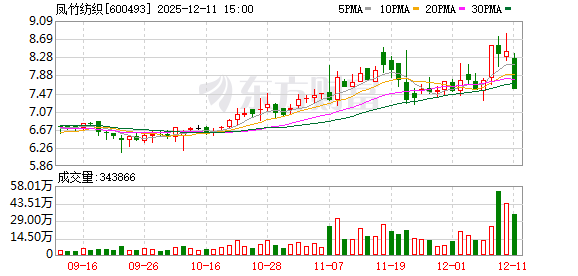
凤竹纺织龙虎榜:营业部净买入410.53万元
Zheng Quan Shi Bao Wang· 2025-12-11 11:03
Core Viewpoint - Fengzhu Textile (600493) experienced a trading halt today, with a significant drop in stock price and notable trading activity, indicating market volatility and investor sentiment concerns [2]. Trading Activity - The stock hit the daily limit down with a trading volume of 12.64% and a total transaction value of 271 million yuan, showing a price fluctuation of 10.71% throughout the day [2]. - The stock was listed on the Shanghai Stock Exchange for a price deviation of -9.30%, with a net buying amount of 4.1053 million yuan from brokerage seats [2]. - The top five brokerage seats accounted for a total transaction of 53.1047 million yuan, with a buying amount of 28.605 million yuan and a selling amount of 24.4997 million yuan, resulting in a net buying of 4.1053 million yuan [2]. Major Brokerage Activity - The largest buying brokerage was CITIC Securities Co., Ltd. Shanghai Branch, with a purchase amount of 9.0941 million yuan, while the largest selling brokerage was JPMorgan Securities (China) Co., Ltd. Shanghai Yincheng Zhonglu Securities Branch, with a selling amount of 5.5081 million yuan [2]. - Other notable buying brokerages included UBS Securities and Goldman Sachs, with buying amounts of 7.2597 million yuan and 5.5623 million yuan, respectively [2]. Fund Flow - The stock saw a net outflow of 5.5102 million yuan in principal funds today, with a significant outflow of 239,800 yuan from large orders and 5.2704 million yuan from major orders [2]. - Over the past five days, the stock experienced a net inflow of 32.3552 million yuan in principal funds [2]. Financial Performance - The company reported its third-quarter results on October 31, showing a total revenue of 688 million yuan for the first three quarters, a year-on-year decrease of 5.54%, and a net profit of 15.7354 million yuan, down 74.86% year-on-year [2].

展望“十五五” | 广东省发布“十五五”规划建议:着力打造新兴支柱产业,实施产业创新工程
Xin Lang Cai Jing· 2025-12-11 10:16
Core Viewpoint - The Guangdong Provincial Committee emphasizes the importance of the 15th Five-Year Plan in advancing China's modernization, highlighting the achievements during the 14th Five-Year Plan and setting ambitious goals for economic and social development in the upcoming period [3][4][7]. Group 1: Achievements During the 14th Five-Year Plan - Guangdong has achieved significant economic growth, reaching a total economic output of 14 trillion yuan, with over 7 million new urban jobs created and a rise in per capita disposable income outpacing economic growth [3][4]. - The province has made strides in high-quality development, technological innovation, and ecological improvements, showcasing a balanced and coordinated development approach [3][4][10]. Group 2: Historical Context and Development Environment - The 15th Five-Year Plan period is seen as crucial for consolidating the foundations of socialist modernization and creating new advantages for Guangdong [4][5]. - The province faces both opportunities and challenges, including global geopolitical shifts and the need for technological advancements to maintain competitive advantages [5][6]. Group 3: Guiding Principles and Goals for the 15th Five-Year Plan - The guiding principles include upholding the leadership of the Communist Party, prioritizing people-centered development, and focusing on high-quality growth [8][9]. - Key goals include achieving significant improvements in economic quality, enhancing self-reliance in technology, and promoting coordinated urban and rural development [10][11]. Group 4: Economic and Social Development Strategies - Strategies include deepening reforms, expanding openness, and enhancing the quality of the business environment to stimulate economic vitality [31][33]. - The plan emphasizes the importance of integrating domestic and international markets, fostering innovation, and developing a modern industrial system [30][36]. Group 5: Infrastructure and Technological Development - The plan outlines the need for a modern infrastructure system that supports economic activities and enhances resilience [21][22]. - It highlights the importance of technological self-reliance and innovation as key drivers for economic transformation and productivity enhancement [22][24]. Group 6: Consumer Market and Investment - The strategy focuses on boosting domestic consumption and investment, with initiatives aimed at enhancing consumer spending and optimizing investment structures [28][29]. - The plan aims to create a unified national market, facilitating resource sharing and economic integration across regions [30].