
数字经济

Search documents
侨力涌动中东 共拓合作新蓝海
Ren Min Ri Bao Hai Wai Ban· 2025-11-12 01:37
Group 1: China-Arab Cooperation - Recent events indicate a surge in cooperation between China and Arab countries, including forums and trade meetings [1][2] - China has achieved visa-free access for all members of the Gulf Cooperation Council (GCC), enhancing travel and business opportunities [3][2] - The bilateral trade volume between China and Arab countries reached a record $101.8 billion in 2024 [2] Group 2: Business Opportunities in UAE and Bahrain - The UAE has become China's largest export market in the Middle East, with a significant increase in trade activities [2][5] - Business leaders in the UAE are actively seeking to introduce innovative Chinese companies to the region, capitalizing on high investment returns [2][3] - Bahrain is experiencing a transformation towards a diversified economy, moving beyond oil dependency, creating new business opportunities [5][4] Group 3: Saudi Arabia's Economic Transformation - Saudi Arabia is emerging as a key investment destination for Chinese companies, driven by its economic transformation and large market size [6][8] - The "Vision 2030" initiative aims to reduce oil dependency and promote economic diversification, aligning with China's Belt and Road Initiative [8][6] - Chinese enterprises are increasingly focusing on sectors such as infrastructure, biomedicine, photovoltaic, digital economy, and environmental protection in Saudi Arabia [8][6] Group 4: Networking and Community Engagement - The Chinese community in the Middle East, particularly alumni from Zhejiang University, is actively involved in various sectors, enhancing business connections [9][6] - Local Chinese entrepreneurs are leveraging their networks to facilitate business opportunities for Chinese companies in the region [9][8] - Events like the China International Import Expo serve as platforms for promoting bilateral trade and cultural exchange [5][4]
专访卡塔尔投资促进局总监:中企在卡投资瞄准创新与氢能新赛道
2 1 Shi Ji Jing Ji Bao Dao· 2025-11-11 23:37
Core Insights - Chinese enterprises are shifting their investment focus in Qatar from traditional sectors to innovation-driven industries, aligning with Qatar's "2030 National Vision" for diversified development [1][2][4] Trade and Economic Cooperation - China is Qatar's largest trading partner, with a projected trade volume of $24.22 billion in 2024, including $4.174 billion in exports and $20.046 billion in imports [1] - From January to August 2025, the bilateral trade volume reached $16.374 billion, reflecting a year-on-year increase of $199 million, or 1.1% [1] Energy Cooperation - Qatar is China's second-largest source of liquefied natural gas (LNG), with imports expected to reach 18.3464 million tons in 2024 [1] - Qatar holds the world's third-largest natural gas reserves, particularly in the North Field, which is the largest single gas field globally [1] Investment Trends - Investment diversification is evident in four key areas: - Digital economy and ICT, with enhanced cooperation in cloud computing, smart cities, and 5G [2][4] - Advanced manufacturing and transportation, including the introduction of electric buses [4] - Gaming and creative industries, with Chinese firms entering the entertainment and digital content sectors [4] - Legal and professional services, with Chinese law firms establishing branches in Qatar [4] Renewable Energy Initiatives - Qatar aims to achieve 18% renewable energy share and a 25% reduction in greenhouse gas emissions by 2030, with significant projects like the 800 MW Al Kharsaah solar power plant [2][6] - Plans for a global largest blue ammonia plant by 2026 to support hydrogen and ammonia-based clean energy solutions [3][6] Innovation and Research - Qatar ranks first in the GCC for university-industry research collaboration and fourth globally in the ITU ICT Development Index [5] - R&D spending increased from 3.25 billion QAR in 2012 to 4.45 billion QAR in 2021, with a target of 1.5% of GDP by 2030 [5] Investment Incentives - Qatar offers a comprehensive set of incentives for foreign investors, including up to 40% coverage of eligible local investment costs for five years in sectors like advanced manufacturing, logistics, technology, and financial services [7][8]
工信部:创新成果播种活动吸引创投机构意向投资超70亿元
2 1 Shi Ji Jing Ji Bao Dao· 2025-11-11 13:16
Core Insights - The event "Innovation Achievement Seeding Action" held in Yibin, Sichuan, focuses on the development of key industries and innovation needs of enterprises, showcasing 14 major technological achievements in fields like new energy and chemical medicine [1][2] - Since the pilot program began at the end of 2024, over 120 major technological achievements have been facilitated for roadshow matching, attracting intended investments exceeding 7 billion yuan [1][3] - The initiative aligns with the goals set by the 20th National Congress of the Communist Party of China to enhance the role of enterprises in technological innovation and promote the development of specialized and innovative small and medium-sized enterprises [1][4] Industry Development - Yibin has established 22 national-level innovation platforms and attracted over 52,300 talents with bachelor's degrees or higher in the past three years, indicating a strong focus on talent acquisition [2] - The city has implemented a 1 billion yuan talent fund to gather various innovative and entrepreneurial talents, accelerating technological breakthroughs and industrial upgrades [2] - In 2024, Yibin's R&D expenditure is projected to reach 5.529 billion yuan, with a growth rate of 21.3%, double the provincial average [2] Financial Integration - The event involved multiple financial institutions, including investment banks and funds, to provide strategic guidance and support for the implementation of quality technological achievements in Yibin [2][3] - The initiative aims to create a "Sichuan model" and "Yibin model" for integrated development of technology, industry, and finance [2] Technological Transformation - The "Innovation Achievement Seeding Action" leverages 88,000 high-quality patents from the Chinese Academy of Sciences to match industrial development and enterprise innovation needs [3] - The Ministry of Industry and Information Technology emphasizes the importance of transforming technological achievements from samples to products, ensuring seamless integration of innovation and industrial chains [4][5] - Future efforts will focus on enhancing mechanisms, building platforms, improving services, and optimizing ecosystems to facilitate the transformation of technological achievements into practical applications [4][5]
海南“封关”进入倒计时,将如何改变你我?专访李世杰
Sou Hu Cai Jing· 2025-11-11 11:51
Core Insights - The implementation of "full island closure" in Hainan Free Trade Port marks a significant shift towards a high-level openness, transforming the island into a customs supervision area where most foreign goods can enter duty-free and circulate freely [3][4]. Policy Design and Structure - The policy design of "one line open, one line manage, and free flow within the island" aims to facilitate the free movement and efficient allocation of global goods and resources within Hainan [4]. - Hainan Free Trade Port differs fundamentally from existing free trade zones, as it encompasses the entire island (33,900 square kilometers) rather than small pilot areas, and focuses on comprehensive openness rather than just internal reform [4]. Industry Transformation - The tourism industry is expected to evolve from mere sightseeing to becoming an "international vacation destination," with duty-free shopping categories expanding to 6,600 items, covering 74% of all customs tax items [5]. - The modern service industry will see internationalization and high-end development, with cross-border finance, international exhibitions, and logistics set to experience significant growth [5][6]. - High-tech industries will benefit from low-cost aggregation due to favorable tax policies, attracting sectors like biomedicine, digital economy, and green technology [6]. Market Opportunities - For businesses, the main attractions include significantly reduced tax costs, improved customs efficiency, and access to a vast market that allows for global procurement and national sales [7]. - Individuals will benefit from enhanced job opportunities and quality of life, with a capped personal income tax rate of 15% and improved international living conditions [7]. Regional Integration - Inland regions can leverage Hainan as a new development hub by establishing a comprehensive logistics network and creating collaborative platforms for bonded goods and industrial synergy [8][9]. - The integration of trade facilitation and regulatory cooperation between Hainan and inland areas can streamline customs processes and enhance cross-border e-commerce [10]. Challenges and Responses - Potential challenges include price fluctuations and intense talent competition, necessitating the establishment of price monitoring mechanisms and optimized talent policies [11]. - Financial risk management is crucial, with a need for a robust regulatory framework to monitor cross-border capital flows and prevent financial crimes [11]. Strategic Role in Global Trade - Hainan Free Trade Port serves as a critical intersection for domestic and international dual circulation, facilitating easier access for global goods and capital into China while enabling domestic products to reach international markets [12]. - The initiative signals China's commitment to high-level openness and provides a model for supply chain optimization and trade facilitation in the Asia-Pacific region and beyond [12].


昆明“十四五”:经济总量连续跨过7000亿元、8000亿元台阶
Sou Hu Cai Jing· 2025-11-11 02:43
Economic Growth - Kunming's economic total has continuously surpassed 700 billion and 800 billion yuan since the start of the 14th Five-Year Plan, contributing to the province's economic growth rate increasing from 13.3% in 2020 to 31.9% in 2024 [1] - The city has focused on industrial development, with five industry chains including chemicals, metallurgy, tobacco, digital economy, and biomedicine reaching a scale of 100 billion yuan, while two additional chains in equipment manufacturing and new materials are accelerating towards the same goal [1] Industrial Development - Kunming has implemented reforms to address development challenges and stimulate market dynamics, establishing key industrial cooperation parks such as the Mohan-Ding border cooperation zone and the Shanghai-Yunnan Port Kunming Science and Technology City [1] - A total of 49 projects have been launched in the Mohan area, and the Shanghai-Yunnan Port Kunming Science and Technology City has attracted 123 enterprises [1] Investment Environment - The city has been recognized as one of the top investment hotspots in China for three consecutive years, significantly improving its business environment [1] - Kunming has taken the lead in the western region by introducing regulations to promote the development of the private economy and establishing an "Entrepreneur Day" [1] Trade and Tourism - Kunming is transforming its geographical advantages into developmental strengths, expanding its openness to a broader range of areas and depths [2] - The city's foreign trade import and export volume has increased from 54.59% in 2021 to 61.7% in 2024, indicating a significant rise in its trade activities [2] - In 2024, Kunming is expected to receive 996,000 inbound tourists, a year-on-year increase of 147.6%, with international tourism revenue reaching 417 million USD, up 129.6% year-on-year [2]
场景开放有大动作,多部门权威解读!
券商中国· 2025-11-10 15:22
Core Viewpoint - The article discusses the implementation of the State Council's opinions on accelerating the cultivation and opening of application scenarios, marking a systematic deployment of scenario cultivation in China [1][2]. Group 1: Definition and Importance of "Scenarios" - "Scenarios" are defined as specific contexts for the innovative application of new technologies, products, and business models, originating from the film industry and now applied across various sectors [3]. - The absence of scenarios can hinder the transition of innovative results from theory to market, emphasizing the need for scenario openness to bridge the gap between technology and industry [3]. Group 2: Key Areas for Scenario Development - The implementation opinions outline five main areas for scenario cultivation and opening: digital economy and AI applications, manufacturing and transportation upgrades, mining and emergency services, social governance, and enhancing livelihood applications [4]. - The Ministry of Industry and Information Technology plans to accelerate the cultivation of application scenarios in these five key areas [4]. Group 3: Specific Application Scenarios - The five highlighted application scenarios include: 1. "5G+" applications focusing on factory construction and integrated solutions [4]. 2. "AI+" applications extending AI into manufacturing processes [4]. 3. "Robotics+" applications promoting the use of robots in various industrial settings [5]. 4. "Industrial Internet+" applications integrating industrial internet with key industries [6]. 5. "Beidou+" applications enhancing the integration of Beidou technology in smart cities and agriculture [6]. Group 4: Strengthening Leading Technology Enterprises - The Ministry of Science and Technology aims to enhance the role of enterprises in technological innovation, promoting a rapid iteration mechanism from demand to application [7]. - The government encourages state-owned enterprises to open their scenarios to attract participation from private and small enterprises [7][8]. Group 5: Local Practices and Initiatives - Guangdong and Anhui provinces are leading in implementing these initiatives, with Guangdong establishing a comprehensive scene innovation mechanism and Anhui launching a city scene innovation promotion center [9]. - Anhui aims to develop 1,000 application scenarios by 2027, focusing on areas like quantum information and artificial intelligence [9].

(第八届进博会)“链”全球机遇 浙江持续扩大国际“合作圈”
Zhong Guo Xin Wen Wang· 2025-11-10 13:40
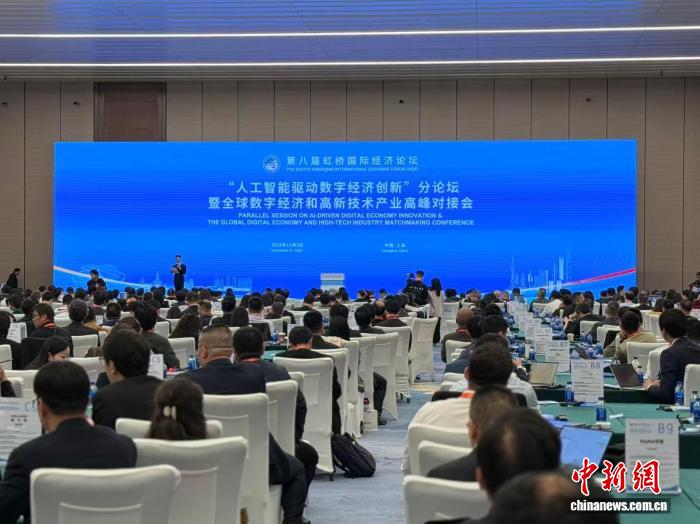
Core Insights - The eighth China International Import Expo (CIIE) held in Shanghai from November 5 to 10 serves as a platform for Zhejiang to integrate its industrial development into global supply chains and enhance international cooperation [1][2] Group 1: International Cooperation and Investment - Zhejiang actively seeks to expand its international cooperation circle by engaging in diverse investment and procurement activities during the CIIE [1] - A total of 24 foreign suppliers from 14 countries signed procurement agreements with 20 Zhejiang import enterprises, amounting to approximately 14.5 billion RMB [4] - The signing event for international medical supplies saw participation from several Fortune 500 companies, with a total contract value reaching 9 billion RMB [5] Group 2: Digital Economy and Technology - The eighth Hongqiao International Forum featured a sub-forum on "Artificial Intelligence Driving Digital Economy Innovation," where 300 leading companies from Zhejiang's digital economy engaged in discussions with foreign enterprises [2] - Since the first CIIE, over 500 foreign companies have interacted with more than 1,500 Zhejiang enterprises through various matchmaking events [2] Group 3: Cultural Exchange and Promotion - Zhejiang showcased its cultural heritage through performances and exhibitions, highlighting traditional industries such as tea, silk, and traditional Chinese medicine [6] - The "Lingdong Zhejiang" cultural exchange area featured performances that emphasized Jiangnan's cultural charm, enhancing the province's international image [6] Group 4: Trade and Business Promotion Activities - During the CIIE, Zhejiang organized over 30 key activities focused on international procurement, investment promotion, and open cooperation, including 13 promotional events [7] - The province's "Thousand Investment Personnel Go to CIIE" initiative involved over 1,800 investment professionals to enhance investment attraction efforts [7] - Various trade matching events were held to connect global resources, including a focus on cross-border services and investment environment promotion from countries like Mexico and Uzbekistan [7][8]
“十四五”时期,广东经济实力不断提升,GDP连续跨越12万亿、13万亿、14万亿台阶
Zhong Guo Fa Zhan Wang· 2025-11-10 09:03
Economic Growth and Strength - Guangdong's economic strength has been continuously improving, with GDP projected to reach 14.16 trillion yuan in 2024, maintaining the top position in the country for 36 consecutive years [1] - The average annual growth rate during the first four years of the 14th Five-Year Plan is 4.7%, with local public budget revenue reaching 1.35 trillion yuan, also ranking first nationally for 34 years [1] - The province's industrial revenue reached 19.41 trillion yuan, and the service sector's added value was 8.14 trillion yuan, both leading the nation [1] Industrial Development - Guangdong is focusing on manufacturing, aiming to establish nine trillion-yuan industrial clusters by 2024, with the AI core industry exceeding 220 billion yuan, accounting for one-third of the national total [2] - The province's digital economy ranks first in the country, with new energy vehicle production at 3.618 million units, making up one-quarter of the national output [2] - Guangdong has cultivated 190 national-level manufacturing champions and 727 provincial-level champions, leading the nation in specialized and innovative enterprises [2] Marine Economy - As a major marine province, Guangdong's marine GDP is expected to exceed 2 trillion yuan in 2024, maintaining the top position for 30 consecutive years [2] - The province has established two national key laboratories and 49 provincial key laboratories in the marine field, with over 200 kilometers of coastline restored [2] Greater Bay Area Development - The Guangdong-Hong Kong-Macau Greater Bay Area has seen significant progress, with the "Shenzhen-Hong Kong-Guangzhou" innovation cluster ranking first globally in innovation index [3] - Infrastructure connectivity has improved, with over 3,000 kilometers of rail transit and key cross-sea projects completed [3] - The area has implemented various reforms and established significant cooperation platforms, enhancing economic integration and development [3][4] Market Reforms and Economic Vitality - Guangdong is deepening reforms and enhancing economic vitality, with over 60 national firsts created through the Shenzhen comprehensive reform pilot [5] - The province's foreign trade and investment have seen substantial growth, with total imports and exports exceeding 9 trillion yuan, maintaining the top position for 39 years [5] - Guangdong's foreign investment reached 626.26 billion yuan in the first four years, with active participation in the Belt and Road Initiative [5]
全球GDP20强城市最新出炉:洛杉矶险胜东京,重庆12,苏州惊险入围
Sou Hu Cai Jing· 2025-11-08 18:46
Core Insights - The latest global city GDP rankings reveal a diverse development landscape, with New York leading by a significant margin, followed closely by Los Angeles and Tokyo in a tight competition [1][3] - China showcases strong performance with five cities making the top twenty, including Shanghai, Beijing, Shenzhen, Guangzhou, and Suzhou, highlighting the robust vitality and resilience of Chinese urban economies [1][5] Group 1: City Rankings and Economic Performance - New York tops the list with over 9 trillion, while Los Angeles narrowly surpasses Tokyo with approximately 6.78 trillion vs. 6.68 trillion [3] - Los Angeles benefits from its core position as California's economic engine, driven by advanced manufacturing, digital entertainment, and international trade [3] - Tokyo remains a leading financial hub in Asia, focusing on digital transformation and green growth, supported by significant R&D investment [3] Group 2: China's Economic Growth - Chongqing ranks 12th globally with a GDP of 3.21 trillion, leveraging its strategic position as a key node in the new western land-sea corridor [5] - The city has seen substantial growth in high-tech manufacturing and modern services, with a notable increase in retail sales surpassing 1 trillion [5] - Suzhou claims the 20th position with a GDP of 2.67 trillion, showcasing its industrial strength and innovation-driven economic clusters [7] Group 3: Innovation and Development Trends - The competition among cities has evolved into a new phase characterized by innovation leadership and collaborative development [8] - The collective rise of Chinese cities is reshaping the global economic landscape, emphasizing the importance of development models and industrial vitality [8]

携手欧洲共绘绿色创新合作新篇章
人民网-国际频道 原创稿· 2025-11-08 04:02
Core Viewpoint - The Shenzhen delegation, led by Wang Shourui, is actively promoting economic and trade cooperation with Belgium and Denmark, focusing on service industry openness, green technology finance, and digital economy collaboration, aiming to connect European innovation resources with Qianhai [1][2] Group 1: Economic Cooperation with Belgium - The China (Shenzhen Qianhai) - Belgium (Brussels) economic cooperation promotion meeting was held, attended by over 60 institutions and enterprises [1] - Qianhai is positioned as a significant platform for cooperation under the "One Country, Two Systems" framework, inviting European companies to connect with the Guangdong-Hong Kong-Macao Greater Bay Area and the broader Chinese market [1] - A cooperation memorandum was signed between Qianhai Management Bureau and the Belgium-China Economic and Trade Committee to enhance collaboration in standard recognition and technology transformation [1] Group 2: Innovation Cooperation with Denmark - The China (Shenzhen Qianhai) - Denmark (Copenhagen) innovation cooperation exchange meeting took place, with participation from over 40 institutions and enterprises [2] - Denmark's international advantages in green technology and sustainable finance are acknowledged, with Qianhai planning to adopt Nordic models to develop a multi-tiered green financial service system [2] - A cooperation memorandum was signed with the Denmark-China Business Association to promote project collaboration in green technology and digital innovation [2] Group 3: Visits and Collaborations - During the visit, the Qianhai delegation visited the Chinese embassies in Belgium and Denmark, local investment promotion agencies, and leading companies such as Maersk Group and LEGO [2] - The delegation aims to expand cooperation in green technology, standardization, and supply chain collaboration with European entities [2]