文化产业

Search documents
成都:“濯锦之江”铺展文商旅体展融合发展新画卷
Zhong Guo Fa Zhan Wang· 2025-10-17 07:37
Core Insights - The cultural and tourism sector in Chengdu's Jinjiang District has seen significant growth during the National Day and Mid-Autumn Festival period, with 6.08 million visitors and a total tourism revenue of 5.85 billion yuan, marking an 8.22% increase year-on-year [1] - The district aims to receive 29 million visitors and achieve a tourism revenue of 39 billion yuan by 2024, indicating a strong growth trajectory [1] Group 1: Economic Development Initiatives - The Jinjiang District has adopted a "first-release economy" strategy to drive cultural, commercial, and tourism integration, aiming to create a new economic landscape [2][4] - The district's Spring Street commercial area has become a core hub for the "first-release economy," featuring over 600 global flagship stores and 1,989 international brands [3] Group 2: Cultural and Tourism Integration - The district is focusing on deepening the integration of culture, commerce, tourism, sports, and exhibitions, with plans to establish a nationally influential first-release economic hub by 2027 [4][6] - Innovative cultural events and experiences, such as immersive performances and themed activities, are being developed to enhance visitor engagement and satisfaction [7] Group 3: Consumer Experience Enhancement - Jinjiang District is enhancing the shopping experience for international tourists, with 114 "immediate refund" stores and over 5,000 merchants equipped with foreign card POS machines, leading to a significant increase in tax refund sales [8][9] - The district aims to achieve a retail sales total of over 160 billion yuan by 2027, reflecting a commitment to improving consumer quality and experience [8] Group 4: Future Growth Projections - By 2030, the Jinjiang District plans to establish a thriving cultural, commercial, tourism, sports, and exhibition environment, positioning itself as a key player in the western inbound tourism market [9]
第十九届杭州文博会10月17日开幕
Hang Zhou Ri Bao· 2025-10-17 02:22
Core Insights - The 19th Hangzhou Cultural Expo is set to showcase over 5,800 domestic and international cultural brands, highlighting a more diverse cultural China and creative Hangzhou [1] - The expo reflects the growth of Hangzhou's cultural industry, which has become a significant pillar of the local economy, with a focus on "cultural + technology," "cultural + tourism," and "cultural + livelihood" [2][3] Group 1: Cultural Industry Growth - Hangzhou's cultural industry has seen substantial growth, with its added value surpassing 3,000 billion yuan in 2023, maintaining a leading position in both provincial and national contexts [3] - The city's cultural industry is supported by various cultural corridors and has a strong focus on digital content, film production, and creative design, contributing to a vibrant economic landscape [3][4] Group 2: Internationalization and Cultural Export - Hangzhou is recognized as a UNESCO Creative City, with its cultural innovations gaining international visibility, particularly through the export of cultural "new three items" such as online literature, web series, and online games [5][6] - The export value of these cultural products is projected to reach 1.8 billion USD in 2024, with significant contributions from online gaming and animation [6] Group 3: Technological Integration - The expo will feature a new digital city pavilion showcasing cutting-edge technologies like AI-generated art and immersive interactions, emphasizing the integration of culture and technology [4] - The rise of digital cultural enterprises in Hangzhou is expected to generate revenues of 885.5 billion yuan in 2024, reflecting a growth rate of approximately 10% [3]

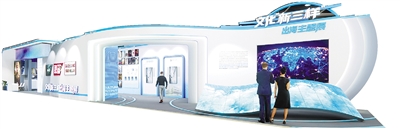
相得益彰,下好区域协调发展一盘棋
Xin Hua Ri Bao· 2025-10-16 23:31
Core Viewpoint - Jiangsu province is experiencing significant regional coordination and development, with a notable reduction in economic disparities between southern and northern regions, enhancing overall resident satisfaction and economic integration [1][2][3]. Group 1: Economic Development - The GDP per capita ratio between southern and northern Jiangsu has decreased to 1.86, and the disposable income ratio has reduced to 1.80, making Jiangsu one of the provinces with the smallest regional disparities in China [1][3]. - The "14th Five-Year Plan" period has seen a shift from simple industrial transfer to deep innovation collaboration between southern and northern Jiangsu [2][3]. - The Suzhou Street in the Suzhou-Suqian Industrial Park contributes 6% of the city's general public budget revenue and 8.7% of industrial added value, despite occupying only 0.16% of the land [2]. Group 2: Innovation and Collaboration - The establishment of 15 innovation hubs between southern and northern Jiangsu has facilitated a collaborative industrial model where R&D occurs in the south and production in the north [3]. - Since 2022, southern Jiangsu has allocated 3.84 billion yuan annually for support projects in northern Jiangsu, focusing on capacity enhancement rather than basic construction [3]. Group 3: Urban-Rural Integration - Jiangsu has implemented systematic reforms to break the urban-rural dual structure, promoting a model of co-prosperity between urban and rural areas [4][5]. - The province has built 283 "unmanned" farms and developed five national-level characteristic industrial clusters, enhancing rural economic vitality [5]. - Infrastructure improvements have led to a total rural road mileage of 140,000 kilometers, achieving full coverage of dual-lane four-level roads in administrative villages [5][6]. Group 4: Cultural Integration - Cultural exchanges are being promoted in rural areas through various initiatives, enhancing community engagement and cultural resources [6]. - The per capita disposable income of urban and rural residents in Jiangsu has increased by 5.2% year-on-year, with a gradual reduction in the income gap [6]. Group 5: Strategic Development - Jiangsu has integrated its development into national strategies, contributing significantly to the Yangtze River Delta and the Yangtze River Economic Belt [7][8]. - The GDP of the Yangtze River Delta region accounted for 24.4% of the national total in 2023, with Jiangsu contributing 41.3% of the total regional GDP in 2024 [8]. Group 6: Environmental and Trade Development - Jiangsu has focused on ecological protection and coordinated industrial development along the Yangtze River, becoming a key player in high-quality development [9]. - In 2024, Jiangsu's foreign trade volume reached 5.62 trillion yuan, representing a 7% year-on-year increase and accounting for 28.3% of the total foreign trade in the Yangtze River Economic Belt [9]. Group 7: Support and Cooperation - Jiangsu has allocated over 34 billion yuan for targeted support and cooperation projects, enhancing collaboration with various regions [10]. - The province aims to continue fostering growth and opportunities through regional integration and collaboration, focusing on economic development and public welfare [10].
西城连续两年获评“中国最具幸福感城区”
Bei Jing Ri Bao Ke Hu Duan· 2025-10-16 22:17
Core Viewpoint - Xicheng District has been recognized as "China's Most Happiness District" for two consecutive years, focusing on high-quality economic development and urban governance to enhance residents' well-being [1] Economic Performance - Xicheng's GDP surpassed 600 billion yuan, reaching 603.8 billion yuan with an average annual growth of approximately 5.2% [1] - The district ranks among the top three in Beijing in terms of economic total, largely due to its robust financial sector, which contributes nearly 70% of the city's financial tax revenue [1] - The asset scale of financial institutions in Xicheng amounts to 156 trillion yuan, accounting for one-third of the national total [1] Asset Management Sector - Eight asset management institutions from Xicheng made it to the top 300 in the global ranking, representing one-seventh of the 57 institutions from China [2] - The asset management scale in Xicheng exceeds 20 trillion yuan, constituting half of the city's total and one-eighth of the national total [1][2] Urban Development and Infrastructure - Xicheng has completed significant urban renewal projects, including the renovation of 84 roads and the transformation of 148 old residential communities [3][4] - The district has developed various modern industrial zones, such as Jinke New District and Zhongguancun Xicheng Park, enhancing its economic structure [2] Digital Economy Growth - The digital economy in Xicheng is projected to exceed 240 billion yuan in 2024, with revenue from information transmission and software services surpassing 110 billion yuan, reflecting a growth of over 40% compared to the end of the 13th Five-Year Plan [2] Cultural and Social Development - Xicheng has invested significantly in public cultural services, with per capita public cultural service area reaching 2.6 square meters, double that of the end of the 13th Five-Year Plan [5] - The district's per capita disposable income is expected to reach 107,600 yuan in 2024, ranking first in the city [5] Community Services - Xicheng has established a "ten-minute elderly care service circle," with 7.8 beds per thousand elderly residents, and has implemented various community support initiatives [5]

李璐:迎接文化产业“数智时代”
Sou Hu Cai Jing· 2025-10-14 23:39
Core Viewpoint - The cultural industry in China is experiencing significant growth and transformation during the "14th Five-Year Plan" period, contributing positively to the national economy and regional development [1][4]. Group 1: Economic Impact - In 2023, the added value of China's cultural and related industries reached 5.95 trillion yuan, accounting for 4.59% of GDP [1]. - By 2024, the cultural industry is projected to achieve operating revenue of 19.14 trillion yuan, representing a 37.7% increase compared to 2020 [1]. - The added value of the cultural industry is expected to exceed 5.0% of GDP by the end of the "14th Five-Year Plan" period, enhancing its role in promoting consumption and stabilizing employment [1]. Group 2: Industry Characteristics - The cultural industry is characterized by an increasingly optimized structure, with a deeper integration of cultural, tourism, and commercial sectors. In 2024, the cultural service industry is expected to generate operating revenue of 10.91 trillion yuan, a year-on-year growth of 7.4%, making up 57.0% of total cultural industry revenue [1]. - The profit margin for the cultural industry is projected to reach 9.3% in 2024, driven by structural optimization [1]. - Technological innovation is leading the growth of new economic models and industries, with revenue from technology-intensive and creative-intensive sectors growing significantly, including broadcasting and internet services, which saw a 12.4% increase [2]. Group 3: Cultural and Economic Synergy - The cultural industry is increasingly supporting public cultural initiatives, creating a mutually beneficial relationship between cultural industries and cultural undertakings. For instance, over 12,000 intangible cultural heritage workshops have been established, generating employment for more than 1.2 million people [3]. - Traditional cultural elements are being integrated into modern products, particularly in the gaming industry, which is attracting younger generations to explore traditional culture [3]. - The international influence of Chinese culture and the competitiveness of Chinese manufacturing are gradually improving through the revitalization of traditional cultural resources [3]. Group 4: Future Directions - To sustain the growth of the cultural industry, efforts should focus on digital transformation, particularly in underdeveloped regions, and the establishment of a national cultural big data platform [4]. - There is a need to deepen the integration of cultural and tourism sectors and enhance public cultural services, including expanding free access to cultural facilities [4]. - Promoting international cultural cooperation and simplifying export processes for cultural products will enhance the global reach of Chinese culture [4].
迎接文化产业“数智时代”
Jing Ji Ri Bao· 2025-10-14 22:16
Core Insights - The cultural industry in China is experiencing significant growth, with the added value reaching 5.95 trillion yuan in 2023, accounting for 4.59% of GDP, and projected to exceed 5.0% by the end of the 14th Five-Year Plan [1][3] - The cultural industry is expected to generate 19.14 trillion yuan in revenue in 2024, representing a 37.7% increase compared to 2020 [1] - The cultural service sector is projected to achieve 10.91 trillion yuan in revenue in 2024, growing by 7.4% year-on-year and making up 57.0% of total cultural industry revenue [1][2] Group 1: Industry Characteristics - The structure of the cultural industry is increasingly optimized, with deeper integration of cultural, tourism, and commercial sectors [1] - The profit margin for the cultural industry is expected to reach 9.3% in 2024, driven by structural optimization [1] - Technology-driven sectors such as cultural equipment production and content creation are experiencing rapid revenue growth, with increases of 11.2% and 8.4% respectively [2] Group 2: Economic Impact - The cultural industry is playing a crucial role in promoting domestic consumption and stabilizing employment, while also enhancing national soft power [1][3] - The integration of traditional culture into modern products, such as games, is fostering interest among younger generations and driving economic development [3] - The cultural industry is contributing to job creation, with over 1.29 million jobs generated through the establishment of intangible cultural heritage workshops [3] Group 3: Future Directions - The focus will be on digital transformation within the cultural industry, promoting the "digital intelligence era" [4] - There is a need for enhanced support for cultural development in underdeveloped regions, particularly in the western and northeastern areas of China [4] - Efforts will be made to facilitate international cultural cooperation and enhance the global influence of Chinese culture [4]
文投会北上“招亲”:共筑文化项目与资本“京湾之链”
2 1 Shi Ji Jing Ji Bao Dao· 2025-10-14 13:22
Core Insights - The development of the cultural sector relies heavily on capital support, with the 2025 Guangdong-Hong Kong-Macao Greater Bay Area Cultural Industry Investment Conference (2025 GBA Cultural Investment Conference) aiming to connect cultural projects with capital to foster a healthy ecosystem for cultural industry growth [1][4] - The conference is scheduled to take place from November 26 to 28, 2025, in Guangzhou, featuring a series of activities designed to empower high-quality development in the cultural industry [1][3] Group 1: Conference Overview - The 2025 GBA Cultural Investment Conference will include a "1+8+N" format, consisting of one main conference, eight investment project roadshows, and various investment service activities [1][3] - The conference aims to enhance understanding among cultural enterprises and investment institutions regarding project selection criteria and to promote interaction and cooperation within the cultural industry [1][2] Group 2: Cultural Industry Landscape - China's cultural industry has evolved from traditional sectors to a large cultural ecosystem characterized by digital technology, cross-industry integration, and user experience [3][4] - Guangdong Province is the largest cultural industry province in China, with a total revenue of 2.5 trillion yuan from large-scale cultural enterprises in 2024, accounting for approximately one-sixth of the national total [3][4] Group 3: Investment Opportunities - The 2025 GBA Cultural Investment Conference aims to create a platform for efficient investment and financing connections between cultural enterprises and investment institutions, focusing on new cultural business models that represent future lifestyles and production methods [4][6] - The conference has successfully hosted two previous editions, with a total of 250 billion yuan in cultural industry investment funds announced, and actual financing amounts reaching 15.1 billion yuan in 2023 and 63.87 billion yuan in 2024 [3][4] Group 4: Regional Collaboration - Beijing, as a cultural and financial center, is increasingly collaborating with Guangdong and the Greater Bay Area, with local investment institutions showing interest in participating in Guangdong's cultural industry chain [6][7] - The integration of cultural and technological sectors is accelerating, with significant investment opportunities emerging in areas such as AIGC, the metaverse, and digital content creation [7][8]
破域与重构:数字智能驱动下国家文化公园建设的江苏路径
Xin Hua Ri Bao· 2025-10-14 05:22
Core Insights - Jiangsu province is uniquely positioned with significant waterways, including the Grand Canal and Yangtze River, which provide a historical and cultural foundation for the development of national cultural parks [1] - The transition from traditional management to digital governance in cultural park management faces challenges related to physical, cognitive, and industrial boundaries [2][3] - Jiangsu is exploring innovative practices in cultural park governance, focusing on digital technology, IP operation, and multi-stakeholder collaboration to address governance challenges [3][4] Group 1: Opportunities and Challenges - The governance of national cultural parks is undergoing a critical transformation towards digital governance, highlighting the need to overcome physical, cognitive, and industrial boundaries [2] - The integration of cultural heritage sites is challenged by administrative divisions and the "data island" phenomenon, necessitating systematic solutions [2] - Cultural transmission must evolve from one-way output to interactive engagement, particularly to enhance youth recognition of traditional culture [2] Group 2: Pathways to Governance Modernization - Jiangsu's cultural narrative is being restructured through digital media, transforming cultural heritage into emotional symbols [4] - The use of IP operation is aimed at activating the cultural industry ecosystem, turning cultural resources into marketable IP symbols [4] - Digital platforms are facilitating collaborative governance, creating an inclusive governance model that engages government, market, and society [5] Group 3: Future Vision - The construction of a unified data platform for national cultural parks is essential for integrating various data sources and addressing the "data island" issue [6] - Innovative mechanisms for IP operation and industry linkage are being established to support cross-media development and global cultural product transformation [6] - The development of a digital dialogue platform for river culture is anticipated to enhance emotional connectivity and social participation in cultural parks [6][7]
深创投人工智能与具身机器人产业基金成立,规模15.5亿元;中际旭创出资3.54亿元参投产业基金丨09.29-10.12
创业邦· 2025-10-14 00:08
Core Insights - The article provides a comprehensive overview of recent developments in the private equity fund market in China, highlighting various fund establishments and their strategic focuses [5][11]. Government-Backed Funds - China Guoxin and other state-owned enterprises have jointly established a private equity fund management company with a registered capital of 100 million RMB, focusing on private equity and venture capital management [7]. - Hunan Liuyang Economic Development Zone has set up a mother fund with a total scale of 3 billion RMB, aimed at supporting key industries and promoting high-quality development [8]. - Nanchong Linjiang Construction Group plans to establish two venture capital funds, each with a scale of 500 million RMB, focusing on strategic emerging sectors [8]. Market-Driven Funds - Brookfield's Global Transition Fund II has completed fundraising, reaching a total of 20 billion USD, making it the largest private equity fund focused on clean energy transition globally [12]. - Shanghai Zhiwei Capital has launched a semiconductor fund with an initial scale of 1.5 billion RMB, targeting the semiconductor and strategic emerging sectors [12]. - Shenzhen Longhua District has established a seed fund of 80 million RMB, focusing on early-stage investments in the healthcare sector [12]. Industry-Specific Funds - The establishment of a 320 billion RMB development fund by CICC and Hebei Steel Group aims to support private equity investments in unlisted companies [17]. - Southern Power Grid Storage has committed up to 1 billion RMB to a 14 billion RMB dual-carbon industry fund, focusing on new energy infrastructure [17]. - A 15.5 billion RMB fund focused on artificial intelligence and robotics has been established by Shenzhen Capital, targeting innovative technology sectors [18]. Collaborative Funds - Zhejiang Wansheng Digital and Zhejiang Publishing Media have jointly established a 200 million RMB fund to invest in high-growth companies in the "culture + technology" sector [19]. - Sichuan Jiuzhou Electric has partnered with its controlling shareholder to set up a 50 million RMB low-altitude economy fund, focusing on low-altitude economic development [22]. - Pizaihuang Pharmaceutical has committed 200 million RMB to a 1 billion RMB healthcare fund, focusing on traditional Chinese medicine and health-related industries [22].

创源股份:全资子公司取得不动产权证书
Xin Lang Cai Jing· 2025-10-13 07:51
Core Points - The company announced that its wholly-owned subsidiary, Ningbo Chuangyuan Haina Technology Co., Ltd., has completed the land use rights registration for the Beilun project in Ningbo [1] - The company has obtained the Real Estate Certificate issued by the Ningbo Natural Resources and Planning Bureau, confirming ownership of the land and property [1] - The land use rights cover an area of 3,342.74 square meters, with a building area of 24,859.66 square meters, designated for business and financial purposes [1] - The land use rights are valid until May 27, 2061, indicating a long-term investment in the digital cultural industry [1]