
教育

Search documents
大行评级|招商证券国际:将多邻国与新东方列为教育行业首选,评级均为“增持”
Ge Long Hui· 2026-01-09 09:14
Group 1 - The core viewpoint of the article is that the education sector has a promising outlook driven by innovations in AI technology and defensive growth [1] - The report highlights that Duolingo and New Oriental are the top picks, maintaining "buy" ratings with target prices of $347 and $70 respectively [1] - The article emphasizes that the continuous innovation of AI in education is leading to a differentiated competitive landscape among market participants [1] Group 2 - The comprehensive development of model capabilities, systematic content, emotional support, and generalized learning scenarios is identified as a future trend in the education industry [1]



消费者服务行业双周报(2025/12/26-2026/1/8):2026年元旦3天国内出游1.42亿人次-20260109
Dongguan Securities· 2026-01-09 07:38
Investment Rating - The report maintains an "Overweight" investment rating for the consumer services industry, expecting the industry index to outperform the market index by more than 10% in the next six months [31]. Core Insights - The domestic tourism sector has shown a strong start in 2026, with 142 million domestic trips taken during the New Year holiday, resulting in a total expenditure of 84.789 billion yuan, reflecting a slight year-on-year increase compared to the same period in 2024 [20][31]. - The report highlights a growing trend among young consumers who prioritize personal enjoyment, enhancing the cultural significance of holidays and driving the rapid growth of niche tourism sectors such as ice and snow tourism, migratory tourism, and performance + tourism [31]. - The China Tourism Research Institute projects that the winter ice and snow tourism revenue will reach 450 billion yuan, with an estimated 360 million participants during the 2025-2026 winter season [24][31]. - Policy support is shifting towards service consumption, with measures introduced in Shanghai to enhance cultural and tourism service consumption capabilities [22][31]. - The report indicates that while the long-term outlook for the cultural tourism industry is positive, there are still short-term performance pressures, suggesting a focus on themes like ice and snow tourism and duty-free shopping as potential catalysts [31]. Summary by Sections Market Review - The CITIC consumer services industry index rose by 4.39% from December 26, 2025, to January 8, 2026, outperforming the CSI 300 index by approximately 2.34 percentage points [8][9]. - All sub-sectors within the consumer services industry experienced gains, with tourism and leisure leading at 5.58% [9]. - A total of 38 listed companies in the industry reported positive returns, with the top five performers including BoRui Communication and China Duty Free, while 15 companies reported negative returns [13][31]. Industry News - Key announcements include the record 142 million domestic trips during the New Year holiday and the launch of Shaanxi Tourism's IPO on the Shanghai Stock Exchange [20][21]. - The report notes the encouragement of seasonal tourism activities and the issuance of cultural and tourism consumption vouchers by various government departments [25][31]. Company Announcements - Notable company updates include the resignation of the vice chairman of Huazhen Hotel and significant growth in visitor numbers and revenue for Xiangyuan Cultural Tourism during the New Year holiday [26][27]. - China Duty Free announced a contract for a major project at Beijing Capital International Airport, indicating ongoing expansion in the duty-free sector [30]. Investment Recommendations - The report suggests focusing on specific companies such as Jinjiang Hotel, Changbai Mountain, Emei Mountain A, and China Duty Free, which are expected to benefit from the recovery in leisure tourism demand [32][31].
西联学校助学生“职”面未来
Xin Lang Cai Jing· 2026-01-08 22:04
Core Viewpoint - The event "Career Salon - Envisioning the Future, 'Job' Facing Life" organized by the Student Development Center of the affiliated school of Southwest United University in Kunming connects students with various industries through parental mentorship [1] Group 1: Event Overview - The event featured a "Career Mentor Group" consisting of parent representatives from over 20 industries, including education, healthcare, finance, technology, and arts [1] - Parents shared practical information about industry job content, skill requirements, career prospects, and subject selection advice [1] Group 2: Student Engagement - A popular immersive mock recruitment session allowed students to prepare resumes and showcase their personal strengths in a one-minute self-introduction [1] - Students actively competed for their ideal positions during the event [1] Group 3: Educational Impact - The career salon served as a platform for students to gain insights and explore future career options, helping them to develop clearer career plans [1]
深夜 中概股爆发!美股突变!大幅降息?美联储大消息
Zheng Quan Shi Bao· 2026-01-08 16:34
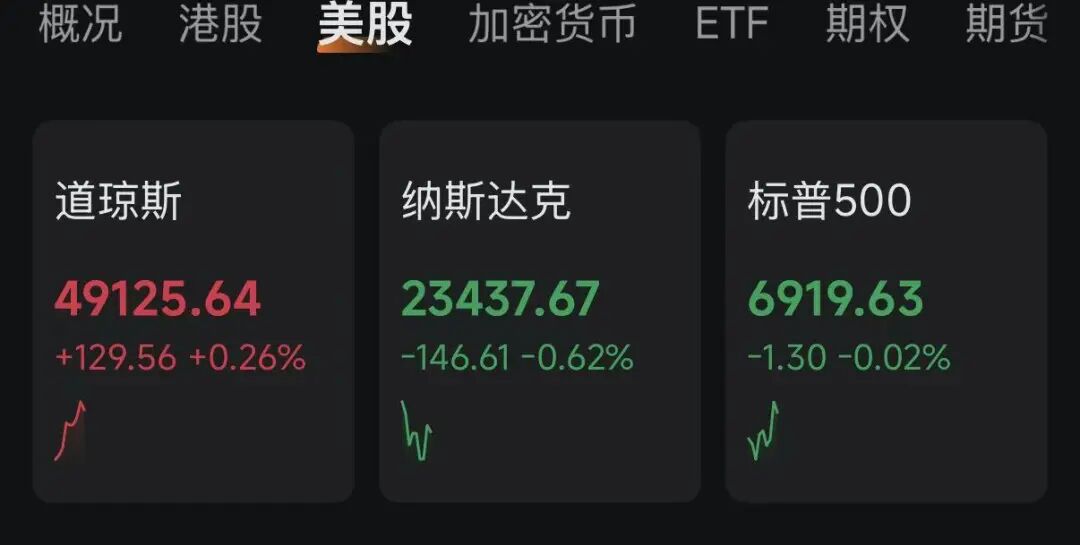
Market Performance - The three major U.S. stock indices collectively declined, with the Nasdaq Composite dropping over 0.6% after opening, while the Dow Jones Industrial Average later turned positive [1] - The Nasdaq Golden Dragon China Index surged over 1% after a low opening, with individual stocks like Huya rising over 22%, Bilibili up over 6%, Alibaba increasing over 4%, and Tencent Music and New Oriental both gaining over 2% [3] Precious Metals - Spot gold fell over 0.6%, while silver experienced a significant drop of over 5% [5] - The World Gold Council announced that gold recorded a 4% increase in December 2025, contributing to an annual growth rate of 67%, marking the highest annual return in decades [5] Monetary Policy - U.S. Treasury Secretary Becerra indicated that the only missing factor for further economic strength is a more significant rate cut by the Federal Reserve [6] - Federal Reserve Governor Milan expressed expectations for a 150 basis point rate cut by 2026 to boost the labor market, with core inflation projected to remain around 2.3% [6] - Fitch Ratings anticipates that the Federal Reserve will implement two rate cuts in the first half of 2026, lowering the upper limit of the federal funds rate to 3.25% [6]

邦达亚洲:美元走高油价下挫 美元加元刷新20日高位
Xin Lang Cai Jing· 2026-01-08 08:50
Group 1: Employment Data - The US private sector added 41,000 jobs in December, following a decline in November, which was below the Bloomberg economists' median estimate of 50,000 [1][6] - The report indicates a gradual cooling of the labor market without a sharp deterioration, with recent hiring activity being subdued and an increase in the unemployment rate affecting economic expectations for the new year [1][6] - Job growth was primarily driven by the education, healthcare, and leisure and hospitality sectors, while professional services and manufacturing saw declines [1][6] - Small businesses have resumed hiring after several months of layoffs, recovering from job losses experienced in November [1][6] Group 2: Federal Reserve Regulatory Changes - The Federal Reserve is reassessing its bank rating approach, continuing a broader effort initiated during the Trump administration to refocus regulatory attention on significant risks posed by banks [7] - The CAMELS rating framework, which scores banks on capital adequacy, asset quality, management, profitability, liquidity, and market risk sensitivity, is being adjusted to better reflect a bank's risk characteristics and financial condition [7] - The "management" category of the CAMELS framework is suggested to be evaluated based on measurable factors, responding to calls from banking groups for a review of the assessment standards [7]
收评:沪指微跌 军工股领涨
Zhong Guo Jing Ji Wang· 2026-01-08 07:19
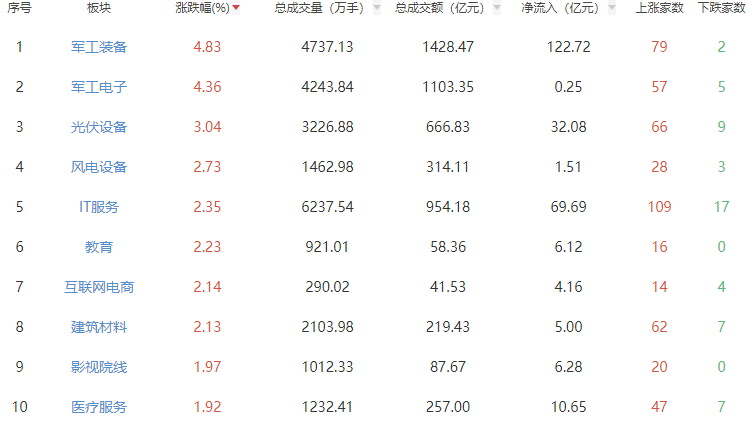
Market Overview - The Shanghai Composite Index closed at 4082.98 points, down 0.07% with a trading volume of 1183.19 billion yuan [1] - The Shenzhen Component Index closed at 13959.48 points, down 0.51% with a trading volume of 1617.08 billion yuan [1] - The ChiNext Index closed at 3302.31 points, down 0.82% with a trading volume of 750.34 billion yuan [1] Sector Performance Top Performing Sectors - Military equipment, military electronics, and photovoltaic equipment showed significant gains, with military equipment leading at a rise of 4.83% [2] - Other notable sectors include wind power equipment (up 2.73%) and IT services (up 2.35%) [2] Underperforming Sectors - The insurance sector declined by 2.17%, while the securities sector fell by 2.06% [2] - Energy metals and industrial metals also experienced declines of 1.41% and 0.87% respectively [2]
午评:沪指微涨 军工股强势
Zhong Guo Jing Ji Wang· 2026-01-08 03:48
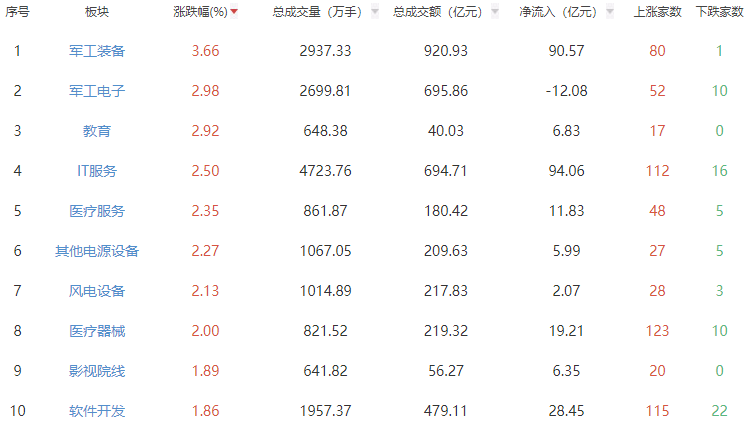
Market Overview - The three major indices in the A-share market opened lower in the morning, with the Shanghai Composite Index turning positive during the session, closing at 4089.45 points, up 0.09% [1] - The Shenzhen Component Index closed at 14003.09 points, down 0.20%, while the ChiNext Index closed at 3312.47 points, down 0.52% [1] Sector Performance - The leading sectors in terms of gains included military equipment (up 3.66%), military electronics (up 2.98%), and education (up 2.92%) [2] - Conversely, the sectors with the largest declines were securities (down 1.74%), insurance (down 1.32%), and tourism and hotels (down 0.68%) [2] Trading Volume and Net Inflow - The military equipment sector had a total trading volume of 2,937.33 million hands and a net inflow of 90.57 million [2] - The securities sector recorded a trading volume of 2,633.93 million hands with a net outflow of 72.49 million [2]
2026年度策略-看好内需顺周期主线-出海关注龙头Alpha
2026-01-08 02:07
Summary of Conference Call Notes Industry and Company Focus - **Industry**: Various sectors including travel, high-end consumption, education, and export markets - **Companies Mentioned**: China Duty Free Group, Lao Pu Gold, Chao Hong Ji, Huatu Shanding, China Oriental Education, Anker Innovations, Star Technology, Small Commodity City, and others Key Points and Arguments Domestic Demand Strategy - **Focus Areas**: - **Cyclical Beta**: Prioritize travel-related sectors such as aviation, hotels, and tourism due to significant demand improvement driven by policy catalysts [1][3] - **High-End Consumption**: Strong recommendations for duty-free and high-end gold jewelry sectors, with expectations of price increases driving both valuation and performance [1][6] - **Value Consumption**: Marginal improvement in demand is unclear; sectors depend on income growth or improvements in PPI and CPI data [1][7] - **Counter-Cyclical Industries**: Education sector shows strong demand resilience, particularly in vocational education and public examination training, with AI technology enhancing efficiency [1][8] Service Consumption - **Characteristics**: Service-oriented consumption is elastic, quick to respond, and has no inventory issues, significantly aiding employment and economic recovery [4][11] - **Current Proportion**: Service consumption accounts for approximately 55% of personal consumption expenditure in China, compared to 70% in the US, indicating room for growth [12] High-End Retail and Luxury Market - **Market Recovery**: High-end retail and luxury markets began to recover in Q2 and Q3 of 2025, driven by a stable high-net-worth population and wealth effect [4][16] - **Consumer Sentiment**: The recovery of middle-class confidence is crucial, as they contribute 60% of luxury sales [16] Export Market Opportunities - **Outlook for 2026**: Anticipation of more opportunities in the second half of 2026, with resilient exports and better-than-expected US demand [9][23] - **Key Companies**: Focus on leading companies with alpha attributes such as Anker Innovations and Star Technology for performance-driven growth [9][23] Education Sector - **Demand Characteristics**: The education sector, particularly vocational training and public examination preparation, is expected to perform well despite overall employment pressures [8][26] - **Key Players**: Companies like Huatu Education and China Oriental Education are highlighted for their strong market positions [8][26] Risks and Challenges - **Currency Fluctuations**: Current RMB exchange rates are stable, with limited risk of significant appreciation that could impact export companies negatively [24] - **Raw Material Prices**: Fluctuations in raw material prices are not seen as a major concern for leading companies due to supply chain dynamics [25] Investment Recommendations - **Cyclical Sectors**: Focus on travel-related industries for potential valuation uplift due to demand recovery [5] - **High-End Consumption**: Investment in duty-free and high-end jewelry sectors is recommended due to positive market sentiment [6] - **Education**: Strong prospects for companies in vocational education and public examination training [26] Additional Insights - **Tea and Restaurant Industries**: Opportunities in the tea industry due to competitive landscape improvements and in the restaurant sector with companies like Xiao Cai Yuan and Guo Quan showing potential for scalable growth [18][20] This summary encapsulates the key insights and recommendations from the conference call, providing a comprehensive overview of the current market landscape and future opportunities across various sectors.
三季度CBI解读:用复购承接大促红利,品牌平峰期运营指南
NIQ· 2026-01-08 01:34
Investment Rating - The report indicates a positive investment outlook for the e-commerce sector, particularly during the off-peak periods, highlighting the importance of brand operations and consumer engagement strategies [2][5]. Core Insights - The Chinese online consumer brand index (CBI) shows a year-on-year growth of 0.9% in Q3 2023, reflecting a sustained increase in consumer willingness to spend during off-peak periods [2][4]. - Brands are increasingly viewing off-peak periods as critical for building long-term value and operational stability, focusing on customer retention and repeat purchases [5][35]. - The report emphasizes the necessity for brands to optimize their operations during off-peak times to leverage the momentum gained during major sales events like "618" and "Double Eleven" [2][4]. Summary by Sections E-commerce Performance - The CBI data indicates that the online consumer brand index has consistently risen during the off-peak periods, suggesting that these times are not void of consumer demand but rather a phase for rational brand selection [4][6]. - The report notes that the online retail sales growth rate is significantly higher than the overall retail market, with a 4.4% increase compared to Q3 2022 [2][7]. Fast-Moving Consumer Goods (FMCG) Sector - The FMCG sector shows a stark contrast between online and offline sales, with online sales growing by 16.8% while offline sales declined by 9.3% in Q3 2025 [10]. - Specific categories like dairy and maternal and infant products are experiencing varied growth rates, with dairy products showing a decline of 16.6% [10][11]. Brand Strategies - Brands are focusing on scenario-driven marketing and consumer engagement during off-peak periods, utilizing emotional value and social gifting to enhance consumer experiences [25][28]. - The report highlights the importance of creating a stable sales curve by integrating products into specific lifestyle scenarios, thereby enhancing brand loyalty and repeat purchases [35][40]. Consumer Behavior Trends - There is a noticeable shift in consumer preferences towards products that resonate with social and emotional contexts, particularly among younger demographics [32][33]. - The report identifies a trend towards "self-reward" and "quality socializing" in the alcohol sector, with brands adapting to younger consumers' preferences for lower alcohol content and convenient packaging [28][30]. Operational Recommendations - Brands are encouraged to leverage platform tools for precise consumer targeting and to maintain a robust membership system to optimize traffic during off-peak periods [39][41]. - The report suggests that successful brands will be those that can effectively convert new product launches and seasonal changes into repeat purchases during these critical off-peak times [40].
【机构策略】逐步聚焦主线板块 把握好轮动节奏
Zheng Quan Shi Bao Wang· 2026-01-08 01:19
Group 1 - The core viewpoint is that the A-share market is experiencing a phase of consolidation after a period of gains, with expectations for continued upward movement supported by favorable macroeconomic conditions and policy outlooks [1][2]. - The Shanghai Composite Index showed narrow fluctuations, while the Shenzhen Component and ChiNext indices experienced initial gains followed by pullbacks, indicating a mixed performance across sectors [1]. - Key sectors such as coal, non-ferrous metals, and power equipment performed well, while shipbuilding, securities, jewelry, and education sectors lagged behind [1]. Group 2 - The market's attractiveness is bolstered by expectations of increased credit issuance and a supportive monetary policy stance, with a continued "moderately loose" approach anticipated [1]. - There is a prevailing expectation that the Federal Reserve will maintain a rate-cutting cycle through 2026, contributing to a more accommodative global liquidity environment [1]. - The overall market sentiment suggests that the bull market in A-shares is likely to persist, driven by structural changes in corporate earnings and the emergence of new economic forces [2].