商用车

Search documents
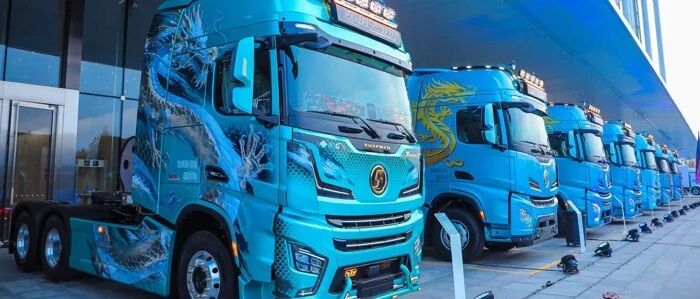
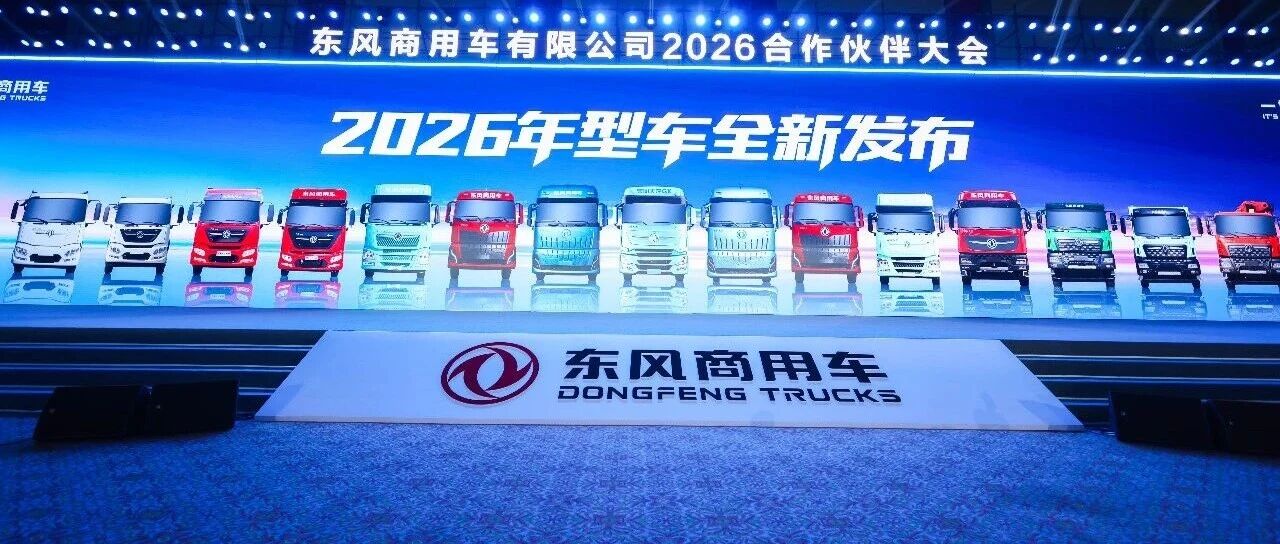
东风商用车2026合作伙伴大会在渝举行
Yang Shi Wang· 2025-12-12 10:21
Core Insights - Dongfeng Commercial Vehicle Company held its 2026 Partner Conference in Chongqing, focusing on the theme "Defining the Track, Aggregating Strength, and Joining Hands for a New Journey" with over a thousand representatives from dealers, suppliers, service providers, and industry clients participating to review achievements from 2025 and plan for 2026 [1][3] Group 1: Strategic Goals and Development Plans - The company aims to achieve a total sales target of 176,000 units for 2026, focusing on "sales scale growth" and "profitability enhancement" as core objectives [3] - Dongfeng Commercial Vehicle will concentrate on key trends in the commercial vehicle industry, including electrification, intelligence, internationalization, and diversification, while enhancing product leadership and accelerating overseas expansion [3][10] - The company plans to establish a new cooperative system characterized by "ecological symbiosis, value co-creation, and risk sharing" with partners, forming a community of strategy, interests, and responsibilities [3] Group 2: Product Development and Innovation - The new modular global platform introduced by the company is compatible with five major regulatory systems and covers 28 key countries and regions, supporting internal combustion engines, pure electric, hybrid, and hydrogen fuel cell technologies [6] - A total of 214 new models will be launched in 2026, covering four major categories: traction, cargo, engineering, and special vehicles, with various energy forms including fuel, gas, pure electric, and hybrid [6][7] - The company showcased 57 new models at the conference, with 46 models from the headquarters and 23 each from traditional and new energy products [7] Group 3: Marketing and Collaboration Strategies - The marketing strategy for 2026 will focus on a "New Three-Dimensional Value Marketing System," which includes value creation, digital marketing, and service upgrades [7] - The company will deepen value chain collaboration by focusing on new product development, quality improvement, and supply chain security [7] - The conference marked the beginning of a new phase of collaboration between Dongfeng Commercial Vehicle and its partners, emphasizing the commitment to high-quality development in the commercial vehicle sector [10]


商用车板块12月12日涨0.06%,江铃汽车领涨,主力资金净流出2871.06万元
Zheng Xing Xing Ye Ri Bao· 2025-12-12 09:06
从资金流向上来看,当日商用车板块主力资金净流出2871.06万元,游资资金净流出1.67亿元,散户资金 净流入1.95亿元。商用车板块个股资金流向见下表: 以上内容为证券之星据公开信息整理,由AI算法生成(网信算备310104345710301240019号),不构成投资建议。 证券之星消息,12月12日商用车板块较上一交易日上涨0.06%,江铃汽车领涨。当日上证指数报收于 3889.35,上涨0.41%。深证成指报收于13258.33,上涨0.84%。商用车板块个股涨跌见下表: ...


商用车、摩托车2026年投资策略:出口向好,拥抱龙头
Soochow Securities· 2025-12-12 08:40
Group 1: Commercial Vehicles - The core conclusion for heavy trucks indicates that exports will surpass domestic sales in 2026, with a focus on leading exporters [2] - In 2025, the total wholesale volume for heavy trucks is expected to reach 1.143 million units, a year-on-year increase of 26.7%, with domestic sales at 814,000 units (+35.2%) and exports at 332,000 units (+14.3%) [11][12] - The penetration rate of electric heavy trucks is projected to rise to 30%-35% in 2026, with natural gas trucks also expected to gain market share [2][11] Group 2: Buses - The bus sector is expected to see stronger external demand than internal demand in 2026, with a projected growth of 3% for domestic sales and 30% for exports [3][22] - The key players in the bus industry, such as Yutong and King Long, are anticipated to benefit from the recovery in both domestic and overseas markets [3][22] - The overall profitability of the bus sector is expected to improve, driven by the recovery in demand and the performance of leading companies [23][39] Group 3: Motorcycles - The motorcycle industry is projected to achieve a total sales volume of 19.38 million units in 2026, a year-on-year increase of 14%, with large-displacement motorcycles expected to grow by 31% [4][29] - Exports of large-displacement motorcycles are expected to reach 830,000 units in 2026, reflecting a 50% increase compared to the previous year [4][29] - Leading motorcycle manufacturers, such as Chunfeng and Longxin, are expected to benefit from the continued growth in exports and large-displacement motorcycle sales [4][30]




214款年型车投放!东风商用车2026要销17.6万辆,怎么干?| 头条
第一商用车网· 2025-12-12 02:40
Core Insights - The 2026 Partner Conference of Dongfeng Commercial Vehicle Company emphasized the theme "Defining the Track, Gathering Strength, and Moving Forward Together" to outline the company's strategic goals for growth and collaboration with partners [1][3][29] Strategic Clarity - The company aims to achieve a sales target of 176,000 units for the year 2026, focusing on both sales volume growth and profitability enhancement [4][5] - Dongfeng Commercial Vehicle is committed to addressing the trends of electrification, intelligence, internationalization, and diversification in the commercial vehicle industry, establishing a new cooperative relationship with partners [5][29] Technological Leadership - Dongfeng is developing a new generation modular global platform that is compatible with various powertrains, including internal combustion engines, pure electric, hybrid, and hydrogen fuel cells, to meet diverse global market needs [8][27] - The company plans to launch 214 new models in 2026, covering multiple vehicle categories and energy sources, reflecting a customer-centric approach [10][13] Collaborative Ecosystem - The conference highlighted the importance of creating a new cooperative system that fosters ecological symbiosis, value co-creation, and shared risk among partners, aiming to build a strategic community for mutual growth [5][22] - Awards were presented to outstanding partners, recognizing their contributions and reinforcing the commitment to deepen strategic collaboration [15][29] Market Dynamics - The competitive landscape in the heavy-duty truck industry is intensifying, but opportunities in new energy and export markets are emerging, necessitating proactive collaboration with partners [15][29] - The marketing strategy focuses on a "new three-dimensional value marketing system" to enhance decision-making and customer satisfaction through digital tools and improved service standards [18][22]
直面掌门人 | 一汽解放李胜:在“守”与“变”中锻造穿越周期韧性
Shang Hai Zheng Quan Bao· 2025-12-12 02:35
Core Viewpoint - The interview with Li Sheng, the Party Secretary and Chairman of FAW Jiefang, emphasizes the balance between maintaining brand heritage and adapting to market changes, highlighting the company's commitment to value competition over price competition in the commercial vehicle industry [4][5]. Group 1: Industry Challenges and Company Response - The commercial vehicle industry is facing significant challenges, including demand contraction, intensified competition, and low freight rates, which have adversely affected truck drivers, the most impacted group in the supply chain [5][6]. - FAW Jiefang has chosen to invest in quality and value rather than engage in price wars, believing that short-term price reductions can lead to long-term losses for users and the industry [6][7]. - The company reported a 525.14% year-on-year increase in net profit attributable to shareholders in the third quarter, indicating a strong recovery and market leadership in the heavy truck segment [7]. Group 2: Commitment to Quality and Technology - FAW Jiefang has initiated a "three-year quality campaign" to embed quality metrics into performance assessments, aiming for a 30% reduction in vehicle claim frequency and costs by year-end [8][12]. - The company has a dual-track decision-making process that prioritizes technical decisions, ensuring that quality and safety are never compromised [8][12]. - Long-term investments in technology and quality are seen as essential for building customer trust and sustaining competitive advantage [8][12]. Group 3: Strategic Vision and Future Growth - FAW Jiefang is transitioning from merely manufacturing vehicles to becoming a provider of integrated green intelligent transportation solutions, reflecting a shift in competitive focus from individual companies to entire industry ecosystems [13][14]. - The company is actively pursuing cross-industry collaborations, as evidenced by its recent investment in partnerships with leading firms to enhance its presence in the new energy vehicle market [13][14][15]. - FAW Jiefang aims to achieve one-third of its sales from new energy vehicles by 2030, demonstrating a commitment to sustainable development and innovation [19]. Group 4: Global Expansion and Market Position - The company has experienced a tenfold increase in overseas exports, indicating a robust international growth strategy that includes local R&D and manufacturing [16]. - FAW Jiefang's upcoming global partner conference will showcase its achievements in cross-industry integration and new product developments, reinforcing its commitment to global collaboration [16][17]. - The company is focused on creating a comprehensive service platform that enhances the customer experience throughout the vehicle lifecycle, moving from one-time transactions to ongoing service relationships [15].

直面掌门人|一汽解放李胜:在“守”与“变”中锻造穿越周期的韧性
Shang Hai Zheng Quan Bao· 2025-12-12 00:59
Core Viewpoint - The company emphasizes the importance of value competition over price competition in the commercial vehicle industry, aiming to enhance long-term user benefits and industry development [5][6][7]. Group 1: Company Strategy and Performance - The company reported a significant increase in net profit attributable to shareholders, with a year-on-year growth of 525.14% in the third quarter [6]. - The company holds the top position in both wholesale and terminal sales of medium and heavy trucks, achieving a terminal market share of 23% from January to November [6]. - The company is committed to a long-term strategy that prioritizes quality and technological investment, aiming for sustainable growth rather than short-term gains [9][11]. Group 2: Quality and Technological Focus - The company initiated a "three-year quality campaign" at the beginning of the year, aiming for a 30% reduction in vehicle claim frequency and amounts by year-end [10]. - The company maintains a dual-track decision-making mechanism that prioritizes technical decisions, ensuring a strong focus on quality and safety [10]. - The company has been a pioneer in the new energy vehicle sector, having achieved significant milestones in technology and production as early as 2009 [10]. Group 3: Ecosystem and Market Expansion - The company is transitioning from merely manufacturing vehicles to building an integrated ecosystem that includes energy and service sectors, aiming to maximize resource utilization [12][14]. - A recent investment of 412 million yuan in collaboration with leading companies aims to enhance the integration of the new energy industry [12]. - The company is expanding its services to cover the entire lifecycle of vehicle management, moving from one-time transactions to continuous service offerings [14]. Group 4: Future Vision and Goals - The company aims to become the first century-old automotive brand in China, with a clear three-step plan focusing on technology, green initiatives, and internationalization [18]. - The company plans for one-third of its vehicle sales to be new energy vehicles by 2030, alongside a significant reduction in manufacturing energy consumption [18]. - The company emphasizes the importance of passing on its legacy and innovation to future generations to achieve its long-term goals [18].
中信证券:汽车行业以旧换新政策有望延续 2026Q1或是行业最差时间 优先选择出海品种进行长期布局
智通财经网· 2025-12-12 00:44
Group 1: Automotive Industry Outlook - The probability of the continuation of the vehicle trade-in policy is high, with Q1 2026 expected to be a challenging period for the industry due to demand exhaustion [1][2] - In 2025, China's wholesale passenger car sales reached 24.17 million units, a year-on-year increase of 12.8%, with new energy vehicle sales at 12.18 million units, up 32%, achieving a penetration rate of 50.4% [1] - The total subsidy applications for 2025 are expected to reach 12.4 million, with a total subsidy amount of 165 billion yuan, potentially increasing actual sales by 3.66 million units [1] Group 2: Sales Forecasts - The total sales of automobiles in China for 2026 are projected to reach 35.25 million units, a year-on-year increase of 1.5%, while passenger car sales (including exports) are expected to be 30.2 million units, down 1.5% [2] - New energy passenger vehicle sales are forecasted to reach 1.811 million units in 2026, a year-on-year increase of 14.9% [2] - The export volume of vehicles is expected to reach 7.94 million units in 2026, a year-on-year increase of 14.4% [2] Group 3: Autonomous Driving Trends - The penetration rates for high-speed NOA (Navigation Assisted Driving) and urban NOA are projected to reach 21% and 22% respectively by 2026 [3] - The intelligent driving industry is transitioning from "function definition" to "data definition," with several trends emerging, including increased parameter quantities in models and the importance of world models and reinforcement learning [3] - The current performance limitations of mainstream chips are becoming a bottleneck for intelligent driving, prompting more companies to develop their own chips [3] Group 4: Regulatory and Commercialization Aspects - A new L2 autonomous driving standard is expected to be implemented on January 1, 2027, which may favor hardware with safety attributes and leading players in the industry [4] - The commercialization of L4 autonomous driving is accelerating, with a focus on closed environments before opening up to passenger transport [4] Group 5: Humanoid Robots - Tesla's fourth chapter of its grand vision emphasizes bringing AI into the physical world, with humanoid robots being a core product [5] - The Optimus V3.0 robot is expected to be released in Q1 2026, with mass production anticipated by the end of 2026 [5][6] - China's complete robot supply chain and manufacturing capabilities are expected to play a significant role in the development of the humanoid robot industry [6] Group 6: Commercial Vehicles - The commercial vehicle sector is experiencing high demand for exports, with a total of 3.472 million units sold in the first ten months of 2025, a year-on-year increase of 9% [7] - The heavy truck segment is expected to see continued demand due to the "trade-in" policy, with a projected sales increase of 12.6 thousand units in 2025 [7] - Chinese commercial vehicle companies are demonstrating global competitiveness, with profits increasing despite a downturn in the global market [7] Group 7: Two-Wheelers - The domestic market is undergoing a supply upgrade, with new standards promoting industry normalization and leading companies dominating the market [8] - The export of large-displacement motorcycles has seen a strong performance, with a year-on-year increase of 59.1% in the first ten months of 2025 [8] - The overall growth momentum in the industry remains strong, supported by favorable conditions in overseas markets [8]

今年11月商用车销量为387万辆
Bei Jing Shang Bao· 2025-12-11 09:17
Core Insights - The China Association of Automobile Manufacturers reported that in November, commercial vehicle production and sales reached 3.843 million and 3.87 million units, representing year-on-year growth of 11.6% and 10.4% respectively [1] Group 1 - Commercial vehicle production in November was 3.843 million units, showing an increase of 11.6% year-on-year [1] - Commercial vehicle sales in November totaled 3.87 million units, reflecting a year-on-year growth of 10.4% [1] - Sales of natural gas commercial vehicles reached 230,000 units, with a year-on-year increase of 13.4% [1]
11月销量达39.2万辆 商用车市场持续增长态势
Zhong Guo Qi Che Bao Wang· 2025-12-11 08:56
12月11日,中国汽车工业协会(以下简称"中汽协")发布11月汽车产销数据。11月,汽车市 场延续良好表现,产销量双超3100万辆,环比、同比均实现增长。其中,商用车市场持续向好, 各细分市场增速明显。 01 卡客车市场均表现良好 根据中汽协发布的数据显示,11月,商用车产销分别完成38.8万辆和39.2万辆,环比分别增长6.6% 和8.6%,同比分别增长18.6%和24.4%。 其中,货车11月产销分别完成33.3万辆和33.8万辆,环比分别增长6%和8.8%,同比分别增长19.2% 和25.9%。从四大类货车细分品类来看,11月,重型货车销量11.3万辆,环比增长6.6%,同比增长 65.4%;中型货车销量1万辆,环比下降23.9%,同比增长15%;轻型货车销量18万辆,环比增长11%, 同比增长7.1%;微型货车销量3.6万辆,环比增长18.1%,同比增长47.7%。 客车市场11月产销分别完成5.5万辆和5.3万辆,环比分别增长10.5%和7.3%,同比分别增长14.9%和 15.8%。从细分市场来看,11月,大中型客车销量1.3万辆,环比增长16.3%,同比增长22.9%;轻型客车 销量4.1万辆, ...
2026年重卡销量或达116万辆!陕汽重卡如何冲击10万辆?| 头条
第一商用车网· 2025-12-11 04:35
Core Viewpoint - Shaanxi Heavy Duty Truck is set to achieve significant sales growth in 2025 and aims for a target of 100,000 heavy truck sales in 2026, reflecting a strategic focus on market share expansion and product innovation [1][4][8]. Group 1: Sales Performance and Market Position - In 2025, Shaanxi Heavy Duty Truck expects to sell 88,000 units of domestic products, representing a 60% year-on-year increase [1][8]. - The company anticipates a total sales volume of 195,000 units for the entire Shaanxi Group in 2025, marking a 16.7% increase [4]. - The order volume for domestic products is projected to exceed 94,000 units, up over 64% from the previous year, with a market share of 11%, an increase of 1.5 percentage points [4][5]. Group 2: Strategic Initiatives for 2026 - The company plans to focus on four strategic directions for 2026: strong transformation, structural adjustment, new opportunities, and collaborative development [10][11]. - Aiming to avoid price wars, the company will shift its marketing strategy from low-price selling to value creation, emphasizing the total cost of ownership of new energy products [10][11]. - Shaanxi Heavy Duty Truck intends to enhance its market share in high-power fuel and gas traction vehicles, while also optimizing its product structure to address market demands [11][15]. Group 3: Product Development and Innovation - The company has seen a significant increase in its new energy vehicle segment, with orders surpassing 30,000 units, a 161% increase year-on-year, and sales exceeding 25,000 units, a 260% increase [5][7]. - Shaanxi Heavy Duty Truck is committed to developing a comprehensive ecosystem for new energy and intelligent vehicles, aiming to lead the industry in these areas [13][17]. - The company plans to introduce a new generation of products that will transition from traditional fuel vehicles to smart and connected vehicles, enhancing its competitive edge [13][18]. Group 4: Marketing and Sales Strategy - The marketing strategy for 2025 includes a dual focus on market scale and share, targeting a sales goal of 100,000 units and a 1 percentage point increase in market share [15][17]. - The company aims to balance regional development by enhancing market presence in underperforming areas while leveraging successful strategies from leading markets [15][17]. - Shaanxi Heavy Duty Truck will upgrade its channel operations to improve inventory safety and delivery efficiency, ensuring better alignment with market demands [17].