生猪养殖

Search documents
牧原股份:预计2025年净利润同比下降14.93%–20.21%
Xin Lang Cai Jing· 2026-01-15 10:38
牧原股份公告,预计2025年度净利润为151亿元–161亿元,同比下降14.93%–20.21%。2025年,公司持 续做好生猪的健康管理与生产管理,提高精细化管理水平,提升养殖生产成绩,生猪养殖成本较上年同 期下降。同时,受生猪市场行情波动影响,全年商品猪销售均价约13.5元/公斤,同比下降约17.3%,使 得公司整体盈利水平较上年同期有所下滑。 ...

年度总结:2025年猪价震荡下滑后翘尾,2026是否曙光将至
Xin Lang Cai Jing· 2026-01-15 03:11
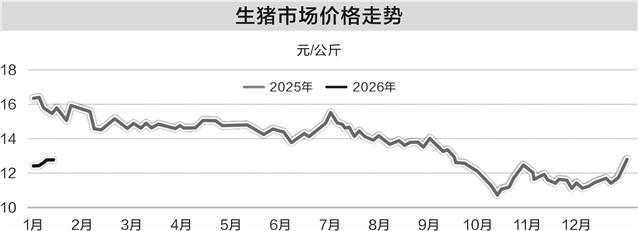
热点栏目 自选股 数据中心 行情中心 资金流向 模拟交易 客户端 卓创资讯生猪行业资深分析师李晶 【导语】2025年从体重反馈供需错配存在,从而影响生猪实际出栏与理论出栏出现偏差,也影响猪价上 半年整体震荡,下半年加速回落。从基础产能数据以及结合上半年二育、压栏和入库等行为的分析, 2026年1-6月供需比或先收窄后走阔再收窄,对应猪价先涨后震荡下跌后再微涨的走势。 2025年内猪价震荡下滑后强势收尾,年均价下滑明显 据卓创资讯监测数据显示,2025年1-12月份国内生猪价格经历震荡后下滑后反弹的走势。全年均价 13.74元/公斤,环比下滑17.97%,为近五年最低。月均价中,最低为10月的11.52元/公斤,最高价为1月 的15.76元/公斤。 1-7月先后经历下滑调整期和长期震荡期。年初至2月初,随着养殖端节前减栏清栏,生猪供应不断增 多,且增幅超过需求端增幅,猪价震荡回落。2月中旬-7月初,一方面养殖端适度压栏增重,同时二次 育肥滚动补栏和出栏,且需求端减量幅度偏小,供需端呈现博弈状态,猪价长期在14.0-15.0元/公斤范 围内震荡。而7月中旬-10月中旬,院校放假、气温升高首先导致需求减量,后期需求 ...


ETF盘中咨询|猪企龙头强强对话,全市场唯一农牧渔ETF(159275)开盘走高!机构:行业基本面和估值有望修复
Sou Hu Cai Jing· 2026-01-15 02:15
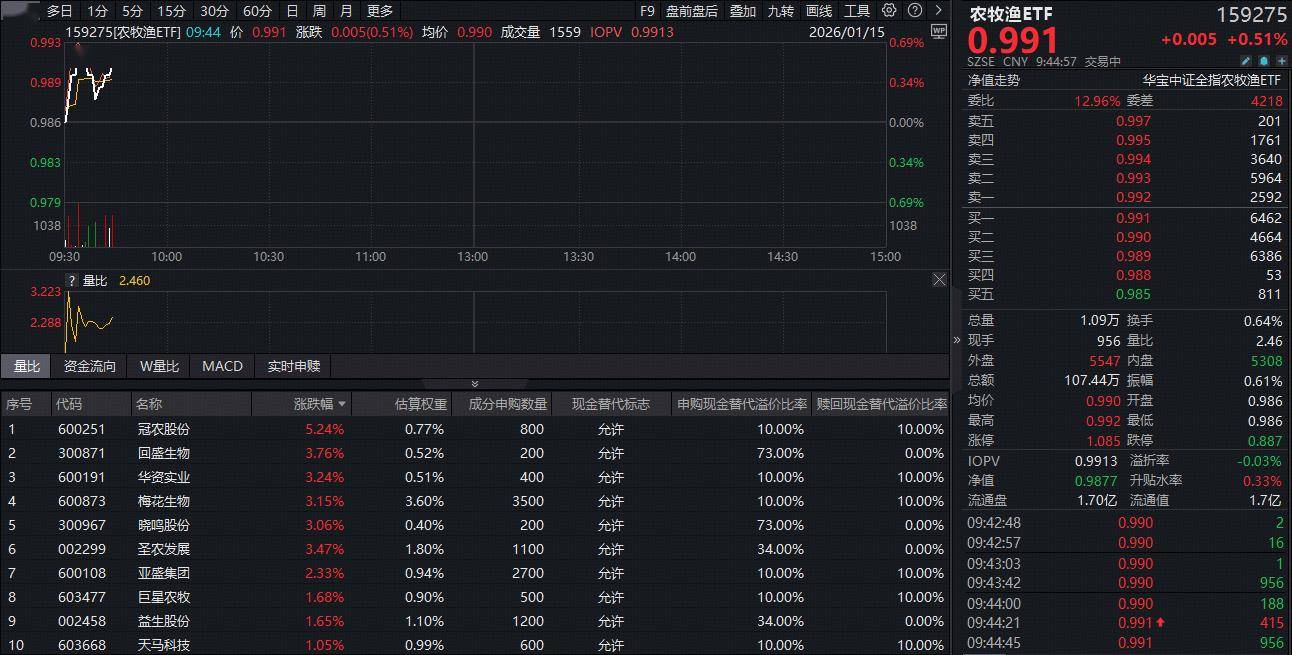
Core Viewpoint - The agricultural, animal husbandry, and fishery sector is experiencing a positive trend, with the highest "pig content" ETF (159275) showing a 0.51% increase in price as of the latest report, indicating a recovery in the market [1][3]. Group 1: Market Performance - The agricultural, animal husbandry, and fishery ETF (159275) opened with a continuous upward trend, rising by 0.51% [1]. - Key stocks in the sector, such as Guan Nong Biological, have seen significant gains, with some stocks increasing by over 5% [1][3]. - The ETF's underlying index, the CSI Agricultural, Animal Husbandry, and Fishery Index, has a price-to-book ratio of 2.53, which is at a low point compared to the past five years [3]. Group 2: Industry Insights - The feed industry is showing signs of recovery, with upstream raw material prices at a cyclical low and structural recovery in downstream breeding [3]. - The pig farming industry has entered a loss phase again, but market and policy factors are accelerating capacity reduction, leading to a decrease in the number of breeding sows [3]. - The pet food industry is highlighted for its growth potential, shifting competition from marketing to research and supply chain [3]. Group 3: Future Outlook - Analysts are optimistic about the pig farming sector, expecting a turning point in pig prices by Q2 2026 due to policy and market forces driving capacity reduction [3]. - The agricultural, animal husbandry, and fishery ETF (159275) is positioned as a strategic investment opportunity, covering major players in the pig farming industry and related sectors [4][6].

超预期创新药BD带动医药板块共振 | 券商晨会
Mei Ri Jing Ji Xin Wen· 2026-01-15 01:26
Group 1 - Huatai Securities reports that the Hong Kong innovative drug sector has seen significant liquidity recovery since the beginning of 2026, with BD transactions exceeding expectations compared to the same period last year [1] - The report anticipates a clear innovative drug beta market driven by liquidity recovery, with expectations for breakthroughs beyond previous highs [1] - External demand-driven CXO performance continues to exceed expectations, likely resonating with the innovative drug sector [1] Group 2 - CITIC Construction Investment indicates that the global interest rate cut cycle is entering its second half in 2026, characterized by "internal and external easing resonance" and a shift from abnormal to normal conditions [2] - The report highlights that the depreciation of the US dollar and appreciation of the RMB support a strong A-share market [2] - The "stock-bond seesaw" effect is expected to further support A-share performance, with a notable increase in demand for reallocation of household deposits [2] Group 3 - China Merchants Securities states that the slight recovery of sow production capacity in 2024 will lead to a downward trend in pig prices in 2025, although there may still be slight profits for the year [3] - The industry is experiencing both passive and active capacity reduction due to price drops below cash costs, with sow production capacity entering an accelerated reduction phase from October [3] - The report predicts a gradual recovery in pig prices in the second half of 2026, with quality pig enterprises continuing to expand their cost advantages and improve cash flow [3]
建信期货生猪日报-20260115
Jian Xin Qi Huo· 2026-01-15 01:23
021-60635727 期货从业资格号:F0230741 研究员:洪辰亮 021-60635572 hongchenliang@ccb.ccbfutures.co m 期货从业资格号:F3076808 行业 生猪日报 日期 2026 年 01 月 15 日 021-60635740 期货从业资格号:F3055047 021-60635732 yulanlan@ccb.ccbfutures.com 期货从业资格号:F0301101 请阅读正文后的声明 #summary# 每日报告 021-60635570 liuyouran@ccb.ccbfutures.com 期货从业资格号:F03094925 生猪行情: 农业产品研究团队 研究员:林贞磊 linzhenlei@ccb.ccbfutures.com 研究员:余兰兰 研究员:王海峰 wanghaifeng@ccb.ccbfutures.com 研究员:刘悠然 期货方面,14 日生猪主力 2603 合约小幅高开后震荡走高,尾盘收阳,最高 12085 元/吨,最低 11780 元/吨,收盘报 12010 元/吨,较昨日涨 1.82%,指数总 持仓增加 8492 ...
仔猪价格上涨,情绪带动近月反弹
Zhong Xin Qi Huo· 2026-01-15 00:30
1. Report Industry Investment Ratings - Oils: Soybean oil and palm oil are rated as "sideways", while rapeseed oil is rated as "sideways with a downward bias" [7]. - Protein meals: Soybean meal is rated as "sideways", and rapeseed meal is rated as "sideways with a downward bias" [9]. - Corn and starch: Rated as "sideways" [11]. - Hogs: Rated as "sideways" [13]. - Natural rubber: Rated as "sideways with a bullish bias" [15]. - Synthetic rubber: Rated as "sideways with a bullish bias" [18]. - Cotton: Rated as "sideways with a bullish bias" [19]. - Sugar: Rated as "sideways with a downward bias" [20]. - Pulp: Rated as "sideways" [21]. - Offset paper: Rated as "sideways" [22]. - Logs: Rated as "sideways" [24]. 2. Core Views of the Report - The overall agricultural market shows a mixed performance, with different commodities having their own supply - demand fundamentals and price trends. For example, in the hog market, short - term supply pressure remains, but long - term supply may gradually ease; in the oil market, although there are some policy and supply - demand changes, the overall supply is relatively abundant [14][7]. 3. Summary by Relevant Catalogs 3.1. Market Views 3.1.1. Hogs - **Logic**: Short - term supply pressure is small in early January, but some February hogs may be sold in advance in mid - to - late January. Medium - term supply will be excessive until April 2026. Long - term supply pressure may ease after May 2026. Demand declines after New Year's Day, and the average weight of hogs decreases but is still higher than the same period last year. - **Outlook**: The near - term price is expected to be in a weak sideways range, while the far - term price may rise in the second half of 2026, but currently, the production cut is insufficient, so far - term positions should be cautiously taken on dips [14]. 3.1.2. Oils - **Logic**: Indonesia cancels the B50 biodiesel plan, and raises the export tax on palm oil. The domestic soybean market has active auctions, and the supply of rapeseed oil may change due to trade relations. - **Outlook**: Soybean oil, palm oil are sideways, and rapeseed oil is sideways with a downward bias. It is recommended to consider buying on dips and palm oil - rapeseed oil spread trading [7]. 3.1.3. Protein Meals - **Logic**: International factors such as the USDA's report, Brazilian soybean production, and the probability of El Niño affect the market. Domestically, soybean auctions are active, and the supply and demand of soybean meal and rapeseed meal are affected by trade and consumption. - **Outlook**: US soybeans, domestic soybean meal are sideways, and rapeseed meal is sideways with a downward bias [9]. 3.1.4. Corn and Starch - **Logic**: The increase in supply due to smooth selling restricts price increases. However, factors such as farmers' reluctance to sell, the time required for imported grains, and downstream replenishment demand support prices. - **Outlook**: Sideways in the short - term [12]. 3.1.5. Natural Rubber - **Logic**: The market has a bullish atmosphere, mainly driven by macro factors. The supply is seasonally increasing, and the raw material price is firm, but the downstream demand is weak after the price increase. - **Outlook**: Sideways with a bullish bias in the short - term [17]. 3.1.6. Synthetic Rubber - **Logic**: The price trend is bullish, mainly due to the expected improvement in the butadiene market and the possible impact of policies on supply. - **Outlook**: Sideways with a bullish bias in the medium - term [19]. 3.1.7. Cotton - **Logic**: The long - term driving factors are the expected "tight balance" in the 2025/26 season and the possible reduction in planting area in 2026. The short - term adjustment space is limited. - **Outlook**: Sideways with a bullish bias in the long - term [19]. 3.1.8. Sugar - **Logic**: The global sugar market is expected to have a surplus in the 25/26 season, with most major producers expected to increase production. - **Outlook**: Sideways with a downward bias in the medium - to - long - term [20]. 3.1.9. Pulp - **Logic**: There are both bullish and bearish factors. Bullish factors include rising import costs and high downstream paper production. Bearish factors include difficult cost transfer, seasonal demand decline, and sufficient supply. - **Outlook**: Sideways [21]. 3.1.10. Offset Paper - **Logic**: The market is affected by factors such as new warehouse receipts, industry profitability, supply and demand, and downstream consumption. - **Outlook**: There may be pressure in the late period, and attention should be paid to the risk of correction [22]. 3.1.11. Logs - **Logic**: The supply pressure will be marginally relieved in January - February. The price has support due to the inverted price difference, and there are some game points in the 03 contract. - **Outlook**: Sideways within a range [24]. 3.2. Variety Data Monitoring - The report lists the monitoring categories including oils and fats, corn and starch, hogs, cotton and cotton yarn, sugar, pulp and offset paper, logs, etc., but specific data details are not provided in the content [25][57][75]. 3.3. Commodity Index - On January 14, 2026, the comprehensive index, characteristic index (including commodity 20 index, industrial products index, PPI commodity index) all showed an upward trend. The agricultural product index also had a certain increase, with a daily increase of 0.20%, a 5 - day increase of 0.44%, a 1 - month increase of 2.30%, and a year - to - date increase of 1.29% [183][184].
财经早报:美国白宫宣布对特定半导体等加征25%关税,美国将暂停对75个国家的所有签证丨2026年1月14日
Xin Lang Cai Jing· 2026-01-14 23:44
Group 1 - The US White House announced a 25% import tariff on certain semiconductors and semiconductor manufacturing equipment starting from January 15 [2][51] - The Dutch court is hearing a case involving Nexperia and its Chinese parent company, Wingtech Technology, regarding control disputes that have led to a global shortage of automotive chips [3][52][53] - The Chinese automotive industry reported a production and sales volume of 34.53 million and 34.40 million vehicles in 2025, maintaining its position as the world's largest for 17 consecutive years [13][63] Group 2 - Goldman Sachs has raised its GDP growth forecasts for China to 4.8% and 4.7% for 2026 and 2027, respectively, marking the largest upward revision since 2019 [9][58][59] - The China Securities Regulatory Commission approved an increase in the minimum margin ratio for financing transactions on the Shanghai, Shenzhen, and Beijing stock exchanges from 80% to 100% [6][56] - Ctrip Group is under investigation for alleged monopolistic practices, with its stock dropping 6.49% to HKD 569.5 per share following the announcement [17][66][67] Group 3 - The Ministry of Finance and other departments announced an extension of personal income tax refunds for home purchases from January 1, 2026, to December 31, 2027 [7][56] - Several real estate companies are set to meet with relevant authorities to discuss changes in financing conditions amid ongoing policy support [8][57] - UBS has identified the human-robot interaction technology as a bottleneck in the development of humanoid robots, indicating potential growth areas in the surgical robot market [22][72] Group 4 - The Chinese automotive export market showed resilience, with exports exceeding 7 million vehicles, marking a new milestone [14][63] - The regulatory body in Zhejiang has launched an investigation into Sunflower Health Technology's restructuring plan for misleading statements [20][70] - The private equity firm Fantasia Quantitative achieved a return of 56.55% in 2025, ranking fifth among large private equity firms [21][71]


从跨界深耕到无界生长 “瓜蒜之乡”中牟如何成为千亿级企业创新优选地
He Nan Ri Bao· 2026-01-14 23:25
Core Viewpoint - The article highlights the transformation of industries in Zhongmu, where major companies like Wanbang Group and Muyuan Group are diversifying their operations into new sectors, such as traditional Chinese medicine and smart agriculture, leveraging the region's advantages for growth [1][2][3]. Group 1: Wanbang Group's Transformation - Wanbang Group, originally focused on agricultural product distribution, is entering the traditional Chinese medicine sector with the establishment of the Thick Jiang Traditional Chinese Medicine Valley project, which aims to create a leading one-stop trading and logistics hub for TCM by 2027 [2]. - The project will cover over 300 acres and include a TCM museum, emphasizing the integration of food and medicine, with over 60% of products having both culinary and medicinal properties [2][3]. Group 2: Muyuan Group's Innovation - Muyuan Group is investing 5.5 billion yuan in the Central Plains Modern Food Industry Park, transitioning from traditional pig farming to a fully automated and intelligent farming model, which includes feed processing, pig breeding, and meat processing [3]. - The park spans 2,800 acres and is designed to produce 1 million tons of feed annually, with a capacity to raise 2 million pigs, showcasing a significant shift towards technology in agriculture [3]. Group 3: Broader Industry Trends - The article notes that the transformation in Zhongmu is not limited to individual companies but reflects a broader trend of industry integration, with various sectors such as commerce, tourism, and agriculture merging to create new business models [4][5]. - The region's development strategy emphasizes the importance of cultural and tourism integration, aiming to enhance the local economy and attract visitors, thereby reshaping the industrial landscape [5][6].
产能充裕叠加需求不足 上半年生猪市场或延续磨底
Zheng Quan Shi Bao· 2026-01-14 17:36
Core Viewpoint - The pig farming industry is entering its traditional peak season with the Lunar New Year approaching, but the market is still facing oversupply, leading to weak pig prices [2][5]. Industry Overview - The overall trend in the domestic pig market has been weak since 2025, with many companies reporting a decline in sales prices and revenues, some by as much as 30% [2][3]. - Analysts indicate that despite ongoing "anti-involution" policies in the livestock sector, the fundamental imbalance of oversupply and insufficient demand remains unchanged [2][8]. Company Performance - In 2025, Wens Foodstuffs Group sold 40.47 million pigs, generating revenue of 61.48 billion yuan, with an average selling price of 13.71 yuan/kg, reflecting a year-on-year decline of 0.45% in revenue and 17.95% in price [3]. - Muyuan Foods sold 6.98 million pigs in December 2025, with an average price of 11.41 yuan/kg, down 25.38% year-on-year, and a revenue drop of 36.06% [4]. - Tian Kang Bio reported a 5.34% increase in sales volume to 3.19 million pigs, but revenue fell by 10.69% to 4.55 billion yuan [4]. Price Trends - The average price of lean pigs in 2025 was 13.74 yuan/kg, a decrease of 17.97% year-on-year, with prices remaining low and companies facing losses [5][6]. - As of January 9, 2026, the national average price for pigs was 12.51 yuan/kg, showing a slight recovery due to seasonal demand, but losses persist in the industry [5][7]. Supply and Demand Dynamics - The supply of pigs remains high, with a reported 36.92 million pigs in large-scale farms as of December 2025, a slight decrease from the previous month but an increase year-on-year [8]. - Analysts predict that while there may be short-term price support due to reduced supply, the overall market remains oversupplied, limiting significant price increases [8][9]. Cost Factors - The prices of corn and soybean meal, key raw materials for pig farming, significantly influence the industry's profitability. High prices for these inputs could exacerbate losses, while a decrease could improve profit margins [9]. - Current prices for feed ingredients are stable, with limited impact on costs, but fluctuations in market supply and demand will continue to drive profitability [9].
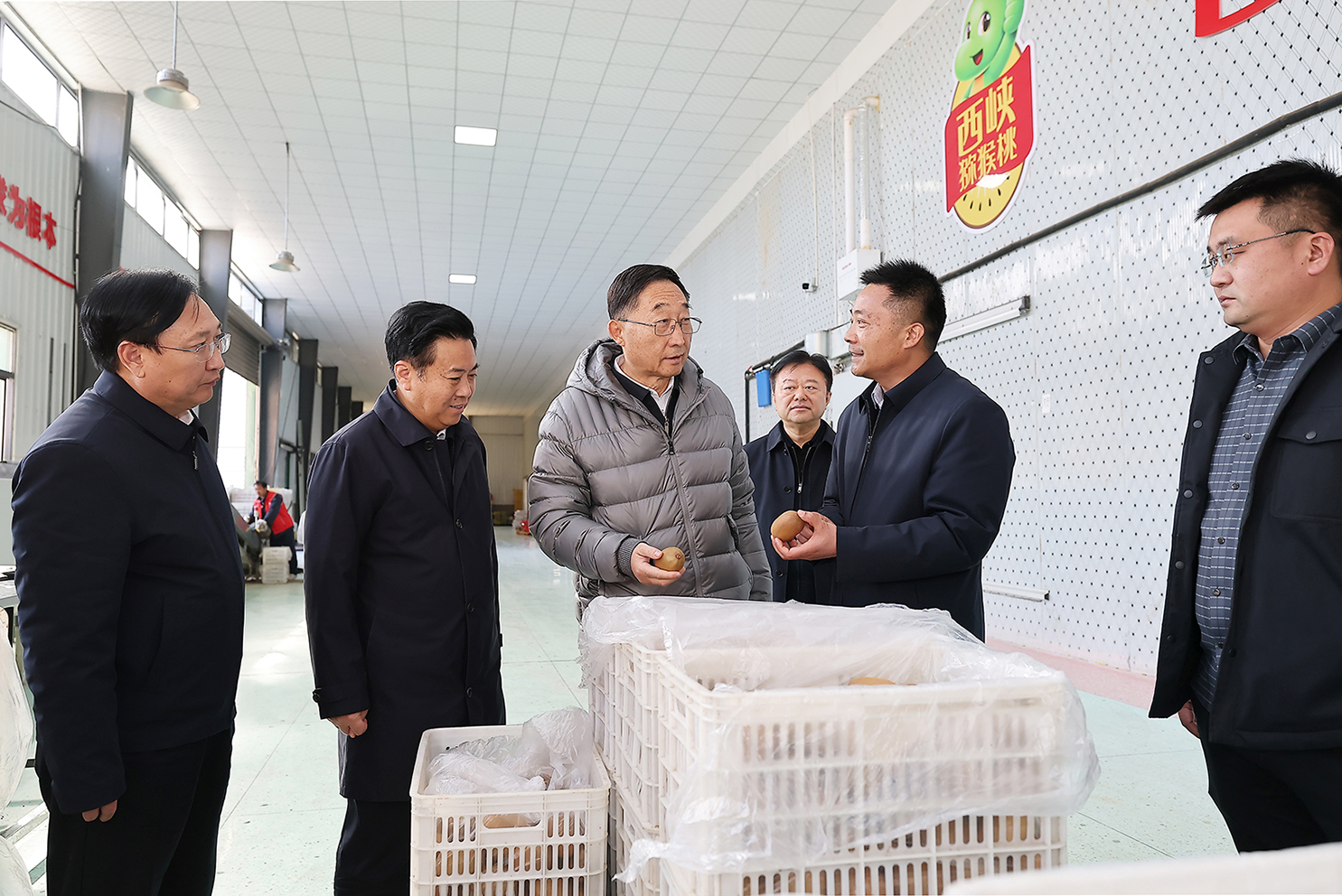
刘宁到南阳市西峡内乡南召调研推动工作时强调 突出特色优势 夯实产业基础 激活县域经济高质量发展新动能
He Nan Ri Bao· 2026-01-14 11:48
Group 1 - The provincial government emphasizes the need to implement the spirit of the 20th National Congress and the Central Economic Work Conference, focusing on enhancing the agricultural industry and ecological protection to drive high-quality economic development in the county [2][4] - Nanyang, as an agricultural city, is extending its agricultural industry chain, with a positive trend in the development of characteristic agriculture [2] - The government encourages enterprises to invest in technological research and development, apply smart technologies to reduce costs and increase efficiency, and explore new industries such as synthetic biology [2][3] Group 2 - The government is promoting the deep integration of technological and industrial innovation, focusing on cultivating leading industries such as traditional Chinese medicine, health care, and new energy materials [3] - Companies are encouraged to combine traditional Chinese medicine with modern science to extend the health industry chain and improve public health [3] - Emphasis is placed on green and low-carbon development, with companies urged to adopt technological innovations and improve resource utilization efficiency [3] Group 3 - The government is focusing on urban-rural integration to drive comprehensive rural revitalization and is committed to high-quality development paths that prioritize ecology and resource conservation [4] - There is a strong emphasis on ensuring supply stability, safety production, and social assistance as the year-end approaches, with increased traffic and logistics [4] - The government is also involved in the protection of cultural heritage and the integration of cultural tourism development [4]