
航空航天

Search documents
SpaceX催化剂不断!领涨十大核心ETF——航空航天ETF(159227),近20日合计净流入15亿
Ge Long Hui· 2026-02-04 07:51
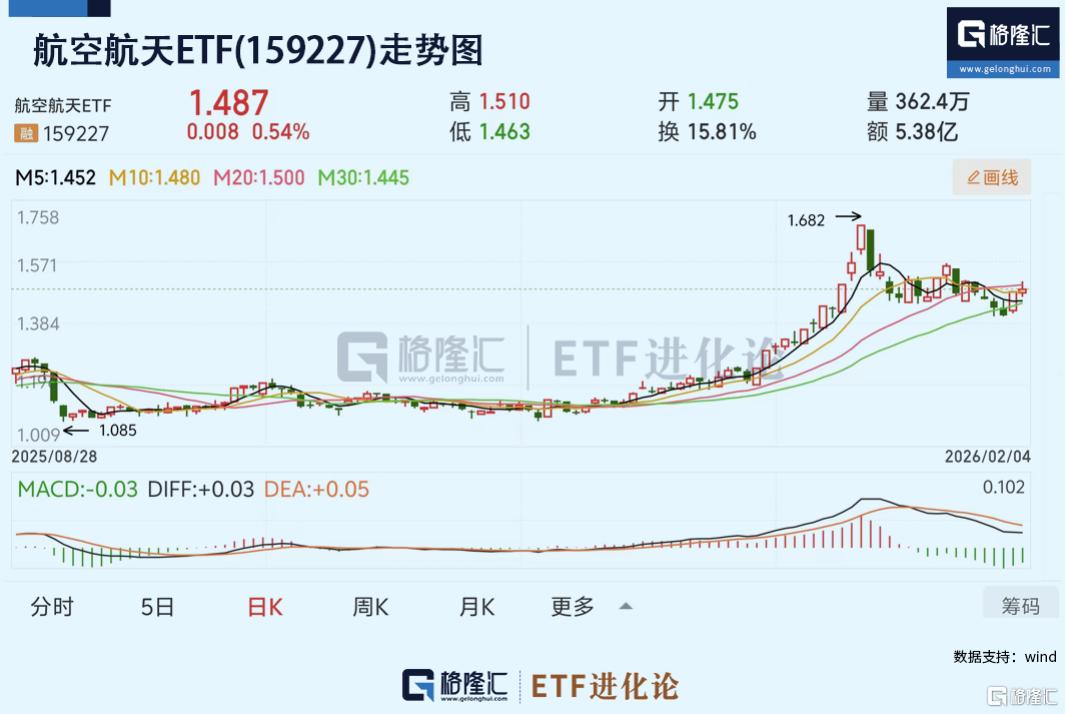
Group 1 - The aerospace ETF (159227) has seen a significant net inflow of 1.519 billion yuan over the past 20 days, with a net subscription of 500 million units today [1] - The ETF has outperformed the top ten core ETFs this week, driven by a more than 14% pullback in the commercial aerospace sector since its peak on January 12 [2] - SpaceX has submitted an application to the FCC to launch up to 1 million satellites, aiming to create a satellite constellation for advanced AI model support, which is expected to enhance market attention [2] Group 2 - SpaceX has acquired xAI for a valuation of 1.25 trillion yuan, integrating AI with aerospace to accelerate applications in the space sector [3][4] - Elon Musk announced that the first flight test of the Starship V3 is scheduled for six weeks from January 27, with the goal of achieving full rocket reusability this year, potentially reducing space access costs by 100 times [5] - SpaceX is actively advancing its IPO process, potentially targeting June for its public offering, aiming to raise up to 500 billion yuan at a valuation of approximately 1.5 trillion yuan, which would be the largest IPO in history [6] Group 3 - The aerospace ETF (159227) closely tracks the national aerospace industry index, with a high purity of commercial aerospace at 69.65%, making it highly aligned with the commercial aerospace revolution led by SpaceX [6] - The ETF's total size is 3.381 billion yuan, ranking first in its category, with an average daily trading volume exceeding 500 million yuan, indicating good liquidity [8] - Major holdings in the ETF include leading companies in the aerospace sector, covering a wide range of industries such as fighter jets, rocket engines, and satellites, with a significant focus on emerging fields like commercial aerospace and low-altitude economy [6][7]

“10年后,中国商飞将与波音、空客三分天下”
Guan Cha Zhe Wang· 2026-02-04 07:12
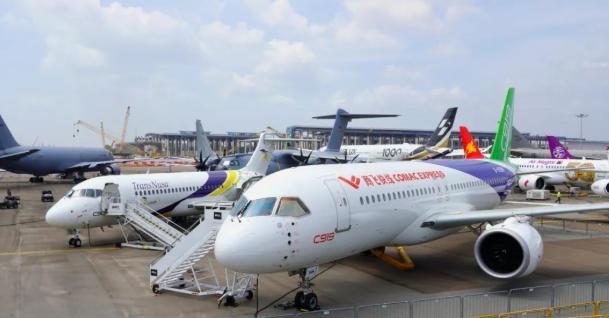
Core Viewpoint - The 2026 Singapore Airshow marks a significant opportunity for COMAC to showcase its C919 and C909 aircraft, positioning itself as a competitor to Airbus and Boeing in the rapidly growing Asia-Pacific aviation market [1][5]. Group 1: Market Context - The Asia-Pacific region is experiencing pressure on airlines due to delivery delays from Boeing and Airbus, engine shortages, and broader supply chain issues, creating a demand for additional aircraft manufacturers [5][6]. - IATA reports that the wait time for new aircraft deliveries is longer than ever, leading to an increase in the average age of fleets and higher operational costs due to older aircraft consuming more fuel [5]. Group 2: Competitive Positioning - COMAC aims to compete directly with Airbus A320neo and Boeing 737 MAX, with a focus on expanding its market presence beyond China, particularly in Southeast Asia [1][5]. - Industry experts, including IATA's Director General Willie Walsh, predict that COMAC could become a significant player alongside Boeing and Airbus within the next 10 to 15 years [3]. Group 3: Production and Delivery Goals - COMAC is reportedly improving the production and delivery pace of the C919, with a target of delivering no fewer than 28 aircraft in 2026, aiming for a production rate of one aircraft every 10 to 15 days [6]. - As of now, COMAC has delivered over 200 aircraft and opened more than 800 routes, transporting over 36 million passengers [8]. Group 4: Regulatory Developments - The Civil Aviation Administration of China has proposed regulations allowing the C919 to operate on narrow runways typically used by smaller airports, which could enhance its competitiveness against Airbus and Boeing [9]. - The European Union Aviation Safety Agency (EASA) has begun flight evaluations of the C919 in Shanghai, indicating a positive outlook on the aircraft's performance and safety [8].
商业航天强势回归,航空航天ETF(159227)再度翻红,规模位居同类第一
Mei Ri Jing Ji Xin Wen· 2026-02-04 06:40
Group 1 - The A-share market showed mixed performance on February 4, with the Shanghai Composite Index slightly up and the ChiNext Index rising in the afternoon, while the commercial aerospace sector rebounded after a previous surge [1] - The Aerospace ETF (159227) increased by 0.14% with a trading volume of 4.83 billion yuan, maintaining its position as the leader in its category [1] - The Aerospace ETF has seen net inflows in 4 out of the last 5 trading days, totaling 257 million yuan, with the latest fund size reaching 3.381 billion yuan, also leading in its category [1] Group 2 - SpaceX has submitted an application to the FCC to launch and operate a constellation of up to 1 million satellites, while also acquiring xAI to integrate aerospace, communication, and AI technologies, accelerating the fusion of commercial aerospace and AI [1] - The Aerospace ETF closely tracks the National Aerospace Index, covering leading companies across the entire industry chain, including fighter jets, aircraft engines, rockets, missiles, satellites, and radars, aligning perfectly with the "integrated aerospace" strategic direction [1] - The ETF has a high commercial aerospace content of 69.65%, with top holdings including Aerospace Development, China Satellite, Aerospace Electronics, and other industry leaders [1]
持续提升“五个中心”能级,上海拿出了施工图
第一财经· 2026-02-04 06:35
Core Viewpoint - Shanghai aims to achieve a GDP growth rate of around 5% for 2025, with a focus on enhancing its status as an international economic, financial, trade, shipping, and technological innovation center [3][5][12]. Group 1: Economic Goals and Projections - The main expected economic targets for Shanghai in 2025 include a GDP growth of approximately 5%, a 2% increase in local public budget revenue, and R&D expenditure reaching 4.6% of GDP [3][12]. - The "15th Five-Year Plan" outlines an average annual GDP growth target of around 5%, with potential growth levels estimated between 4.6% and 5.2% [3][12]. Group 2: Development of the "Five Centers" - The report emphasizes the continuous enhancement of the "Five Centers," which include international economic, financial, trade, shipping, and technological innovation centers [5][7]. - Specific initiatives include supporting industries such as smart connected vehicles, marine economy, low-altitude economy, aerospace, and satellite internet [5][11]. Group 3: New Quality Productivity - The focus is on integrating technological and industrial innovation to foster new quality productivity, including accelerating the application of major technological achievements and promoting intelligent, green, and integrated industrial development [9][10]. - Shanghai's R&D expenditure as a percentage of GDP reached approximately 4.5% in 2025, with significant growth in key industries like integrated circuits, biomedicine, and artificial intelligence [9][10]. Group 4: Modern Industrial System - The "2+3+6+6" modern industrial system aims to establish a world-class high-end industrial cluster, with a focus on traditional industry transformation and the development of three leading industries: integrated circuits, biomedicine, and artificial intelligence [10][13]. - By 2030, the plan targets that the total output value of strategic emerging industries will account for over 50% of the total industrial output value [12][13]. Group 5: Future Industry Layout - The report highlights the importance of forward-looking layouts in future industries, including quantum technology, brain-computer interfaces, and bio-manufacturing, to enhance Shanghai's competitive edge [14][12]. - The establishment of a reasonable investment mechanism for manufacturing and the promotion of collaboration between industry, academia, and research in emerging fields are emphasized [14][13].

特朗普要对稀土等关键矿产发力了
Xin Lang Cai Jing· 2026-02-04 05:07
Core Viewpoint - The U.S. government, under President Trump, is launching a $12 billion "Critical Minerals Strategic Reserve" project, named the "Vault Plan," to stockpile essential minerals like rare earths, gallium, and cobalt for American manufacturing [1] Group 1: Project Details - The project aims to integrate $2 billion in private capital with $10 billion in loans from the U.S. Export-Import Bank to create a centralized procurement and storage system for critical minerals [1] - Participating companies include major players in American manufacturing such as General Motors, Boeing, and Google, indicating the project's significance to the U.S. industrial base [1] Group 2: Strategic Context - The urgency of the project stems from past supply chain vulnerabilities exposed by China's export controls on rare earths, which impacted the U.S. during the trade war [1] - The "Vault Plan" is part of a broader strategy where the U.S. is investing heavily in domestic rare earth companies and seeking to build alliances with G7 nations to create a "mineral club" that excludes China [1] Group 3: Challenges and Expert Opinions - Experts suggest that rebuilding a secure and independent rare earth supply chain could take 10 to 20 years, indicating that the current efforts may not yield immediate results [1] - The focus on financial investment in mining may overlook critical technological and production capacity challenges that cannot be resolved solely through funding [1]
波音:预计今年上半年交付改进型787梦想飞机
Xin Lang Cai Jing· 2026-02-04 05:07
Core Viewpoint - Boeing expects to begin deliveries of the improved 787-9 and 787-10 Dreamliners in the first half of this year [1] Group 1: Aircraft Improvements - The improvements to the wide-body aircraft will increase the maximum takeoff weight, allowing airlines to extend flight distances by 400 miles or increase cargo capacity by 5 to 6 tons [1] Group 2: Future Developments - Boeing anticipates that the larger 777X will receive certification in the second half of this year, but it may not enter service until next year [1]

波音公司预计上半年开始交付改进型787梦想飞机
Xin Lang Cai Jing· 2026-02-04 04:08
Core Insights - Boeing is expected to start delivering improved versions of the 787-9 and 787-10 Dreamliner to airlines in the first half of this year, enhancing flight range and cargo capacity [1][2] - The modifications to the wide-body aircraft's maximum takeoff weight will allow airlines to increase flight distance by 400 miles (643 kilometers) or boost cargo capacity by 5 to 6 tons [1] - The larger 777X is anticipated to receive certification in the second half of this year, but it may not enter service until next year [2]
航空航天ETF天弘(159241)盘中净申购同标的第一,商业航天企业或将在今明两年密集挂牌上市
Mei Ri Jing Ji Xin Wen· 2026-02-04 03:03
Group 1 - The stock market showed a mixed performance with Shanghai outperforming Shenzhen, particularly in the aerospace sector, where the Tianhong Aerospace ETF (159241) rose by 2.20% with a trading volume of 69.5688 million yuan [1] - The Tianhong Aerospace ETF (159241) has seen a net inflow of 386 million yuan over the last 20 trading days, with a net subscription of 7 million units, reaching a new high of 970 million yuan in total assets as of February 3, 2026 [1] - The ETF is well-positioned to capture investment opportunities in themes such as low-altitude economy, large aircraft, satellite internet, and space photovoltaic, benefiting from both policy and market support [1] Group 2 - The political bureau's collective study emphasizes the strategic layout for future industries, marking a new height in the political positioning of commercial aerospace, with ongoing policy support for the construction of a strong aerospace nation [2] - Key support is directed towards low-altitude economy and satellite internet sectors, indicating a favorable environment for growth in these areas [2]
未知机构:伊顿25Q4数据中心订单同比200计划分拆汽车部门专注电气化航天业-20260204
未知机构· 2026-02-04 02:00
Summary of Eaton's Earnings Call Company Overview - **Company**: Eaton Corporation - **Industry**: Electrical and Aerospace Components Key Financial Highlights - **Q4 2025 Performance**: - Revenue: $7.055 billion, up 13% year-over-year [1] - Operating Income: $1.76 billion, up 14% year-over-year [1] - Operating Margin: 24.9%, up 0.2 percentage points year-over-year [1] Segment Performance Americas Electrical Division - **Q4 2025 Revenue**: $3.506 billion, up 21% year-over-year [1] - **Operating Income**: $1.046 billion, up 14% year-over-year [1] - **Operating Margin**: 29.8%, down 1.8 percentage points year-over-year [1] - **Order Backlog**: Increased by 31% year-over-year [2] Global Electrical Division - **Q4 2025 Revenue**: $1.728 billion, up 10% year-over-year [3] - **Operating Income**: $340 million, up 23% year-over-year [3] - **Operating Margin**: 19.7%, up 2 percentage points year-over-year [3] - **Order Backlog**: Increased by 19% year-over-year [3] Aerospace Division - **Q4 2025 Revenue**: $1.111 billion, up 14% year-over-year [3] - **Operating Income**: $268 million, up 21% year-over-year [3] - **Operating Margin**: 24.1%, up 1.2 percentage points year-over-year [3] - **Order Backlog**: Increased by 16% year-over-year [3] Market Trends and Strategic Moves - **Data Center Market**: - Strong growth with a 200% year-over-year increase in rolling orders [2] - Anticipated backlog for U.S. data center construction at $234 billion [2] - **Acquisitions**: - Acquired Resilient Power Systems Inc. to enhance capabilities in AI high-power data centers and electric vehicle charging [2] - Acquired Boyd Corporation's thermal business for $9.5 billion to enter the AI data center liquid cooling market [3] 2026 Guidance - **Revenue Growth**: Expected to grow by 7-9% [4] - **Operating Margin**: Projected between 24.6% and 25% [4] - **Segment Projections**: - Americas Electrical: Revenue growth of 9-11%, operating margin of 29.8%-30.2% [4] - Global Electrical: Revenue growth of 3.5%-5.5%, operating margin of 19.5%-19.9% [4] - Aerospace: Revenue growth of 7-9%, operating margin of 23.9%-24.3% [4] Investment Recommendation - **Net Profit Projections**: Expected net profit of $5 billion in 2026 and $5.8 billion in 2027, corresponding to a PE ratio of 27.92 and 24.07 [4] - **Focus Areas**: Recommended to closely monitor the company's performance and strategic initiatives [4]

2025年上海政府工作报告聚焦实体经济,四大新兴产业集群成发展核心引擎
Jin Rong Jie· 2026-02-04 01:16
Group 1 - The report emphasizes the dual-driven model of upgrading traditional industries and nurturing emerging industries, focusing on the transformation of sectors like petrochemicals and steel through digital and green technology [1][2] - Shanghai's traditional manufacturing industry has achieved an 85% coverage rate in intelligent transformation, which is expected to accelerate energy efficiency improvements and structural optimization [2] - Emerging industries such as intelligent connected new energy vehicles and low-altitude economy are prioritized, with Shanghai opening 1,200 kilometers of testing roads for autonomous vehicles, accumulating over 10 million kilometers of testing mileage [2] Group 2 - The report highlights the low-altitude economy as a new focus area, with Shanghai laying out plans in core fields like drones and eVTOL, which will enhance the collaborative effects across the industry chain [2] - The satellite internet and aerospace industries are expected to synergize with Shanghai's technological reserves in integrated circuits and artificial intelligence, creating a "space-ground integration" industrial ecosystem [2] - The ongoing industrial policy in Shanghai is projected to strengthen the foundation of the real economy, with new productive forces becoming the core driver of economic growth, benefiting the Yangtze River Delta and the national industry [2][3]