锂电

Search documents
证监会:扩大开放范围!
Jin Rong Shi Bao· 2026-01-29 07:30
Core Viewpoint - The recent announcement by the China Securities Regulatory Commission (CSRC) regarding the inclusion of 14 new futures and options products for foreign traders marks a significant step in the opening of China's futures market, enhancing its international influence and pricing power [1][2]. Group 1: Futures Market Expansion - The CSRC has added 14 new futures and options products, increasing the total number of specific products available for foreign traders to 38 [1]. - The newly included products focus on sectors where China has substantial consumption markets or complete industrial chain advantages, such as non-ferrous metals, chemicals, and new energy materials [2]. - The inclusion of nickel futures and options as the first directly open non-ferrous metal futures product signifies a key advancement in the internationalization of the Shanghai Futures Exchange (SHFE) [2][3]. Group 2: Nickel Futures and Options - Nickel is a critical strategic material for emerging industries, and China, being the largest consumer and importer of nickel, provides a solid foundation for the opening of the futures market [2]. - The nickel futures market has effectively played its role since its launch in 2015, becoming an important reference for domestic spot trade pricing and widely used for risk management [2]. - The opening of nickel futures and options aligns with industry demands and is expected to enhance risk management capabilities within China's non-ferrous metal industry [2]. Group 3: Polyester Industry Collaboration - The newly added products in the chemical sector include core polyester industry futures and options, such as paraxylene (PX) and purified terephthalic acid (PTA) [4][5]. - China holds the world's most complete polyester industrial chain, with a projected polyester production capacity of 89.035 million tons by 2025, accounting for 60% to 70% of global capacity [4]. - The internationalization of the polyester sector is expected to improve the global pricing system and meet the diverse risk management needs of domestic and foreign enterprises [5]. Group 4: Lithium Carbonate Futures - The inclusion of lithium carbonate futures and options in the specific products is significant for the new energy sector, as lithium is a key raw material for battery production [6][7]. - Since its listing in July 2023, the lithium carbonate futures market has operated smoothly, providing a transparent pricing basis for spot trade and enhancing China's influence in international lithium resource trade [6]. - The availability of lithium carbonate futures and options will facilitate easier participation for domestic and foreign enterprises in the futures market, offering risk management tools against price volatility [7].
未知机构:中银基金周斌太空光伏是较好的能拉动需求的点但兑现起来会相对较-20260129
未知机构· 2026-01-29 02:25
Summary of Conference Call Notes Industry Overview - The discussion primarily revolves around the **space photovoltaic** industry and its potential impact on demand, as well as the **traditional lithium battery** sector in the context of global electricity shortages [1][2][4]. Key Points and Arguments - **Space Photovoltaics**: - Considered a promising area to stimulate demand, but the realization of its potential is expected to be slow [1][5]. - The U.S.-China dynamics suggest that companies like SpaceX are advancing in satellite energy autonomy, which could address electricity shortages in U.S. data centers [5]. - The high demand logic for space photovoltaics is acknowledged, but there is a preference to engage in sectors with genuine demand and real orders rather than just supply-side logic [5]. - **Traditional Lithium Battery Sector**: - Expected to recover faster than the photovoltaic sector due to supply-demand dynamics and global electricity shortages [2][4]. - **Challenges in Domestic Space Industry**: - The domestic space sector faces significant hurdles, particularly in the area of **reusable rockets**, which limits demand even if recovery is successful [6]. - The domestic market is currently more sentiment-driven rather than based on consumer demand [7]. - **Robotics and Automation**: - Progress in humanoid robots is anticipated to outpace developments in space computing, despite current limitations in functionality [8]. - There is a recognition of a long-term rigid demand for robotics in both the U.S. and China [8][10]. - Tesla's advancements in training robots in virtual environments and factories could lead to significant industry growth, potentially mirroring the electric vehicle market's expansion [11]. Additional Important Insights - The domestic robotics sector struggles with autonomy and requires extensive training [10]. - The current investment landscape is influenced by regulatory adjustments and market dynamics, particularly concerning the T-chain and its relation to domestic chains [11]. - The introduction of Level 4 autonomous driving technology is progressing, but the complexity of domestic scenarios may slow down its implementation compared to the U.S. [11][12]. This summary encapsulates the critical insights from the conference call, highlighting the potential and challenges within the space photovoltaic and traditional lithium battery sectors, as well as the robotics industry.
增速达百分之五点八,高于全省零点三个百分点 成都都市圈GDP站上三万亿元台阶
Si Chuan Ri Bao· 2026-01-29 00:25
Economic Overview - The GDP of the Chengdu metropolitan area reached 31,310.2 billion yuan in 2025, accounting for 46.3% of the province's total [1] - The GDP growth rate for the Chengdu metropolitan area was 5.8%, surpassing the provincial average by 0.3 percentage points [1] - Chengdu led the metropolitan area with a GDP of 24,763.6 billion yuan, while Meishan's GDP reached 2,008.72 billion yuan, entering the "200 billion club" [1] Industrial Growth - The industrial added value above designated size in the Chengdu metropolitan area grew by 7.4% year-on-year, exceeding the provincial growth rate by 0.9 percentage points [2] - Notable growth in specific sectors included a 181.0% increase in Chengdu's new energy vehicles and a 33.9% rise in lithium-ion battery production [2] - Deyang's main industries saw a 5.4% increase, with electronic and communication equipment manufacturing growing by 44.9% [2] Investment and Consumption - Fixed asset investment in the Chengdu metropolitan area increased by 1.8% year-on-year, outperforming the provincial growth rate by 4.2 percentage points [2] - The total retail sales of consumer goods reached 13,790.5 billion yuan, with a year-on-year growth of 5.4%, accounting for 47.3% of the province's total [2] Strategic Initiatives - The "2026 Chengdu Metropolitan Area Outbound and Overseas Plan" aims to promote brand matrix expansion and diversify market outreach, focusing on key industries such as electronic information and equipment manufacturing [3] - The plan targets the expansion of over 800 product categories into overseas markets and aims to add more than 700 foreign trade enterprises and exceed 4,000 cross-border e-commerce companies [3]
锂电板块迎来“开门红”,龙头公司业绩预告亮眼
Guo Ji Jin Rong Bao· 2026-01-28 10:46
受益于新能源汽车、储能与消费电子等下游市场的强劲需求,锂电产业链企业2025年业绩预告大 增。 光伏锂电设备龙头先导智能1月26日公告,预计净利润15亿—18亿元,同比增长424.29%— 529.15%,第四季度预计实现归属于上市公司股东的净利润为3.14亿—6.14亿元。 近期,赣锋锂业、先导智能、天赐材料、天际股份等锂电企业相继公布2025年业绩预告,预计净利 润同比实现正增长或扭亏为盈,行业整体景气度显著回升。 公司表示,随着国内头部电池企业开工率提升、扩产节奏有序加快,公司订单规模同比快速回升, 订单交付与项目验收节奏同步提速,推动了公司经营业绩的筑底回升与快速增长,整体盈利能力明显提 升。 赣锋锂业:主营业务仍亏损 1月28日,赣锋锂业发布业绩预告称,预计2025年实现归母净利润11亿元至16.5亿元,上年同期亏 损20.74亿元,同比扭亏为盈。预计扣非净利润为亏损3亿元至6亿元,同比减亏。 关于业绩变动原因,该公司表示,报告期内,公司持有的Pilbara Minerals Limited(PLS)股票价格 上涨,产生了公允价值变动收益,在领式期权相关的既定风险管理策略对冲后,整体公允价值变动收益 ...
9亿元!比亚迪海外动力电池厂来了
起点锂电· 2026-01-28 10:37
Core Viewpoint - The article highlights BYD's strategic overseas expansion in the lithium battery industry, particularly through a partnership with Vietnam's Kim Long Automotive to establish a battery manufacturing plant, aligning with the growing demand for electric vehicles in Southeast Asia [2][3]. Group 1: Partnership and Market Demand - BYD has signed a strategic cooperation agreement with Kim Long Automotive to establish a battery manufacturing facility in Vietnam, marking a significant step in BYD's dual strategy of electric vehicles and battery production [2]. - Vietnam's government is pushing for a green transition in transportation, with plans to ban fuel motorcycles in urban areas by July 2026 and restrict fossil fuel vehicles by 2030, creating a booming market for electric vehicles [2]. - Electric vehicle sales in Vietnam reached 103,900 units in the first three quarters of 2025, a year-on-year increase of over 103%, indicating a rapidly expanding market for electric vehicles and batteries [2]. Group 2: Project Details and Production Capacity - The total investment for the new battery factory is $130 million (approximately 900 million RMB), with Kim Long Automotive covering all construction costs while BYD provides comprehensive technical support [3]. - The factory will focus on commercial vehicle batteries, with an initial production capacity of 3 GWh, utilizing BYD's advanced lithium iron phosphate technology, and aims to become a leading commercial vehicle battery factory in Vietnam and Asia [3]. - The project will be developed in two phases, with the second phase expanding the facility to include passenger vehicle battery research and production, increasing total capacity to 6 GWh [3]. Group 3: Industry Trends and Strategic Implications - The trend of Chinese lithium battery companies expanding overseas has entered a new phase, driven by various factors including global EV penetration rates and local policy barriers [4]. - From 2020 to 2024, China's lithium battery export value is projected to grow from $15.9 billion to $61.1 billion, with a compound annual growth rate of 40%, indicating a robust international market for Chinese battery manufacturers [5]. - BYD's collaboration with Kim Long Automotive allows it to enter the Southeast Asian market quickly while avoiding direct factory establishment costs, providing a differentiated approach to international expansion [5]. Group 4: Long-term Strategic Benefits - The project will help BYD accumulate operational experience in the Southeast Asian market and position itself to meet the needs of local and international automotive brands, such as VinFast [6]. - The technology output model allows BYD to leverage its expertise in lithium iron phosphate batteries while enhancing its brand influence internationally, creating a competitive edge over companies that establish factories directly [6]. - Although the overseas market presents opportunities, challenges such as policy fluctuations and local operational issues remain, but BYD's approach effectively mitigates initial risks while fostering deeper collaboration with local enterprises [6].



锂电板块迎来“开门红”,龙头公司业绩预告亮眼
Guo Ji Jin Rong Bao· 2026-01-28 10:03
近期,赣锋锂业(002460)、先导智能(300450)、天赐材料(002709)、天际股份(002759)等锂电 企业相继公布2025年业绩预告,预计净利润同比实现正增长或扭亏为盈,行业整体景气度显著回升。 赣锋锂业:主营业务仍亏损 受益于新能源汽车、储能与消费电子等下游市场的强劲需求,锂电产业链企业2025年业绩预告大增。 1月28日,赣锋锂业发布业绩预告称,预计2025年实现归母净利润11亿元至16.5亿元,上年同期亏损 20.74亿元,同比扭亏为盈。预计扣非净利润为亏损3亿元至6亿元,同比减亏。 关于业绩变动原因,该公司表示,报告期内,公司持有的Pilbara Minerals Limited(PLS)股票价格上涨, 产生了公允价值变动收益,在领式期权相关的既定风险管理策略对冲后,整体公允价值变动收益约10.3 亿元。此外,公司通过转让控股子公司深圳易储数智能源集团有限公司部分股权并成功引入战略投资 人,确认了相应的投资收益。 值得注意的是,从近两年的业绩变动看,赣锋锂业的业绩和它持有的PLS股票关系非常大,并非主营业 务有所改善。该公司持有PLS约5.37%的股份,并享有包销权,这一投资不仅保障了锂 ...



碳酸锂行情日报:储能电芯补涨,锂价震荡盘整
鑫椤锂电· 2026-01-28 09:15
Market Overview - As of January 28, the spot settlement price for battery-grade lithium carbonate (99.5%) is 166,500 CNY/ton, unchanged from the previous working day, with transactions around 165,000 CNY being reported as acceptable [1] - The settlement price for battery-grade lithium hydroxide (56.5% coarse particles) is 162,000 CNY/ton, also unchanged from the previous working day [1] - In the futures market, the main contract closed at 166,280 CNY/ton, down 6,740 CNY from the previous working day, with an increase in net long position reductions [1] ICC Lithium Battery Settlement Prices - Lithium concentrate price is 2,210 CNY/ton, with a month-on-month average of 1,249 CNY [2] - Battery-grade lithium carbonate (99.5%) is priced at 16.65 CNY, with a month-on-month average of 10.2 CNY [2] - Lithium hydroxide (56.5% coarse particles) is priced at 16.2 CNY, with a month-on-month average of 8.58 CNY [2] - Lithium iron phosphate (power type) is priced at 5.5 CNY, with a month-on-month average of 4.05 CNY [2] - NCM (811) material is priced at 20.95 CNY, with a month-on-month average of 16.76 CNY [2] - Prismatic energy storage cell (lithium iron phosphate) is priced at 0.365 CNY, with a month-on-month average of 0.307 CNY [2] Industry Focus - In South America, Rio Tinto's lithium equivalent production is projected to reach 57,000 tons by Q4 2025, with Fenix and Olaroz both achieving record quarterly production [5] - In Australia, Core Lithium holds approximately 5,000 tons of lithium concentrate and 75,000 tons of lithium powder in inventory, which are available for sale [5] - Core Lithium has reached an agreement with Tesla to terminate negotiations on a purchase agreement to support the future restart of the Finniss lithium project [5] Market Dynamics - The lithium carbonate market is experiencing intense competition, with significant attention on February's production scheduling as the month-end approaches [7] - Current insights indicate that downstream order conditions remain good for February, with most companies maintaining normal production during the Spring Festival, resulting in a 10% reduction in production due to natural days [7] - Lithium salt plants are also expected to maintain normal production during the Spring Festival, with limited impact on lithium carbonate output, leading to a tight balance in the overall lithium carbonate market [7] - The ability of lithium carbonate prices to break through in the short term will depend on the pace of pre-holiday inventory buildup by downstream users [7]
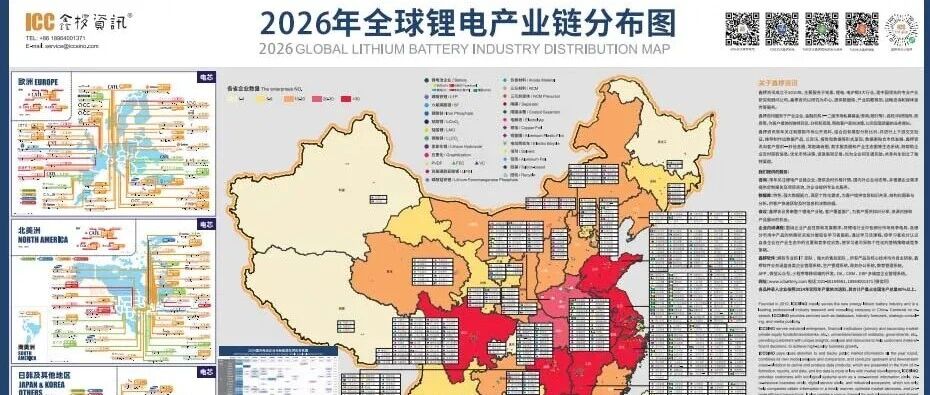
黄金广告位招商!鑫椤资讯2026全球锂电产业链分布图
鑫椤锂电· 2026-01-28 08:09
Group 1 - The core viewpoint of the article emphasizes the creation and significance of the lithium battery industry chain distribution map, which has become a sought-after resource in the industry since its launch in 2022, reflecting its unique value and far-reaching impact [1] - The distribution map provides a comprehensive overview of the global lithium battery industry, detailing the entire ecosystem from raw materials to end applications, including key companies involved in lithium carbonate, lithium iron phosphate, and other essential materials [2] - It highlights the importance of battery components such as separators and electrolytes, which are crucial for the safe and efficient operation of batteries [3] Group 2 - The distribution map covers various types of lithium-ion battery manufacturing, including cylindrical, prismatic, and pouch cells, showcasing the diversity in battery design and production [4] - It includes a section on battery recycling and reuse, emphasizing the role of whitelist companies in this area, as well as the broad applications of lithium battery technology in electric vehicles, energy storage systems, and consumer electronics [5] - Geographically, the distribution map encompasses major lithium battery industry hubs, including China, North America, Europe, Japan, and Southeast Asia, providing a global perspective on the industry [6] Group 3 - The target audience for the distribution map includes global venture capital funds, private equity funds, and industry investment funds, particularly those focused on new energy and new materials [8] - The article invites participation from upstream and downstream companies in the lithium battery industry chain, including raw material suppliers, manufacturers, and electric vehicle producers, to collaboratively build an industry ecosystem [8] - It also encourages collaboration with research institutions, universities, government agencies, and industry associations to promote policy implementation and optimize the development environment for the lithium battery industry [8] Group 4 - The article extends an invitation for sponsorship opportunities related to the distribution map, offering branding and advertising placements for interested companies [10]
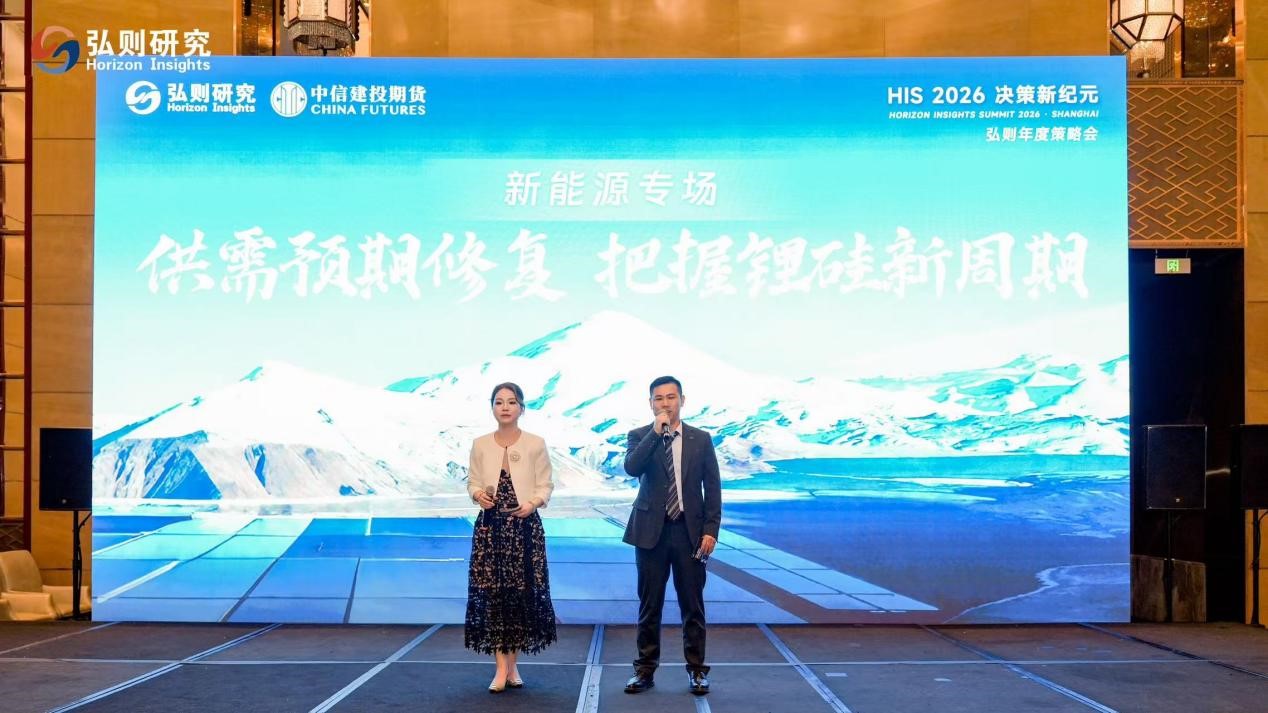
把握锂、硅新周期,弘则研究举办新能源专题会议
Qi Huo Ri Bao· 2026-01-28 08:03
期货日报网讯(记者刘威魁)今年以来,战略性新兴产业蓬勃发展,锂电、光伏、新能源汽车等重点领域创新突破不断加快,成为经济高质量发展的重要支 撑。为进一步理新能源市场在这场周期轮回的市场机遇,近日,弘则研究在上海举办了以"供需预期修复把握锂硅新周期"为主题的新能源专场会议,吸引了 来自光伏、锂电产业链上下游企业、贸易公司、金融机构等津400人参与,共同探讨新能源市场供需格局、价格走势及期货工具在产业风险管理中的应用, 助力光伏、锂电产业链企业应对市场波动、实现高质量发展。 会议主持人:弘则研究新能源板块负责人鹿杭杭 在2026年晶硅展望的主题演讲中,弘则研究资深晶硅分析师刘艺羡认为,2026年多晶硅市场的弱需求是一致性预期。"2025年上半年,多晶硅市场交易过剩 矛盾,估值压到产业最低成本3万元/吨附近,反内卷政策是最大预期差,二季度因反内卷修复期现持货意愿、不低于完全成本销售的约束,多晶硅绝对价格 修复到5万-6万元/吨宽幅震荡,博弈的矛盾主要在于弱需求过剩的现实不改、平台公司成立预期。"刘艺羡认为,20256年,中性预期全球装机折硅料需求在 114万吨,若考虑硅片直接需求或是间接出口口径需求分别在135/11 ...
怡合达20260127
2026-01-28 03:01
Summary of the Conference Call for Yihada Industry Overview - The lithium battery industry is projected to account for 24% of the market share in 2025, showing a year-on-year growth of 57%, making it the largest segment. The 3C sector is expected to hold 20% with a 10% increase, while the automotive sector is anticipated to reach 12% with a 15% growth. The semiconductor segment is expected to account for 6% with a 29% increase, and the photovoltaic sector is projected to be at 3% with a negative growth of 46% [2][4][10]. Core Insights and Arguments - The lithium battery market is expected to maintain some continuity in 2026, although growth rates may not match the 57% seen in 2025. Downstream customer expansion is stable, leading to optimistic demand for the lithium segment [2][7]. - Yihada's 3C business grew approximately 10% in 2025, with expectations for significant revenue contributions in 2026 due to new Apple foldable phone models. The focus will remain on the 3C, lithium, and semiconductor strategic segments [2][8]. - The automotive business is experiencing positive growth, but the rate of increase is expected to slow in the second half of the year. Yihada will not prioritize investments in this sector in the short term but aims for modest growth through online channels [2][10]. - The semiconductor industry could significantly contribute to revenue if its penetration rate increases to 50%, although current growth is slow due to long supply chain integration cycles [2][11]. Additional Important Points - Yihada's strategic focus for 2026 is based on market space and product capability, with a strong emphasis on lithium, 3C, and semiconductors due to their high demand and growth potential [11]. - The company is cautious about the photovoltaic sector, as there are no significant signs of demand growth, and it does not expect substantial increases in this area [13][14]. - The semiconductor sector's current penetration is around 20%, and if it can accelerate to 50%, it could surpass the automotive sector in revenue contribution [14]. - Yihada's products in the semiconductor industry are expected to have a gross margin higher than the industry average by about 4-5 percentage points, with a focus on long-term gross margin improvement [15][20]. - The company is preparing for the impact of new products in the 3C industry by maintaining a light asset operation model and a flexible supply chain to quickly respond to market demands [25]. This summary encapsulates the key points discussed in the conference call, highlighting the company's strategic focus, market expectations, and operational strategies across various sectors.