先进制造

Search documents
外资资管机构:中国市场韧性提升 科技与创新领域仍具广阔机会
Sou Hu Cai Jing· 2026-02-04 12:07
Group 1 - The core viewpoint is that China's macroeconomic outlook is becoming more balanced and resilient by 2026, supported by policy stability and ongoing growth momentum, with a "dual-track growth" pattern of weak domestic demand and strong exports expected to continue [1] - The Chinese market is showing renewed vitality, driven by consumer support, stabilization in real estate, and structural reforms, which are enhancing the funding momentum for A-shares and offshore Chinese stocks [1] - The MSCI China Index is projected to rise by 31.4% in 2025, outperforming US stocks and other major global markets, with AI and technological innovation themes driving this rebound [1] Group 2 - The Chinese fixed income market offers a favorable risk-return profile due to high spreads, relatively short durations, and decreasing systemic tail risks, making issuer selection critical [2] - Under macroeconomic stability, low inflation, and ample onshore liquidity, Chinese sovereign bonds, financial bonds, state-owned enterprise bonds, and quasi-sovereign credit bonds remain attractive, providing a solid foundation for investment-grade assets [2]
香港财政司:目前已有102家重点企业落户香港 预计未来数年将带来约600亿港元投资
Zhi Tong Cai Jing· 2026-02-04 11:31
(原标题:香港财政司:目前已有102家重点企业落户香港 预计未来数年将带来约600亿港元投资) 智通财经APP获悉,2月4日,香港财政司副司长黄伟纶在回复议员提问时表示,目前已有102家重点企 业落户香港,预计未来数年将带来约600亿港元投资,创造约22000个职位,为香港注入新动能。这些重 点企业不少为市值或估值逾1,000亿港元、具备行业前沿技术的企业,它们落户香港后,有助带动其 上、中、下游企业来港,推动产业加速发展,促进传统制造业升级转型,扩大香港本地产业生态圈,并 创造更多优质就业机会。 香港引进办积极引进重点企业,尤其聚焦生命健康科技、人工智能与数据科学、金融科技、先进制造与 新能源科技及文化创意五大策略产业。这些企业具全球代表性及高增长潜力,能为香港带来多元化的高 质量职位。相关产业对人才需求广泛,涵盖科研、人工智能、数据分析、网络安全、医疗健康、环保技 术、创意产业、营运管理、法律、会计及商业拓展等多个领域。 香港政府于2018年制订首份"人才清单",更有效及聚焦吸引不同行业及专业领域的高质素人才。现时, 合资格人才如经"一般就业政策"、"输入内地人才计划"或"优秀人才入境计划"来港从事"人才 ...
今年“3个100”市重点工程清单出炉!副中心项目密集布局
Xin Lang Cai Jing· 2026-02-03 14:37
Core Insights - The city plans to invest over 300 billion yuan in 300 major projects in 2026, maintaining that these key projects will support over 30% of the city's total investment, with social investment projects accounting for no less than 70% [1] - The focus is on urban sub-center projects that integrate cultural tourism, transportation infrastructure, education, healthcare, and industrial upgrades, signaling a commitment to urban-rural integration, prioritizing public welfare, green development, and collaborative progress [1] Investment Projects - A total of 100 technology innovation and modernization projects are planned for this year, with an investment of 142.8 billion yuan, including 50 projects in emerging and future industries [3] - Key projects include the Ant Financial agile manufacturing platform and optoelectronic chip manufacturing base, which aim to support high-quality development in the urban sub-center [3] - 33 modern service industry projects are included, covering financial services, software information services, and high-end international business services [3] Cultural and Tourism Development - Six cultural tourism integration projects are part of the key projects, with three located in the urban sub-center, aimed at expanding tourism and accelerating the integration of cultural and tourism industries [3][4] Infrastructure Investment - 100 major infrastructure projects are set for an investment of 67.4 billion yuan, focusing on enhancing the suburban railway network and various transportation projects [4] - Notable projects include the overall improvement of the suburban railway urban sub-center line and the addition of stations to the Yizhuang Line [6][8] Water Management Projects - 20 projects in the water sector focus on waterfront spaces, ecological governance, and water supply infrastructure, including the North Three Counties water supply project and the Taihu recycled water plant [9] Education and Healthcare Initiatives - 100 major livelihood improvement projects are planned with an investment of 102.7 billion yuan, emphasizing housing, elderly and child care, and cultural consumption [10] - 17 new educational projects are set to commence, including new primary and secondary schools in the urban sub-center, and a vocational training center to support local industry [12] - Healthcare resources are being concentrated in the urban sub-center, with projects like the relocation of the Beijing Emergency Center and a new children's hospital [12] Cultural Supply Enhancement - The government aims to enrich cultural offerings and enhance the influence of the national cultural center, with 12 cultural and sports projects, 7 garden city projects, and 5 consumer projects included [10][14] - The Beijing Art Museum project has commenced, which will serve as a large-scale comprehensive art museum, enhancing cultural life for the community [14]

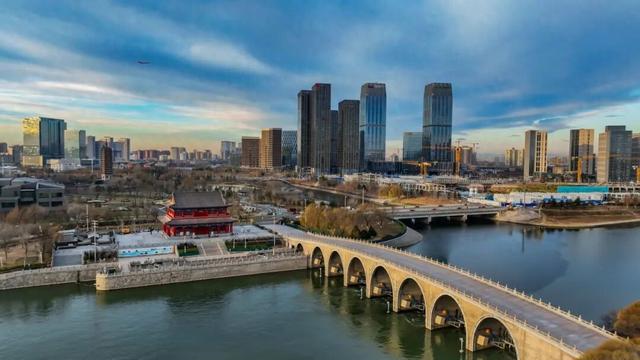
长春新区:新增青年群体1.98万人,产业人才总量达15万人
Xin Lang Cai Jing· 2026-02-03 12:52
Core Insights - The article highlights the rapid development and supportive ecosystem for talent and innovation in Changchun New Area, showcasing successful projects and investments in high-tech sectors [2][11]. Group 1: Talent Attraction and Support - In 2025, Changchun New Area secured a competitive advantage in talent acquisition by integrating innovation, industry, funding, and talent chains [4]. - The area has established a "励志奖学金" (Inspiration Scholarship) and developed 200,000 square meters of talent apartments to create a conducive environment for innovation and entrepreneurship [4][14]. - The total number of industrial talents in the region reached 150,000, with over 8,800 new urban jobs created in a year, attracting 19,800 young graduates [15]. Group 2: Innovation and Research Development - Changchun New Area has gathered 103 intellectual property service institutions, accounting for 48.27% of the city's effective invention patents, with a high density of valuable patents ranking among the top in the country [15]. - The region has incubated 40 enterprises through the Jilin Provincial Science and Technology Innovation Research Institute, generating revenues of 900 million yuan [6][13]. - The establishment of 12 cooperation teams between universities and local governments has led to the identification of 315 technology achievements, with several high-profile projects successfully landing in the area [6][14]. Group 3: Entrepreneurial Ecosystem - The "千帆竞发" (Thousand Sails Competing) innovation incubation platform has established 59 incubation carriers, housing over 1,360 enterprises and creating more than 30,000 job opportunities [6][14]. - The Northeast's first operational new quality productivity development promotion center has organized 118 various events, enhancing the service capabilities for innovation and entrepreneurship [6][14]. - The area has successfully attracted 20 high-quality overseas innovation projects, including advanced technologies from international universities [14].
NextX系列:颠覆性技术周刊第4期(2025.1.24-2026.01.30):分布式城际量子传感:中国科大构建网络约束轴子暗物质
GUOTAI HAITONG SECURITIES· 2026-02-03 03:55
Investment Rating - The report does not explicitly provide an investment rating for the industry Core Insights - The report highlights significant developments in the technology sector, particularly in advanced semiconductor, artificial intelligence, and quantum technology, indicating a dynamic investment landscape Summary by Sections 1. Financing Overview - During the period from January 24 to January 30, 2026, a total of 115 financing events occurred in the technology sector globally, with 84 in China and 31 abroad. The leading sectors in domestic financing were advanced manufacturing (50 events), artificial intelligence (21 events), and enterprise services (4 events) [9] 2. IPO Updates - Several companies submitted IPO applications, including: - Hengyun Chang listed on the Shanghai Stock Exchange's Sci-Tech Innovation Board on January 28, 2026, focusing on semiconductor equipment core components [10] - Tuobida submitted an application to list on the Hong Kong Stock Exchange, specializing in smart traffic solutions [14] - Jucheng Semiconductor also applied for a Hong Kong listing, focusing on high-performance non-volatile memory chips [16] - CoolCore Microelectronics and A-Tong Robot submitted applications for Hong Kong listings, focusing on AI solutions and robotics, respectively [19][21] 3. Market Performance Tracking - The overall market indices showed a decline, with the Shanghai Composite Index down 0.44% and the Shenzhen Component Index down 1.62%. The semiconductor index fell by 0.93%, while the automotive electronics index saw a significant drop of 6.43% [24][28] 4. Advanced Semiconductor Developments - Cornell University proposed a non-invasive method for semiconductor supply chain integrity detection using out-of-band power side-channel measurements, which could enhance security against hardware threats [31] - The University of Tokyo revealed the spontaneous polarization properties of gold oxide nanosheets, which could be utilized in optoelectronic devices [35] - Arizona State University analyzed the electrical and structural responses of nine-atom-wide armchair graphene nanoribbon transistors to gamma radiation, providing insights for radiation-resistant designs [38] 5. Artificial Intelligence Innovations - Tsinghua University and ByteDance introduced a multimodal world model framework that enhances human-like reasoning through visual generation, demonstrating the potential of unified multimodal models [46] - The University of Oslo developed a robotic transesophageal echocardiography system that integrates deep learning for kinematic modeling, addressing clinical challenges [51] 6. Quantum Technology Advancements - The Chinese Academy of Sciences achieved a breakthrough with a 78-qubit processor that realizes long-lived preheated states, contributing to the field of quantum computing [6] - IBM's superconducting quantum computer validated the "Schrodinger's friend" paradox, marking a significant milestone in quantum research [6]
2025年私募图谱:量化主导百亿元阵营 PE/VC募投升温
Jin Rong Shi Bao· 2026-02-03 01:56
Core Insights - The private equity (PE) and venture capital (VC) fundraising market in China has shown significant growth, with a total fundraising scale of 30,860 billion yuan in 2025, marking a year-on-year increase of 26% [4] - The number of private fund managers reached 19,231, managing 138,315 funds with a total scale of 22.15 trillion yuan by the end of 2025 [1] - The private securities investment fund scale has surpassed 7 trillion yuan for the first time, with a market share of 3.5% of the A-share circulating market [2] Private Fund Management - By the end of 2025, the number of private securities investment funds reached 7.08 trillion yuan, with over 100 private funds exceeding 100 billion yuan [2] - The number of 100 billion yuan private funds has increased to 112, with quantitative private funds leading the growth [2][3] - The trend of insurance capital private funds is accelerating, with 133 private funds holding a Hong Kong Type 9 license, including 39 funds exceeding 100 billion yuan [3] Investment Trends - The investment case count in 2025 reached 11,015, a year-on-year increase of 30.6%, with total investment scale at 13,396.8 billion yuan, up 23.43% [6] - The electronic information sector led the investment transactions with 3,485 cases and 3,532.82 billion yuan in financing, followed by advanced manufacturing and healthcare [6] - The participation of corporate investors in fund establishment has increased, accounting for 37.3% of contributions, while state-owned platforms contributed 31.1% [4][5] Fundraising Dynamics - The establishment of new funds by state-owned platforms has surged, with significant initiatives like the National Venture Capital Guidance Fund aiming to raise 1,000 billion yuan [5] - The AIC fund market share has steadily increased since the relaxation of investment regulations in September 2024, with bank-related LP contributions rising by 21.7% [4] - The investment focus of new funds includes key sectors such as integrated circuits, artificial intelligence, biomedicine, quantum technology, 6G, aerospace, and future energy [5]
着力优化京津冀城市体系
Qi Huo Ri Bao· 2026-02-02 23:02
《规划》要求,着力优化京津冀城市体系。构建"一核两翼、双城多点、双廊多圈"的首都都市圈空间格 局。要充分发挥北京"一核"的辐射带动作用,加强"四个中心"功能建设,提升"四个服务"水平,营造一 流的中央政务环境。高标准高质量建设河北雄安新区,把北京城市副中心建设成为首都发展新的增长 极,推动"两翼"比翼齐飞。高质量谱写京津"双城记",天津加强北方国际(000065)航运核心区建设, 共同打造区域发展高地。发挥河北节点城市支撑作用,形成优势互促、联动发展的功能格局。 《规划》强调,促进实现重点领域功能协同。构建"两廊四带"产业协同创新格局,因地制宜发展新质生 产力,推动创新链产业链深度融合,发展先进制造业集群。加快构建"八廊两环"交通廊道,加强海港、 陆港、空港联动,全面建成面向世界的京津冀国际性综合交通枢纽集群。坚持以首都安全保障为核心, 协同构建韧性空间格局,着力提升洪涝等自然灾害应对和跨区域生命线廊道联通保障能力,健全央地、 军地、三地防灾救灾协调联动机制。坚持陆海统筹,强化山水林田湖草沙一体化保护和系统治理,深化 落实以"三区三线"为基础的国土空间开发保护格局。合理优化区域优质公共服务资源配置,推动教育、 ...
中兴通讯拟出资1.17亿元认购建兴湛卢基金份额
Zhi Tong Cai Jing· 2026-02-02 10:45
建兴湛卢基金基金规模为3亿元人民币(最终以实际募集金额为准)。建信北京、中兴通讯、陕西科创母 基金、无锡高新创投、深圳垣华、矽力杰、源杰科技共7家参与主体认缴出资3亿元人民币,出资方式均 为现金出资;各合伙人分两期出资缴付,每期实缴出资比例分别为认缴出资额的40%、60%。该基金的投 资方向及阶段:投资于新一代信息技术产业、新能源、人工智能、先进制造领域。合伙企业对投资项目 阶段不做特殊要求,对中小微型、初创期企业、成长期和成熟期企业均可投资。 中兴通讯出资认购建兴湛卢基金,可投资扶持更大范围的创新业务及上下游产业链企业,降低成本、分 散风险,从而更好的促进公司战略的执行和实施。中兴通讯不控制建兴湛卢基金,不将其纳入合并报表 范围内,按照《企业会计准则第 2 号-长期股权投资》采用权益法进行会计核算。 中兴通讯(000063)(00763)发布公告,公司拟作为有限合伙人出资1.17亿元人民币认购陕西建兴湛卢股 权投资合伙企业(有限合伙)(暂定名,以工商登记部门最终核定为准,简称"建兴湛卢基金"或"基金")份 额。 ...

“光流”3D微纳制造可用多种材料 为开发微型机器人提供新路径
Ke Ji Ri Bao· 2026-02-02 04:54
所有结构均表现出优异的机械稳定性。尽管颗粒间无化学键连接,但依靠强大的范德华力,它们仍能牢 固结合,实现自支撑。 最新研究有望彻底突破这一瓶颈。其核心创新在于,利用飞秒激光精准操控光流体效应,在液体中引导 纳米或微米级颗粒进行3D自组装。当激光聚焦于悬浮粒子溶液中某一点时,会瞬间加热形成"热点", 引发局部热梯度,驱动周围流体产生定向流动——这种"光流"就像无形之手,将粒子推入预设的微模具 中。 团队表示,这项"光流组装"技术不仅克服了传统3D打印的材料限制,更打开了通往多功能微系统的大 门。未来,它有望应用于开发智能药物递送、体内微型手术机器人、高密度微传感器等前沿领域。 这种微模具如同一个微型"蛋糕模",侧面设有小口。粒子随流而动,穿过缝隙,精准落入模腔,层层堆 积成所需形状。模具可设计为立方体、球体,甚至牛角面包等复杂曲面结构,自由度极高。组装完成 后,通过后处理去除聚合物模具,便留下一个完全由目标材料构成的独立微结构。 据新一期《自然》杂志刊发的研究,德国马克斯·普朗克智能系统研究所与新加坡国立大学科学家携 手,开发出一种利用光流体效应进行3D微纳制造的新技术。该技术不再局限于传统的聚合物,而是可 灵 ...

百亿母基金招人工智能、先进制造GP
母基金研究中心· 2026-01-30 09:36
Core Insights - The total management scale of the mother fund industry in China reached 132.2 billion yuan, with investments covering sectors such as artificial intelligence, biomedicine, and high-end equipment manufacturing [1]. Fund Manager Recruitment - Zhejiang: A 10 billion yuan mother fund is recruiting general partners (GPs) focused on artificial intelligence and advanced manufacturing [2]. - Jiangsu: The Pizhou New Industry Investment Fund is seeking GPs [2]. - Chongqing: The West (Chongqing) Science City High-tech Startup Investment Fund is recruiting GPs for its semiconductor sub-fund [2]. - Guangdong: The Dongguan Binhai Bay Artificial Intelligence Industry Mother Fund is looking for GPs [2]. - Shanxi: The Yuncheng City Science and Technology Innovation Equity Investment Fund is recruiting GPs [2]. - Beijing: The first self-managed government investment fund in Fengtai District has successfully completed registration [2]. - Sichuan: The Jiaoziman Garden Fund has been established in Jianyang [2]. Mother Fund Establishment - Jiangsu: The second phase of the Nantong Baoyue Lake Science and Technology Innovation Mother Fund has been established with a total scale of 50 billion yuan [15]. - Henan: The Zhengzhou National Innovation New Industry Investment Mother Fund has been established with a capital of 5 billion yuan [16]. - Jiangsu: The Suqian Industrial Cluster Fund and the Intelligent Manufacturing Mother Fund have completed registration [17]. - Beijing: The Fengtai District self-managed government investment fund has been successfully registered [18]. - Sichuan: The Jianyang Jiaoziman Future Industry Development Fund has been established with an initial scale of 10 billion yuan [20]. Fund Policies - Zhejiang: The "Yuhang District Government Investment Fund Management Measures" has been released to enhance the efficiency of fund operations [21]. - The government investment fund aims to support traditional industry upgrades and the cultivation of emerging industries, attracting social capital [23]. LP Contributions - Shanghai: The third batch of fund management institutions for the three leading industries mother fund has been publicly announced [29]. - Jiangsu: The Wuxi Integrated Circuit Mother Fund has established a CVC sub-fund with a scale of 20 billion yuan [33]. - Sichuan: The Fuchuang Results Transformation Fund has been successfully established with a scale of 5 billion yuan [34].