
手表

Search documents
87岁范曾被新婚娇妻卷走20亿?女儿发声;OpenAI融资83亿美元,年收入将破200亿;小米空调7月线上销量超越格力丨邦早报
创业邦· 2025-08-17 01:09
Group 1 - The article discusses the disappearance of renowned Chinese artist Fan Zeng, who was reportedly taken away by his wife, Xu Meng, leading to concerns about his well-being and the status of his art collection valued at over 2 billion yuan [1] - Fan Zeng's daughter, Fan Xiaohui, claims that her father was forcibly moved from his residence, which has been sealed, and that valuable artworks have been removed under suspicious circumstances [1] - The situation has garnered significant attention on social media, with many users expressing concern for Fan Zeng's safety and questioning the legitimacy of the claims made by his family [1][3] Group 2 - OpenAI has successfully raised 8.3 billion USD in a new funding round, part of a larger 40 billion USD financing plan, amid rapid growth in its business [3] - The annual recurring revenue for OpenAI has increased from 10 billion USD in June to 13 billion USD, with projections to exceed 20 billion USD by the end of the year [3] - The number of paid enterprise users for ChatGPT has surged from 3 million to 5 million in a matter of months, indicating strong demand for its services [3] Group 3 - Xiaomi's air conditioner sales surpassed those of Gree in July, achieving a market share of 16.71% compared to Gree's 15.22% [15][16] - The article highlights the competitive landscape in the air conditioning market, with Xiaomi's rapid growth signaling a shift in consumer preferences [15][16] Group 4 - Shanghai's first batch of autonomous smart connected taxis has officially begun operations, covering 58 locations in the Lingang area [18] - The fare structure for these taxis includes a starting price of 16 yuan for trips under 5 kilometers, with additional charges of 4 yuan per kilometer for longer distances [18] Group 5 - The article mentions the launch of the new generation of the NIO ES8, which is the first high-end electric vehicle in China to complete its third iteration [11] - The vehicle is designed to meet the needs of MPV users and showcases advancements in electric vehicle technology, including a comprehensive battery swap network [11]






财经观察:瑞士如何招架“发达国家最高关税”?
Huan Qiu Shi Bao· 2025-08-10 22:56
Group 1: Tariff Impact on Switzerland - The U.S. has imposed a 39% tariff on Swiss goods, the highest among developed countries, leading to significant shock and confusion in Switzerland [1][3] - The trade deficit between the U.S. and Switzerland exceeded $38 billion last year and approached $48 billion in the first half of this year, prompting U.S. dissatisfaction with Switzerland's trade balance [3] - Swiss exports to the U.S. are heavily reliant on gold, which accounted for two-thirds of exports recently, alongside strong performances in pharmaceuticals, precision machinery, watches, chocolate, and cheese [3] Group 2: Economic Consequences - Economists estimate that the U.S. tariffs could result in the loss of 7,500 to 15,000 jobs in Switzerland and potentially decrease the country's GDP by up to 1% [6] - The high tariffs, combined with the strong Swiss franc, are expected to severely impact Swiss exporters, particularly in the machinery and electrical engineering sectors [7] Group 3: Industry Responses - Swiss companies are preparing for the tariff impact by increasing exports to the U.S. before the tariffs take full effect, but the long-term effects will become apparent as inventories deplete [9] - The luxury watch industry may see prices rise by 65% in the U.S. due to tariffs, while chocolate prices could increase by nearly 55%, risking market share loss [9] Group 4: Negotiation Challenges - Swiss authorities are in ongoing discussions with the U.S. to lower tariffs, but the negotiation leverage appears limited due to Switzerland's already high level of trade liberalization with the U.S. [10] - The potential for Swiss companies to relocate production to Germany is being considered, but this process is complex and time-consuming [10] Group 5: Broader Trade Dynamics - The current trade negotiations between Switzerland and the U.S. are characterized by pressure and threats rather than traditional cooperative discussions, complicating the resolution process [11]


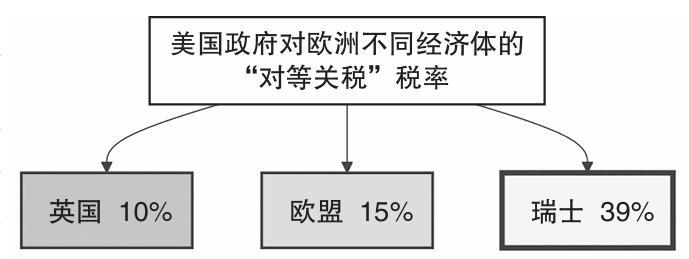
瑞士成美关税打击最重欧洲国家
Sou Hu Cai Jing· 2025-08-09 02:29
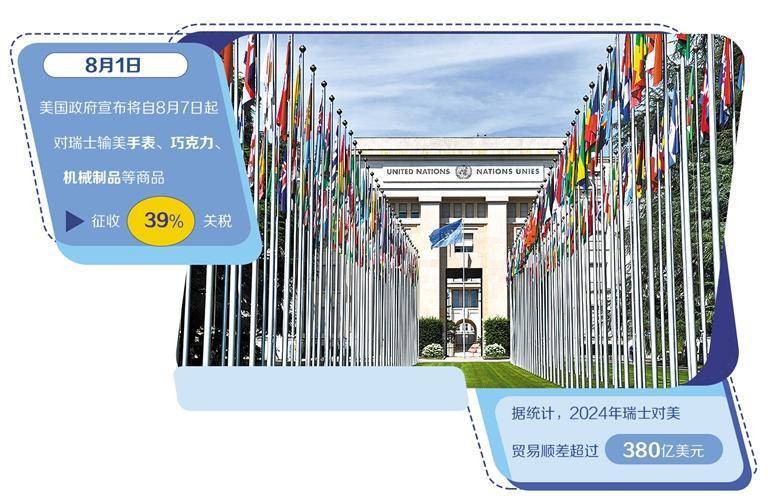
Group 1 - The U.S. government announced a 39% tariff on Swiss imports, effective August 7, which is higher than the previous 31% tariff and more than double the tariff on EU imports, making Switzerland the hardest-hit European country by U.S. tariffs [2] - Switzerland's trade surplus with the U.S. exceeded $38 billion in 2024, prompting the U.S. to impose these high tariffs due to concerns over trade imbalances [2] - The Swiss government expressed dissatisfaction with the U.S. decision, highlighting that the trade surplus is not based on unfair practices and that they have unilaterally eliminated all industrial tariffs since January 1, 2024, allowing over 99% of U.S. goods to enter Switzerland duty-free [3] Group 2 - The imposition of the 39% tariff is expected to significantly impact the Swiss job market, with potential increases in short-term work and layoffs, particularly affecting key industries [3] - The pharmaceutical sector, which accounts for over half of Switzerland's exports to the U.S., is currently not covered by the new tariffs, but any future inclusion could lead to a GDP decline of at least 0.7% [3] - A high-level Swiss delegation, including the Federal President and the Minister of Economy, has been sent to Washington to negotiate and propose more attractive terms to reduce the tariff levels on Swiss exports [3] Group 3 - The situation illustrates the U.S. government's unilateral approach to trade, focusing primarily on trade surpluses without considering the broader economic context [4] - The case of Switzerland serves as a lesson for other countries on how to engage in trade with the U.S. and the challenges they may face [4]
约100%关税!芯片和半导体,突发!
Zheng Quan Shi Bao· 2025-08-06 23:33
Group 1 - The U.S. government plans to impose approximately 100% tariffs on chips and semiconductors, with no fees for products manufactured in the U.S. [2][3] - The initial tariffs on imported drugs will be small, but are expected to rise to 150% within a year and potentially reach 250% thereafter, although the initial rate has not been disclosed [3] - Due to the tariff policies, U.S. consumers are facing price increases on various products, with computer prices rising nearly 5% in June compared to the previous year, and potential short-term increases of 18.2% for electronics [3][6] Group 2 - The tariffs will significantly impact clothing and footwear, with short-term price increases projected at 40% for shoes and 38% for clothing, and long-term increases of 19% and 17% respectively [3] - The average effective tariff rate on imported goods has reached 18.3%, the highest level since 1934, which is expected to increase average household spending by $2,400 by 2025 [6] - The tariff policies are projected to reduce the U.S. GDP growth rate by 0.5 percentage points annually in 2025 and 2026, and increase the unemployment rate by 0.3 percentage points by the end of 2025 [6]
约100%关税!芯片和半导体,突发!
证券时报· 2025-08-06 23:10
Group 1 - The U.S. government plans to impose approximately 100% tariffs on chips and semiconductors, with no fees for domestic manufacturing [1] - President Trump indicated that initial tariffs on imported drugs would be low, but could rise to 150% within a year and potentially reach 250% thereafter [1] - The average effective tariff rate on imported goods in the U.S. has reached 18.3%, the highest level since 1934, which is expected to increase household spending by $2,400 by 2025 [6] Group 2 - Due to tariff policies, U.S. consumers are facing price increases on various products, with computer prices rising nearly 5% year-over-year as of June [3] - Short-term projections suggest that shoe prices could increase by 40% and clothing prices by 38% due to tariffs [3] - The tariffs on Swiss watches are projected to cause a 39.7% price increase if implemented, affecting the luxury goods market significantly [4] Group 3 - The tariffs are expected to lower the U.S. GDP growth rate by 0.5 percentage points annually in 2025 and 2026, and increase the unemployment rate by 0.3 percentage points by the end of 2025 [6]

8月7日 特朗普要发表重要讲话
Guo Ji Jin Rong Bao· 2025-08-06 17:48
Group 1 - The new tariff policy by President Trump, originally set to take effect on August 1, has been postponed to August 7, with the tariff rates "basically determined" according to U.S. Trade Representative Jamison Greer [1][2] - Trump is expected to announce significant economic measures on August 6, which will be his first major action following a series of economic and geopolitical warnings [2] - Trump has expressed dissatisfaction with India for continuing to purchase Russian oil, threatening "very significant" tariffs as punishment, which has led to a defensive response from Indian officials [3][4] Group 2 - The Indian stock market has shown signs of stress, with the BSE Sensex index dropping 0.38% and the rupee depreciating against the dollar amid concerns over potential U.S. tariffs [3] - The Sensex and Nifty indices fell again on August 6, with Sensex down 166 points, as Trump indicated plans to impose tariffs on specific industries, including semiconductors and pharmaceuticals, potentially raising drug tariffs to 250% [4] - Following Trump's executive order on July 31, trade partners will face adjustments in tariff rates, with new rates set to take effect on August 7 [5][6] Group 3 - The U.S. has announced a significant increase in tariffs on Swiss imports to 39%, up from a previously proposed 31%, raising concerns about potential job losses and order declines in Swiss industries [7] - Swiss officials, including President Keller-Sutter and Economy Minister Parmelan, have traveled to Washington to negotiate before the new tariffs take effect [7][8] - Japan's Economic Revitalization Minister is also in the U.S. seeking clarification and adjustments to tariff measures, as Japan's goods may face higher effective tax rates than the agreed 15% [8]
8月7日,特朗普要发表重要讲话
Sou Hu Cai Jing· 2025-08-06 16:02
Group 1 - The new tariff policy by the Trump administration has been postponed from August 1 to August 7, with the tariff rates "basically determined" before the deadline [1] - Trump has expressed dissatisfaction with India's continued purchase of Russian oil, threatening significant tariffs as a punishment [2][3] - India's response highlights its strategic need for Russian oil to stabilize global oil prices, emphasizing the potential economic impact of U.S. tariffs on India [2] Group 2 - The Sensex and Nifty indices in India have declined due to concerns over U.S. tariffs, with Sensex dropping 166 points and Nifty falling below 24,600 points [3] - The U.S. has announced a 39% tariff on Swiss imports, significantly higher than the previously proposed 31%, raising concerns about job losses in Swiss export industries [6] - Swiss officials are seeking negotiations with the U.S. to address the impending tariffs, while Japan is also engaging in discussions regarding its trade agreements with the U.S. [7]
对等关税伤美民众钱包,涨价潮席卷电脑手表衣鞋酒类
Sou Hu Cai Jing· 2025-08-04 21:22
Group 1 - The latest tariffs announced by Trump will take effect on August 7, impacting a wide range of imported goods, including computers, electronics, watches, clothing, shoes, and alcoholic beverages, potentially leading to price increases for consumers [1][3]. - Goldman Sachs estimates that consumers will start feeling the impact of these tariffs within eight months [1][7]. - The new tariffs will impose rates ranging from 10% to 41% on nearly 70 countries, affecting the prices of various consumer goods [3]. Group 2 - Yale University's budget laboratory estimates that if the new tariffs are implemented indefinitely, prices for computers and other electronic products could rise by 18.2% in the short term (2 to 3 years) and by 7.7% in the long term (3 to 10 years) [4]. - Clothing, being one of the most imported goods in the U.S., is expected to see a short-term price increase of 37.5% and a long-term increase of 17.4% due to tariffs imposed on major exporting countries like China, Vietnam, Bangladesh, India, and Indonesia [4]. - Swiss watches, a significant export to the U.S. with over $4 billion in sales last year, will face a 39% tariff, likely affecting their prices [5]. Group 3 - Vietnam and Indonesia, major producers of footwear, will see tariffs of at least 19% starting next week, which could lead to increased prices for shoes [6]. - The U.S. wine and spirits market, where imported products account for 35% of total sales, will face a 15% tariff on imports from the EU, impacting prices for alcoholic beverages [6]. - Furniture and toys, primarily imported from Vietnam and China, are also expected to see price increases due to the looming tariffs, with manufacturers already warning of potential hikes [7].
美股,重大警告!
Mei Ri Jing Ji Xin Wen· 2025-08-03 02:44
Group 1 - The average effective tariff rate imposed by the U.S. on imported goods has reached 18.3%, the highest level since 1934 [1][2] - The tariff policy is projected to reduce the U.S. GDP growth rate by 0.5 percentage points annually in 2025 and 2026 [1][2] - By the end of 2025, the unemployment rate in the U.S. is expected to rise by 0.3 percentage points, and by 0.7 percentage points by the end of 2026 [1][2] Group 2 - The average household expenditure in the U.S. is anticipated to increase by $2,400 due to the tariff policy, with significant impacts on clothing and footwear prices [2] - Short-term price increases for shoes and clothing are projected at 40% and 38%, respectively, while long-term increases are estimated at 19% and 17% [2] - The tariffs on Swiss watches could lead to a short-term price increase of 39.7% due to a proposed 39% tariff [2] Group 3 - The U.S. stock market has experienced a significant decline, with a total market value loss exceeding $1 trillion, attributed to the tariff policy and weak employment conditions [3] - The recent weak employment report has intensified pressure on the Federal Reserve to consider interest rate cuts [3][4] - Analysts are closely monitoring upcoming economic data to assess the likelihood of the Federal Reserve's rate cuts in September [4]
凯投宏观:瑞士将受到特朗普关税打击
news flash· 2025-08-01 11:32
Core Viewpoint - The imposition of a 39% tariff on Swiss imports by the U.S. is expected to significantly impact the Swiss economy, particularly affecting its export-driven sectors [1] Economic Impact - The Swiss government is currently analyzing the situation following the announcement of the tariffs [1] - The estimated reduction in the Swiss economy due to these tariffs is approximately 0.6% [1] - If pharmaceutical products, currently exempt, are included in the tariff, the downward pressure on the economy will increase substantially [1] Growth Projections - Despite the tariffs, the Swiss economy is projected to continue growing, although at a significantly slower rate [1]