方便面

Search documents
康师傅天选好面:航天技术加持,助力神舟二十一!
Zhong Guo Shi Pin Wang· 2025-11-01 12:45
Core Insights - The successful launch of the Shenzhou 21 manned spacecraft marks a new phase of high-quality development in China's manned space program, with the participation of the first base noodle shop, Kang Shifu Tianxuan Noodle Shop, at the Jiuquan launch center providing support to researchers and workers [1][21] Group 1: Company Involvement - Kang Shifu has been a long-term partner of China's space program, supporting it for nine years and aligning its products with aerospace standards [19][20] - The Tianxuan Noodle Shop has become a popular spot at the launch center, providing warm meals to researchers, enhancing their morale and energy during critical mission periods [7][21] - The company has invested significantly in food safety and technology, including a 500 million yuan food safety testing center and a 300 million yuan freeze-drying factory, integrating aerospace technology into food production [19][20] Group 2: Public Engagement and Marketing - The launch event attracted millions of viewers through a multi-dimensional live broadcast, showcasing the launch and inviting experts to explain the mission [2] - Kang Shifu organized a witness group of distributors and fans to experience the launch firsthand, reinforcing brand loyalty and connection to the aerospace spirit [7][12] - The company has also launched a new noodle shop in Nanjing, allowing the public to experience the integration of aerospace technology into everyday food [10][21] Group 3: Technological Integration - Kang Shifu utilizes patented aerospace temperature control technology in its noodle production, ensuring high quality and consistency [10][20] - The company has received multiple certifications, including the WRCA "World Class Aerospace Patent Instant Noodle" certification, highlighting its commitment to quality and safety [10][19] - The production process involves precise techniques, such as maintaining a specific thickness for noodle dough, reflecting the company's dedication to quality akin to aerospace standards [10][19]



被曝吃出虫卵、蜘蛛,“性价比之王”今麦郎争议缠身
凤凰网财经· 2025-10-31 12:34
Core Viewpoint - Recently, Jinmailang has faced public scrutiny due to consumer complaints about "insect eggs" found in instant noodles, raising concerns about product quality and safety [1][4][10] Group 1: Consumer Complaints - There have been multiple reports of foreign objects in Jinmailang products, including plastic pieces and insects, leading to significant consumer dissatisfaction [5][6][11] - Complaints on social media platforms like Xiaohongshu and Douyin have accumulated nearly 1600 entries, primarily related to food safety issues [4][12] - Consumers have expressed frustration with the company's customer service, citing difficulties in reaching support and inadequate responses to complaints [11] Group 2: Financial Performance - Jinmailang's revenue has declined significantly, dropping from 241.5 billion yuan in 2021 to 165.7 billion yuan in 2023, a decrease of 31.4% [14][18] - The company's instant noodle segment reported a revenue of 63.67 billion yuan in 2023, down 11.29% year-on-year [18] - Despite being a major player in the market, Jinmailang's market share remains low at 7.84%, with only a slight increase of 0.4% [17] Group 3: Quality Control Issues - The company has faced ongoing scrutiny regarding its quality control measures, particularly following incidents involving foreign objects in its products [11][19] - Past partnerships, such as with Wahaha for bottled water production, have ended due to quality concerns, further highlighting potential issues in production management [11][19] - The brand's historical focus on cost-effectiveness may be compromising product quality, necessitating a reevaluation of its operational strategies [19]

康师傅在上海时装周完成碳中和时装秀
Ren Min Wang· 2025-10-29 01:36
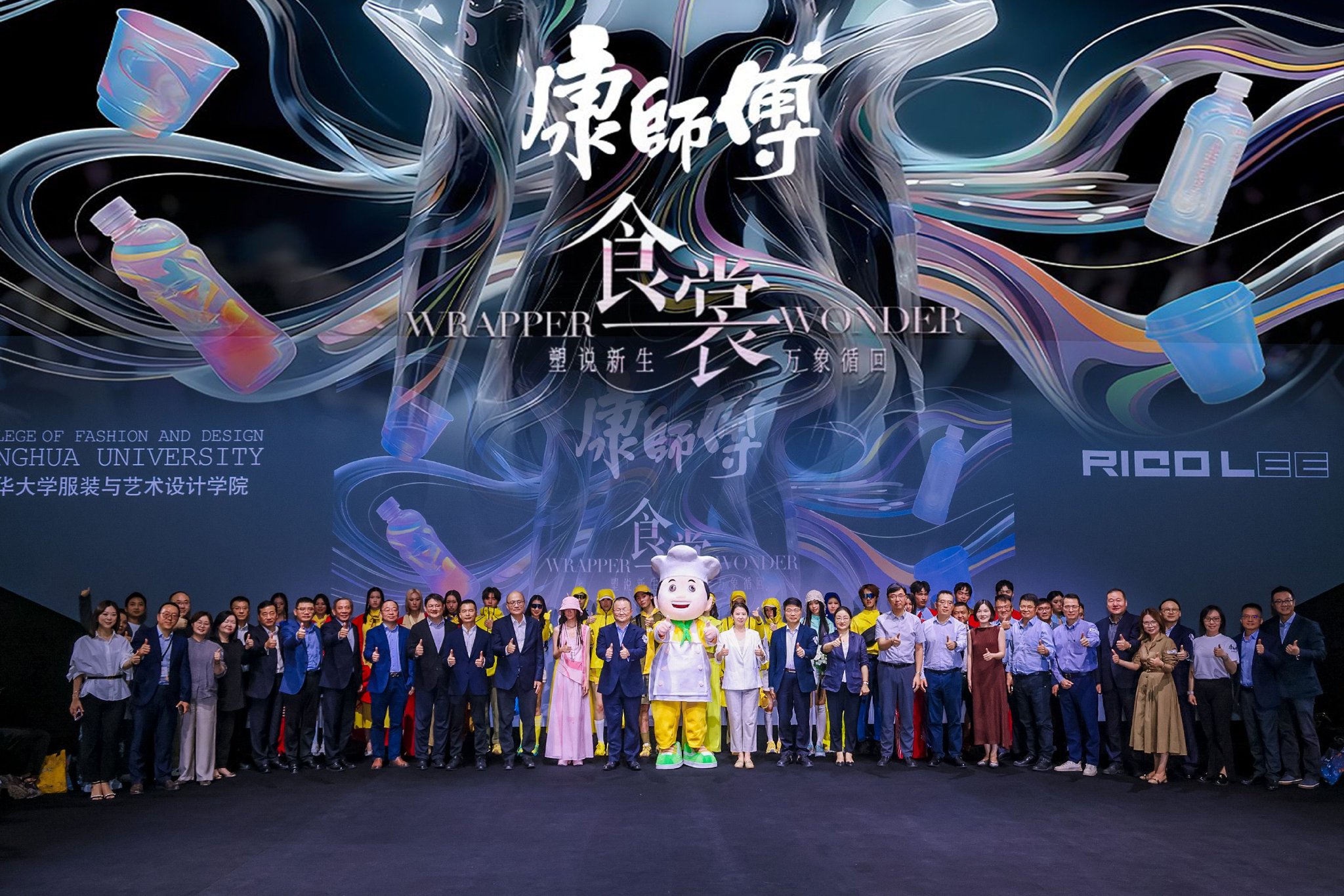
Core Viewpoint - The event marks the first carbon-neutral fashion show at Shanghai Fashion Week, showcasing the integration of sustainability and fashion through the use of food packaging materials to create trendy garments [2][4][7] Group 1: Event Overview - The fashion show titled "Food·Fashion - Plastic Rebirth" is a collaboration between Master Kong and the Donghua University design team, focusing on four key products: Braised Beef Noodles, Fresh Q Noodles, Ice Black Tea, and Jasmine Tea [2][4] - All garments presented were made from recycled packaging materials, demonstrating the concept of "turning waste into fashion" [3][5] Group 2: Design and Themes - The show featured nearly 60 outfits across four series: "Soul of Quality," "Deconstruction Thought," "Energy Supply Station," and "Fresh Breathing," each reflecting Master Kong's brand essence and circular economy principles [4][5] - The designs incorporated innovative techniques such as 3D printing and high-performance recycled fabrics, emphasizing both aesthetics and sustainability [4][5] Group 3: Sustainability Practices - The event achieved carbon neutrality with the support of Carbon Measurement Technology and third-party certification, making it a pioneering example of cross-industry collaboration for sustainability [4][6] - Master Kong's commitment to sustainable development includes initiatives like lightweight packaging, recycling, and the establishment of a circular economy ecosystem [5][6] Group 4: Broader Impact and Future Initiatives - The fashion show serves as a tangible example of how environmental concepts can be transformed into fashionable products, promoting a low-carbon lifestyle among consumers [5][6] - Master Kong's ongoing projects include collaborations aimed at reducing plastic pollution and promoting green agriculture, further enhancing its sustainable living ecosystem [6][7]

中国必选消费品10月成本报告:包材价格上行,啤酒现货成本指数同比上涨
Haitong Securities International· 2025-10-28 15:13
Investment Rating - The report provides various investment ratings for companies in the consumer staples sector, with "Outperform" ratings for companies like China Feihe, Haidilao, and China Resources Beer, while Budweiser APAC is rated as "Neutral" [1]. Core Insights - The report highlights a rise in packaging material prices and an increase in the beer spot cost index by 2.96% year-on-year, indicating upward pressure on costs in the consumer staples sector [1][35]. - The cost indices for six categories of consumer goods monitored by HTI mostly increased, with notable changes in spot and futures indices across beer, frozen food, soft drinks, instant noodles, dairy products, and condiments [35]. Summary by Category Beer - The beer spot cost index is at 116.32, down 0.06% from last week, while the futures index is at 115.68, up 1.2% [13]. - Year-to-date, the spot index has decreased by 0.86%, and the futures index has decreased by 7.13% [14]. Condiments - The condiments spot cost index is at 100.51, down 0.1%, and the futures index is at 101.3, up 1.55% [17]. - Year-to-date, the spot index has decreased by 2.66%, and the futures index has decreased by 7.47% [17]. Dairy Products - The dairy products spot cost index is at 101.25, down 0.13%, and the futures index is at 91.04, up 0.69% [20]. - Year-to-date, the spot index has decreased by 2.89%, and the futures index has decreased by 3.28% [20]. Instant Noodles - The instant noodles spot cost index is at 103.62, down 0.23%, and the futures index is at 102.53, up 0.88% [23]. - Year-to-date, the spot index has decreased by 2.29%, and the futures index has decreased by 5.47% [24]. Frozen Food - The frozen food spot cost index is at 120.39, up 1.02%, and the futures index is at 119.44, up 1.72% [28]. - Year-to-date, the spot index has decreased by 0.17%, and the futures index has decreased by 1.35% [28]. Soft Drinks - The soft drinks spot cost index is at 109.39, up 0.22%, and the futures index is at 109.26, up 0.72% [31]. - Year-to-date, the spot index has decreased by 3.04%, and the futures index has decreased by 9.54% [31].



3年销量暴跌41亿,半年亏11亿元,全民食品为何惨遭消费者抛弃?
Sou Hu Cai Jing· 2025-10-23 14:56
Core Insights - The article discusses the historical competition between Taiwanese instant noodle giants, Master Kong and Uni-President, in the Chinese market, highlighting their initial successes and subsequent challenges due to a food safety scandal and changing consumer preferences [2][17]. Group 1: Historical Competition - In the 1990s, both Master Kong and Uni-President entered the Chinese market, with Master Kong successfully adapting to local tastes by offering beef-flavored noodles and convenient packaging, while Uni-President failed to cater to the preferences of migrant workers [4][6][8]. - Master Kong's strategy of conducting extensive market research and focusing on cost-effectiveness allowed it to surpass Uni-President in revenue by 1998, achieving over 10 billion in sales [8][10]. Group 2: Product Innovation and Market Dynamics - The introduction of Uni-President's pickled cabbage beef noodles in 2008 successfully tapped into consumer demand for flavor variety, leading to annual sales exceeding 4 billion [10]. - Master Kong quickly responded by launching a similar product, resulting in a fierce price and promotional war that ultimately harmed both companies' profitability [12][15]. Group 3: Industry Crisis - A food safety scandal involving the pickled cabbage product severely damaged consumer trust in both brands, leading to a decline in the overall perception of the instant noodle industry [17][20]. - The instant noodle market has faced significant challenges since 2011, with a decline in sales attributed to a shrinking migrant worker population and the rise of alternative food options, such as high-speed rail and food delivery services [19][22]. Group 4: Current Market Trends - Official data indicates that instant noodle consumption in China dropped from 47.23 billion servings in 2020 to 43.12 billion in 2023, reflecting a significant downturn in the industry [20]. - Master Kong reported a decline of 1.1 billion in sales over six months, indicating broader struggles across its product lines as consumer preferences shift towards healthier and more diverse food options [24].
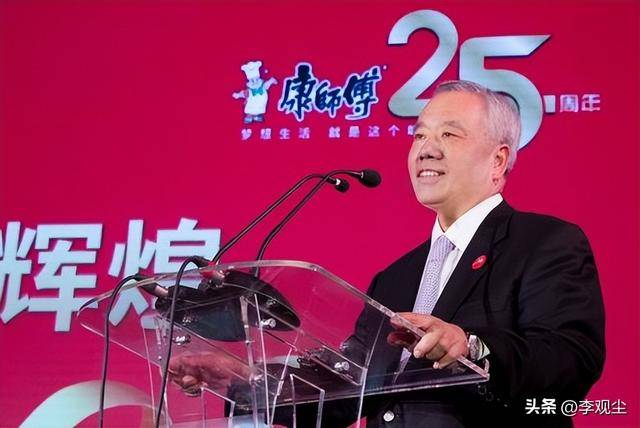
用周期x组织,读懂经营的本质
Sou Hu Cai Jing· 2025-10-22 17:22
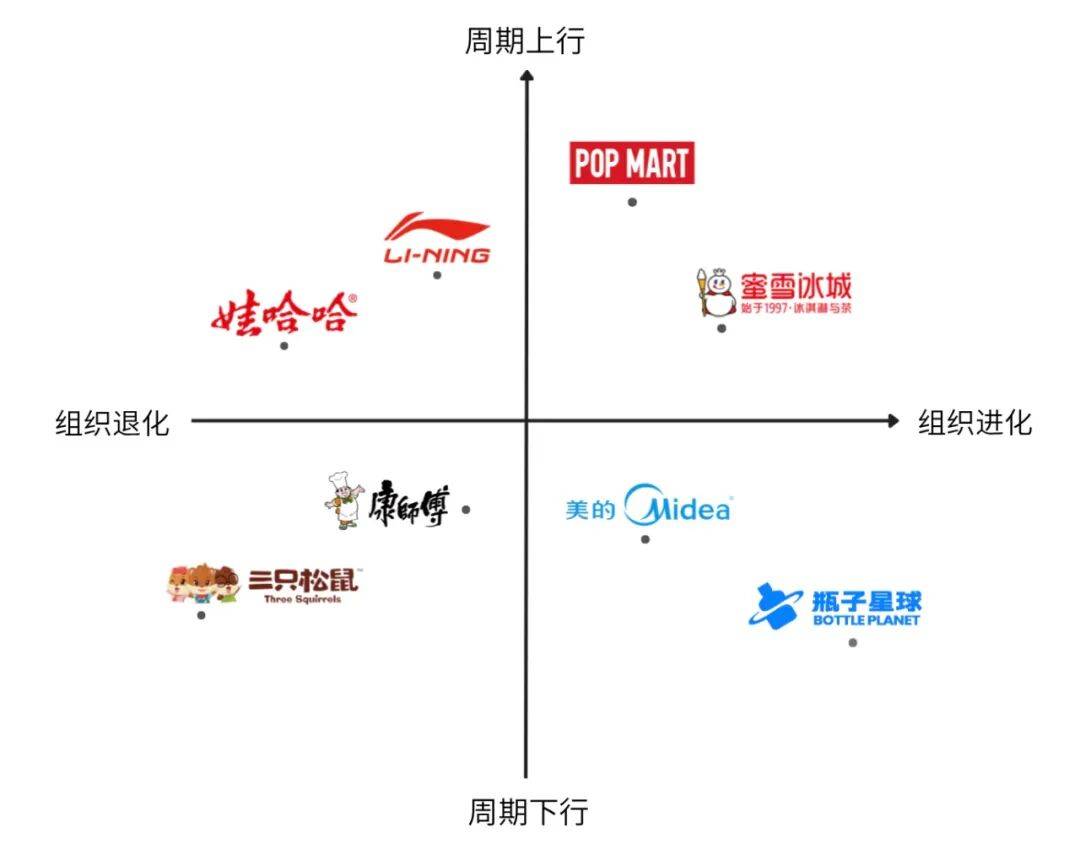
Core Insights - The article emphasizes the importance of both external cycles and internal organization in determining a company's success, suggesting that understanding past actions is crucial for defining future outcomes [2][19] Group 1: Successful Companies in Favorable Conditions - Companies like Mixue Ice City thrive in a favorable environment characterized by industry benefits, strategic accuracy, and efficient execution, often referred to as "the right time, the right place, and the right people" [4] - Mixue Ice City's business model focuses on selling raw materials rather than franchise fees, resulting in the lowest opening costs among chain brands and achieving a gross margin and net margin that are among the highest in the new tea beverage industry [4] - The company's revenue is equivalent to the combined total of the second to fourth ranked competitors in the same sector, showcasing its unique profit model [4] Group 2: Companies Adapting to Market Changes - Pop Mart represents a contrasting approach, expanding globally rather than focusing on domestic market penetration, demonstrating a strong organizational capability to adapt to market demands [7] - The concept of "retail entertainment" is highlighted, indicating that companies must continuously innovate to remain relevant and capitalize on market opportunities [7] Group 3: Companies Facing Internal Challenges - Companies like Bottle Planet, known for its brand Jiangxiaobai, faced significant challenges due to a declining traditional liquor market but successfully pivoted to a "new liquor" strategy, launching new products to regain growth [8][9] - The implementation of the Danaher DBS model has been crucial for Bottle Planet's transformation, focusing on systematic improvements across various operational aspects [9][11] Group 4: Companies Struggling with Market Dynamics - Companies like Master Kong are experiencing external pressures from the rise of the takeout market, which has negatively impacted instant noodle sales, highlighting the challenges of adapting to changing consumer behaviors [16] - Three Squirrels, a former leader in the snack industry, struggles with an outdated business model and quality control issues, leading to significant revenue losses and a decline in market position [18]

经营的本质是什么?
Hu Xiu· 2025-10-22 13:24
Core Insights - The article discusses the importance of both external cycles and internal organization in determining a company's success or failure during different market conditions [1][2][3] - It presents a four-quadrant model to categorize companies based on their organizational strength and market cycles, illustrating how these factors interact to shape business outcomes [3][4] Quadrant Analysis Quadrant 1: Upward Cycle + Organizational Evolution - Companies like Mixue Ice City and Pop Mart thrive during industry booms due to strategic accuracy and efficient execution, benefiting from favorable market conditions [6][7] - Mixue Ice City's success is attributed to its low-cost model and 100% self-sourced supply chain, achieving high gross and net profit margins in the new tea beverage sector [10][11][12] - Pop Mart capitalizes on global expansion and market adaptability, demonstrating a keen understanding of market dynamics despite periods of lower visibility [14][15][16] Quadrant 2: Downward Cycle + Organizational Evolution - Companies such as Bottle Planet and Midea exemplify resilience in challenging environments, adapting their strategies to align with market demands [17][18] - Bottle Planet, known for its brand Jiangxiaobai, pivoted to a "new liquor" strategy to counteract declining traditional liquor sales, leading to renewed growth [20][21][24] - Midea's transformation into a technology ecosystem company, driven by a focus on organizational strength over individual leadership, has resulted in significant market value growth [26][27] Quadrant 3: Upward Cycle + Organizational Degeneration - Wahaha and Li Ning illustrate how poor organizational management can squander opportunities during favorable market conditions [28][29] - Wahaha's leadership struggles have hindered its ability to capitalize on the bottled water market, while Li Ning's missteps in brand strategy have led to significant market value decline [30][34][35] Quadrant 4: Downward Cycle + Organizational Degeneration - Companies like Master Kong and Three Squirrels face compounded challenges from external market pressures and internal management issues [37][38] - Master Kong's sales have declined due to the rise of food delivery services, while its strategies have failed to adapt effectively to changing consumer preferences [39][41] - Three Squirrels struggles with maintaining quality and adapting to market changes, resulting in significant revenue losses and competitive disadvantages [43][44] Conclusion - The analysis emphasizes that while market cycles are constant, the organizational structure and adaptability of a company are crucial for long-term survival and success [45][46][47]




将食品包装变为潮流时装 康师傅于上海时装周上演碳中和大秀
Zhong Guo Jin Rong Xin Xi Wang· 2025-10-13 08:36
Core Viewpoint - The event showcased a groundbreaking collaboration between Master Kong and the fashion industry, transforming food packaging waste into fashionable items, emphasizing sustainability and circular economy principles [1][19][20]. Group 1: Event Overview - The 2026 Spring/Summer Shanghai Fashion Week featured a unique ESG-themed fashion show titled "Food·Fashion - Plastic Rebirth, Infinite Circulation" by Master Kong, highlighting the intersection of food and fashion [1][18]. - The show included four major products from Master Kong: Braised Beef Noodles, Fresh Q Noodles, Ice Black Tea, and Jasmine Tea, designed in collaboration with top fashion design talents from Donghua University and renowned designer Rico Lee [1][10]. Group 2: Sustainability and ESG Commitment - Master Kong's CEO, Chen Yingrang, emphasized the company's commitment to sustainable development, focusing on lightweight packaging, reuse, and recycling to contribute to a green, low-carbon lifestyle [4][19]. - The event was recognized as the first carbon-neutral collaboration at Shanghai Fashion Week, demonstrating a practical application of carbon neutrality in the fashion industry [16][18]. Group 3: Design and Innovation - The fashion show featured nearly sixty exclusive outfits designed around Master Kong's core products, showcasing innovative use of recycled materials, such as rPET and PP, to create functional fabrics and accessories [10][19]. - The designs included four thematic series: "Essence of Quality," "Deconstruction Thought," "Energy Supply Station," and "Fresh Breath," each reflecting the brand's heritage and commitment to sustainability [10][19]. Group 4: Industry Impact and Future Directions - The collaboration serves as a model for high-value resource utilization, transforming waste into fashion, and providing a tangible example of the economic viability of sustainable practices [5][19]. - Master Kong's "eESG" concept integrates economic benefits into traditional ESG frameworks, aiming to drive broader adoption of sustainable practices across the industry [19][20][23].
中国必选消费品9月成本报告:双节前成本指数波动较小
Haitong Securities International· 2025-09-30 09:23
Investment Rating - The report provides various investment ratings for companies in the consumer staples sector, with "Outperform" ratings for several companies including China Feihe, Haidilao, and China Resources Beer, while Budweiser APAC is rated "Neutral" [1]. Core Insights - The overall cost indices for six categories of consumer goods showed mixed trends, indicating stability in the market. Spot cost indices for soft drinks, beer, instant noodles, dairy products, frozen foods, and seasonings changed by +0.97%, +0.51%, +0.26%, -0.13%, -0.44%, and -0.57% respectively, while futures cost indices changed by -1.08%, +1.06%, -1.06%, -1.67%, -0.78%, and -0.06% respectively [31][32][33][34][35][36][37]. Summary by Category Beer - The spot cost index for beer increased by 0.51% month-on-month, while the futures index rose by 1.06%. Year-to-date, the spot and futures indices have decreased by 3.71% and 4.95% respectively [12][32]. Seasonings - The spot cost index for seasonings decreased by 0.57% month-on-month, while the futures index fell by 0.06%. Year-to-date, the indices have changed by -2.41% and -6.71% respectively [15][33]. Dairy Products - The spot cost index for dairy products decreased by 0.13% month-on-month, while the futures index fell by 1.67%. Year-to-date, the indices have changed by -3.36% and -3.93% respectively [18][34]. Instant Noodles - The spot cost index for instant noodles increased by 0.26% month-on-month, while the futures index decreased by 1.06%. Year-to-date, the indices have changed by -3.23% and -6.06% respectively [22][35]. Frozen Foods - The spot cost index for frozen foods decreased by 0.44% month-on-month, while the futures index fell by 0.78%. Year-to-date, the indices have changed by -2.3% and -3.37% respectively [25][36]. Soft Drinks - The spot cost index for soft drinks rose by 0.97% month-on-month, while the futures index fell by 1.08%. Year-to-date, the indices have changed by -4.19% and -10.86% respectively [28][37].
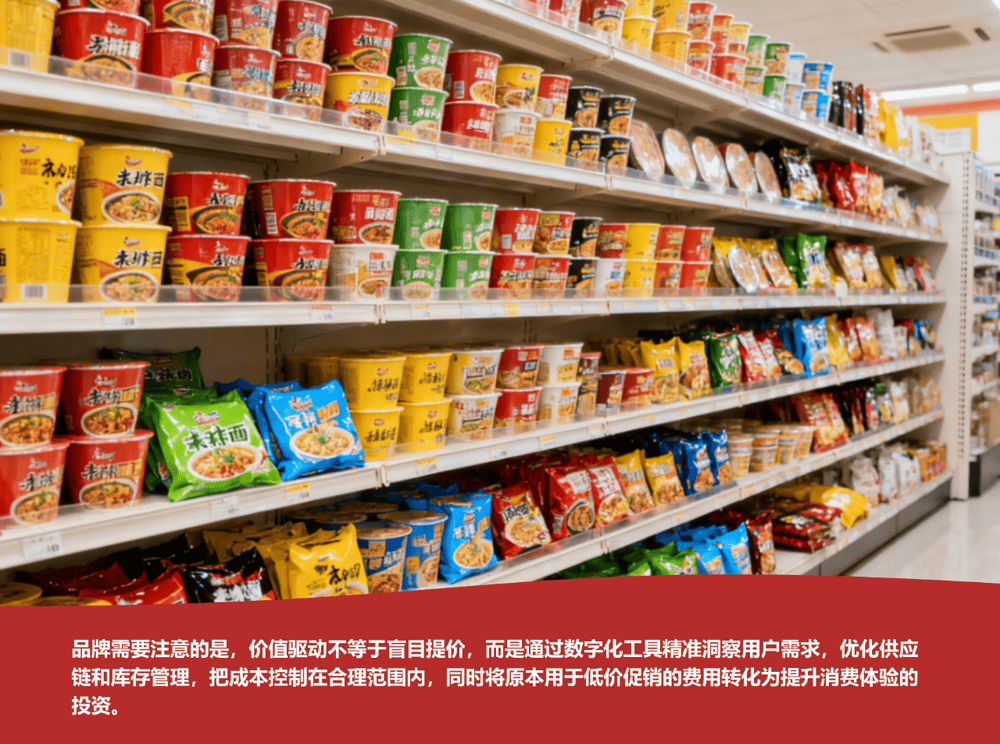
“不促不销” ! 看方便面行业的中年危机,这是衰退而非调整
Sou Hu Cai Jing· 2025-09-25 17:53
Core Insights - The convenience noodle industry is facing challenges due to the rise of alternative products and changing consumer preferences, leading to a decline in the appeal of instant noodles [1][10] - Brands are resorting to promotions to boost sales, resulting in a dilemma of "no sales without promotions, no profits with promotions" [2][6] - Rising raw material costs and increased competition are squeezing profit margins, with many brands experiencing revenue growth without corresponding profit increases [3][5] Cost Challenges - High raw material costs are a significant issue, with key ingredients like flour and palm oil experiencing price volatility, impacting overall production costs [3][4] - The cost structure of instant noodles includes approximately 35% for raw materials, 20% for packaging, 25% for production, and 20% for logistics, all of which are under pressure from rising costs [3][4] - The industry is seeing a general increase in costs over the past decade, with raw material and production costs rising by 30%-65% [3][4] Market Dynamics - The convenience noodle market is entering a phase of stagnant or declining sales, with a reported decrease of 4 billion packages from 2020 to 2023 [5] - Brands are engaging in price wars and aggressive promotions, which further erodes profitability and creates a cycle of high investment with low returns [5][6] - Consumer loyalty is declining as frequent promotions lead to a reliance on short-term incentives rather than product value [6] Global Expansion - The trend of international expansion is evident, with significant growth in exports, particularly to the U.S. and African markets, although challenges such as tariffs and supply chain issues persist [7][8] - Brands like Nongshim and Samyang are benefiting from overseas sales, but they also face increased costs due to tariffs and logistical challenges [7][8] Consumer Behavior Changes - Changing consumer habits, including the rise of food delivery services and health-conscious eating, are negatively impacting instant noodle sales [10][11] - The popularity of high-speed rail has also reduced the demand for instant noodles as a travel food option [10] - Consumers are increasingly concerned about the health implications of instant noodles, leading to a shift towards healthier alternatives [10][11] Innovation and Product Development - Brands are attempting to innovate by introducing non-fried options and enhancing nutritional value, but many still struggle to change consumer perceptions [11][14] - There is a need for brands to embrace new consumption scenarios and extend product lines to meet diverse consumer needs [16][17] - The industry is shifting from a focus on volume to a focus on value, emphasizing quality and consumer experience over mere sales growth [14][15] Supply Chain Resilience - The importance of robust supply chain management is highlighted, with brands needing to localize production to mitigate costs and improve efficiency [12][13] - The industry is moving towards smart supply chain solutions, utilizing technology for better inventory and procurement decisions [13]