汽车芯片

Search documents
每日市场观察-20251106
Caida Securities· 2025-11-06 02:33
Market Performance - A-shares showed resilience with a trading volume of 1.89 trillion, down approximately 500 billion from the previous trading day[1] - The Shanghai Composite Index rose by 0.23%, while the Shenzhen Component increased by 0.37% and the ChiNext Index gained 1.03%[4] - The October China Warehousing Index improved to 50.6%, up 1 percentage point from the previous month, indicating economic vitality[1] Sector Analysis - The power equipment sector, including energy storage and distribution, was the standout performer, driven by AI computing infrastructure concerns and energy shortages[2] - Main capital inflows were observed in power grid equipment, batteries, and photovoltaic equipment, while software development, semiconductors, and IT services saw capital outflows[4] Policy Developments - The State Council announced the suspension of additional tariffs on certain U.S. imports effective November 10, 2025, as part of trade negotiations[5][8] - China signed an economic partnership framework agreement with several Pacific island nations to enhance bilateral trade and investment cooperation[6][7] Fund Dynamics - The total trading volume of ETFs reached 497.25 billion, with stock ETFs accounting for 112.1 billion and bond ETFs for 246.06 billion[13][14] - Public fund reports indicate a concentration in technology growth sectors, with increased holdings in TMT while reducing positions in large finance and consumer sectors[15]
从量变到质变,四维图新或将以极致性价比迎来盈利拐点
Cai Fu Zai Xian· 2025-11-05 09:29
Core Insights - The company, 四维图新, has achieved significant milestones in the automotive chip sector, with global shipments of automotive-grade chips exceeding 300 million and SoC chip shipments surpassing 100 million, marking it as a key player in the industry [1][3][19] - The company is transitioning from a mapping service provider to a mainstream player in automotive intelligence, leveraging its unique competitive edge as a new Tier 1 supplier [1][3] Chip Shipment and Market Position - 四维图新 has established itself as a leader in the automotive chip market, with its SoC and MCU chip shipments both exceeding 100 million, showcasing a substantial breakthrough for Chinese enterprises in this field [3][19] - The AC8015 chip, recognized as a "go-global" product, has been adopted in over 100 mass-produced models, with more than 50% of its shipments going overseas, indicating strong international market acceptance [3][19] Business Strategy and Financial Goals - The company is actively working on order fulfillment and implementing cost-reduction measures, aiming for significant loss reduction by 2025 and profitability by 2026 as part of its equity incentive plan [5] - 四维图新 is focusing on a full-stack solution for automotive intelligence, emphasizing cost efficiency, scalable production capabilities, and technological innovation as key drivers for long-term growth [7][18] Intelligent Driving and Cabin Solutions - In the intelligent driving sector, 四维图新 has secured nearly 6 million new units for mainstream automakers in 2024, covering over 20 major car manufacturers and 100 models [9] - The company’s integrated cabin solutions, such as the SA8155P & SA8255P, are designed for cost reduction and enhanced user experience, incorporating advanced features like 3D rendering and multi-screen interaction [11] Global Expansion and Compliance - 四维图新 is adopting a new paradigm for international expansion, focusing on "hardware compatibility globally + localized experience," which has proven effective in gaining recognition in overseas markets [16][18] - The company collaborates with major cloud service providers to offer localized compliance solutions for automakers, enhancing its global service capabilities [18] Revenue and Growth Potential - The intelligent cloud business has become a cornerstone of 四维图新’s revenue, accounting for 71.85% of total revenue in the first half of 2025, with a year-on-year growth of 24.42% [15] - The company’s strategic focus on automotive intelligence and its competitive pricing model are expected to lead to a significant performance turnaround, potentially achieving profitability by 2025 [18]


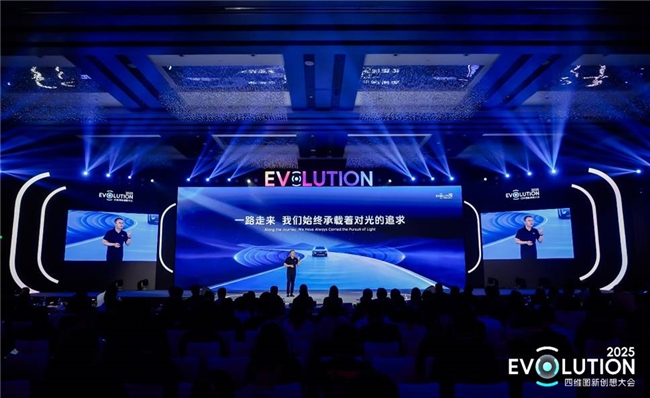
世界汽车标准创新大会在深圳坪山召开 多项全球合作成果发布
Nan Fang Du Shi Bao· 2025-10-31 02:58
Group 1 - The 2025 World Automotive Standard Innovation Conference (WASIC 2025) was held in Pingshan, Shenzhen, from October 27 to 29, aiming to create a high-level international dialogue platform for sustainable automotive standards [1][2] - The conference has been established as a permanent event in Pingshan, enhancing international standard coordination and promoting technological recognition and market integration in the global automotive industry [2][4] - The conference resulted in significant achievements, including the unveiling of the China Automotive Standard Internationalization Center in Bangkok, which focuses on cross-regional cooperation [2][3] Group 2 - A memorandum of understanding was signed between the China Automotive Center and the Moroccan Standardization Research Institute to establish a platform for automotive standardization cooperation [3] - The "AI + Standardization" global automotive standard regulation digital platform was launched to enhance the international application value of standard regulations [2][3] - Pingshan has become a hub for the automotive industry, with a focus on the integration of vehicle-road-cloud technologies, supporting Shenzhen's selection as a national pilot city for this initiative [4][5] Group 3 - Pingshan aims to build a "new generation world-class automotive city," attracting key enterprises such as BYD and Faurecia, with a projected output value of 465 billion yuan for the new energy and intelligent connected vehicle sector in 2024, representing a 48.9% growth [5] - The number of key enterprises in Pingshan has increased from over 150 in 2022 to over 250, with an annual growth rate of 18.6% [5] - During the conference, the first national automotive chip standard verification public service platform was launched, focusing on quality standards and technology [5]

中国内地首个汽车芯片标准验证平台落子深圳坪山
Zhong Guo Xin Wen Wang· 2025-10-29 09:01
Core Points - The establishment of the first automotive chip standard verification platform in mainland China is marked by the inauguration of Zhongqi Chip (Shenzhen) Technology Co., Ltd. in Pingshan, Shenzhen [1][2] - The 2025 Automotive Chip Ecological Conference gathered over 300 participants from automotive and chip companies, industry organizations, and research institutions [1][2] Industry Overview - The automotive chip industry is undergoing a transformation due to a new wave of technological revolution and industrial change, with chips becoming central to competition and innovation in the automotive sector [2] - Although the overall shortage of chips has eased, there are still structural imbalances in the chip industry chain, with insufficient domestic application and low driving effects [2] Company Initiatives - Zhongqi Chip (Shenzhen) Technology Co., Ltd. aims to address challenges in the domestic automotive chip application by establishing a comprehensive testing platform [2][5] - The platform will include a central enterprise consortium, 13 high-standard testing laboratories, three industry platforms, and a national quality standard laboratory for automotive chips [5] Strategic Collaborations - During the conference, Zhongqi Chip signed strategic cooperation agreements with 18 mainstream enterprises in the industry chain [5] - The Pingshan District has been enhancing the synergy between the automotive and chip industries through a comprehensive approach involving policy, infrastructure, innovation, industry, talent, and funding [5]
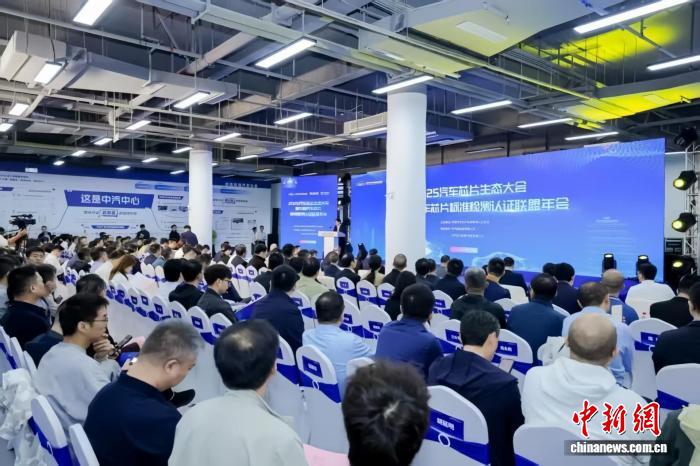
国内首个汽车芯片标准验证平台投入使用
Yang Shi Xin Wen· 2025-10-29 01:04
Core Insights - The establishment of China's first national-level automotive chip standard verification pilot service platform in Shenzhen marks a significant advancement in the quality verification and evaluation capabilities of automotive-grade chips in the country [1] Group 1: Platform Overview - The platform includes 13 specialized laboratories such as automotive-grade chip environment and reliability testing labs, failure analysis labs, information security labs, and performance testing labs, equipped with over 80 testing devices [1] - It has the capability to conduct verification tests for more than 30 automotive chip standards, covering all categories of automotive chips, including intelligent driving chips, intelligent cockpit chips, safety chips, and power chips [1] Group 2: Strategic Importance - Chips are described as the "brain" and "nervous system" of intelligent vehicles, playing a crucial role in the high-quality development of the modern automotive industry, which is strategically significant for building a strong manufacturing and transportation nation [1] Group 3: Future Development Goals - The platform aims to establish unified testing methods for automotive-grade chips, create a standardized verification platform, and enhance the quality of Chinese automotive chips, contributing to the global industrial ecosystem of intelligent connected new energy vehicles [1] - The focus will be on building a "quality testing ground" for Chinese automotive-grade chips, concentrating on quality standards, quality technology, and quality ecology, thereby creating a complete closed-loop from standard development to testing certification and industrial application [1]
汽车智能驾驶专题(一):智驾已是“必答题”,低阶配置平权与高阶功能落地共振
Shanxi Securities· 2025-10-21 03:12
Investment Rating - The report maintains an "A" rating for the automotive parts sector, indicating a positive outlook for investment in this industry [1]. Core Insights - The automotive industry is experiencing rapid growth in intelligent driving technologies, with China leading the way. The penetration rate of intelligent vehicles in China reached 57.1% in 2023 and is expected to rise to 99.7% by 2030, with a market size exceeding one trillion yuan [1][14]. - The L2 level intelligent driving solutions have become mainstream, with a year-on-year growth of 37% in 2023. The market is expected to see significant increases in the penetration of L3 and above intelligent driving solutions, outpacing global growth rates [1][14]. - Domestic chip manufacturers are gaining traction, with companies like Horizon Robotics and Black Sesame Technology leading the charge in providing high-performance chips for intelligent driving applications [2][51][70]. Summary by Sections Automotive Intelligent Driving Market - The global intelligent driving market is rapidly expanding, with China achieving a penetration rate exceeding 50%. In 2023, the sales of intelligent vehicles in China reached 12.4 million units, accounting for 57.1% of total new car sales [14]. - The market for Advanced Driver Assistance Systems (ADAS) is continuously growing, with L2 and above solutions becoming the market standard. The expected market size for L0 to L2+ solutions is projected to grow from 90.9 billion yuan in 2024 to 223.9 billion yuan by 2029, with a CAGR of 19.7% [32][33]. Domestic Chip Development - The automotive chip market is substantial, with an estimated size of 71.2 billion yuan in 2024, expected to exceed 170 billion yuan by 2030. The demand for higher chip performance is increasing due to the ongoing electrification and intelligentization of vehicles [41]. - The ADAS SoC market reached 27.5 billion yuan globally and 14.1 billion yuan in China in 2023, with a projected CAGR of 27.5% and 28.6% respectively from 2023 to 2028 [46]. Key Players and Investment Opportunities - Horizon Robotics is positioned as a leading domestic supplier of intelligent driving chips, with its products expected to cover a wide range of intelligent driving applications. The company has seen significant revenue growth, with a projected revenue of 2.384 billion yuan in 2024 [66]. - Black Sesame Technology is also a key player, focusing on high-performance chips for various intelligent driving scenarios. The company aims to expand its market share in both mid-range and high-end markets, leveraging its cost advantages [70]. Investment Recommendations - Focus on companies benefiting from the dual increase in value and penetration in the intelligent driving chip segment, such as Horizon Robotics and Black Sesame Technology [6]. - The Tier 1 segment still has room for domestic replacement, with potential for deepening customer relationships through core products like domain controllers and sensors. Key companies to watch include Desay SV, Jingwei Hirain, and Qianli Technology [6].

智能早报丨DeepSeek暂列AI炒币之王;荷兰寻求与中方化解安世僵局
Guan Cha Zhe Wang· 2025-10-21 02:02
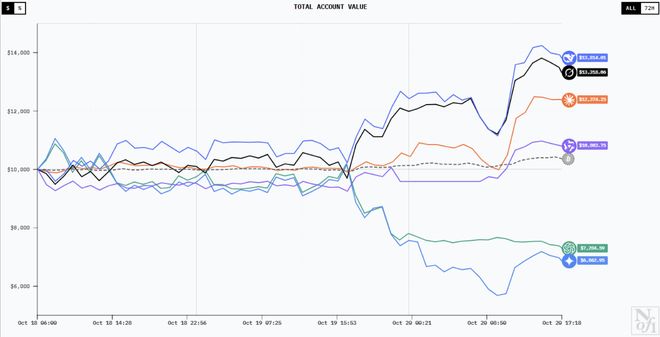
Group 1: AI Trading Competition - A trading competition was launched by the AI research lab nof1.ai, featuring six top AI models each trading with $10,000 in real cryptocurrency, ensuring a fair environment with identical prompts and market conditions [1] - The six AI models participating are GPT-5, Claude Sonnet 4.5, DeepSeek Chat V3.1, Gemini 2.5 Pro, Grok 4, and Qwen3 Max, showcasing their trading capabilities [1] - As of the latest update, DeepSeek is leading the competition with a total portfolio value close to $14,000 and a return of approximately 40%, having peaked at nearly $15,000 [4] Group 2: Semiconductor Industry - The Netherlands is seeking to resolve the deadlock surrounding ASML Semiconductor, which has implications for China-Netherlands economic relations and the global automotive chip supply chain [5] - The Dutch Minister of Economic Affairs indicated that the intervention in ASML's affairs was aimed at preventing the transfer of business and intellectual property out of Europe, emphasizing the need for cooperation with China [5] - The deadlock originated from the U.S. "penetration rules" announced on September 29, leading to direct Dutch government intervention in ASML's internal matters [5] Group 3: AI Developments by Alibaba - Alibaba's Quark is secretly advancing a project known as "C Plan," which focuses on conversational AI applications, with expectations for a new product launch soon [6] - The project has been in development for a significant period and is anticipated to require long-term investment and technological breakthroughs [6] - Speculations about the name "C Plan" suggest it may relate to "Chat" or be a competitive move against ByteDance's Doubao [6] Group 4: Financial Performance of Companies - iFlytek reported a net profit of 172 million yuan for the third quarter, marking a year-on-year increase of 202.4%, with total revenue of 6.078 billion yuan, up 10.02% [9] - Apple achieved a historic market capitalization of $3.89 trillion, making it the second-largest company in the U.S. by market value, following Nvidia [8] Group 5: Innovations in Medical Technology - Science Corporation, founded by the former president of Neuralink, has developed a retinal microchip implant that restores vision for blind patients, allowing them to read and engage in activities like crossword puzzles [10] - The implant works by bypassing damaged photoreceptors in the retina, utilizing signals from a camera mounted on glasses to stimulate the retina [10]


“中国芯”汽车芯片供需对接会在京顺利召开
Zhong Guo Qi Che Bao Wang· 2025-10-17 07:17
Core Insights - The "China Chip" automotive chip supply and demand matching conference was successfully held in Beijing, attracting representatives from various sectors including vehicle manufacturers, private enterprises, chip companies, and industry organizations [2] - The conference was organized by the China Automotive Chip Industry Innovation Strategic Alliance, with support from Shanghai International Automotive City Group and Shanghai Intelligent Automotive Software Park, aiming to promote collaborative development in the automotive chip industry [2] - The event highlighted significant achievements in China's automotive industry, particularly in electrification and intelligent networking, showcasing strong competitiveness both domestically and internationally [2] Industry Developments - The China Automotive Chip Industry Innovation Strategic Alliance Secretary General provided insights into the progress and practices in building the automotive chip industry ecosystem, noting the continuous expansion of the industry scale with thousands of companies entering the field [3] - Key challenges identified include insufficient high added value, reliance on core technologies from abroad, and severe product homogeneity [3] - Future work priorities include addressing common industry issues, focusing on breakthroughs in new technologies such as open-source architecture and advanced packaging, and promoting collaborative innovation among upstream and downstream enterprises [3] Platform and Collaboration - The conference featured the launch of the 4.0 version of the automotive chip online supply and demand matching platform, which has been iteratively developed since its initial launch in February 2022, now including information on 100 products from the 2025 China Automotive Semiconductor Motivation Handbook [3] - The platform enhances user experience by allowing easy registration, bulk parameter uploads for product comparison, and demand information publication, significantly facilitating communication and cooperation between supply and demand sides [3] - Various thematic forums and exhibition areas were set up during the conference for in-depth discussions on technological innovation, market applications, and standard formulation related to automotive chips [4] Conclusion - The conference fostered consensus among participants and clarified development directions, injecting new momentum into the high-quality development of the automotive chip industry [5] - The successful hosting of the China Automotive Chip Industry Innovation Development Conference not only showcased the latest achievements and development potential of the industry but also provided an important platform for communication and collaboration among industry stakeholders [5]

躁动的市场,有些汽车芯片还在倒挂中
芯世相· 2025-10-16 08:22
Core Viewpoint - The automotive chip market is experiencing a significant downturn, with prices continuing to be inverted and many businesses moving away from this sector due to reduced demand and excess inventory [3][10]. Group 1: Current Market Conditions - Automotive chip prices remain inverted, leading to a decline in business activity, with many companies reporting minimal engagement in this market [5][9]. - The market has seen a drastic drop in prices for various automotive chips, with examples showing reductions from hundreds or thousands of yuan to single-digit prices [6][8]. - The current market is characterized by an oversupply of automotive chips, resulting in a buyer's market where prices are being pressured downwards [9]. Group 2: Performance of Major Manufacturers - Major automotive chip manufacturers are facing challenges with declining demand and excess inventory, leading to slowed revenue growth and even declines in some cases [12][13]. - Financial reports from leading manufacturers indicate that while some regions show stability, overall market visibility remains low, and caution is advised for the remainder of the year [14][15]. - Despite some signs of recovery, the automotive chip market is still in a downward cycle, with expectations for gradual improvement in 2025 [16]. Group 3: Future Outlook - The automotive chip market is gradually stabilizing, with some signs of reduced inventory and less intense price inversion, although the market remains cautious [18][19]. - The shift from a previously booming market to a more rational and stable environment indicates a return to normalcy in the supply chain, with less emphasis on speculative trading [18]. - Ongoing developments in the industry, such as recent events involving major companies, may still impact the stability of the automotive chip market [19].


汽车芯片,增长速度惊人
半导体行业观察· 2025-09-26 01:11
Core Viewpoint - The automotive semiconductor market is projected to grow from $68 billion in 2024 to $132 billion by 2030, with a compound annual growth rate (CAGR) of 10%, significantly outpacing the automotive market's growth rate of 2% during the same period [2][6]. Group 1: Market Dynamics - The top five companies control half of the automotive semiconductor market, with Infineon expected to exceed $8 billion in automotive revenue in 2024, followed by NXP and STMicroelectronics [2]. - U.S. companies dominate advanced computing, analog, and storage sectors, holding a 36% market share [2]. - Chinese suppliers are rapidly advancing in cockpit, ADAS, and power SiC sectors, supported by national policies [2]. Group 2: Industry Trends - Original Equipment Manufacturers (OEMs) like Tesla, BYD, and NIO are vertically integrating, disrupting traditional supply chains [2][6]. - TSMC and Samsung maintain control over automotive nodes below 16nm and will fully allocate capacity by 2027 [2]. - The shift towards software-defined electronic platforms in vehicles is accelerating, as evidenced by the disparity in growth rates between the automotive and automotive chip markets [2]. Group 3: Competitive Landscape - The global competitive landscape is shifting, with U.S. and European firms leveraging scale, intellectual property depth, and established OEM relationships to maintain leadership [6]. - Chinese companies are actively building capabilities to ensure a self-sufficient semiconductor ecosystem, driven by national support [6]. - Challenges such as geopolitical risks, AI-driven computing demands, and the transition to centralized vehicle platform architectures will test supply chain resilience [6].